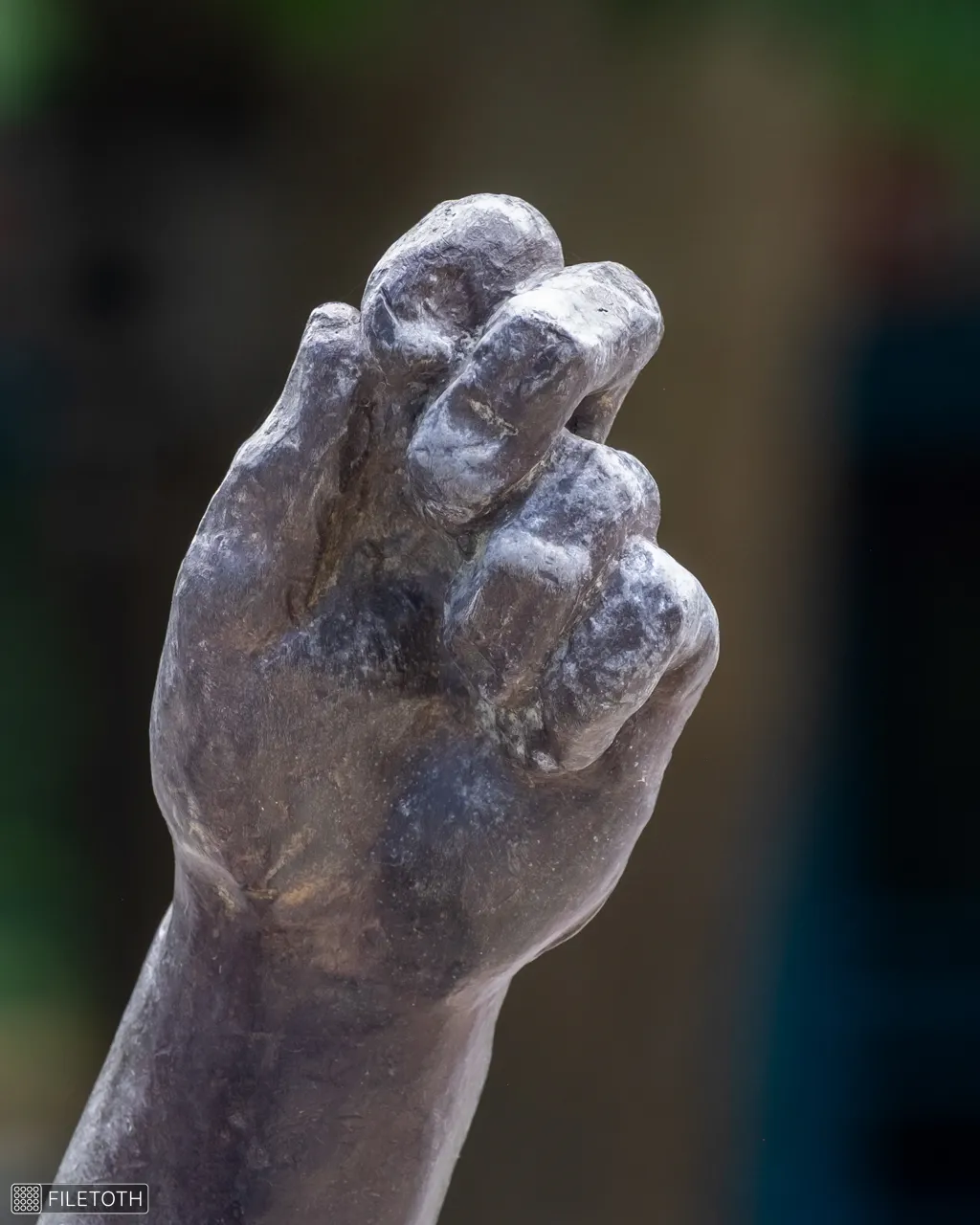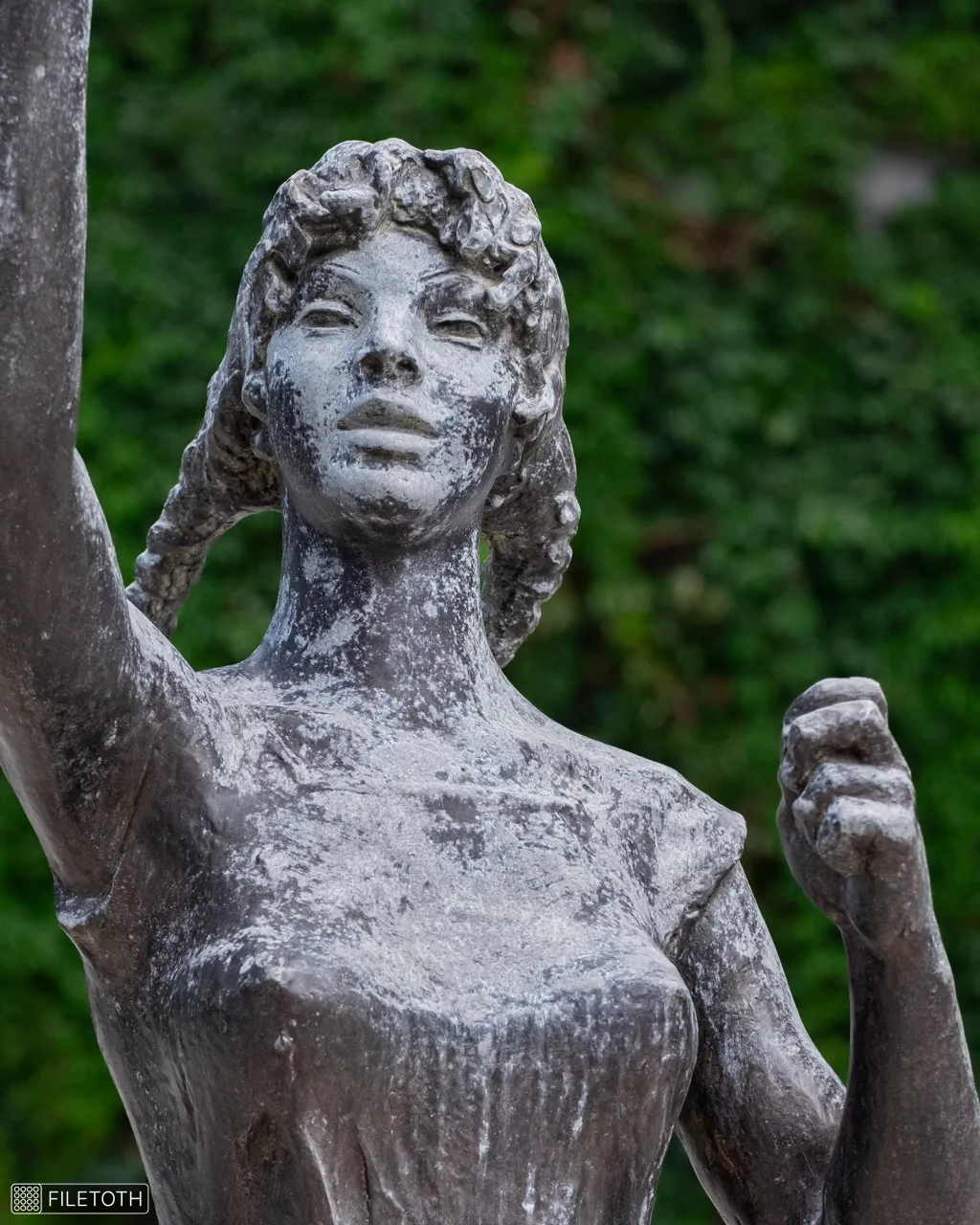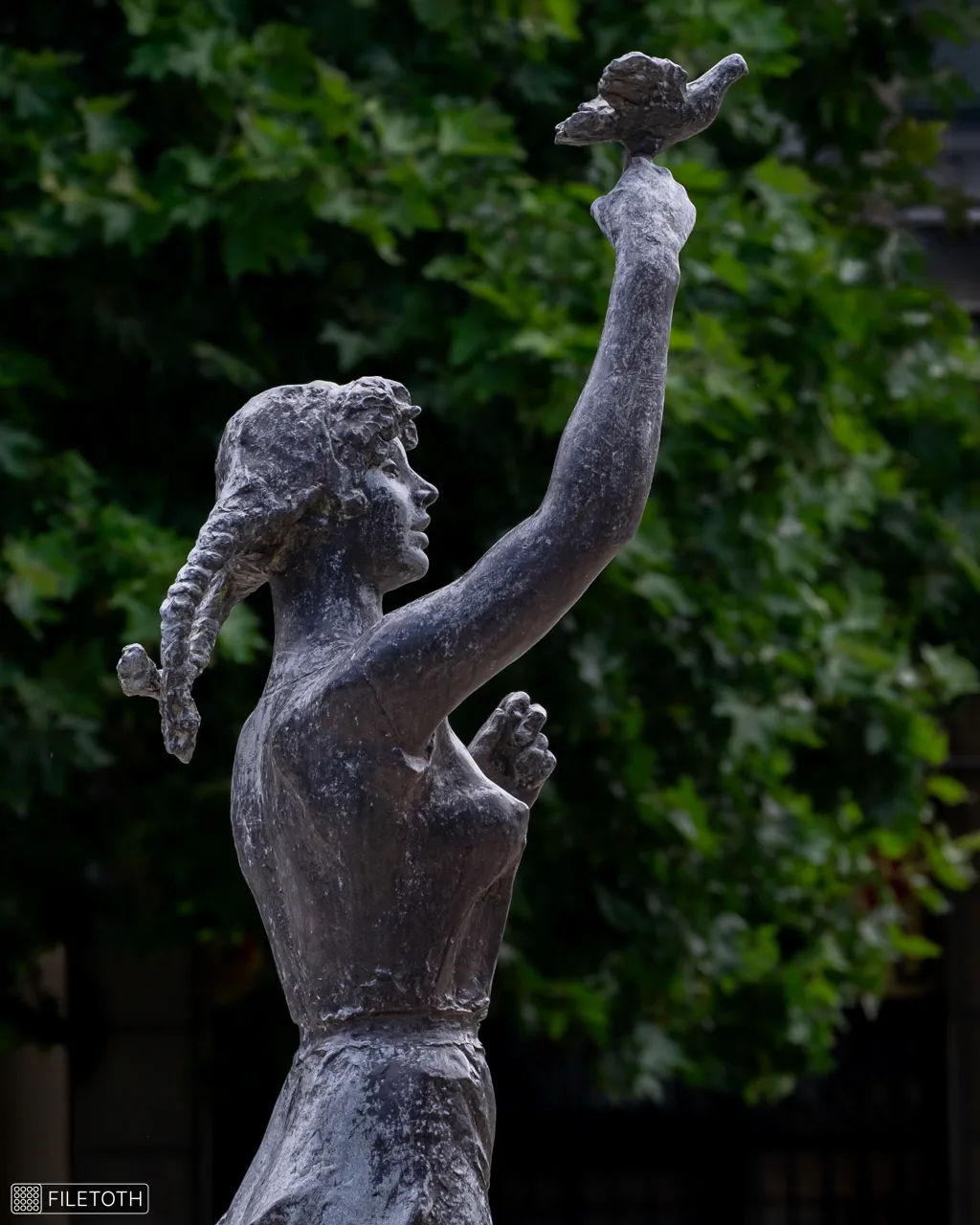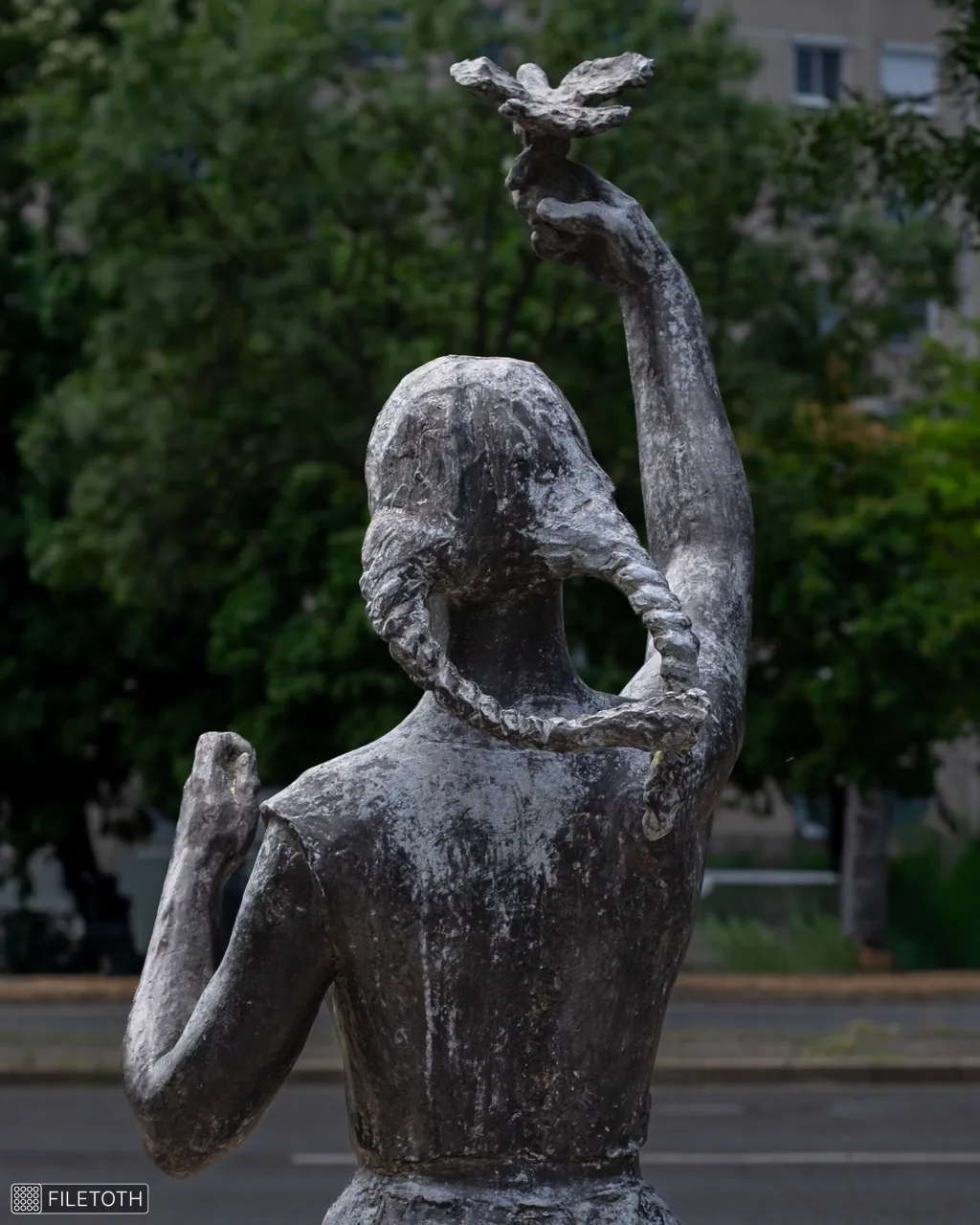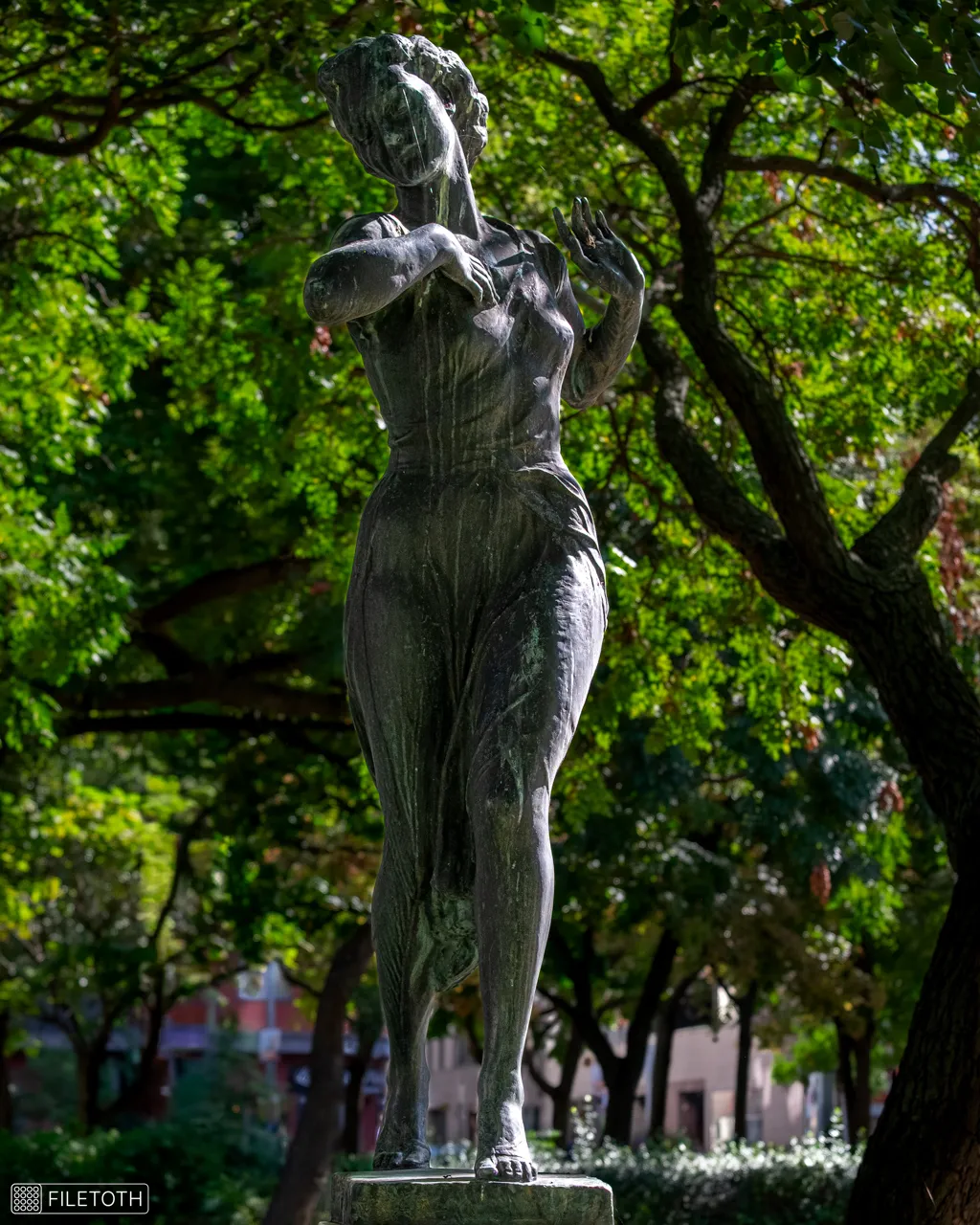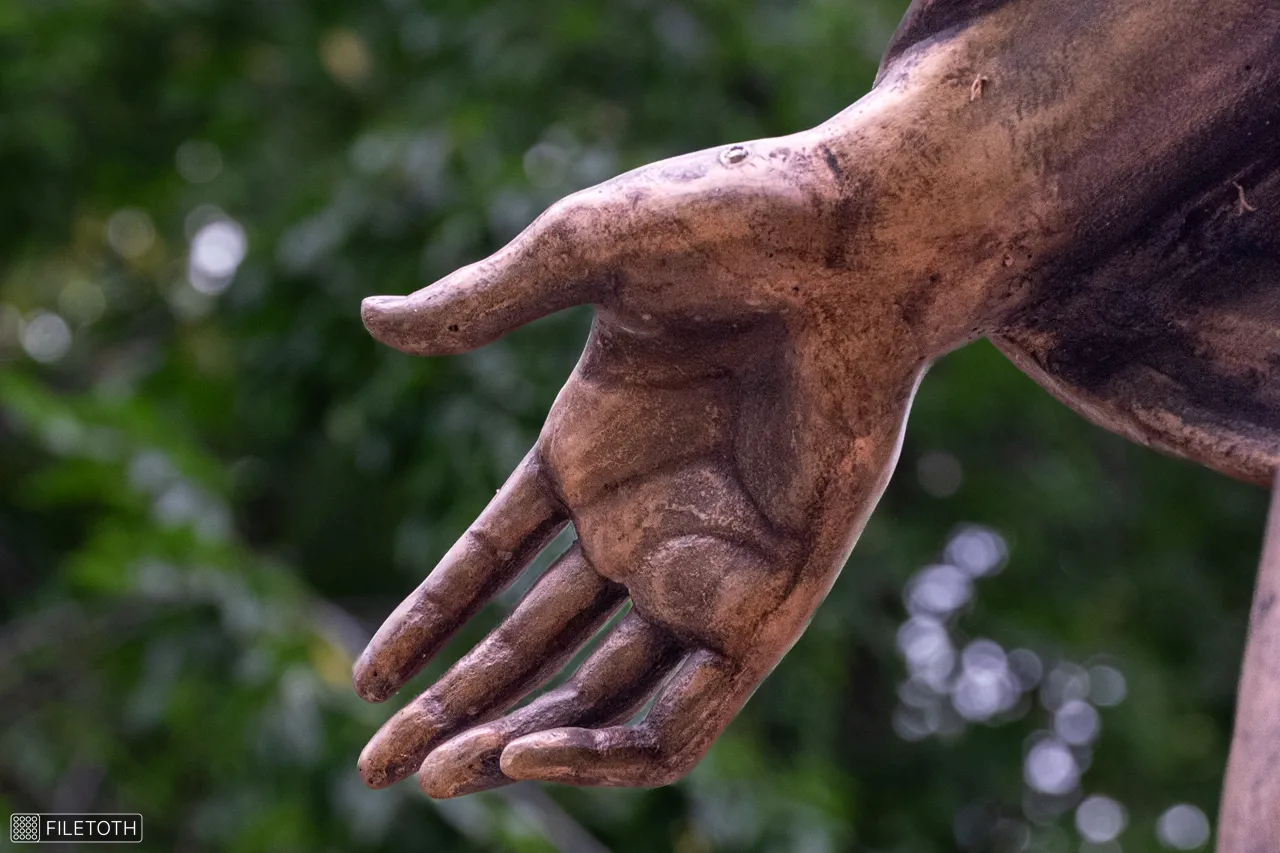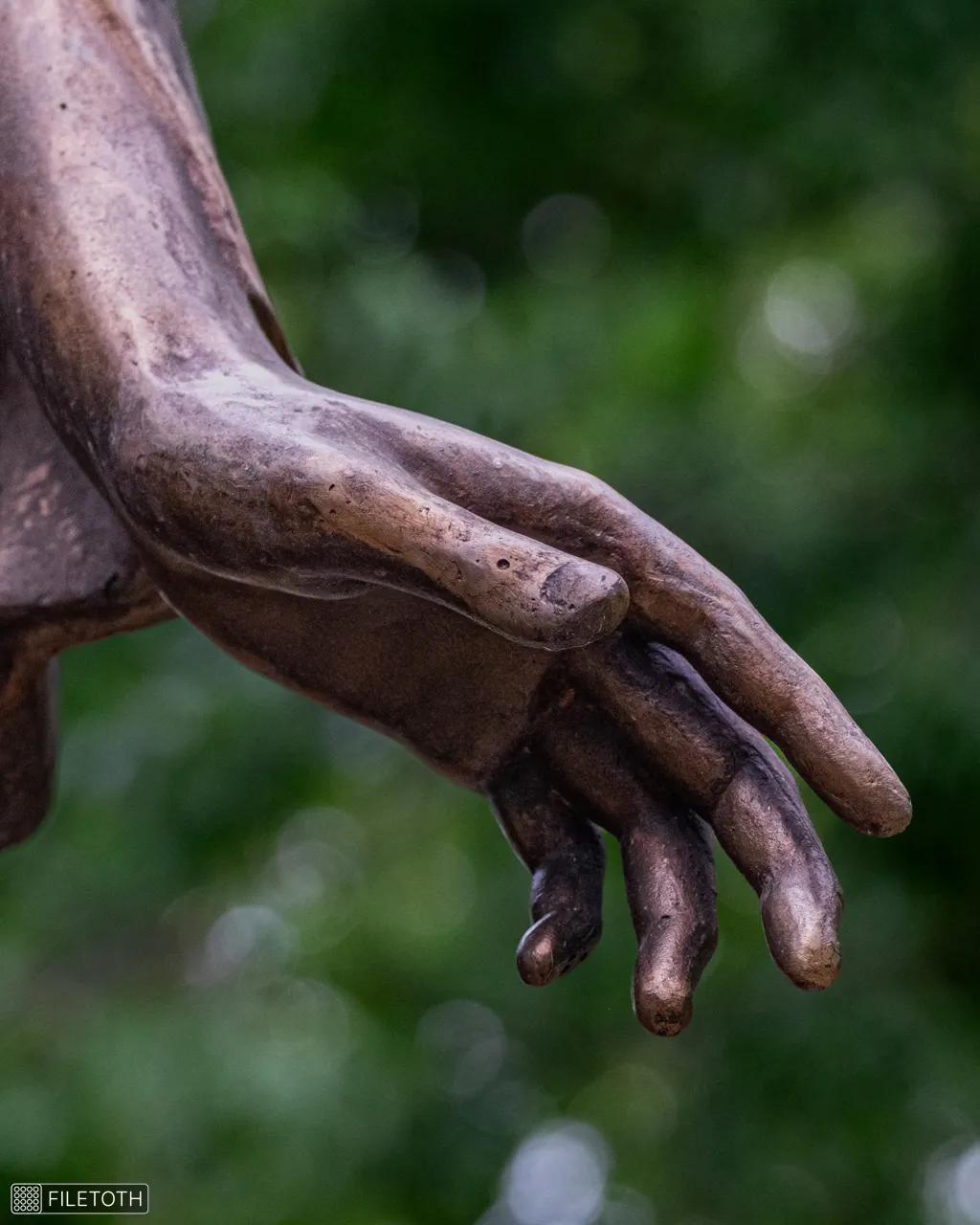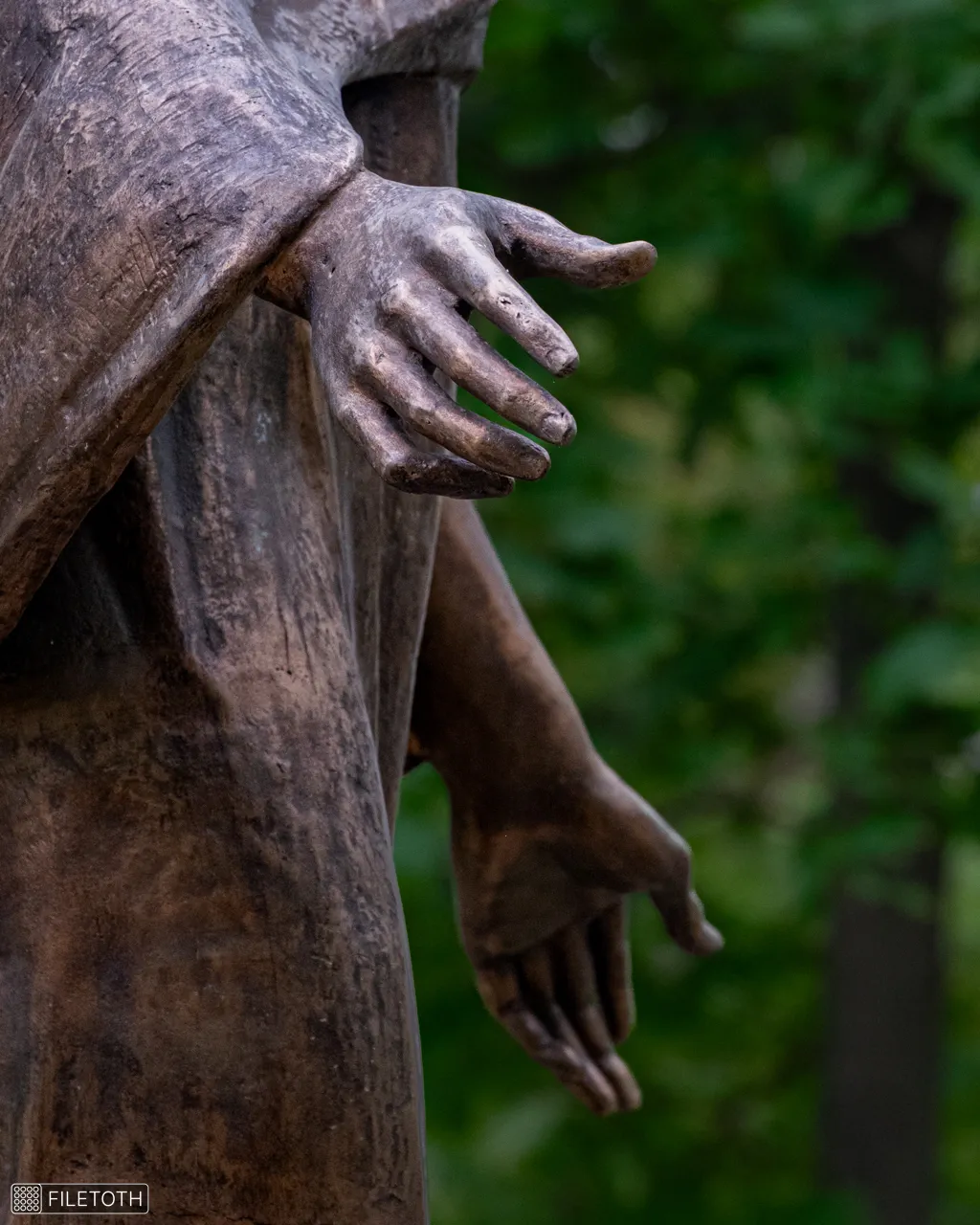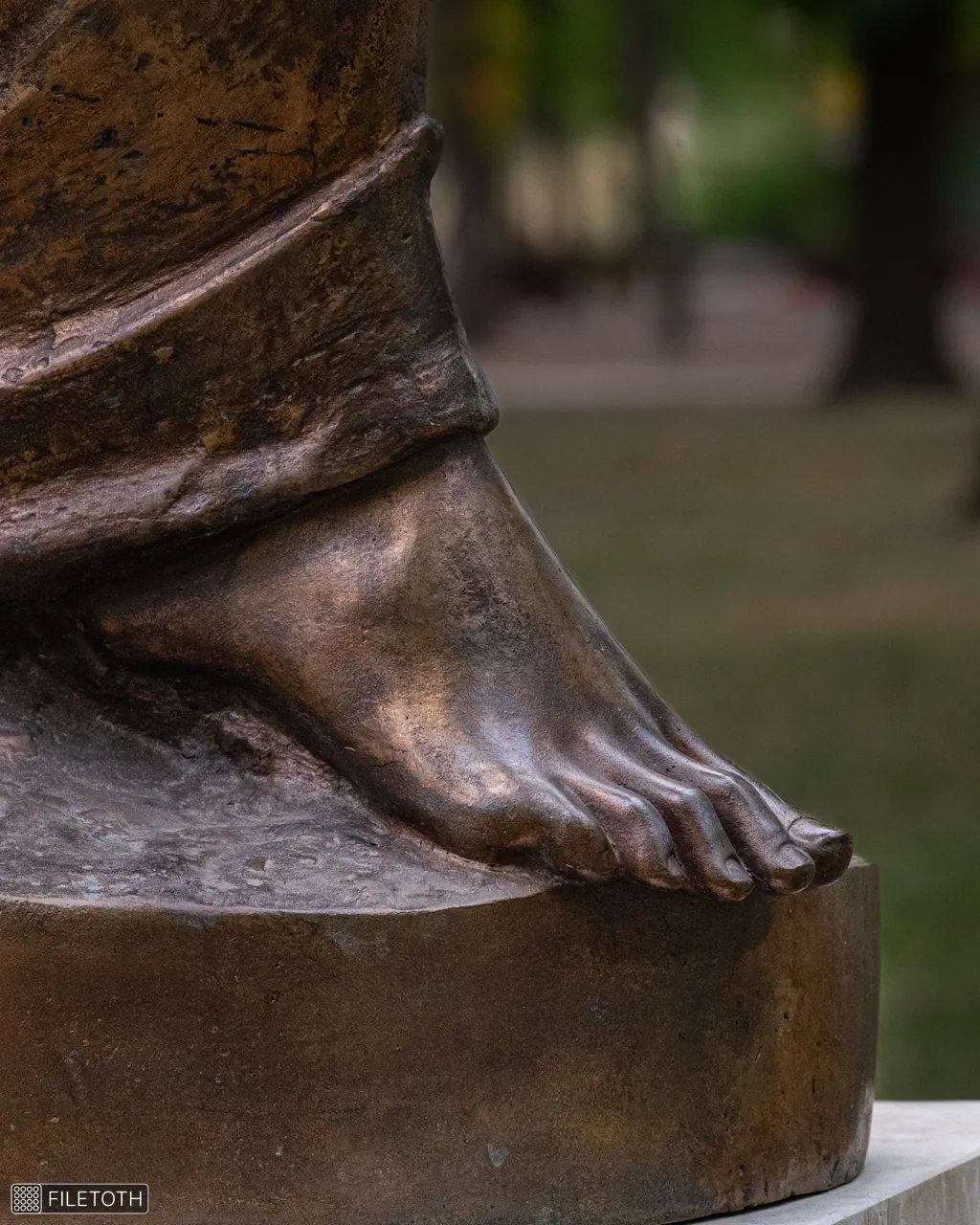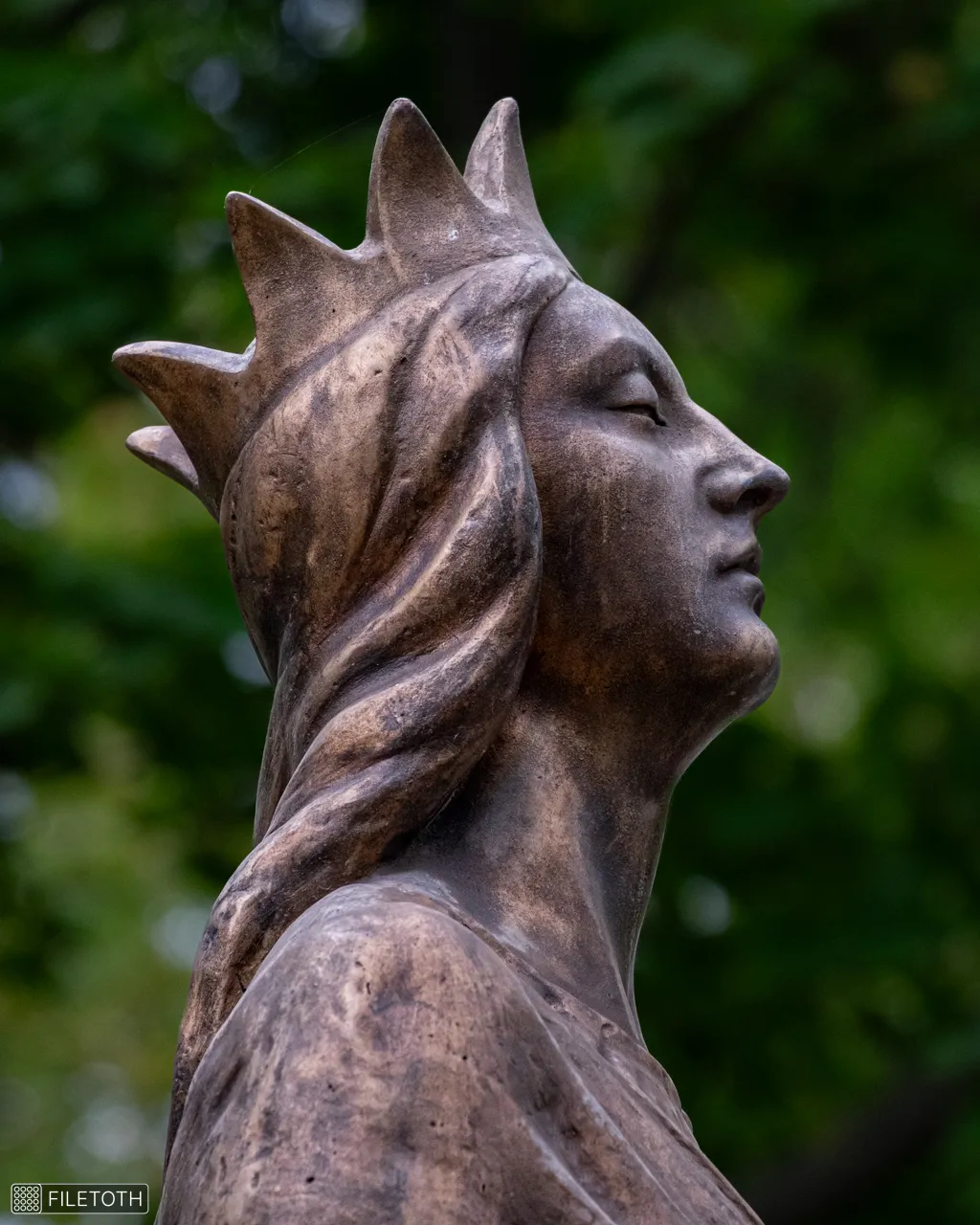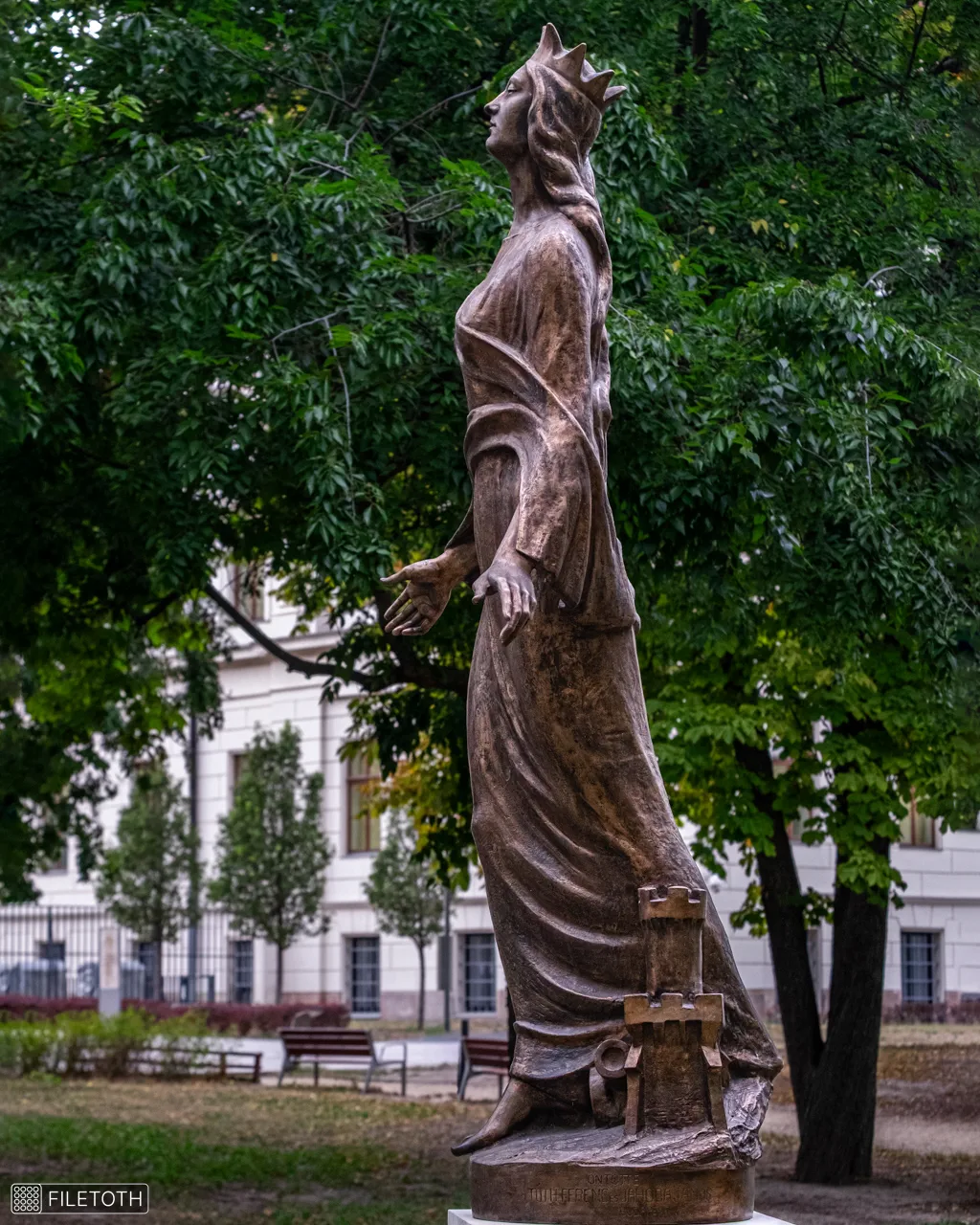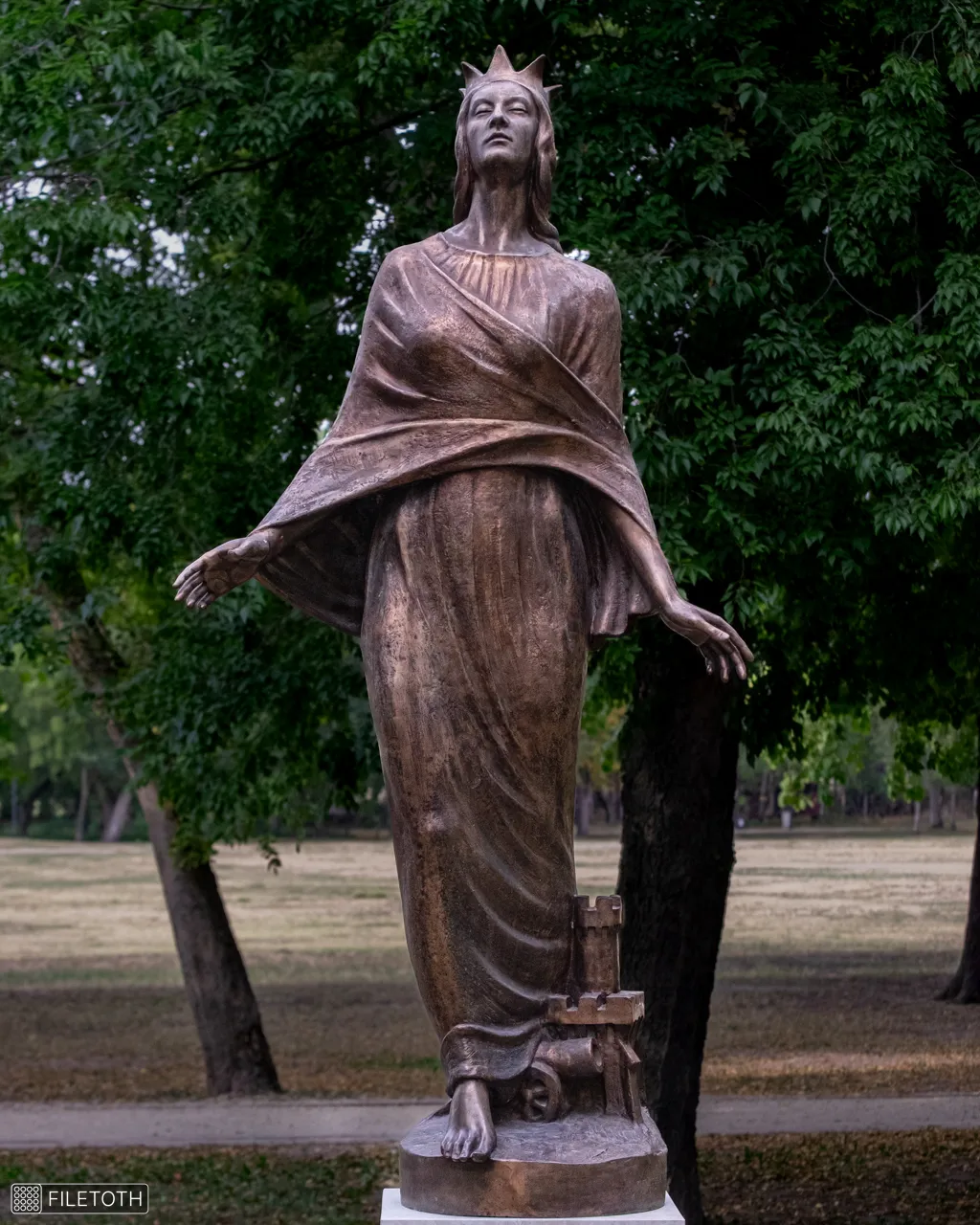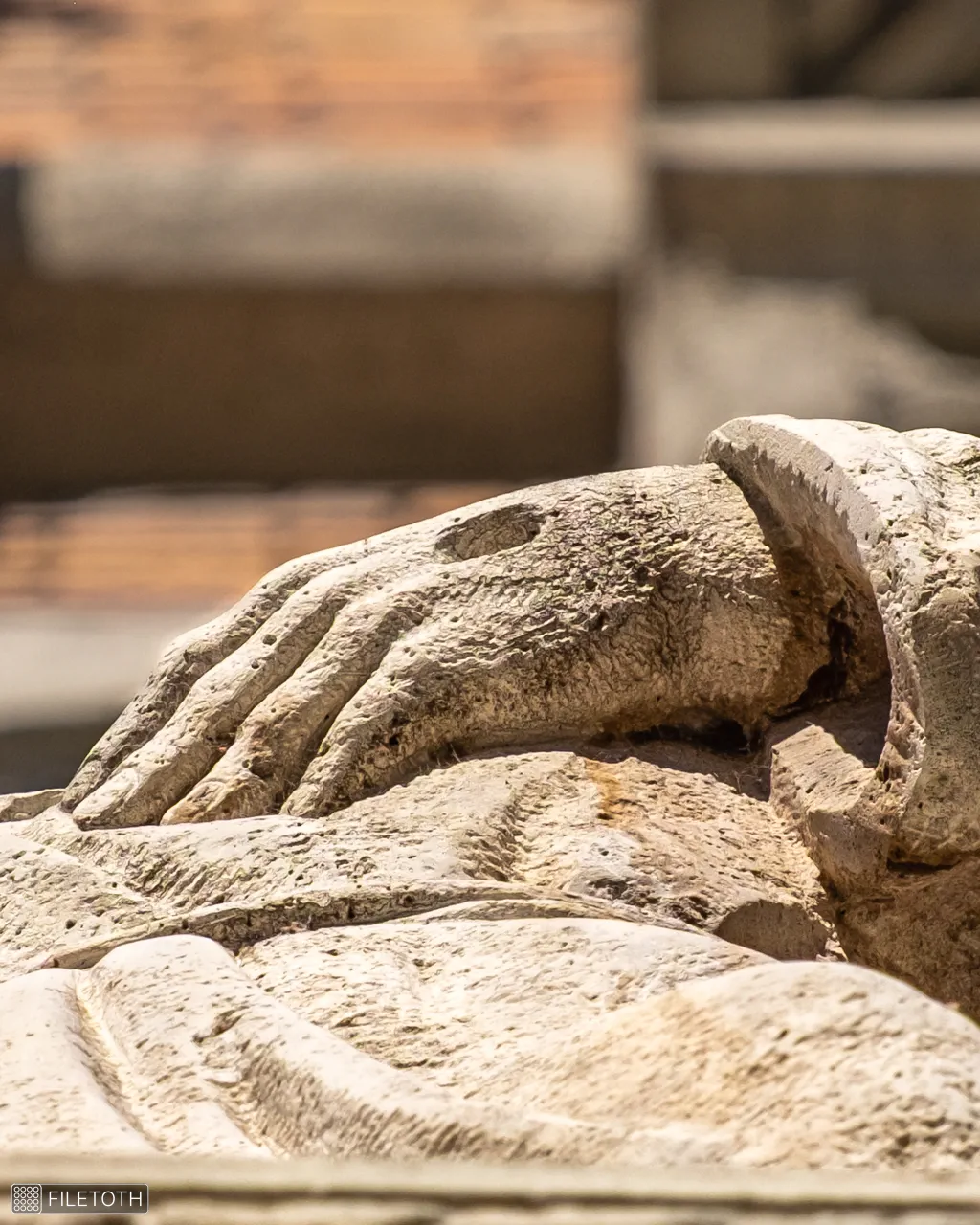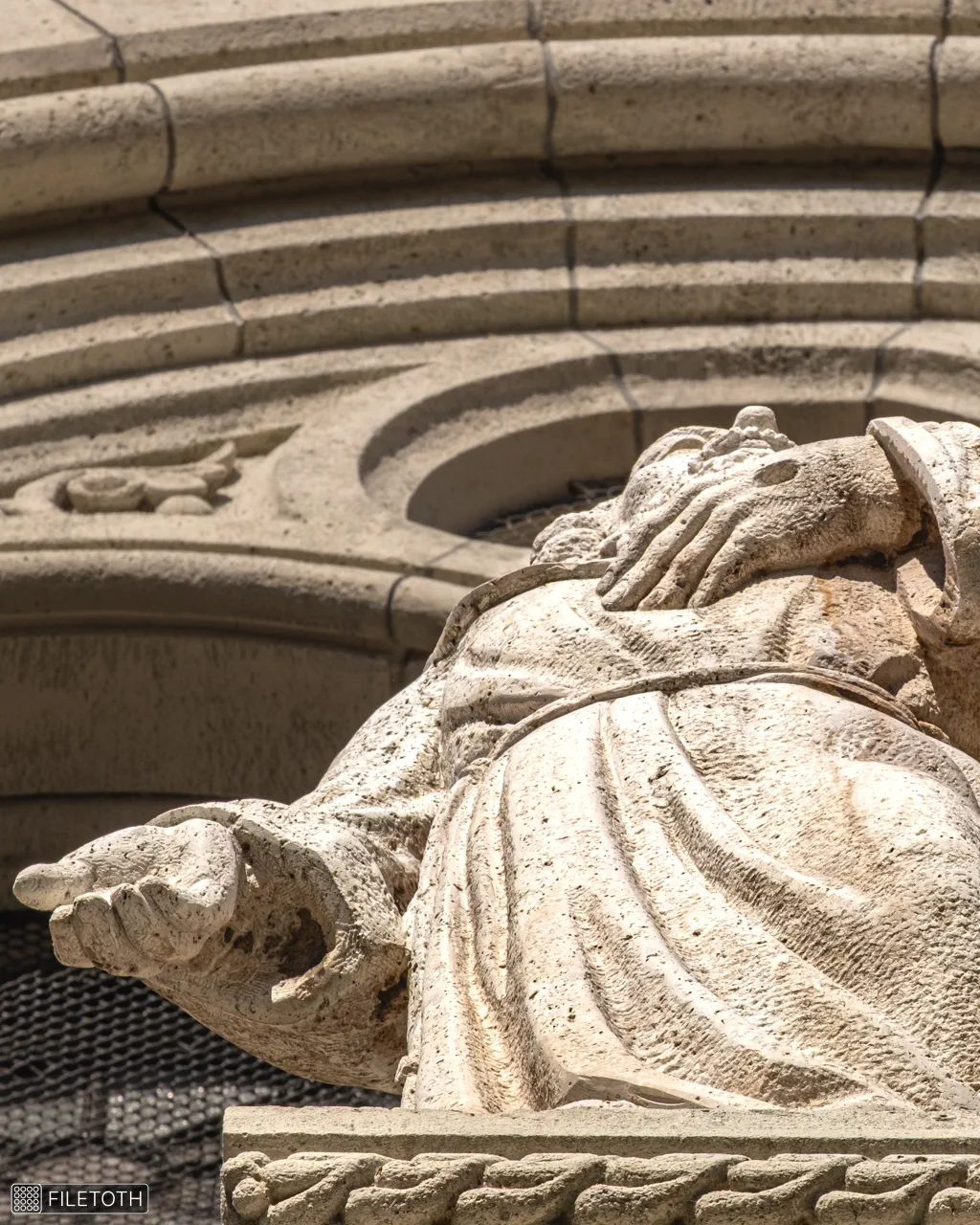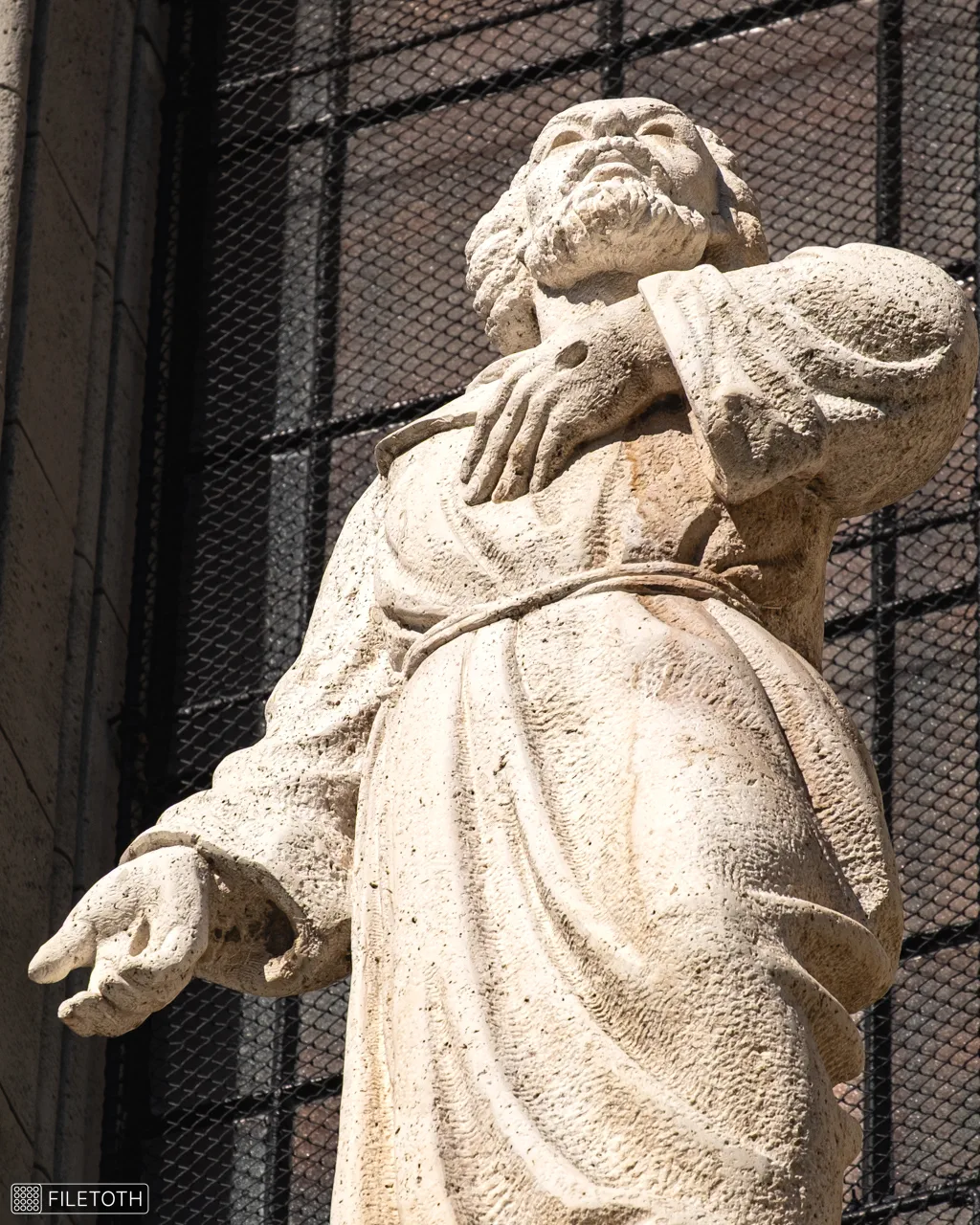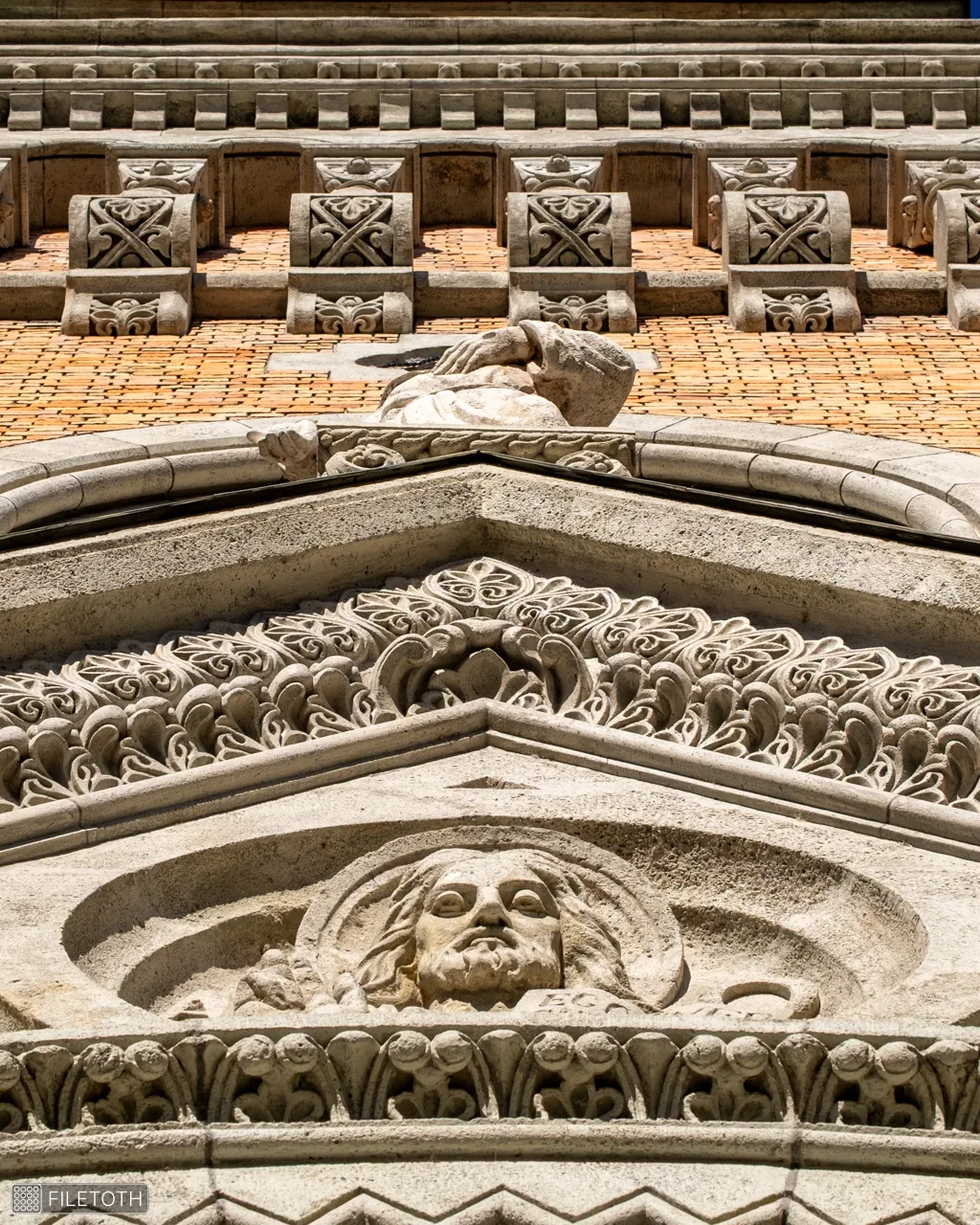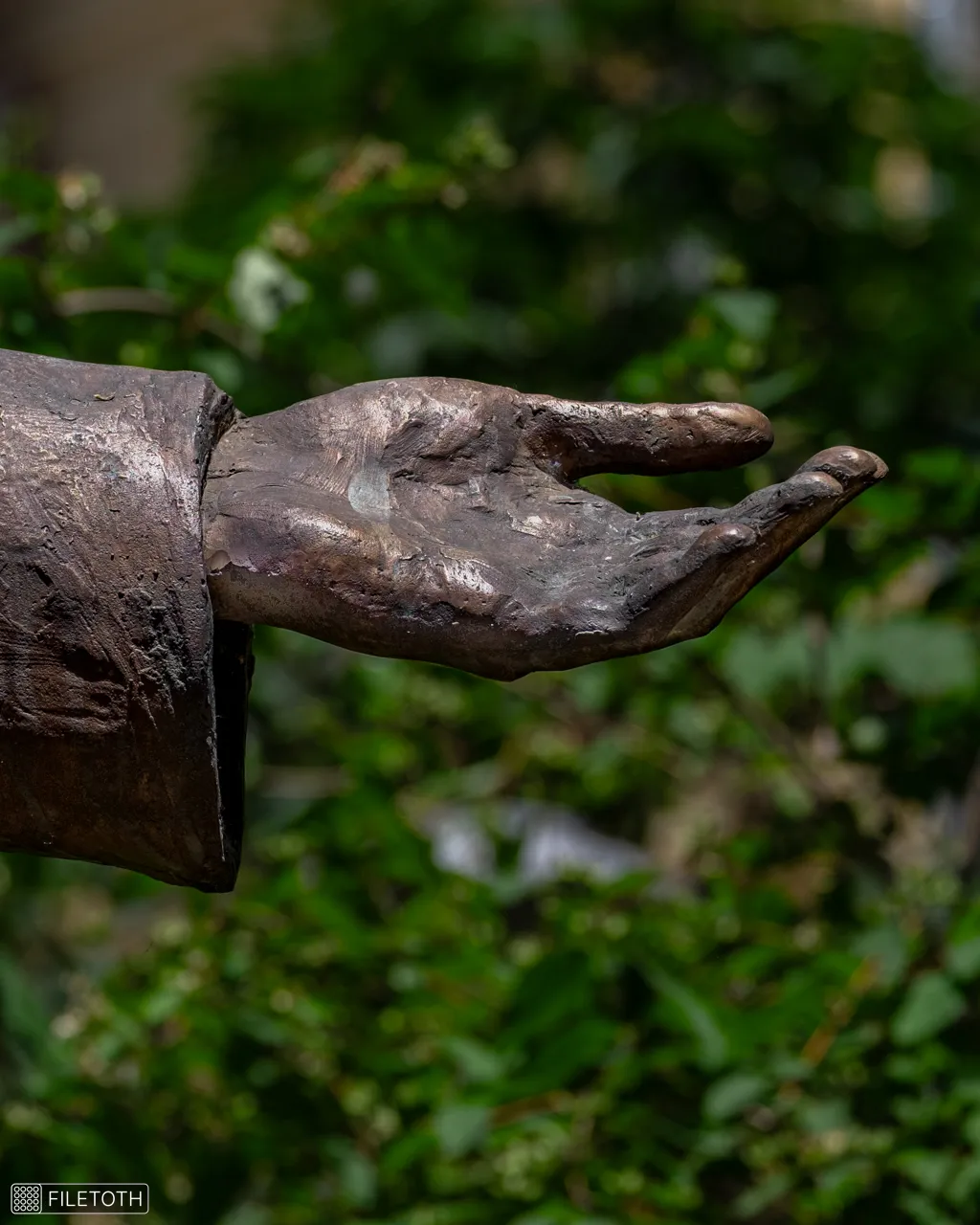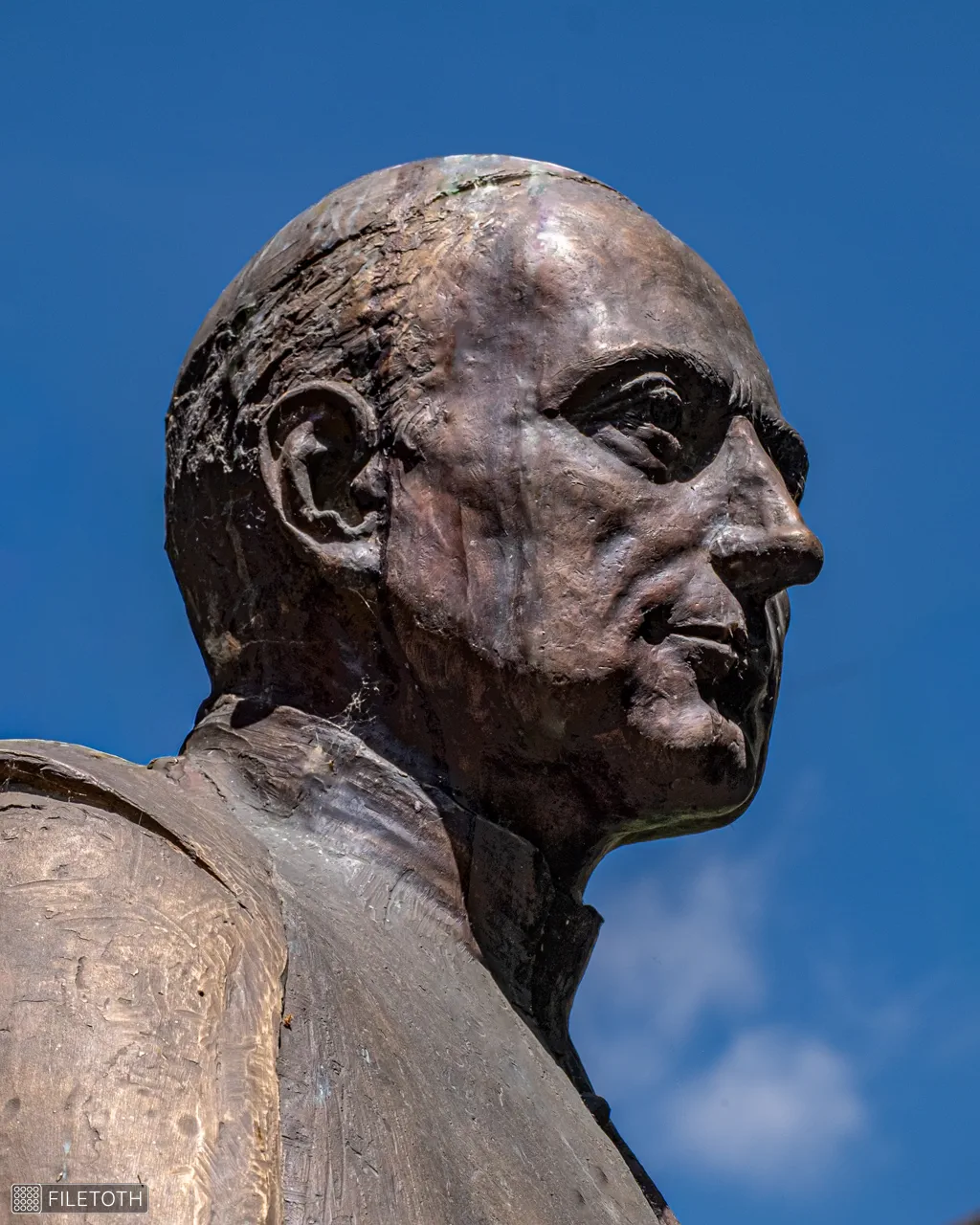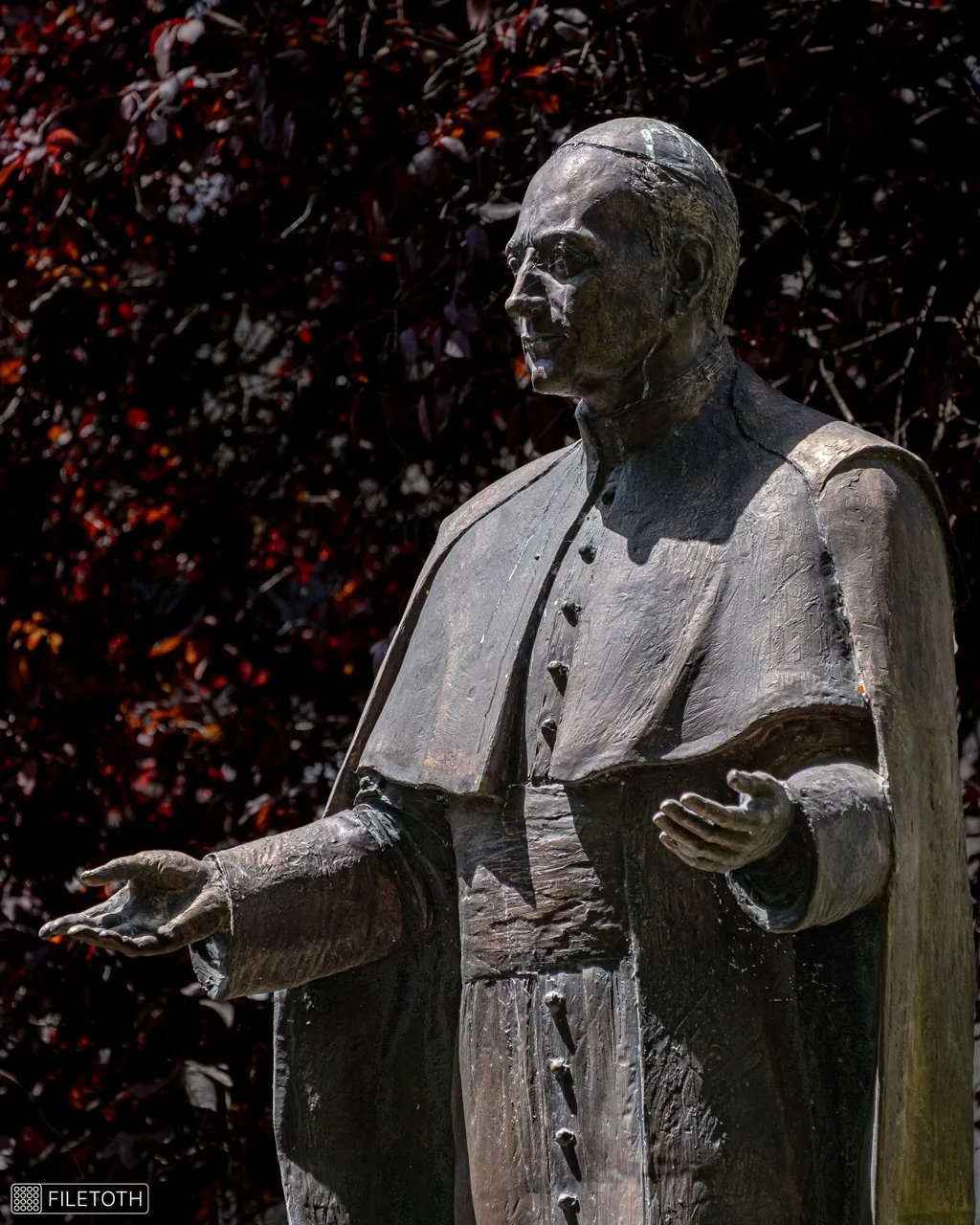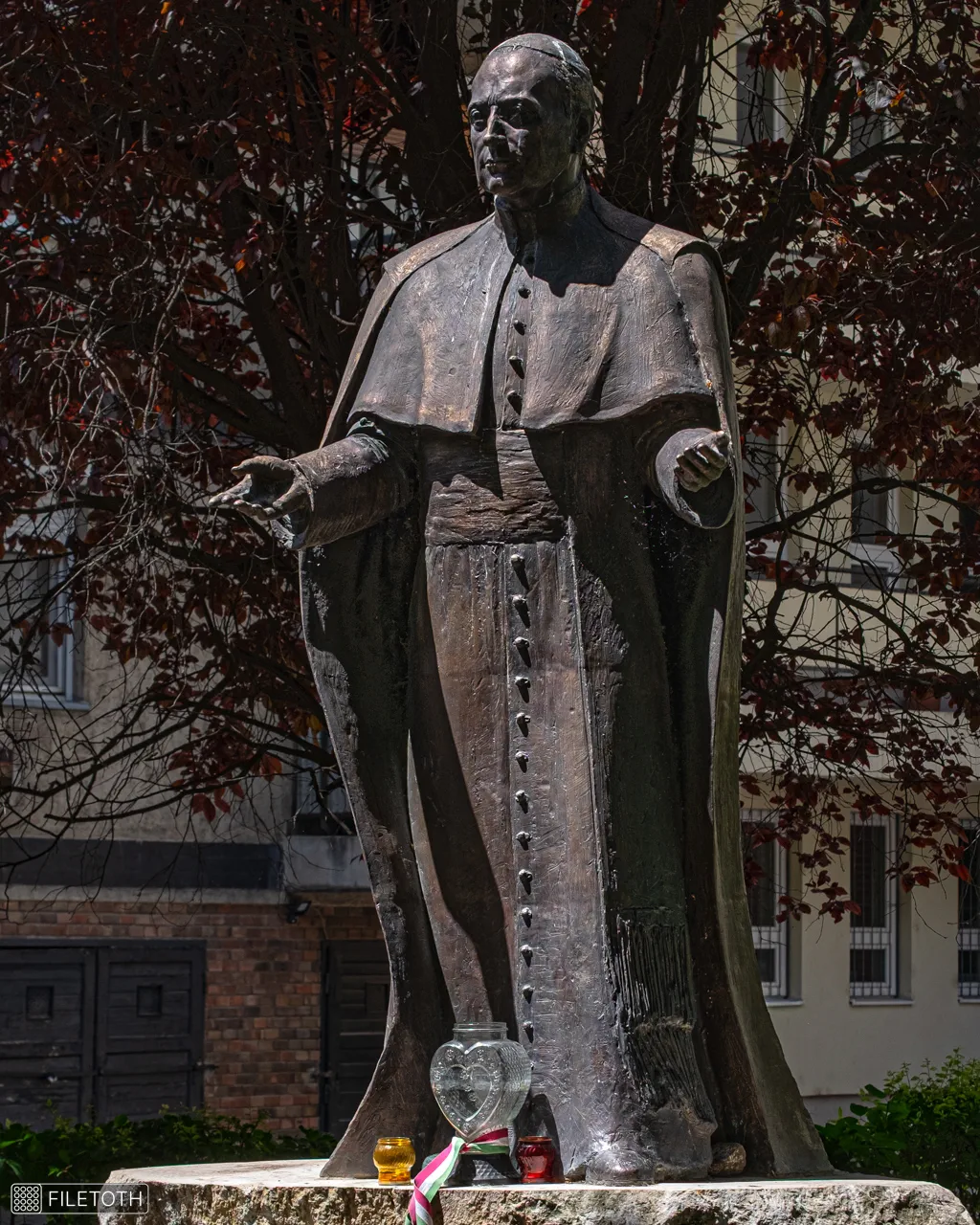
Hands dedicated to a cause.

DEVOTION

Faith, service, and sacrifice — gestures shaped by belief and commitment.

Hands, gestures and statues reflecting faith, conviction, service and dedication to causes greater than the individual.

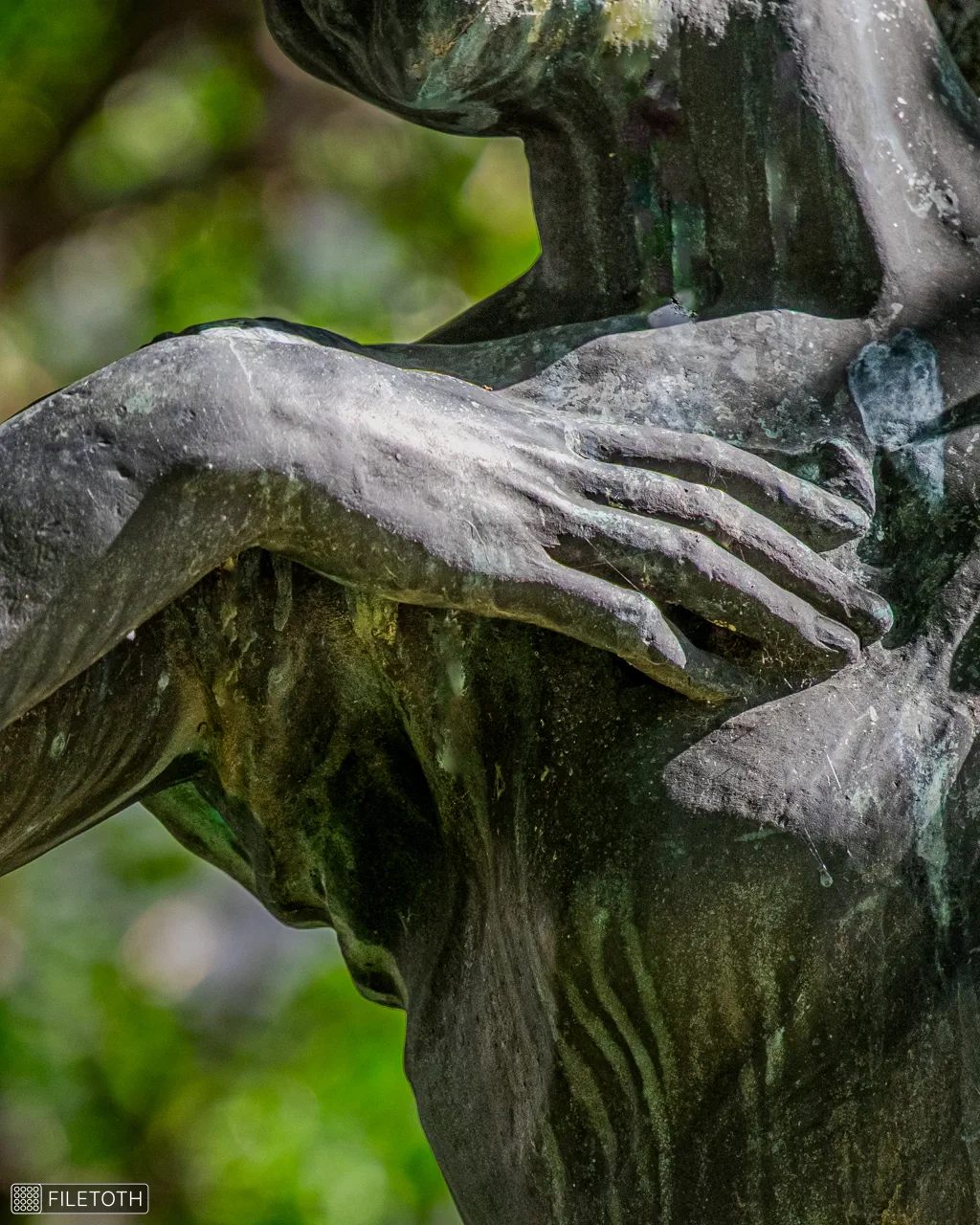
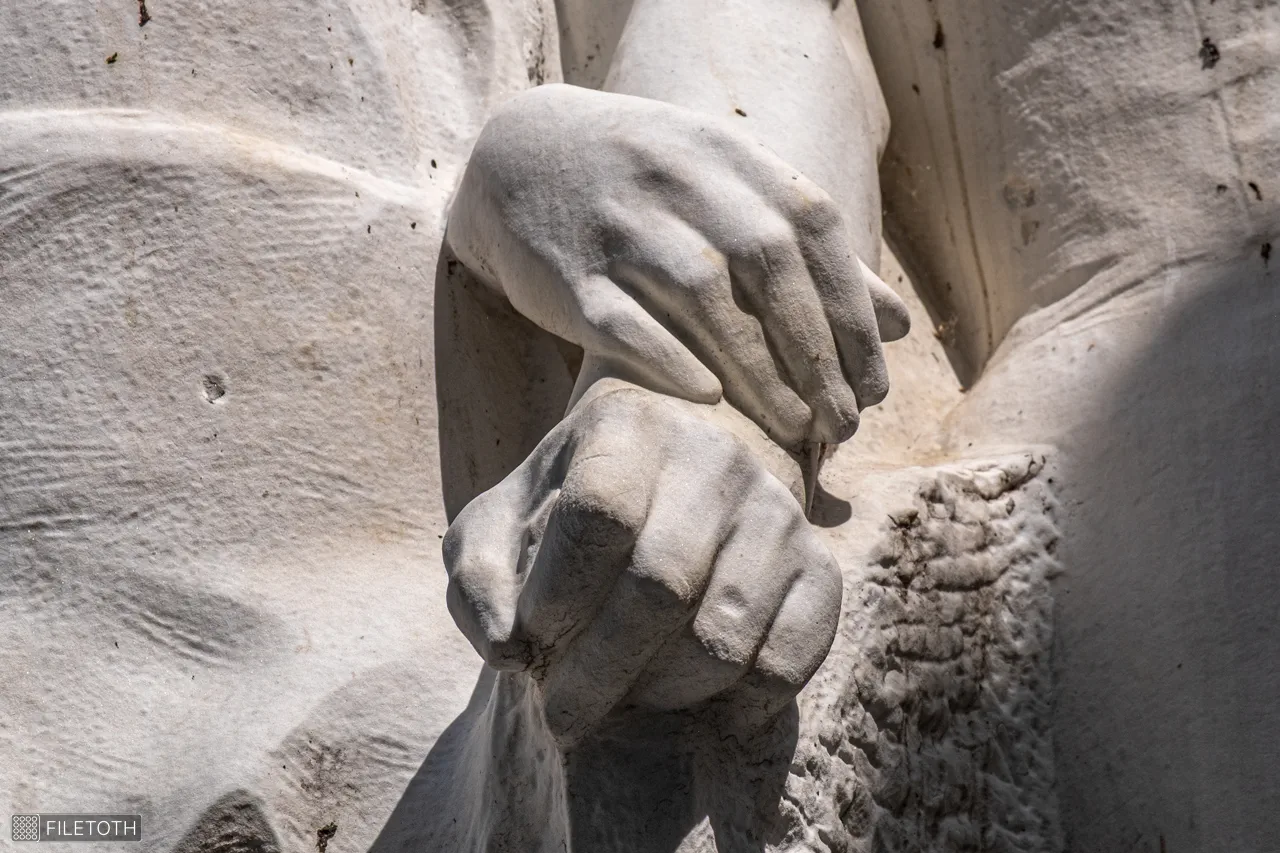
The Hand of Belonging

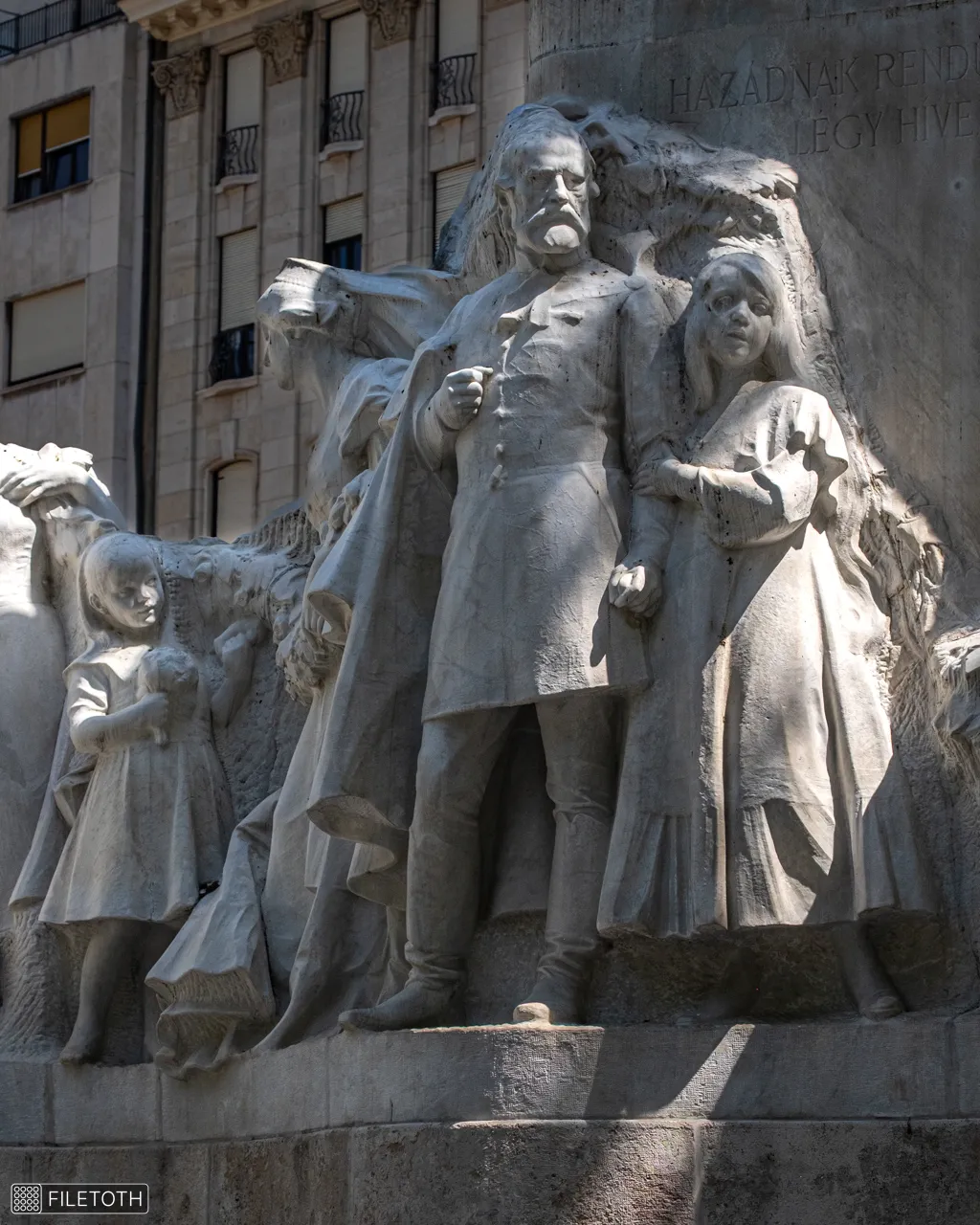
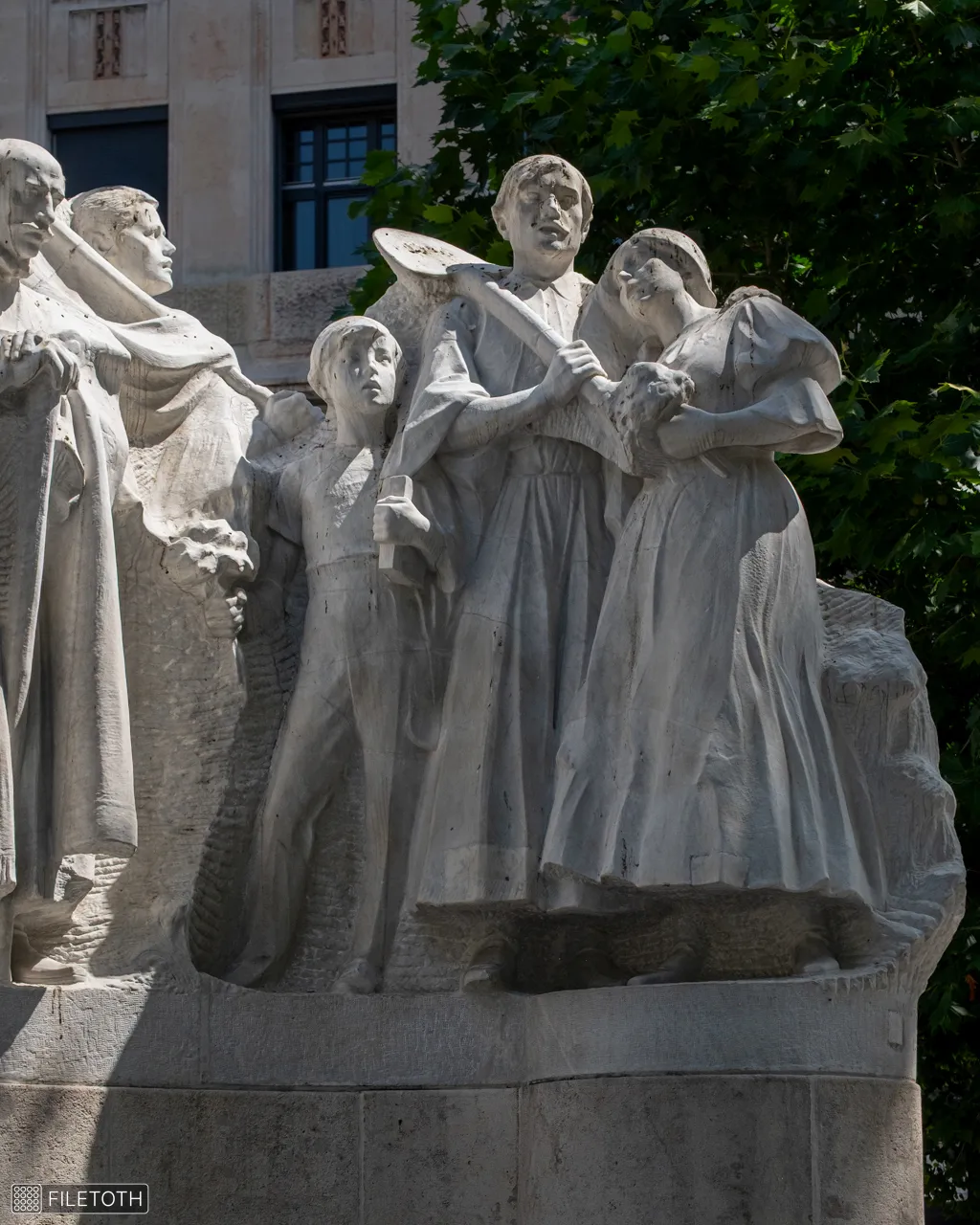
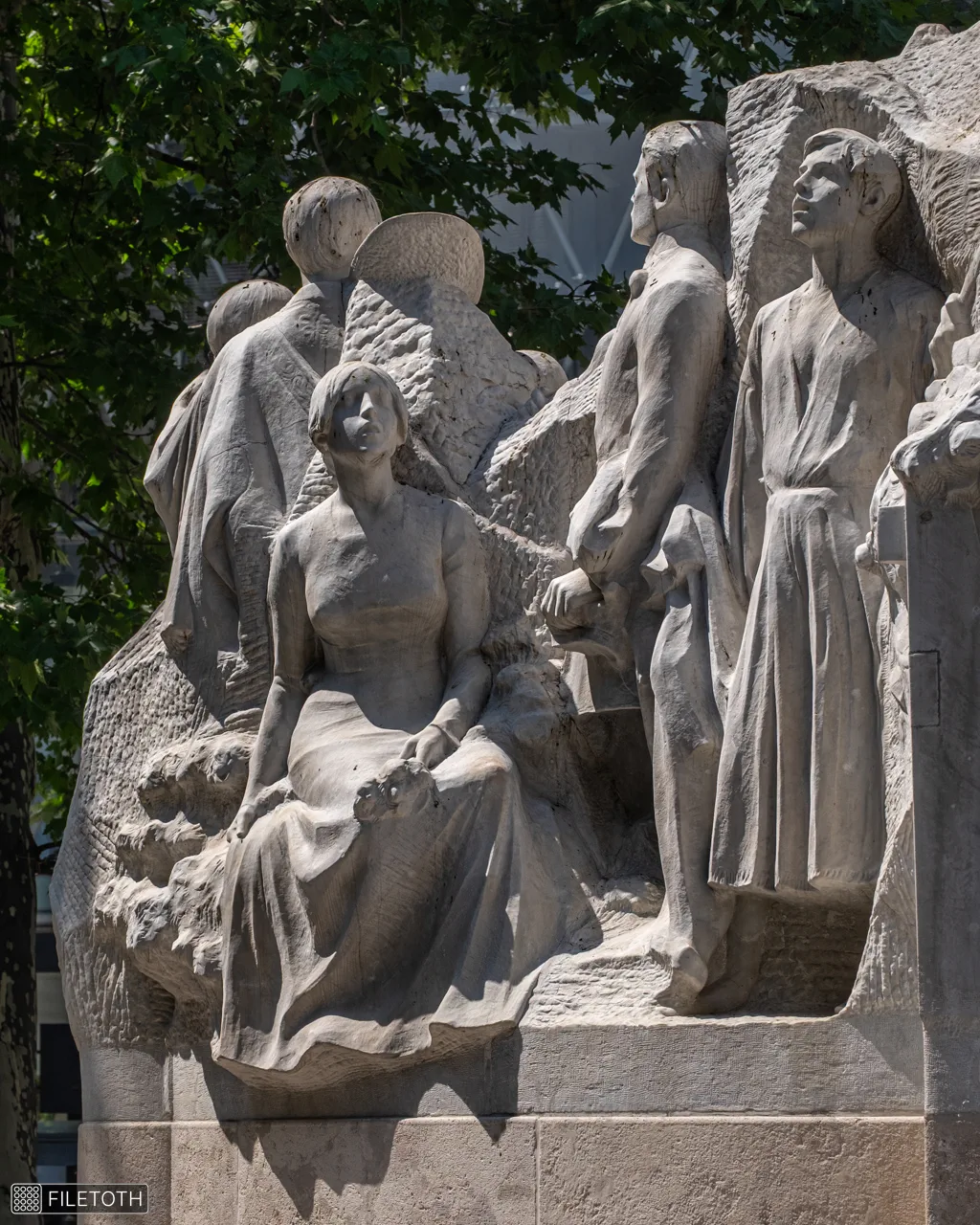
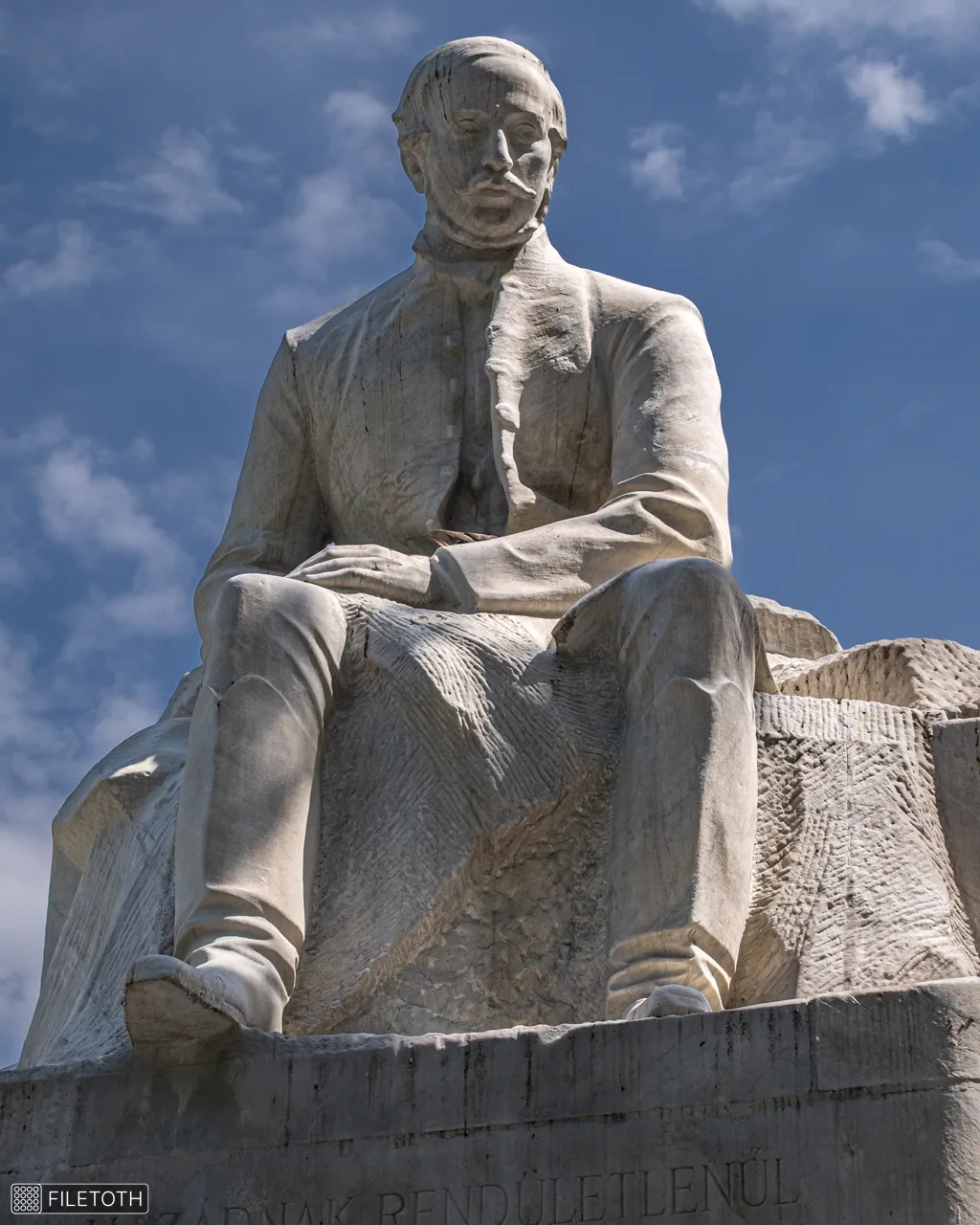
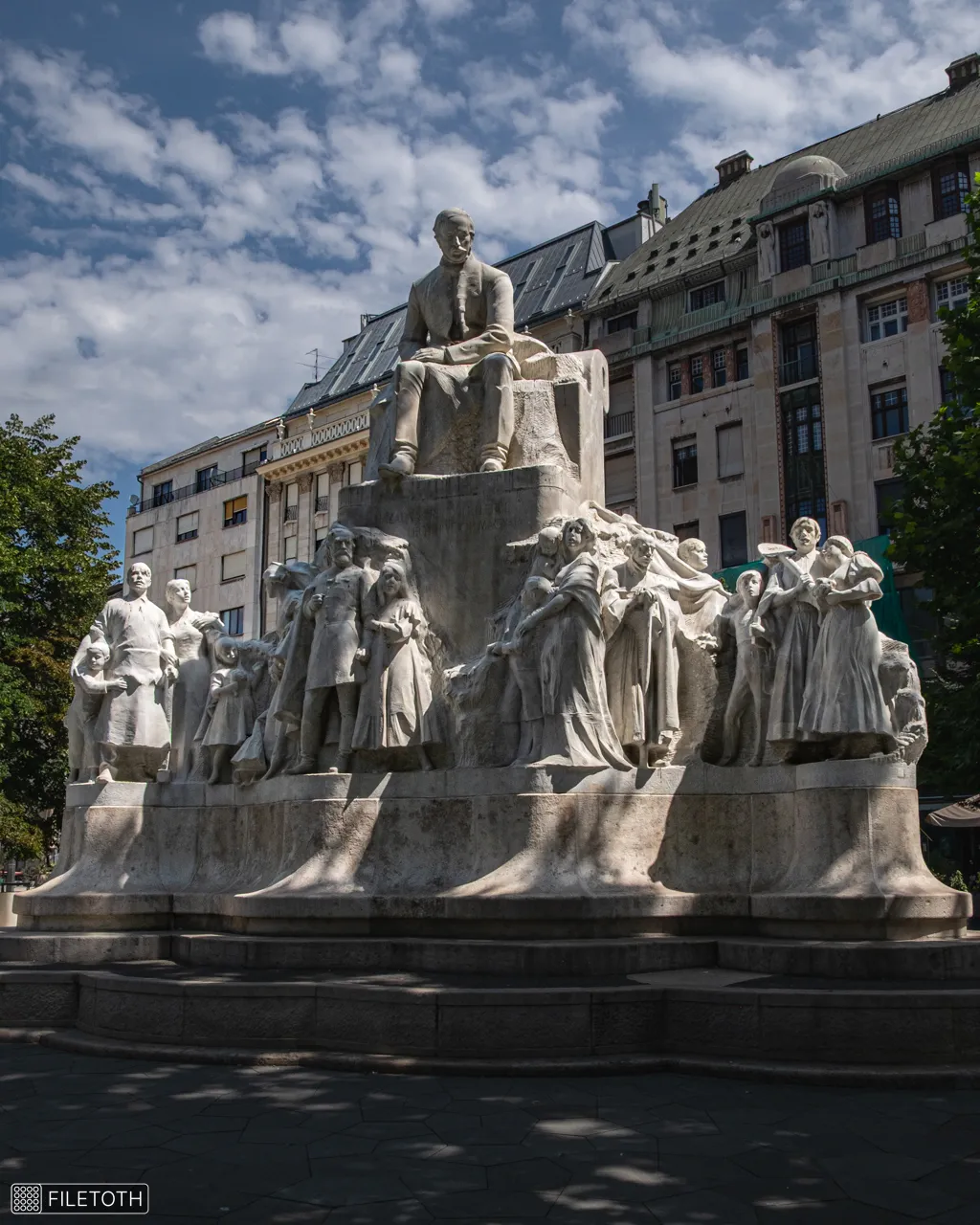
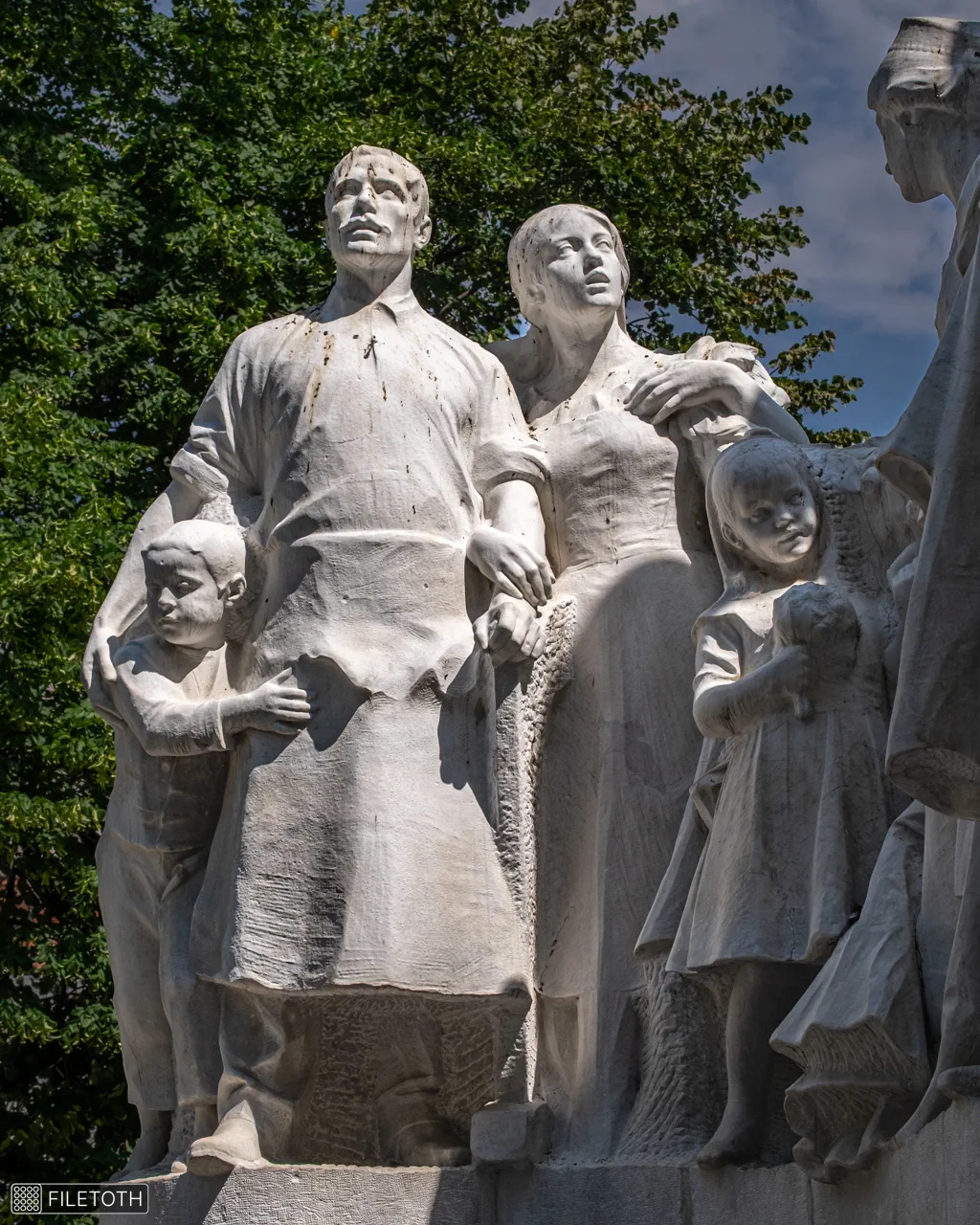
Mihály Vörösmarty Memorial

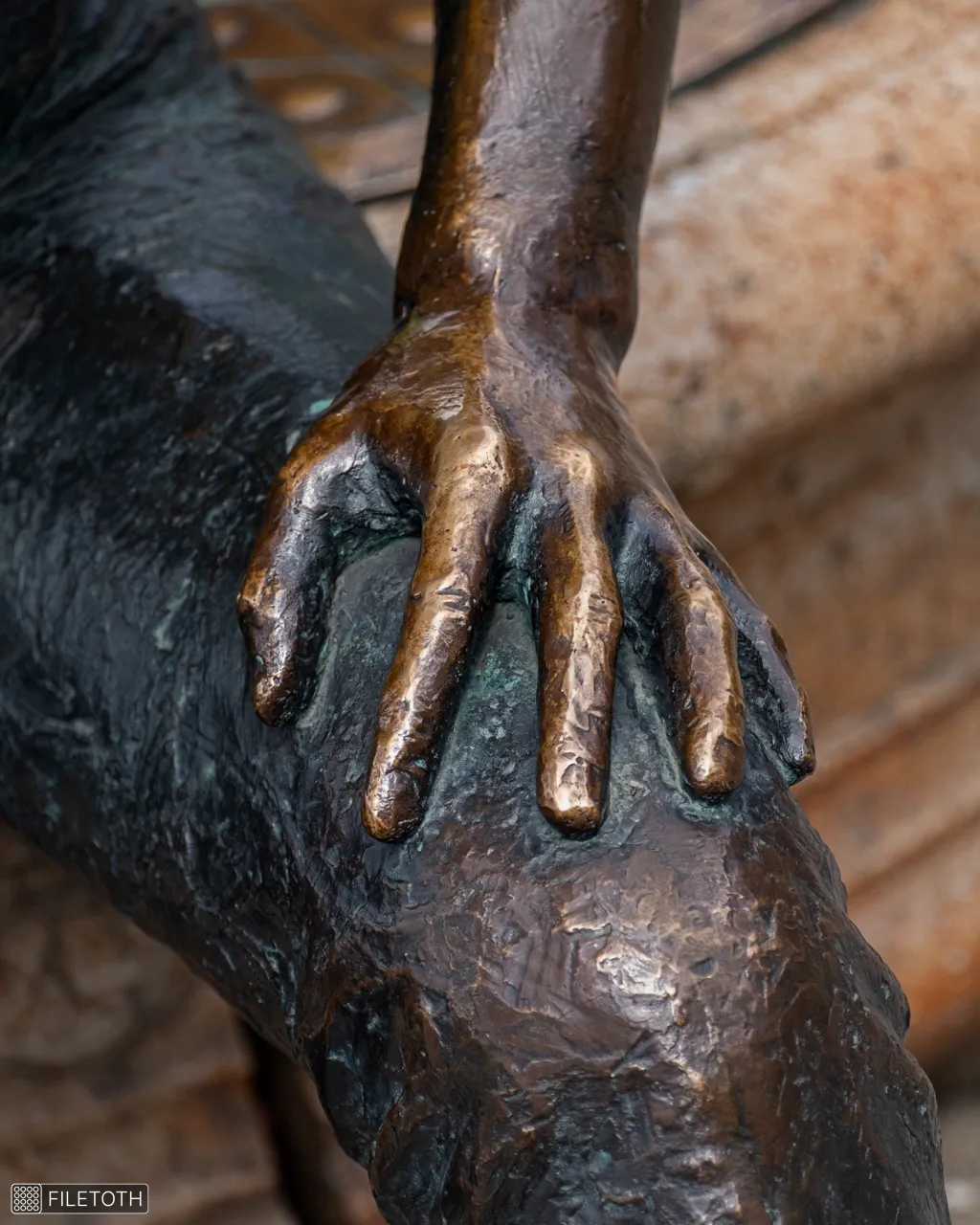
Close-up of the worker's and his wife's resting hands.

Historical figure and era

Mihály Vörösmarty (1800–1855) was one of Hungary's greatest Romantic poets and the author of *Szózat* ("Appeal"), a patriotic poem that became one of the nation's defining literary works. His poetry gave voice to ideas of national identity, shared responsibility, and loyalty to one's homeland, leaving a lasting influence on Hungarian culture.

Creation and historical context

Unveiled on May 24, 1908, the memorial by Ede Kallós and Ede Telcs places the seated figure of Vörösmarty above a gathering of ordinary people representing every layer of Hungarian society. Workers, farmers, children, students, families, and elders appear united as though listening to the words of *Szózat*. Among them, one quiet gesture becomes the emotional heart of the monument: a worker lays down his hammer while his wife's hand gently rests upon his own. Rather than celebrating a poet alone, the memorial portrays poetry as a force capable of bringing an entire community together.

Memorial by Ede Kallós and Ede Telcs, unveiled May 24, 1908. [ref.]
The Hand of Awareness

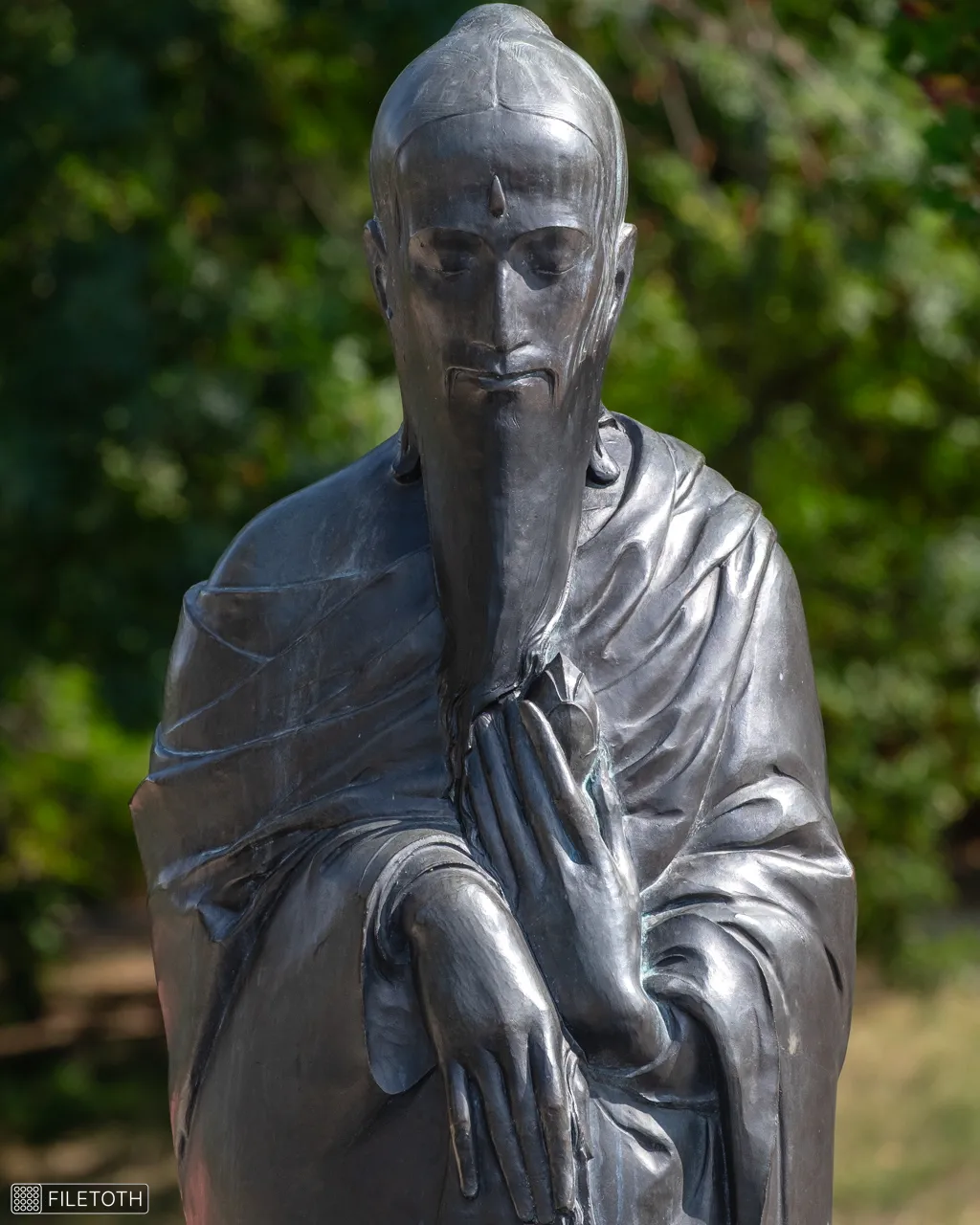
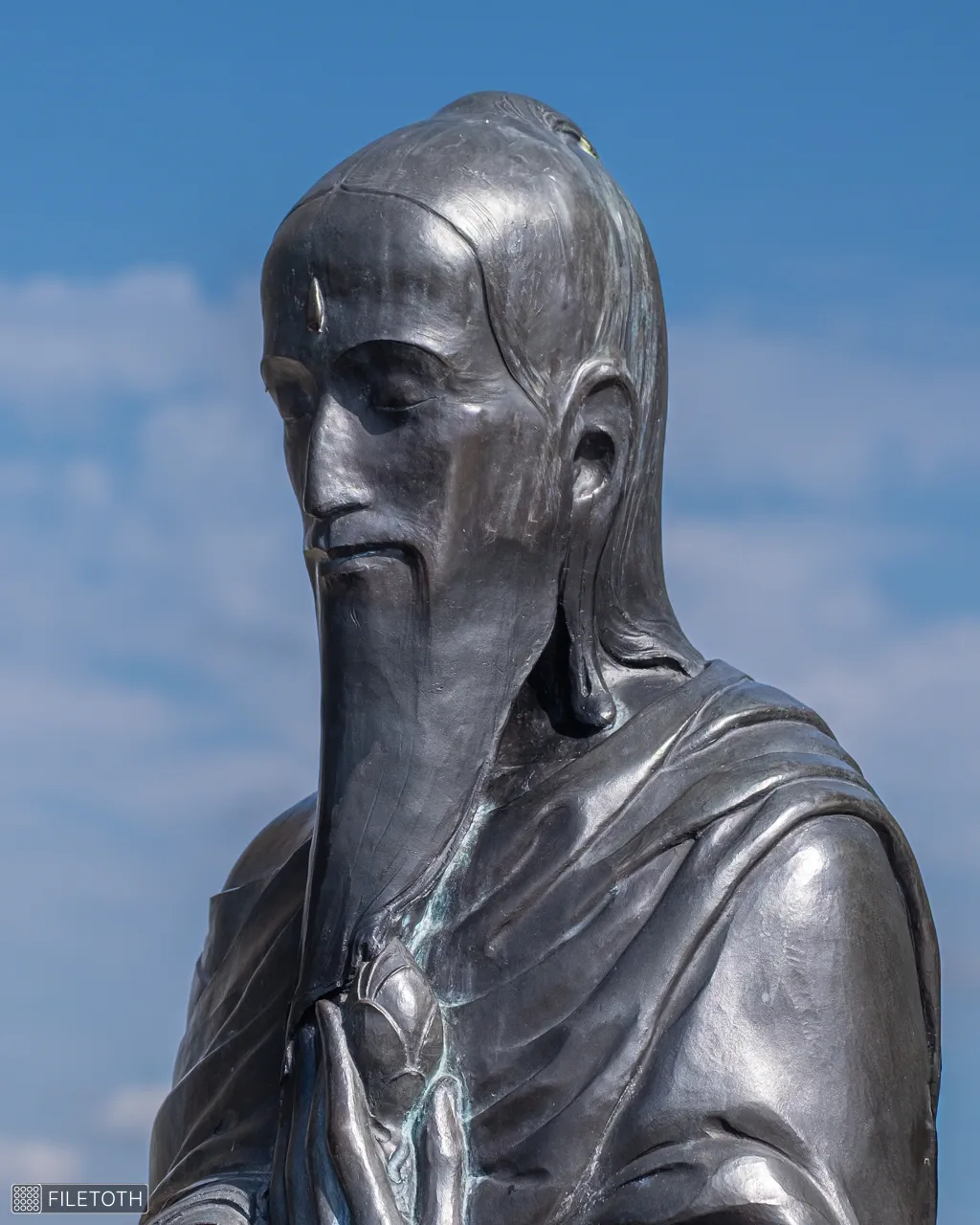
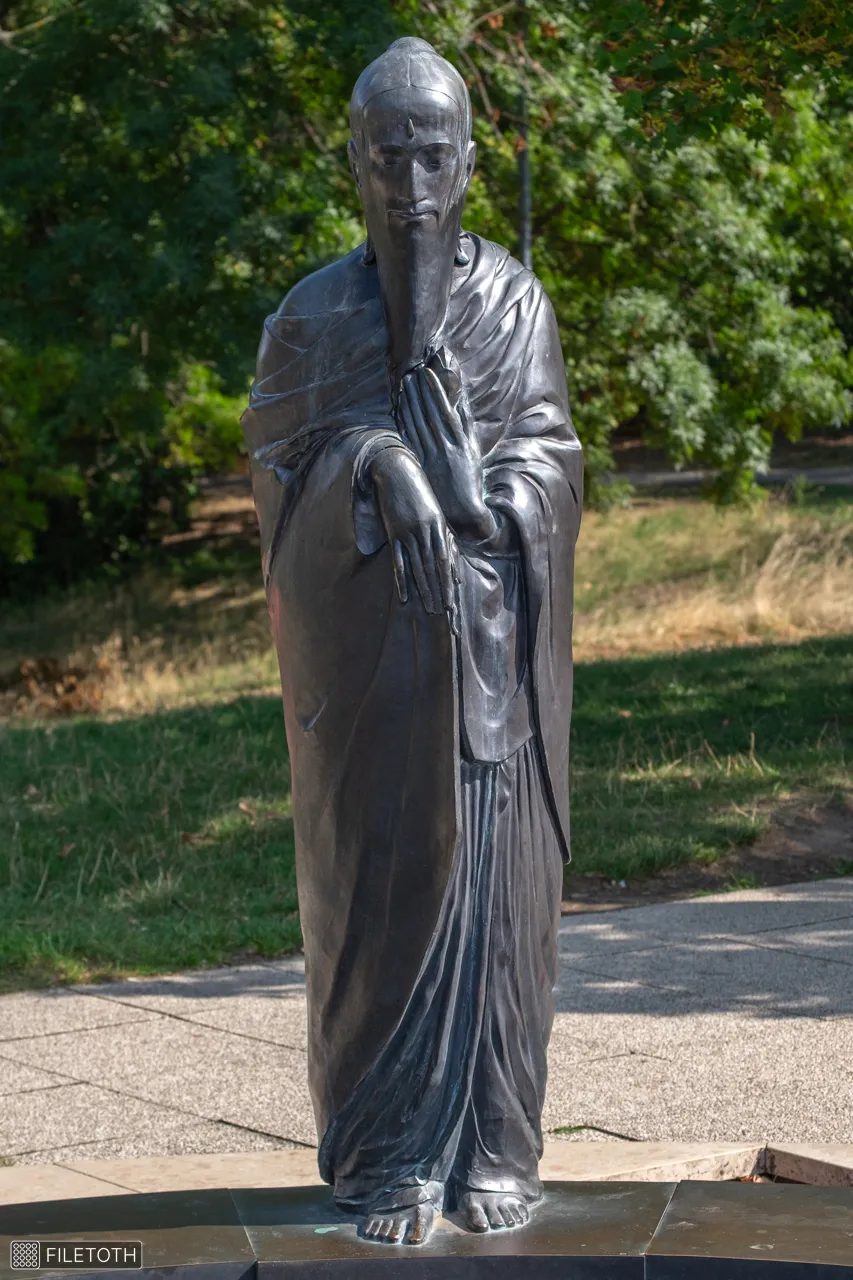
Buddha Statue

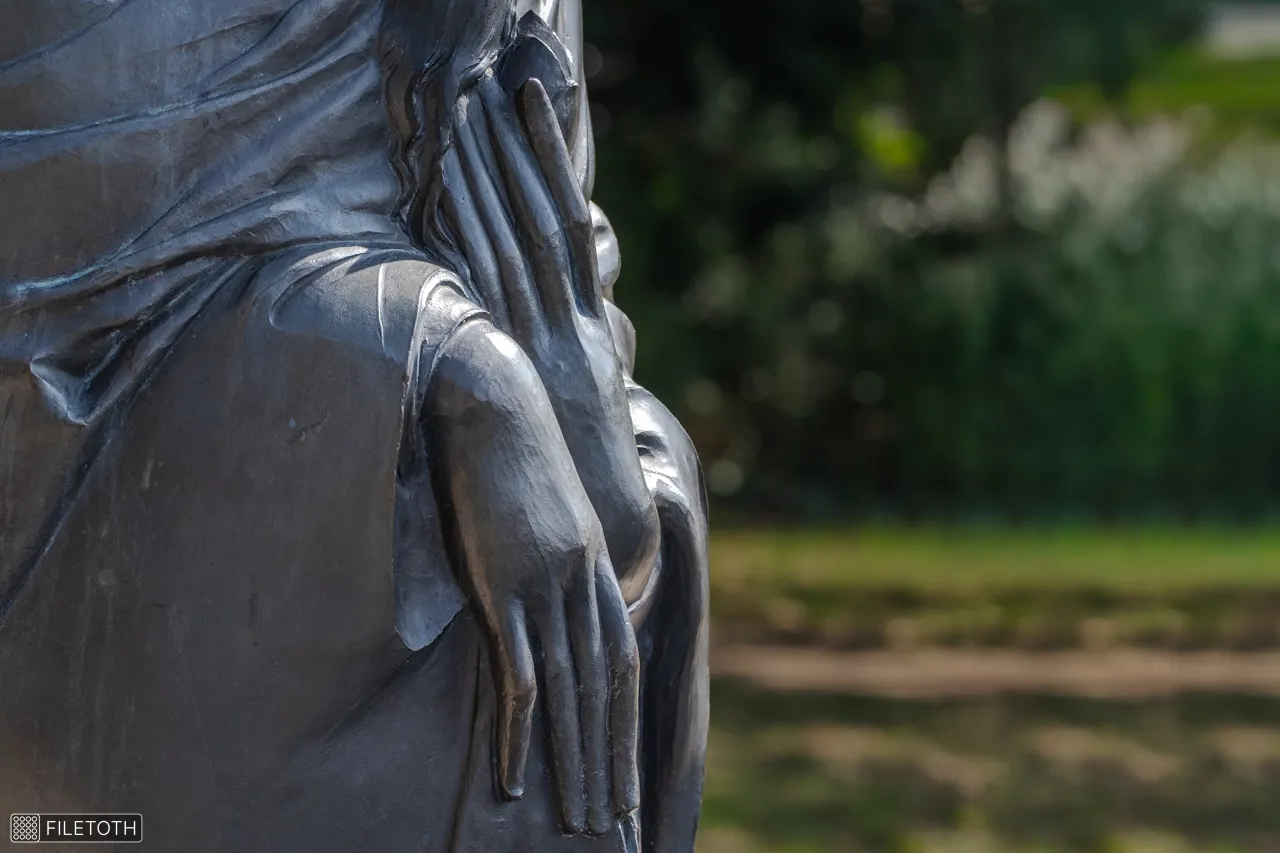
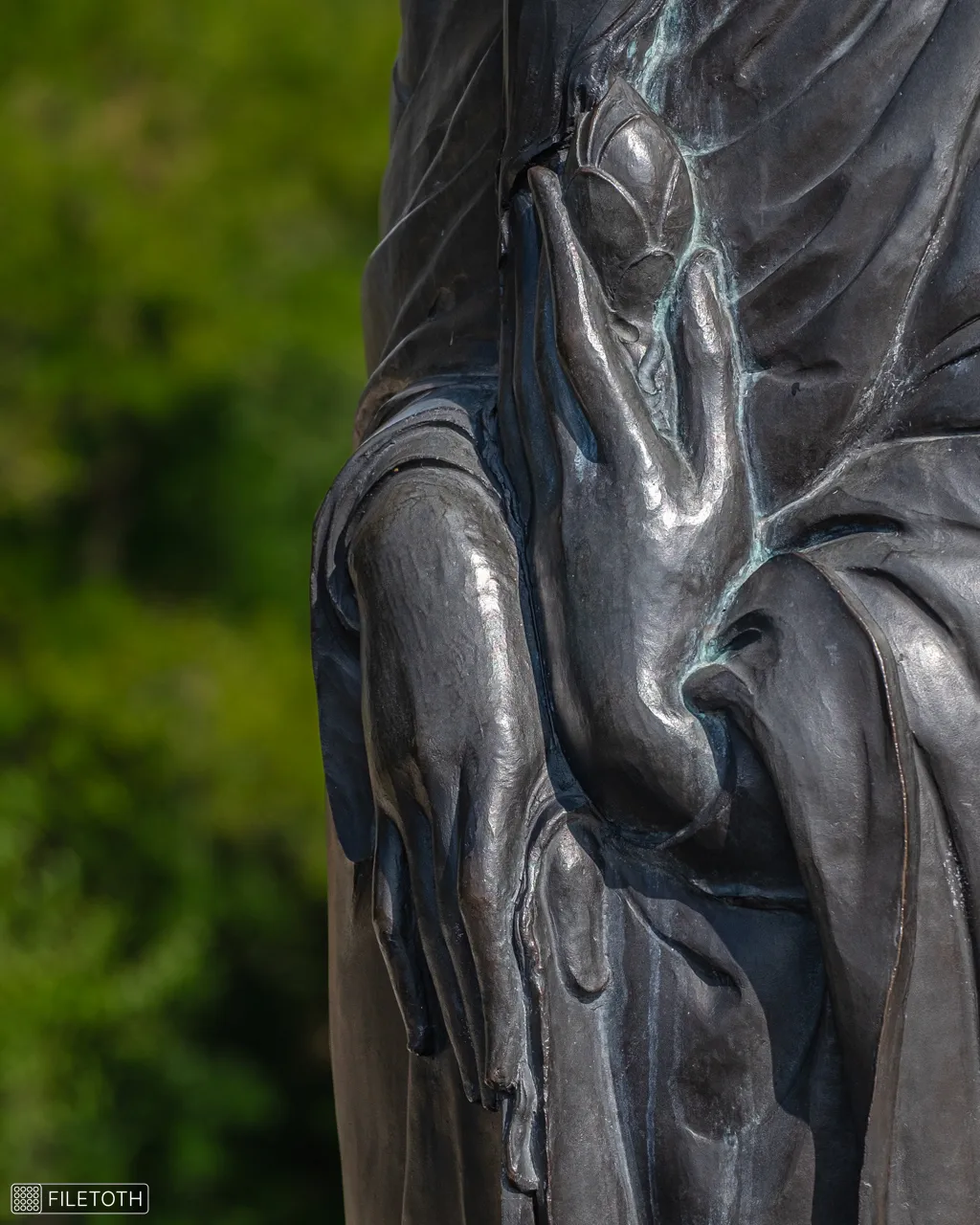
Close-up of the Buddha statue's hands.

Historical figure and era

The Buddha (5th–4th century BCE) embodies wisdom, compassion, and inner peace, offering a path from suffering to awakening. Across many Buddhist traditions, the lotus—rooted in mud yet blooming above the water—symbolizes the journey from confusion to clarity, reminding viewers that insight may emerge from the difficulties of ordinary life.

Creation and historical context

Nándor Wagner's 2001 statue depicts the Buddha in a calm meditative posture, with the lotus flower forming a quiet focal point beside the seated figure. Installed at the turn of the millennium in Budapest's Garden of Philosophy, the work introduces an Eastern spiritual presence into the urban landscape while inviting quiet reflection amid everyday activity. Surrounded by representations of other influential religious and philosophical teachers, the sculpture contributes to a broader conversation about wisdom, dialogue, and peaceful coexistence.

Statue by Nándor Wagner, October 18, 2001. [ref.]

The Hand of Compassion

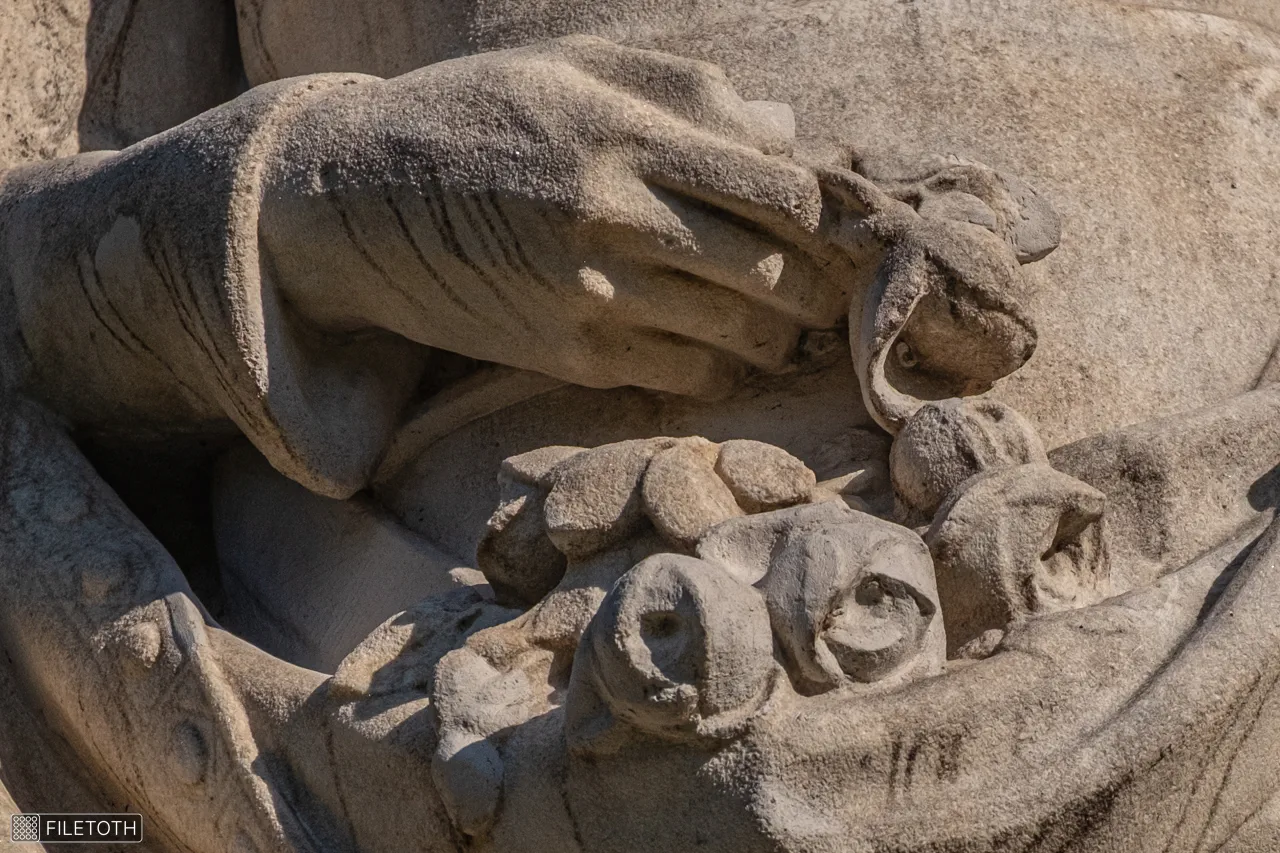
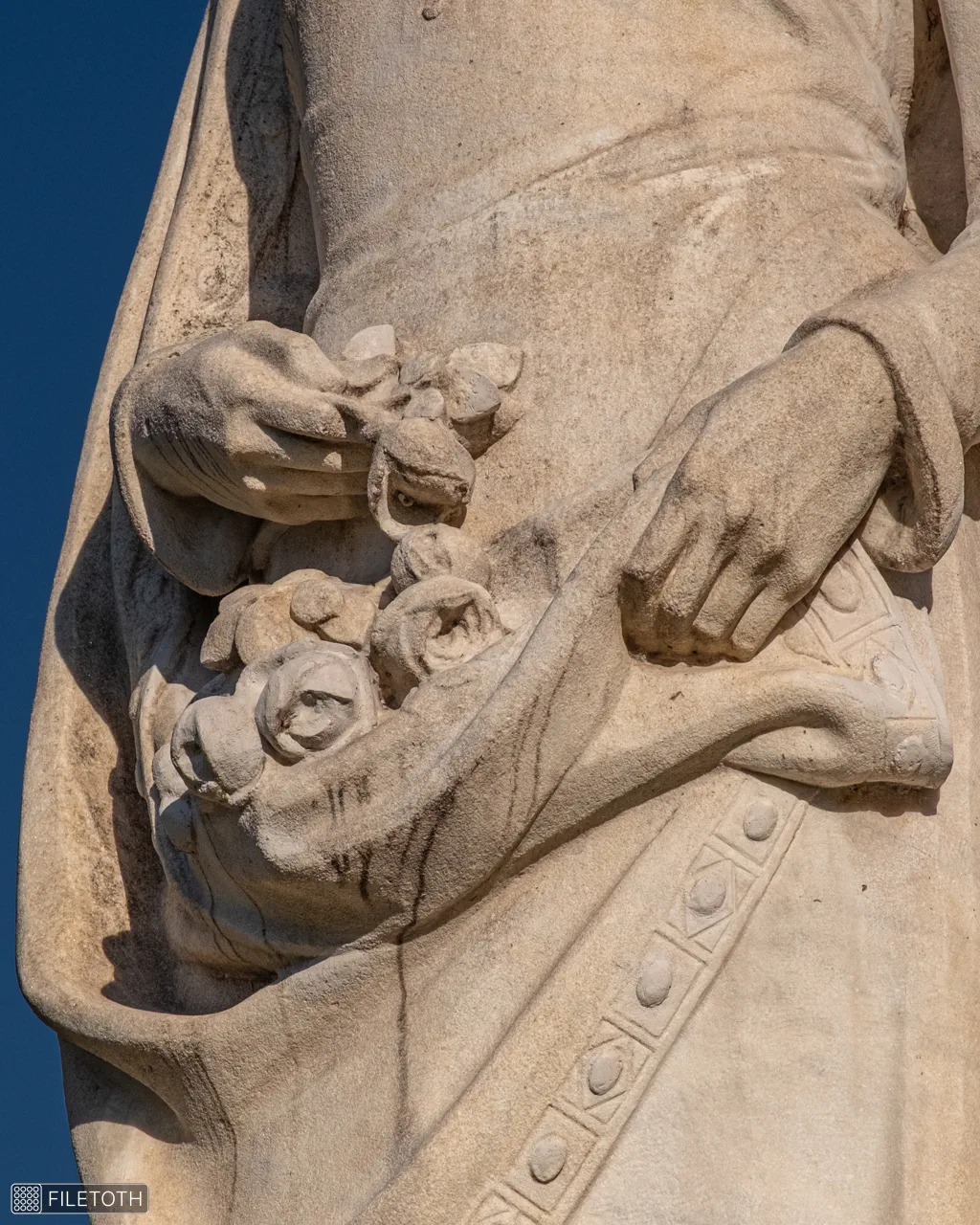
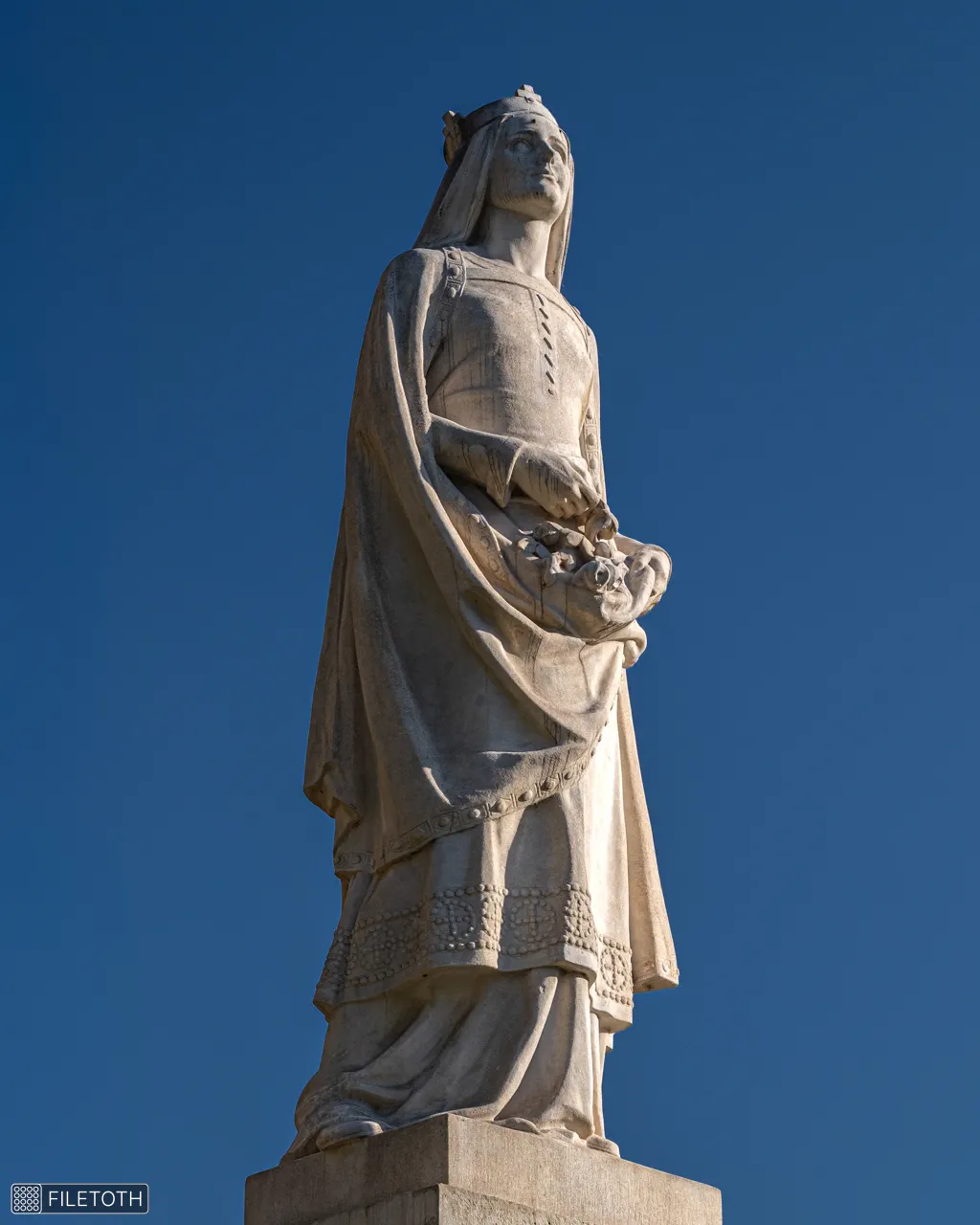
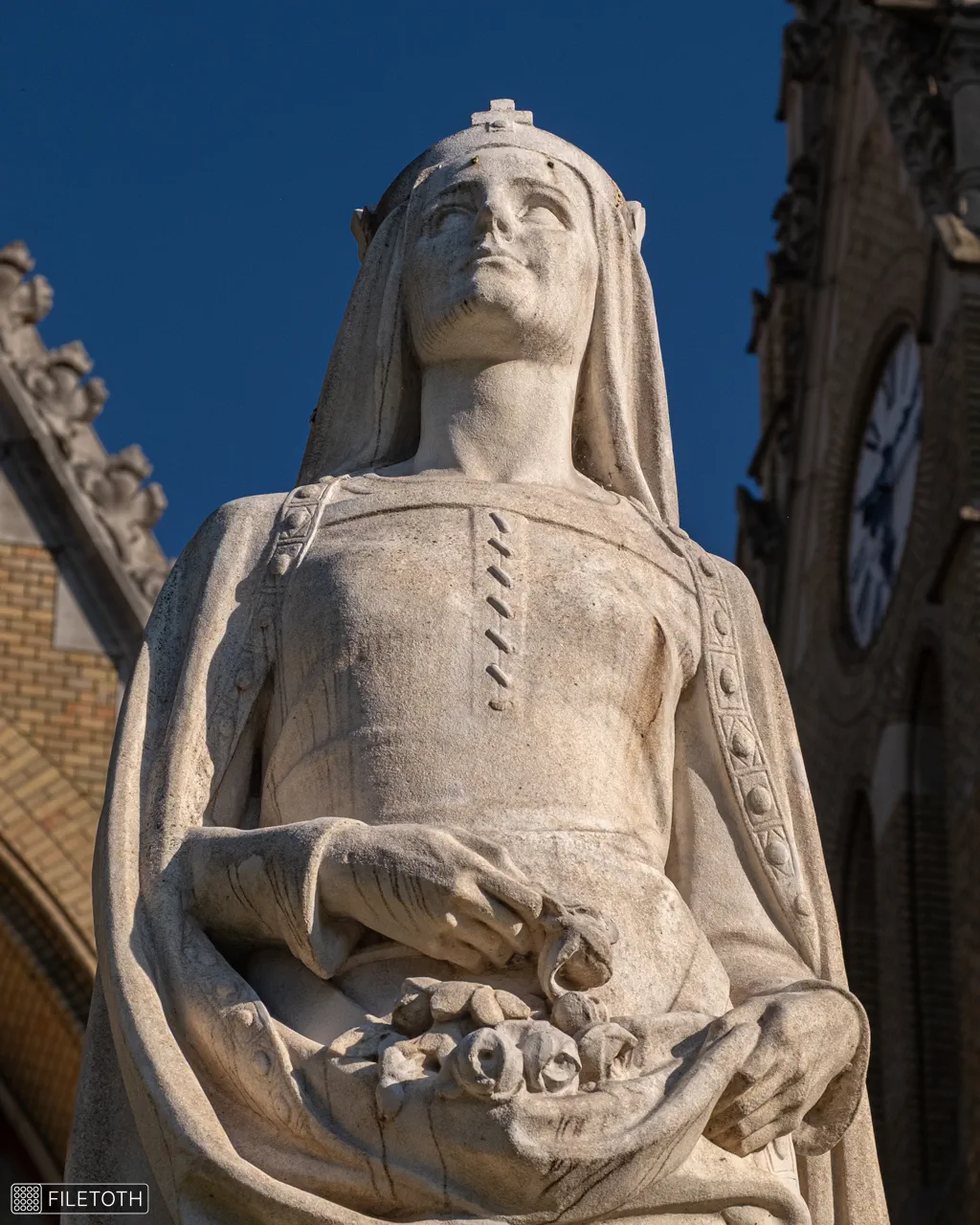
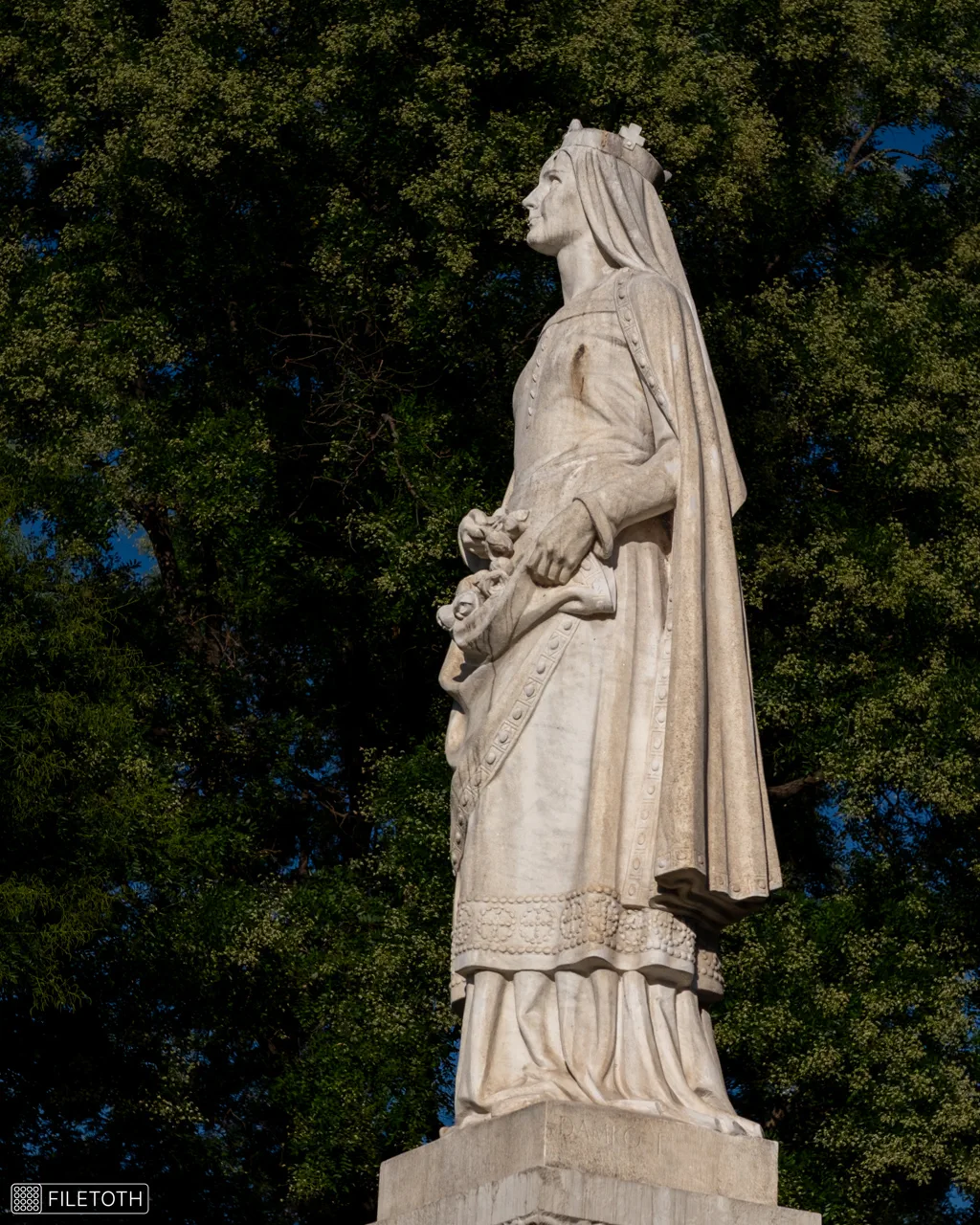
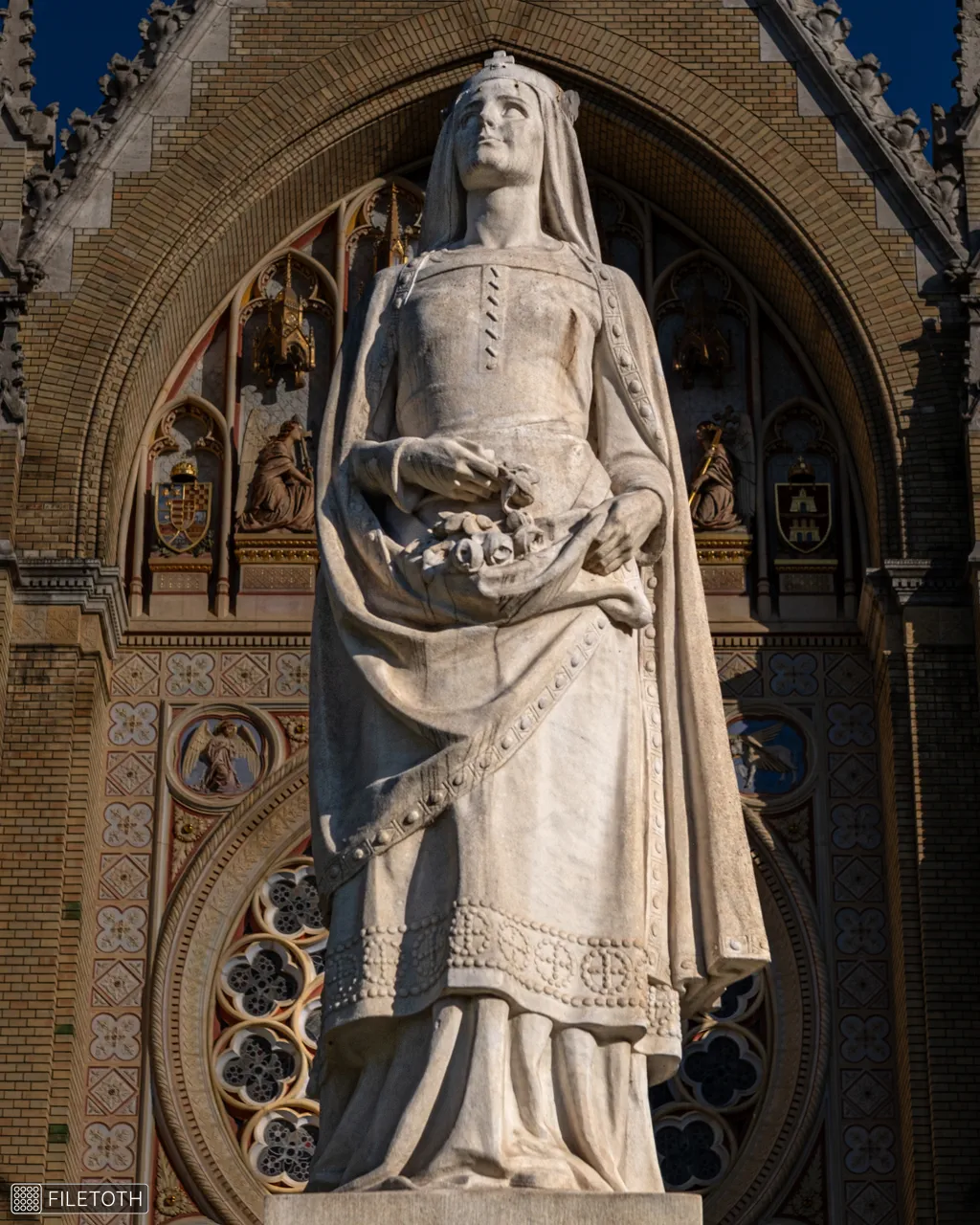
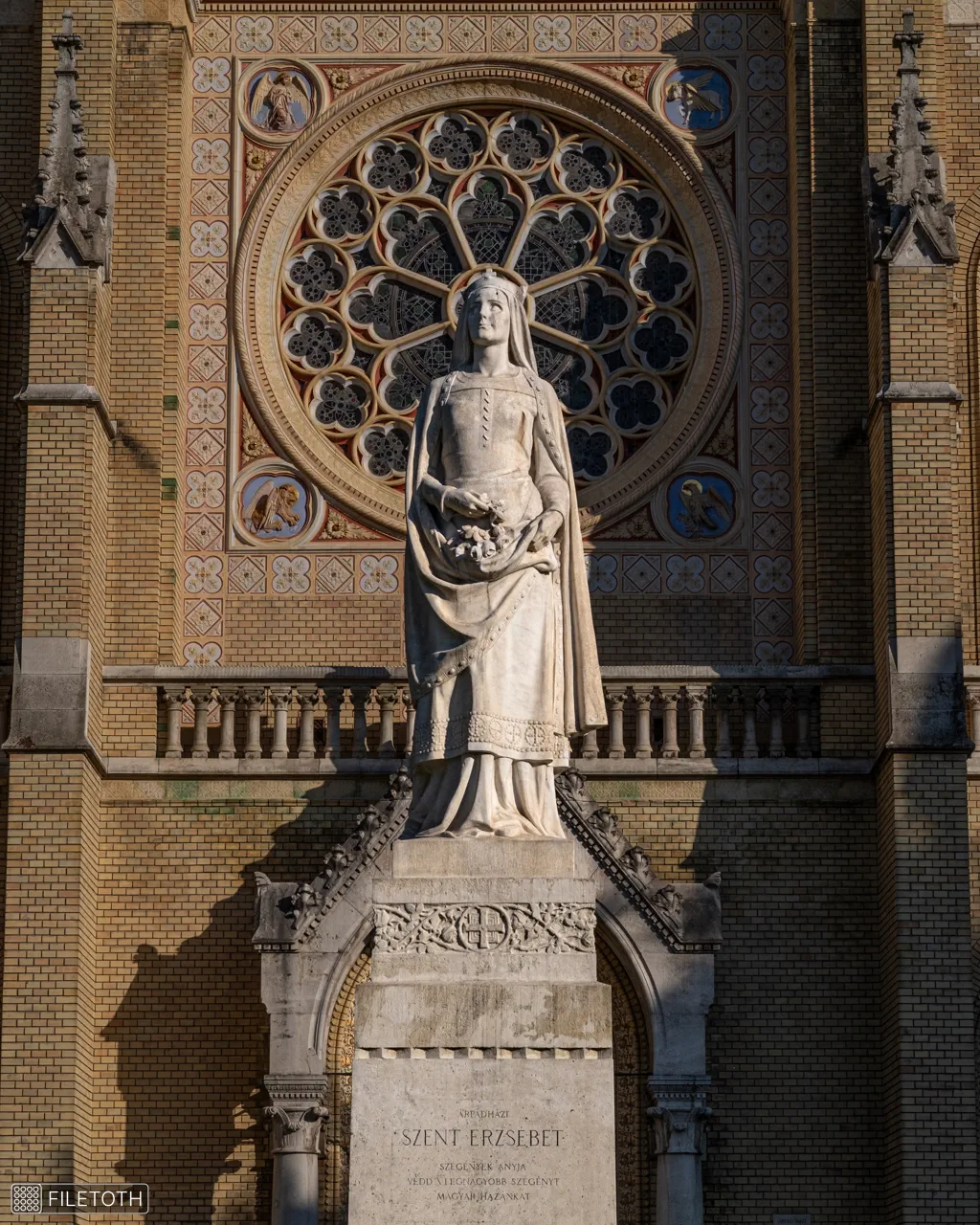
Saint Elizabeth of Hungary Statue

Close-up of Saint Elizabeth's left hand holding roses.

Historical figure and era

Saint Elizabeth of Hungary (1207–1231), daughter of King Andrew II of Hungary, is one of the country's most beloved saints. Renowned for her deep Christian faith and unwavering care for the poor, she devoted her short life to charity, humility, and service. Her example inspired generations throughout Europe, making her a lasting symbol of compassion.

Creation and historical context

Sculpted by József Damkó and unveiled on 31 August 1932, the monument portrays Saint Elizabeth holding roses, recalling the famous legend of the Miracle of the Roses. According to tradition, while secretly carrying bread to the poor, she was challenged about the contents of her basket. When she revealed them, the bread had miraculously become roses. Here the flowers rest gently in her hands, transforming a gesture of charity into a lasting symbol of kindness and selfless giving.

Statue by József Damkó, unveiled on 31 August 1932. [ref.]

The Hand of Companionship

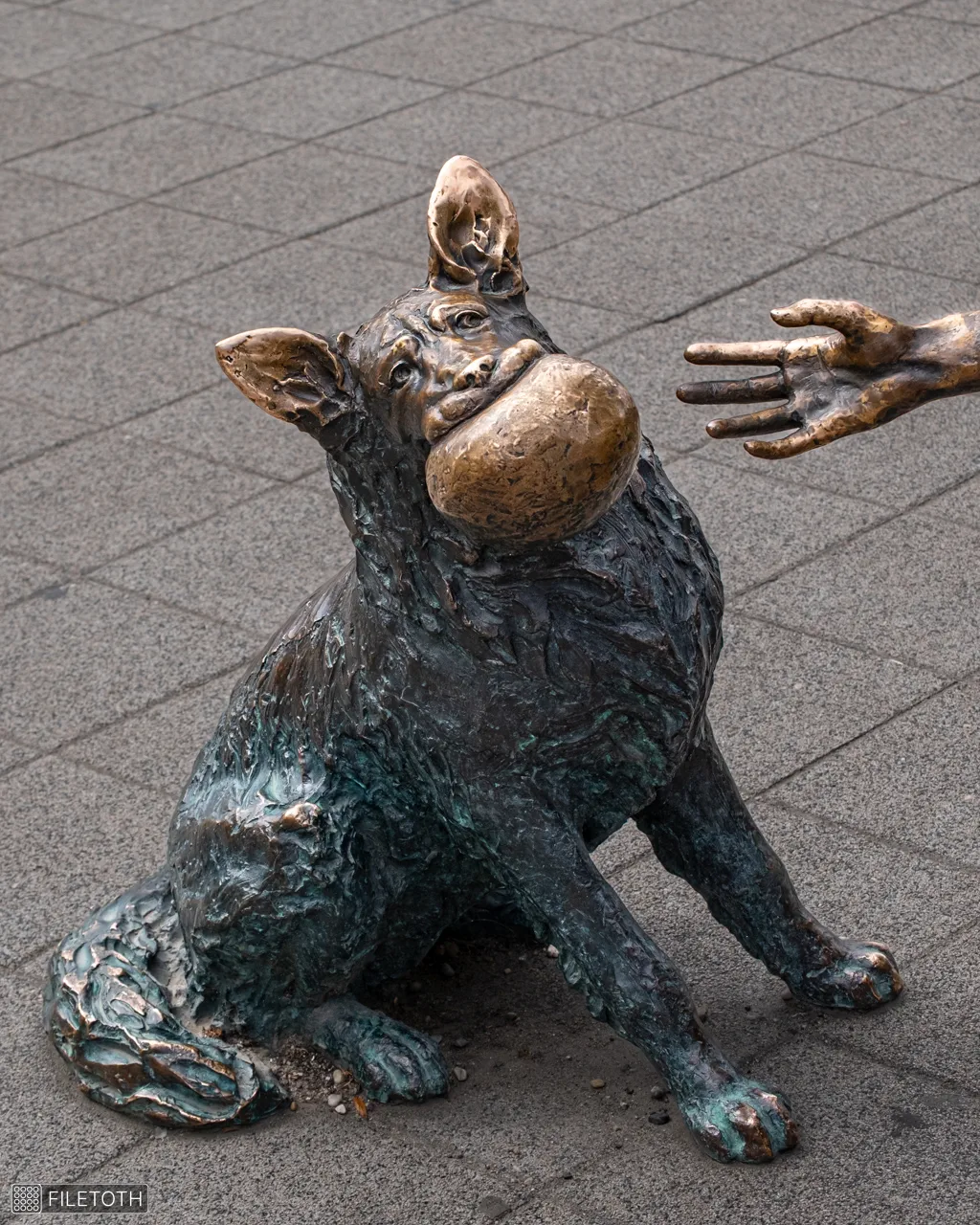
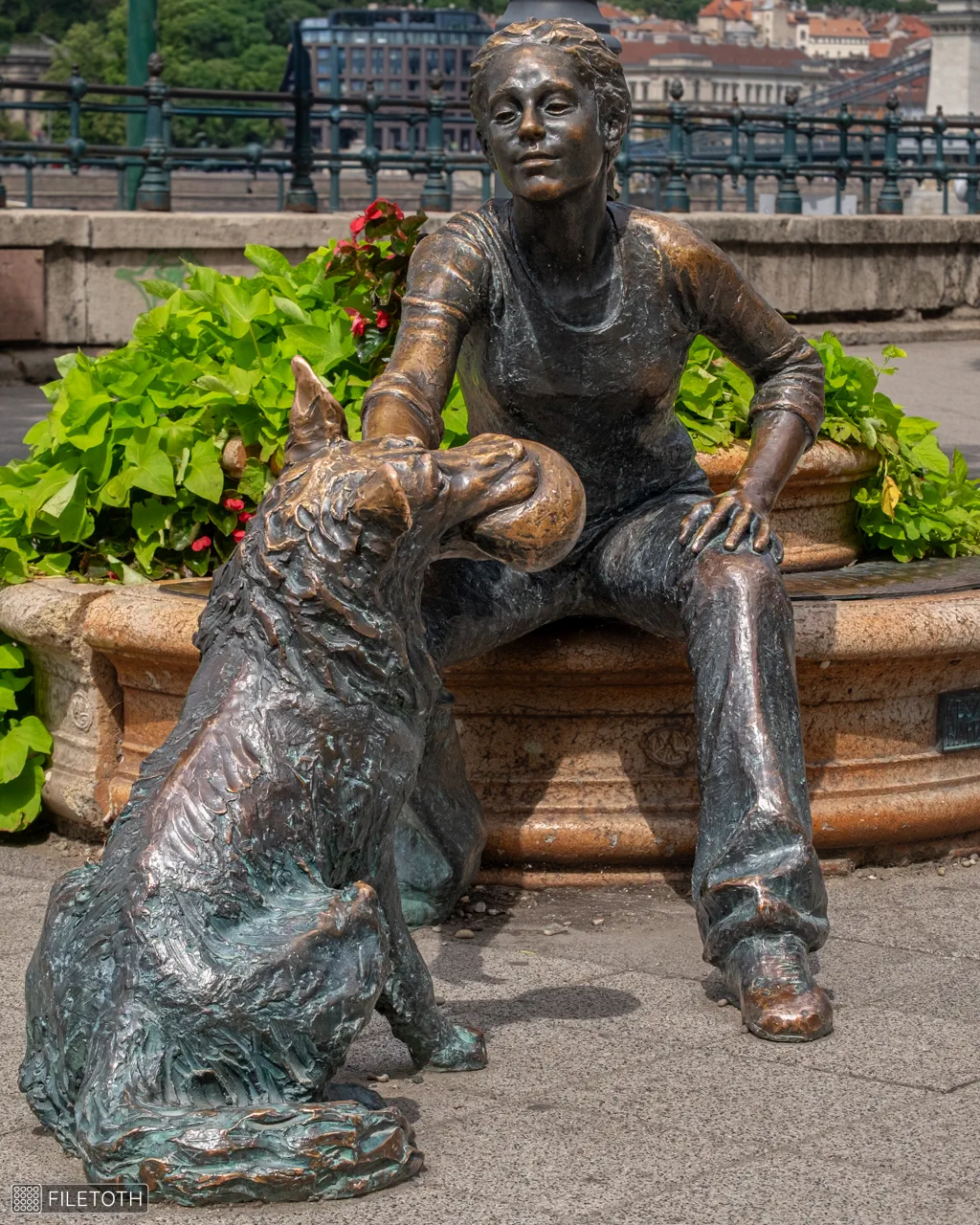
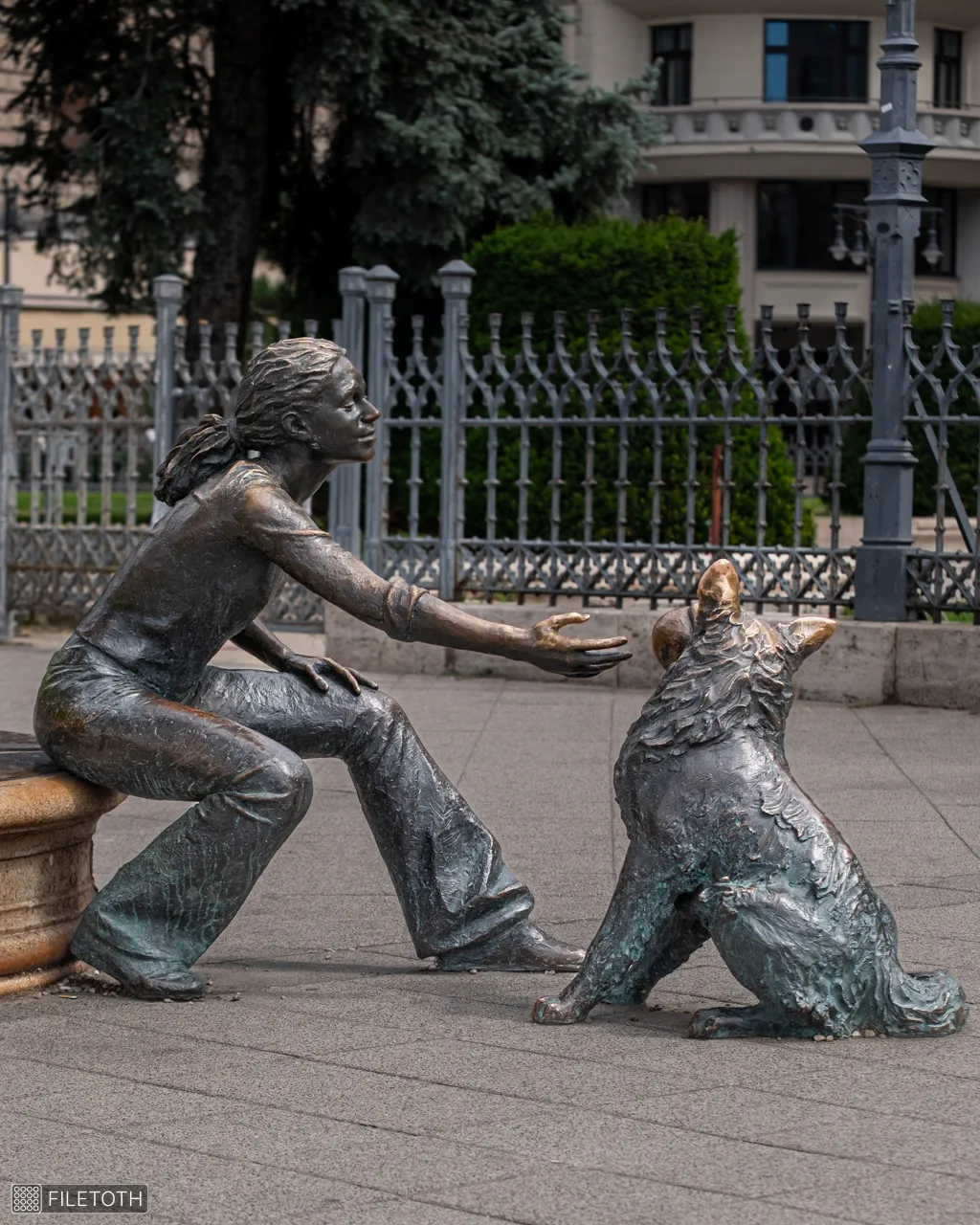
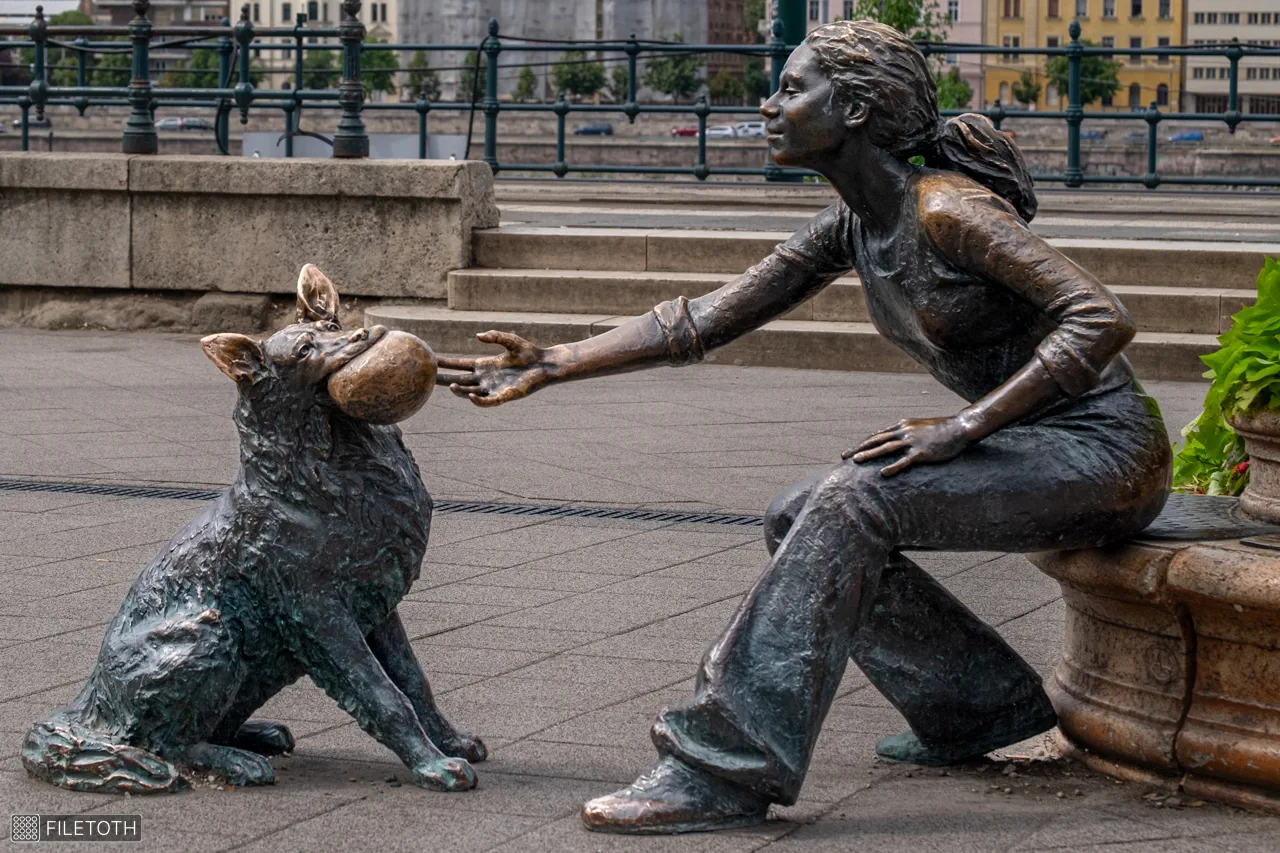
Girl with Dog Statue

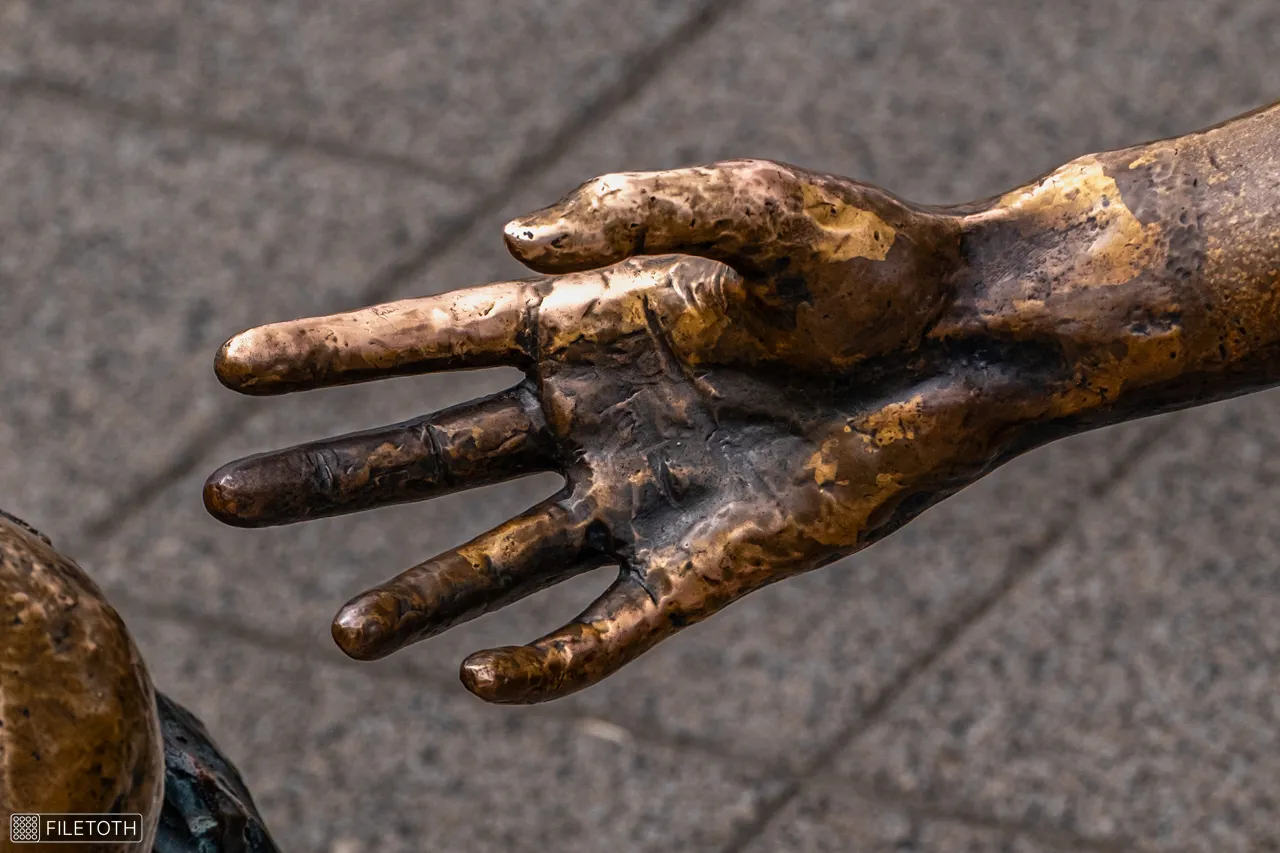
Close-up of the girl's hand reaching toward the dog.

Historical figure and era

Rather than commemorating a historical figure, Dávid Raffay's sculpture celebrates one of the simplest moments of everyday life: the playful friendship between a young girl and her dog. Installed along Budapest's Danube promenade, the life-sized bronze invites visitors to sit beside the pair and become part of their quiet game, transforming an ordinary scene into a shared public experience.

Creation and historical context

Unveiled in 2007, the sculpture captures a fleeting moment of playful interaction. The girl reaches gently toward the ball held by her dog's mouth, while the dog teasingly pulls its head away, extending the game for another joyful moment. Neither is trying to win; both are simply enjoying each other's company. Unlike traditional monuments viewed from a distance, this sculpture encourages people to sit beside it, smile, and join the conversation.

Statue by Dávid Raffay, 2007. [ref.]

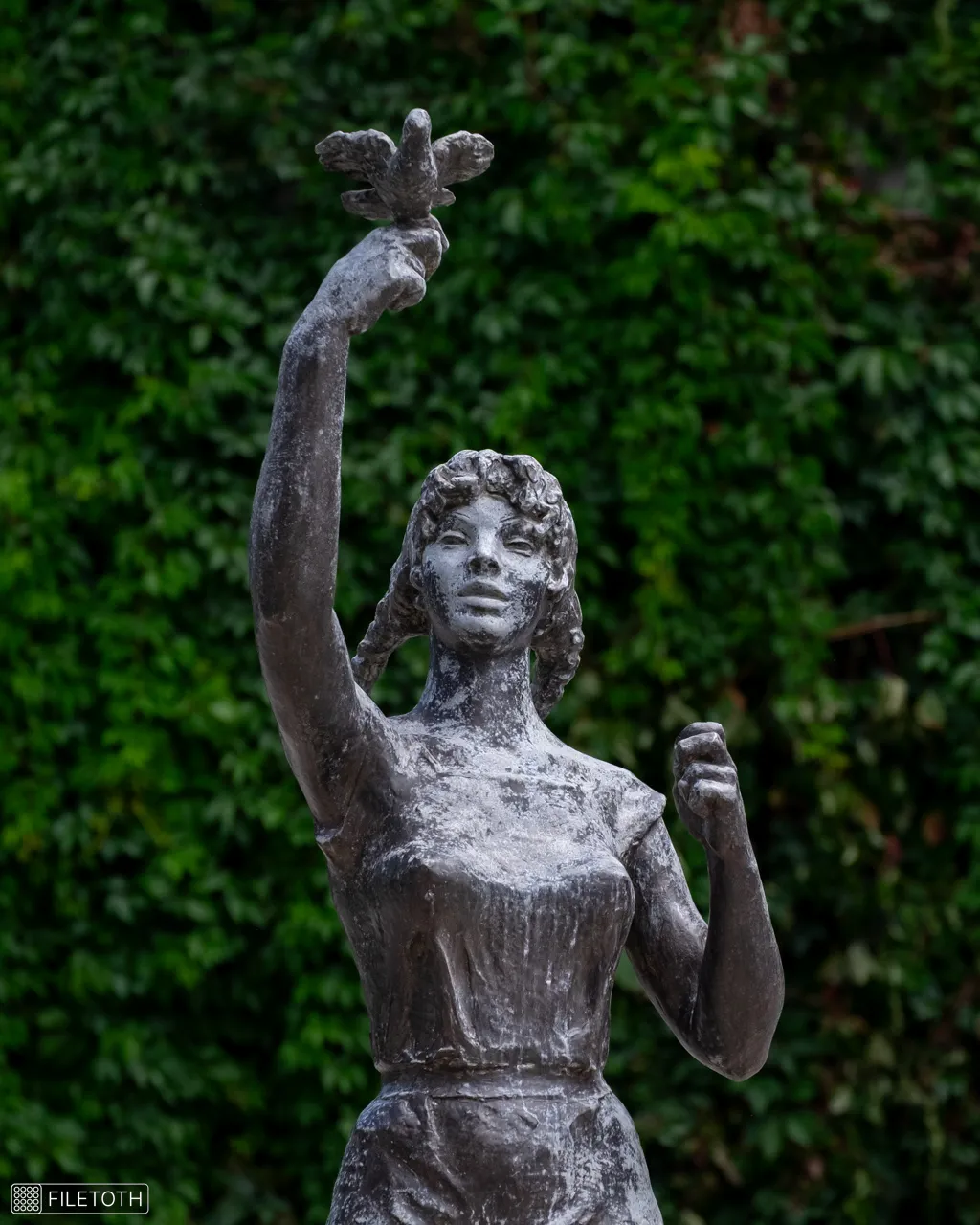
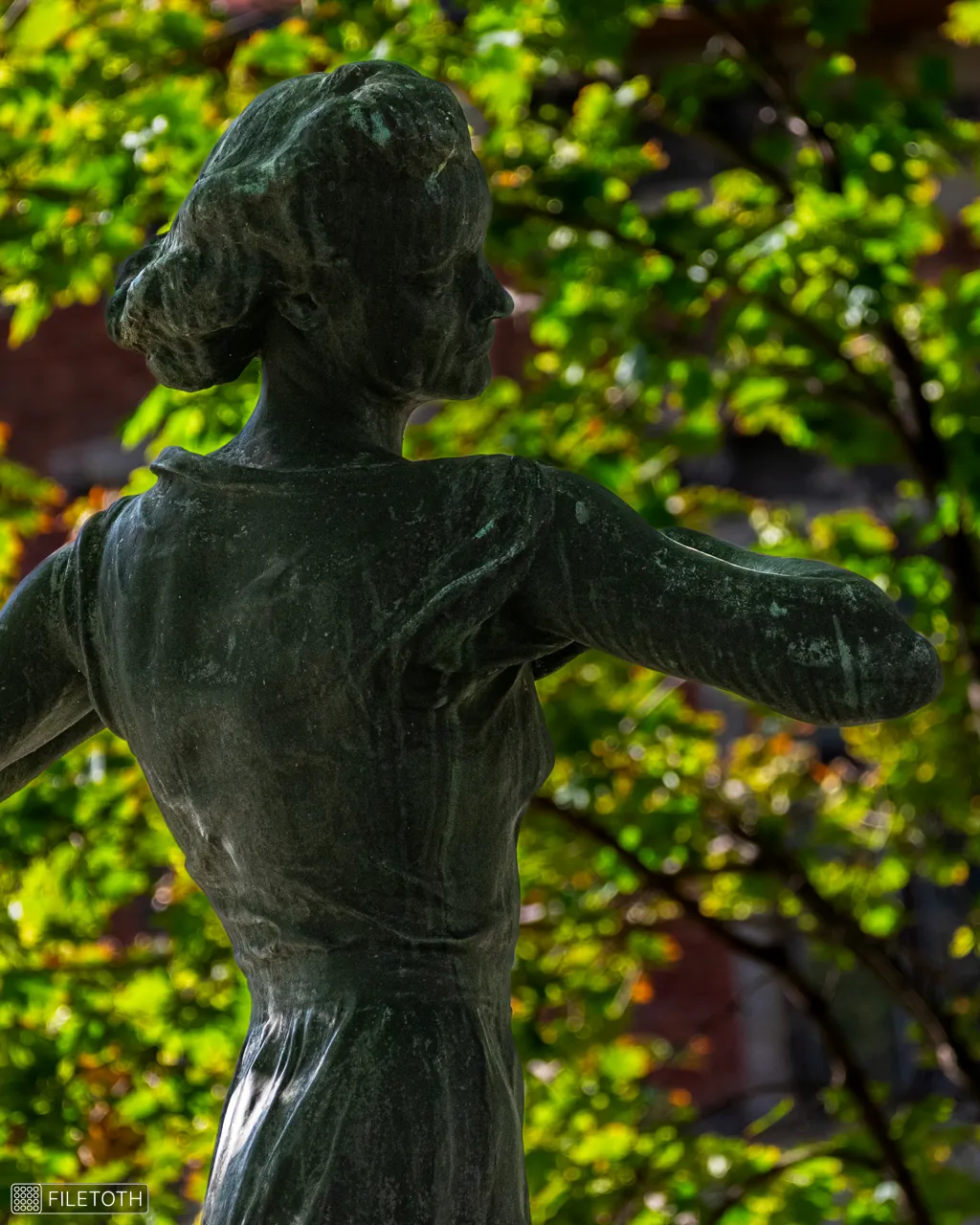
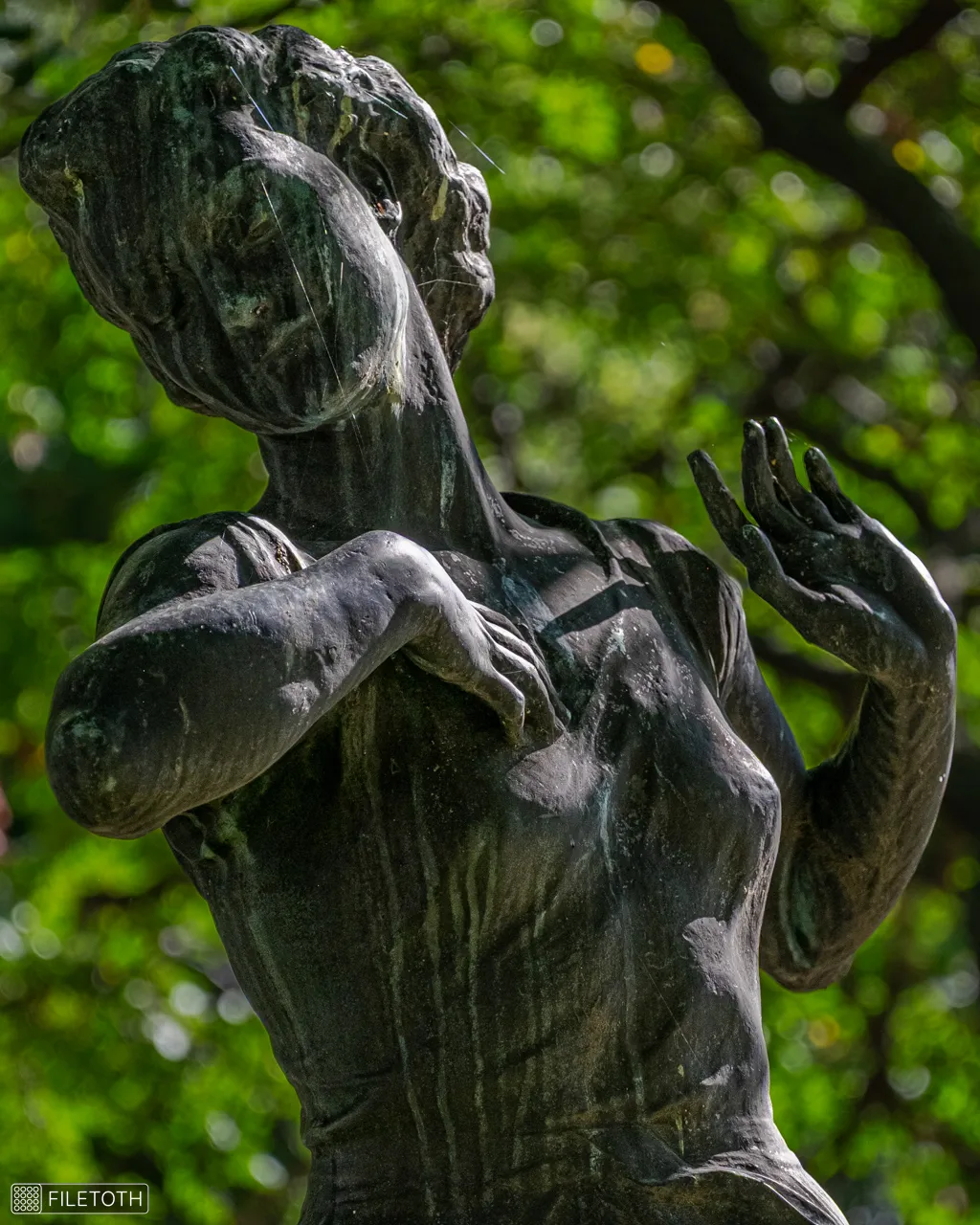
The Hand of Letting Go

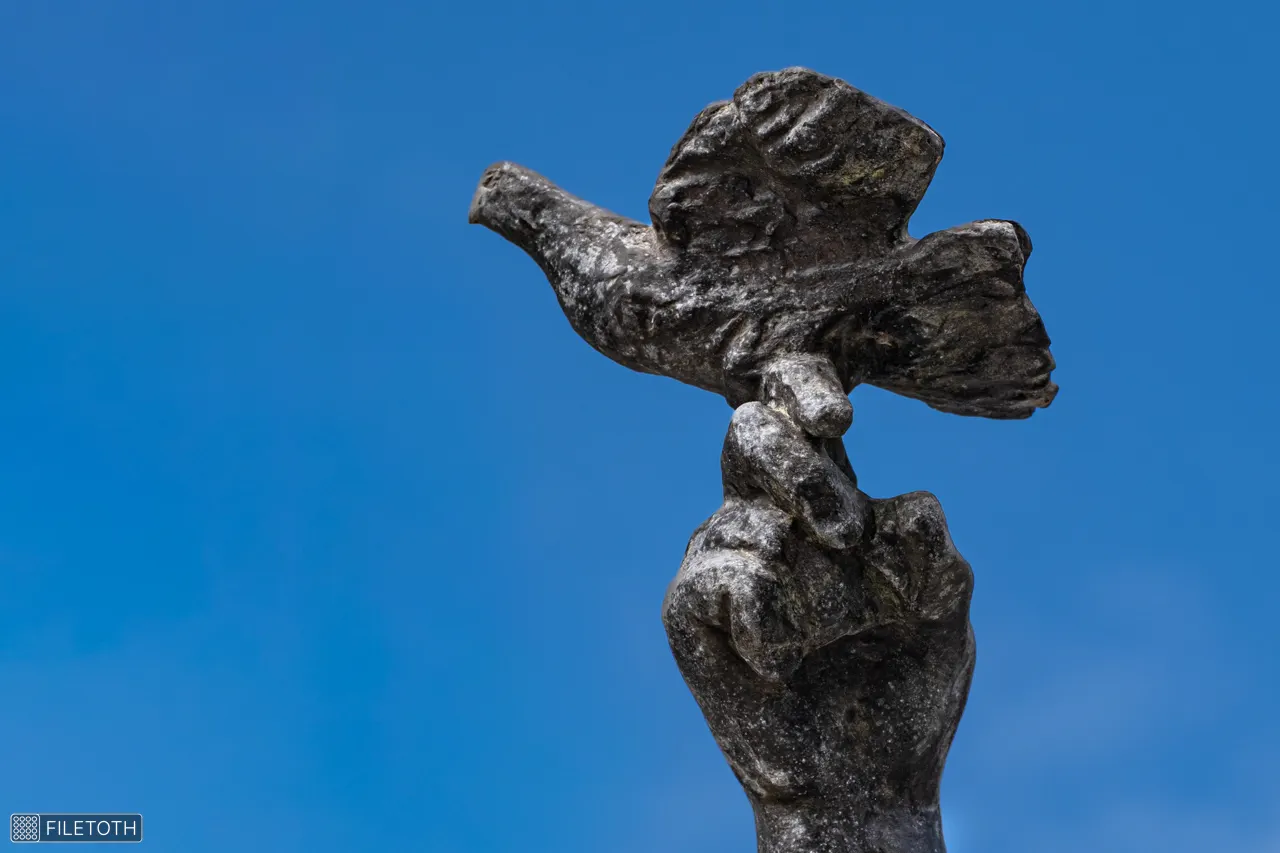
Girl with a Dove Statue

Close-up of the girl's raised hand releasing a dove.

Historical figure and era

Rather than portraying a historical person, this sculpture celebrates a universal moment of childhood. A young girl stands barefoot, releasing a dove into the air with quiet confidence and joy. Although created during a period when the dove was widely used as a symbol of peace, the sculpture reaches beyond its original context to express innocence, trust, and the simple happiness of watching another living creature become free.

Creation and historical context

László Marton's fountain sculpture was unveiled in 1958 in a newly built residential district of Budapest. Standing beside a shallow pool, the girl raises one arm as the dove opens its wings and catches the wind. Her other hand remains gently closed, preserving the excitement of the moment. Seen from the side, the flowing lines of her body, skirt, and the bird form a graceful arc that suggests movement and a gentle breeze. More than six decades later, the sculpture continues to offer a quiet moment of joy beside one of the city's busiest roads.

Statue by László Marton, 1958. [ref.]
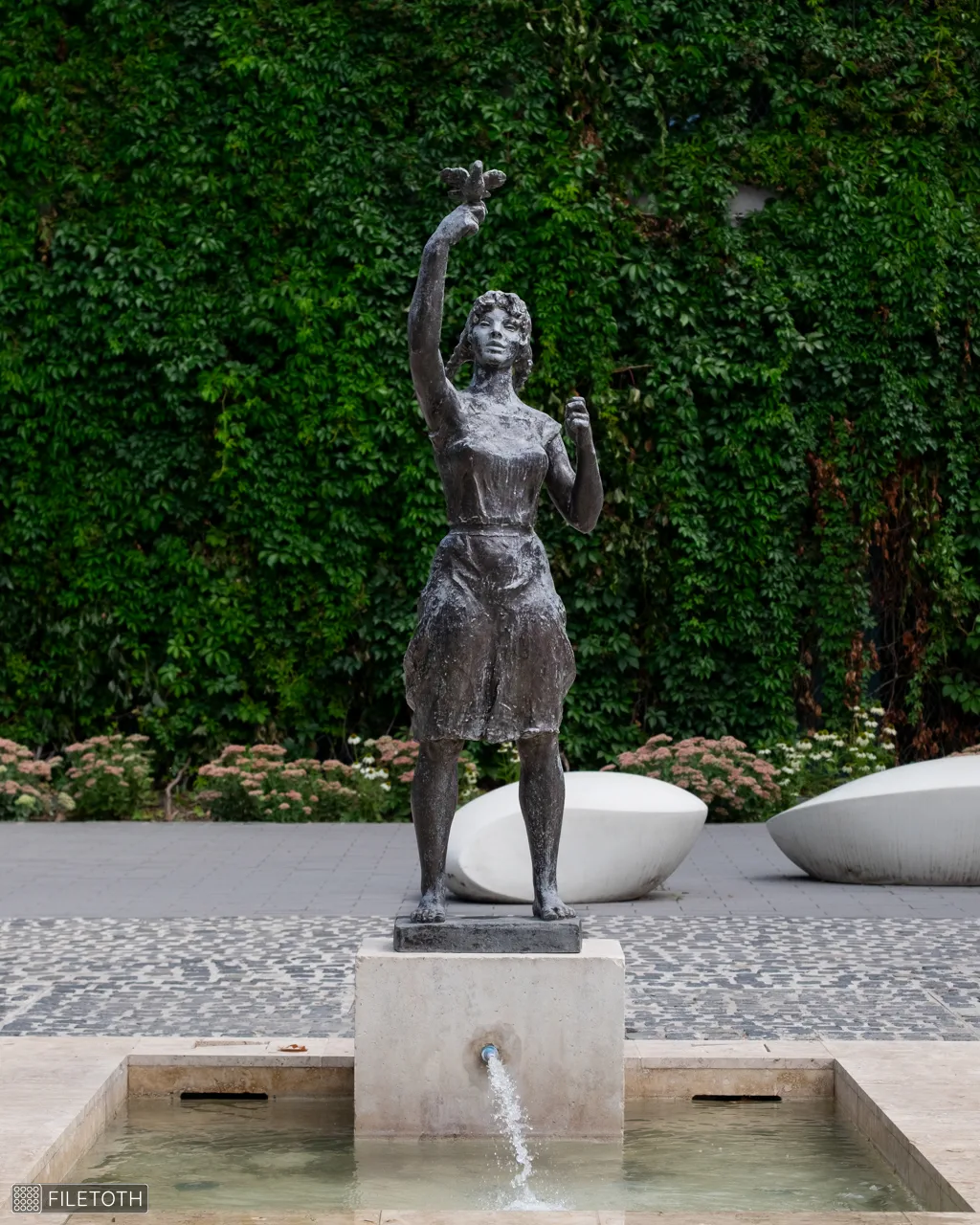
The Hand of Peace

Peace Fountain

Close-up of the hand of the Peace figure.

Historical figure and era

The figure atop the Peace Fountain is a replica of Antonio Canova's celebrated La Pace, inspired by the iconography of Nemesis, the Greek goddess of justice. Here, peace is presented not as passive stillness, but as a lasting balance between justice, reconciliation, and human dignity.

Creation and historical context

Sculpted by Mihály Bauer in 1805, the figure adapts Canova's neoclassical ideal to Budapest's urban landscape, combining an international artistic language with local civic aspirations. Rising above the Lion Fountain, the sculpture introduces a calm vertical presence above the flowing water. Set against the open sky, the raised hand quietly reminds visitors of the enduring value of peace, even during times when conflict seems to overshadow public life.

Sculpture by Mihály Bauer, 1805. [ref.]
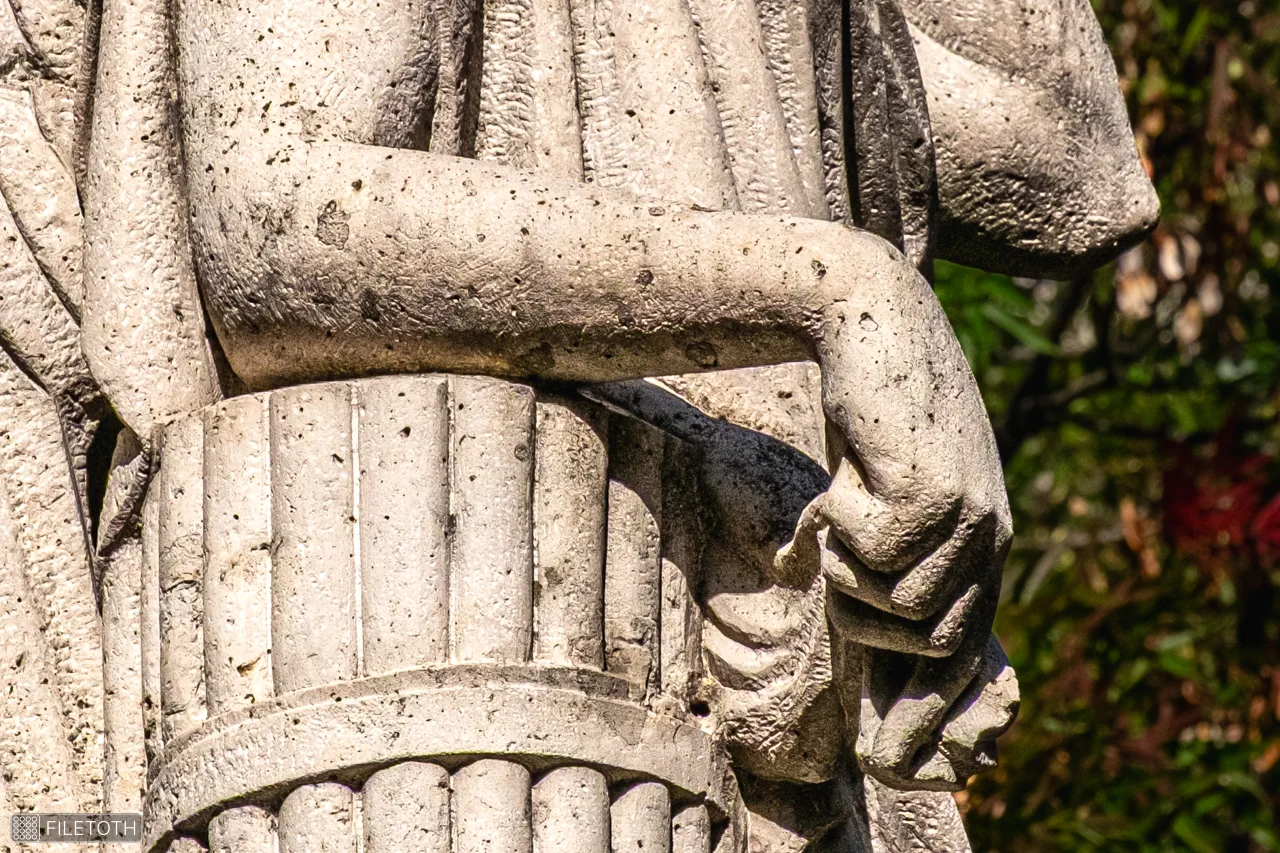
The Hand of Spring

Spring Statue

Close-up of the Spring statue's hand.

Historical figure and era

Jenő Grantner (1907–1983) was a sculptor known for his elegant forms and steadfast commitment to a classical language at a time when many contemporaries were turning toward abstraction. This bronze figure of a young woman welcoming spring reflects his search for pure beauty and direct emotional expression, conveyed through light, fluid gestures rather than monumental pathos.

Creation and historical context

Completed in 1979, during the later decades of state socialism, the work offers a deliberately apolitical, lyrical subject at a moment when many public sculptures still served overt ideological purposes. Placed quietly among the multistory buildings of Józsefváros, it introduces a moment of softness into a dense, often austere urban environment, setting human scale and calm movement against concrete, traffic, and façades.

Statue by Jenő Grantner, 1979. [ref.]
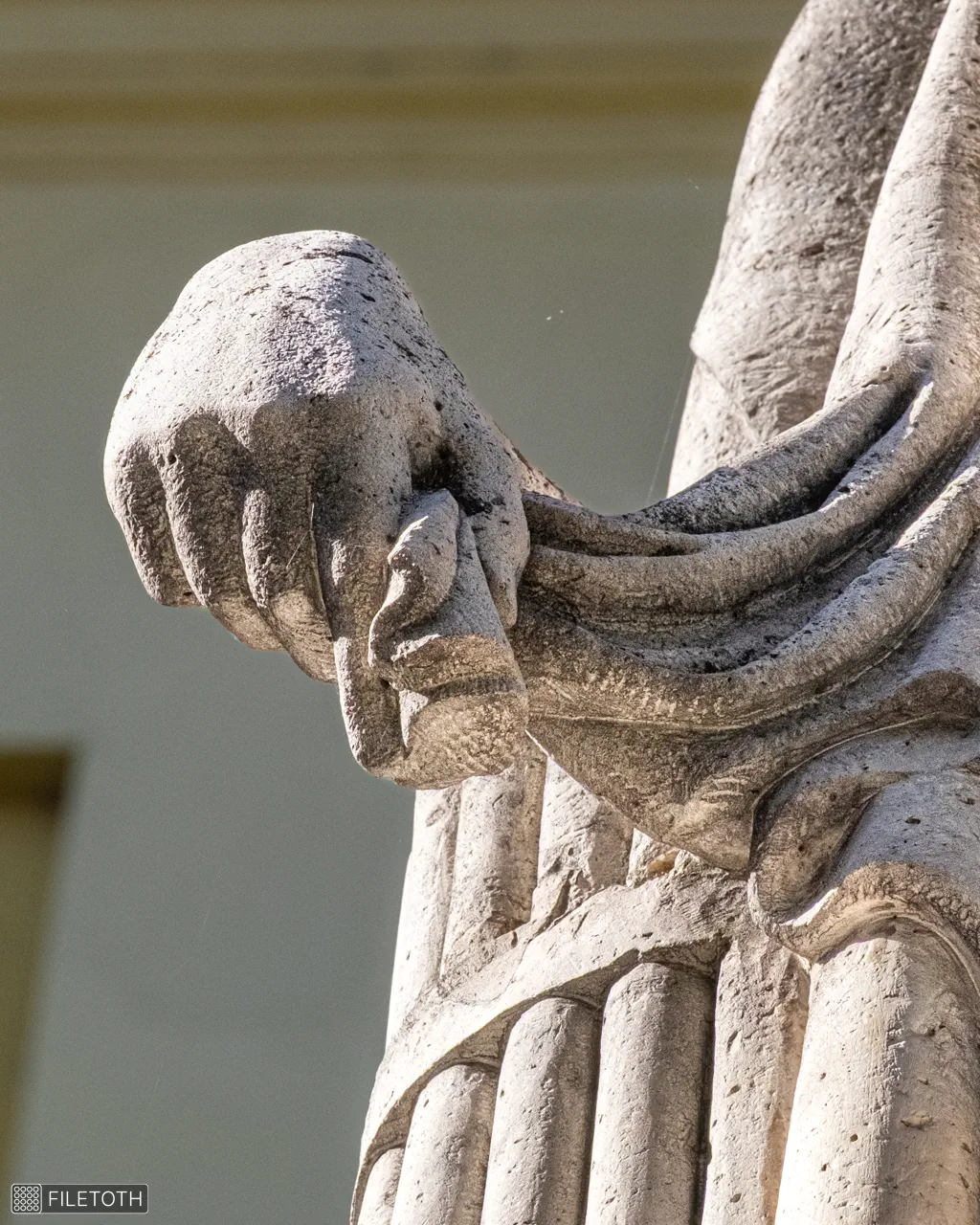
The Hand of Protection

Saint Barbara Statue

Close-up of Saint Barbara's hand.

Historical figure and era

Saint Barbara is a legendary early Christian martyr who lived in the 3rd century and has long been revered as a protector against the dangers of gunpowder, artillery fire, and mining, as well as by architects, engineers, and builders. The statue conveys this protective role through a calm, watchful figure whose open hands suggest blessing and shelter rather than triumph.

Creation and historical context

Created in the tense years before the Second World War, the work spoke directly to soldiers and cadets who faced very real risks in training and in the field. Placed in an institutional setting, it linked daily professional discipline with an older Christian idea of intercession, implying that technical skill and spiritual protection belong together. Even as historical criticism has questioned Barbara's literal biography, her image here preserves a cultural memory of danger, faith, and the hope of coming home safely.

Statue by Mihály Dabóczi, December 4, 1937. [ref.]
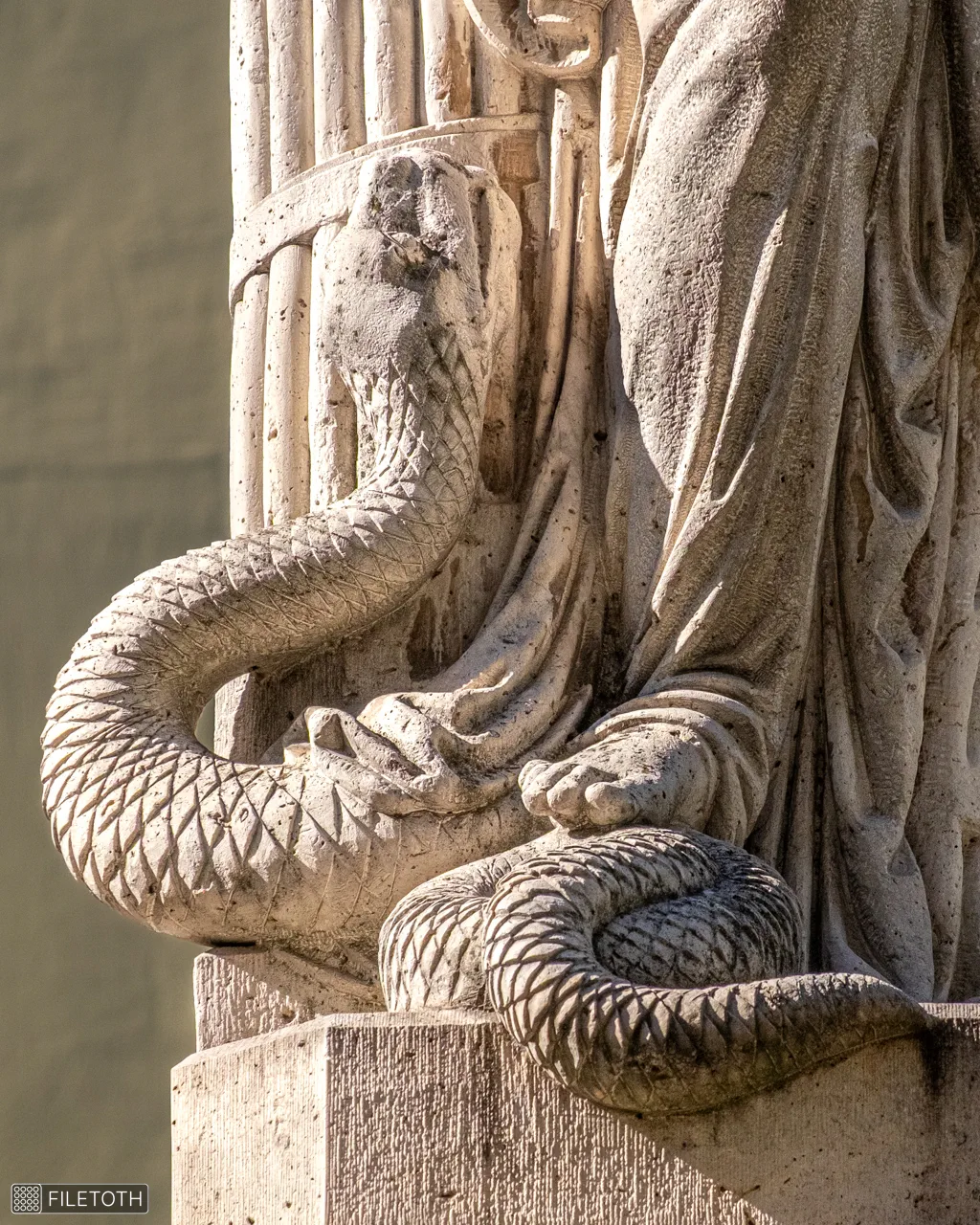
The Hand of Sanctuary

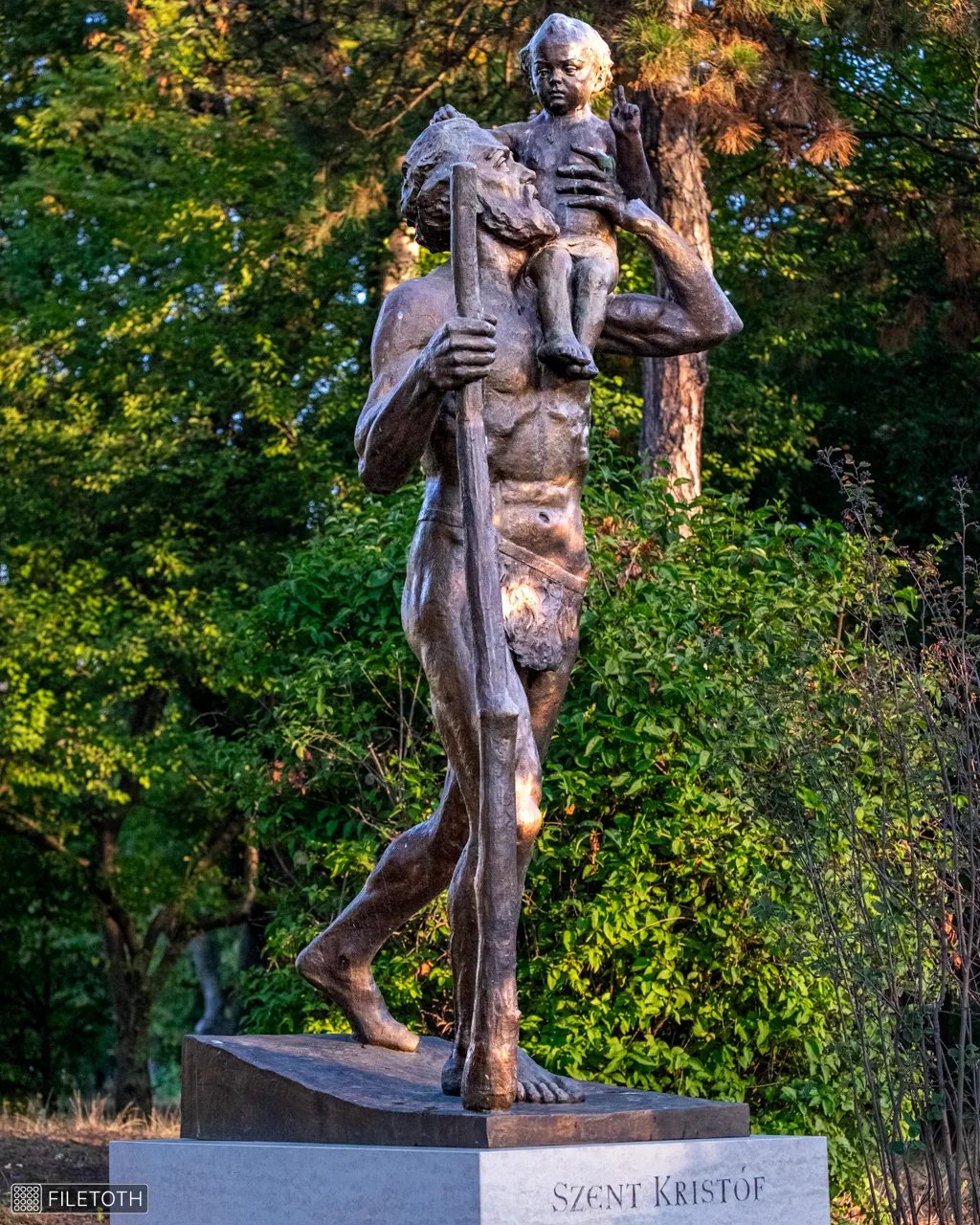
Saint Christopher Statue

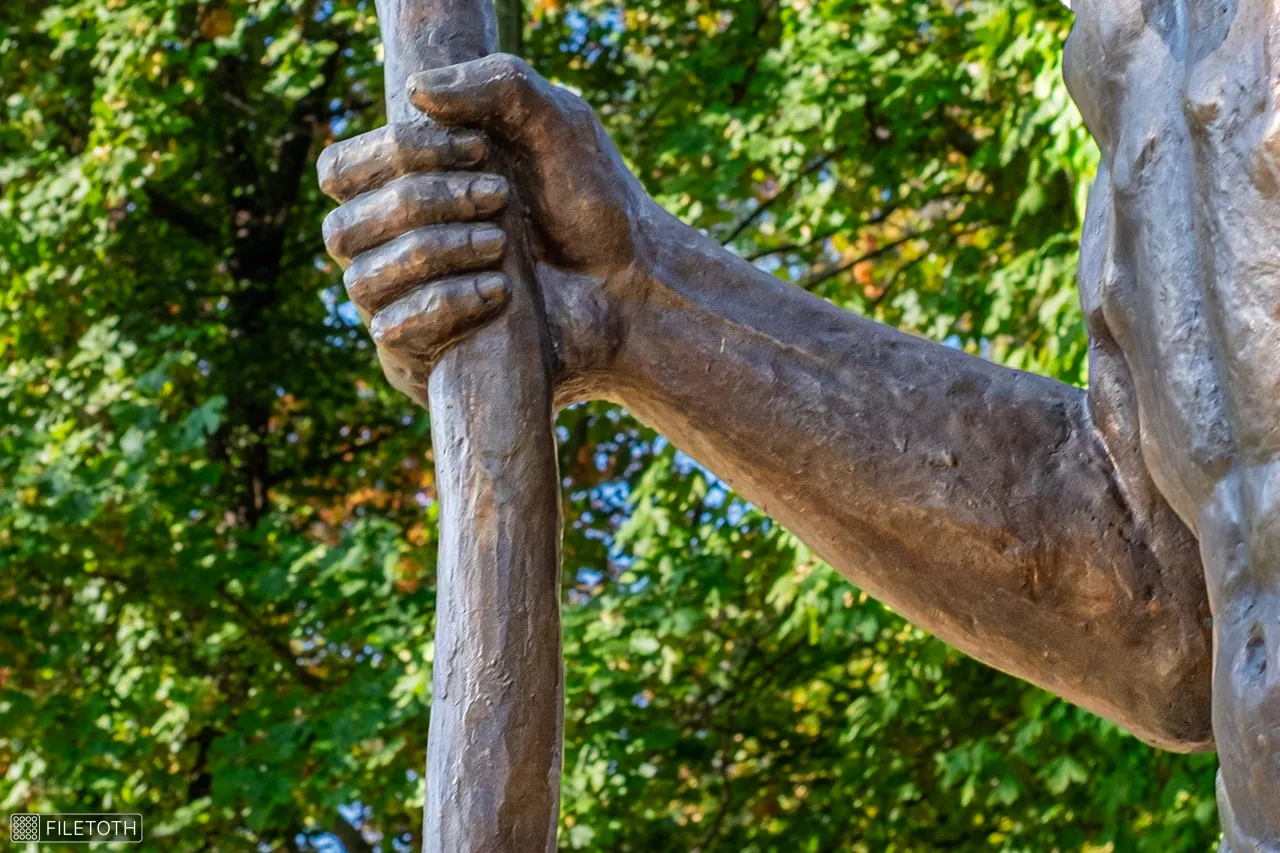
Close-up of Saint Christopher's hand.

Historical figure and era

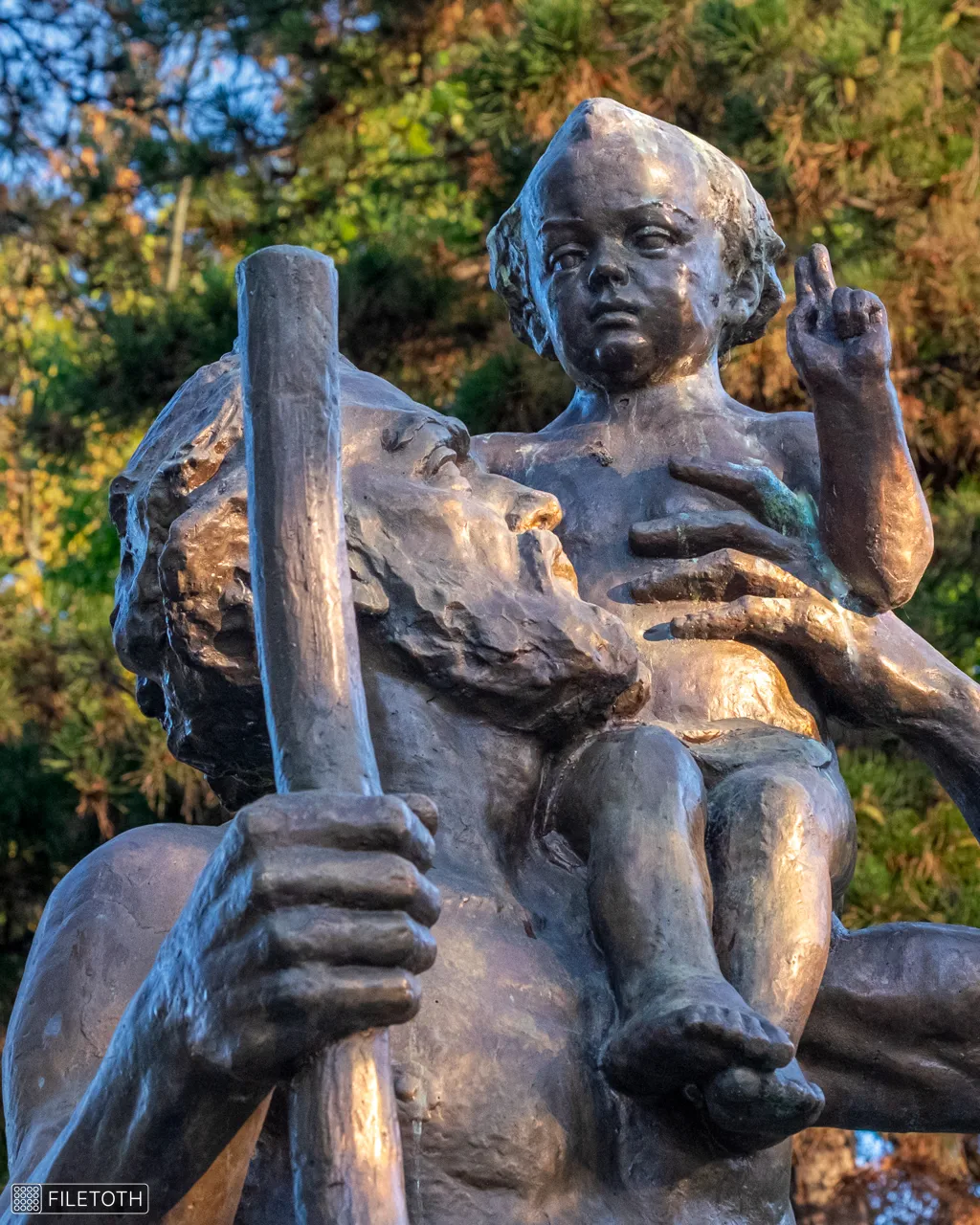
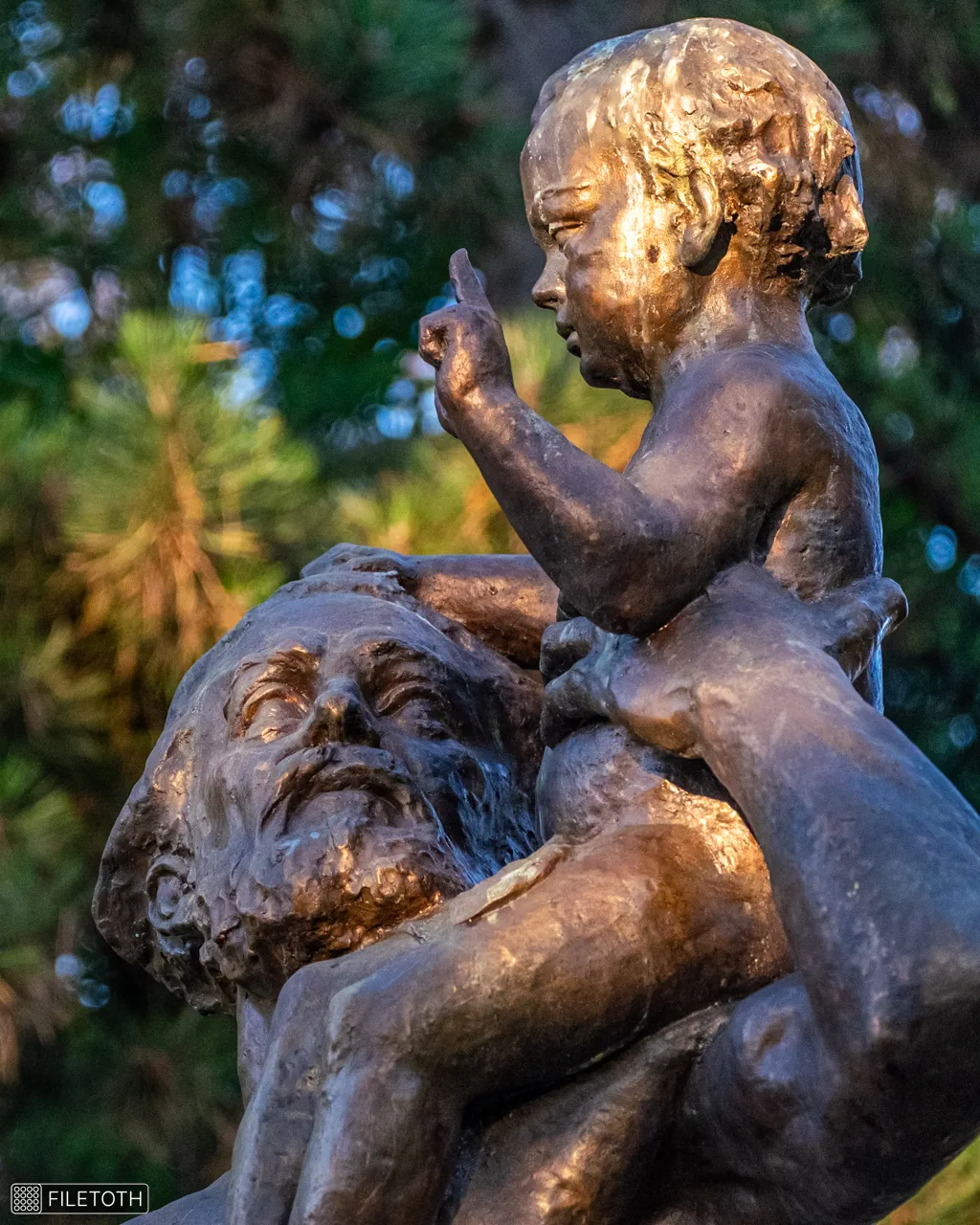
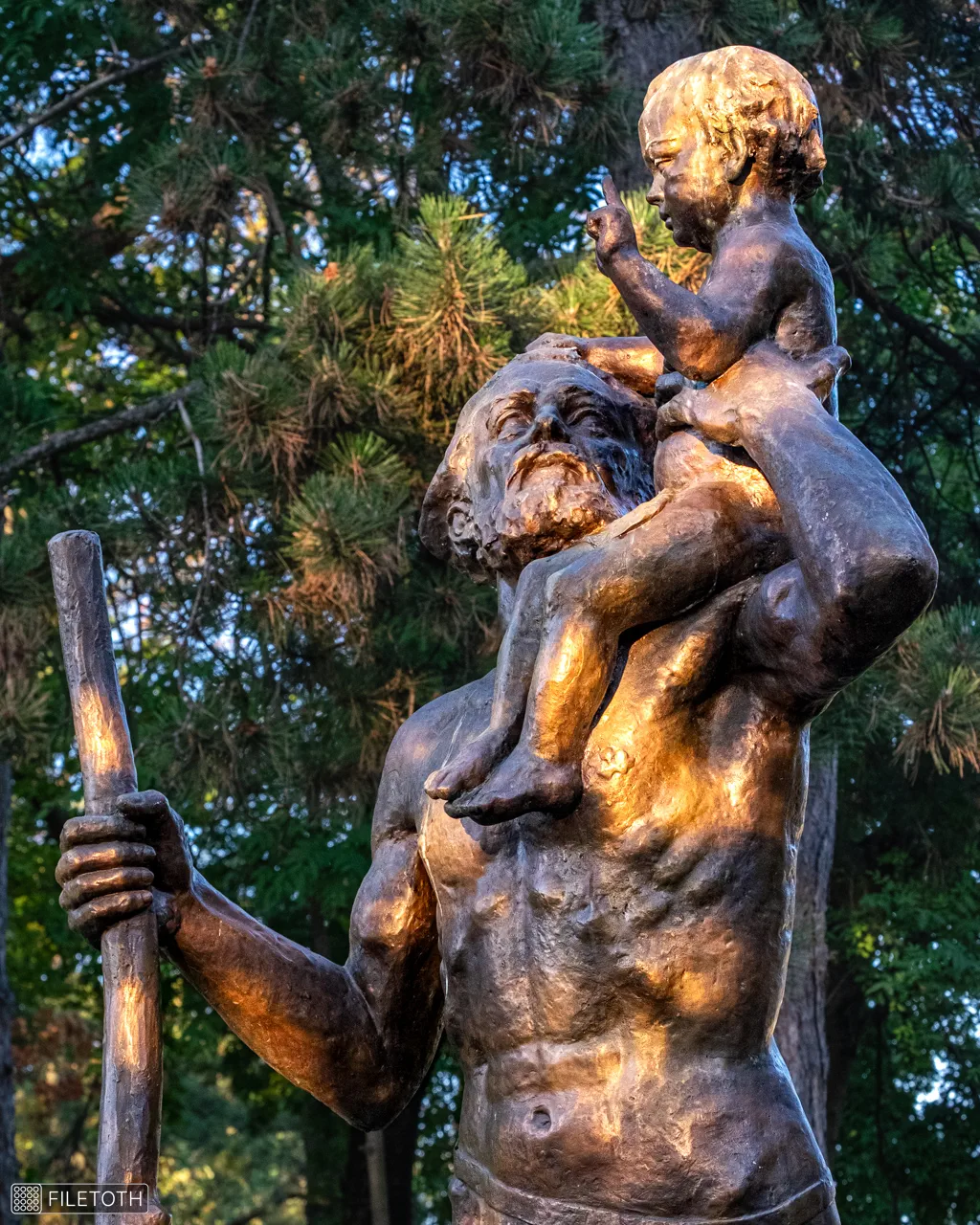
Saint Christopher is revered as the patron saint of travelers, pilgrims, and those undertaking difficult journeys. According to legend, he devoted his great strength to carrying people across a dangerous river until one day the small child on his shoulders revealed himself as Christ, bearing the weight of the world. Christopher's story has long symbolized protection, service, and faithful perseverance.

Creation and historical context

The statue by Sándor Oláh and János Lestyán-Goda portrays Christopher carrying the Christ Child across the river, emphasizing the protective strength of his hands, arms, and steady stride. Created in 1941 and later complemented by additional work, the sculpture emerged during a decade marked by uncertainty, when themes of refuge and safe passage carried particular resonance. Christopher's sheltering gesture suggests that sanctuary is not merely a place of safety, but an active commitment to carrying others through hardship.

Statue by Sándor Oláh and János Lestyán-Goda, 1941. [ref.]
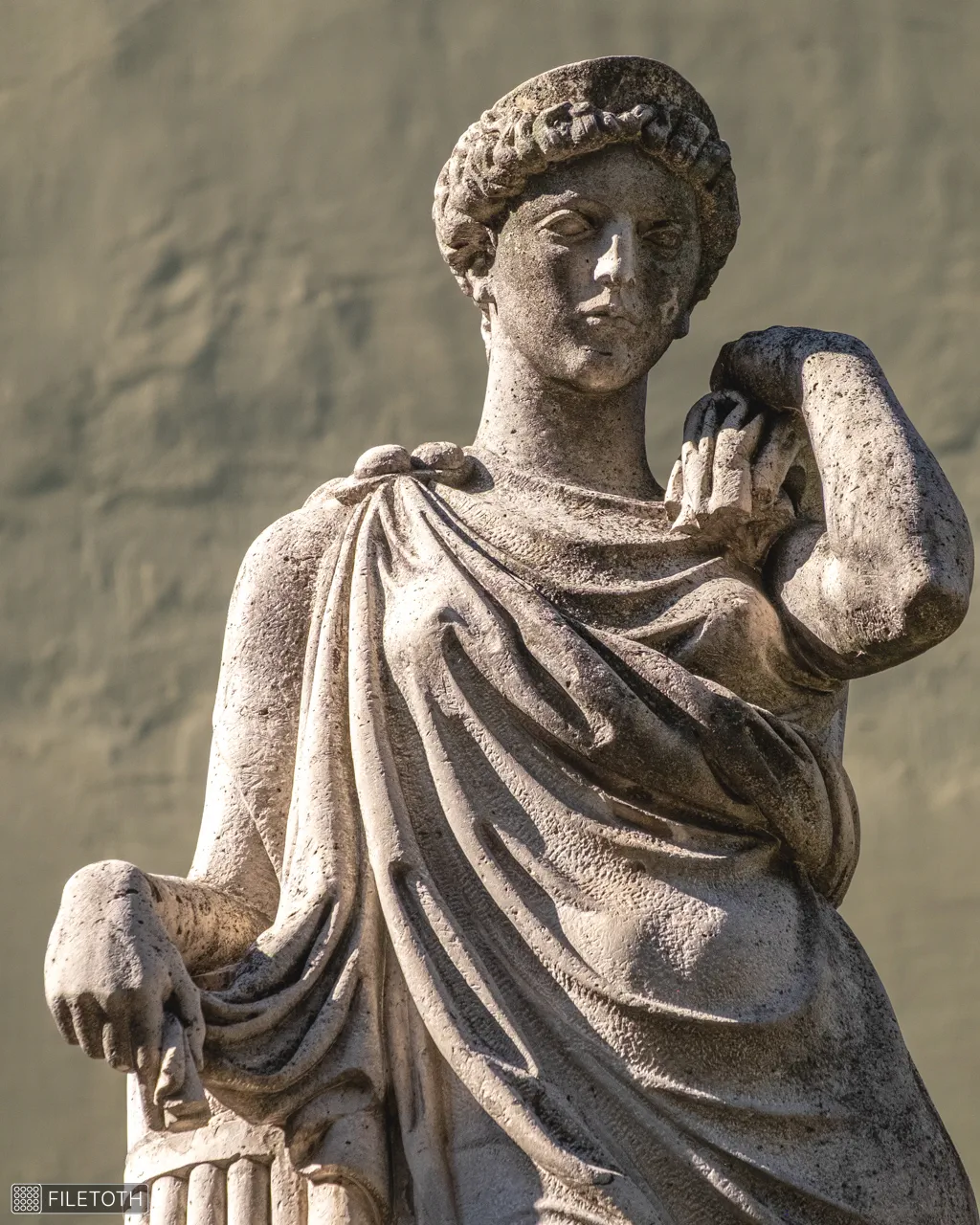
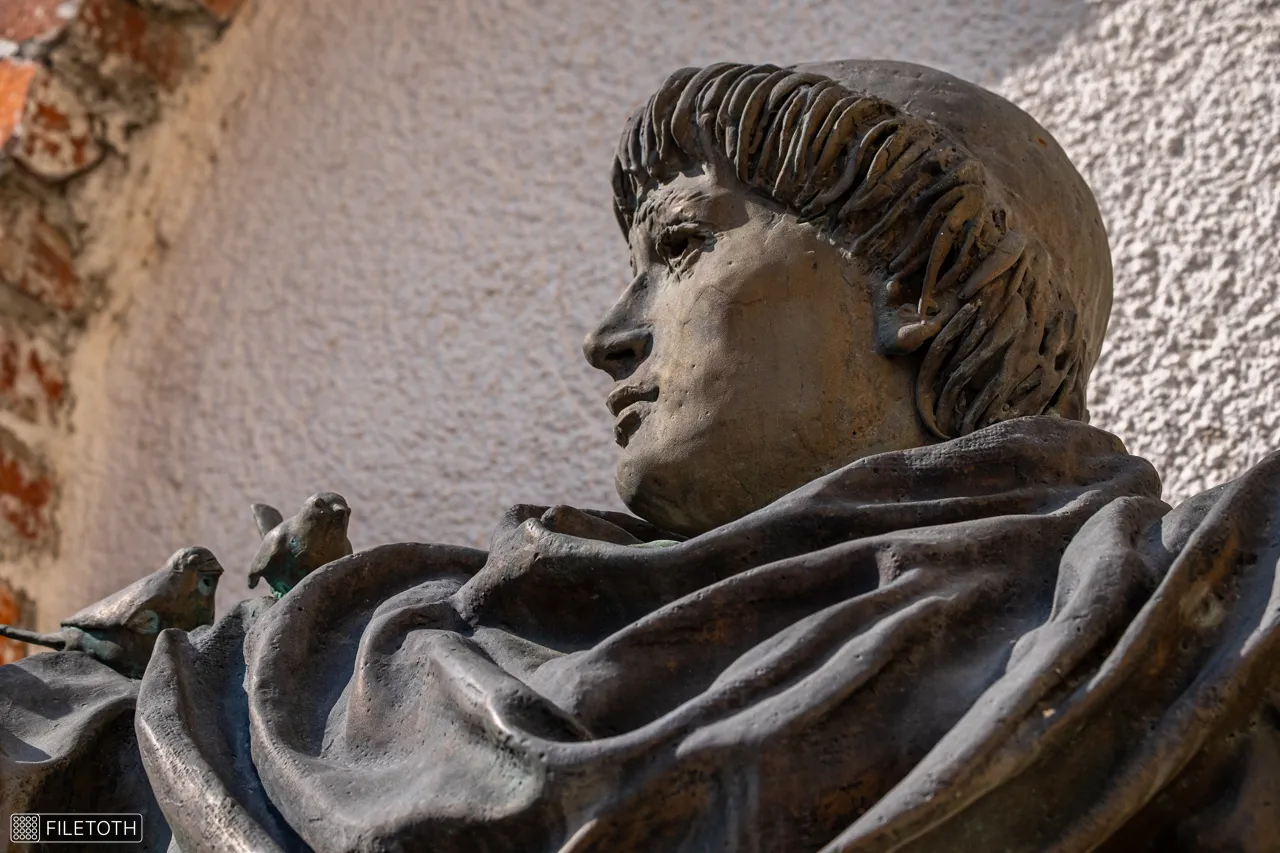
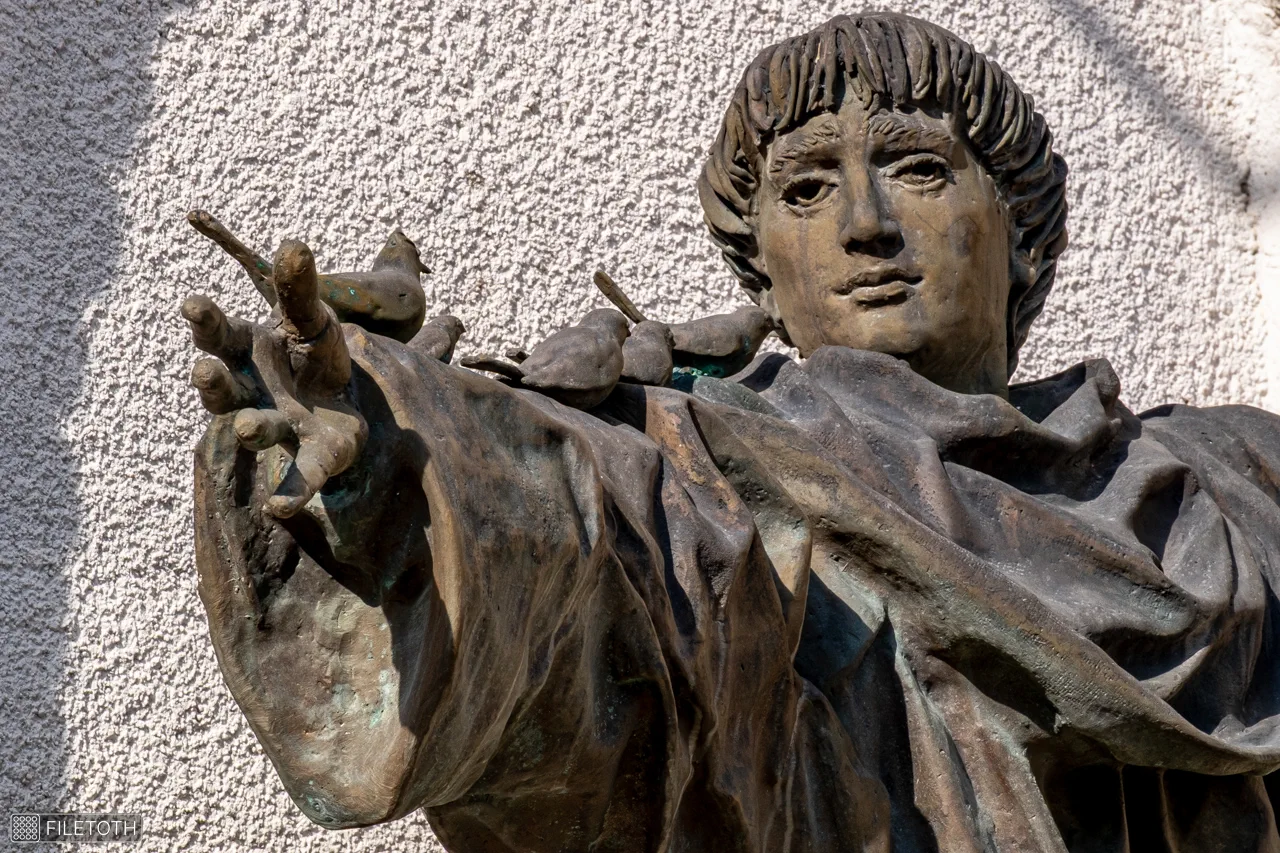
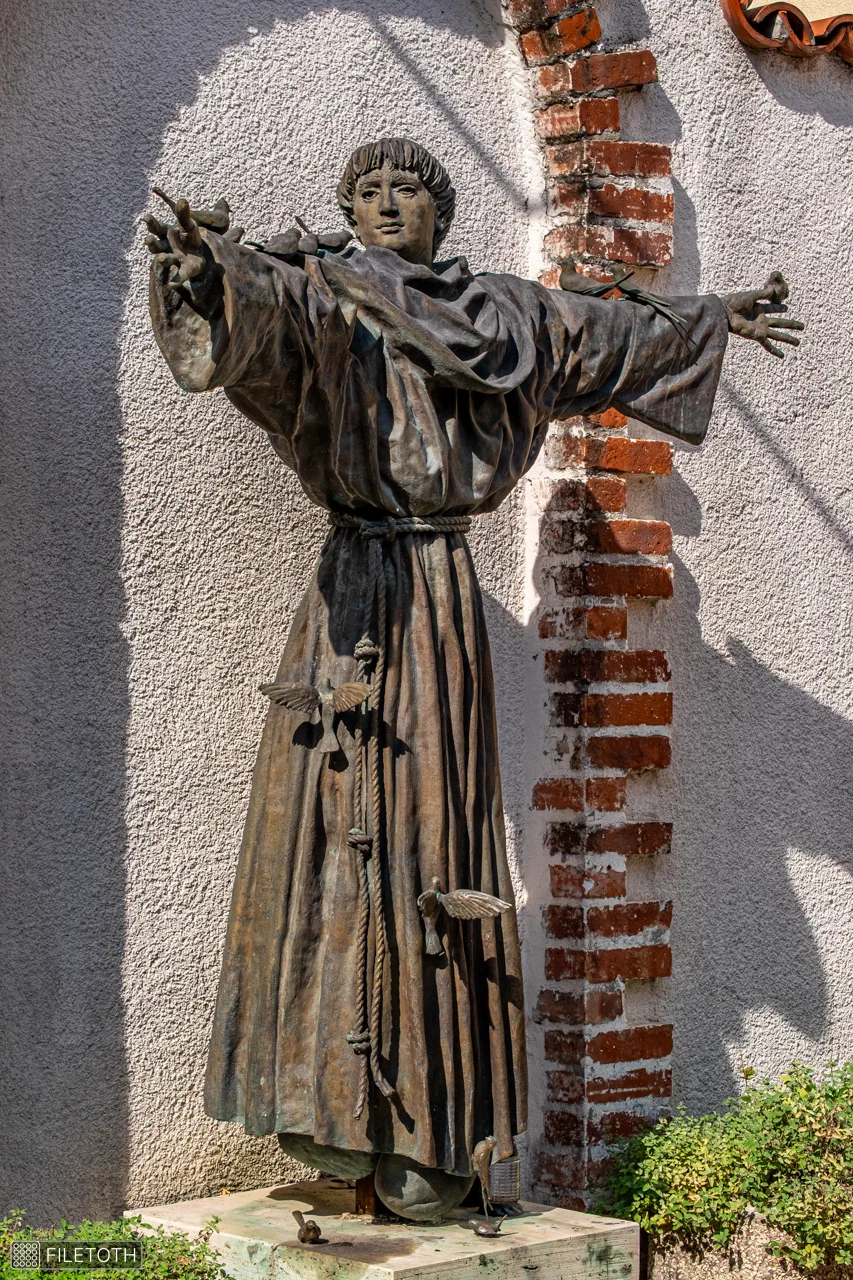
The Hand of Brotherhood

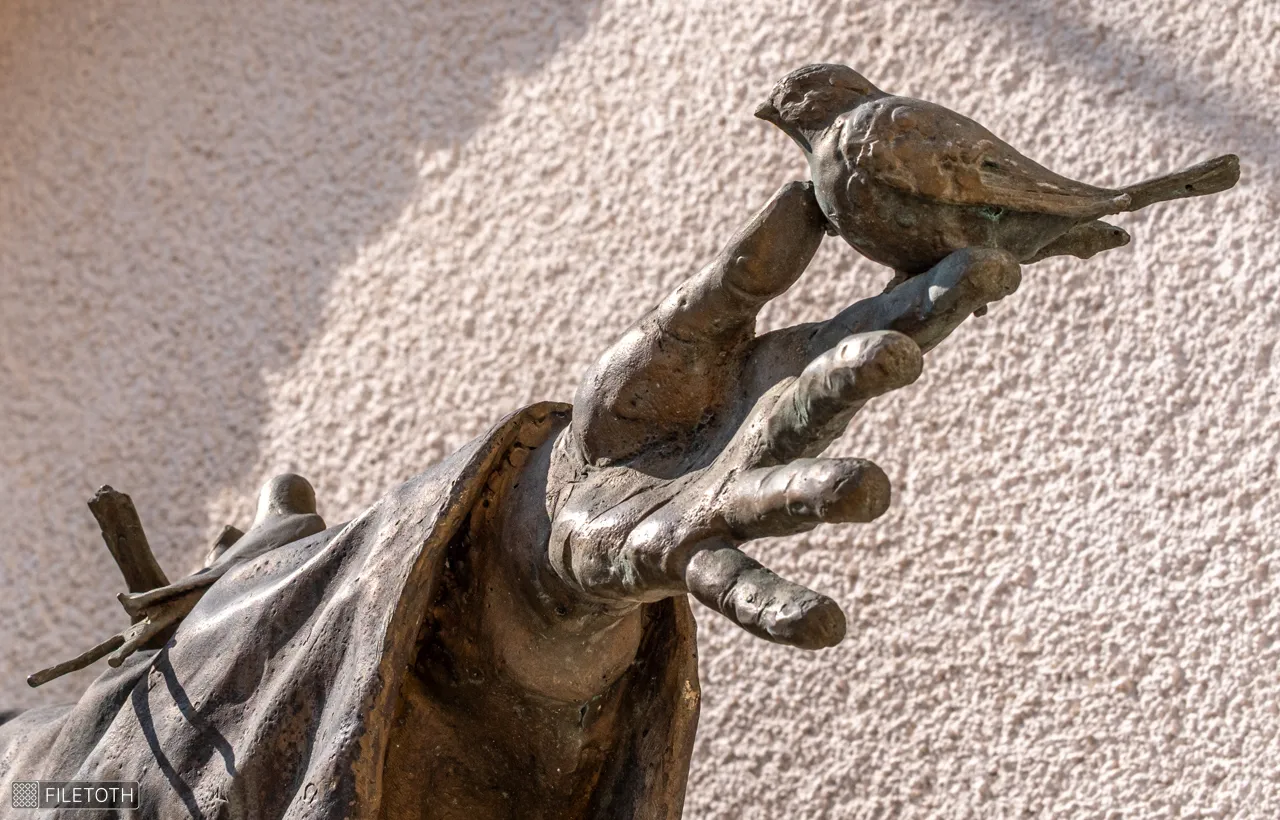
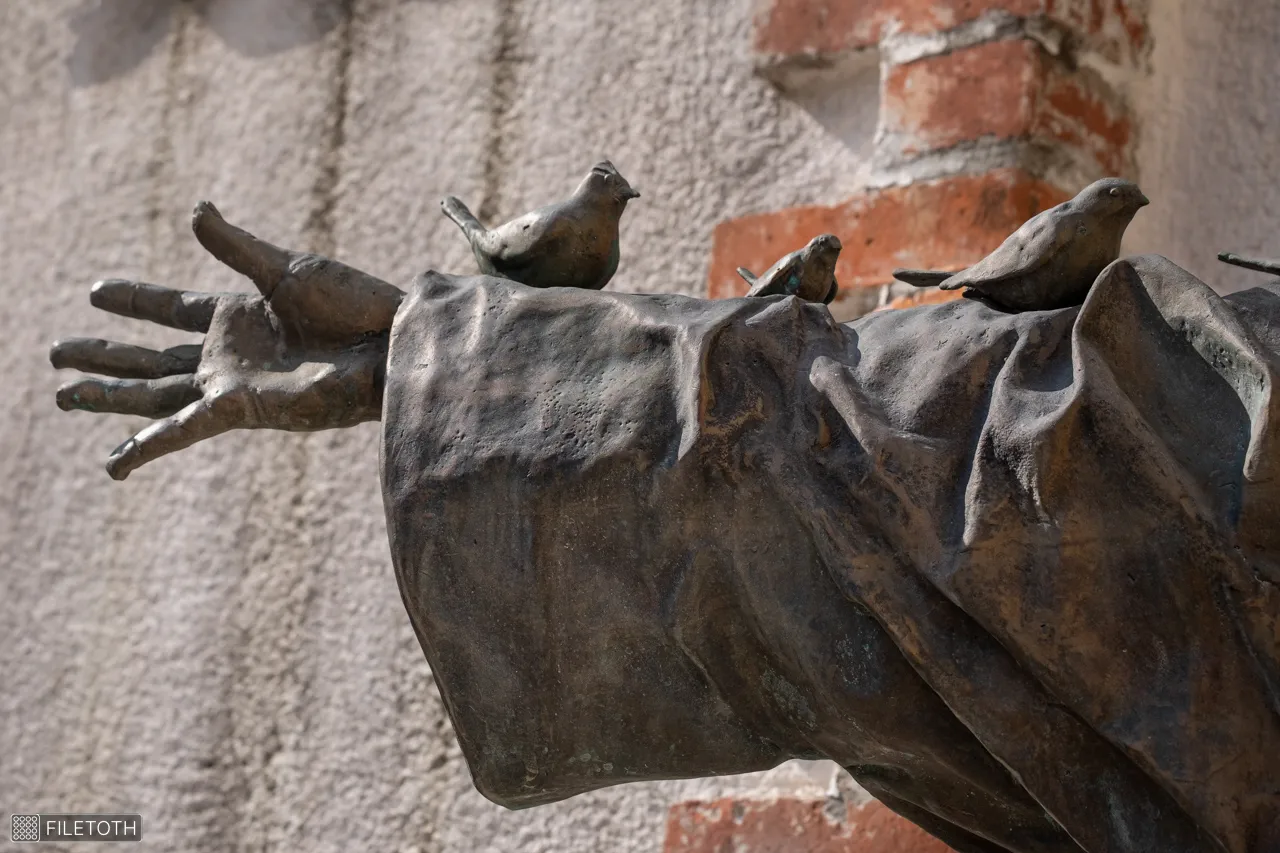
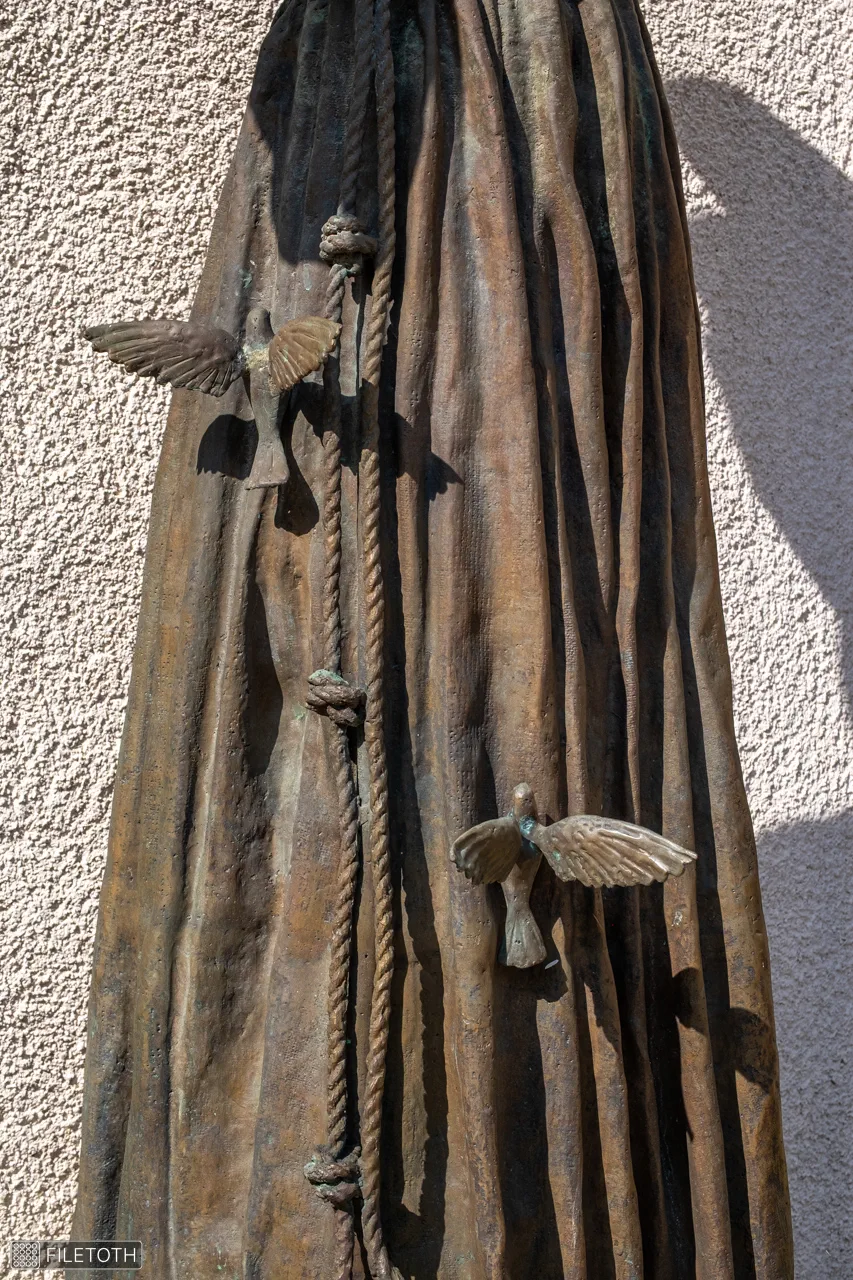
Saint Francis of Assisi Statue

Close-up of Saint Francis of Assisi's hand.

Historical figure and era

Saint Francis of Assisi (1181–1226) is remembered as the son of a wealthy merchant who renounced privilege to live in radical poverty, preaching peace, humility, and closeness to all creatures. His life and the Franciscan movement reshaped medieval Christianity's view of creation, presenting animals, the poor, and outsiders not as marginal but as companions and brothers.

Creation and historical context

Sándor Kligl's 2001 statue translates this vision into a light, almost floating figure surrounded by birds that perch on Francis's arms and gather around his robe, so that the saint and the flock form a single, continuous silhouette. The open hands suggest both blessing and mutual trust. Standing before the Budapesti Szent Ferenc Kórház, the statue echoes Francis's care for the sick, greeting patients and healthcare workers with a quiet gesture of solidarity.

Statue by Sándor Kligl, 2001. [ref.]
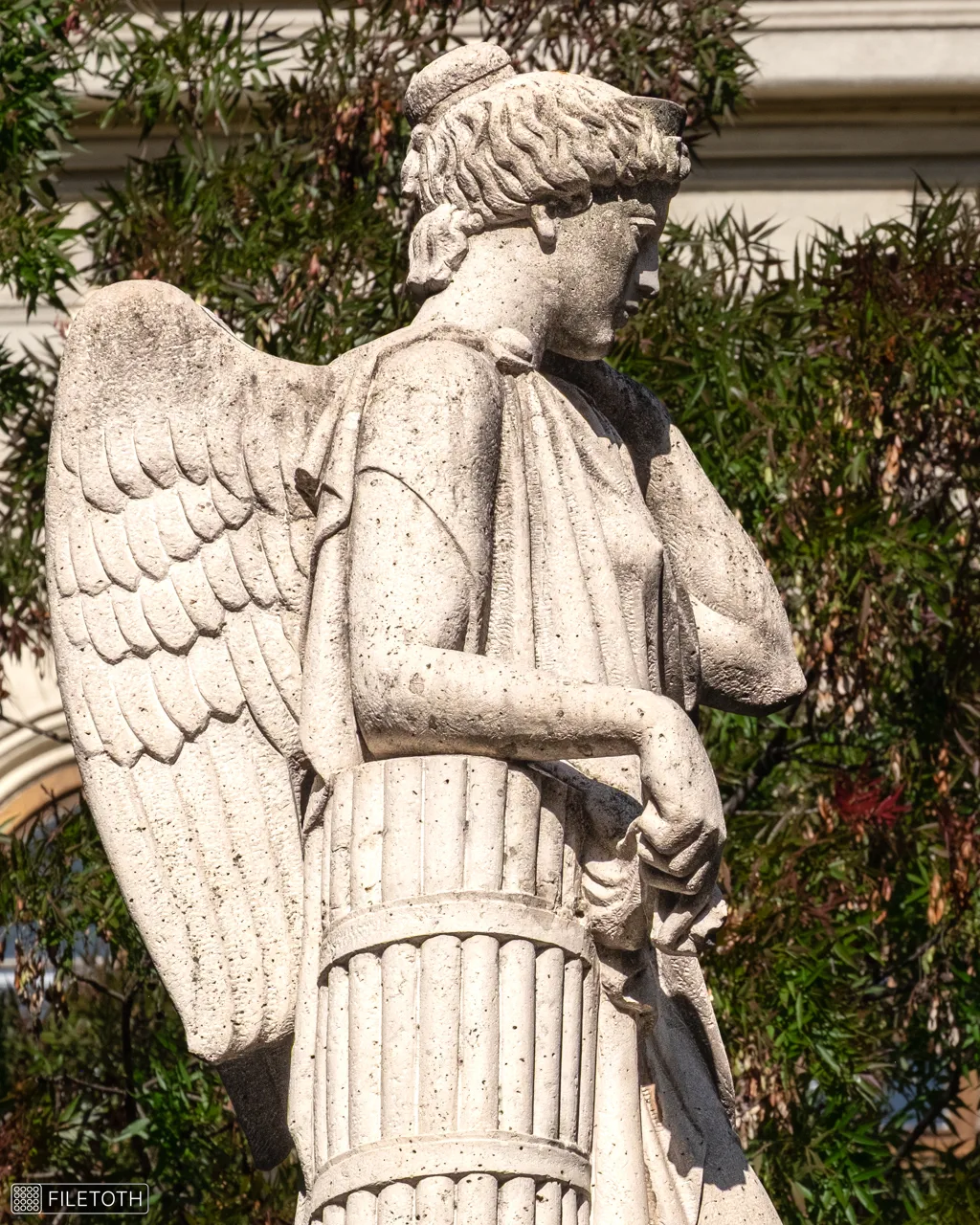
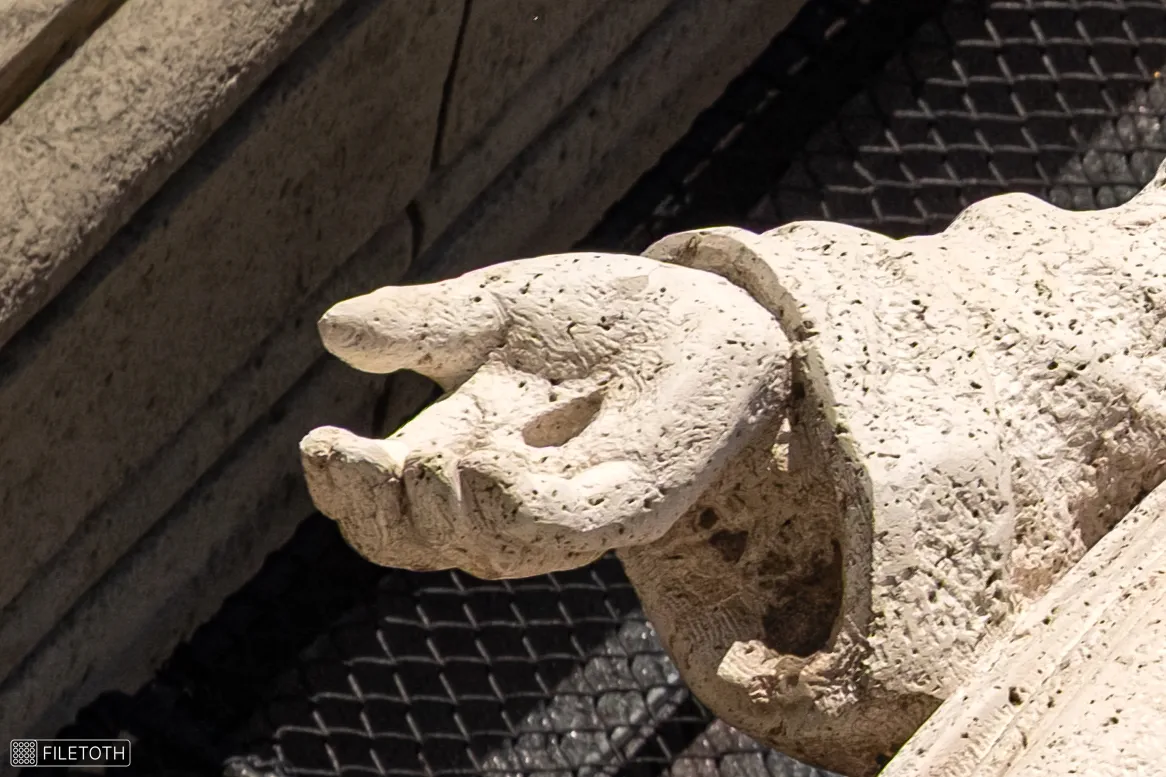
The Hand of Passion

Saint Francis of Assisi Statue

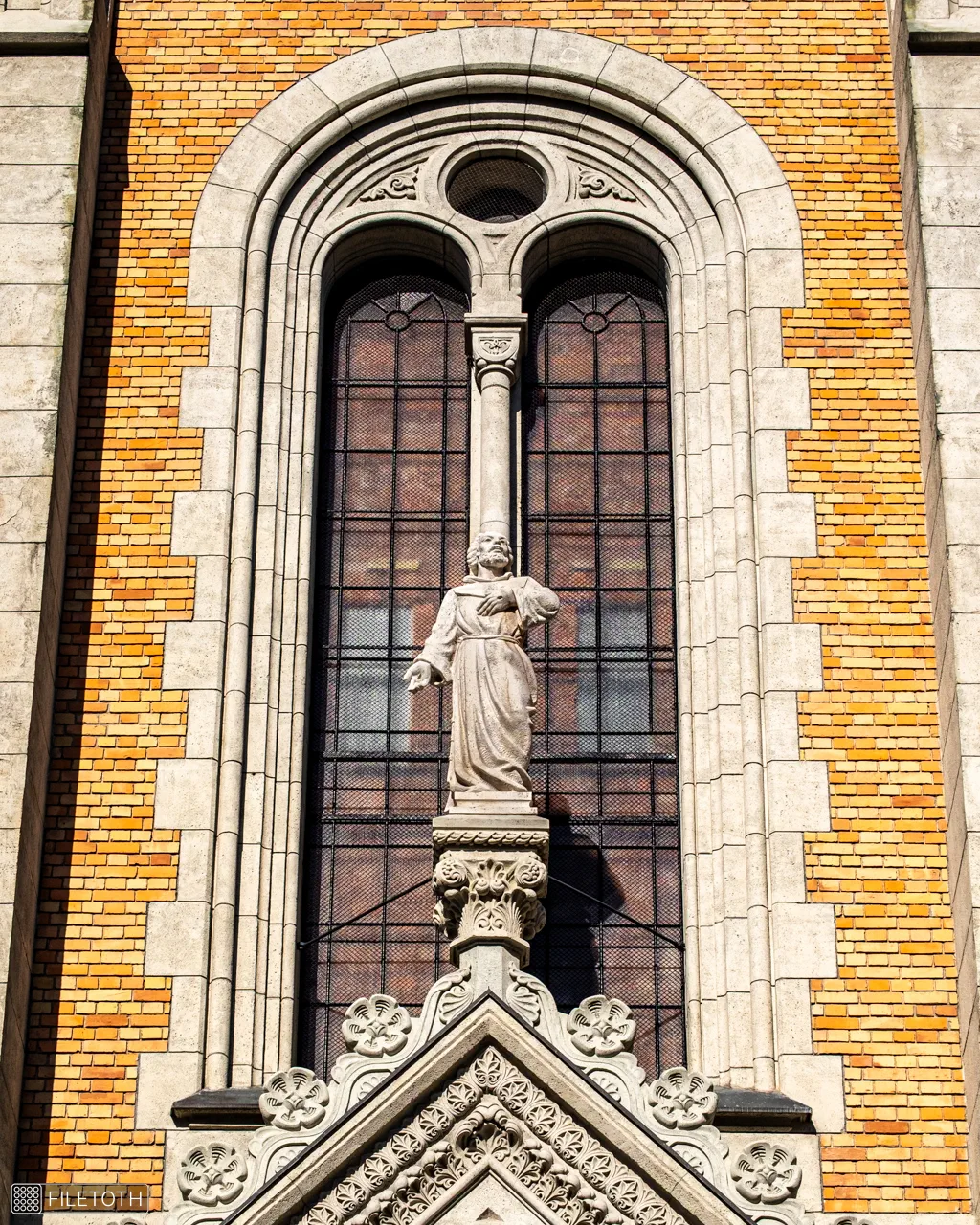
Close-up of Saint Francis's hand bearing the stigmata.

Historical figure and era

Saint Francis of Assisi (1182–1226) is remembered for his profound devotion, humility, and compassion, becoming one of Christianity's most beloved saints. According to tradition, he received the stigmata—the sacred wounds corresponding to Christ's crucifixion—making him the first recorded person to bear these marks. His life continues to symbolize selfless love, simplicity, and spiritual renewal.

Creation and historical context

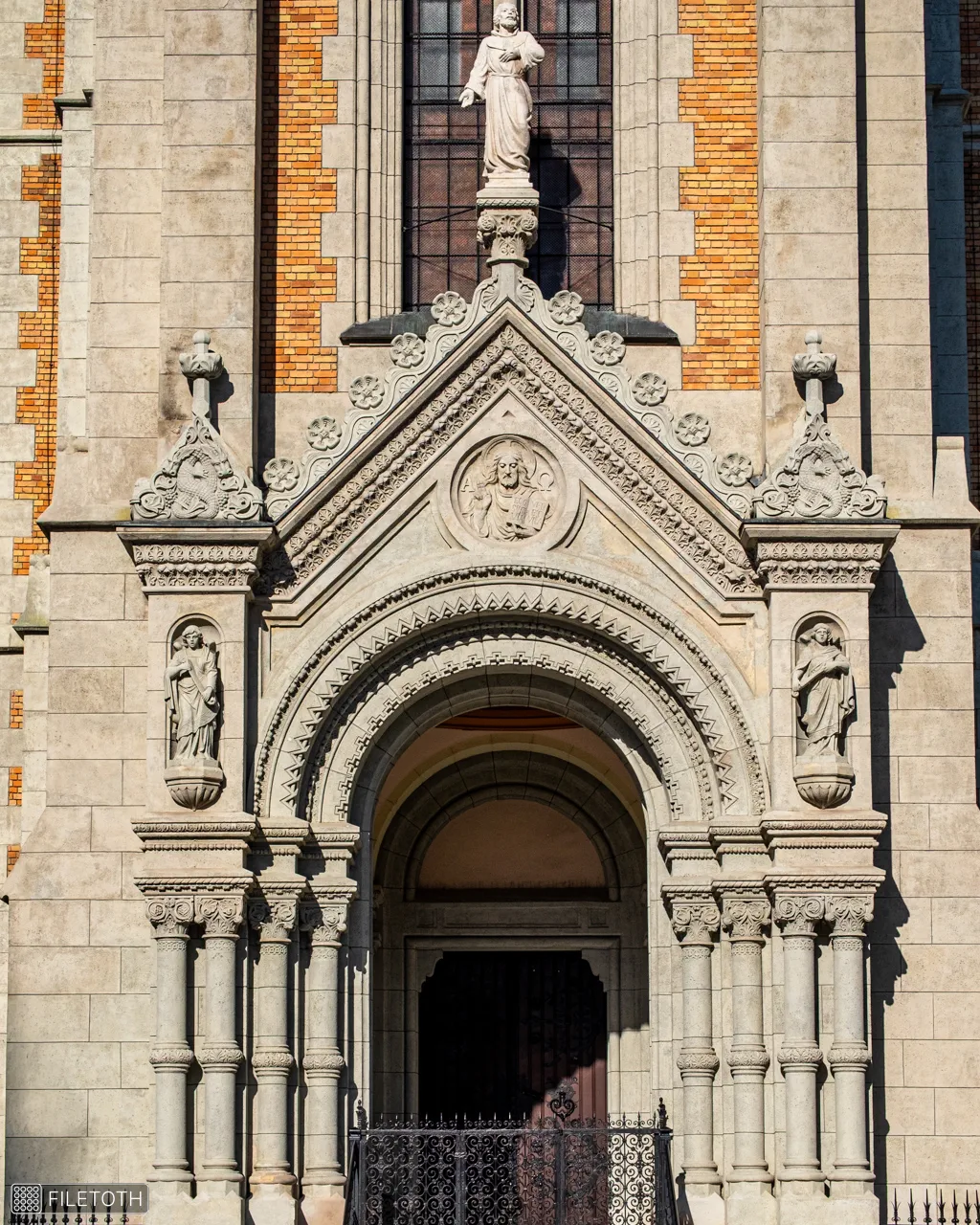
Gyula Szász's 1879 sculpture stands on the main façade of the church that bears Saint Francis's name, making the saint a visible presence in the everyday life of the surrounding neighborhood. Integrated into the architectural rhythm of the building, the statue functions both as a devotional image and as part of the church's urban identity. The marked hand bearing the stigmata quietly invites contemplation of suffering embraced with faith, transformed into compassion for others.

Statue by Gyula Szász, 1879. [ref.]
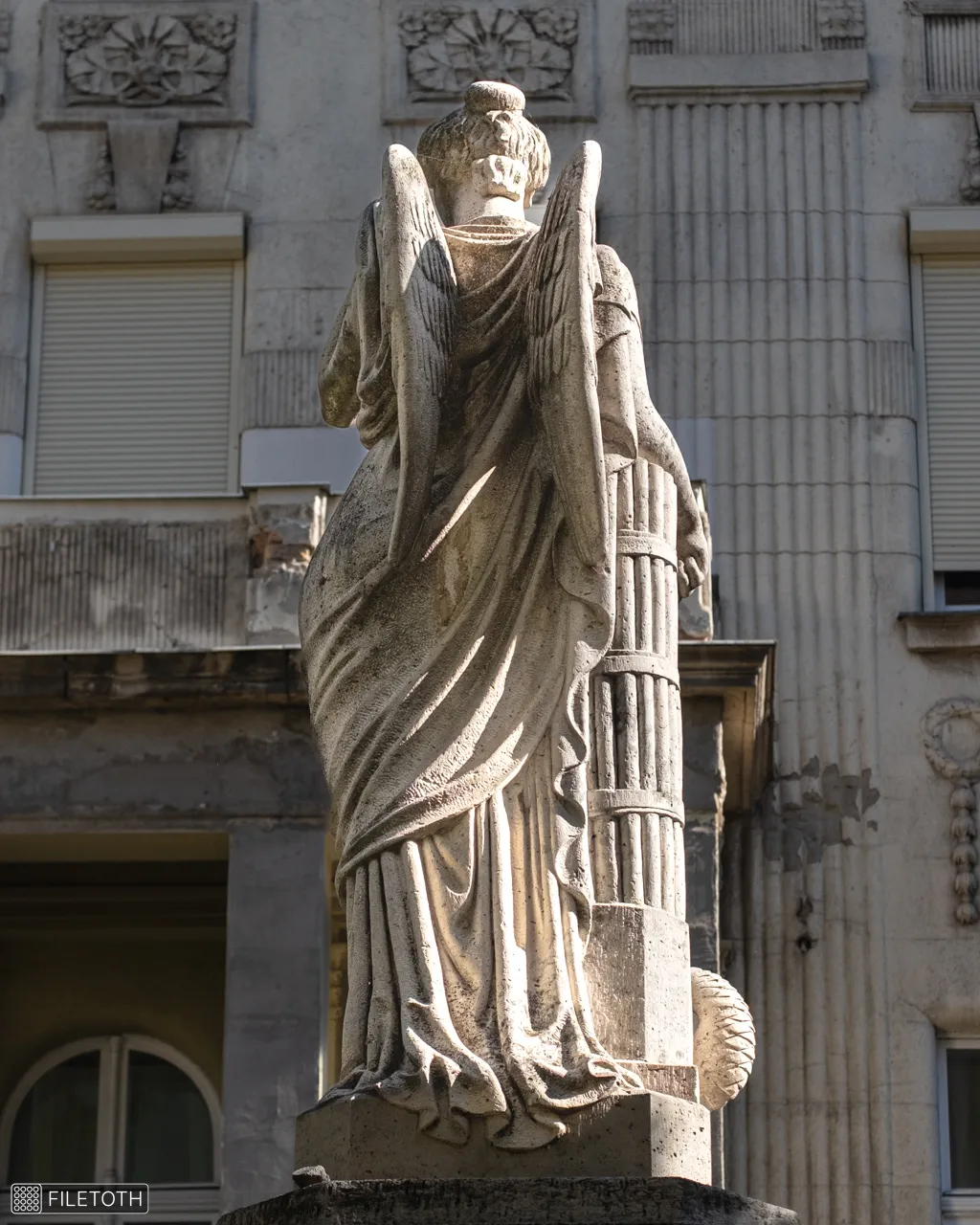
The Hand of the Missionary

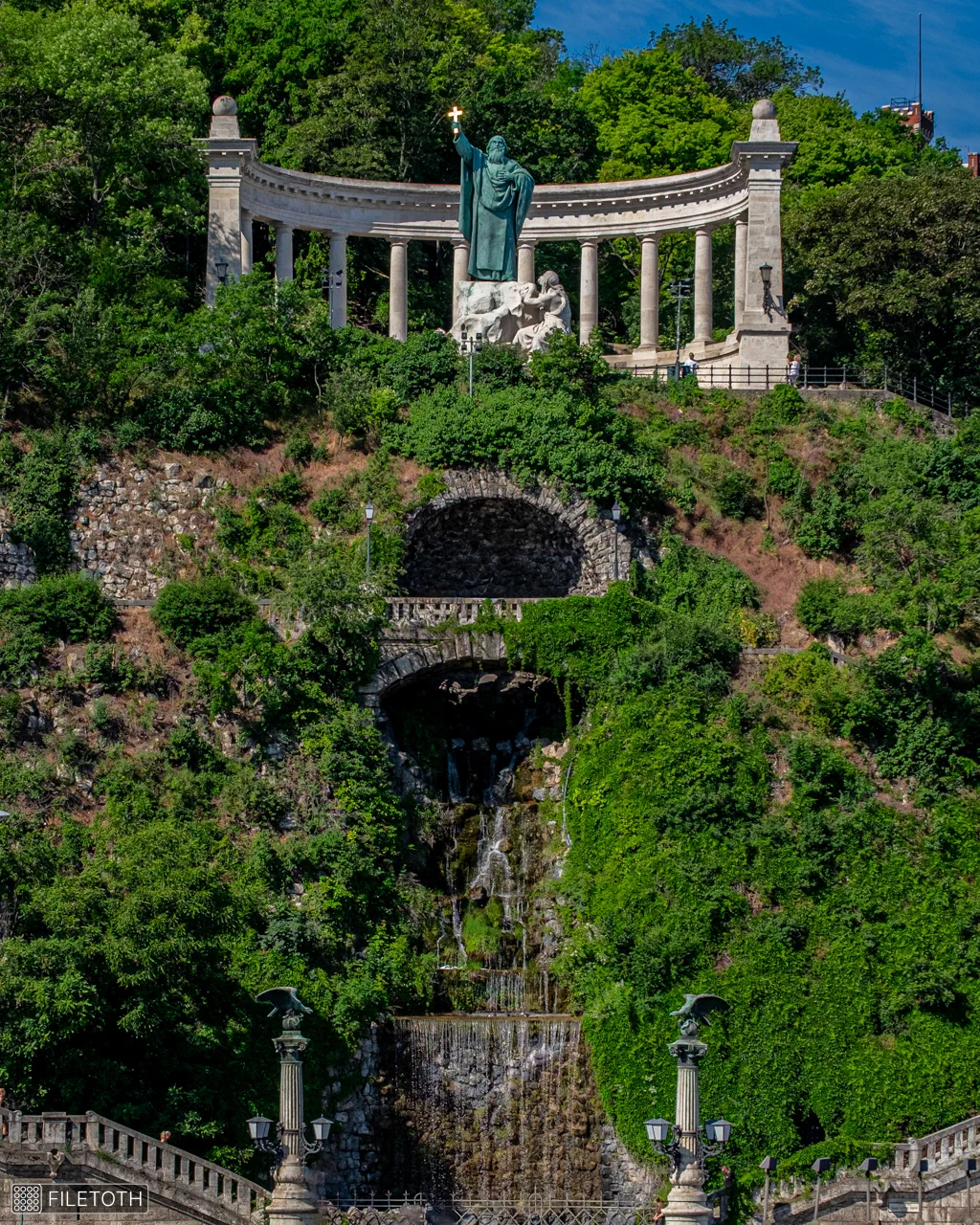
Saint Gerard Statue

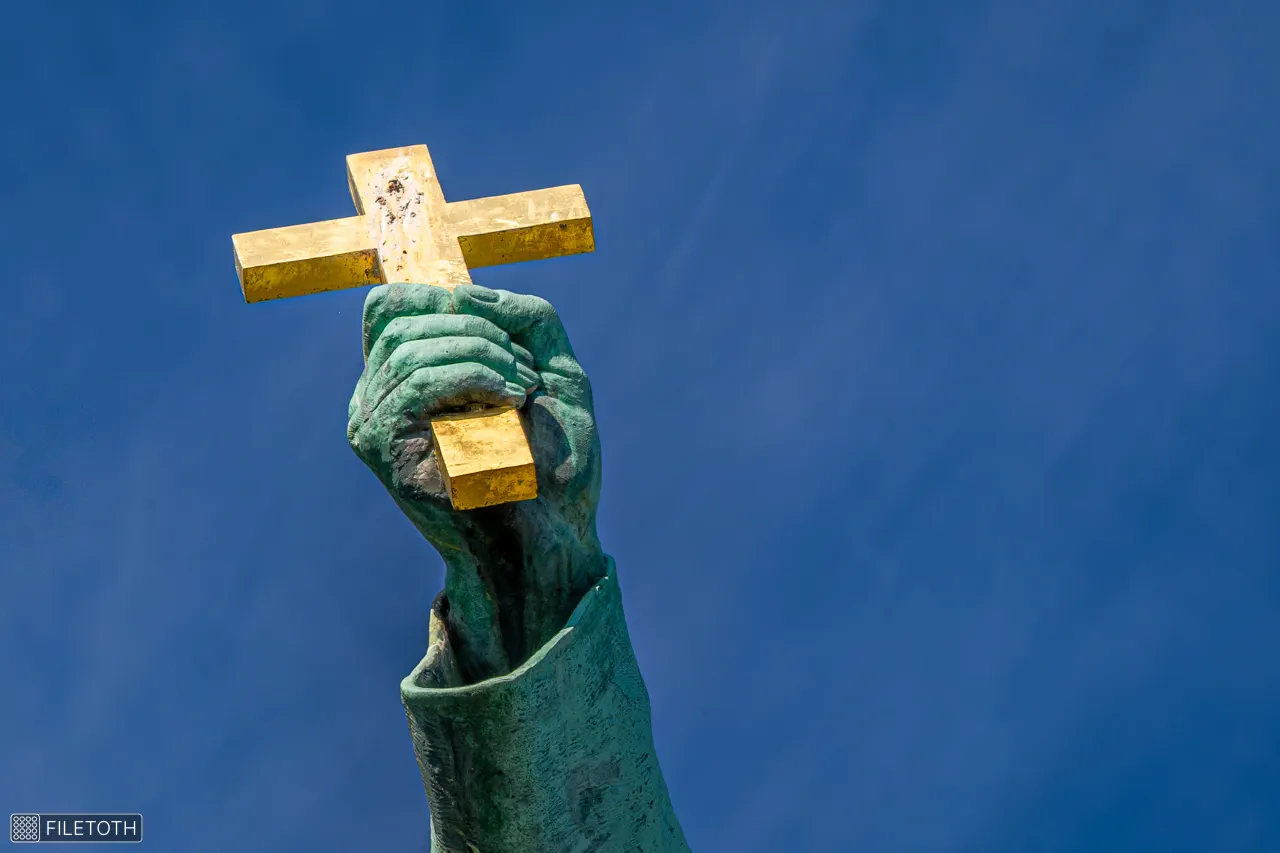
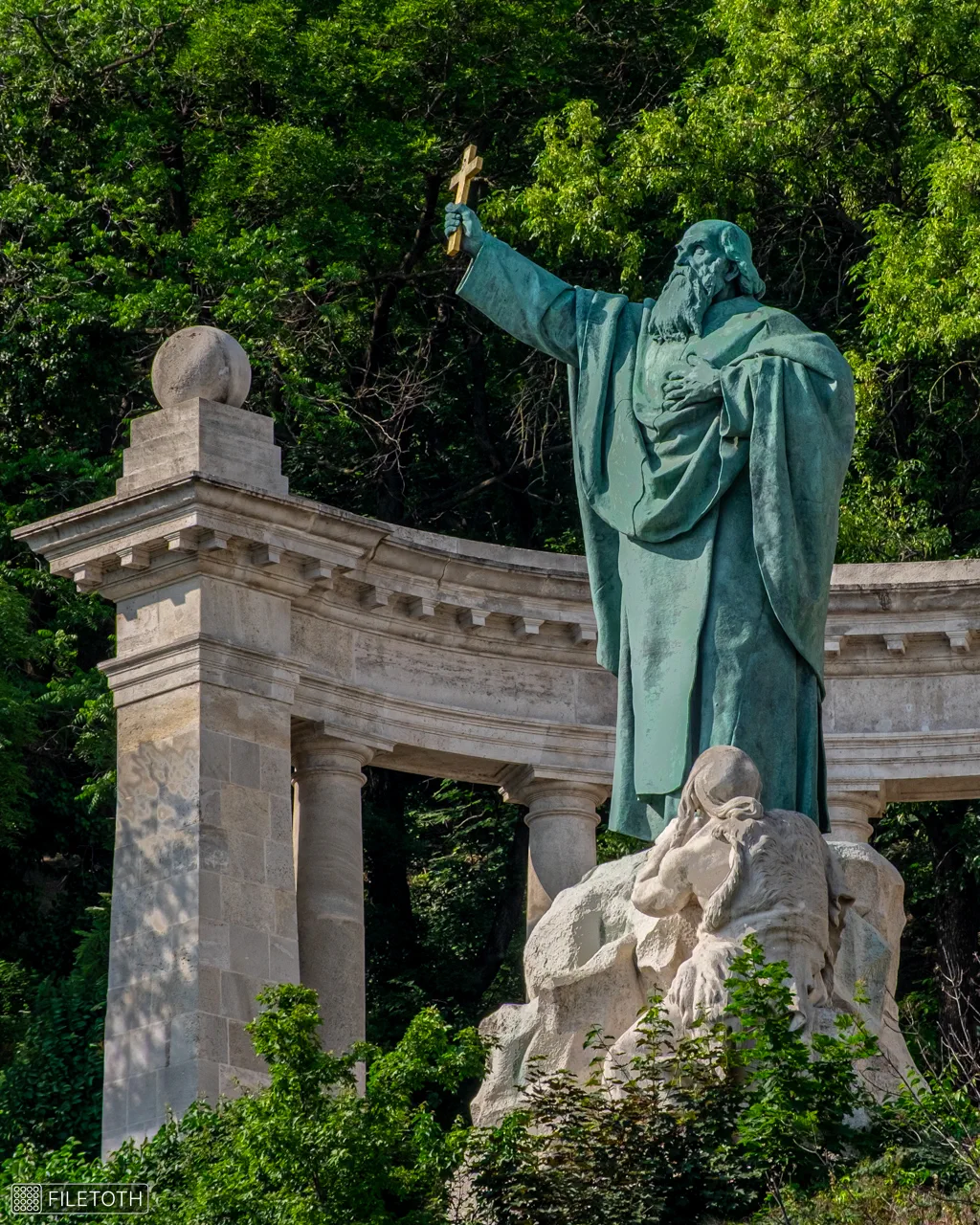
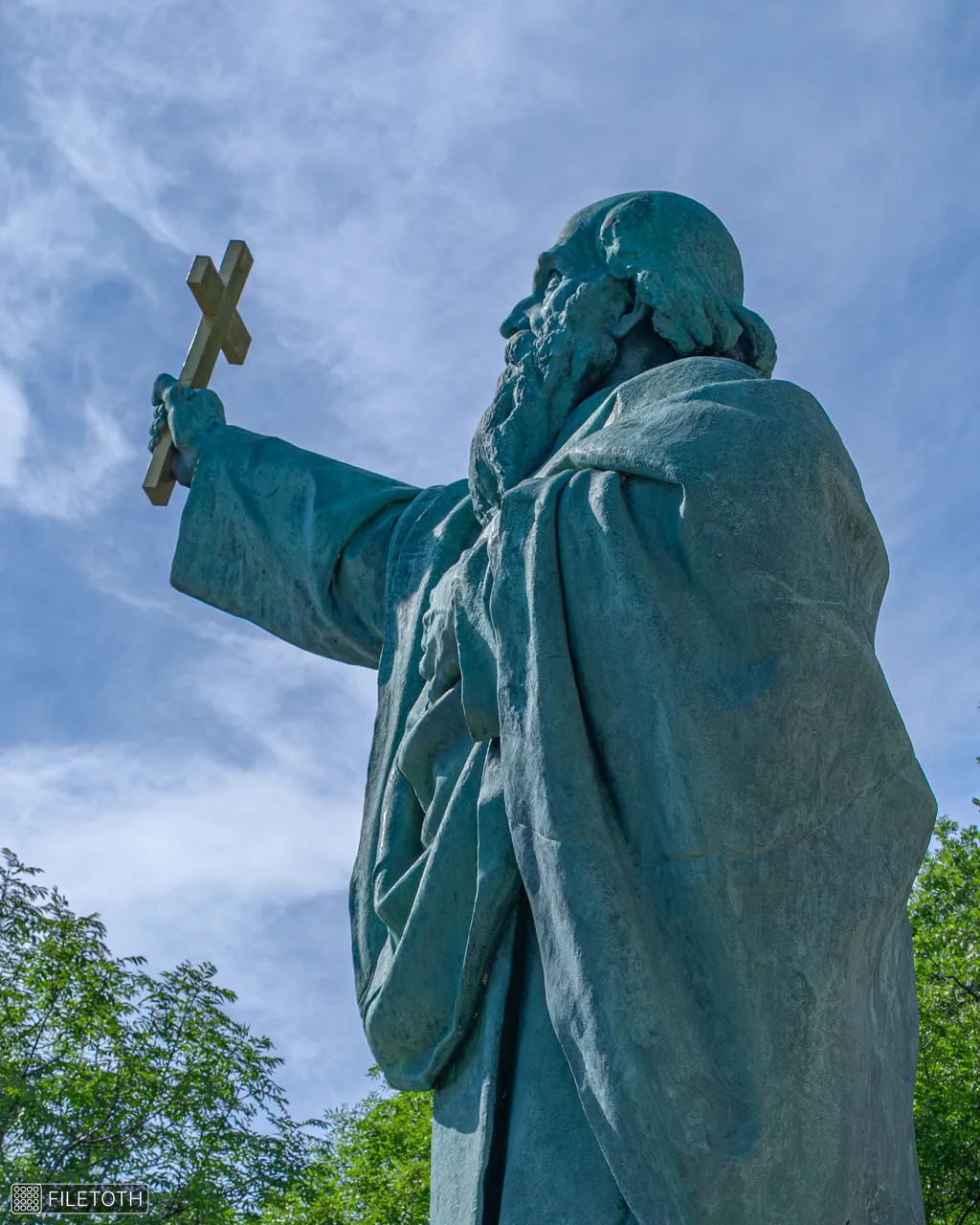
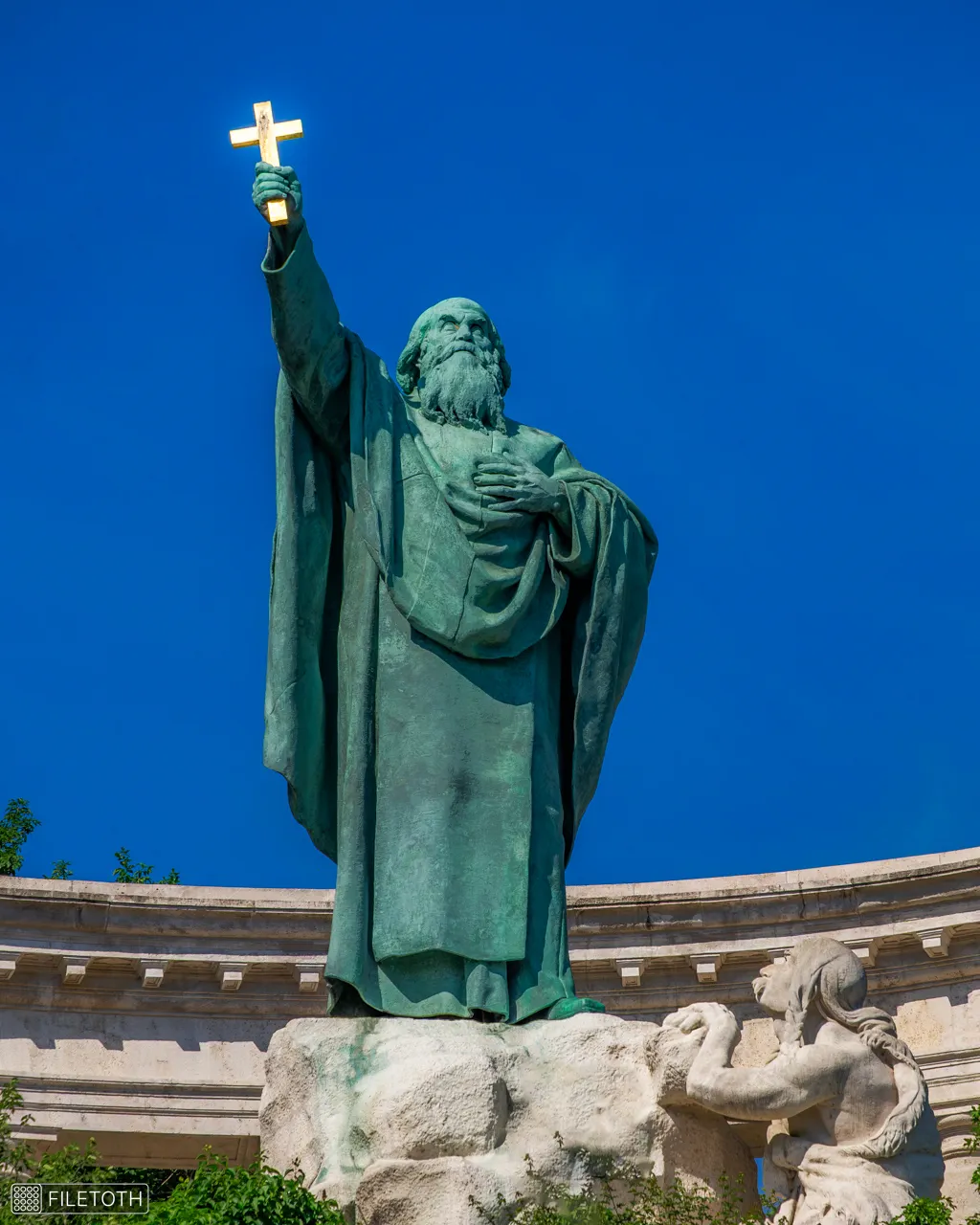
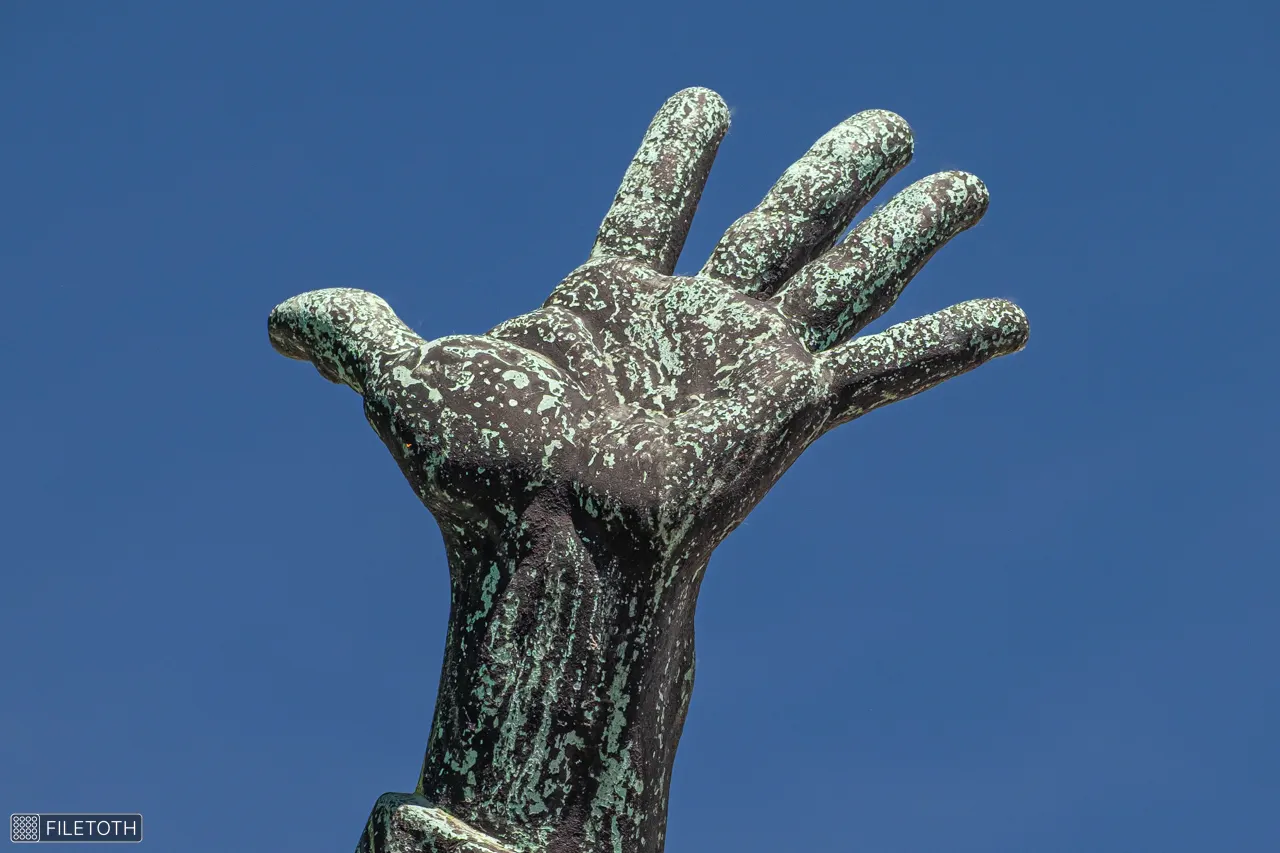
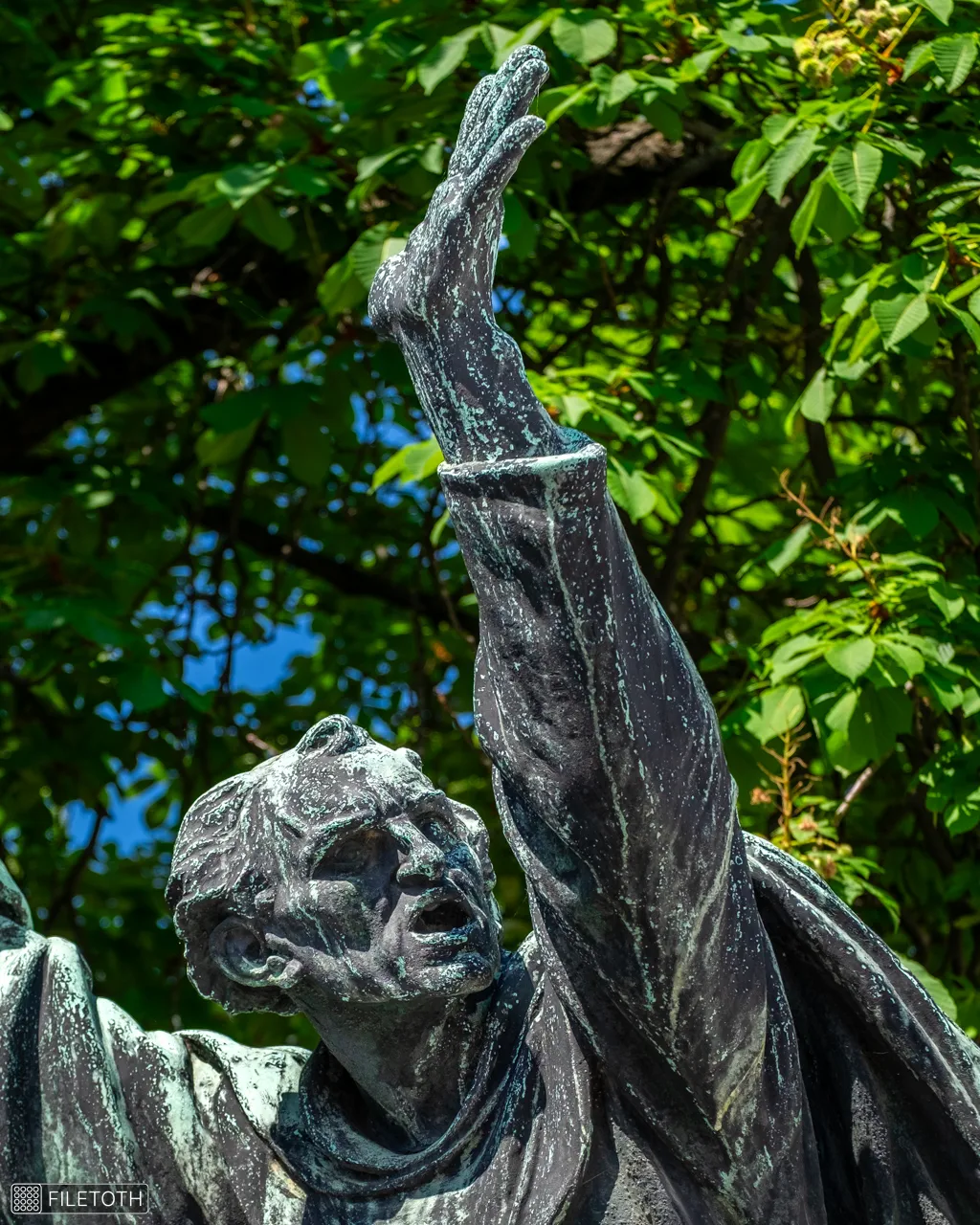
Close-up of Saint Gerard's hand holding a cross.

Historical figure and era

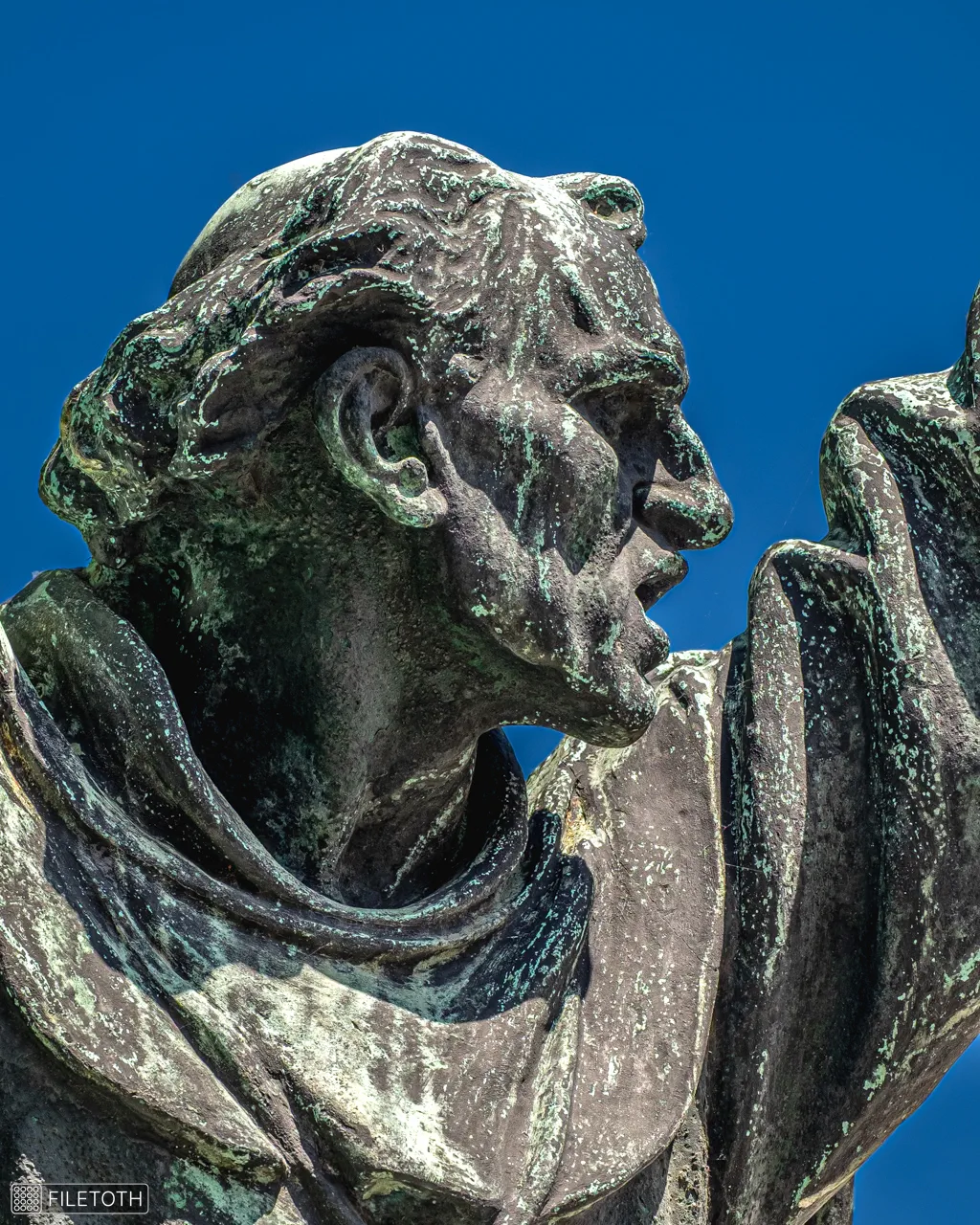
Saint Gerard (c. 980–1046) was a Benedictine monk and missionary bishop invited to the court of King Stephen I, where he became one of the leading figures in the Christianization of the early Hungarian kingdom. Remembered for his learning, teaching, and unwavering faith, he later became one of Hungary's earliest martyrs. His life remains closely connected to Gellért Hill, where tradition places his death.

Creation and historical context

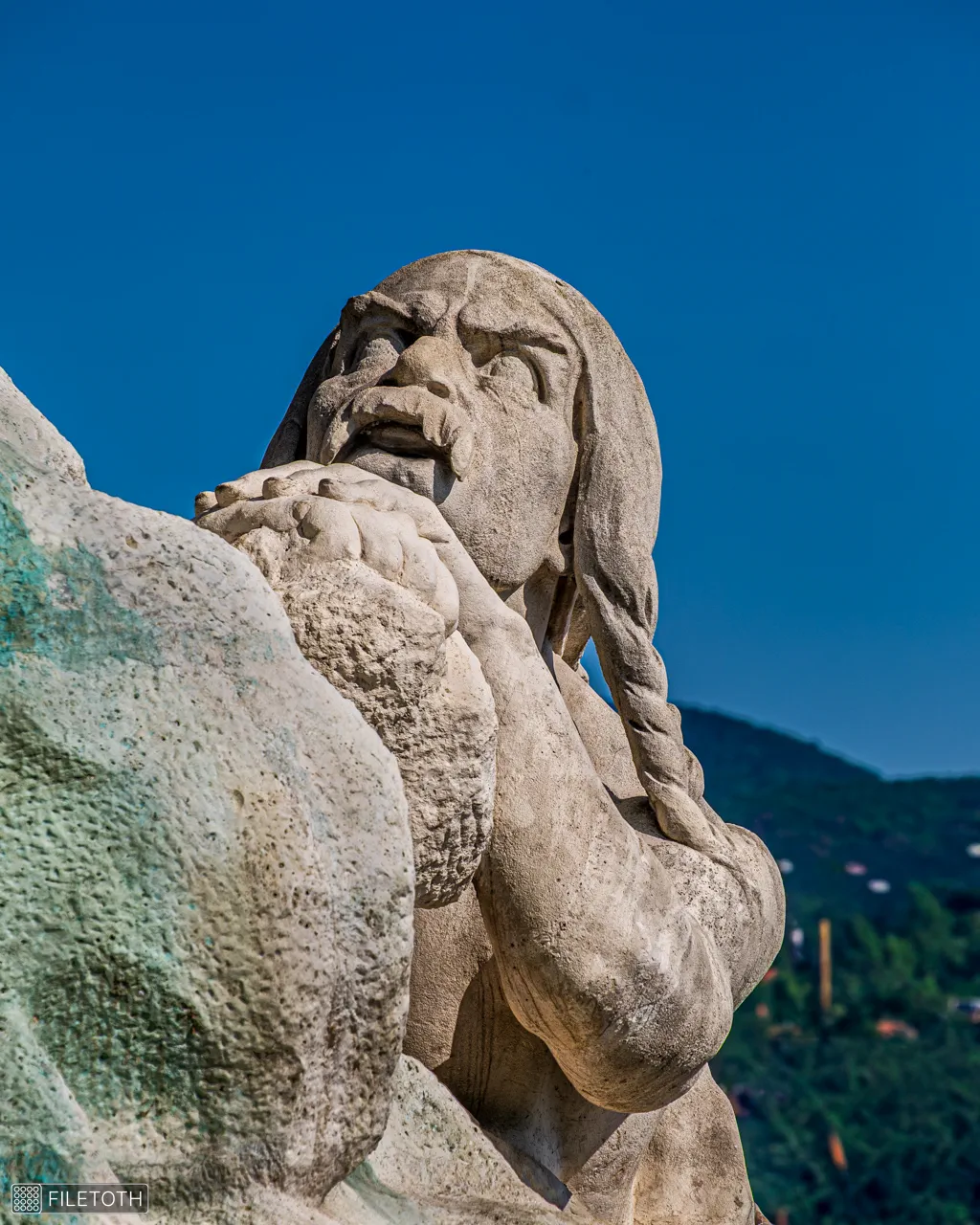
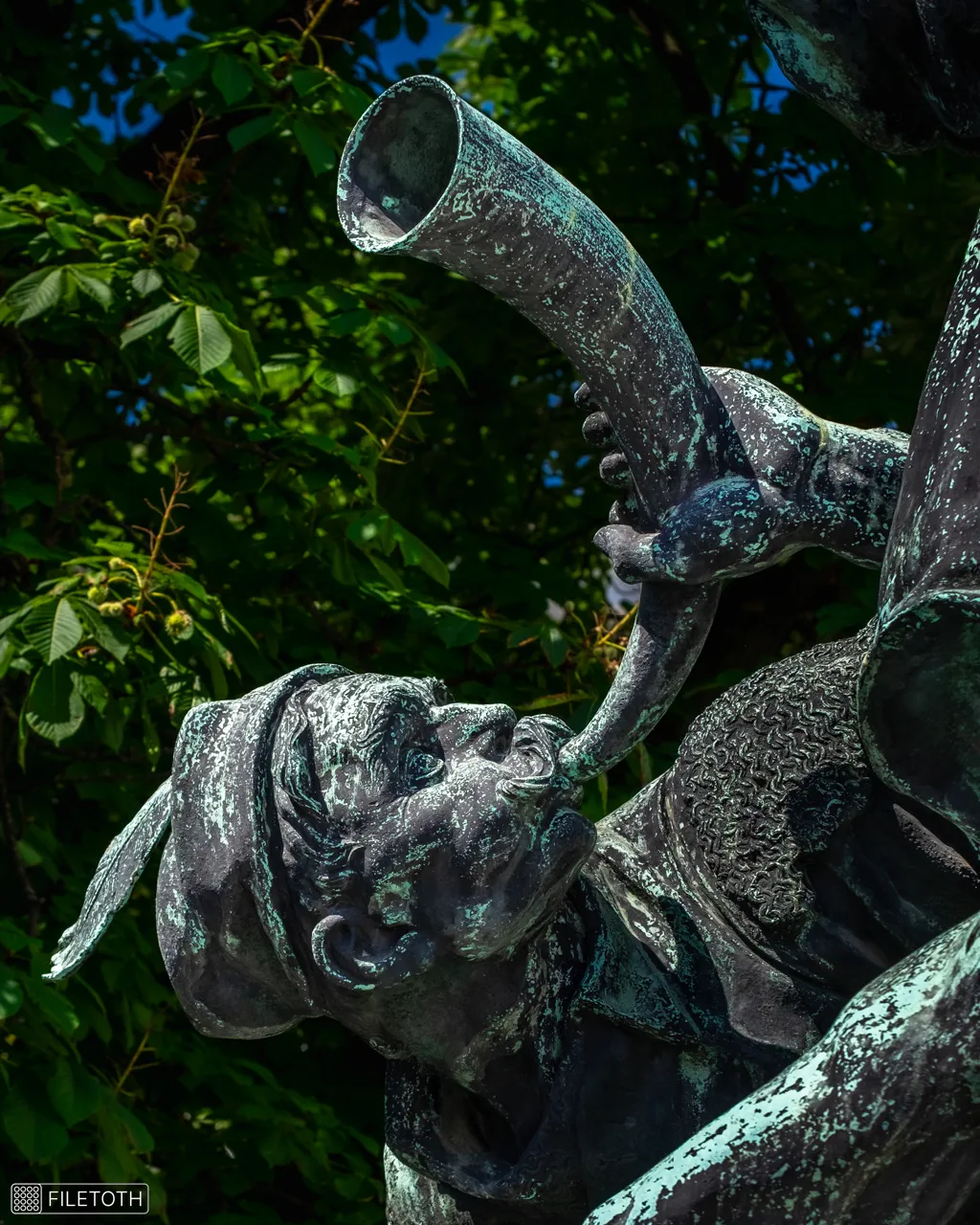
Designed by Gyula Jankovits and Aladár Gárdos and inaugurated in 1904, the monument stands high above the Danube on the rocky slopes of Gellért Hill. Raising a cross toward the sky, Saint Gerard dominates one of Budapest's most dramatic viewpoints, while the kneeling pagan warrior below recalls the challenges of Hungary's Christian beginnings. The lifted hand transforms a simple gesture into a lasting symbol of conviction, purpose, and faith expressed through action.

Statue by Gyula Jankovits and Aladár Gárdos, June 16, 1904. [ref.]
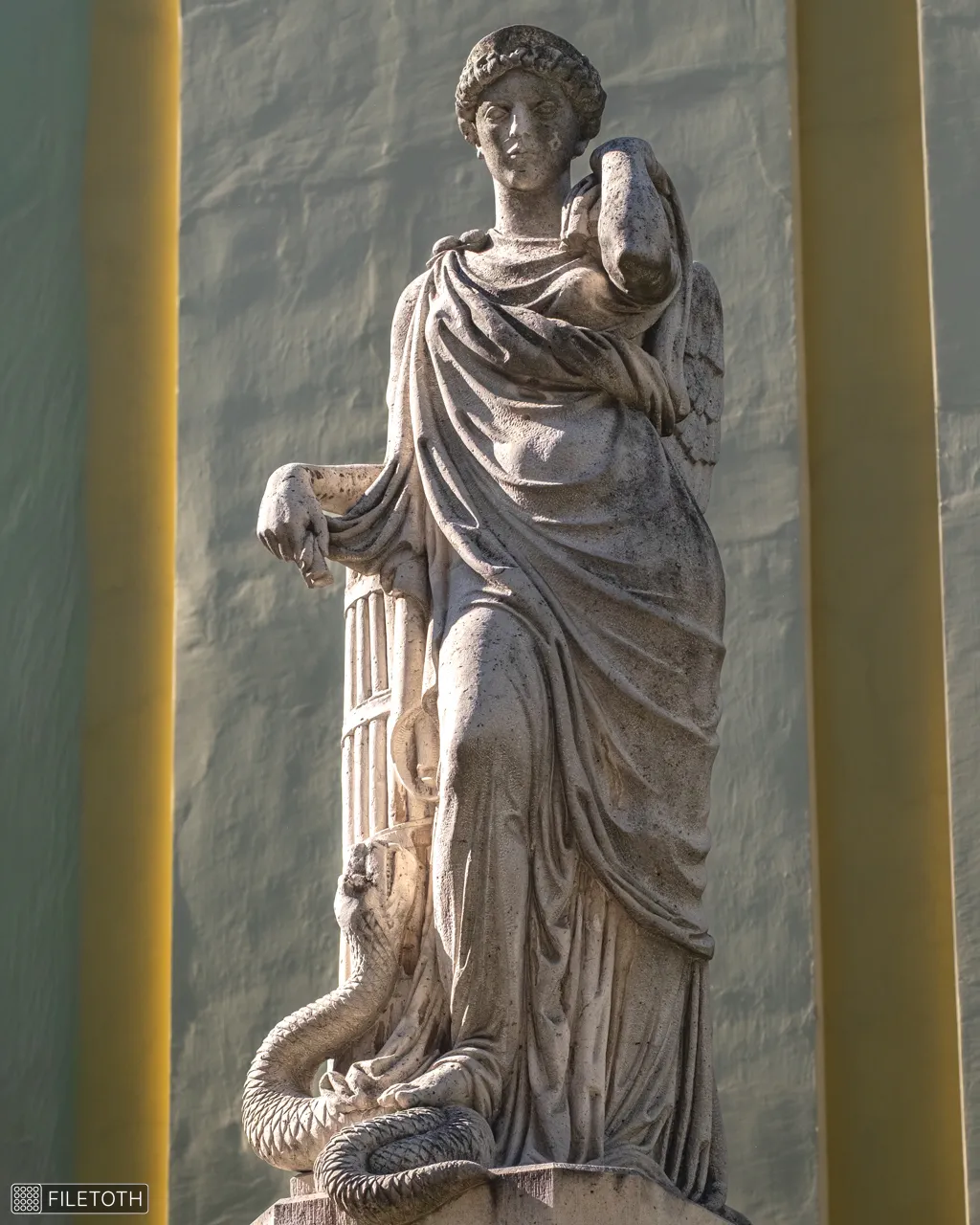
The Hand of Resolve

Saint John of Capistrano Statue

Close-up of Saint John of Capistrano's left hand.

Historical figure and era

St. John of Capistrano (1386–1456) was a Franciscan friar and preacher who became a leading spiritual figure during the defense of Central Europe against the Ottoman Empire. In Hungarian historical memory, he is closely associated with the 1456 Siege of Belgrade (Nándorfehérvár), where his preaching inspired crusaders and townspeople alike, uniting religious conviction with collective action.

Creation and historical context

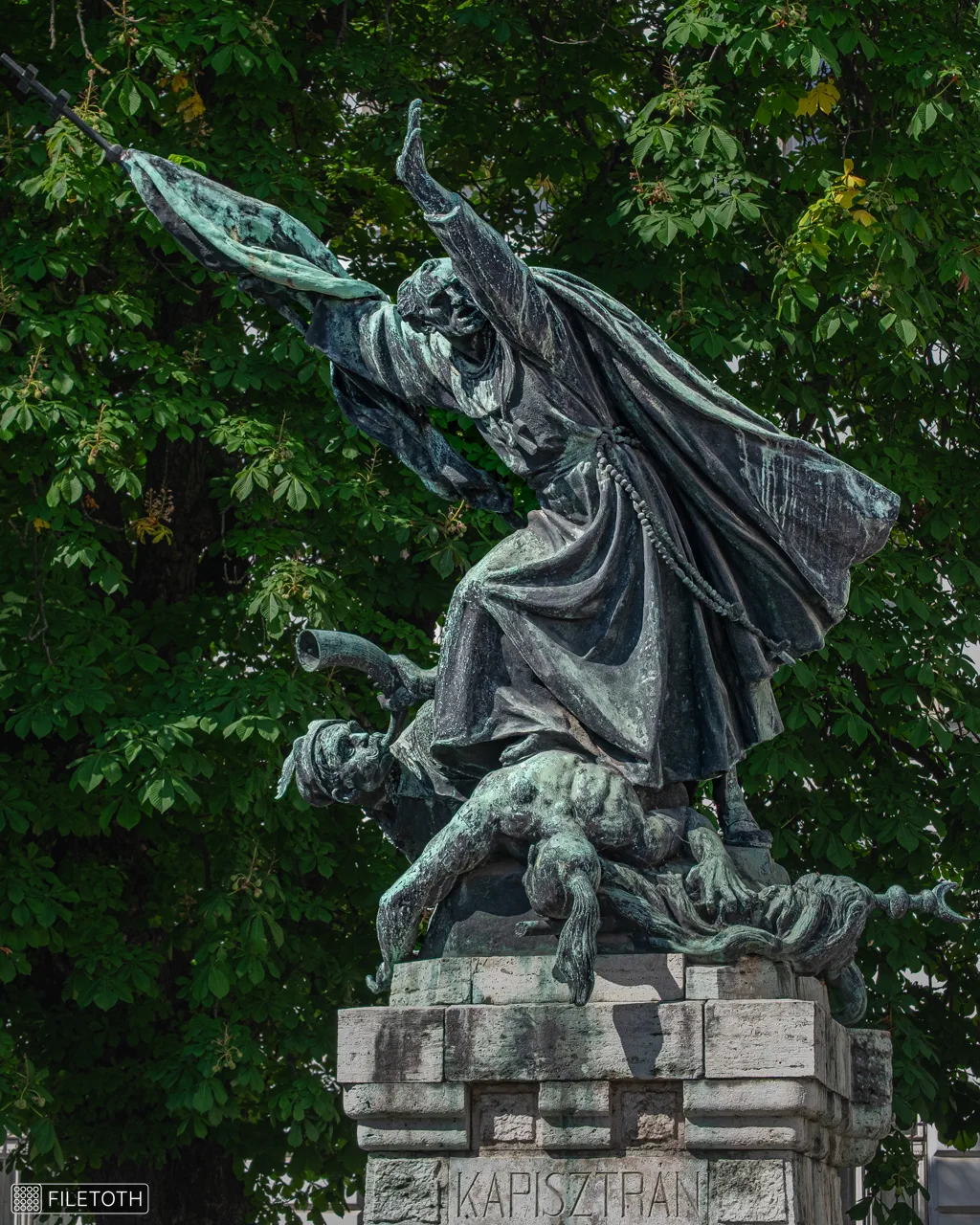
József Damkó's statue, unveiled in 1922 during the early Horthy era, reflects a period when post-Trianon Hungary frequently turned to historical and religious figures as symbols of perseverance and national renewal. Captured in mid-stride, the saint advances while raising a cross and extending one hand in a gesture of exhortation. The sculpture emphasizes movement, determination, and moral resolve rather than quiet contemplation.

Statue by József Damkó, November 19, 1922. [ref.]
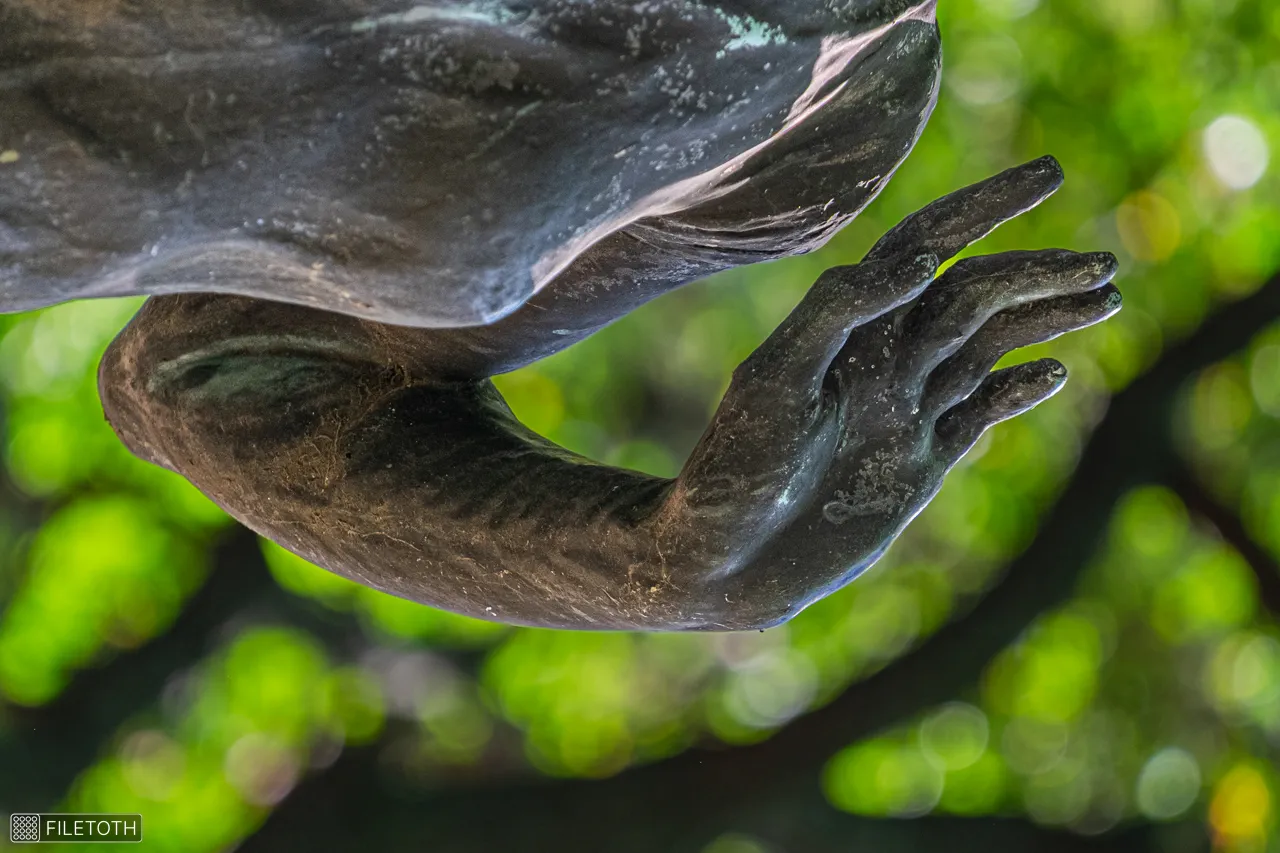
The Hand of Vigilance

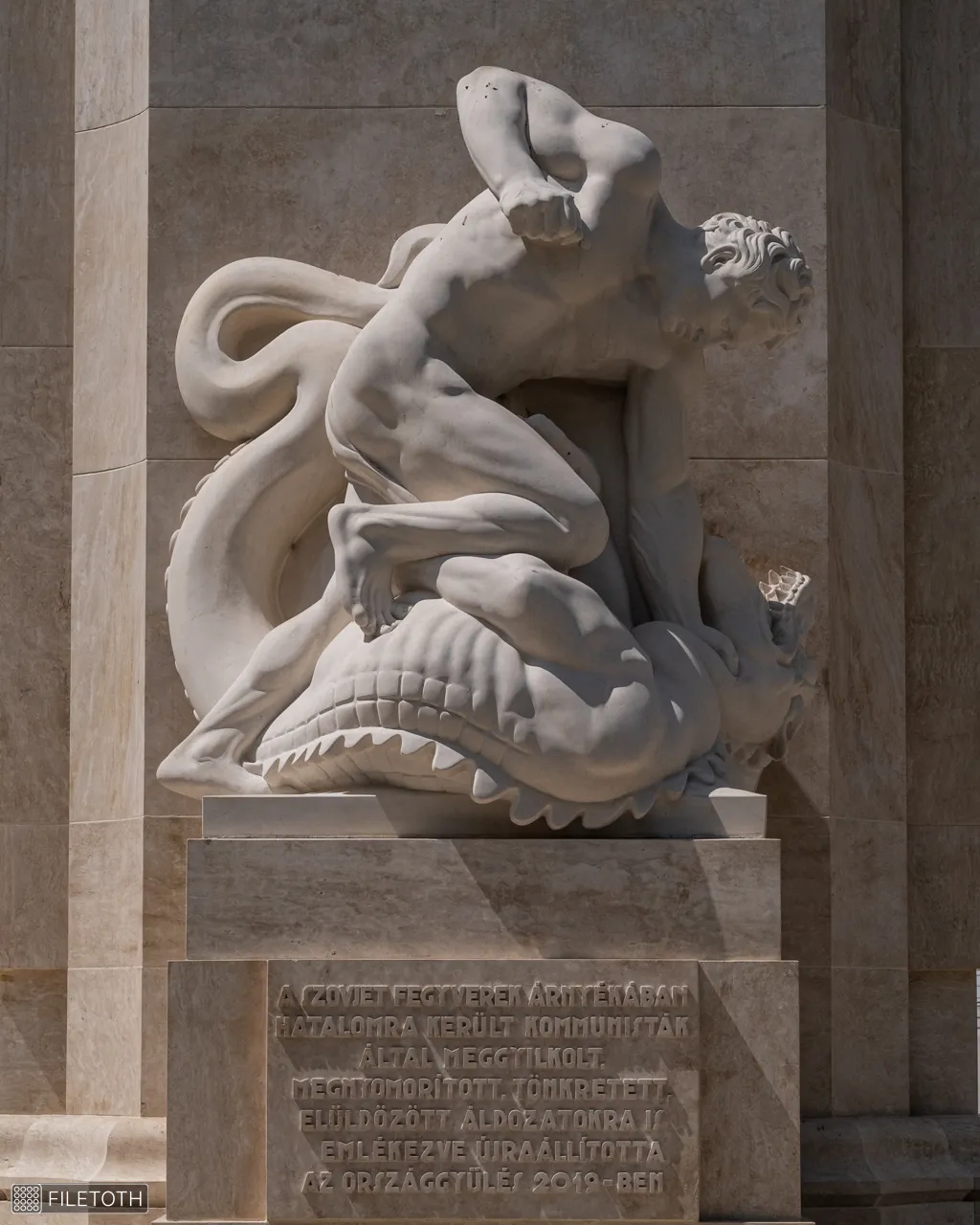
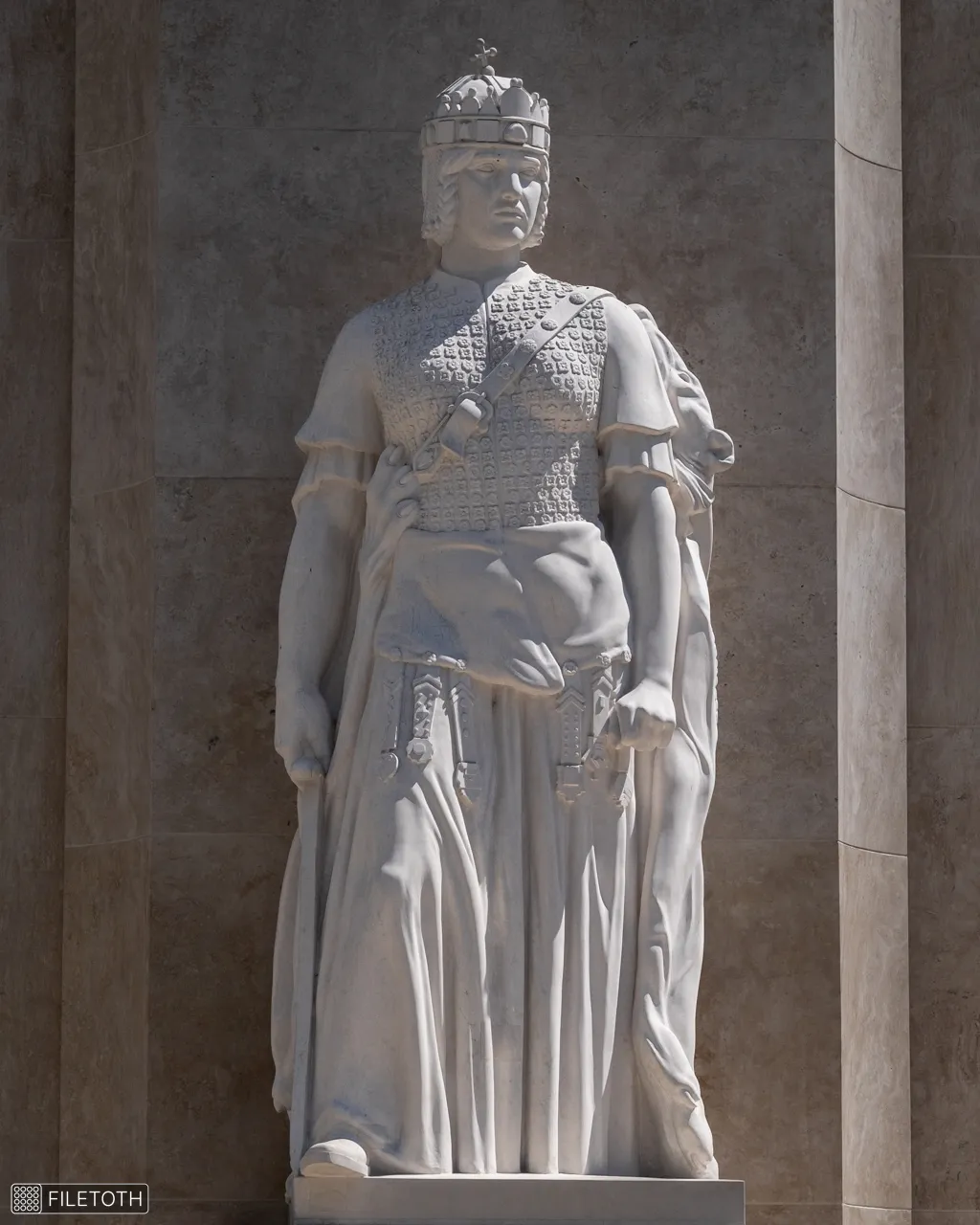
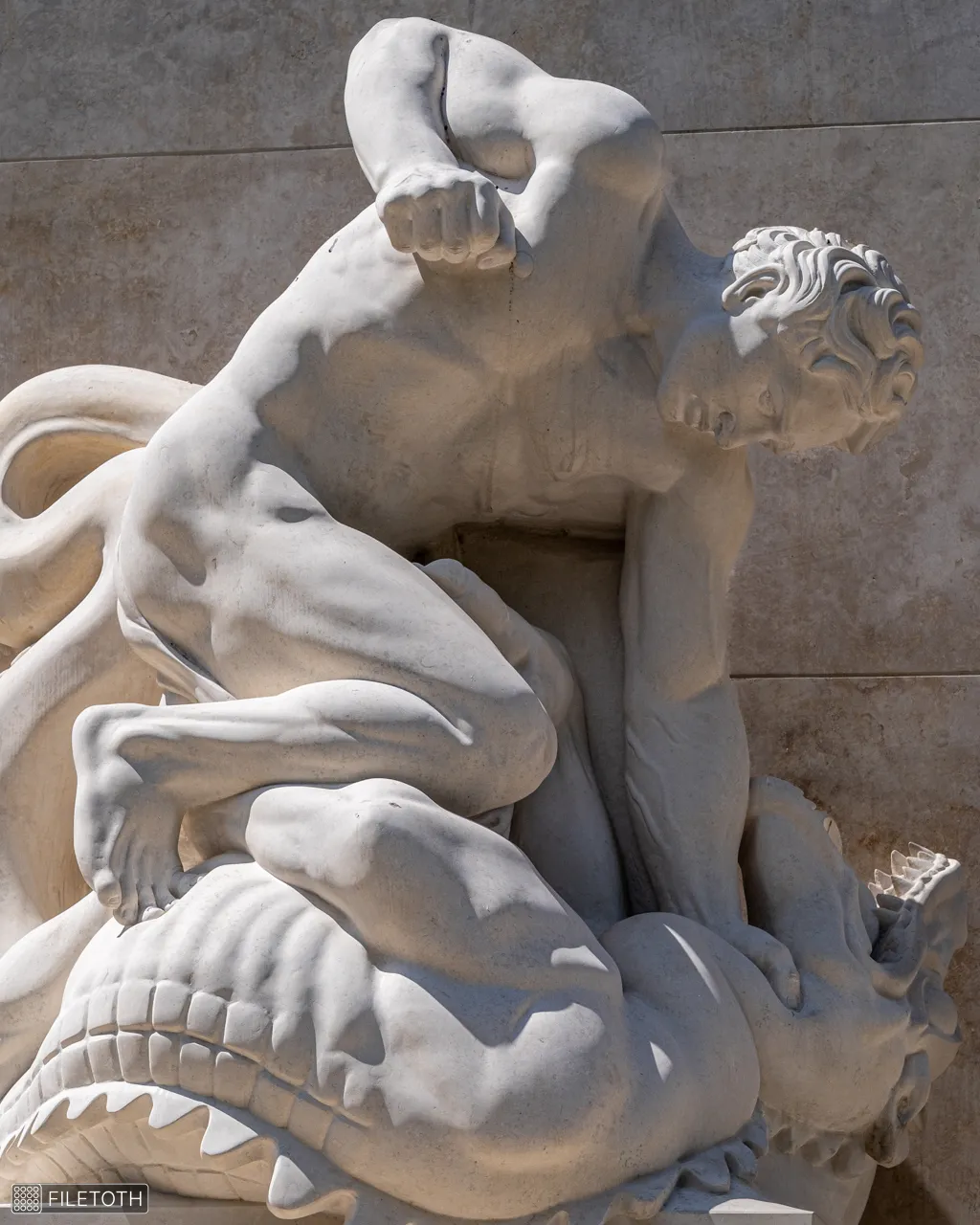
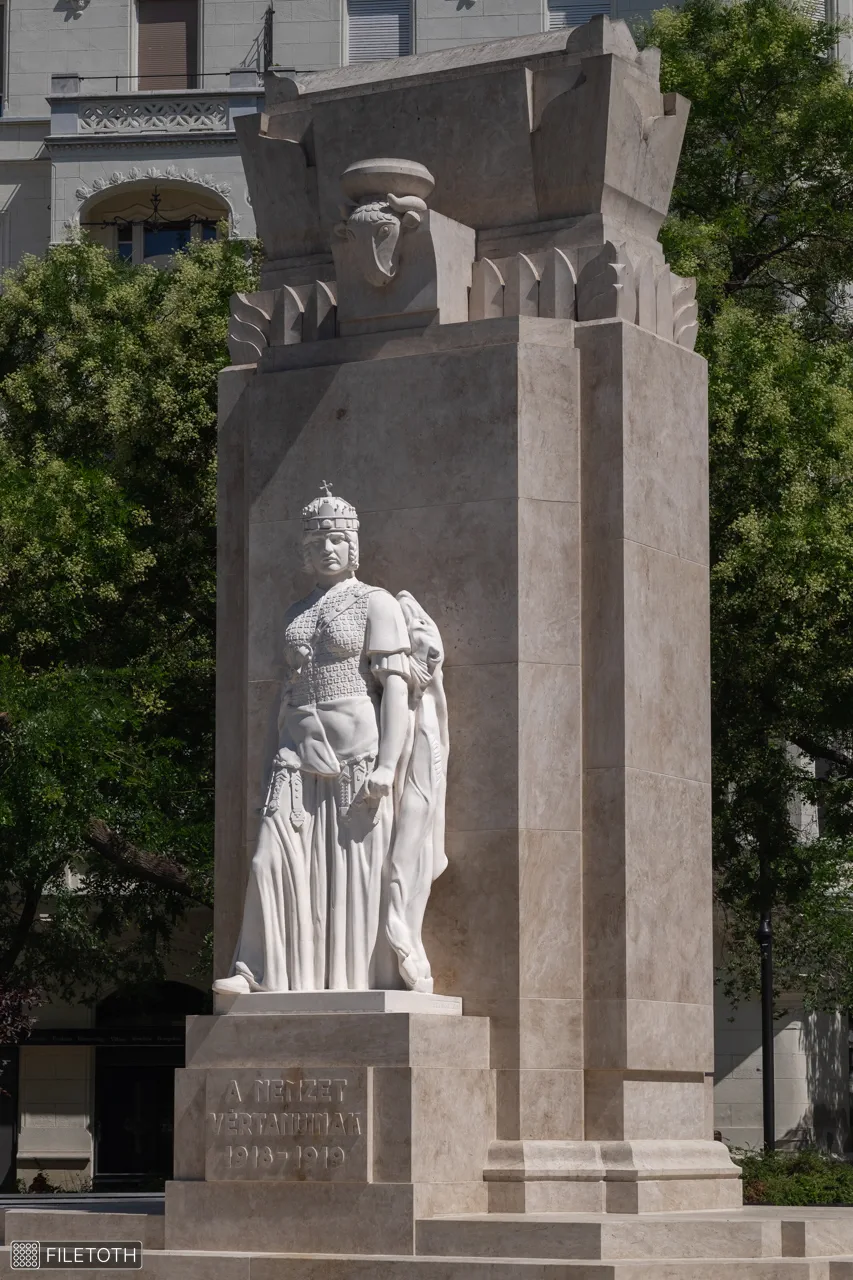
Memorial of the National Martyrs

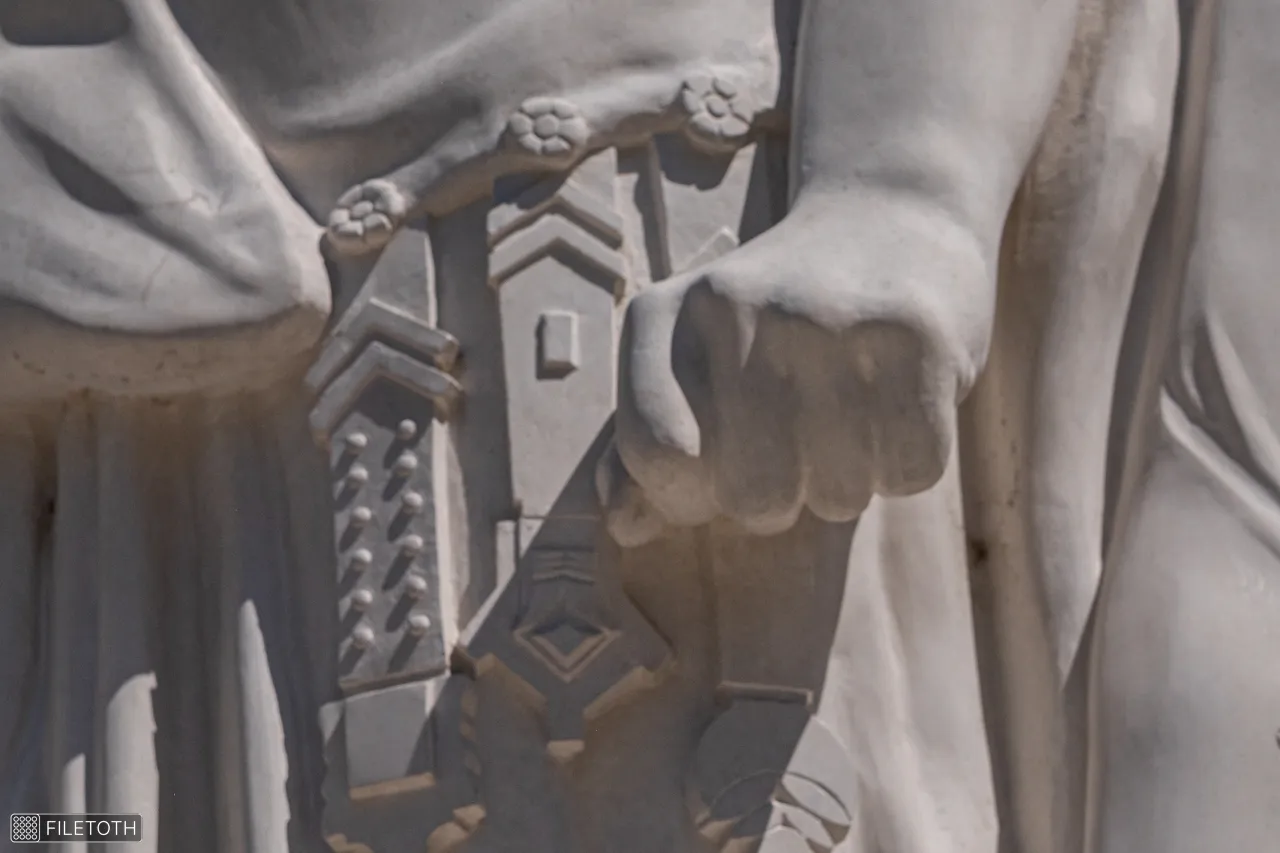
Close-up of Hungaria's right hand clenched beside her body.

Historical figure and era

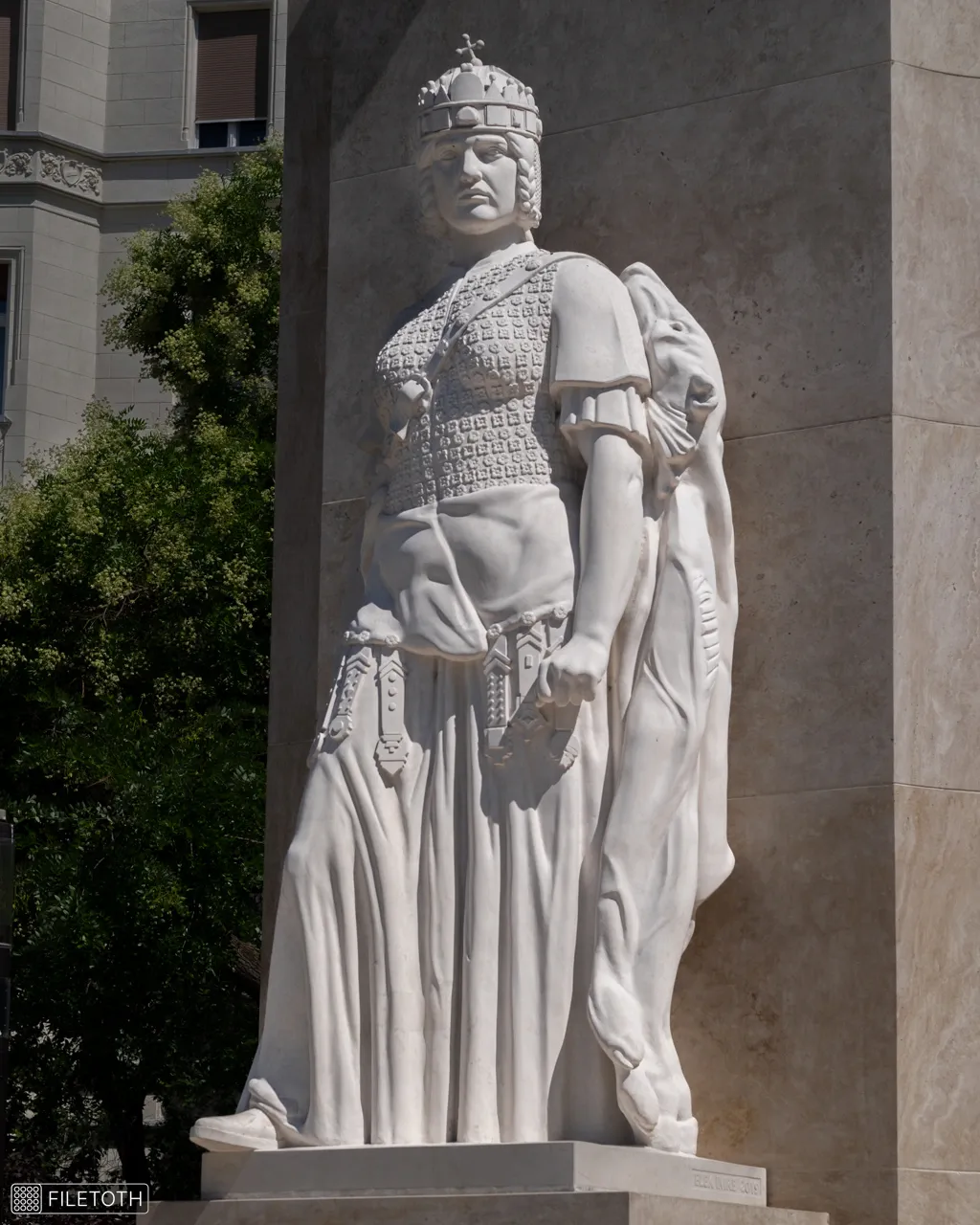
The Memorial of the National Martyrs commemorates victims of the political violence that followed the collapse of the Austro-Hungarian Monarchy during 1918–1919. At its front stands Hungaria, the allegorical female personification of the Hungarian nation, represented as a crowned warrior prepared to defend the country. Rather than depicting an individual, the monument expresses collective memory through symbolic figures.

Creation and historical context

Designed by Imre Elek and Richárd Füredi and unveiled on 18 March 1934, the monument combines allegorical sculpture with historical remembrance. Hungaria stands before a stone pillar topped by a sarcophagus, while the reverse depicts a muscular man overcoming a dragon-like creature, a symbolic composition reflecting the political interpretation of the period. The monument was removed after the Second World War and reconstructed in 2019 with updated inscriptions reflecting its complex history.

Monument by Imre Elek and Richárd Füredi, unveiled on 18 March 1934 and reconstructed in 2019. [ref.]
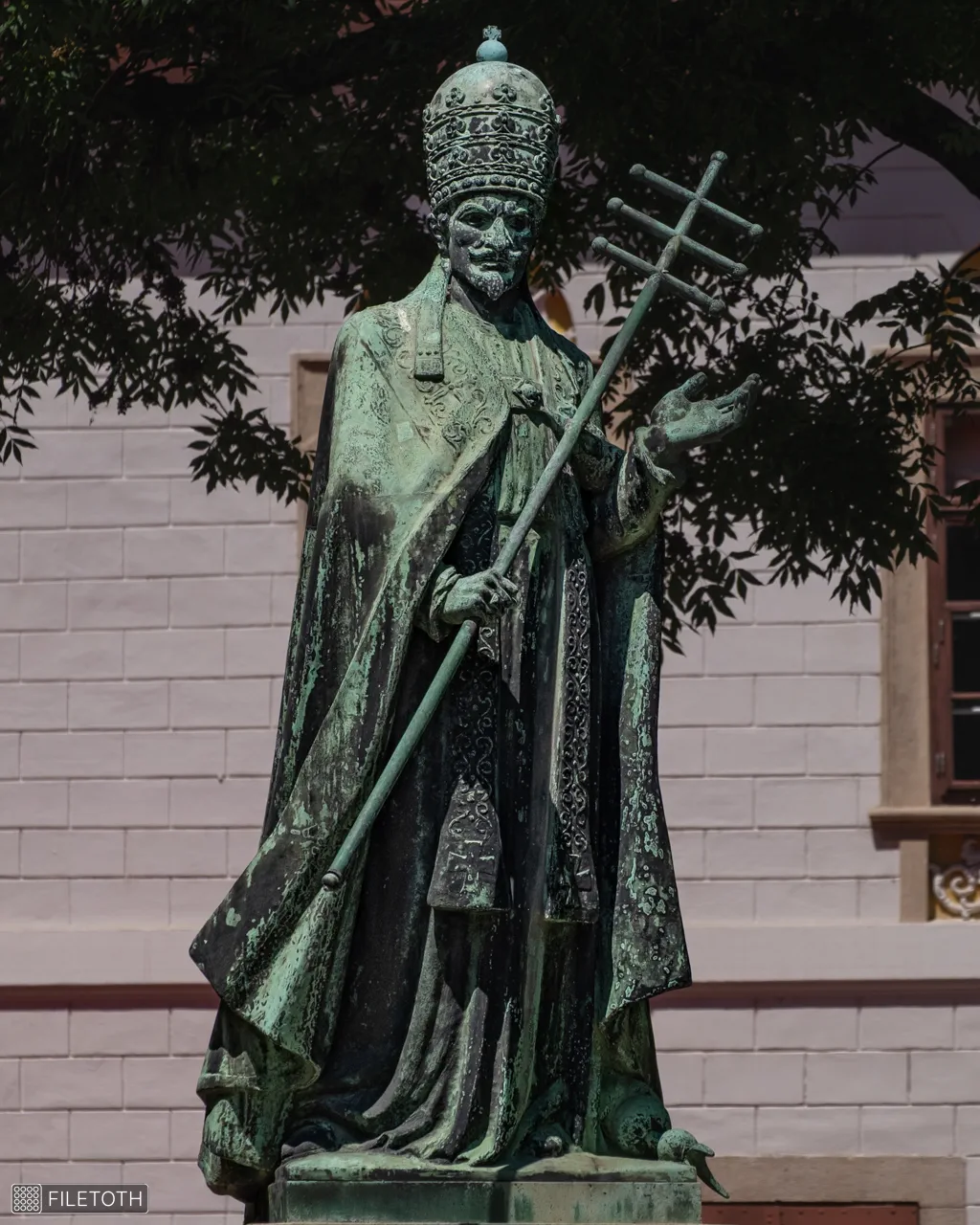
The Hand of Deliverance

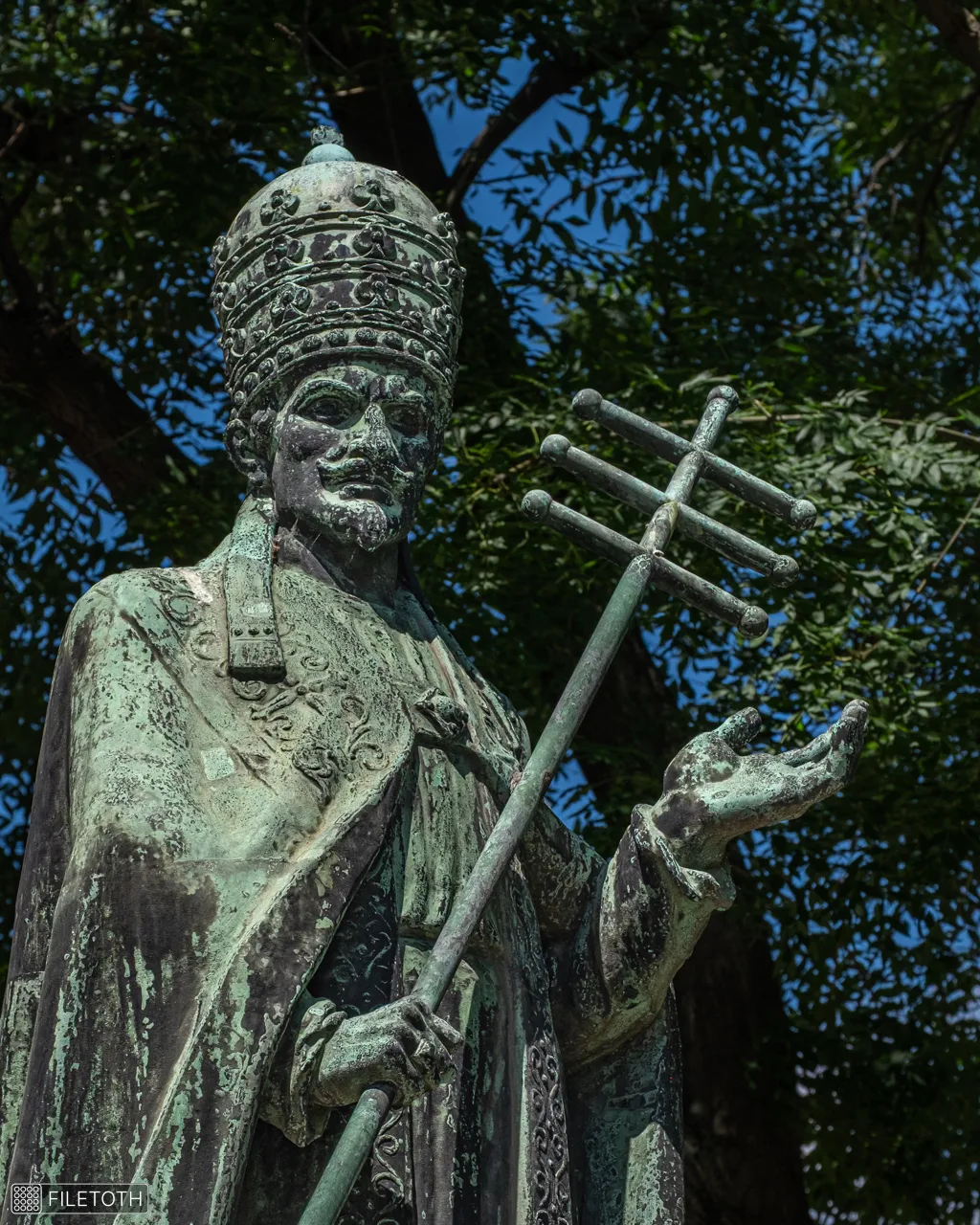
Pope Innocent XI Statue

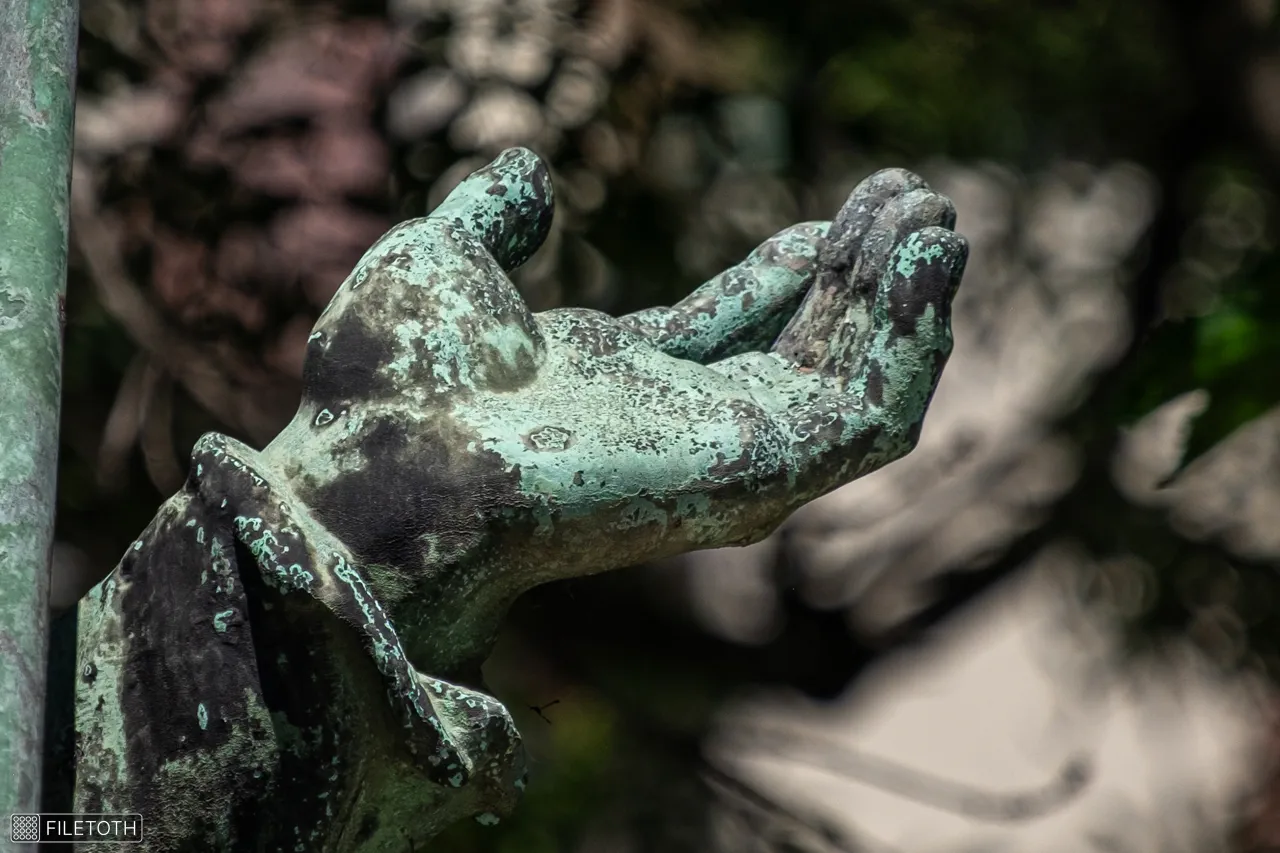
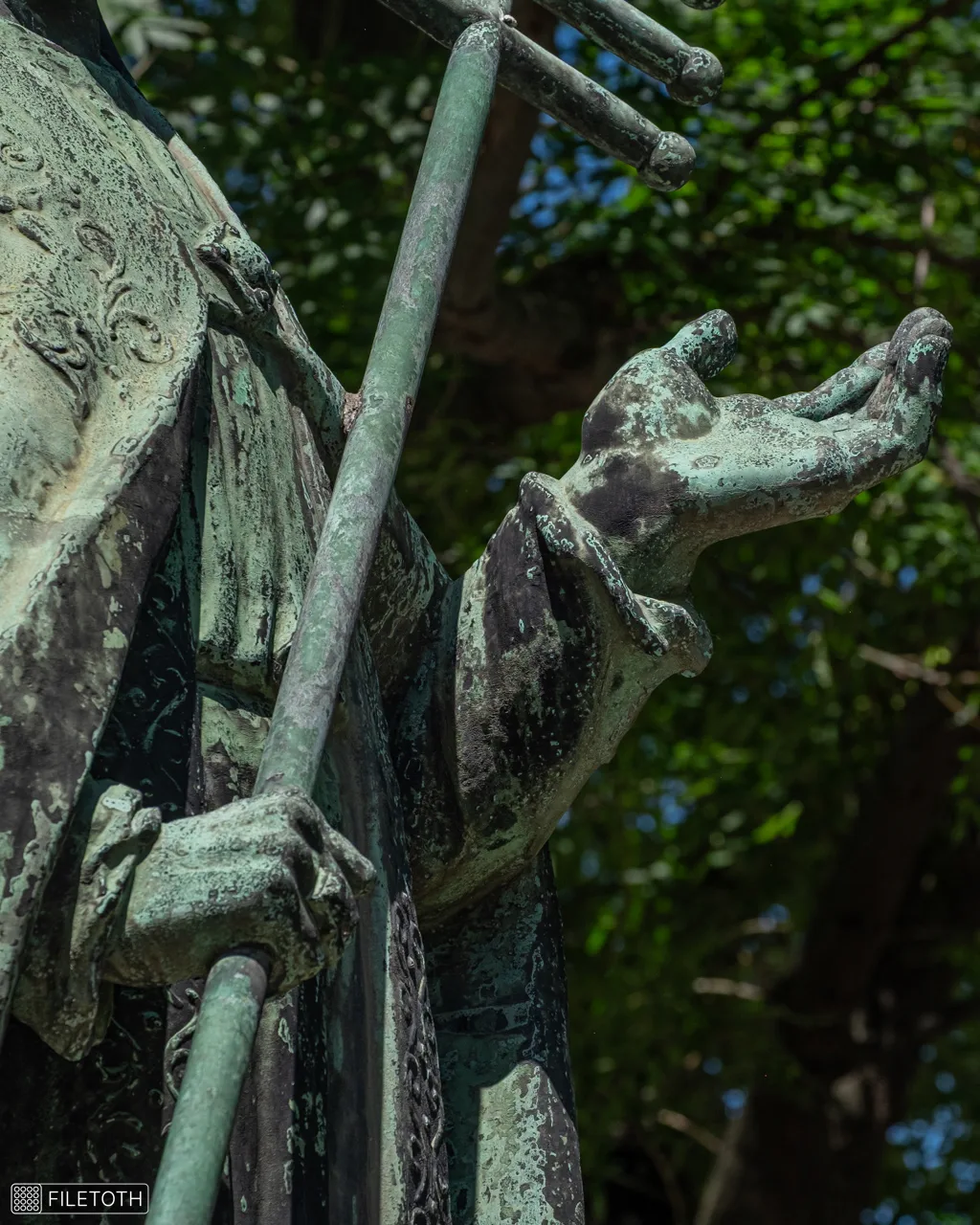
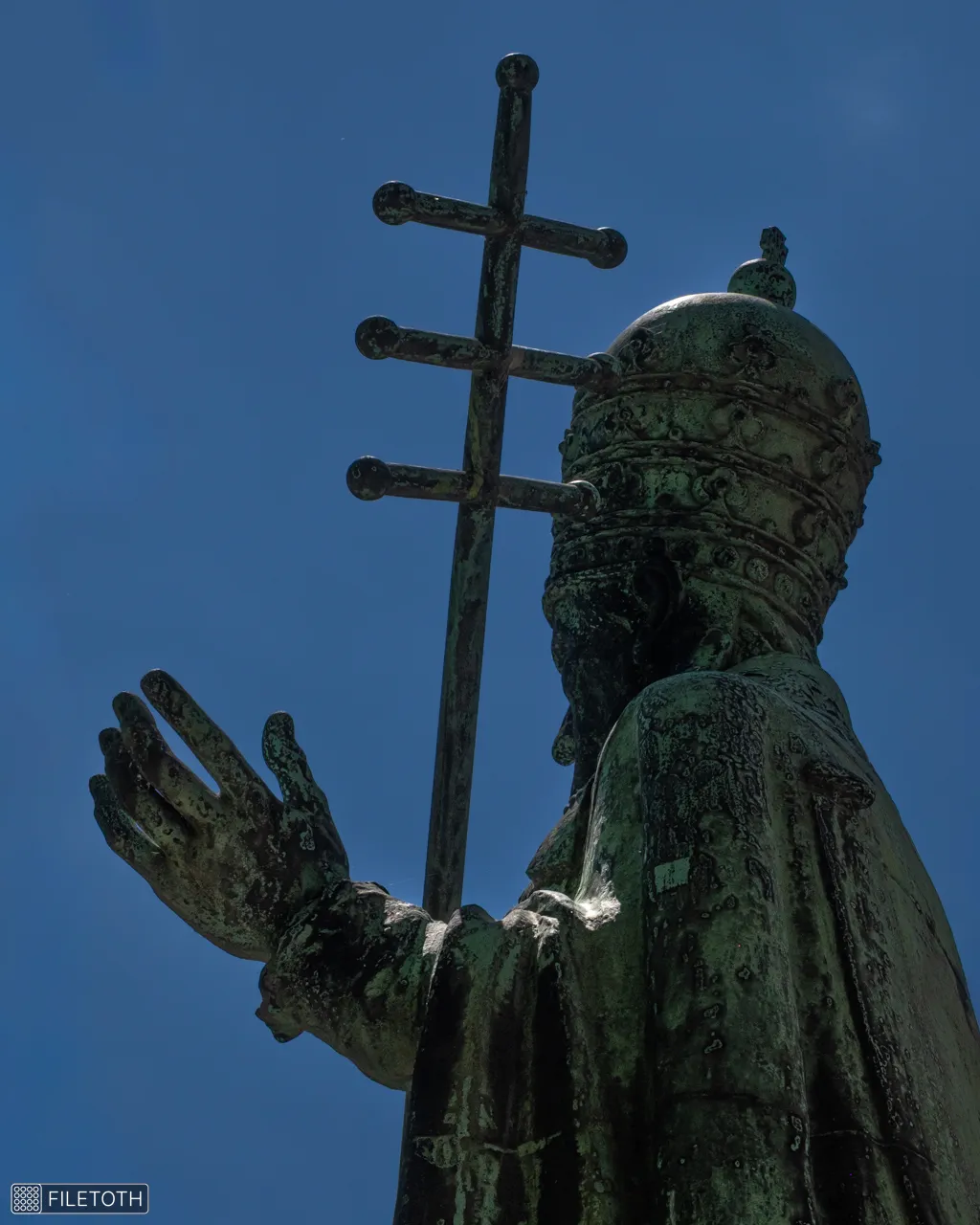
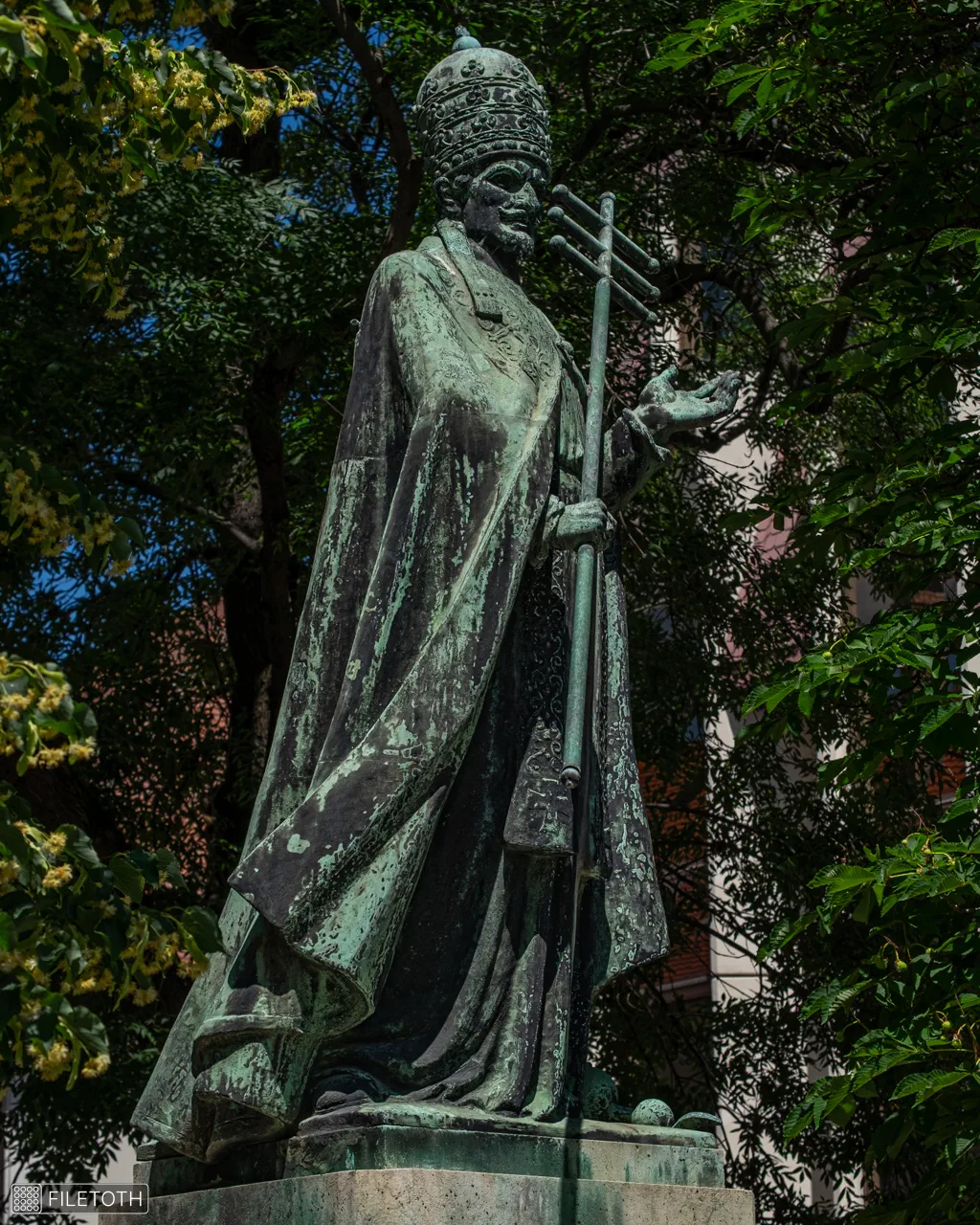
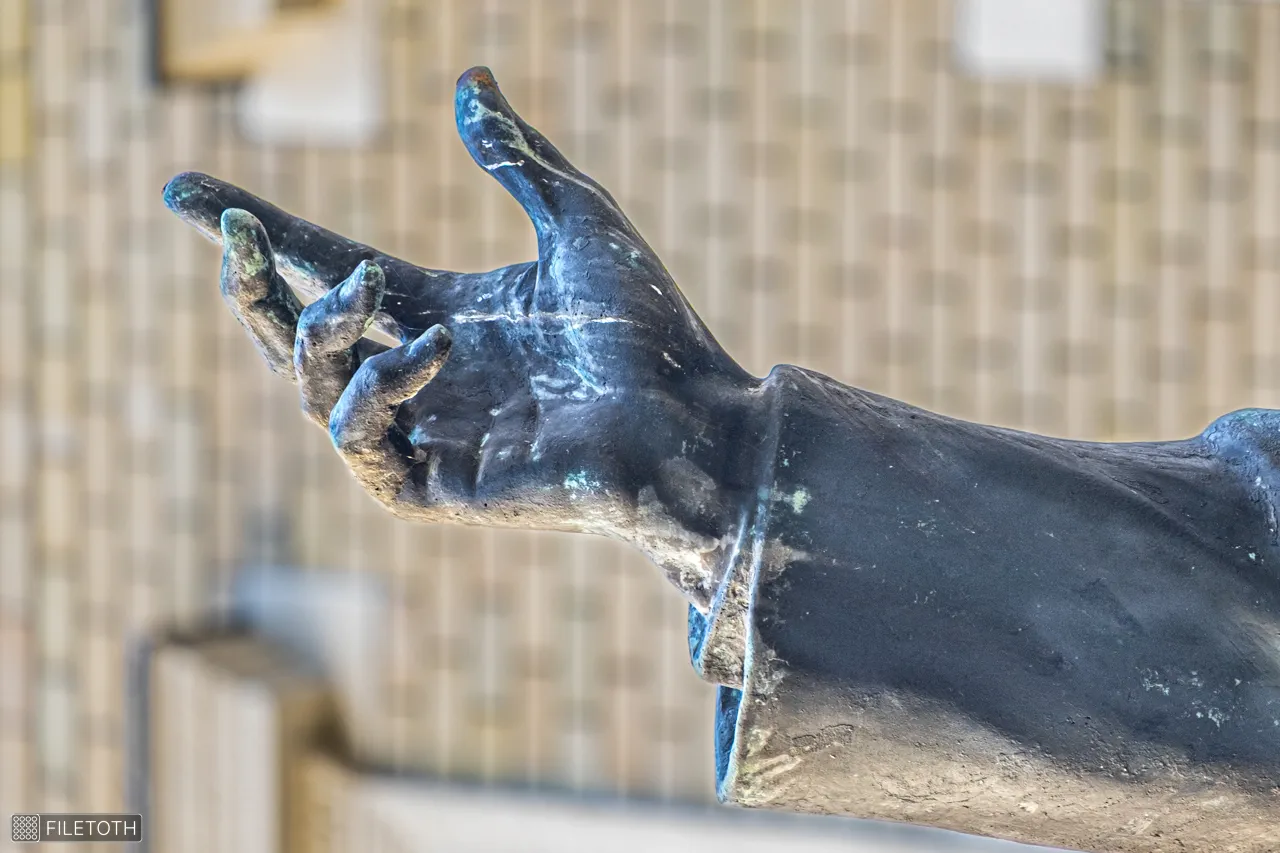
Close-up of Pope Innocent XI's left hand.

Historical figure and era

Pope Innocent XI (1611–1689) led the Catholic Church during a period of political and military conflict in Europe. In Hungarian historical memory, he is especially remembered for supporting the Holy League, the alliance that helped recapture Buda in 1686 after nearly 150 years of Ottoman rule. Although he never visited Hungary, his diplomatic and financial support earned him a lasting place in Hungary's liberation story.

Creation and historical context

József Damkó's monument was unveiled on October 5, 1936, during commemorations marking the 250th anniversary of the recapture of Buda. The statue honors Innocent XI's support for the campaign that ended Ottoman rule in central Hungary. Depicted in papal attire, with a cross in one hand and the other raised in blessing, the figure combines spiritual authority with historical remembrance. Viewed up close, the raised hand appears calm and open rather than commanding. The gesture suggests protection and support rather than direct action.

Statue by József Damkó, October 5, 1936. [ref.]
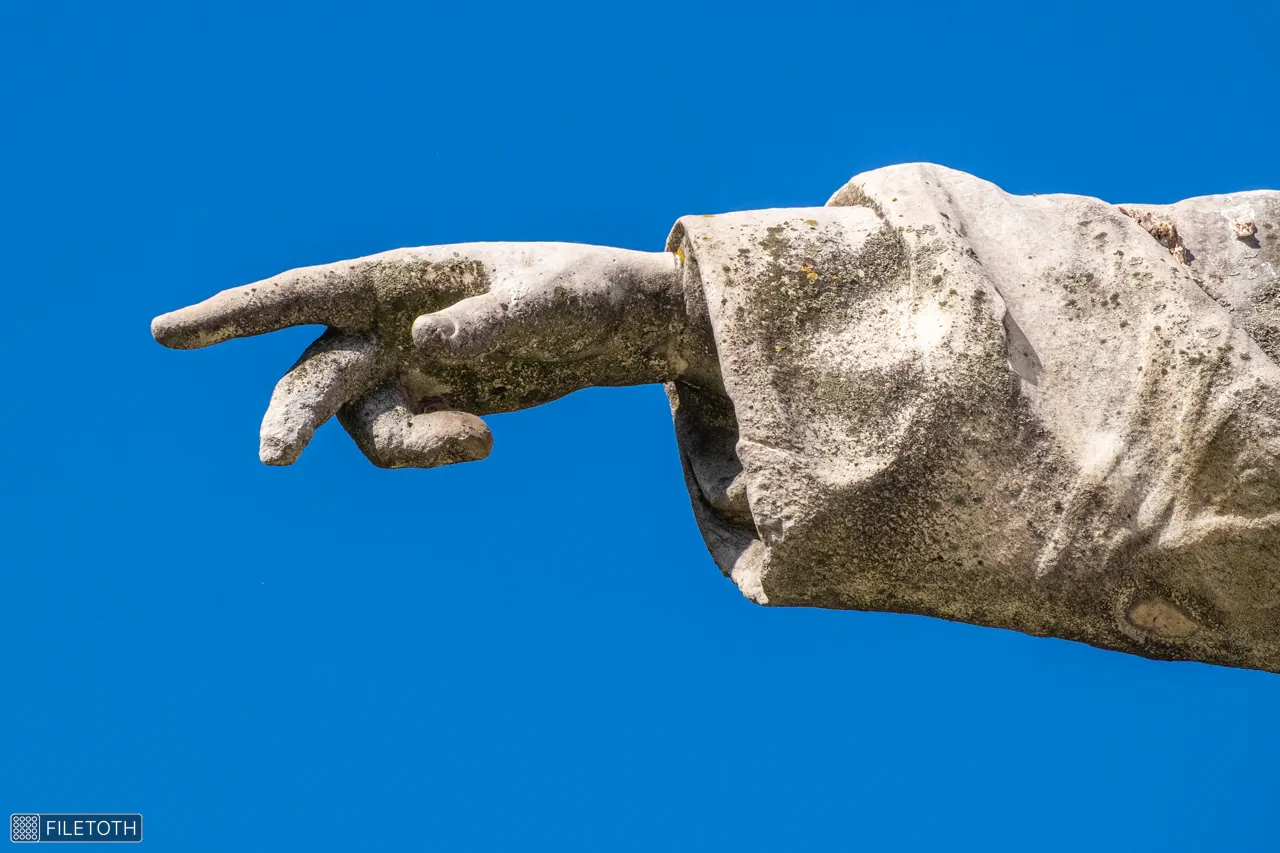
The Hand of Renewal

Péter Pázmány Statue

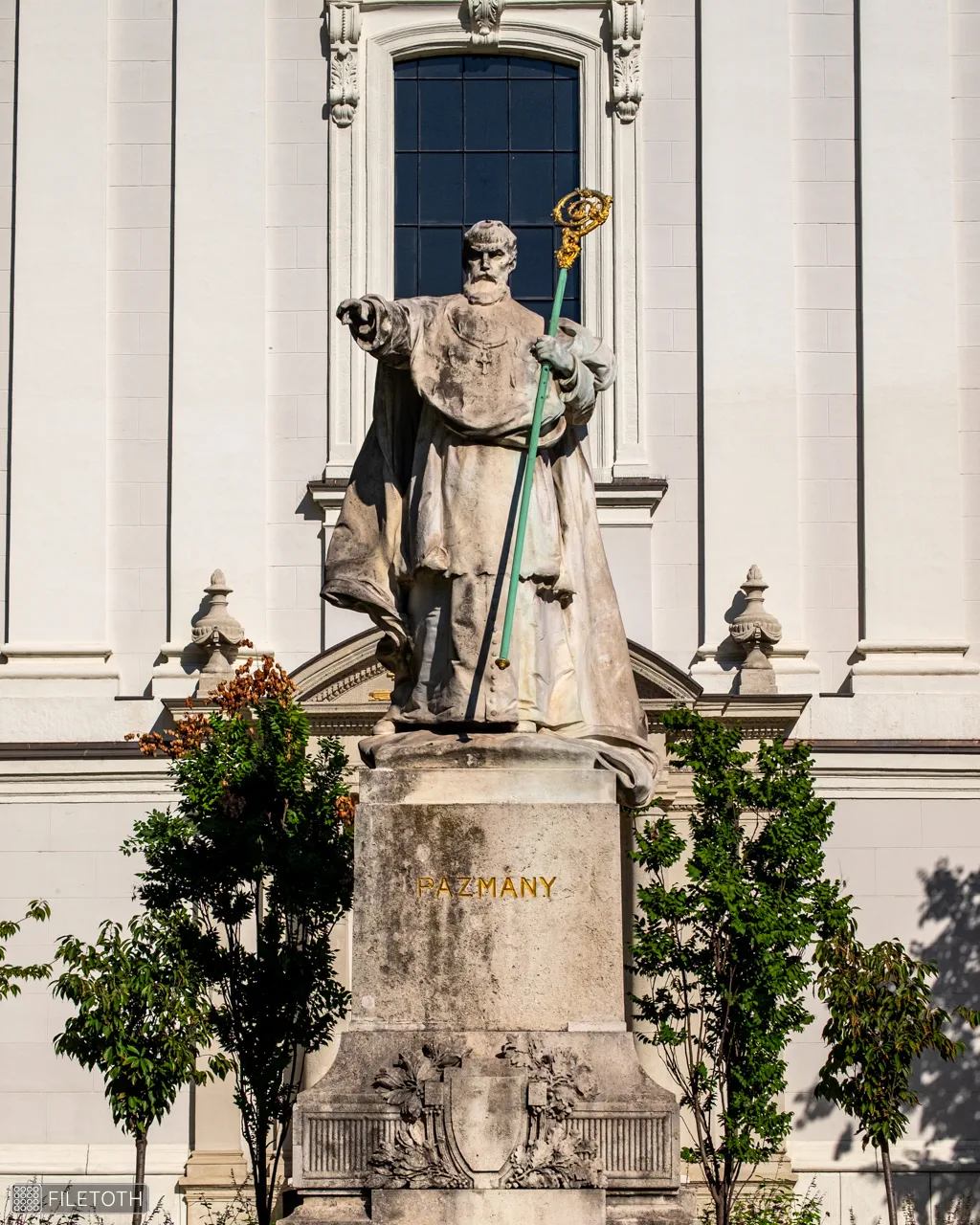
Close-up of Péter Pázmány's pointing hand.

Historical figure and era

Péter Pázmány (1570–1637) was a Hungarian Jesuit cardinal, philosopher, writer, and statesman who played a central role in the Catholic renewal of seventeenth-century Hungary. Through his influential writings, educational reforms, and the founding of important religious and academic institutions, he also helped shape the development of the Hungarian language and intellectual life.

Creation and historical context

Béla Radnai's 1914 statue portrays Pázmány in a thoughtful, instructive pose, emphasizing the raised hand that both teaches and blesses. Unveiled on the eve of the First World War, the monument connected contemporary aspirations for moral and intellectual renewal with one of Hungary's great reformers. Rather than presenting renewal as a dramatic event, the sculpture suggests that lasting change grows through education, persuasion, and the patient sharing of ideas.

Statue by Béla Radnai, August 19, 1914. [ref.]
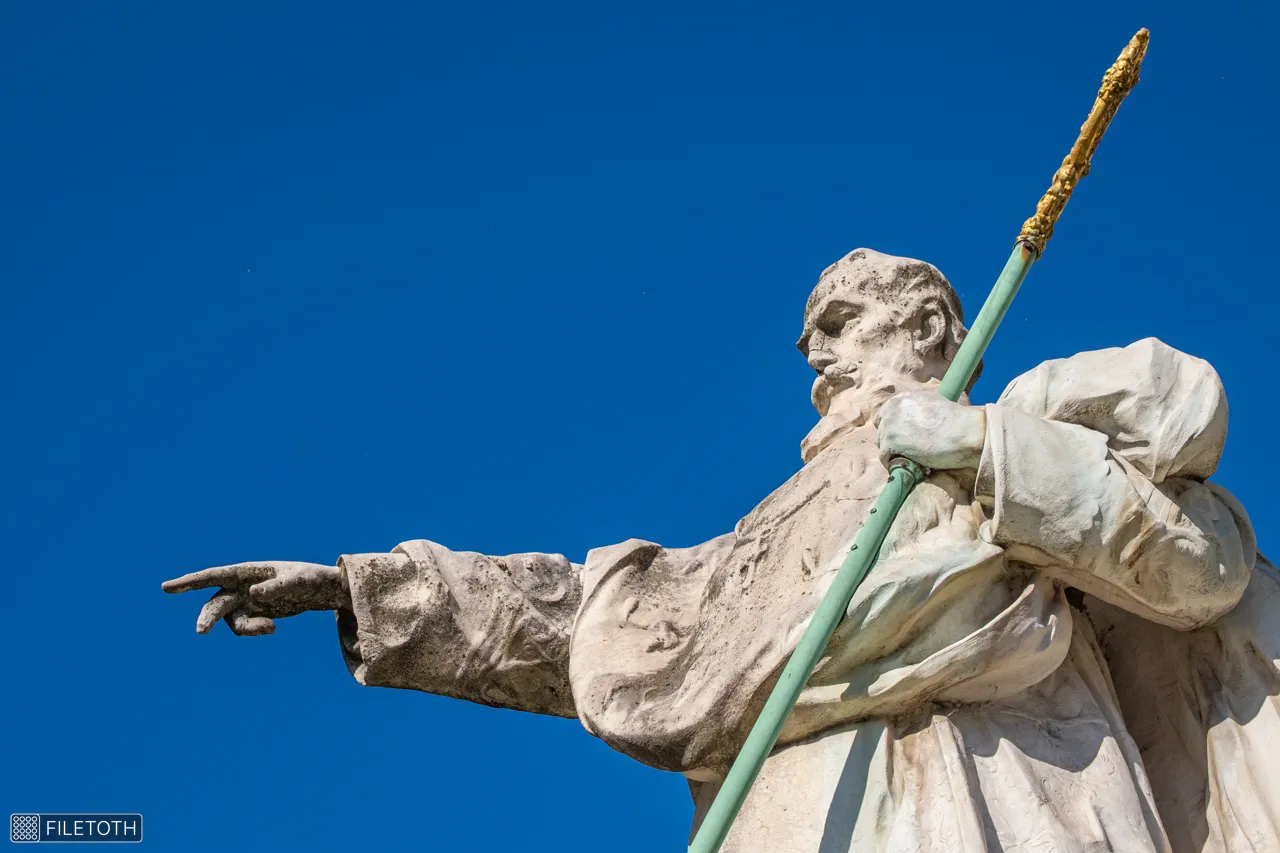
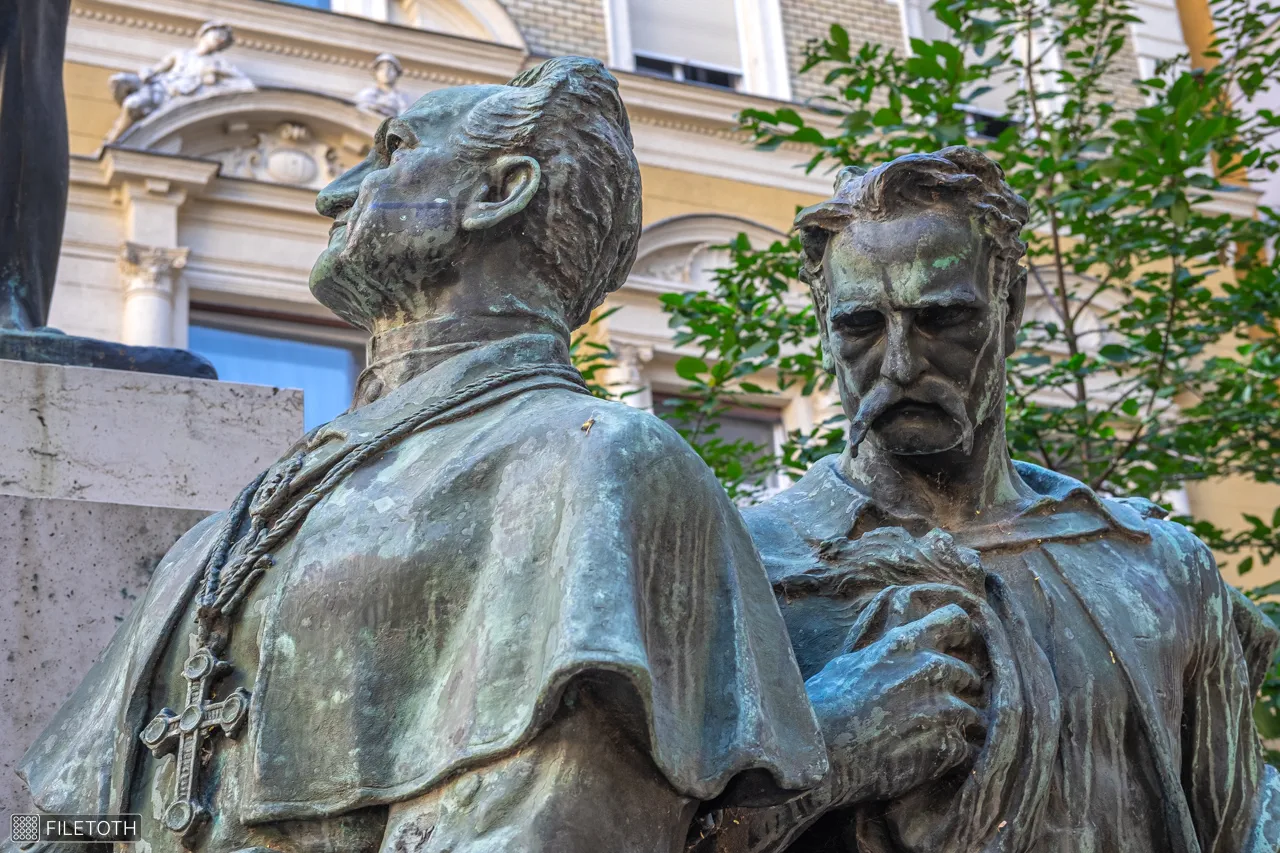
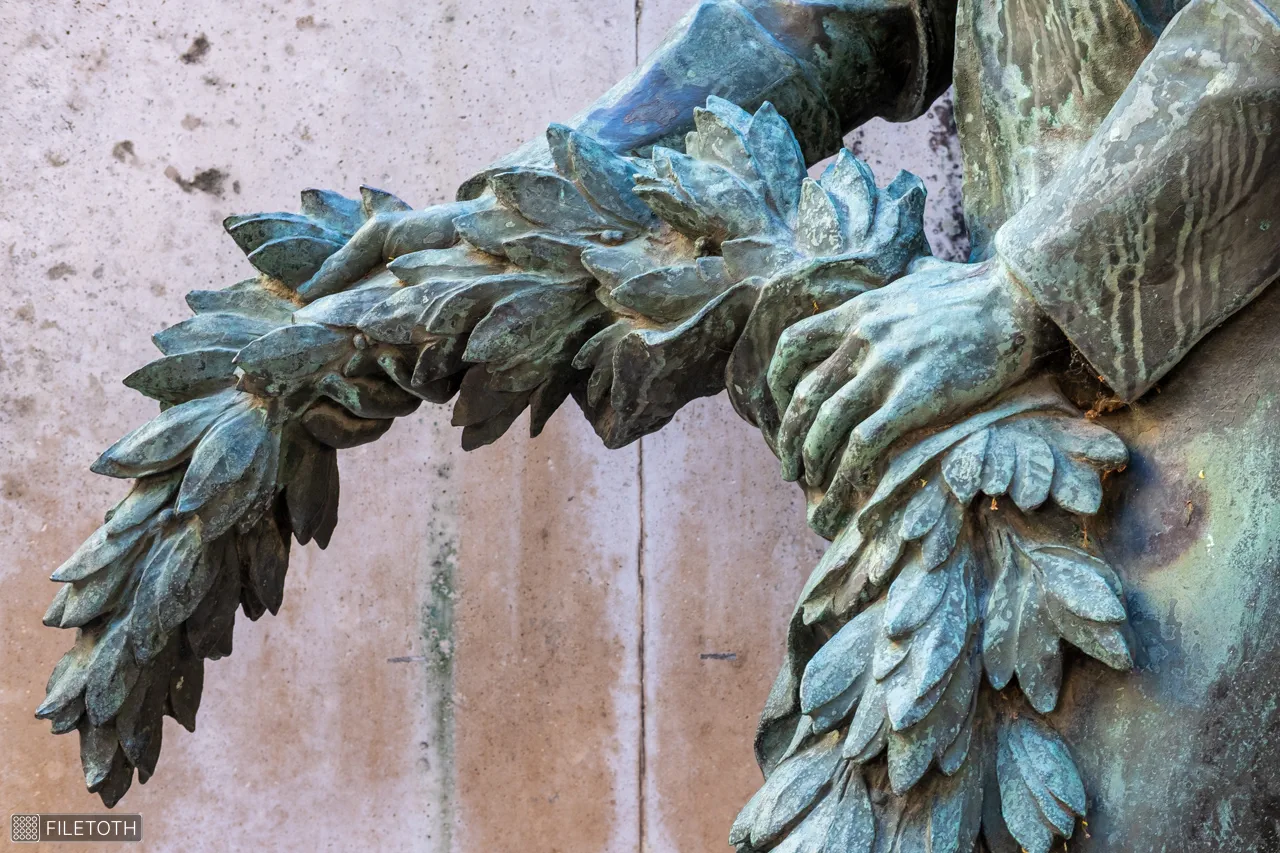
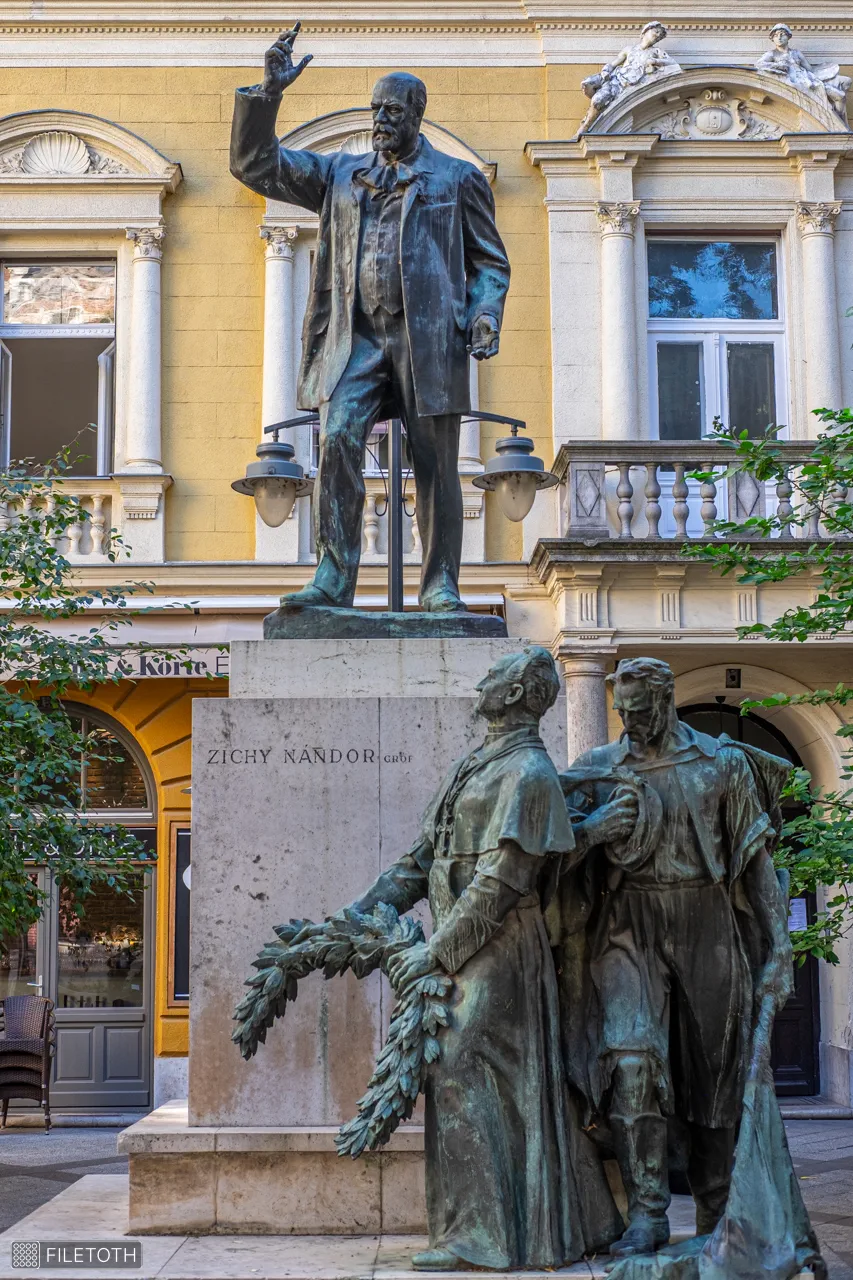
The Hand of Service

Nándor Zichy Statue

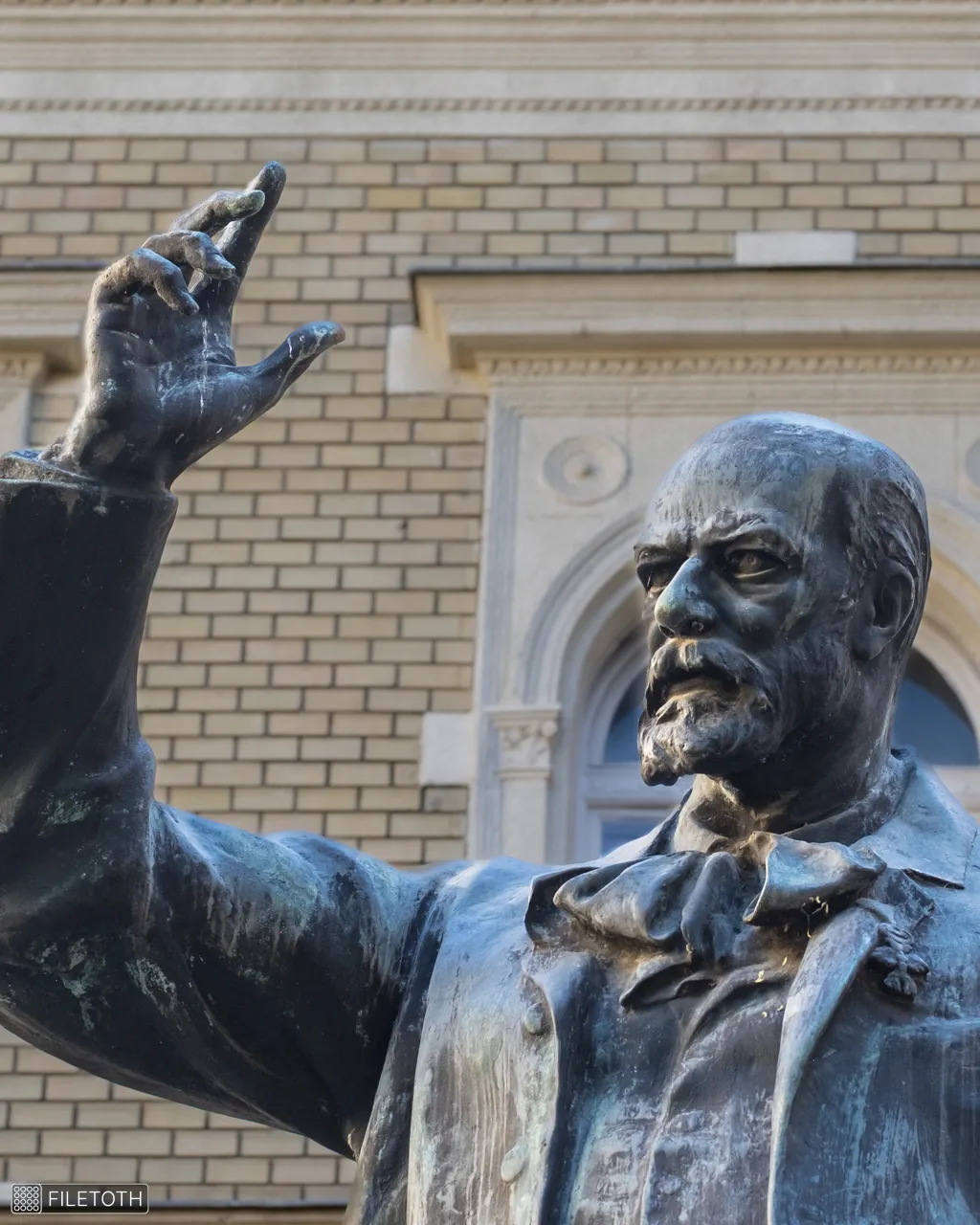
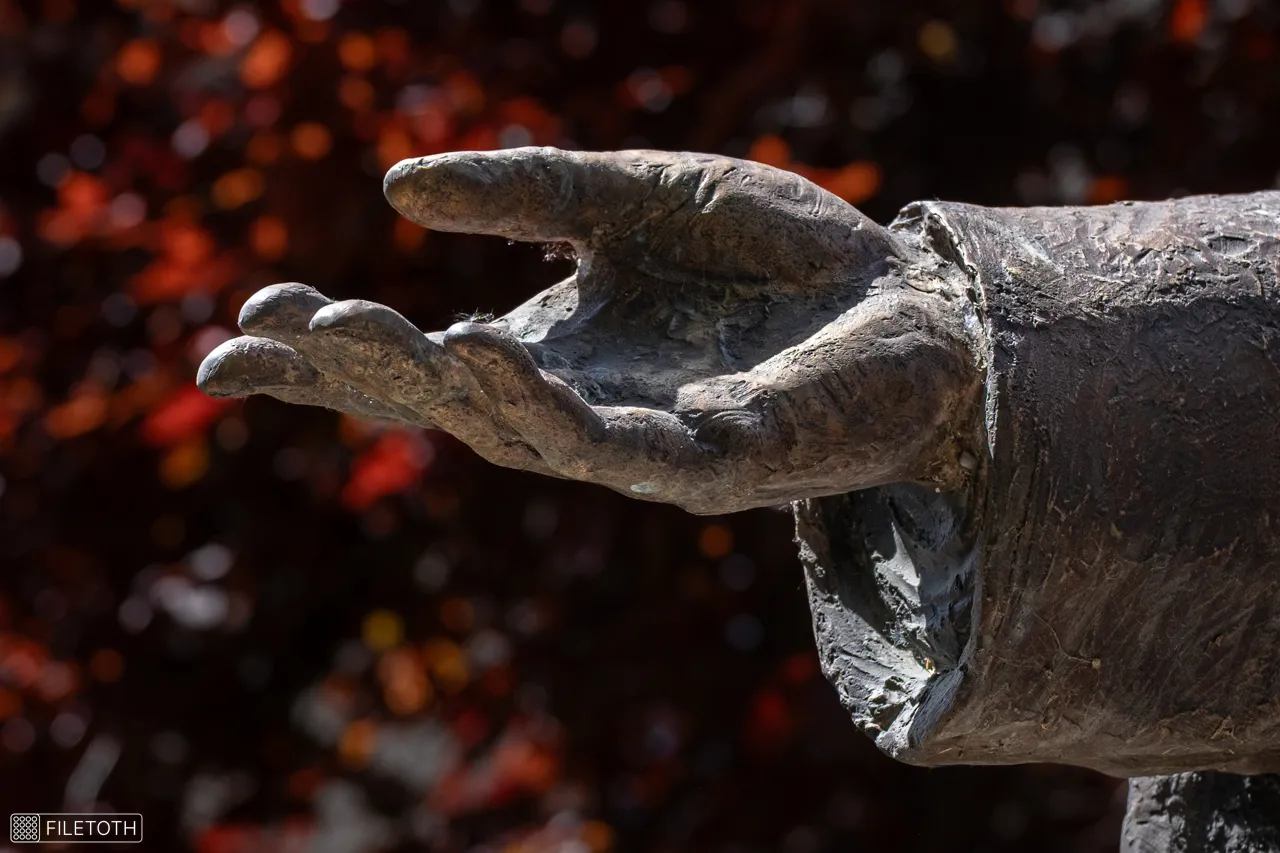
Close-up of Nándor Zichy's bronze hand.

Historical figure and era

Count Nándor Zichy (1829–1911) was a Hungarian statesman and founder of the Catholic People's Party, remembered for combining public service with religious conviction. Beside him stand Abbot János Molnár, representing his intellectual and spiritual legacy, and a peasant carrying a flag, symbolizing the broader community he sought to represent.

Creation and historical context

Antal Orbán's 1930 composition brings together the leader, the clergy, and the people in a unified sculptural group. Created during the interwar period, the monument reflects contemporary ideas about representation, tradition, and civic responsibility. Rather than celebrating authority alone, the arrangement suggests that lasting leadership grows through service, cooperation, and responsibility shared among a community.

Statue by Antal Orbán, November 16, 1930. [ref.]
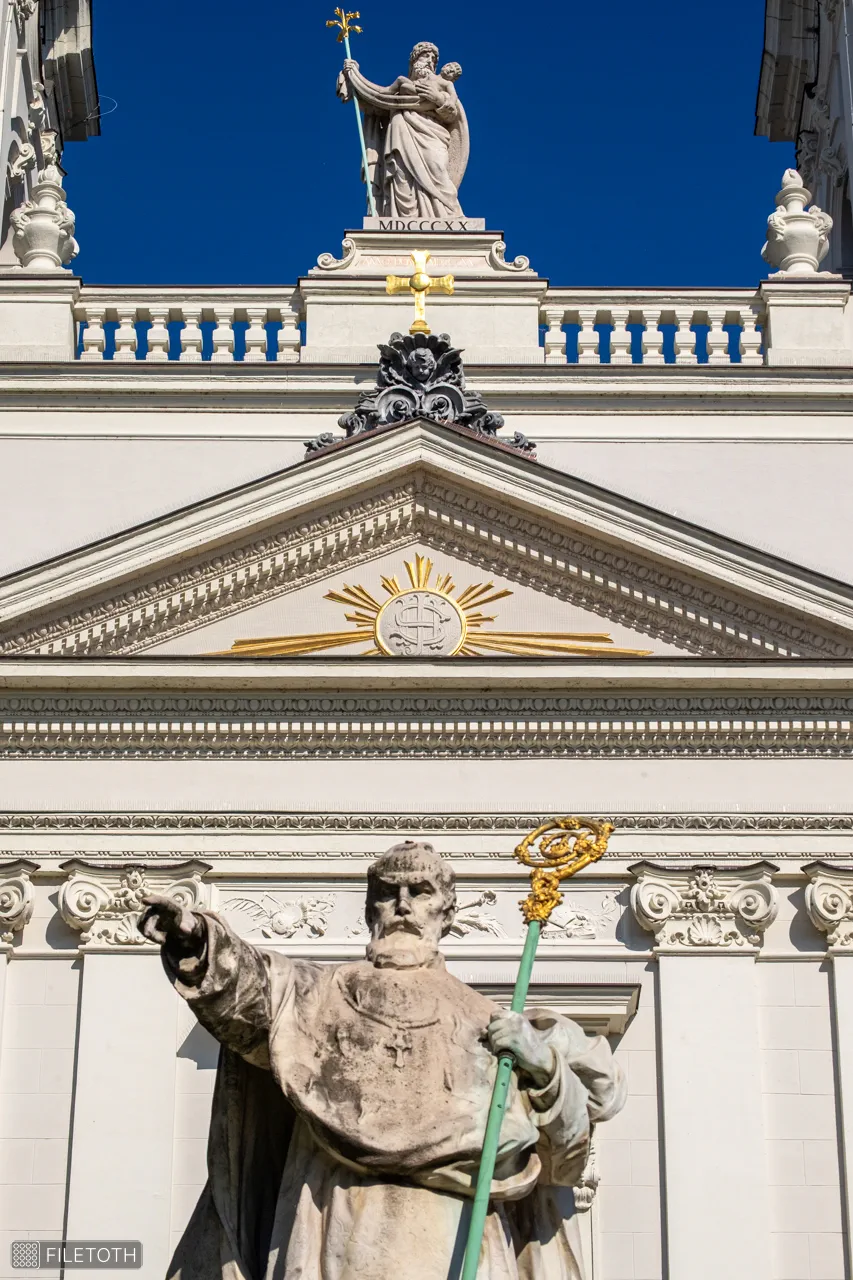
The Hand of Resistance

József Mindszenty Statue

Close-up of József Mindszenty's hand.

Historical figure and era

József Mindszenty (1892–1975) was a Hungarian Catholic priest, Bishop of Veszprém, and, from 1945, Prince Primate of Hungary. He became internationally known for his uncompromising opposition to both fascist and communist regimes. Arrested, imprisoned, and tortured under communist rule, he spent years in captivity before living in enforced refuge at the United States Embassy in Budapest and later in exile.

Creation and historical context

Zsolt Hermann's statue, unveiled in 2017, reflects the renewed public recognition of twentieth-century religious figures whose moral convictions placed them in conflict with successive dictatorships. Rather than presenting Mindszenty as a distant church dignitary, the sculpture portrays him leaning slightly forward, his raised hand expressing determination grounded in conscience. The gesture can be understood both as a blessing and as a quiet refusal to surrender deeply held principles.

Statue by Zsolt Hermann, November 6, 2017. [ref.]
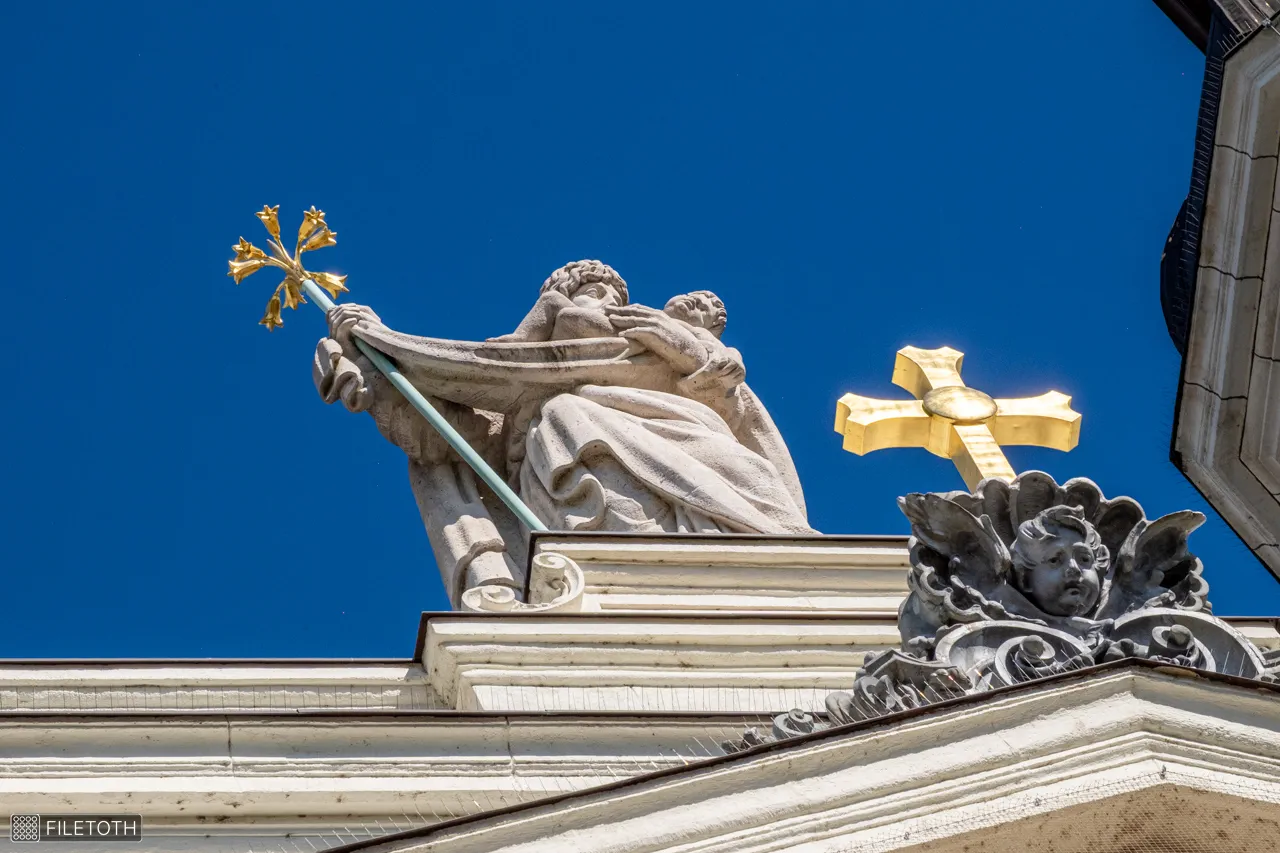
The Hand of Fortitude

Saint Ladislaus of Hungary statue

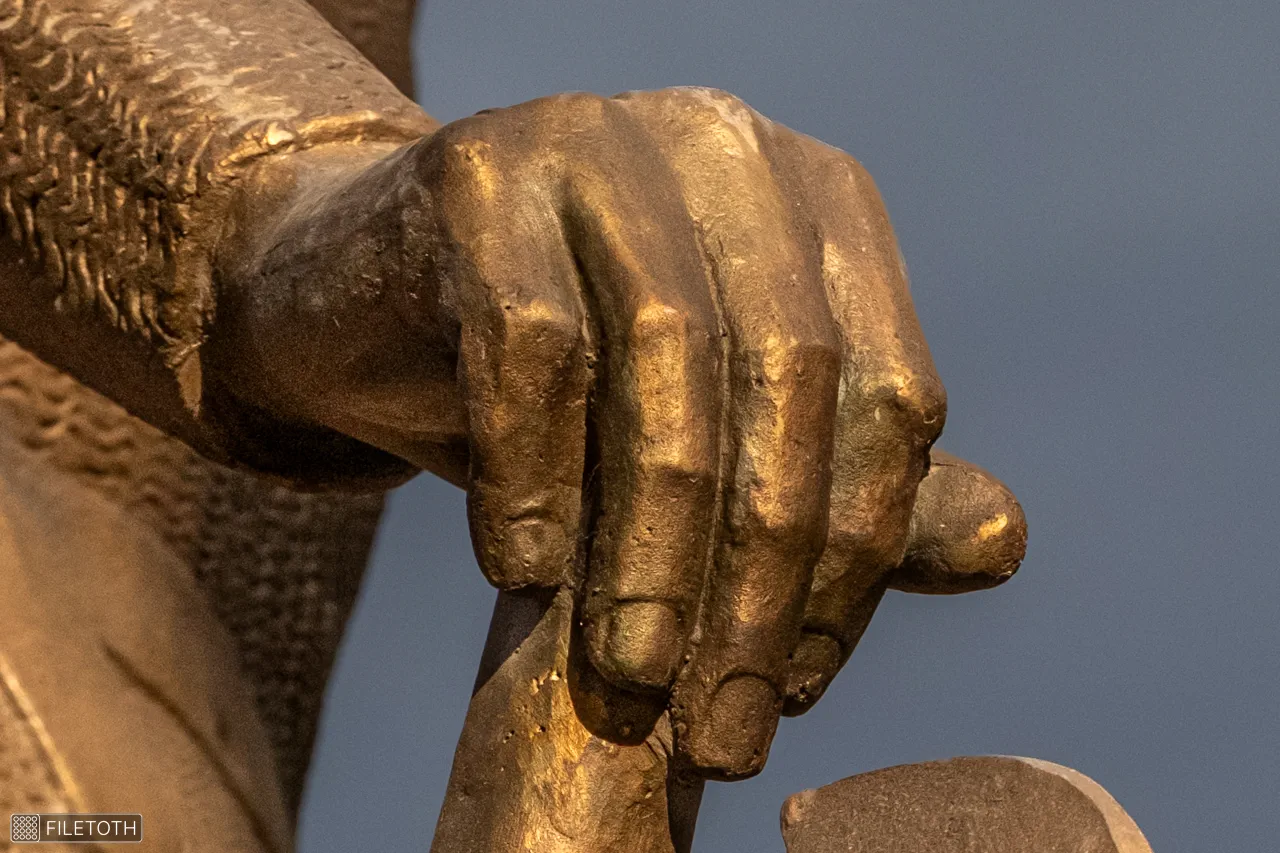
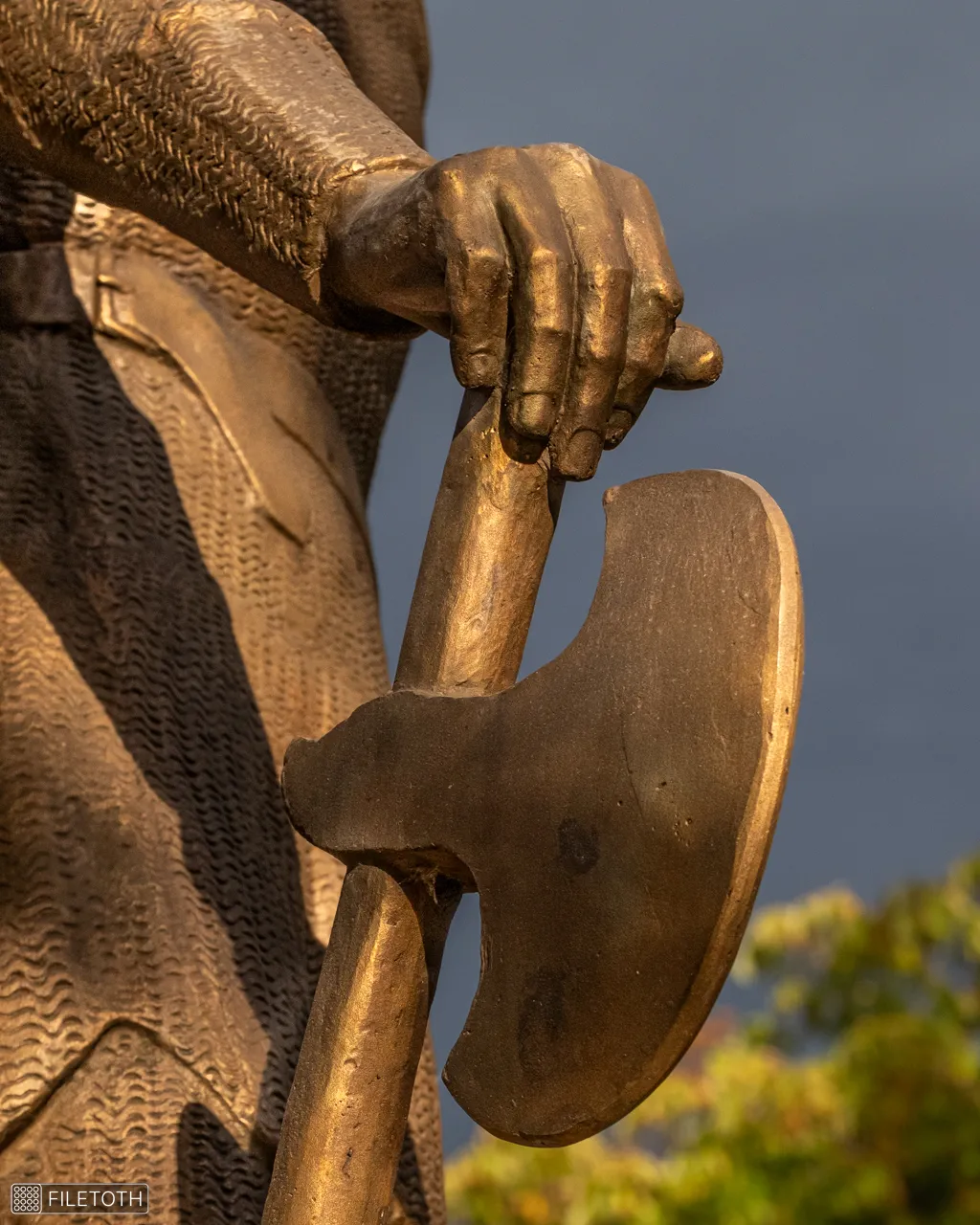
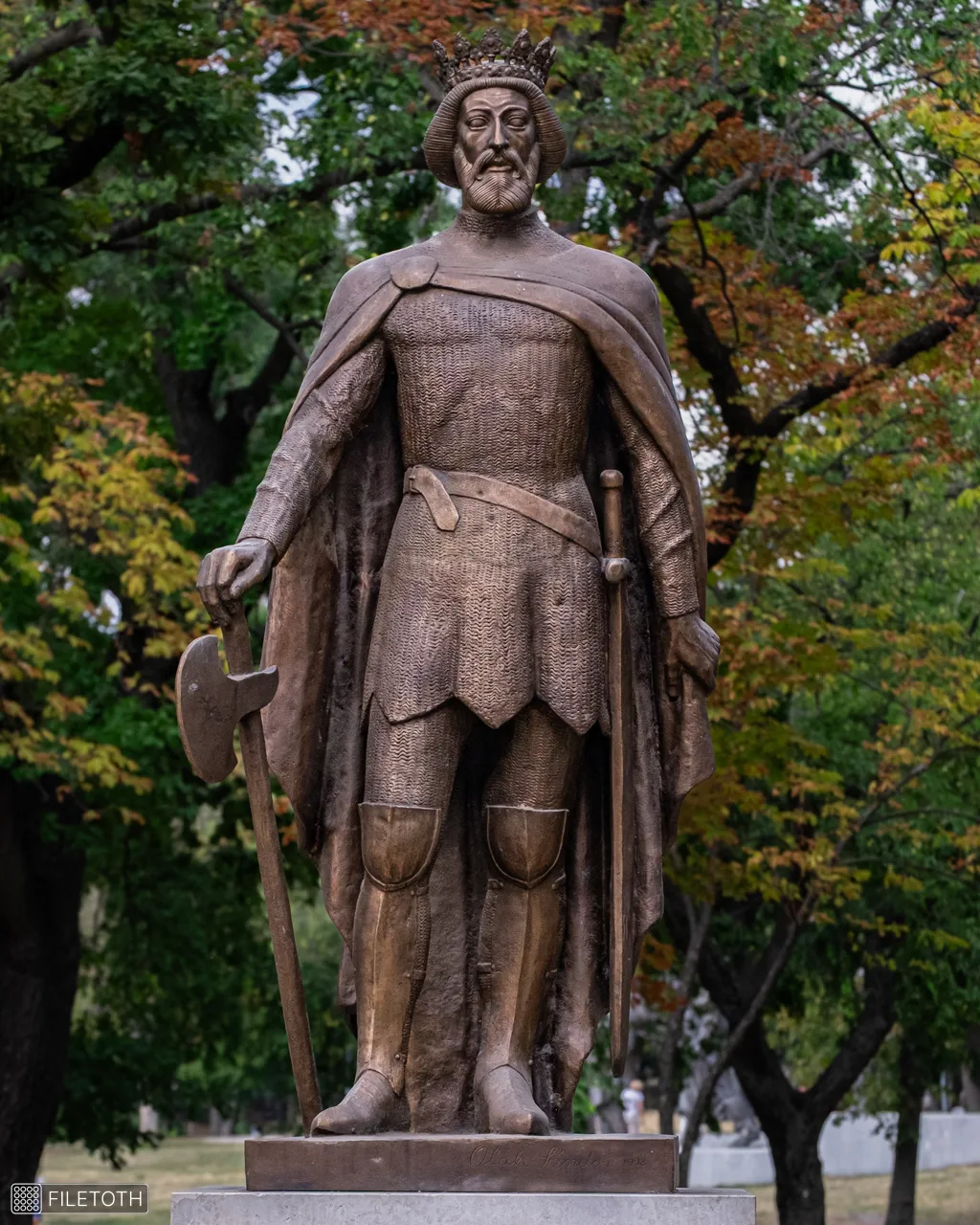
Close-up of Saint Ladislaus's left hand resting on the battle axe.

Historical figure and era

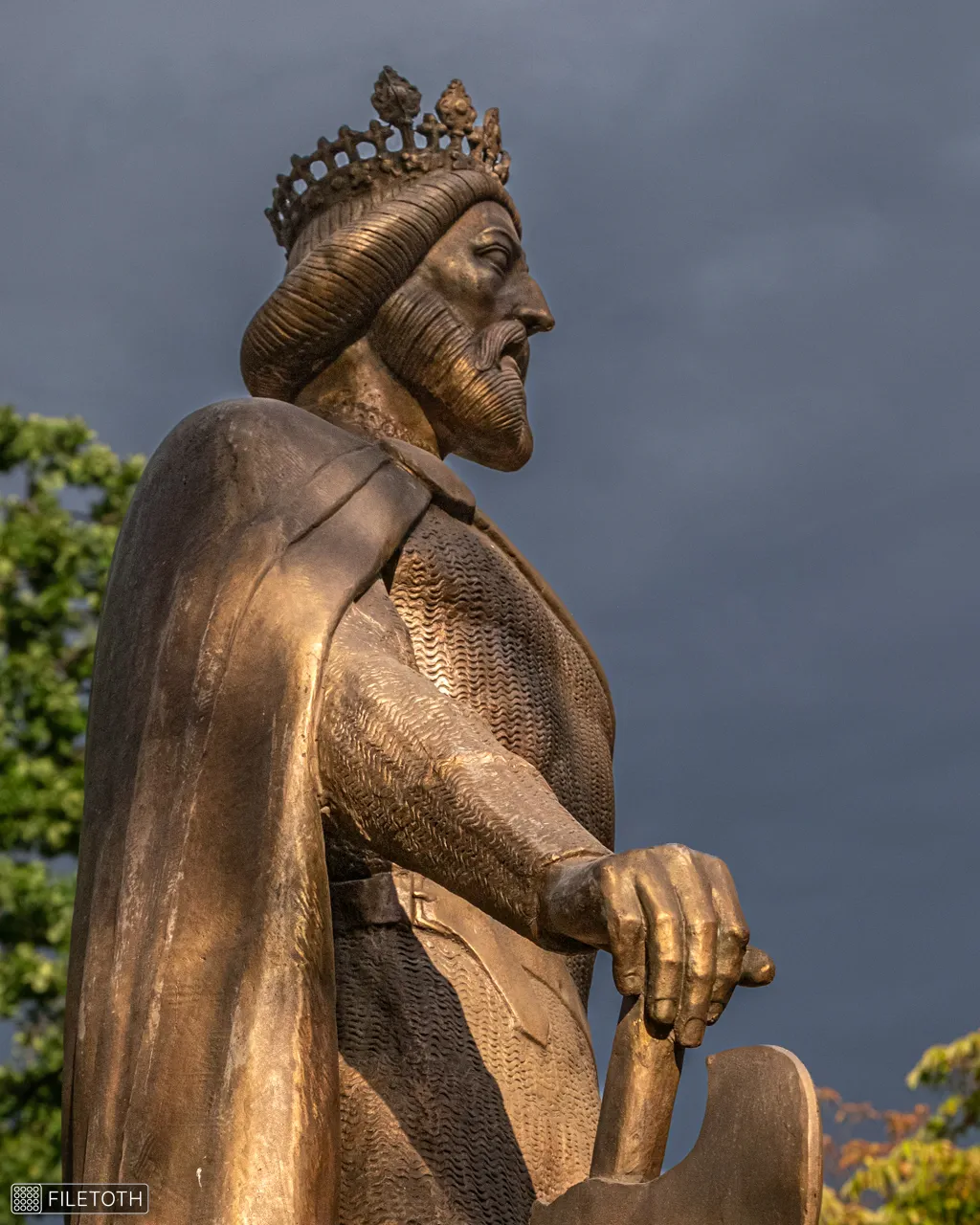
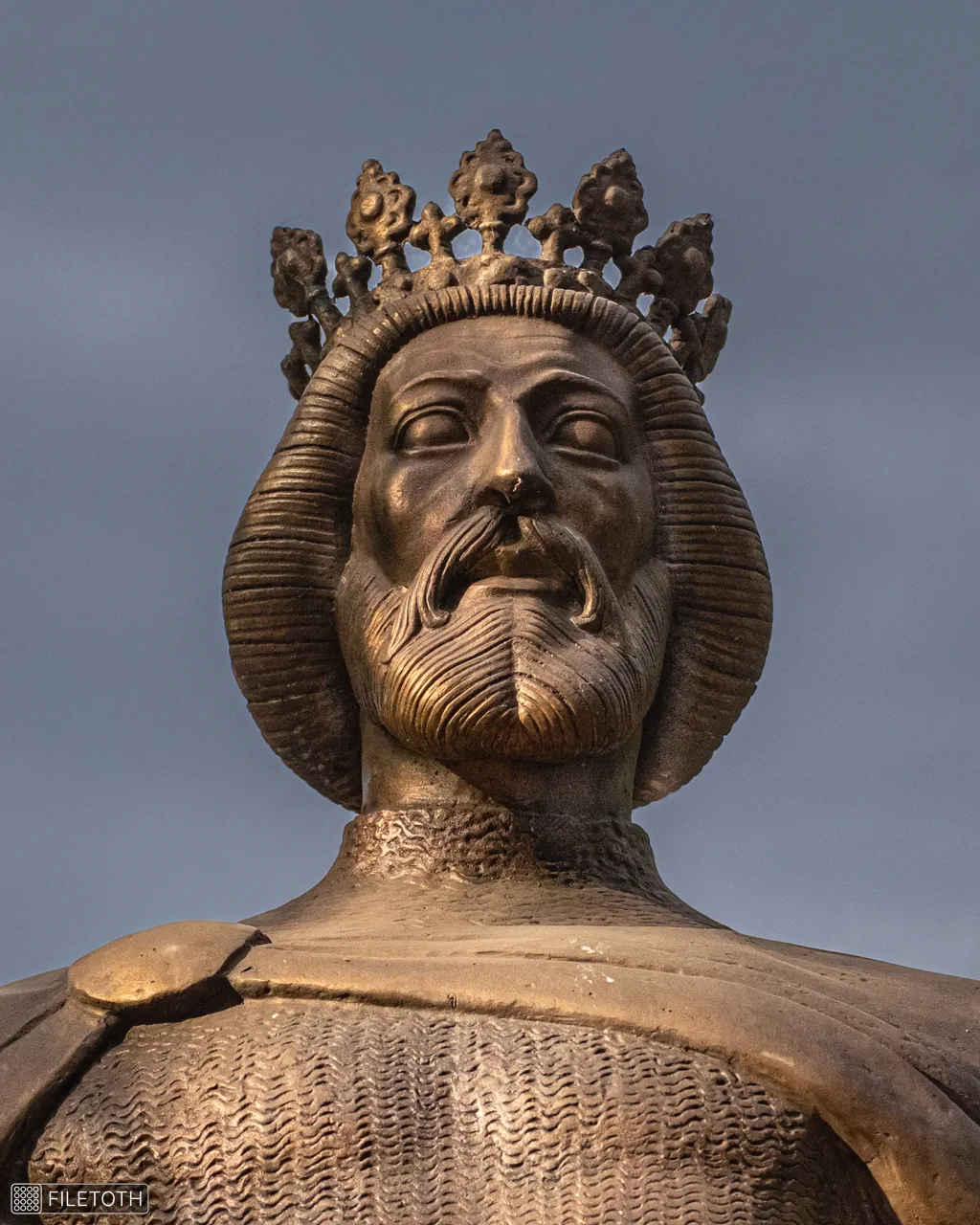
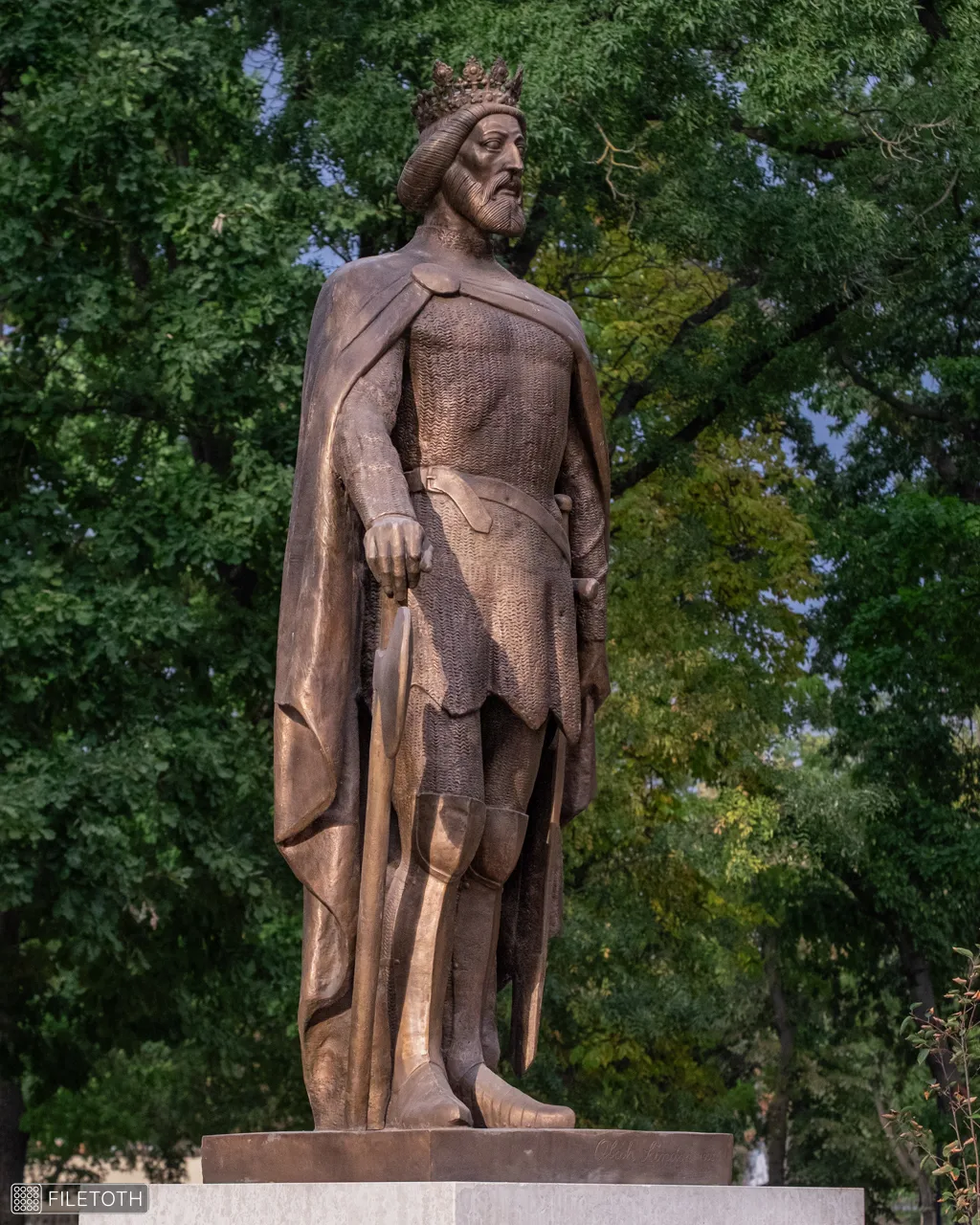
Saint Ladislaus I of Hungary (c. 1040–1095) was king of Hungary from 1077 until his death and later became one of the country's most revered saints. Remembered as a warrior king and a defender of the kingdom, he became associated with courage, chivalry, strength, and the protection of those in need.

Creation and historical context

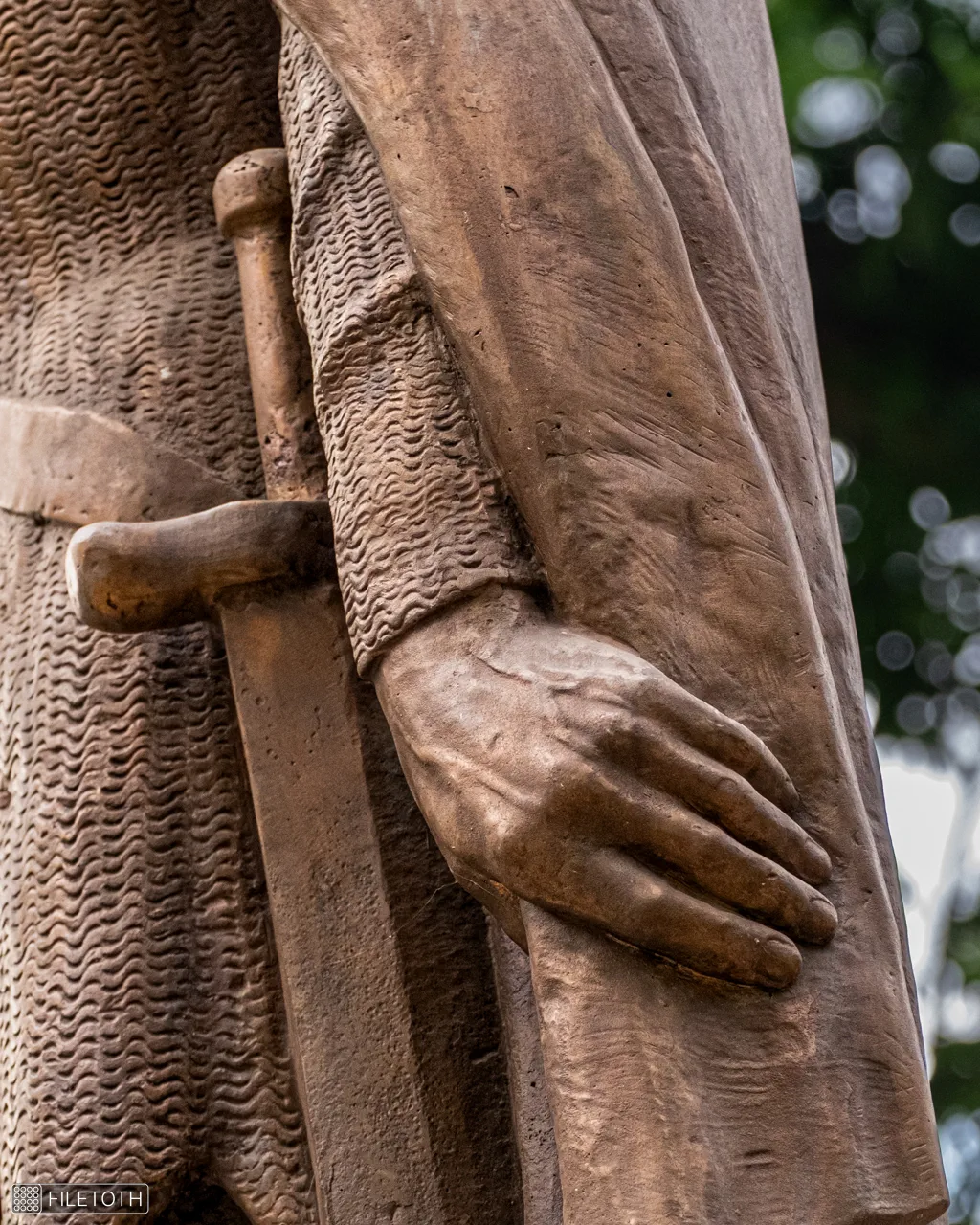
Oláh Sándor created the statue in 1939 for the garden of the Ludovika Academy, where Saint Ladislaus stood alongside other patron saints associated with the military. The figure presents the king as a medieval warrior: armored, upright, and holding a large battle axe beneath one hand while his sword hangs at his side. The statue was later moved from the Ludovika grounds and is now in Sümeg; a copy was returned to the Orczy Garden in 2021. The hand resting firmly on the battle axe gives the otherwise still figure a quiet sense of strength and readiness.

Statue by Sándor Oláh, May 14, 1939. [ref.]
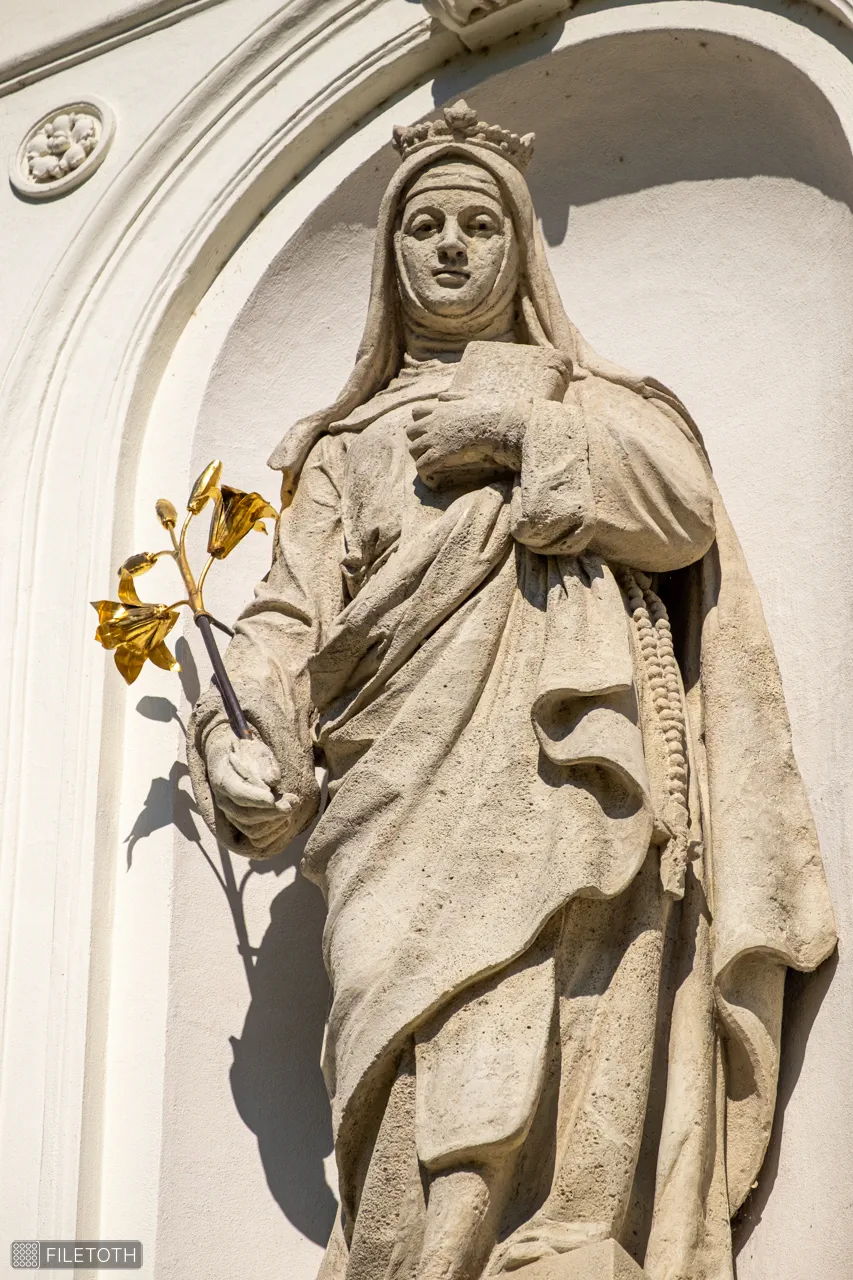
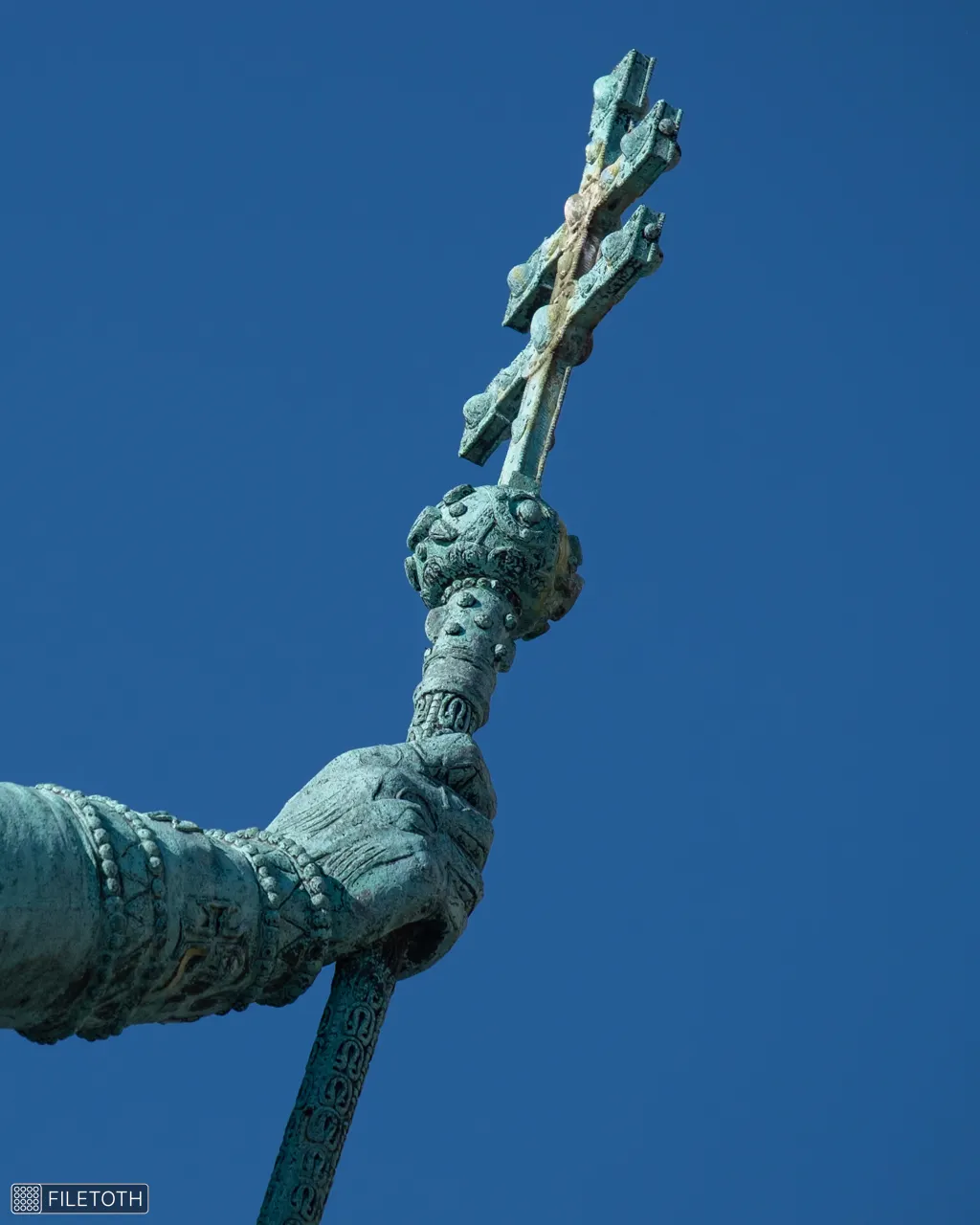
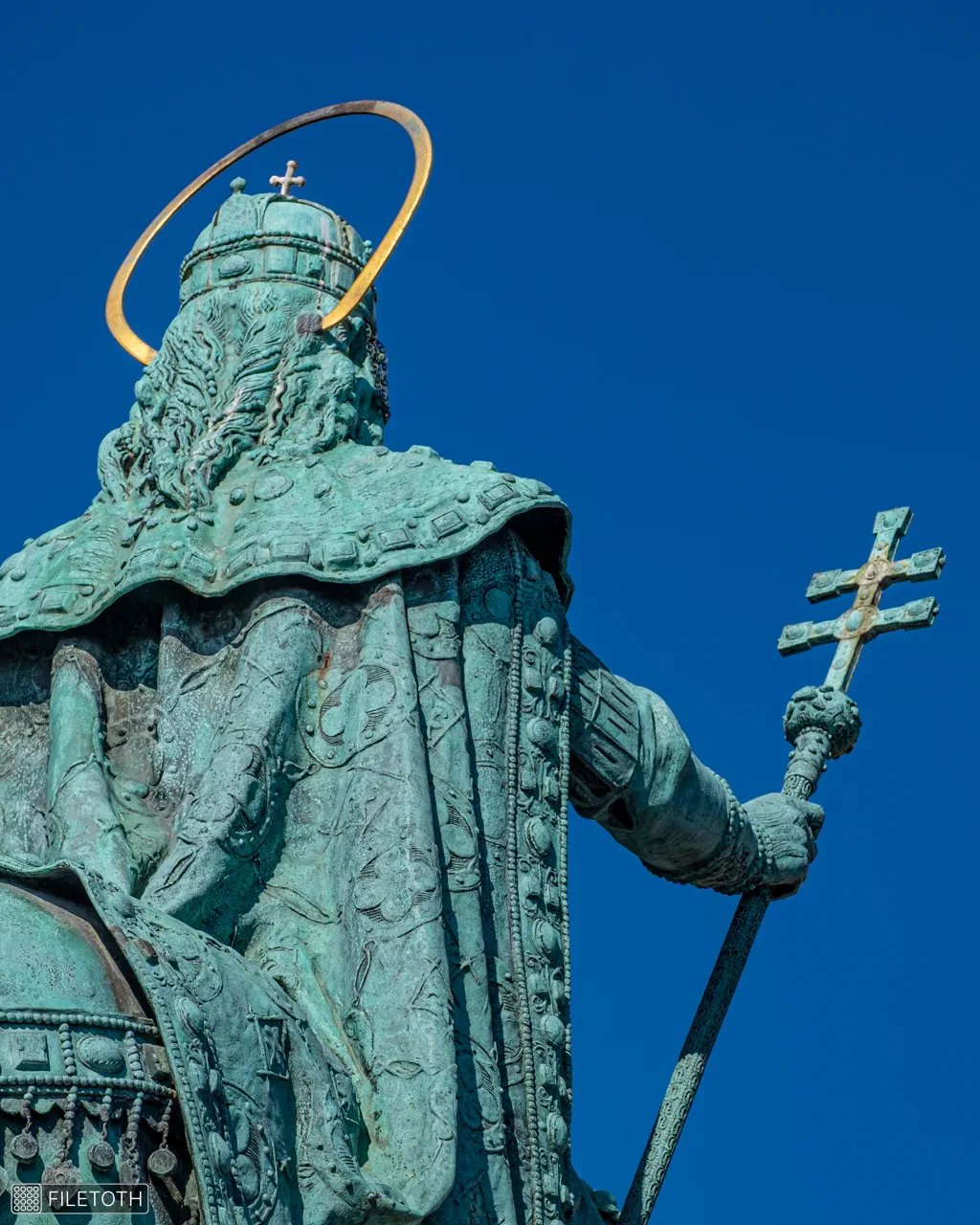
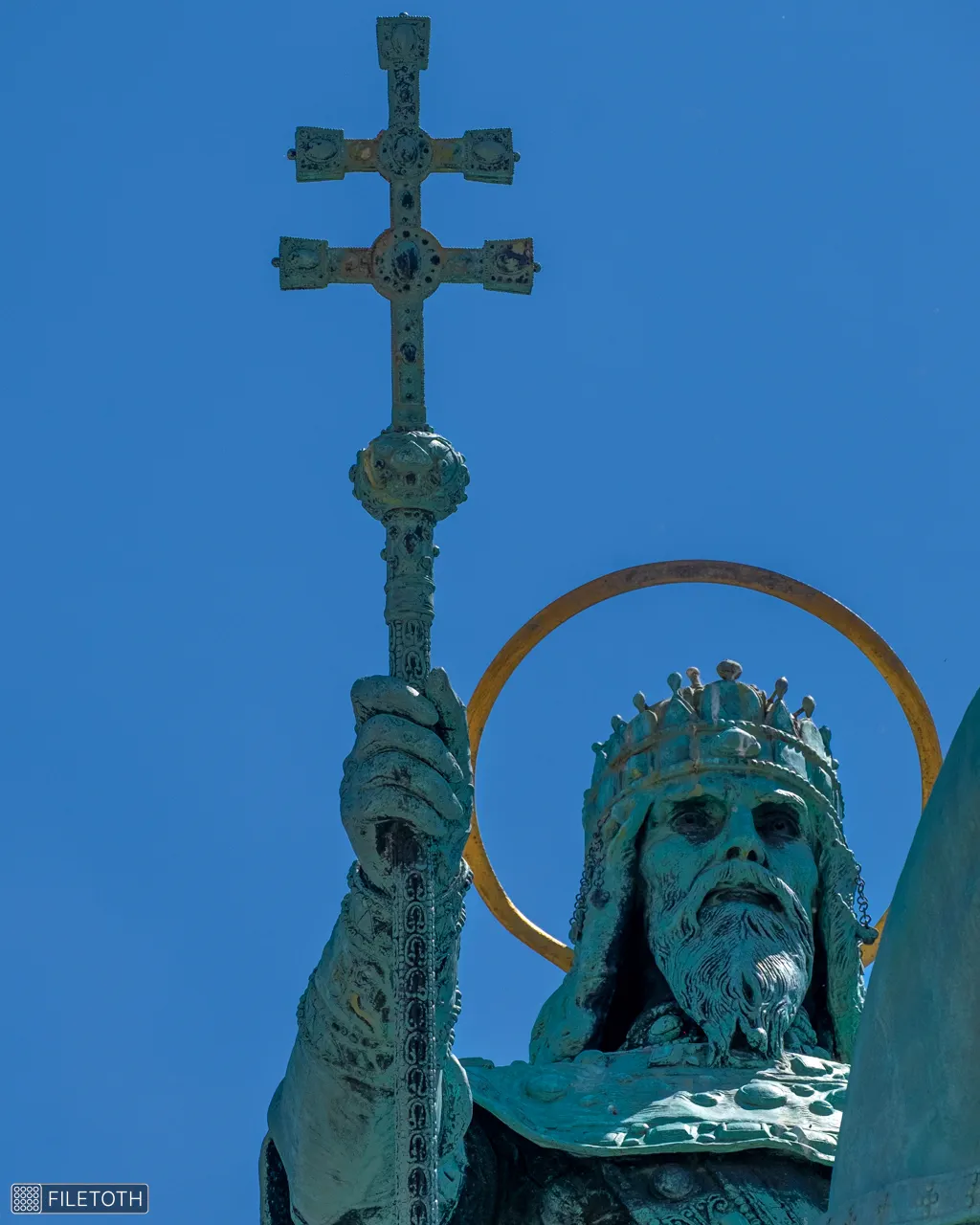
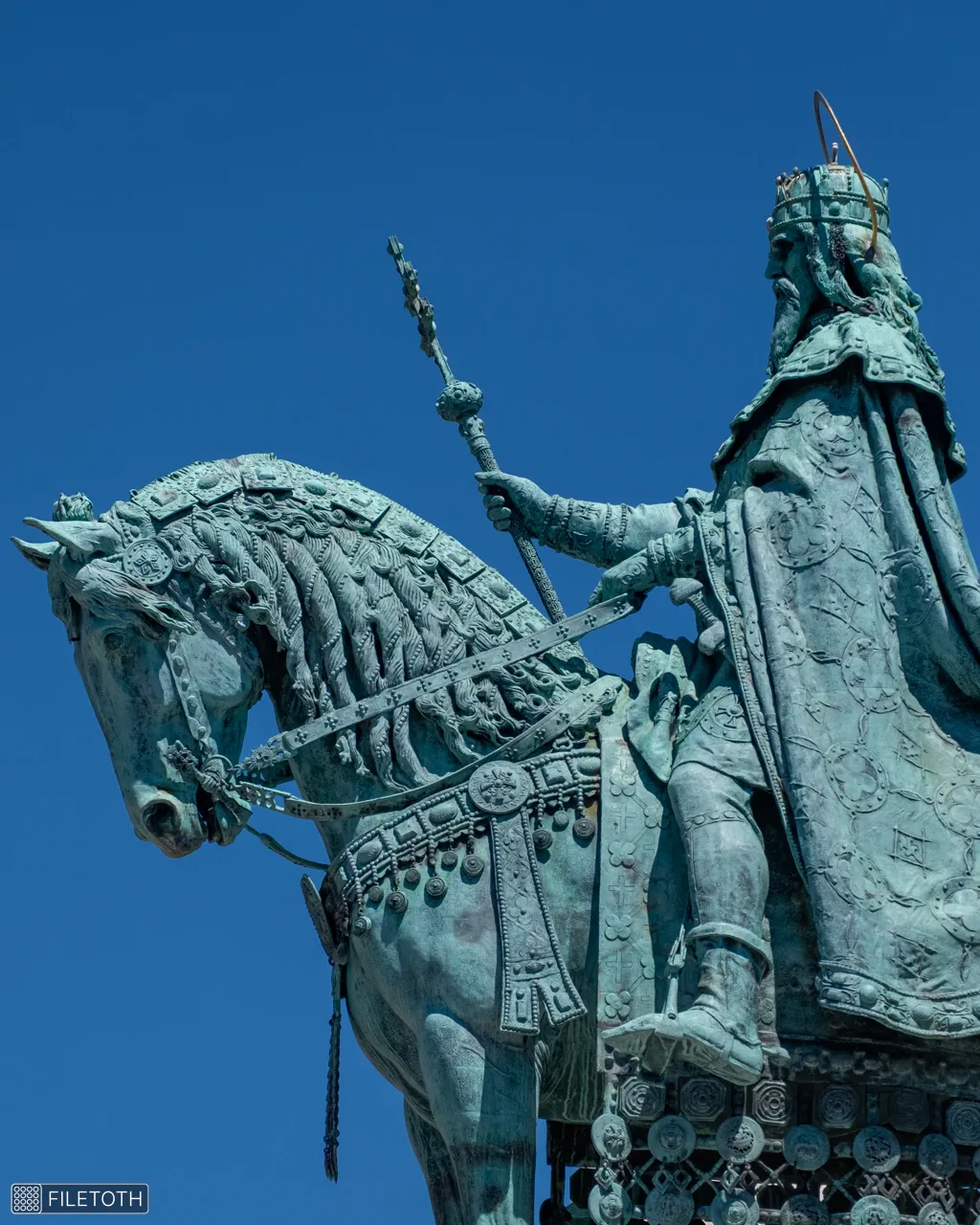
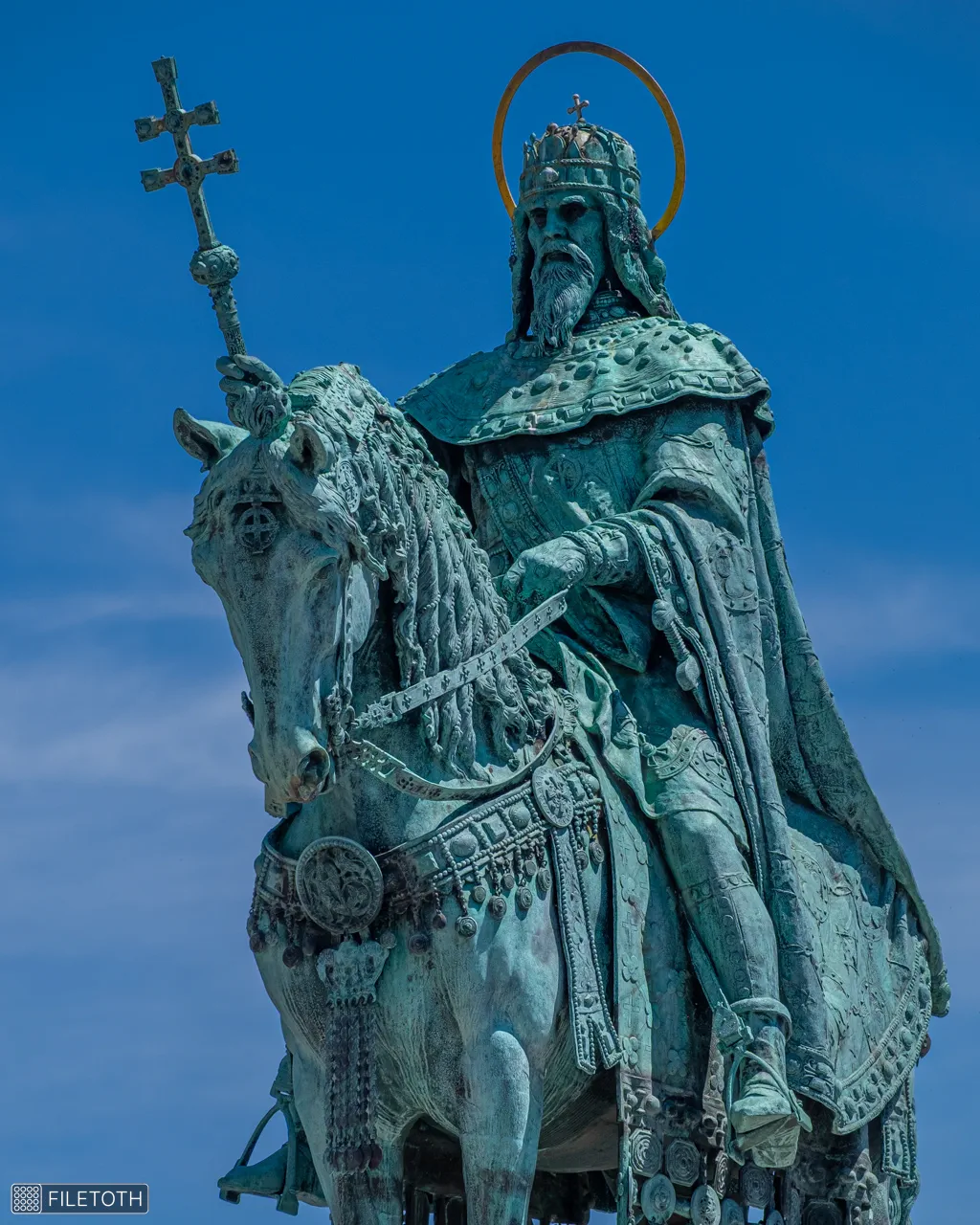
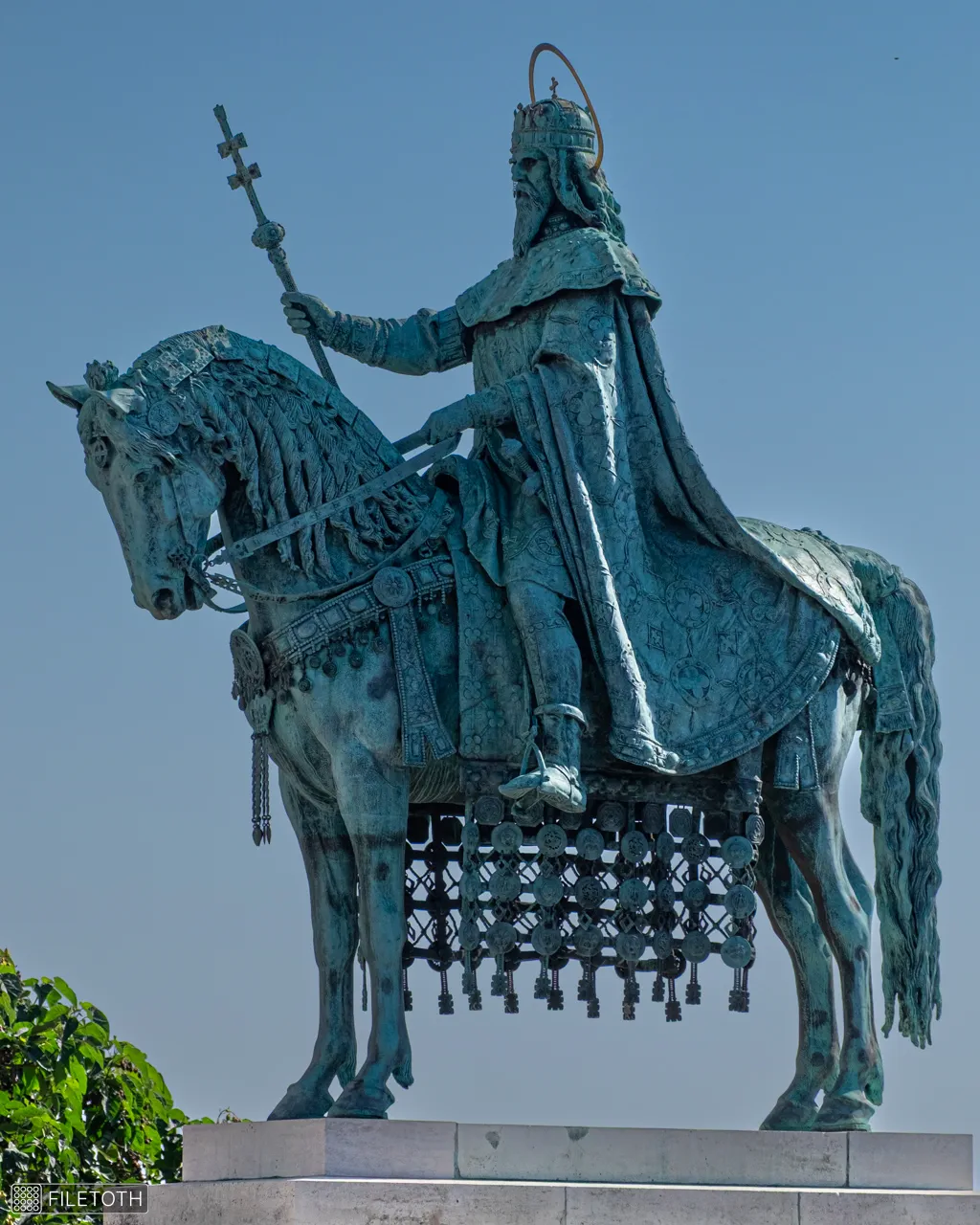
The Hand of Foundation

Saint Stephen Statue

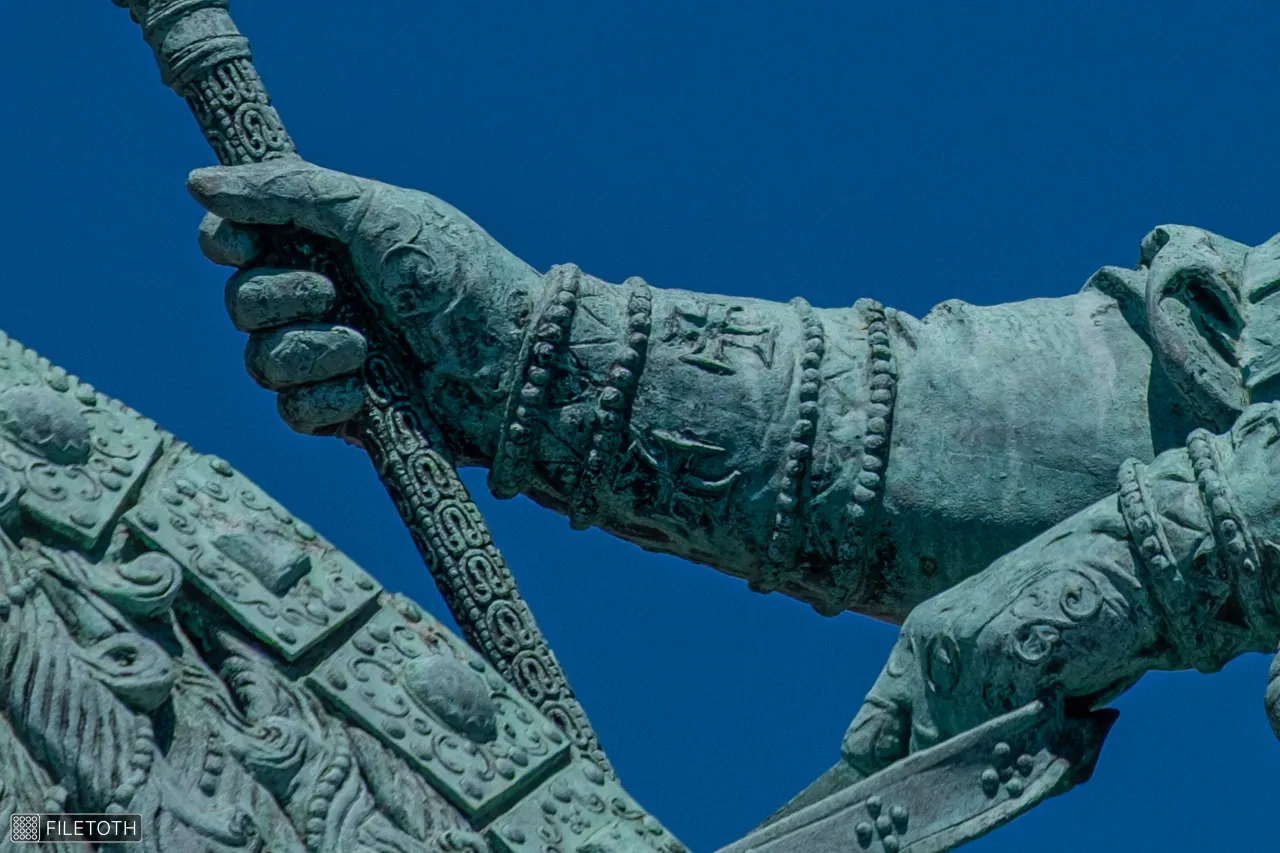
Close-up of Saint Stephen's hands.

Historical figure and era

Saint Stephen I (c. 975–1038), the first King of Hungary, is regarded as the founder of the Hungarian state and the central figure in its Christianization. Crowned around the year 1000, he transformed a federation of tribes into a stable Christian kingdom through new institutions, laws, and governance, firmly integrating Hungary into medieval Europe. Canonized in 1083, he remains both a national ruler and one of Hungary's most enduring religious symbols.

Creation and historical context

Alajos Strobl's equestrian statue, unveiled in 1906 on the terrace of Fisherman's Bastion, presents Saint Stephen not as a conquering warrior but as a calm and thoughtful founder. Holding the apostolic double cross while guiding his horse with the other hand, the king embodies responsibility rather than domination. The monument reflects the early twentieth century's renewed interest in Hungary's medieval origins and enduring statehood.

Statue by Alajos Strobl, May 21, 1906. [ref.]
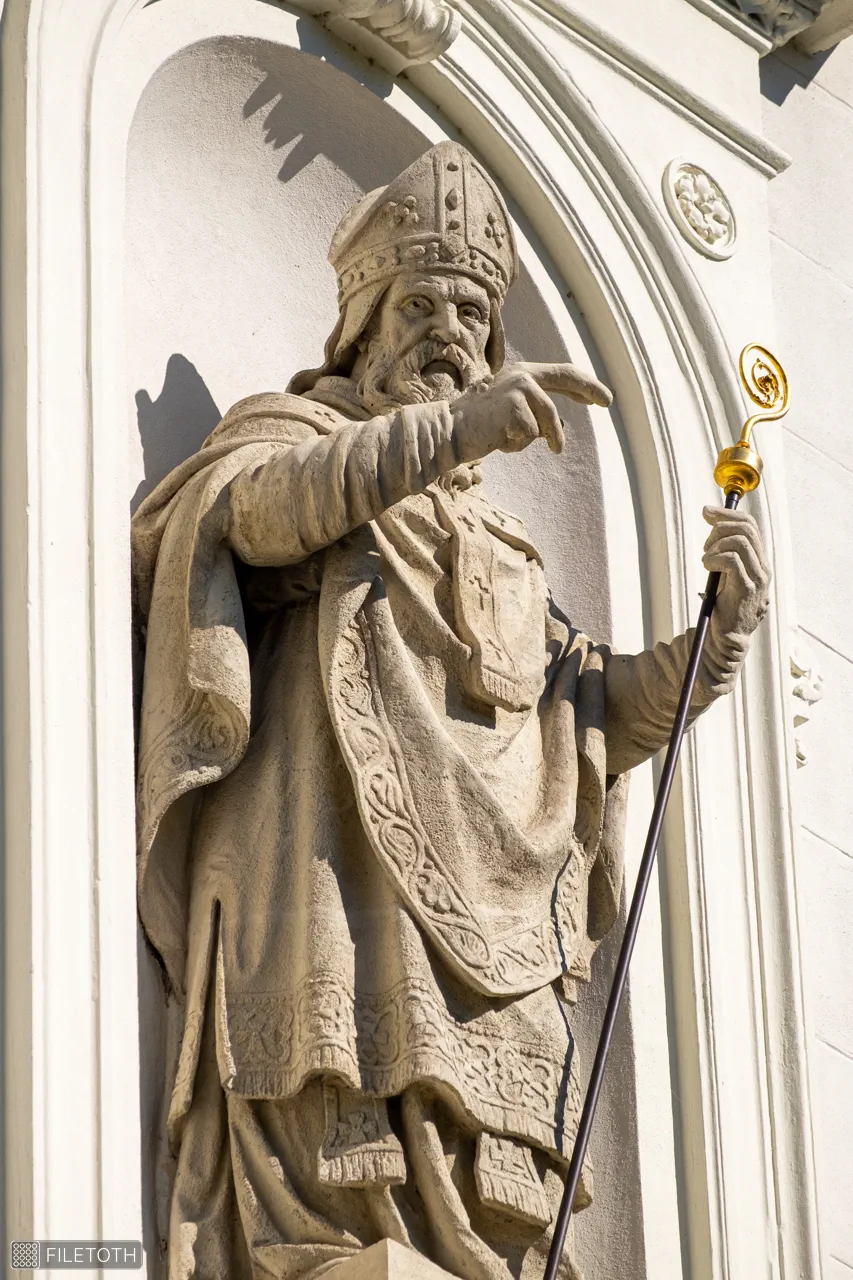
Continue exploring:

The Kolodko Trail.|Browse the full reference index.|Search the collection.|Explore the map.