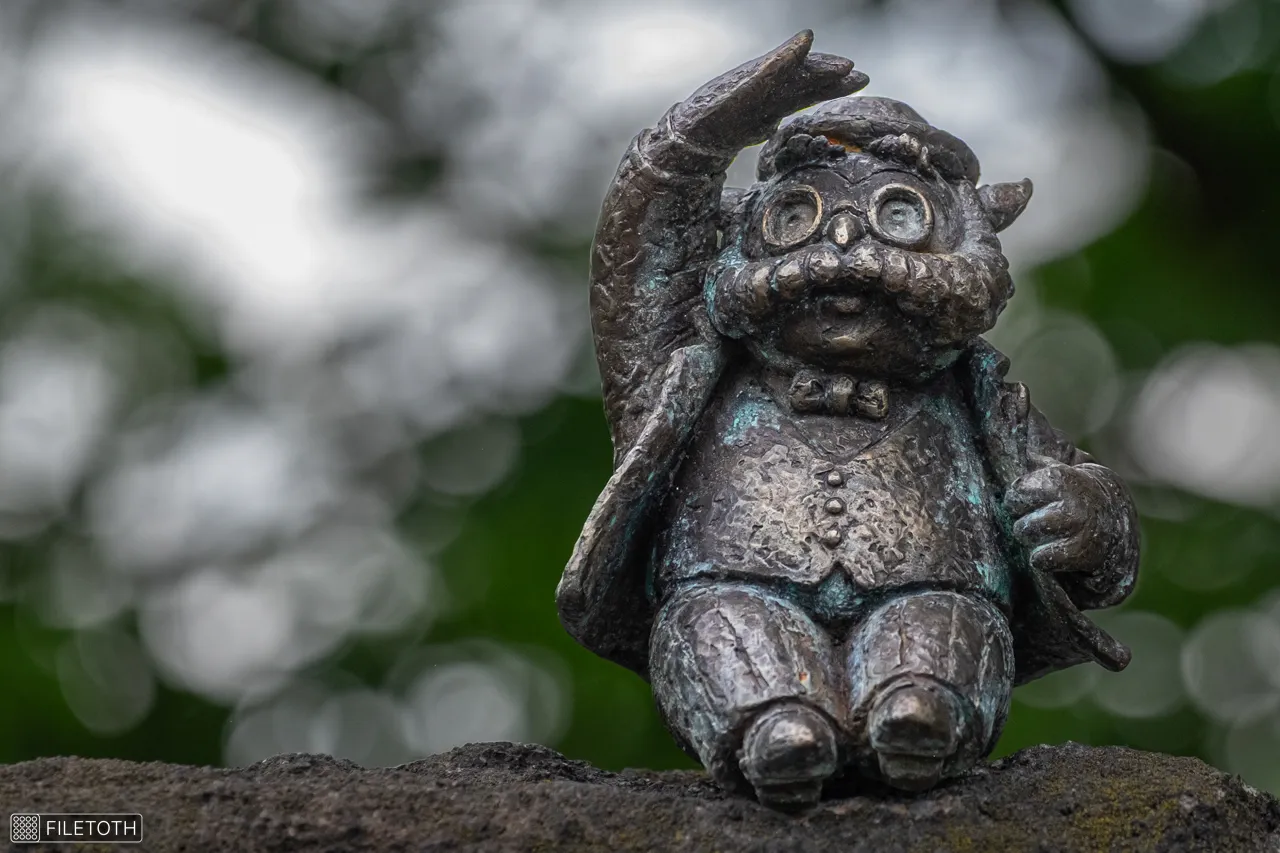
Small sculptures. Big stories.

THE KOLODKO TRAIL

A photographic journey through miniature sculptures and the stories they quietly tell.

Discover a different perspective through the miniature sculptures of Mihály Kolodko. Easy to overlook yet rich in character, each sculpture invites curiosity, reflection, and interpretation. This growing collection presents each miniature through photography, research, and one way of seeing.

The Diabetes Meerkat

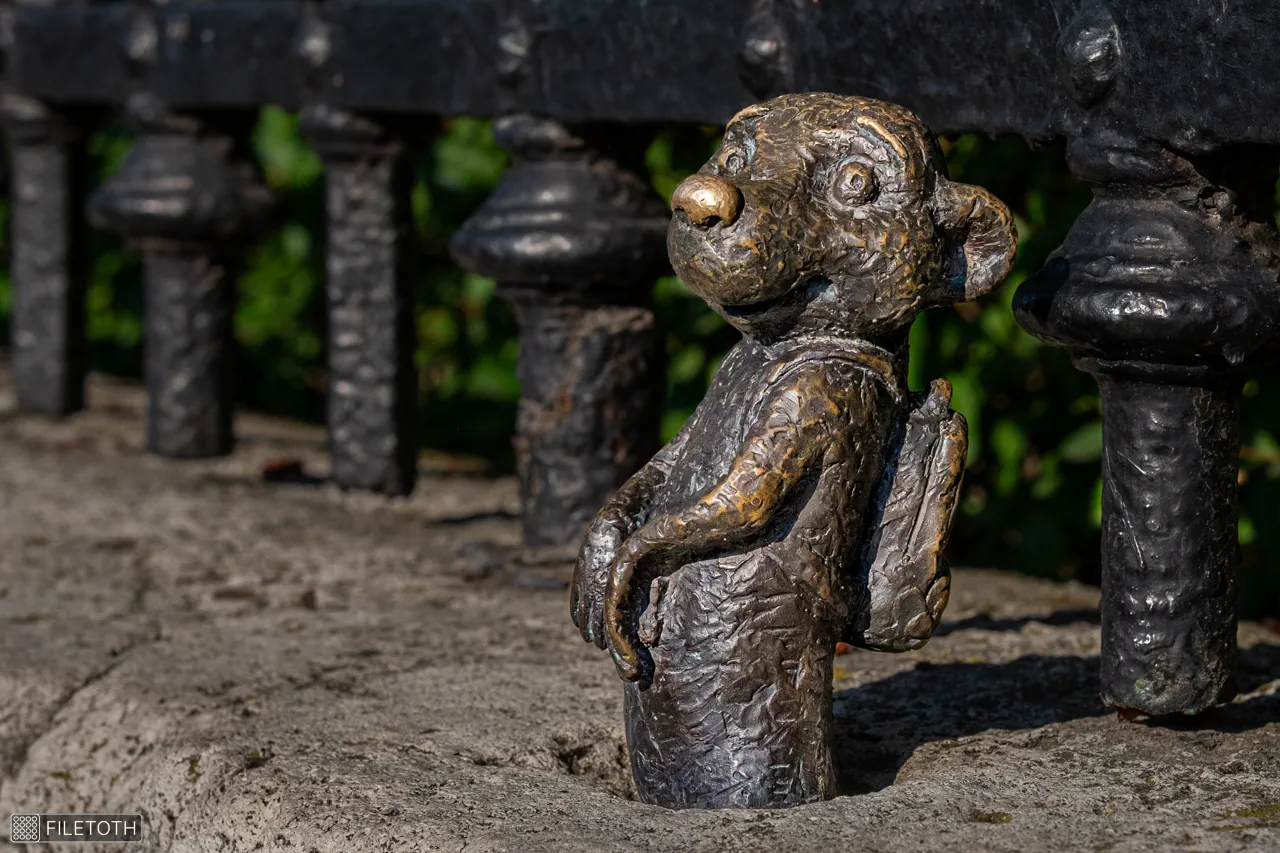
Meerkat miniature

Front view of the Meerkat miniature by Mihály Kolodko.

About the Miniature

Created in 2022, the Meerkat stands beside the First Department of Pediatrics in Budapest to commemorate the 100th anniversary of the discovery of insulin. The small bronze figure wears a backpack and looks curiously toward passersby, inviting visitors to pause and discover its story. Rather than commemorating a historical figure, the miniature gives a visible presence to children living with Type 1 diabetes and to the quiet courage found in everyday life.

Behind the Miniature

The miniature was commissioned by the Szurikáta Foundation, which supports children living with diabetes and their families. Its location beside the children's clinic reflects that mission. The name "Szurikáta" combines the Hungarian word szuri ("injection") with the meerkat, an animal admired for its vigilance and cooperative nature. Together they symbolize daily care, mutual support, and the strength of community.

Miniature by Mihály Kolodko, September 18, 2022. [ref.]
Leave Your Headphones Behind

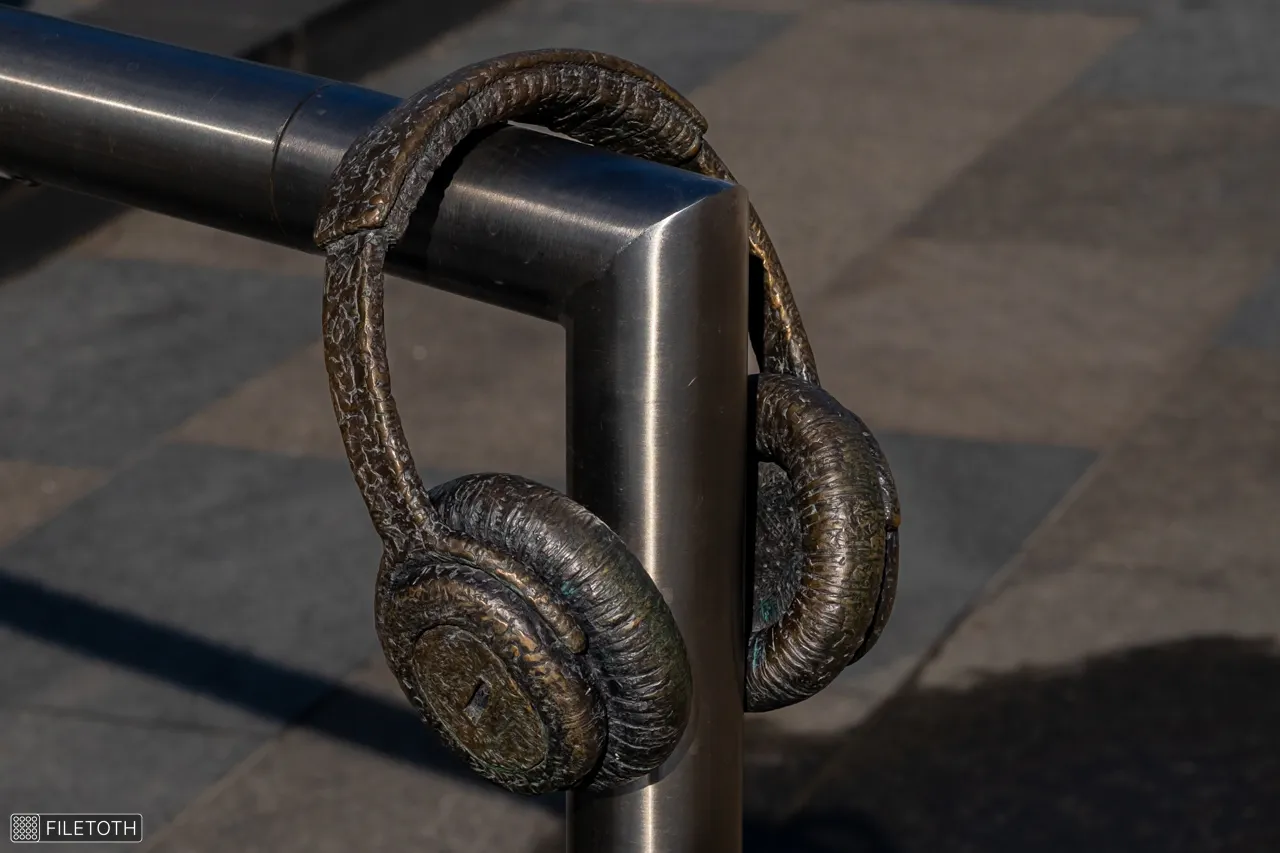
Headphone miniature

Front view of the Headphone miniature by Mihály Kolodko.

About the Miniature

Installed in 2023, the Headphone rests on the handrail beside the main entrance of Müpa (The Palace of Arts). The oversized bronze headphones appear to have been left behind by a visitor, inviting passersby to pause before stepping inside. Rather than depicting a person or character, the miniature transforms an everyday object into a quiet symbol of listening.

Behind the Miniature

Created to celebrate Müpa's 18th anniversary, the miniature welcomes visitors with a simple message: leave your headphones—and the distractions of everyday life—outside. Inside, live music offers an experience that no recording can fully replace. Its location at the entrance makes the sculpture part of the journey from the ordinary world into one of performance, culture, and shared experience.

Miniature by Mihály Kolodko, March 27, 2023. [ref.]

A Trace of Origins

Footprint miniature

Front view of the Footprint miniature by Mihály Kolodko.

About the Miniature

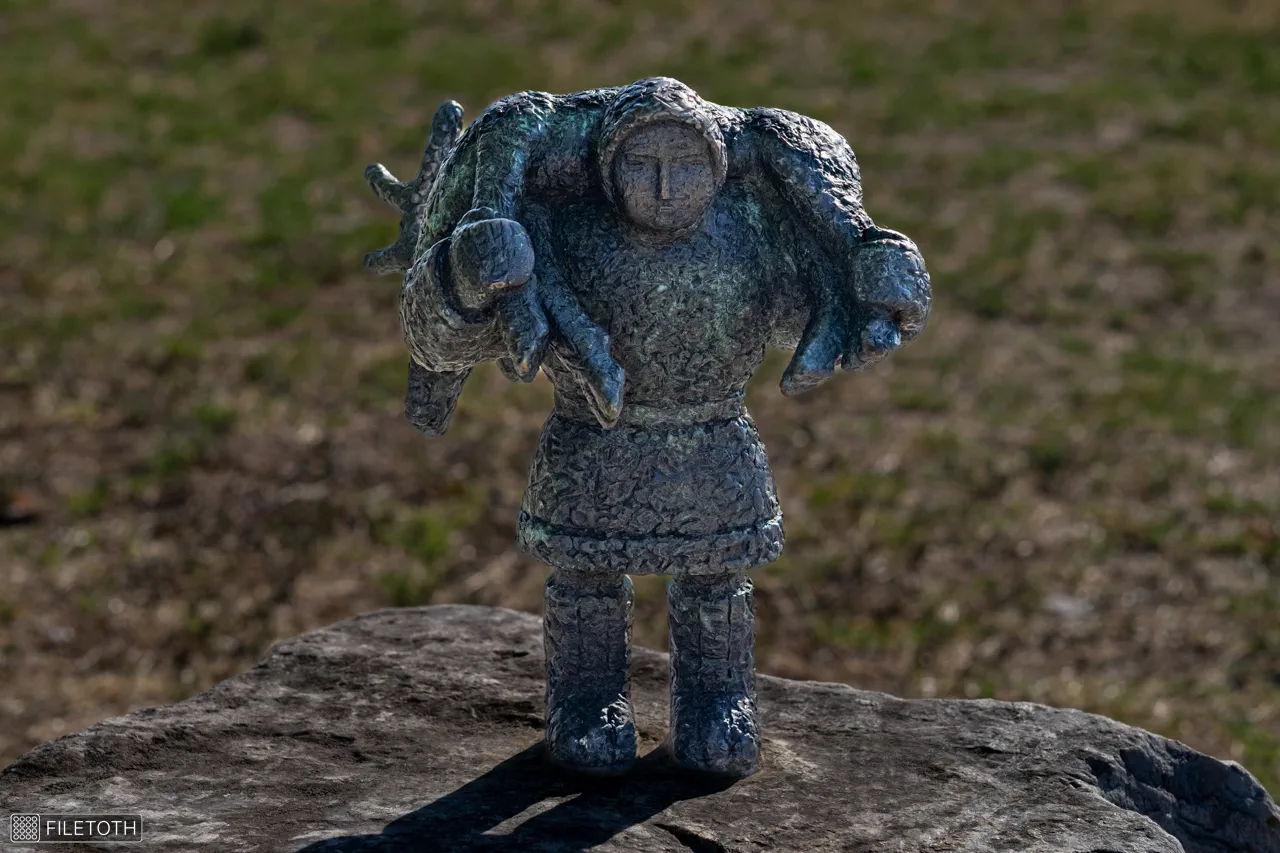
Installed on New Year's Day 2026, Footprint stands beside the Danube on a quiet stretch of riverbank. The bronze figure portrays a member of the Khanty people carrying a reindeer over one shoulder. Surrounded by open grass rather than busy streets, the miniature feels unexpectedly at home in its setting, inviting visitors to pause and consider the traces that connect landscapes, cultures, and people.

Behind the Miniature

The Khanty are an Indigenous people of western Siberia and among the closest linguistic relatives of Hungarians. The official title, Footprint, suggests more than a hunter's trail. It may also be understood as a trace of shared origins, memory, or humanity itself. The words of an elderly Khanty shaman remind us that one people's future cannot be separated from another's, making the miniature an invitation to reflection rather than a statement with a single meaning.

Miniature by Mihály Kolodko, January 1, 2026. [ref.]

The Lost Circus

Leo and Fred miniature

Front view of the Leo and Fred miniature by Mihály Kolodko.

About the Miniature

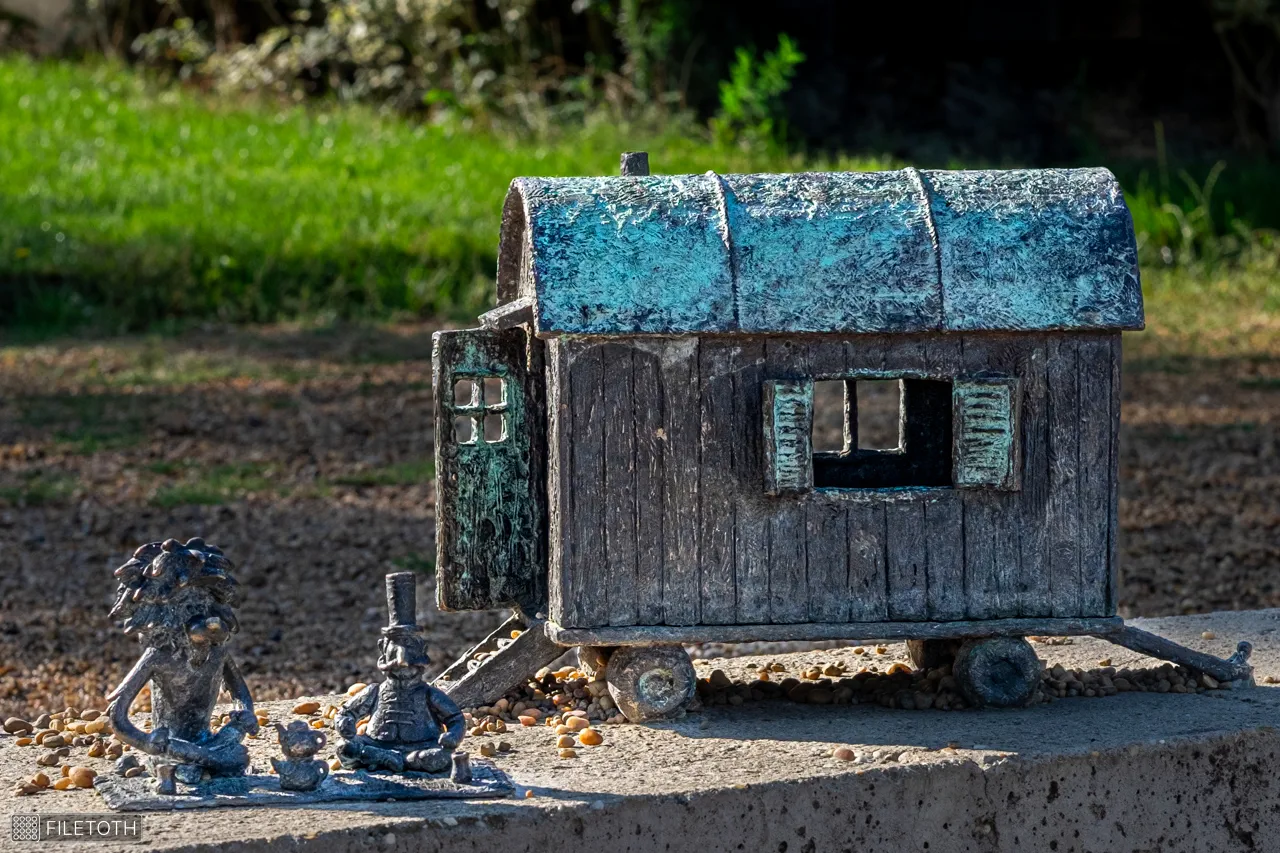
Installed in 2026, the miniature depicts Leo and Fred, two well-known characters from Hungarian animation, seated beside a beautifully crafted circus wagon. Hidden details, including the furnished interior and a small vintage image, reward closer inspection. Together they create a scene that feels playful at first glance yet reveals remarkable craftsmanship.

Behind the Miniature

The miniature pays tribute to Little Constantinople, a lively entertainment district that once stood near today's Kopaszi Dam before disappearing with the growth of the modern city. The circus seems to have arrived too late, finding only memories where the neighborhood once existed. Even the wagon's tiny interior quietly preserves traces of that vanished world, making the sculpture both nostalgic and reflective.

Miniature by Mihály Kolodko, May 28, 2026. [ref.]

Wisdom Beneath the City

Yoda miniature

Front view of the Yoda miniature by Mihály Kolodko.

About the Miniature

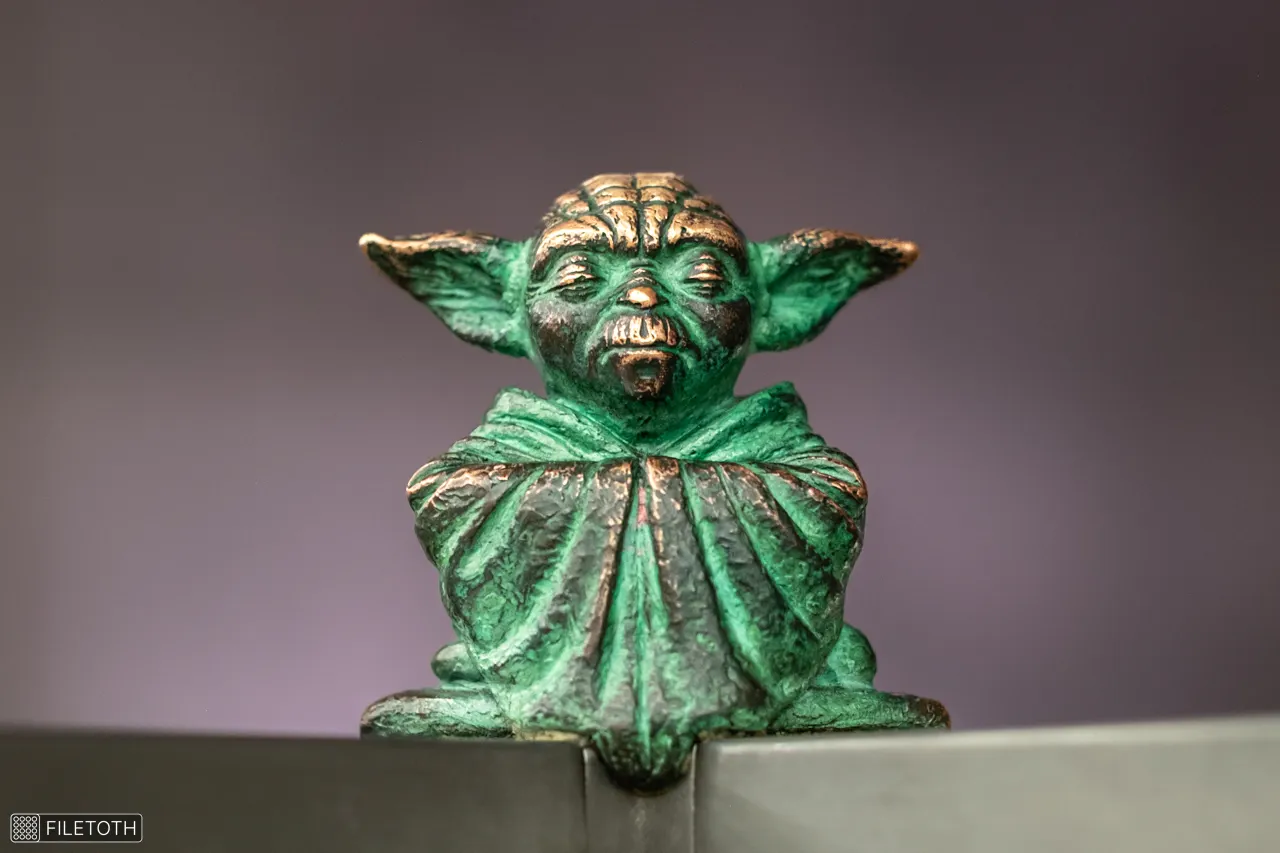
Installed in 2024, Yoda stands within the striking architecture of Budapest's Gellért Hill metro station. The miniature portrays the legendary Jedi Master seated in quiet contemplation. Surrounded by exposed concrete, dramatic lighting, and intersecting structural beams, the sculpture feels surprisingly at home in one of the city's most distinctive underground spaces.

Behind the Miniature

No official explanation has been given for Yoda's location. One possible interpretation begins with the station itself. Designed as a vast network of concrete beams and light, the space has an unmistakably futuristic atmosphere, recalling the interior of a science-fiction spacecraft. In that setting, Yoda becomes more than a popular character. He may represent wisdom, patience, and quiet guidance, inviting travellers to pause before continuing their own journey.

Miniature by Mihály Kolodko, August 21, 2024. [ref.]

Back on His Bridge

Franz Joseph I miniature

Front view of the Franz Joseph I miniature by Mihály Kolodko.

About the Miniature

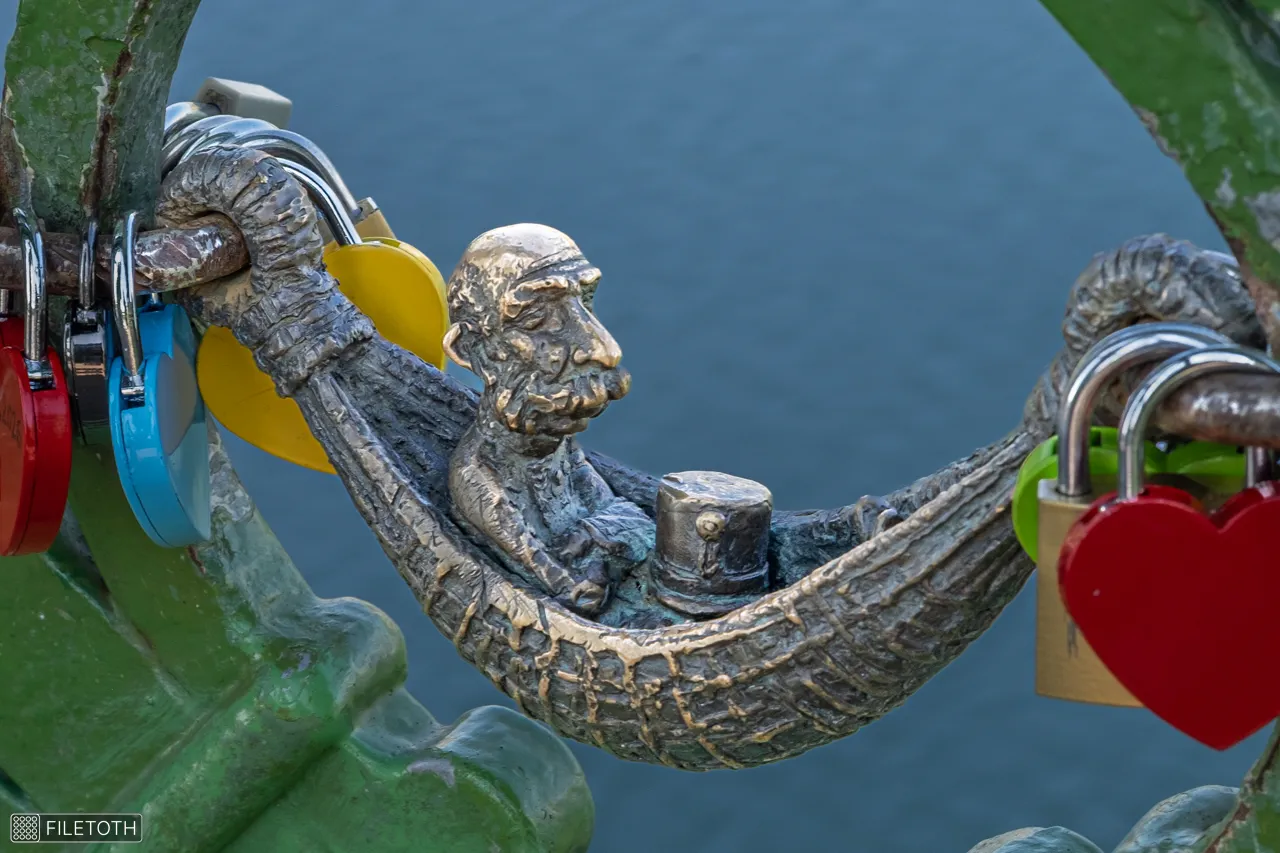
Installed in 2021, the miniature portrays Emperor Franz Joseph I relaxing in a hammock attached to Budapest's Liberty Bridge. Sitting comfortably with his hat resting on his lap, the ruler appears unusually informal. The delicate mesh hammock and the bridge locks holding it in place add a playful touch to one of Kolodko's most humorous creations.

Behind the Miniature

Before 1946, today's Liberty Bridge was known as Franz Joseph Bridge, named after the emperor who inaugurated it in 1896. Kolodko playfully returns him to his former bridge, where he now rests above the Danube instead of presiding over it. The miniature recalls history with a gentle sense of humour while offering a fresh perspective on one of Budapest's historical bridges.

Miniature by Mihály Kolodko, May 7, 2021. [ref.]

Holding On

Bomb miniature

Front view of the Bomb miniature by Mihály Kolodko.

About the Miniature

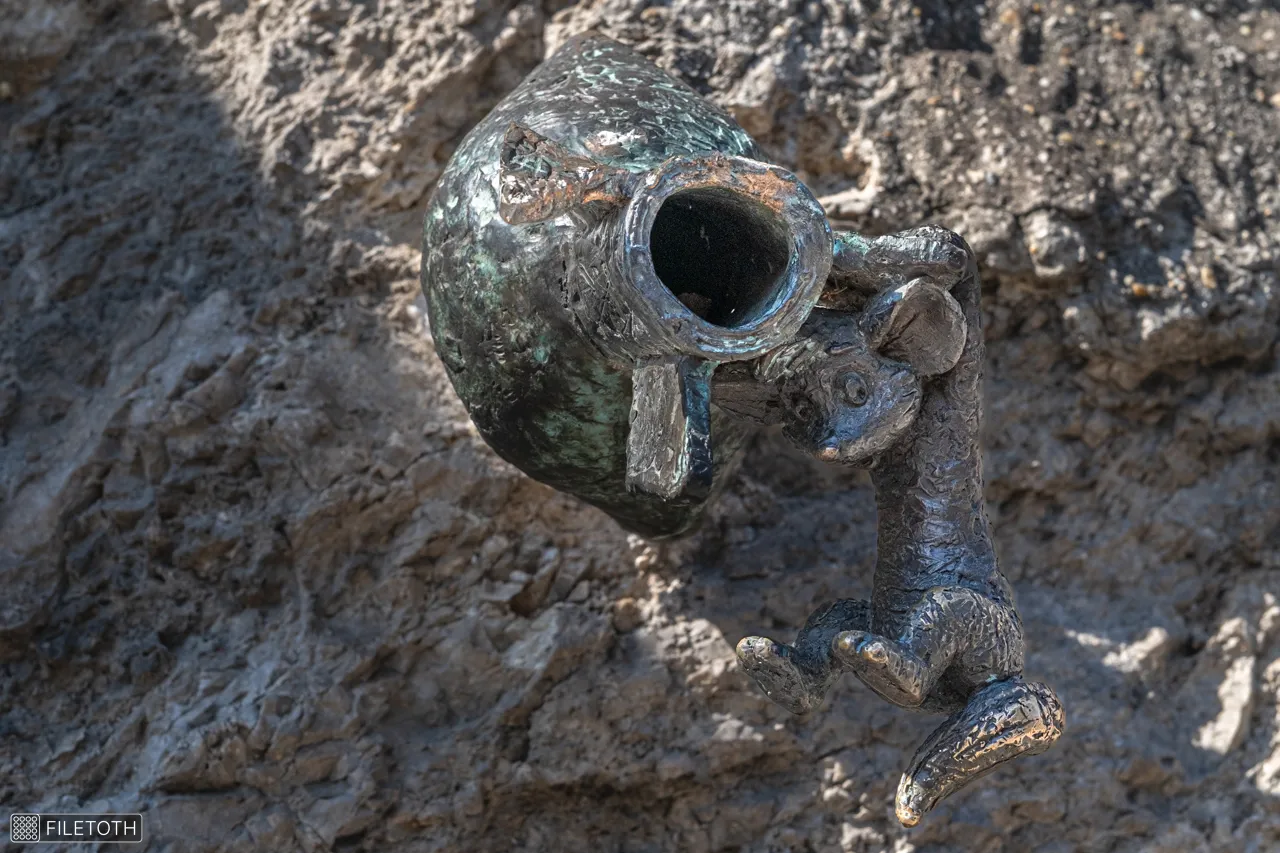
Installed in 2023, Bomb is embedded in the rocky hillside of Gellért Hill overlooking the Danube. The bronze bomb appears deformed, as though it had struck the rock without exploding, while a small animal clings to its surface and looks out across the city. The unusual composition creates an immediate sense of tension, balancing weight, height, and fragility in a single scene.

Behind the Miniature

No official explanation has been given for the miniature. In one video presenting the sculpture, a contemporary city poster featuring a bomb briefly appears, suggesting one possible point of reference from the period in which the miniature was created. Beyond that hint, the meaning is left open. While the bomb itself may evoke conflict or danger, the small animal clinging to its surface quietly shifts the focus elsewhere. Whether the sculpture reflects a particular moment or something more universal is left entirely to the viewer.

Miniature by Mihály Kolodko, January 11, 2023. [ref.]

The Artist at Work

Ratatouille miniature

Front view of the Ratatouille miniature by Mihály Kolodko.

About the Miniature

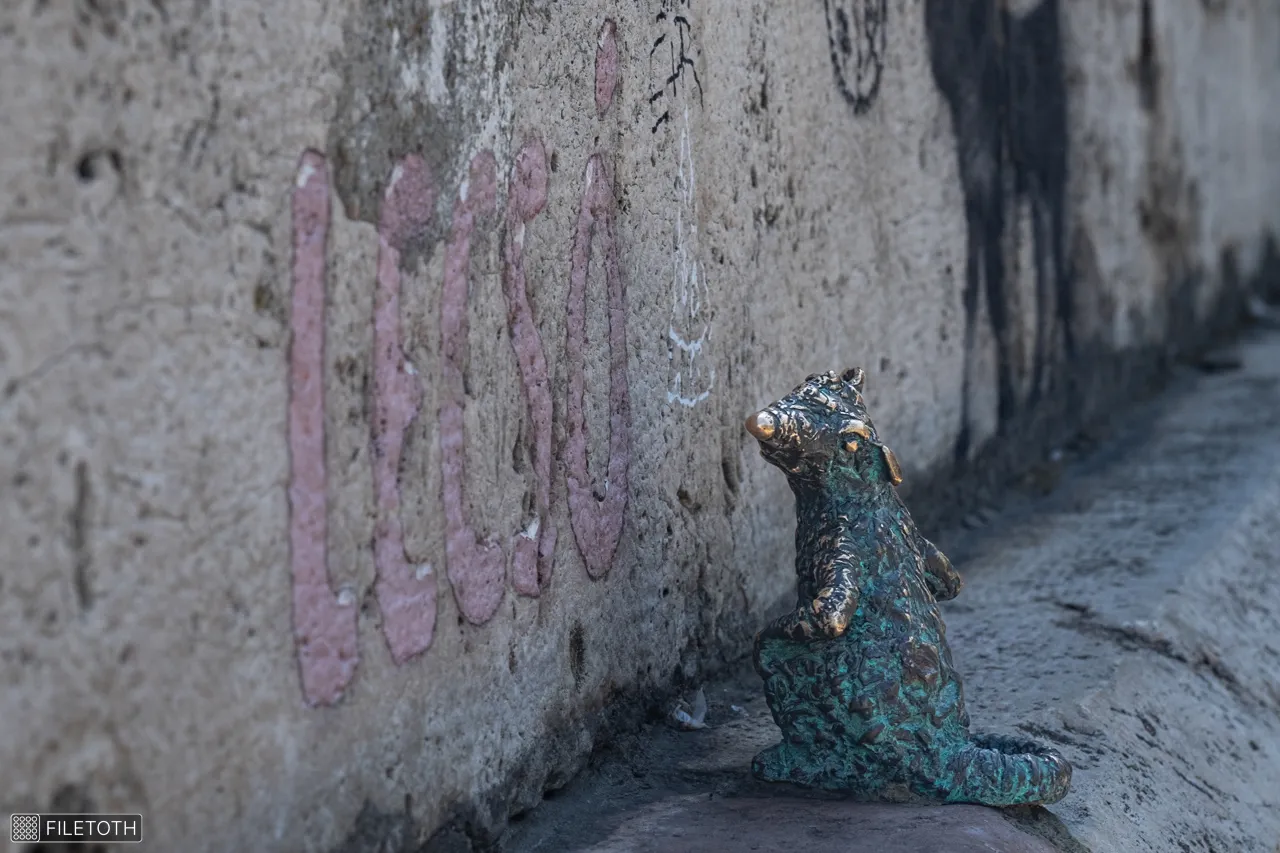
Installed in 2021 beside the Buda abutment of Elizabeth Bridge, the miniature portrays the famous rat from Ratatouille standing before freshly painted graffiti reading "L'ecsó". Looking directly at passersby, the small bronze figure appears to have been caught in the act. The playful scene transforms an ordinary wall into a tiny street-art moment.

Behind the Miniature

No official explanation has been given for the miniature. The graffiti, the riverside location, and the mischievous expression naturally recall the world of urban street art, while the character itself pays tribute to the animated film Ratatouille. Whether the sculpture also reflects contemporary graffiti culture is left open, inviting visitors to discover their own connections.

Miniature by Mihály Kolodko, August 18, 2021. [ref.]

The Russians Are Already in the Pantry

There Is No Stewed Fruit miniature

Front view of the There Is No Stewed Fruit miniature by Mihály Kolodko.

About the Miniature

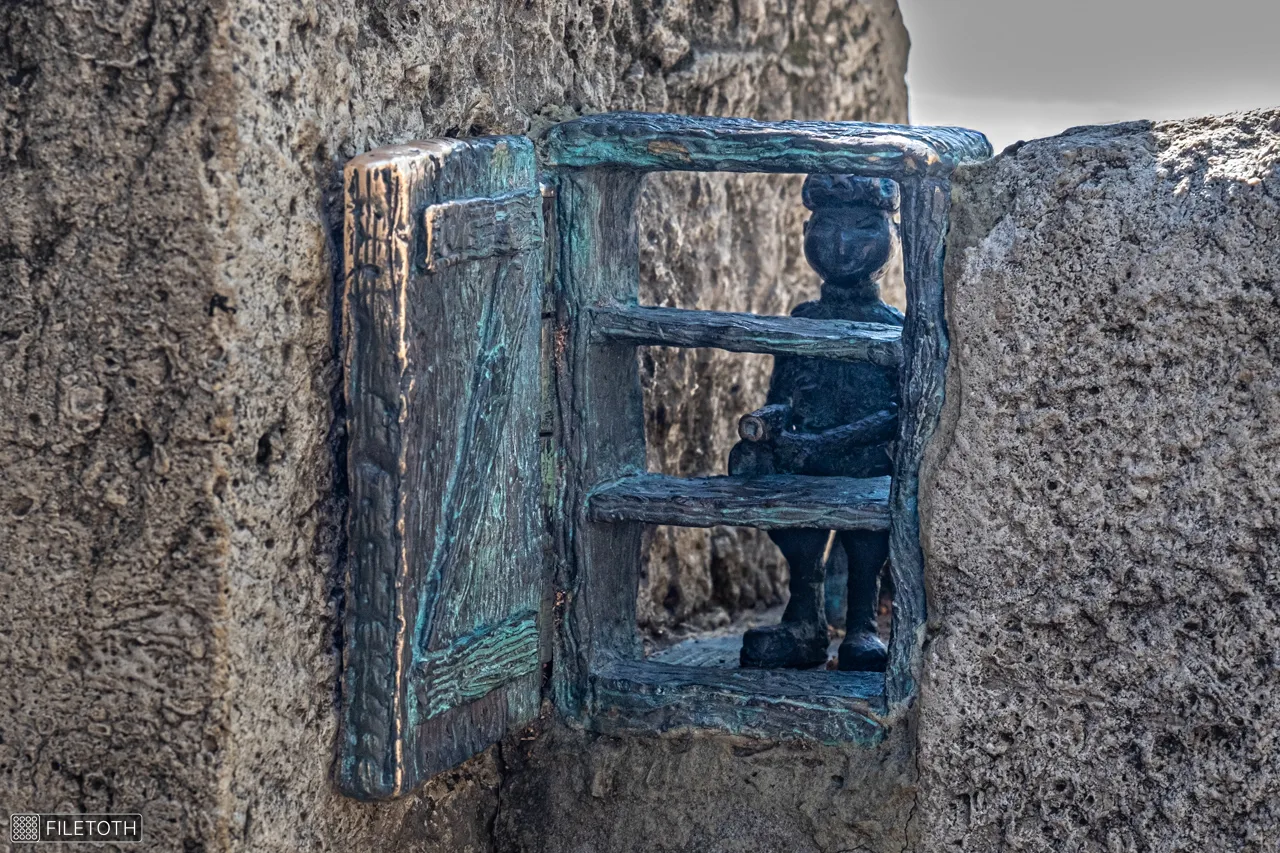
Installed in 2022 on the stone parapet near the Várkert Bazár, the miniature depicts a Russian soldier hiding inside a tiny pantry while watching passersby with a submachine gun in his hands. The little pantry door can be opened, revealing that the sculpture is more than a simple figure. It is a carefully crafted miniature scene that rewards closer inspection.

Behind the Miniature

The miniature recalls an iconic scene from the 1965 Hungarian comedy The Corporal and the Others. Although its official title is There Is No Stewed Fruit, most Hungarians recognize it from the famous line, "The Russians are already in the pantry." Kolodko playfully transforms one of Hungarian cinema's most memorable moments into miniature form, where humour and nostalgia come together.

Miniature by Mihály Kolodko, September 11, 2022. [ref.]

Where It All Began

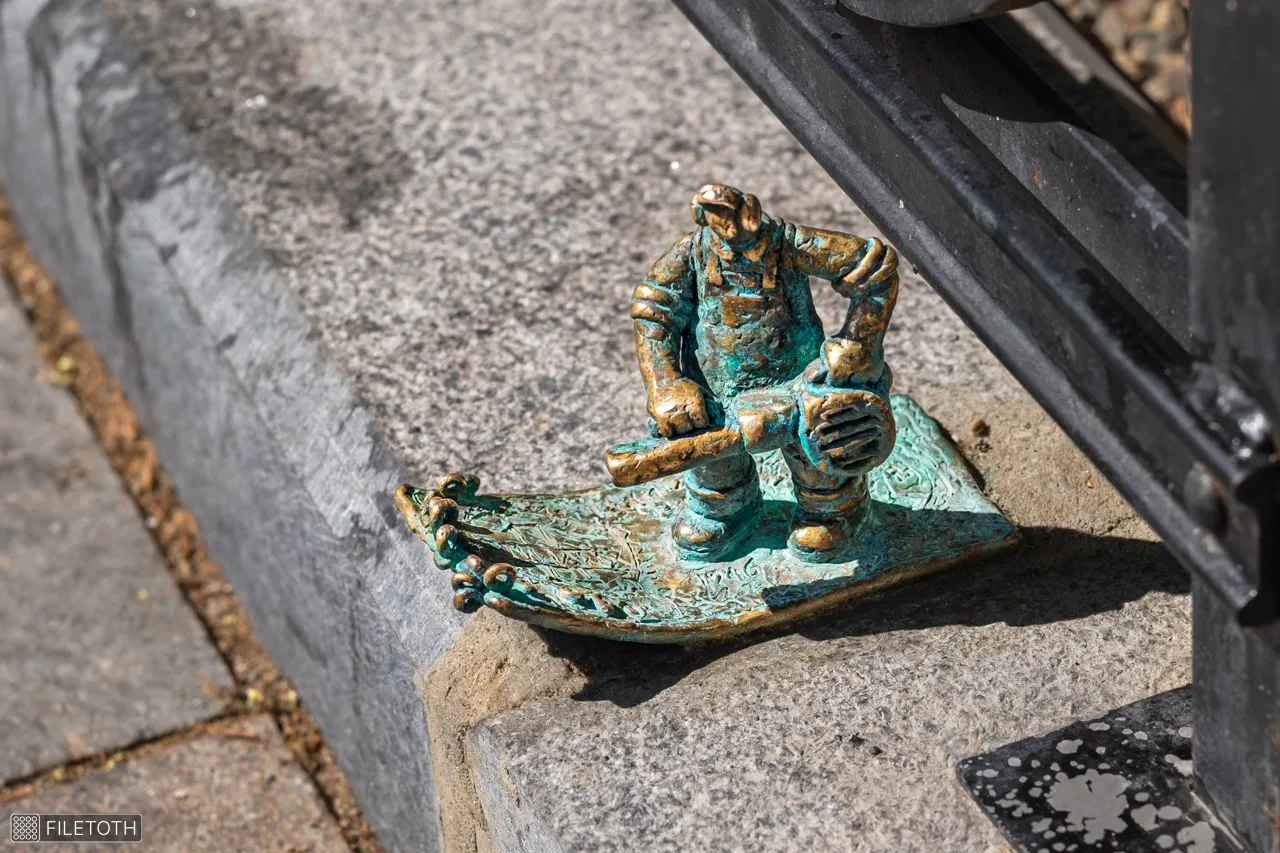
Chief Worm miniature

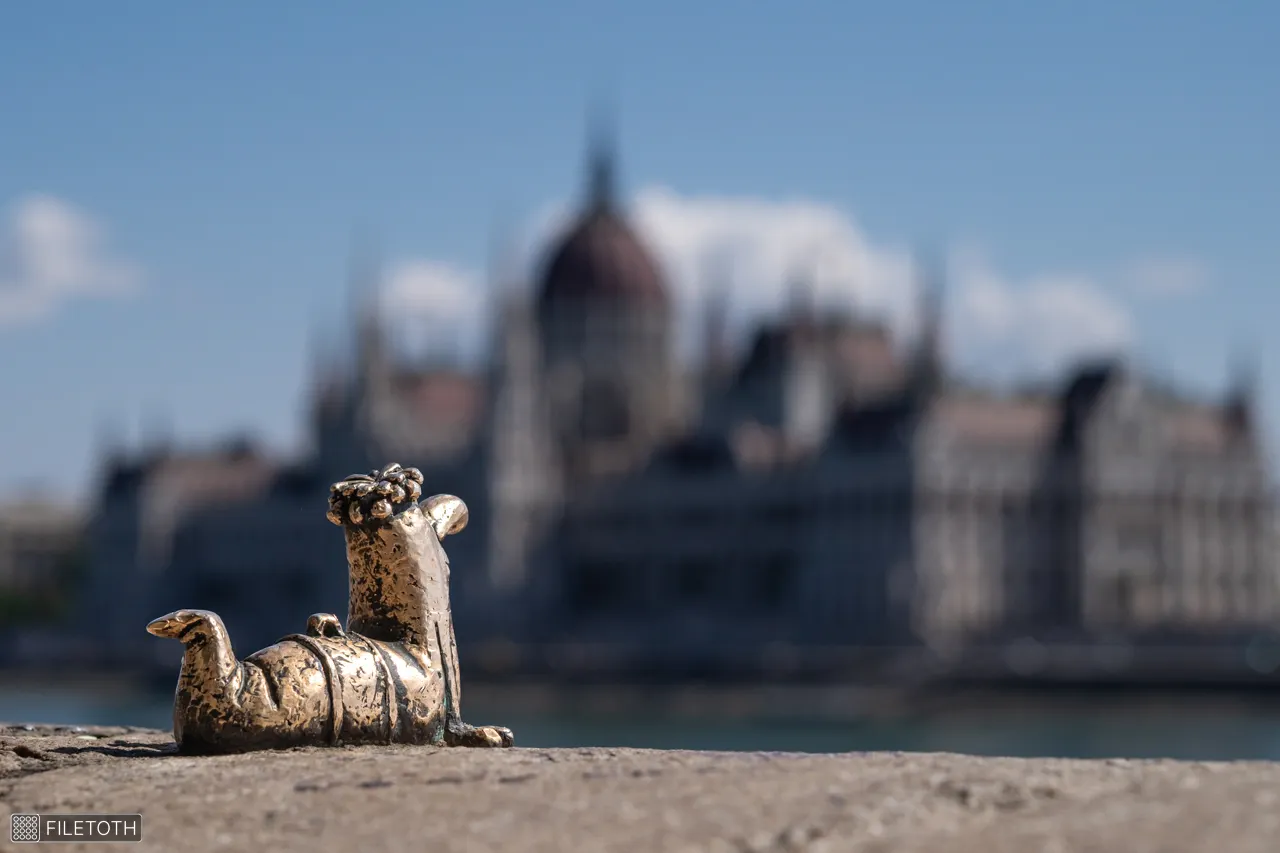
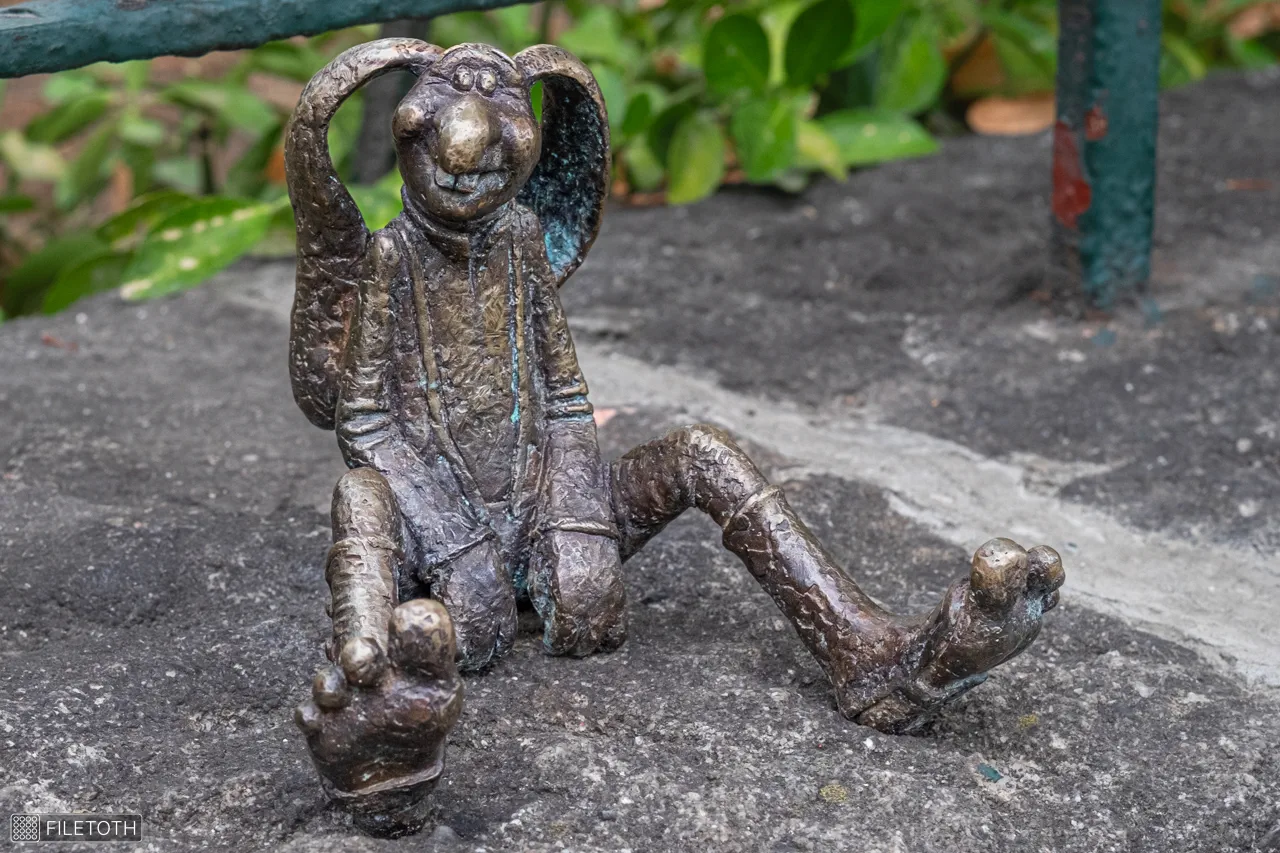
Chief Worm miniature overlooking the Hungarian Parliament.

About the Miniature

Installed in 2016 along the Danube embankment, Chief Worm quietly looks across the river toward the Hungarian Parliament. Although barely noticeable at first, the tiny bronze figure occupies one of Budapest's most recognizable panoramas. Water, fishing, and the city's iconic riverside come together in a setting that feels both playful and surprisingly peaceful.

Behind the Miniature

Chief Worm was among Kolodko's first miniatures installed in Budapest after moving from Uzhhorod. Inspired by the beloved Hungarian animated series The Great Ho-Ho-Ho Fisherman, which the artist has said helped him learn Hungarian as a child, the sculpture carries a deeply personal connection. Generations of Hungarians grew up with the adventures of the cheerful fisherman and his witty companion, making the miniature both a tribute to childhood memories and a symbolic beginning of Kolodko's Budapest journey. Its final location was chosen during a walk along the Danube with his child—only a cast away from the river and its fish.

Miniature by Mihály Kolodko, December 1, 2016. [ref.]

Russians, Go Home!

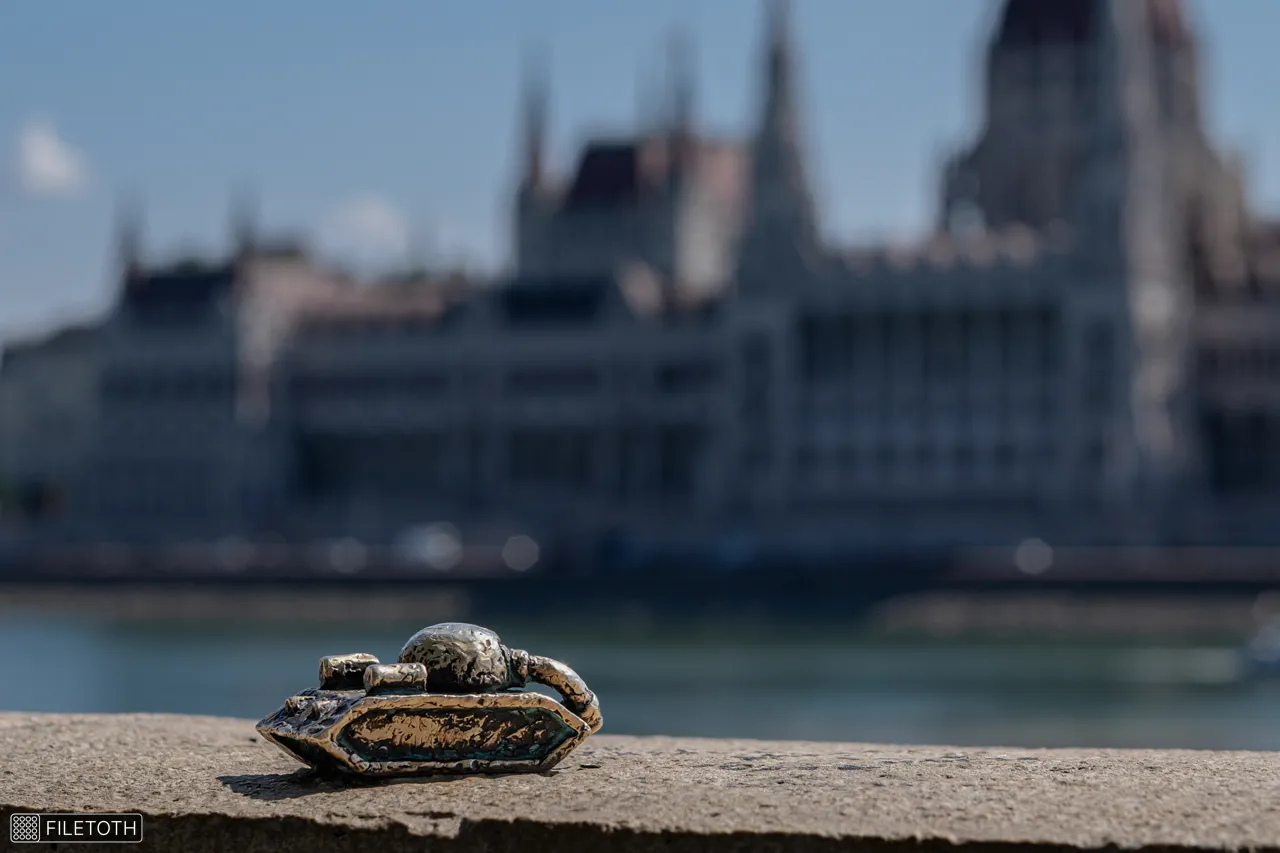
Sad Tank miniature

Front view of the Sad Tank miniature by Mihály Kolodko.

About the Miniature

Installed in 2017 near Batthyány Square, the Sad Tank rests quietly beside the Danube with its barrel lowered toward the ground. Rather than appearing threatening, the small bronze vehicle seems almost defeated, while the white inscription "Russians, Go Home!" stands out against its dark surface. The unusual composition transforms a weapon into an unexpectedly sympathetic character.

Behind the Miniature

The miniature stands in a place deeply connected to Budapest's twentieth-century history. Nearby, the first temporary bridge linking Buda and Pest was built after the destruction of the city's bridges during the Second World War, while Batthyány Square also became associated with the events of the 1956 Revolution. Unveiled on April 4, the former official anniversary of the end of the Second World War in Hungary, the sculpture quietly shifts the focus away from conflict. Its lowered barrel and sorrowful expression invite thoughts of peace rather than victory.

Miniature by Mihály Kolodko, April 4, 2017. [ref.]

A Puzzle in Motion

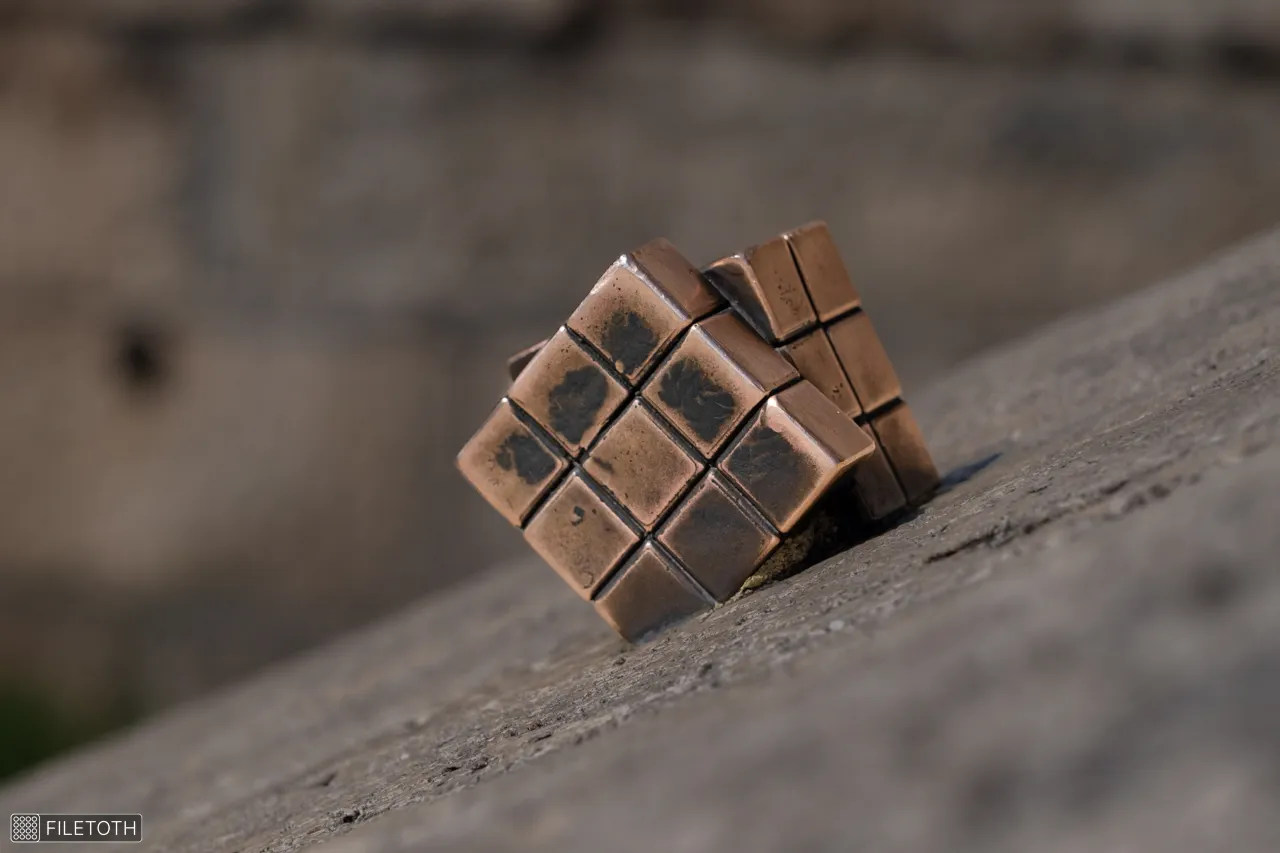
Rubik's cube miniature

Front view of the Headphone miniature by Mihály Kolodko.

About the Miniature

Installed in 2019, the Rubik's Cube rolls down the handrail of a staircase leading toward Budapest's lower embankment. Captured in motion rather than at rest, the familiar puzzle appears ready to continue its journey. The playful composition transforms one of Hungary's best-known inventions into a lively part of the city's streetscape.

Behind the Miniature

Invented in Hungary by Ernő Rubik, the Rubik's Cube became one of the world's most recognizable puzzles. The miniature appeared in 2019, the year of Rubik's 75th birthday, which may have inspired its creation. Whether the sculpture pays tribute to the inventor or simply celebrates one of Hungary's most iconic inventions, Kolodko once again leaves the final interpretation to the viewer.

Miniature by Mihály Kolodko, February 10, 2019. [ref.]

A Tale of King Matthias

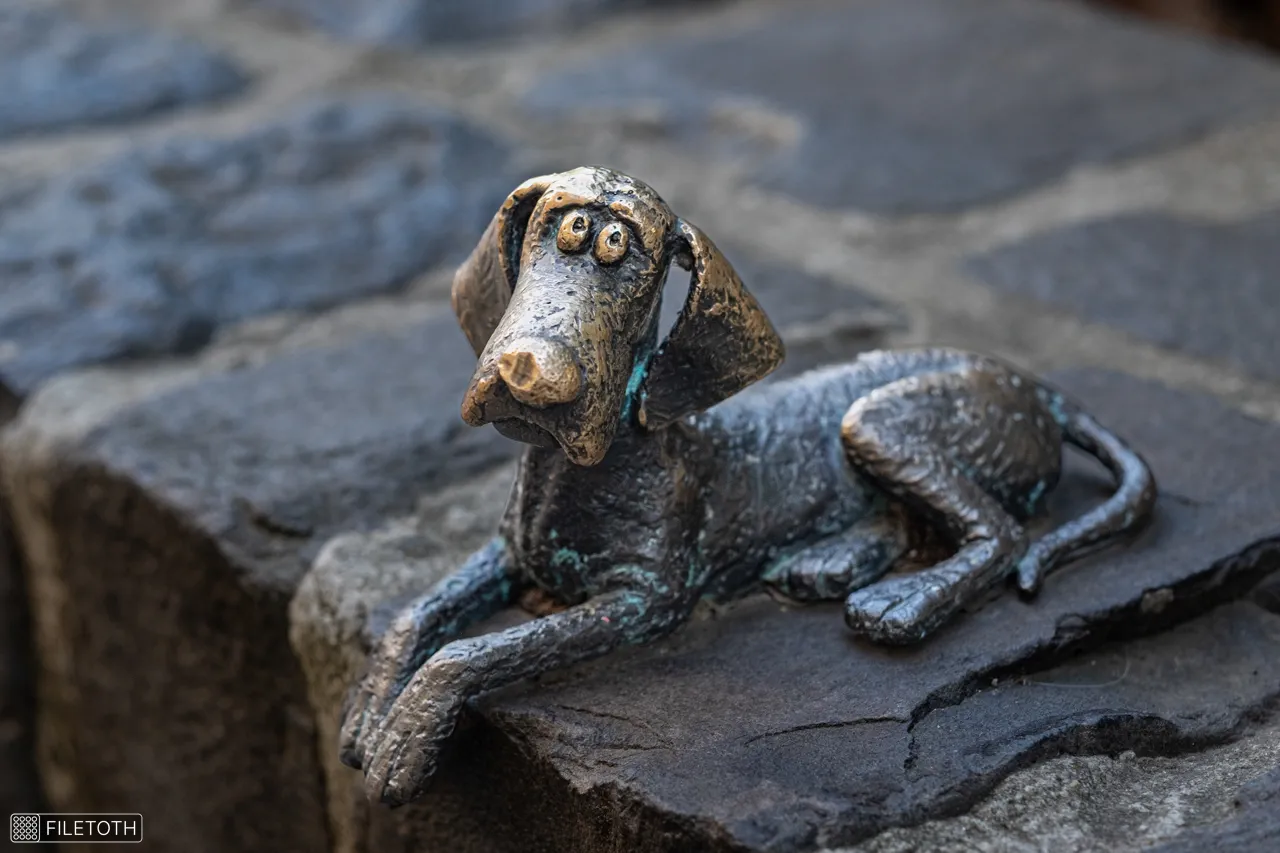
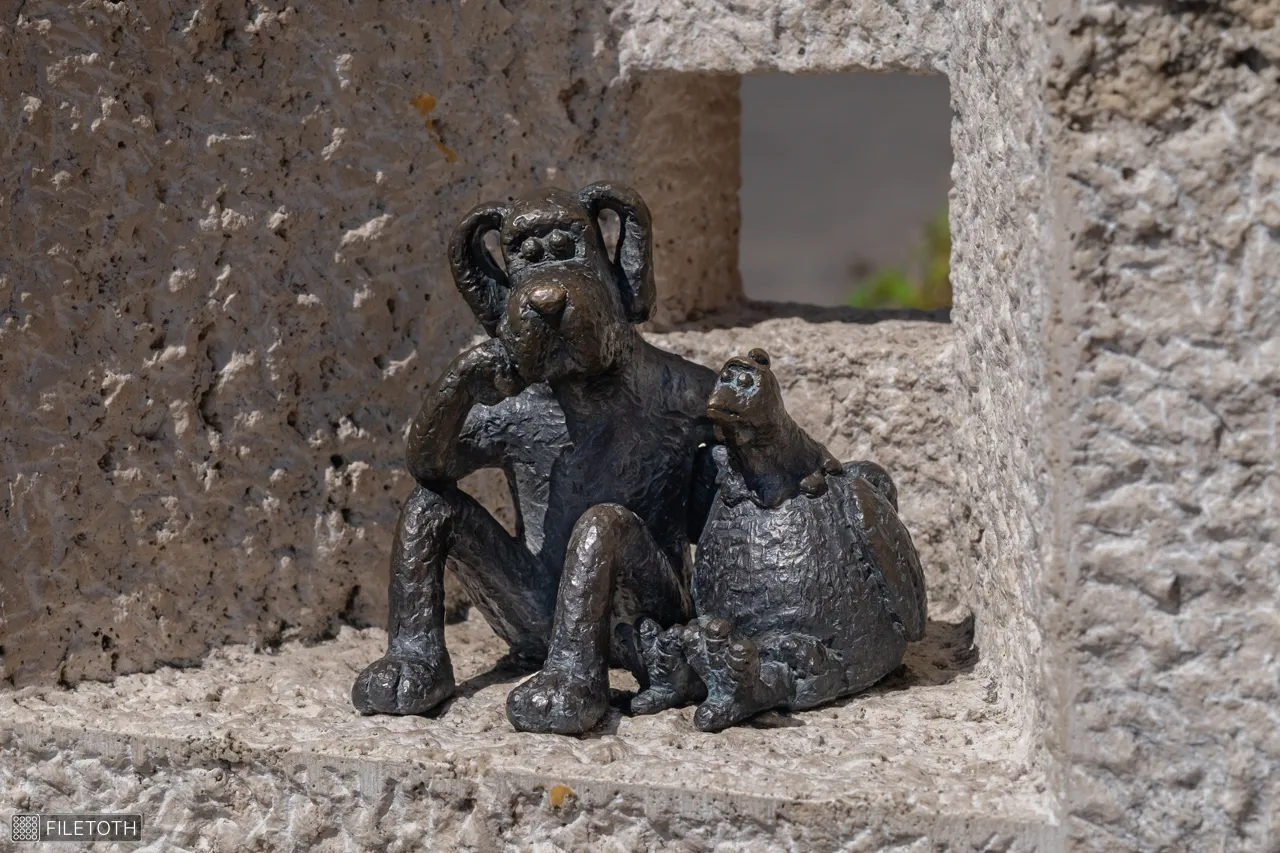
Once in a Blue Moon miniatures

One of the bronze dogs resting on the stone wall.

About the Miniature

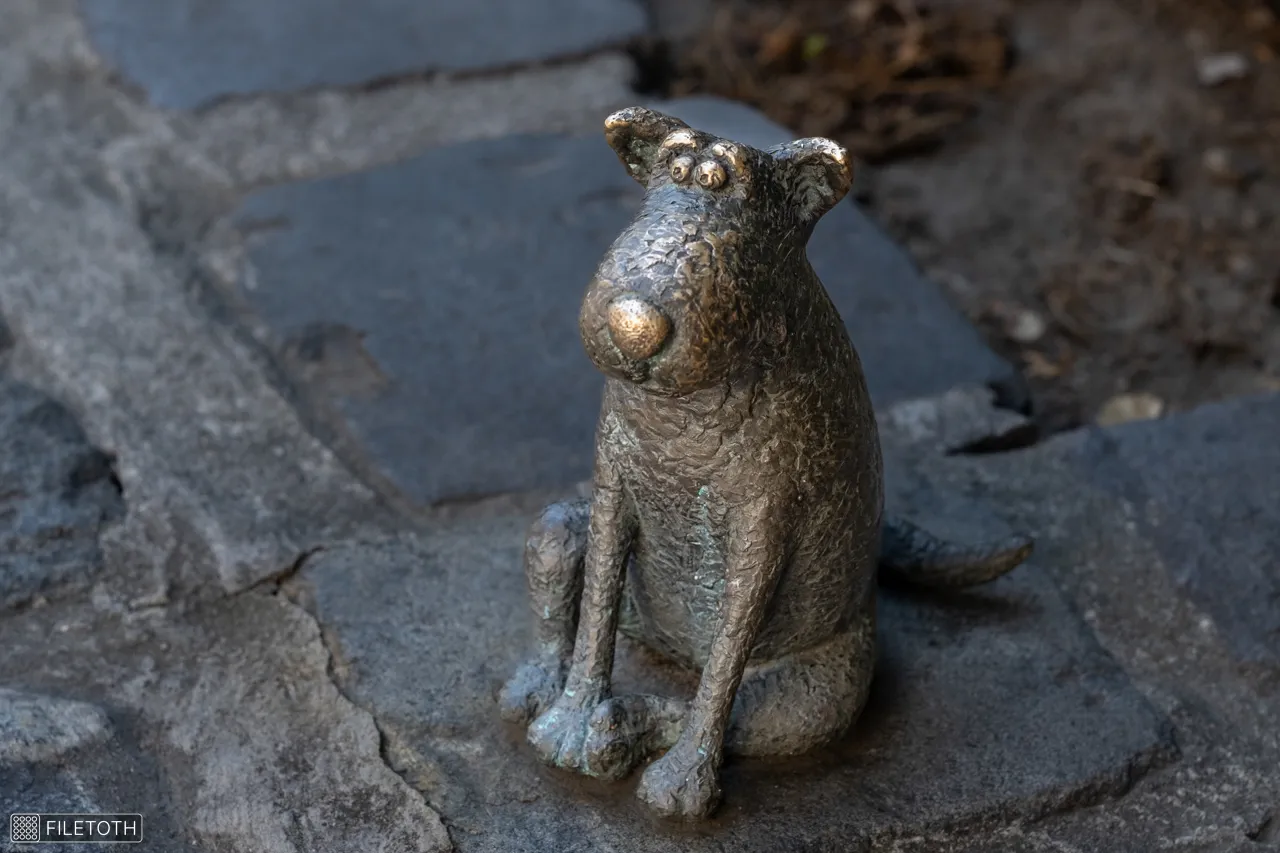
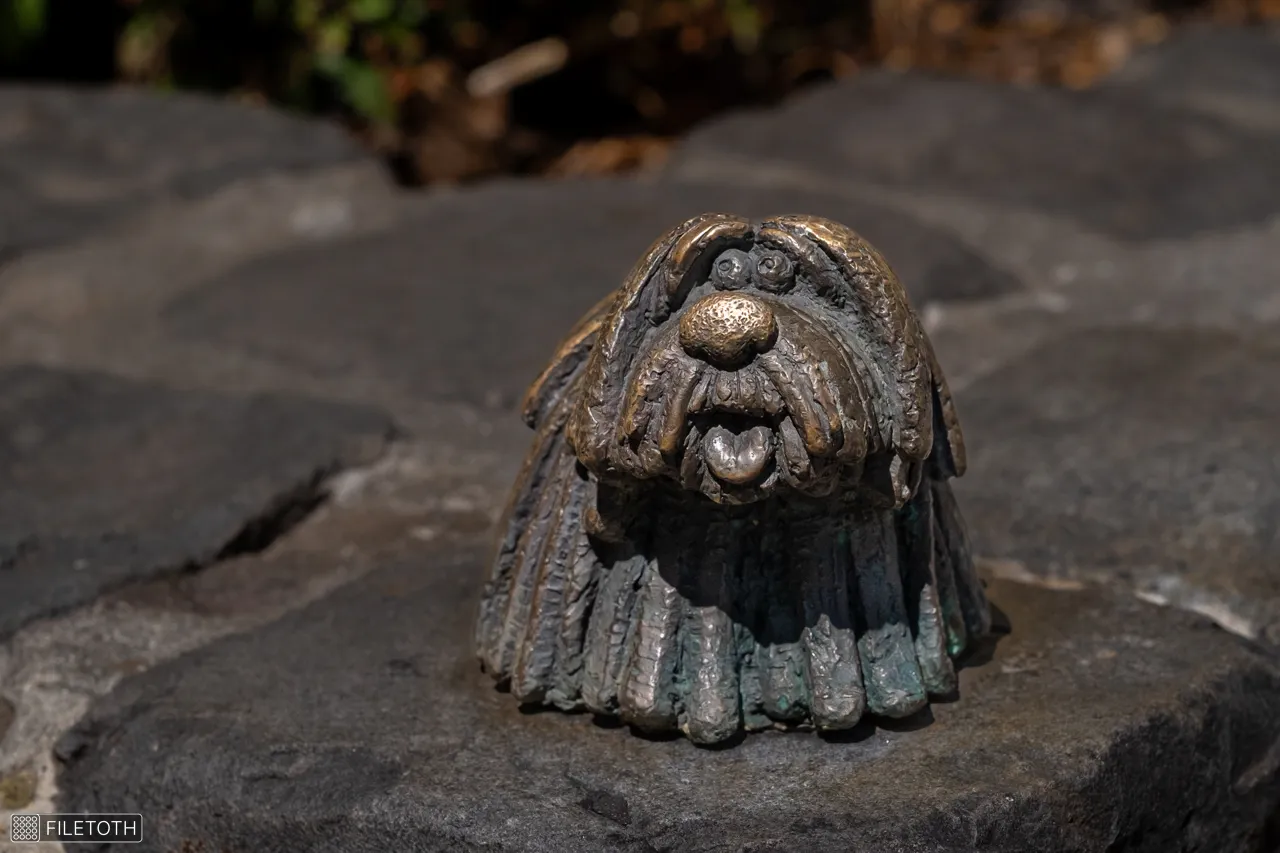
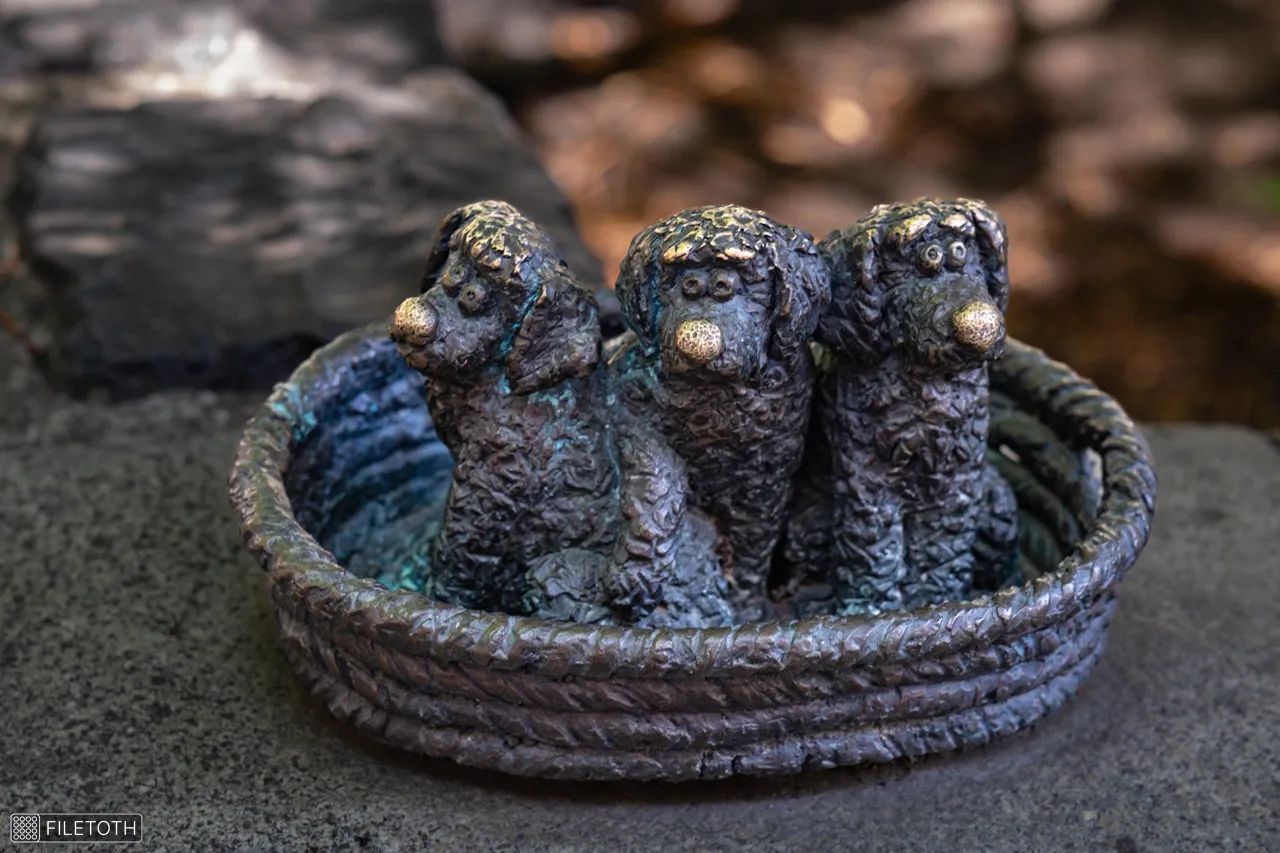
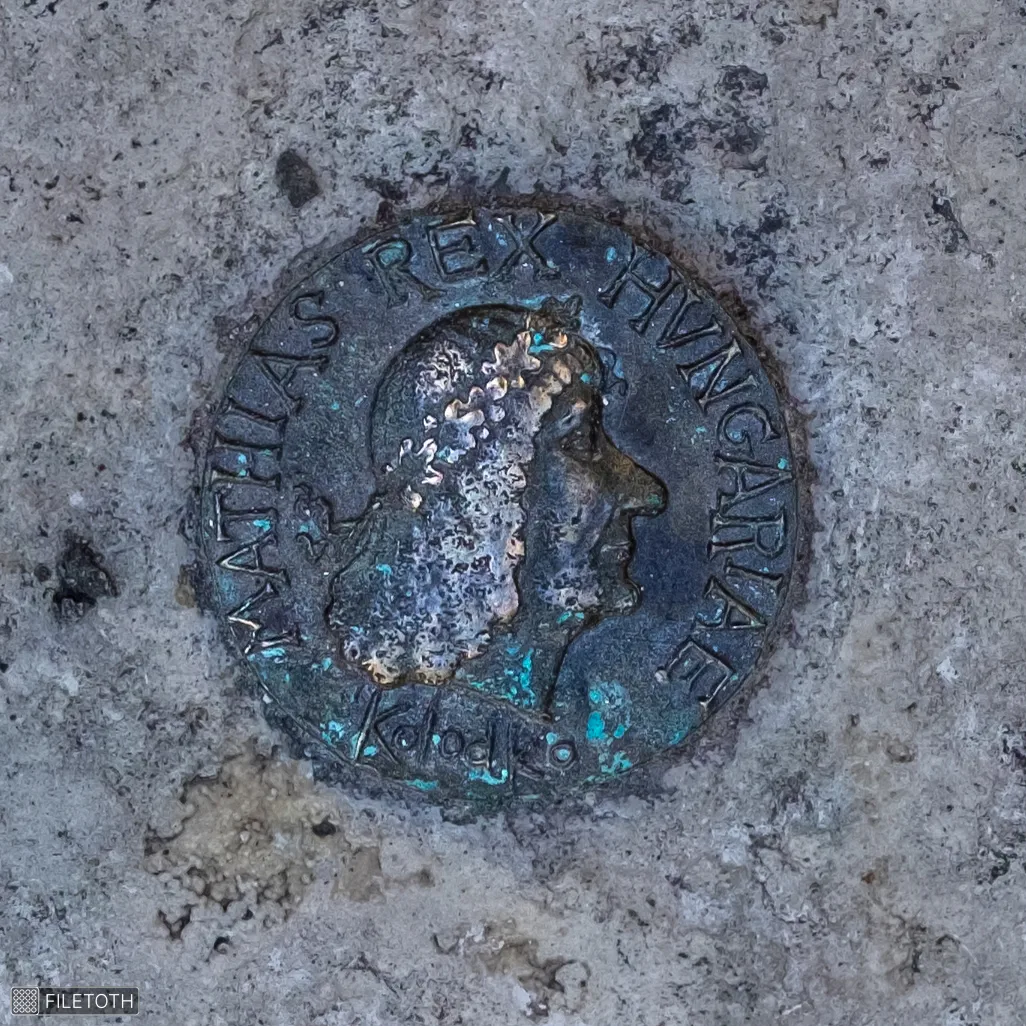
Installed in 2022 on a small square in Buda, Once in a Blue Moon is a collection of miniature dogs placed along a low stone wall. Each figure appears in a different location, while a hidden Matthias coin can be found nearby in the pavement. Rather than forming a single sculpture, the miniatures create a playful scene that gradually unfolds as visitors explore the square.

Behind the Miniature

The miniatures draw inspiration from the well-known Hungarian saying "Once there was a dog fair in Buda", whose origins lie in a folk tale about King Matthias. In the story, a poor man is rewarded for his honesty, while his greedy neighbour hopes to repeat the same fortune and loses everything instead. Since then, the expression has described something that happens only once in a lifetime. Kolodko retells this familiar tale through a series of playful bronze miniatures scattered across the square.

Miniatures by Mihály Kolodko, May 28, 2022. [ref.]
The Name of the Square

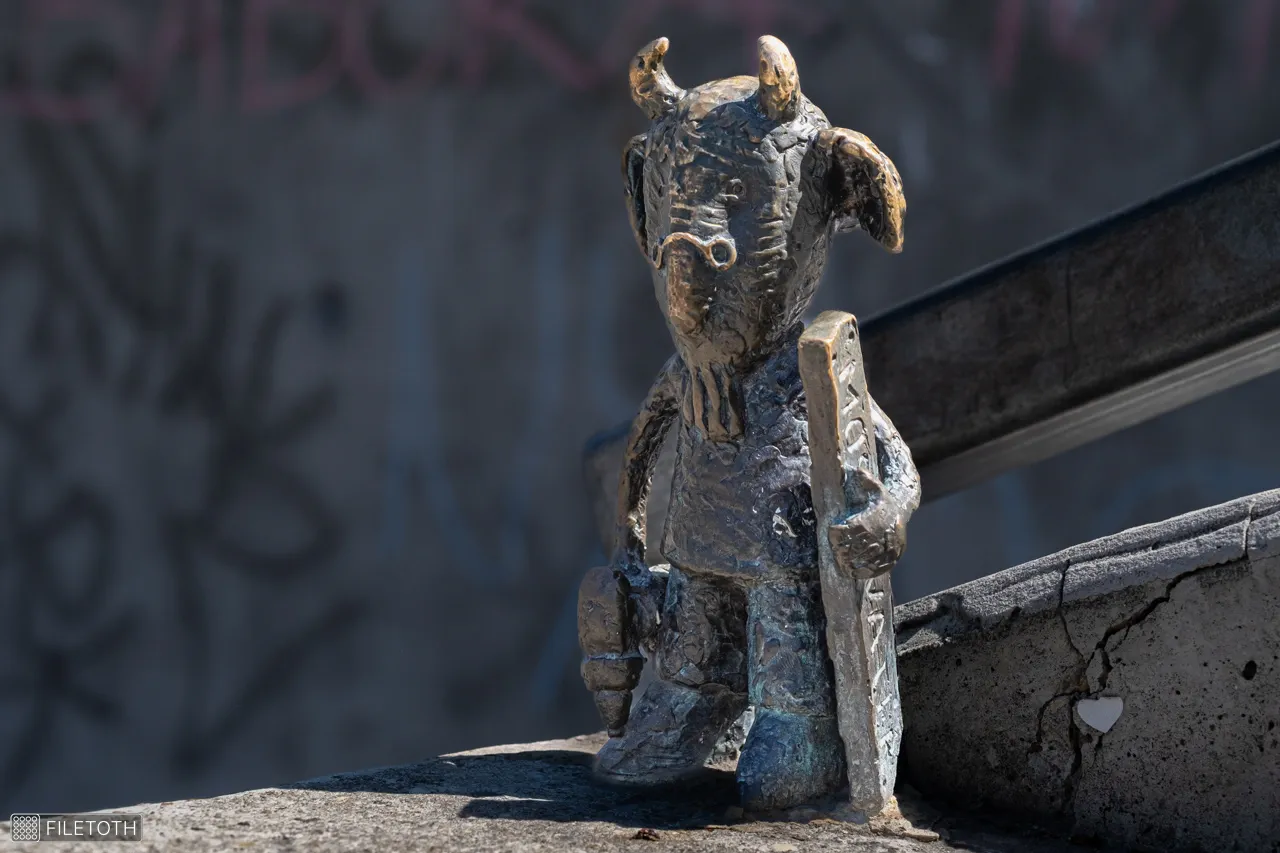
Mekk Elek, the Handyman miniature

Front view of the Mekk Elek, the Handyman miniature by Mihály Kolodko.

About the Miniature

Installed in 2018 on Széll Kálmán Square, the miniature portrays Mekk Elek, the well-known handyman from Hungarian animation. Holding an electric screwdriver in one hand and an old "Moszkva tér" street sign in the other, the bronze goat appears to be searching for the perfect place to put it back. The familiar cartoon character instantly turns a busy transport hub into a playful scene.

Behind the Miniature

Mekk Elek is famous for enthusiastically taking on every repair, usually with less-than-perfect results. Here, Kolodko humorously imagines him trying to restore the square's former name after it was officially changed from Moszkva tér back to Széll Kálmán tér in 2011. The miniature also quietly honours the animated series itself: its designer, Iván Koós, lived on Széll Kálmán Square for nearly sixty years, only a short walk from where the sculpture now stands.

Miniature by Mihály Kolodko, June 18, 2018. [ref.]

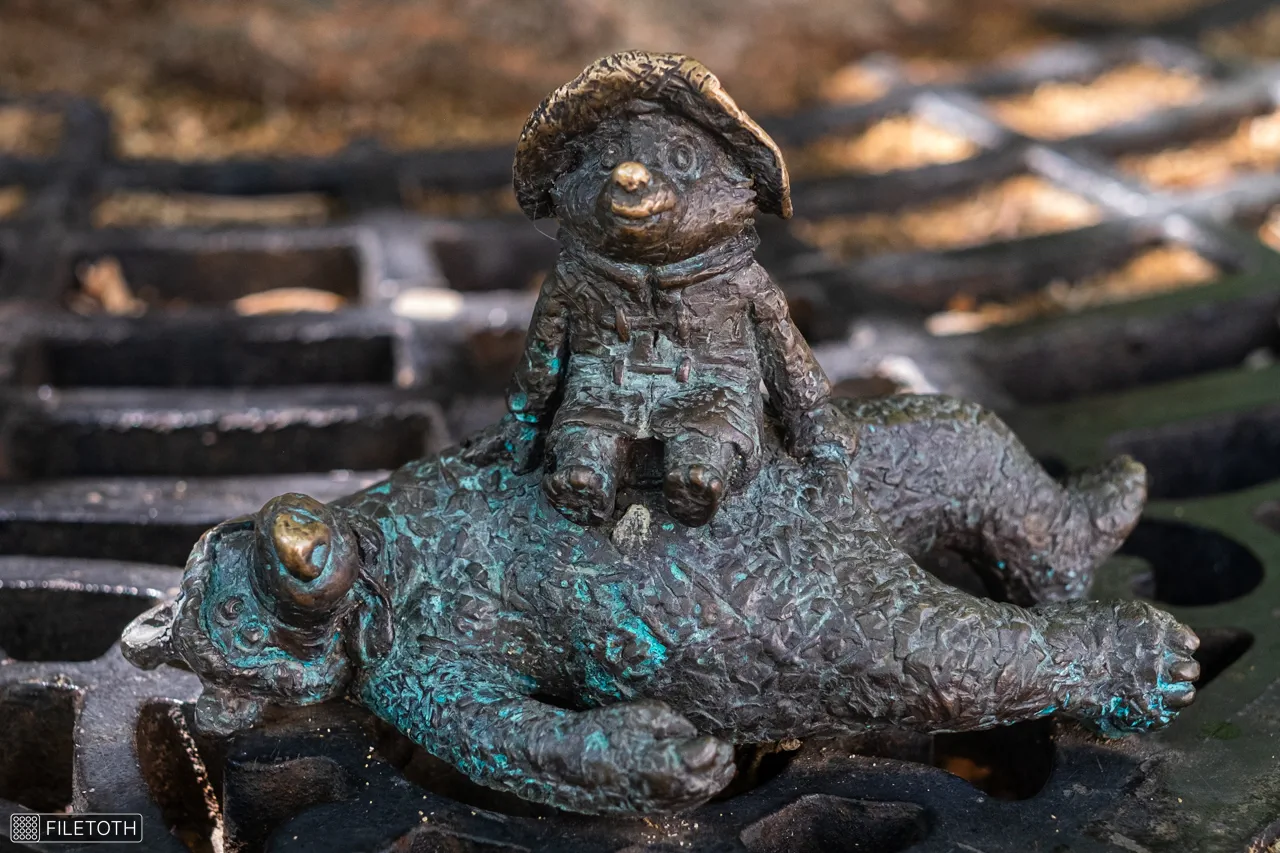
Two Bears, One Message

Paddington and Masha's Bear miniature

Paddington Bear sitting on Masha's Bear by Mihály Kolodko.

About the Miniature

Installed on Christmas Eve 2024 in Medve Street, the miniature combines two well-known fictional bears in a single playful composition. Paddington Bear sits confidently on the back of the larger bear from the animated series Masha and the Bear. The unexpected pairing transforms a quiet little square into a scene that immediately invites curiosity.

Behind the Miniature

No official explanation has been given for bringing the two characters together. Contemporary commentary has often interpreted the larger bear from Masha and the Bear as a reference to Russia, while Paddington, the much smaller figure, confidently sits on it. Another curious connection is that Volodymyr Zelenskyy, before becoming President of Ukraine, voiced Paddington in the Ukrainian dub. Whether these references form the sculpture's intended message or simply enrich its possible meanings, Kolodko once again leaves the final interpretation to the viewer.

Miniature by Mihály Kolodko, December 24, 2024. [ref.]

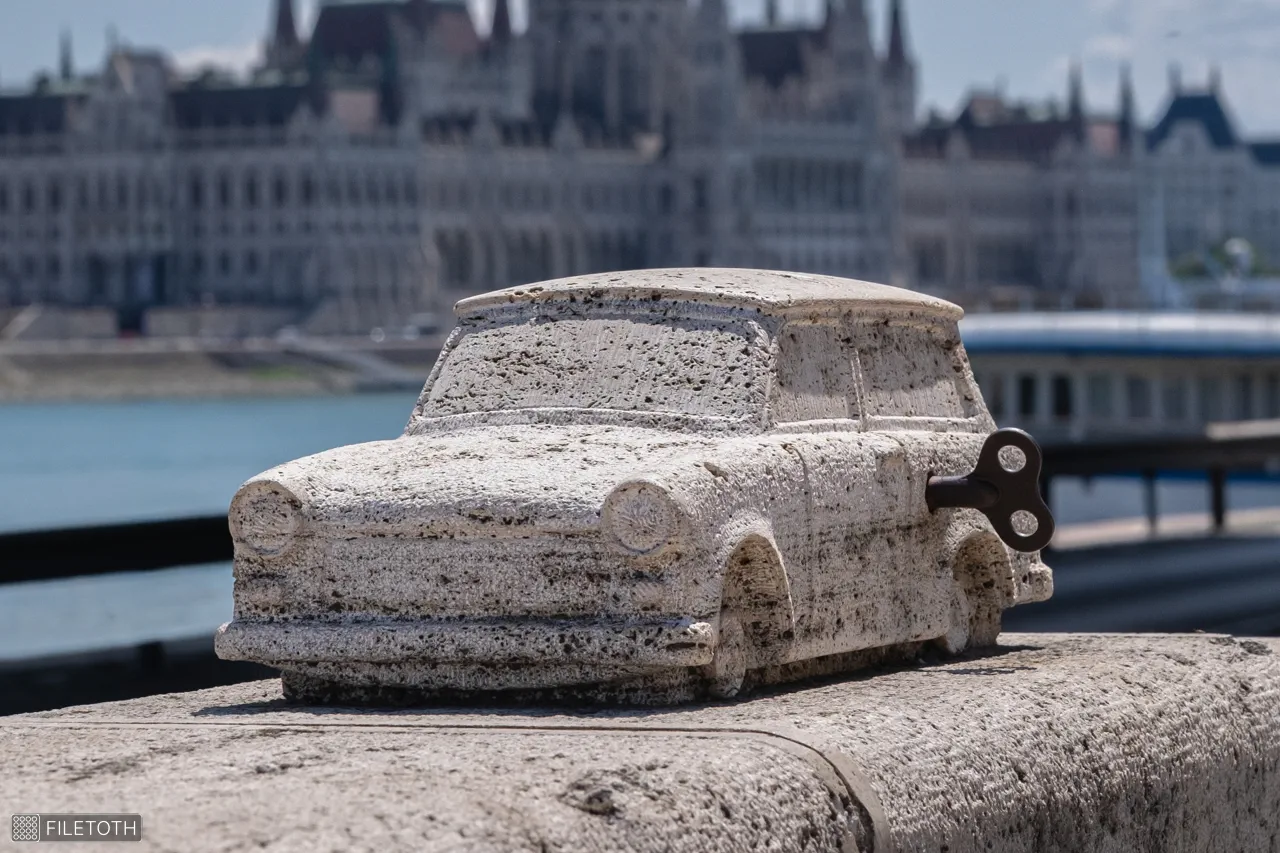
Winding Back Time

Rusty Old Wind-Up Toy miniature

Overview photograph of the Rusty Old Wind-Up Toy sculpture by Mihály Kolodko.

About the Miniature

Installed in 2022 beside the Danube near Margaret Bridge, Rusty Old Wind-Up Toy differs from most Kolodko sculptures. Rather than bronze, it is carved from stone and depicts a Trabant transformed into a large wind-up toy. A metal winding key projects from its side, while the missing wheels suggest the little car was never meant to drive away.

Behind the Miniature

No official explanation has been given for the sculpture. Although unmistakably shaped like a Trabant, the official title encourages visitors to see it first as a toy rather than an automobile. The winding key transforms an everyday object into something that may recall childhood memories, while the carved stone body lends it an unexpected sense of permanence. Perhaps it reflects a particular era, the memories of a generation, or simply the joy of play—the answer is left to the viewer.

Miniature by Mihály Kolodko, April 3, 2022. [ref.]
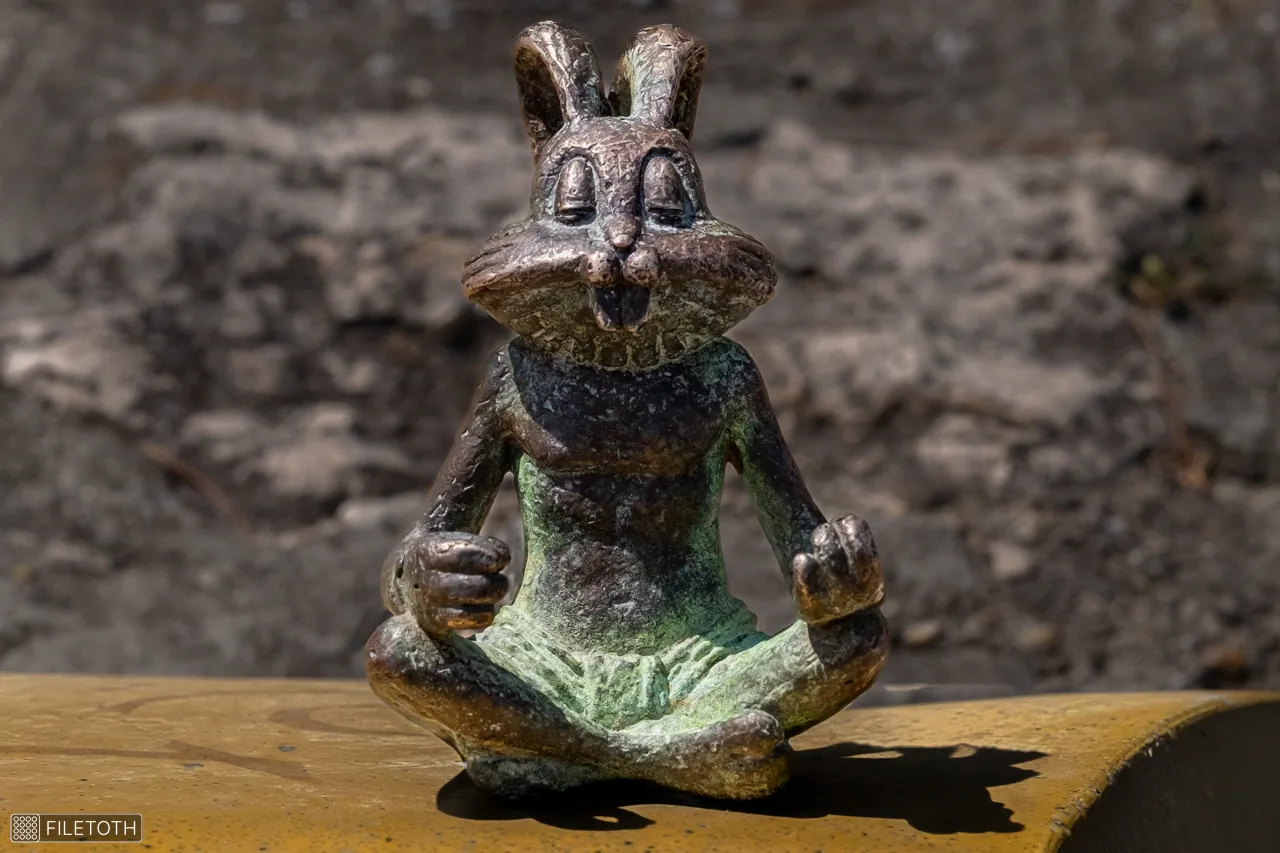
Inner Peace

Buddha Bugs miniature

The Meditating Rabbit overlooking the Danube.

About the Miniature

Installed in 2026 on Margaret Island beside the Danube, the Meditating Rabbit sits cross-legged with its hands resting calmly on its knees in a familiar meditation pose. Facing Pest from the island's peaceful riverside, the small bronze figure immediately conveys a sense of quiet reflection and balance.

Behind the Miniature

Margaret Island was once known as Rabbit Island, making the location itself a possible clue. Some viewers have also noted similarities to Bugs Bunny meditating in the animated episode known as Buddha Bugs, whose central message is that inner peace is a greater treasure than gold. Whether these connections inspired the sculpture or simply offer one way of interpreting it, Kolodko once again leaves the final meaning to the viewer.

Miniature by Mihály Kolodko, July 26, 2026. [ref.]

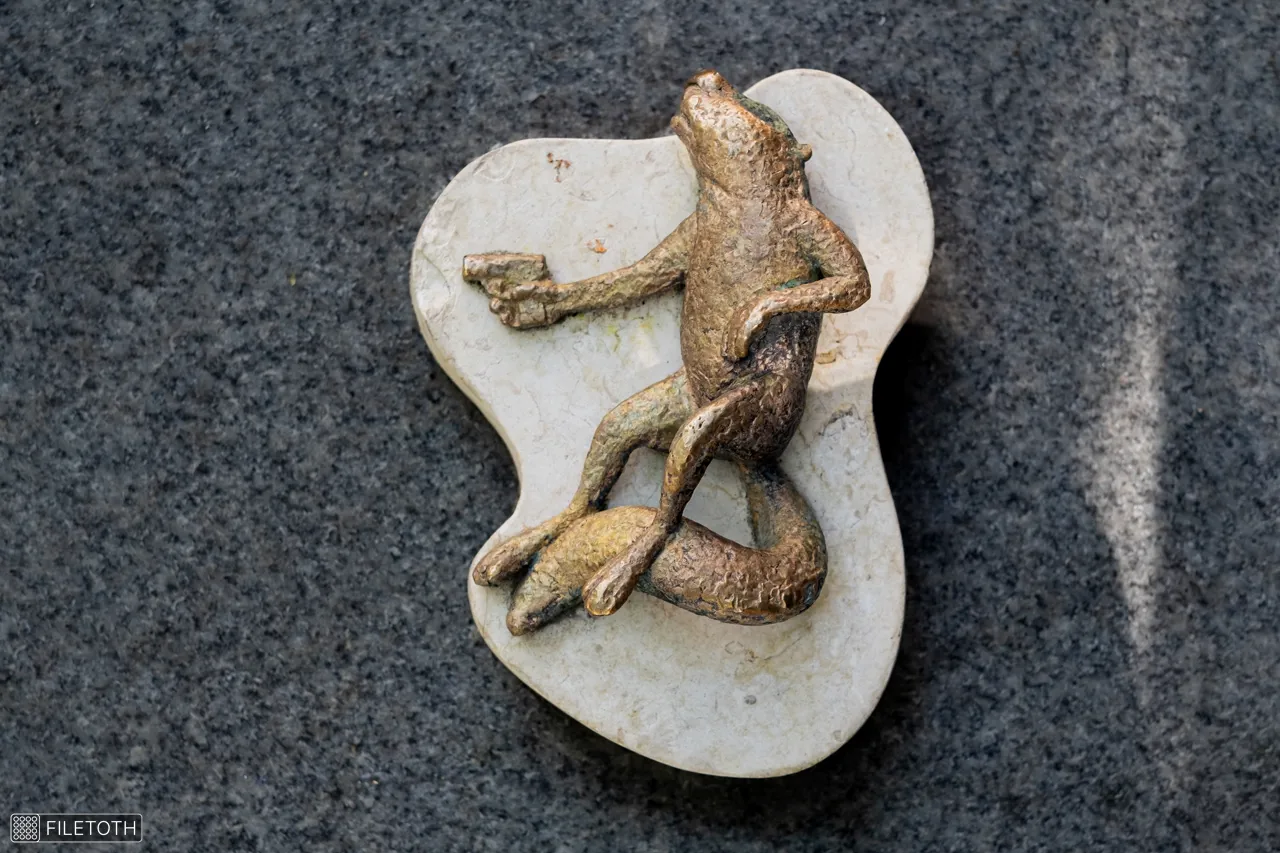
An Unfinished Investigation

Dead Squirrel miniature

The Dead Squirrel miniature lying on its stone base.

About the Miniature

Installed in 2018 near Margaret Bridge, the Dead Squirrel lies motionless on a stone base shaped like the outline of a crime scene. A small revolver still rests in its paw, transforming the tiny bronze figure into a curious mystery. The unusual composition immediately stands out among Kolodko's miniatures with its dark humour and cinematic atmosphere.

Behind the Miniature

Just a short walk away stands a life-size statue of Peter Falk as Lieutenant Columbo. Together, the two sculptures almost form a single scene, inviting visitors to imagine that the famous detective is investigating the squirrel's mysterious fate. Whether this playful connection was intentional or simply a happy coincidence remains unknown, the two sculptures reward those who discover them together.

Miniature by Mihály Kolodko, June 4, 2018. [ref.]

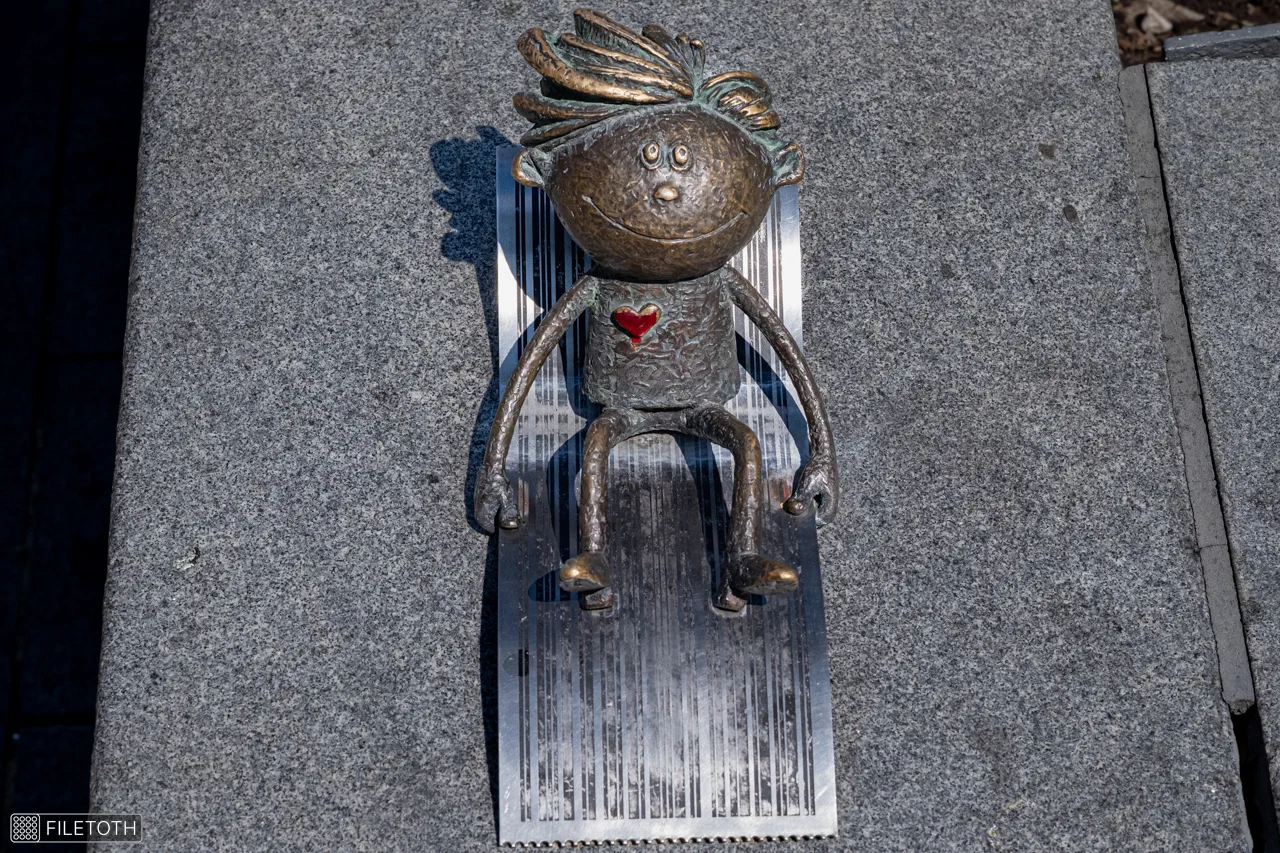
A Familiar Smile

Skála Rascal miniature

The Skála Rascal riding a receipt-shaped sled.

About the Miniature

Installed on April 1, 2022, in front of the former Skála department store, the miniature portrays the famous Skála Rascal happily sliding on a sled shaped like a shopping receipt with a barcode. His unmistakable red hair and cheerful smile immediately recall one of Hungary's best-known advertising mascots.

Behind the Miniature

For decades, the Skála Rascal welcomed shoppers through television commercials and a memorable advertising jingle that became familiar across Hungary. By placing the cheerful character in front of the former department store, Kolodko playfully reconnects the mascot with the place where many people first encountered him. Unveiled on April Fools' Day, the sculpture adds an extra touch of humour to an already light-hearted tribute.

Miniature by Mihály Kolodko, April 1, 2022. [ref.]
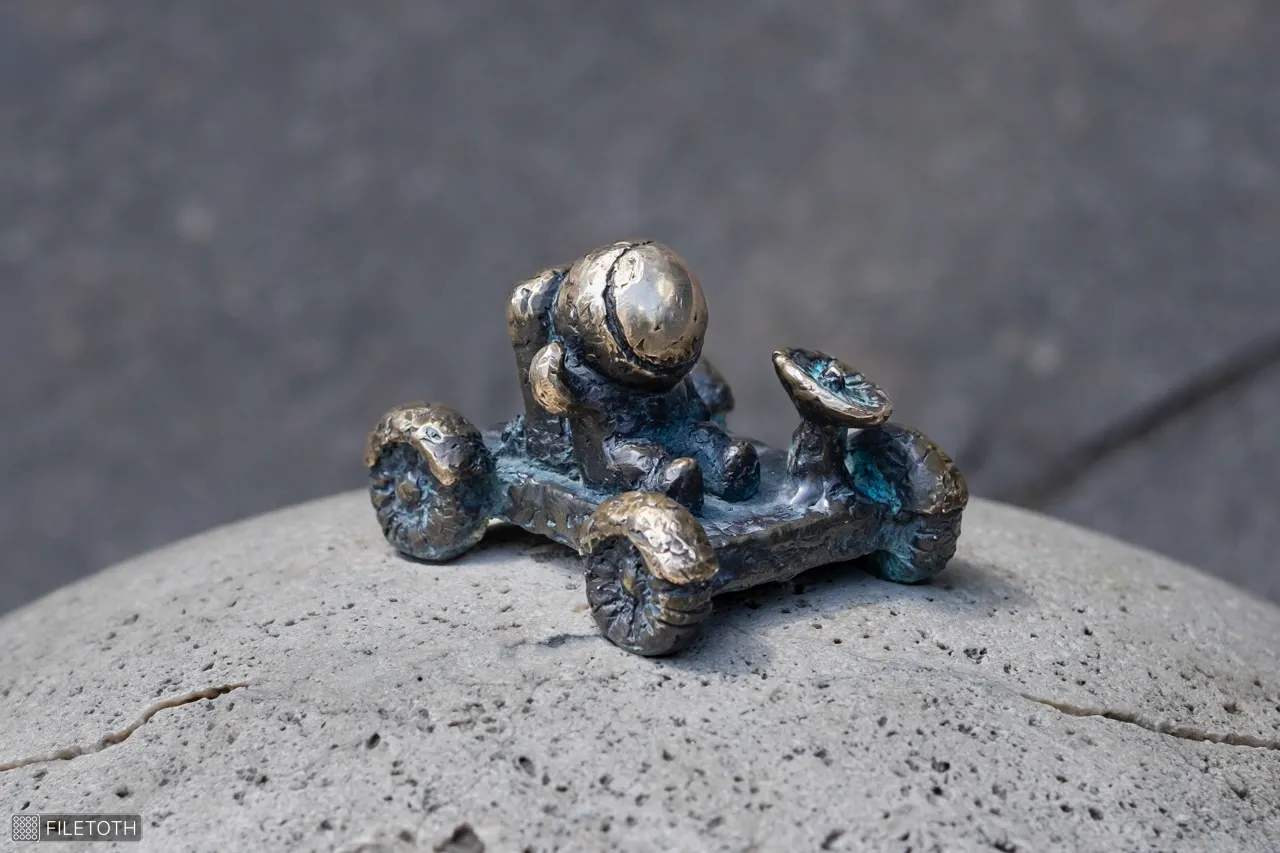
A Small Step

Moon Street miniature

The Moon Street miniature on its stone sphere.

About the Miniature

Installed in 2019 in Budapest's Moon Street, the miniature depicts a tiny lunar rover carrying a waving astronaut across the surface of the Moon. Rather than standing on a traditional pedestal, the sculpture rests on top of one of the large stone spheres that line the street, cleverly transforming an everyday urban object into part of the artwork itself.

Behind the Miniature

Shortly after moving to Budapest with his family, Kolodko lived in Moon Street. The unusual street name inspired him to create this miniature, which also pays tribute to Hungarian-born engineer Ferenc Pavlics, whose pioneering work helped make the Apollo lunar rover possible. By placing the tiny Moon on top of an existing stone sphere, the sculpture quietly connects the street's name with one of humanity's greatest journeys.

Miniature by Mihály Kolodko, September 27, 2019. [ref.]

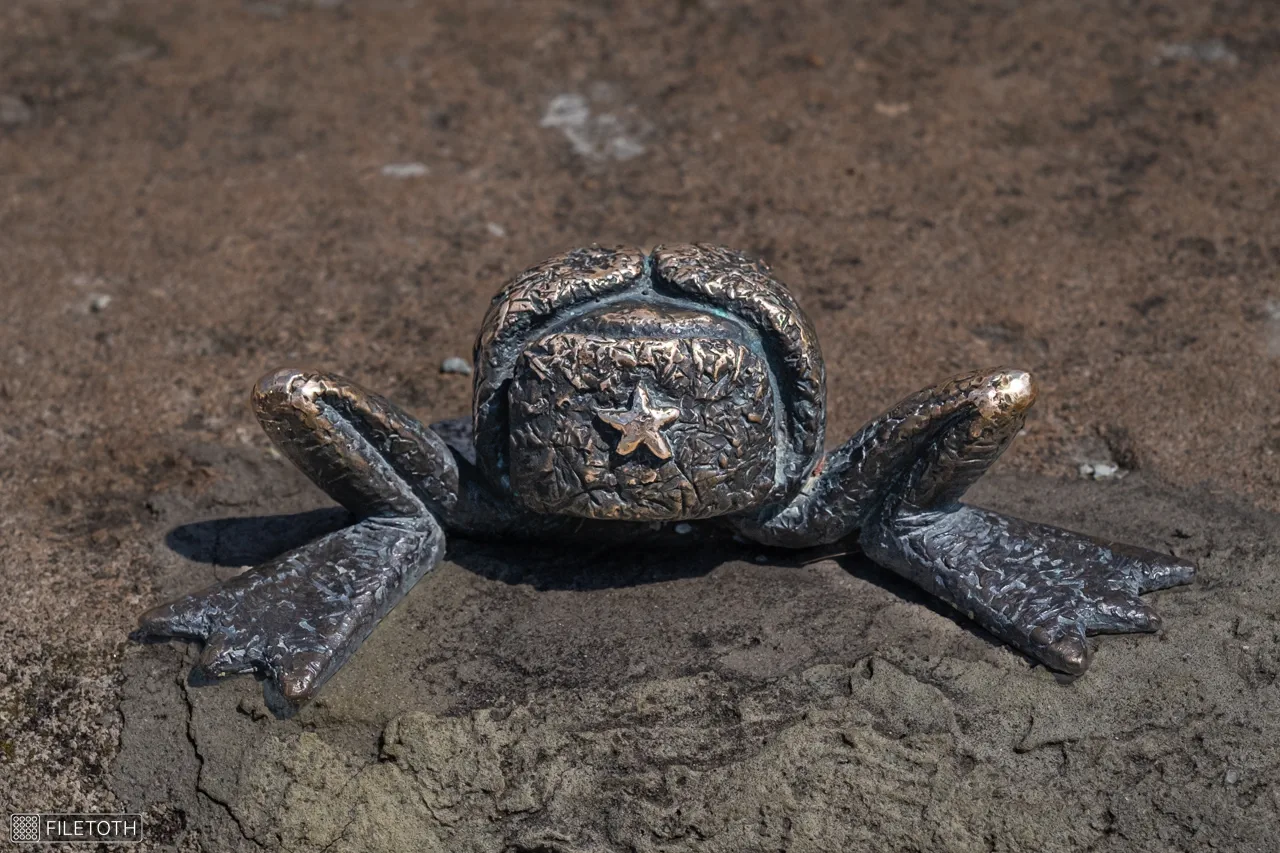
Back from the River

Ushanka Returns miniature

The Ushanka Returns miniature on the Danube embankment.

About the Miniature

Installed in 2023 beside the Danube near the Hungarian Parliament, the miniature depicts the familiar Soviet ushanka emerging with a surprising new feature: a pair of powerful frog legs. Resting on the embankment steps, the bronze sculpture looks as though it has just climbed out of the river, transforming a simple military cap into an unexpectedly lively character.

Behind the Miniature

The miniature continues the story of Kolodko's earlier Ushanka sculpture, which was removed from Liberty Square and thrown into the Danube shortly after its installation. The accompanying video opens with archival footage of that event before shifting to the river itself, where the ushanka emerges from the Danube. This time it has grown a pair of powerful frog legs, as if it had climbed out of the river on its own. Whether the legs symbolize resilience, escape, or simply Kolodko's playful humour, the final interpretation remains with the viewer.

Miniature by Mihály Kolodko, May 9, 2023. [ref.]

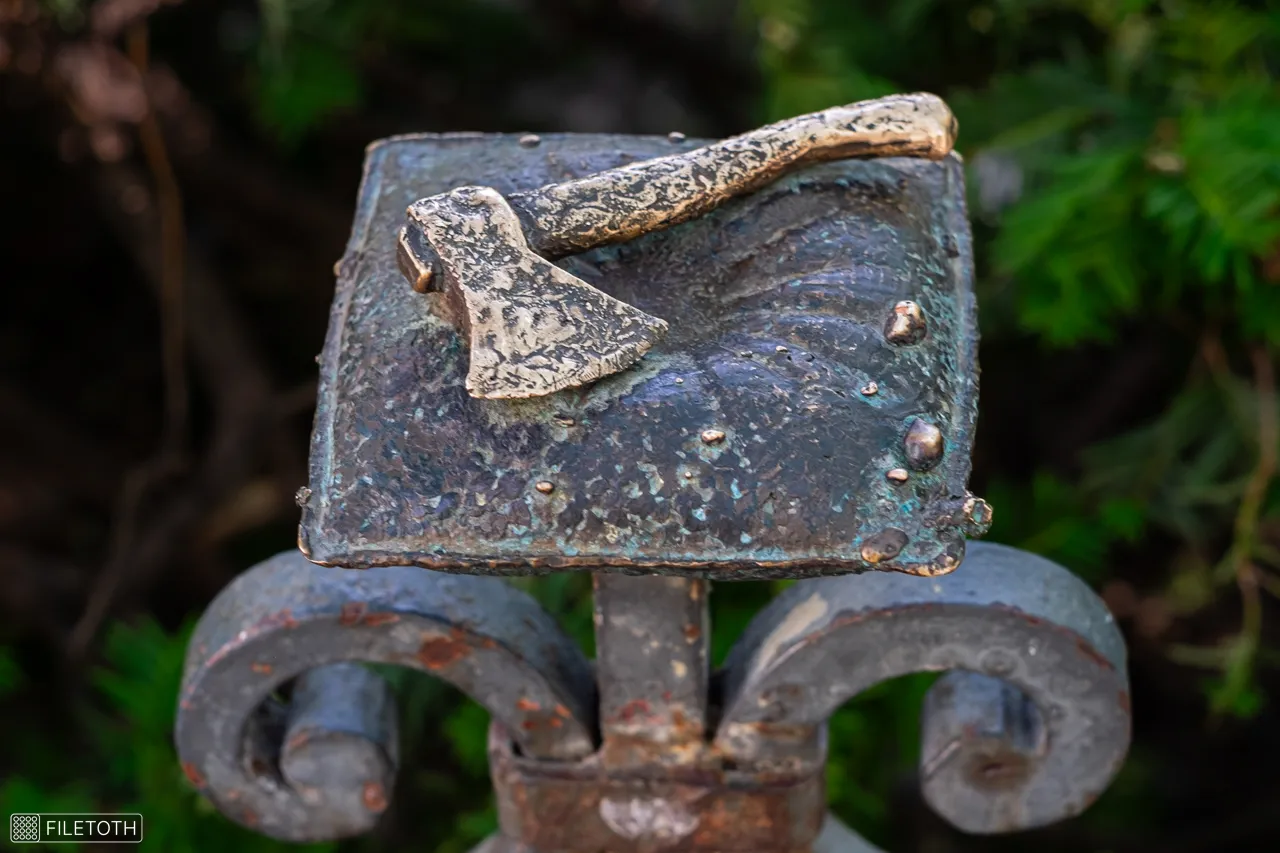
A Reply in Bronze

Axe miniature

The Axe miniature resting on a crimson cushion.

About the Miniature

Installed on January 3, 2020, beside Liberty Square, the miniature depicts an axe resting on an elegant crimson cushion. Although simple in appearance, the sculpture immediately recalls the object used to destroy Kolodko's earlier Ushanka miniature, transforming an everyday tool into a quiet yet unmistakable symbol.

Behind the Miniature

The Axe was created after Kolodko's earlier Ushanka miniature, displayed nearby, had been removed and thrown into the Danube. Rather than replacing the missing sculpture with an identical copy, the artist responded with the very object that had destroyed it. Resting on the same crimson cushion as its predecessor, the miniature transforms a real event into an artistic reply. Years later, the story continued with Ushanka Returns.

Miniature by Mihály Kolodko, January 3, 2020. [ref.]

Relocation

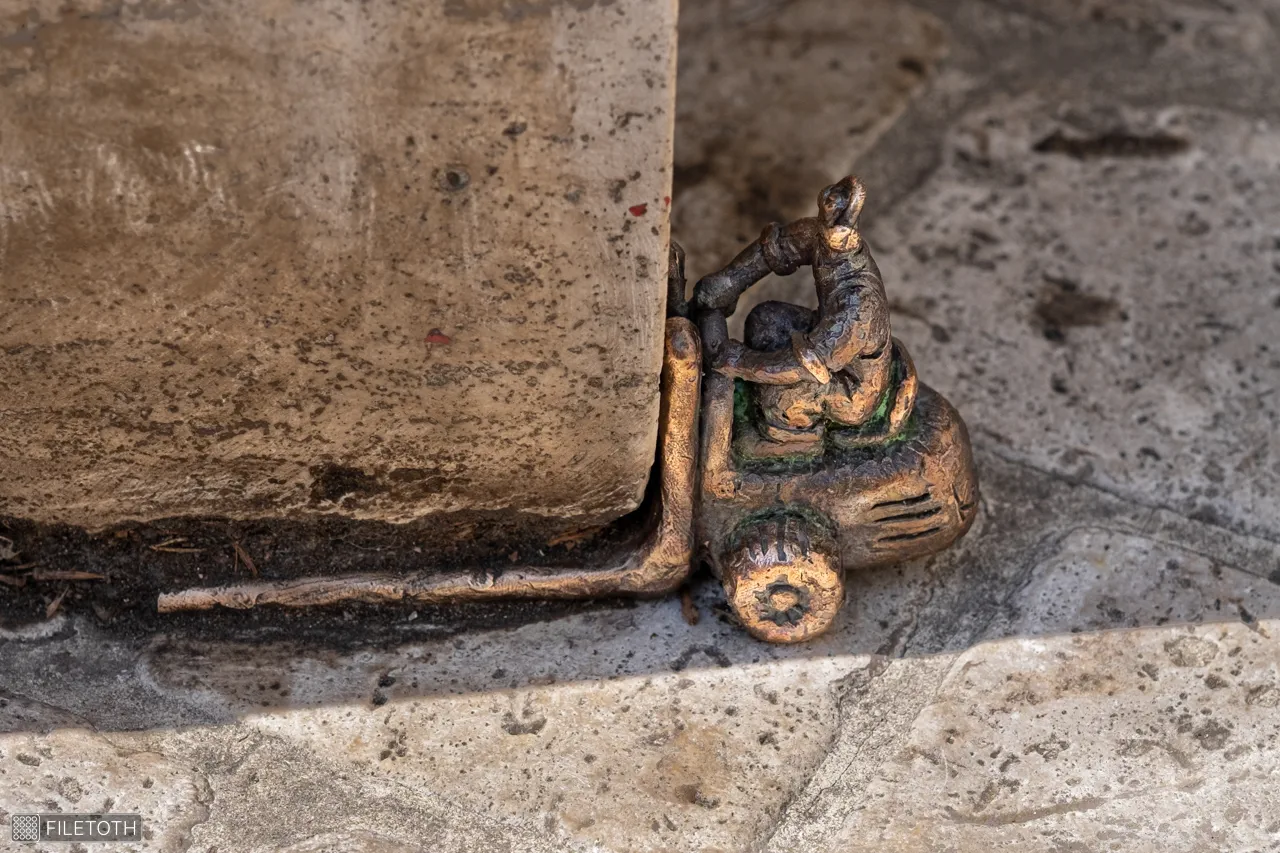
Forklift miniature

The Forklift miniature beneath one of the memorial's white stone blocks.

About the Miniature

Beside the nearby memorial, the miniature depicts a tiny forklift driver positioned beneath one of the monument's large white stone blocks. The unusual placement creates the impression that one of the stones could be lifted, turning the surrounding memorial into an integral part of the composition.

Behind the Miniature

The miniature appeared shortly after public discussion began about the future of the memorial. Its timing naturally invites visitors to connect the two events. Positioned beneath one of the monument's stone blocks, the forklift suggests the possibility of relocation. Whether it also speaks about preservation, renewal, or something else entirely is left to each visitor.

Miniature by Mihály Kolodko, July 26, 2026. [ref.]

End of the Show

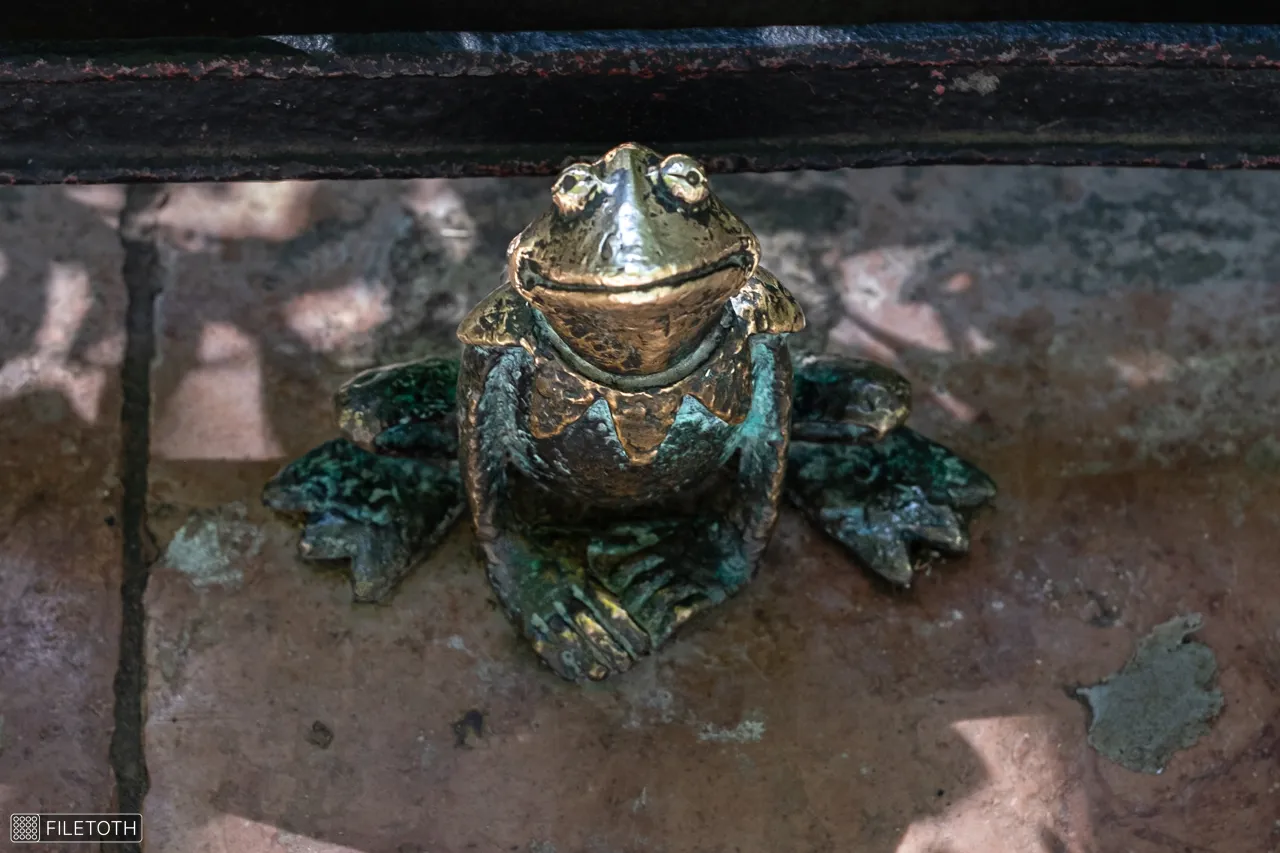
Kermit the Frog miniature

The Kermit the Frog miniature in Budapest.

About the Miniature

The miniature depicts Kermit the Frog sitting quietly in Budapest's Liberty Square. It recalls an earlier frog sculpture by Mihály Kolodko in Perechyn, Transcarpathia, where the frog commemorates a local tradition of eating frog legs introduced during the nineteenth century by French prisoners of war from Napoleon's army.

Behind the Miniature

Unlike the original Perechyn sculpture, the Budapest miniature stands in a very different setting. It is located near the former headquarters of Hungarian Television in Liberty Square. For many Hungarians, Kermit the Frog is inseparable from The Muppet Show, which was broadcast on Hungarian Television throughout the 1980s. The location naturally invites visitors to reflect on the relationship between the familiar television character and the building where generations first encountered him.

Miniature by Mihály Kolodko, July 18 2017. [ref.]

Worthless Fortune

Money Sweeper miniature

The Money Sweeper miniature among scattered pengő banknotes.

About the Miniature

The miniature depicts a municipal worker wearing protective clothing and ear defenders while operating a leaf blower. Instead of leaves, large-denomination pengő banknotes are scattered around him, some caught between the nearby fence bars. The unusual scene recalls one of the best-known photographs from Hungary's period of hyperinflation.

Behind the Miniature

The sculpture commemorates Hungary's hyperinflation of 1946, when the pengő became virtually worthless and banknotes reached unimaginable denominations. Contemporary photographs show street cleaners sweeping away piles of discarded money before the introduction of the forint on 1 August 1946. Kolodko updates that well-known historical scene by replacing the broom with a modern leaf blower.

Miniature by Mihály Kolodko, July 3, 2026. [ref.]

Truth and Knowledge

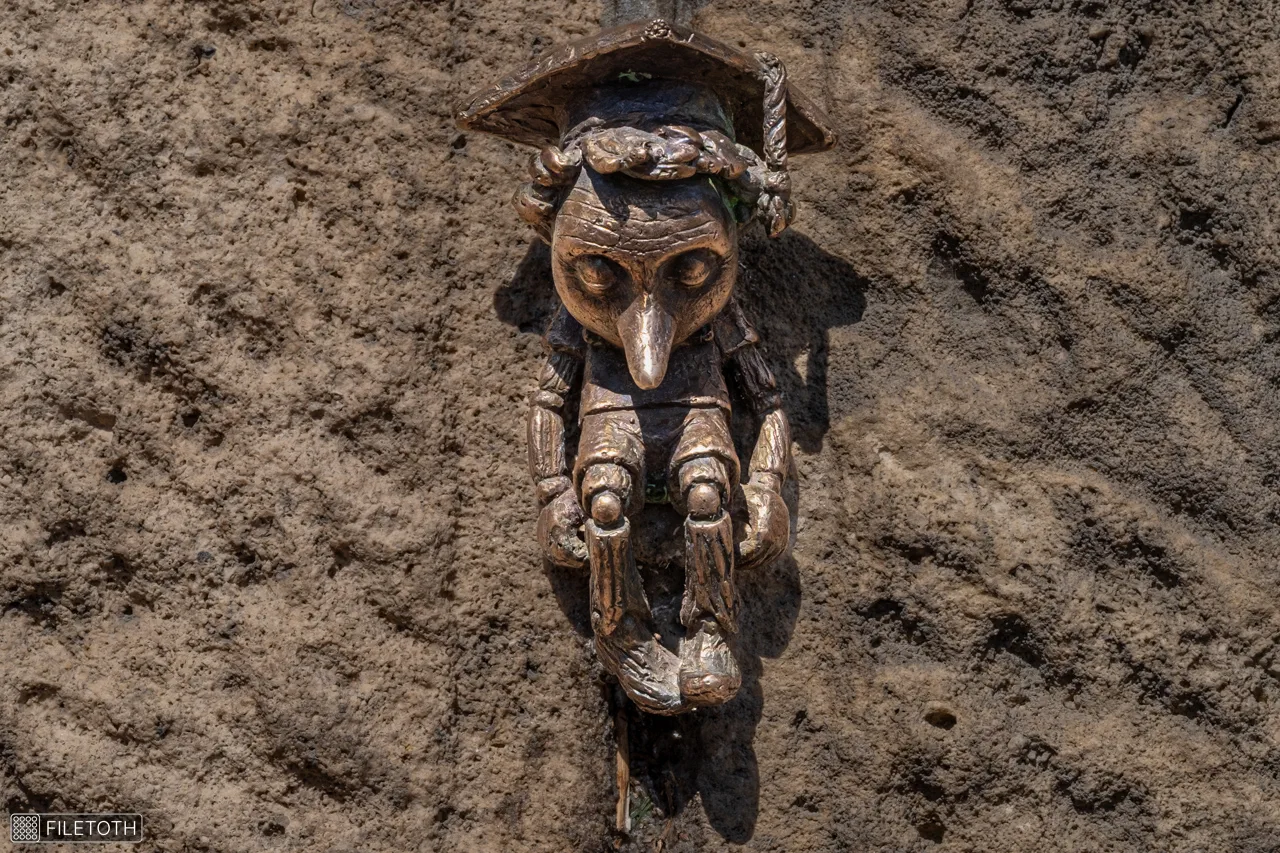
Pinocchio miniature

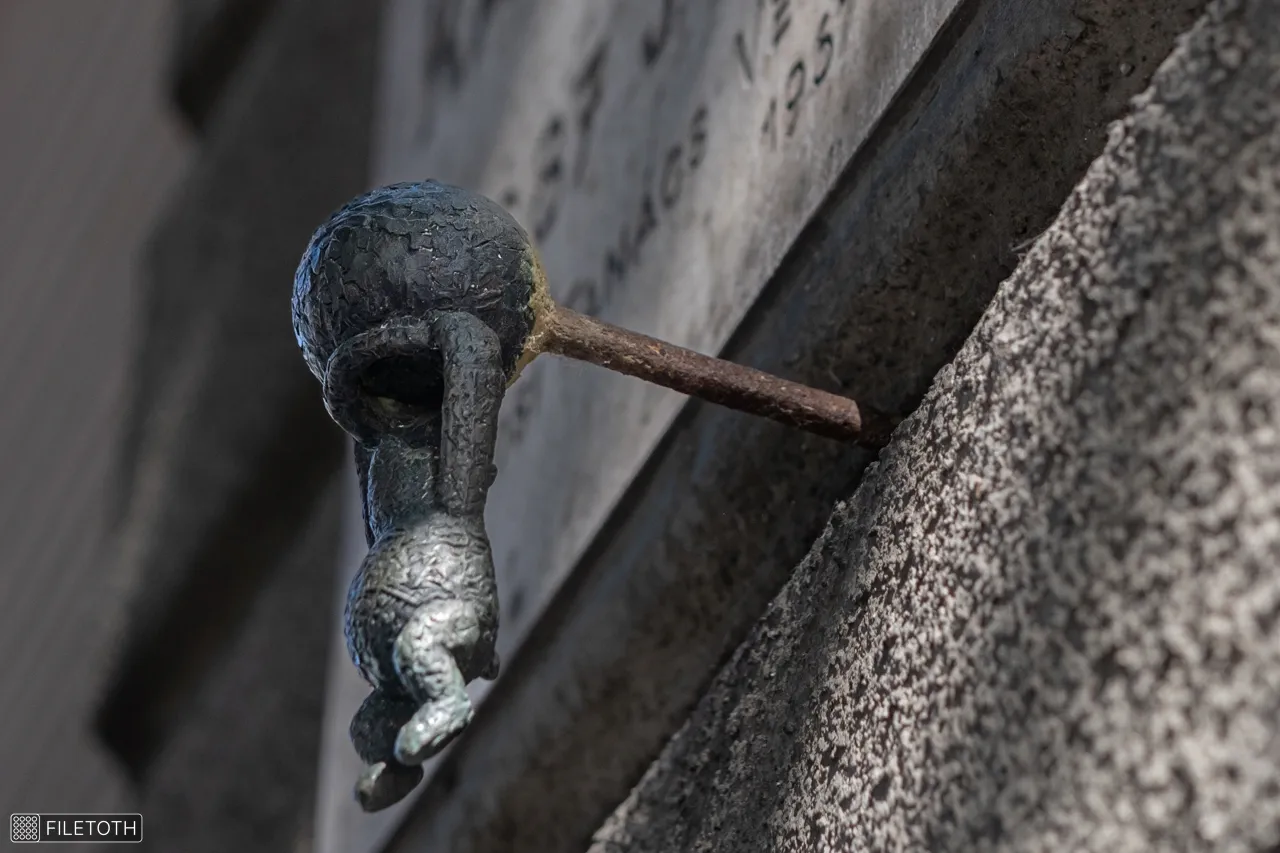
The Pinocchio miniature hanging on the wall beside the Hungarian Academy of Sciences.

About the Miniature

The miniature depicts Pinocchio wearing a graduation cap while hanging from a wall beside the Hungarian Academy of Sciences. Instead of the lively wooden boy familiar from books and films, the figure appears motionless, creating an unusual contrast with its academic surroundings.

Behind the Miniature

Pinocchio is one of literature's best-known characters, remembered for the growing nose that reveals every lie. Placed beside the Hungarian Academy of Sciences and wearing a graduation cap, the miniature naturally invites visitors to reflect on the relationship between knowledge, truth, and education. Whether the scene is playful, ironic, or something entirely different is left to each visitor.

Miniature by Mihály Kolodko, July 26, 2026. [ref.]

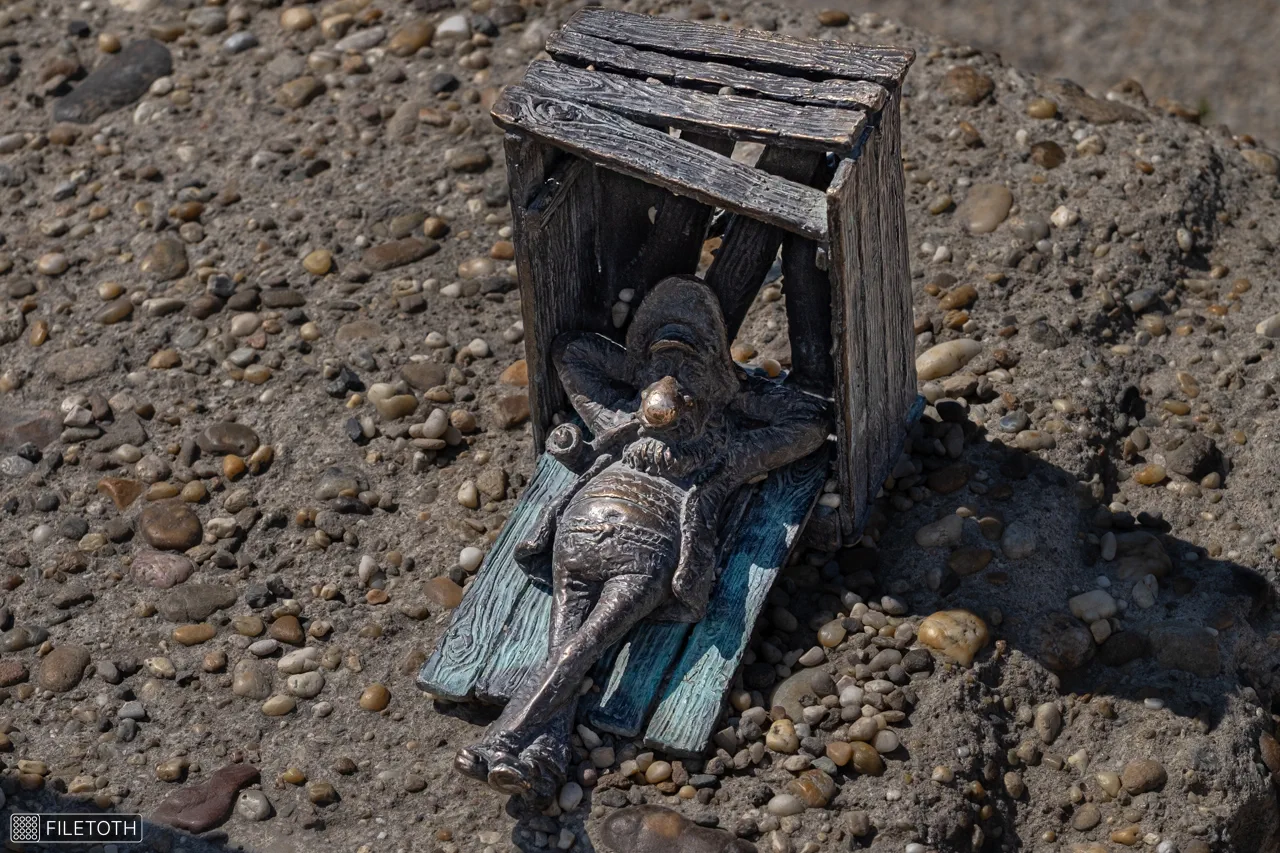
The Captain

Dirty Fred miniature

Dirty Fred resting beside a weathered crate on the Danube embankment.

About the Miniature

The miniature depicts Dirty Fred, the unforgettable captain from Jenő Rejtő's adventure novels, resting beside a weathered wooden crate on the Danube embankment. With his worn captain's cap, unshaven face, oversized nose and crooked pipe, the relaxed figure faithfully captures one of Hungarian literature's most beloved fictional characters.

Behind the Miniature

Dirty Fred first appeared in Jenő Rejtő's adventure novels of the 1930s and has remained one of the most popular characters in Hungarian literature ever since. Rejtő's absurd humour, unforgettable characters and adventurous stories have entertained generations of readers, and his novels are now part of the Hungarian school curriculum. The miniature pays tribute to a literary hero who has become part of Hungary's cultural heritage.

Miniature by Mihály Kolodko, December 26, 2025. [ref.]

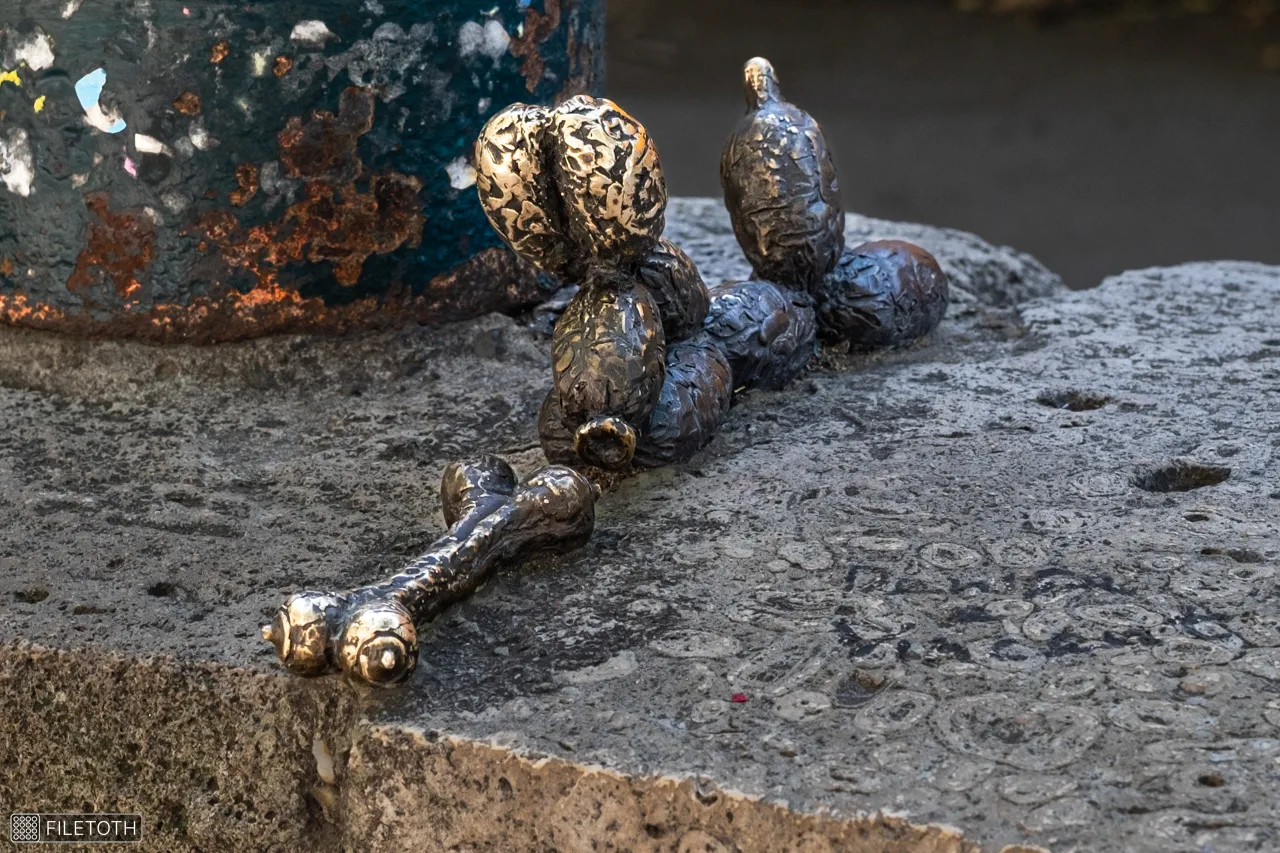
Pop Art in Bronze

Balloon Dog with Bone miniature

The Balloon Dog with Bone miniature on Budapest's Danube promenade.

About the Miniature

The miniature depicts a balloon dog chewing on a bone while overlooking the Danube from Budapest's riverside promenade. Although cast in bronze, the sculpture faithfully recreates the inflated appearance of a twisted balloon, creating a playful contrast between a temporary children's toy and a permanent public artwork.

Behind the Miniature

The miniature is widely regarded as a tribute to Jeff Koons' famous Balloon Dog sculptures, among the best-known works of contemporary art. By shrinking the monumental balloon animal into a miniature and adding a simple bone, Kolodko transforms a familiar artistic icon into a playful discovery along Budapest's Danube promenade.

Miniature by Mihály Kolodko, May 18, 2019. [ref.]

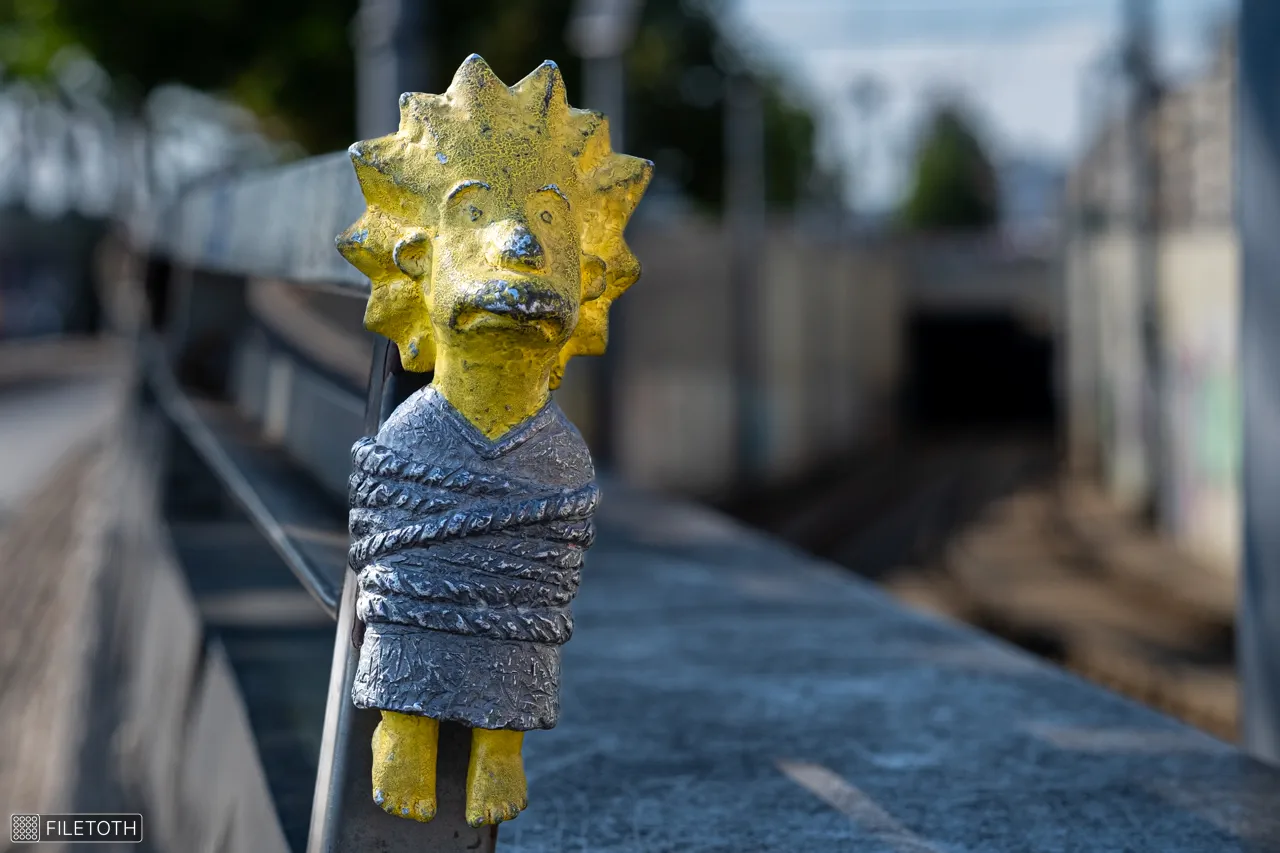
Lisa as Joan of Arc

Hungarian Yellow miniature

The Hungarian Yellow miniature beside Budapest's Tram 2 line.

About the Miniature

The miniature depicts Lisa Simpson dressed as Joan of Arc, tied to a pole beside Budapest's famous Tram 2 line. Although only a few centimetres tall, the familiar cartoon character is immediately recognisable by her spiky silhouette and distinctive costume.

Behind the Miniature

Lisa Simpson appeared as Joan of Arc in the 2002 Simpsons episode Tales from the Public Domain. The Budapest miniature recalls that memorable scene while placing the character in an entirely different urban setting. Whether the official title Hungarian Yellow refers to Budapest's iconic yellow trams, Lisa's unmistakable colour, the Hungarian association of yellow with jealousy, or something else entirely remains open to interpretation.

Miniature by Mihály Kolodko, August 3, 2019. [ref.]

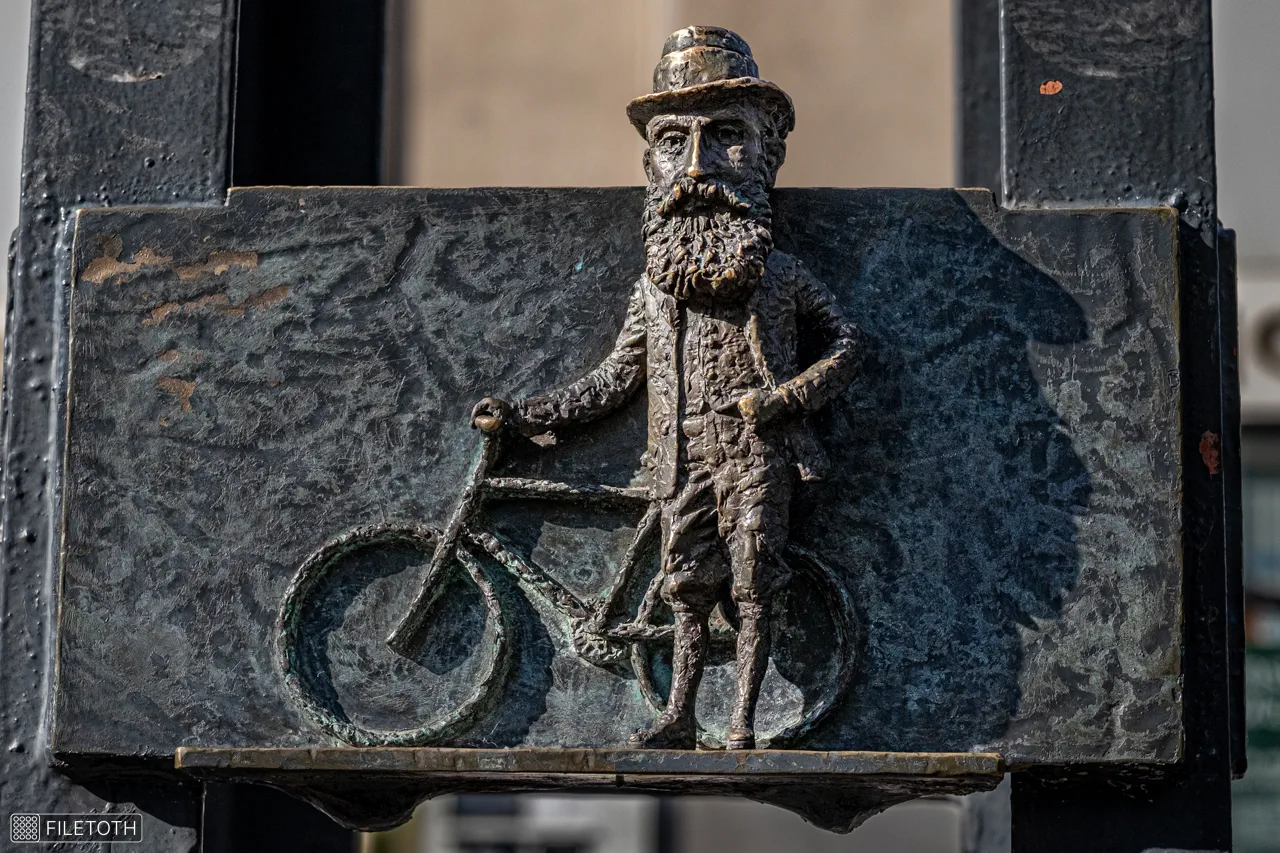
Birthplace

Theodor Herzl miniature

The Theodor Herzl miniature beside his bicycle in Dohány Street.

About the Miniature

The miniature depicts Theodor Herzl standing beside a bicycle, mounted high on a lamppost in Budapest's Dohány Street. The sculpture marks the site where Herzl, journalist, writer and founder of modern political Zionism, was born in 1860.

Behind the Miniature

Theodor Herzl was born here on 10 May 1860, in the former Fleischer House that once stood on this site. Although the original building no longer exists, the miniature preserves the memory of one of Budapest's most influential native-born historical figures and invites passers-by to discover his connection to the city.

Miniature by Mihály Kolodko, October 25, 2018. [ref.]

Gloomy Sunday

Rezső Seress miniature

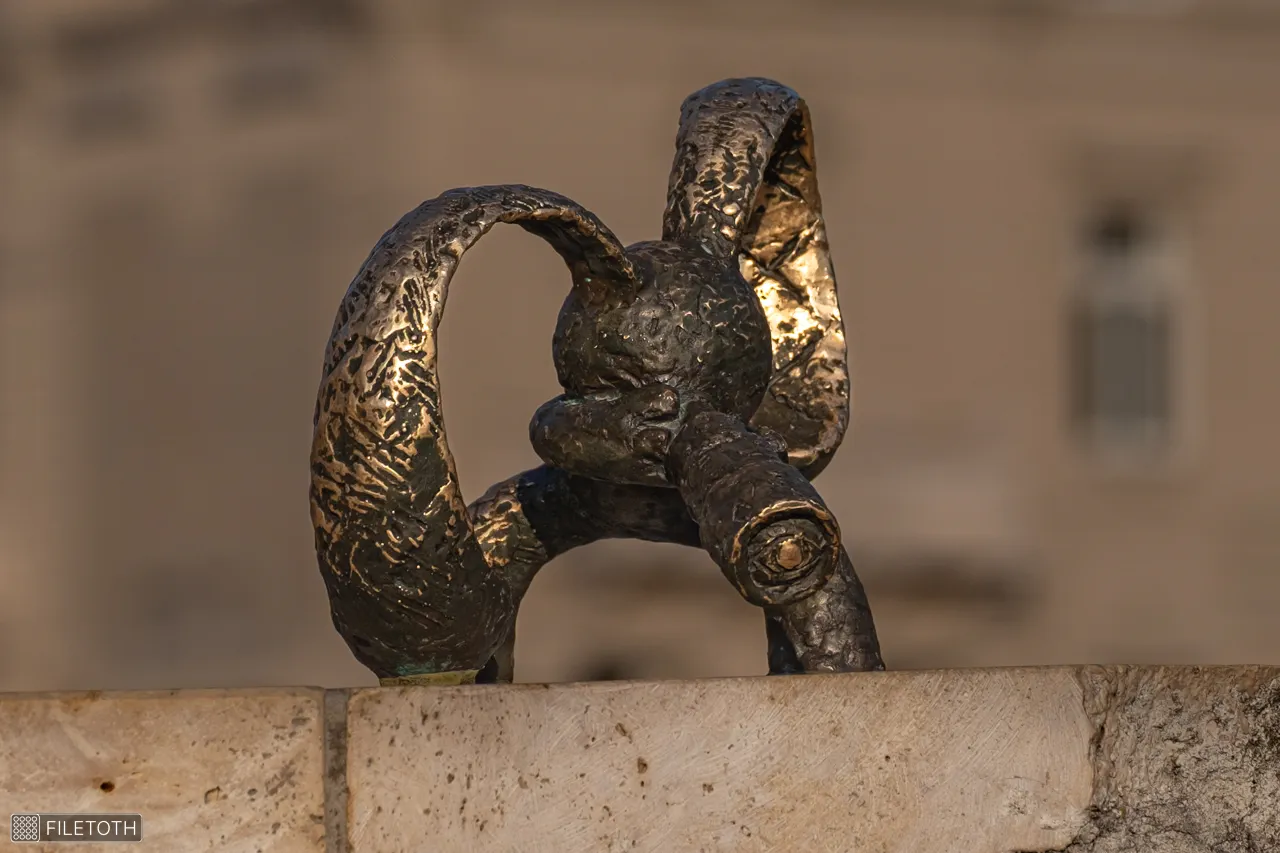
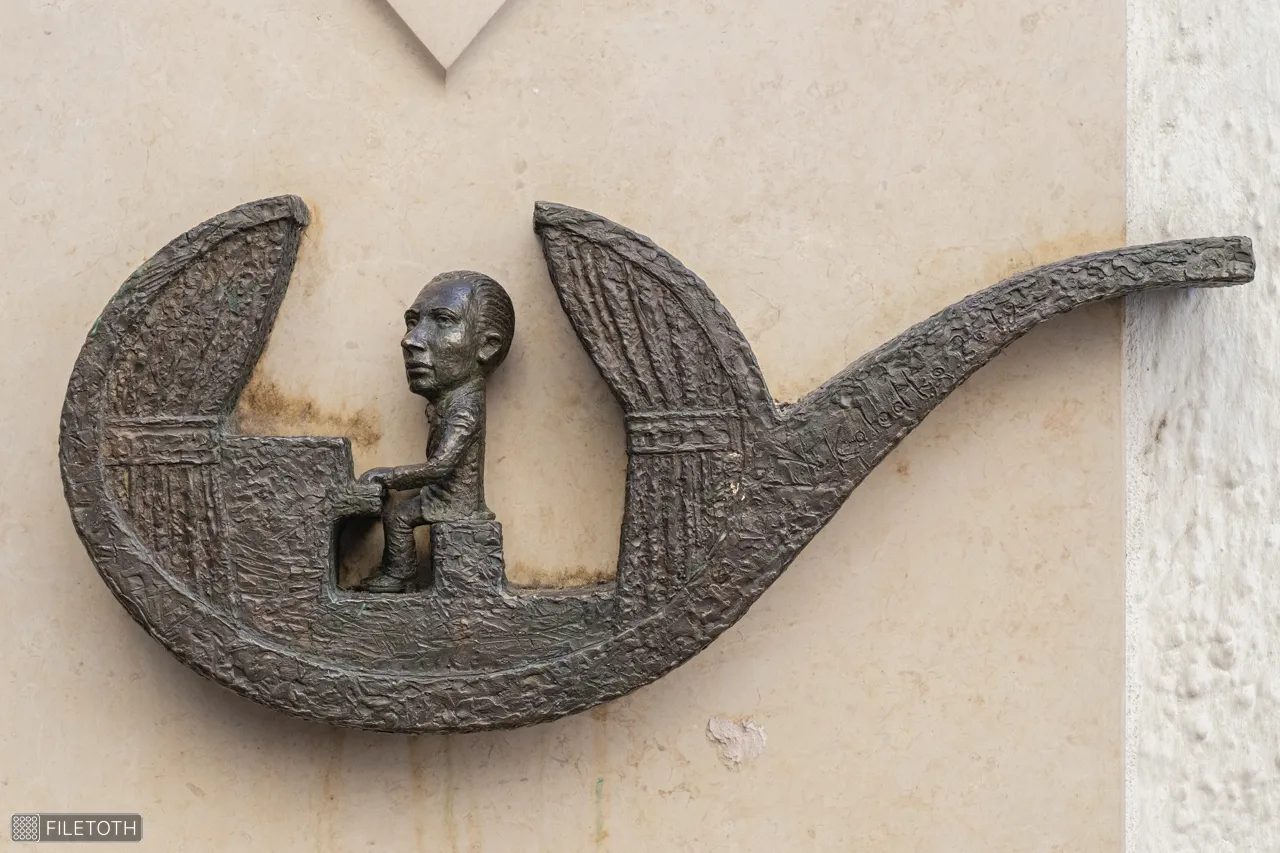
The Rezső Seress miniature hidden within the curve of a pipe.

About the Miniature

The miniature depicts Hungarian composer Rezső Seress seated at a piano, cleverly integrated into the curve of a smoking pipe attached to the wall of Budapest's historic Kispipa Restaurant. From a distance, many visitors notice only the pipe; only on closer inspection does the tiny pianist reveal himself.

Behind the Miniature

Rezső Seress became world-famous through his song Gloomy Sunday, one of the best-known Hungarian compositions ever written. Although international success did not bring lasting financial security, he spent many years performing at the nearby Kispipa Restaurant, only a short walk from his home. The miniature marks the place most closely associated with his everyday life, where generations of guests listened to him play.

Miniature by Mihály Kolodko, September 10, 2019. [ref.]

The Key Keeper

Scuba Diver miniature

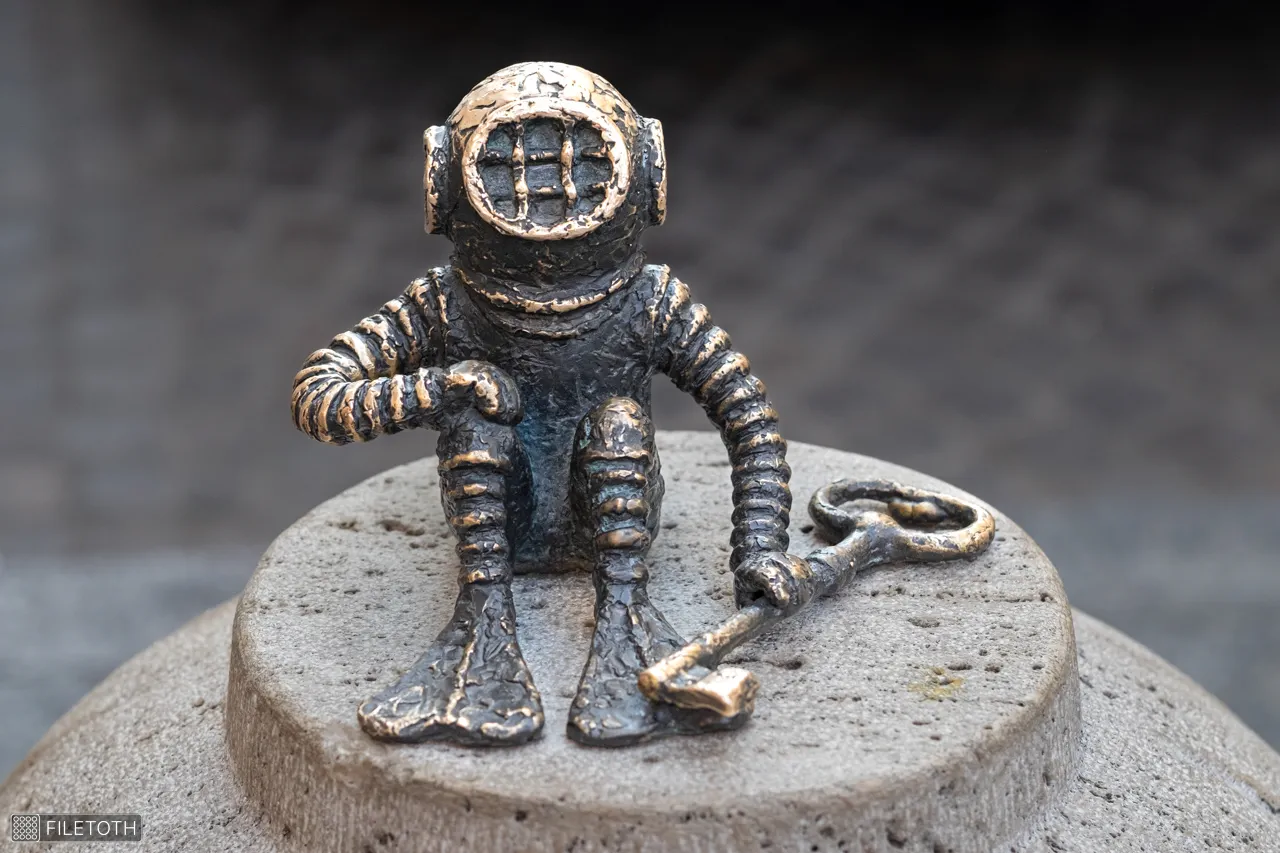
The Scuba Diver miniature guarding a key on a stone fire hydrant.

About the Miniature

The miniature depicts a scuba diver sitting on top of a stone fire hydrant while guarding a large key. The hydrant, which prevents cars from parking on the pedestrian walkway, becomes an integral part of the composition. Installed near Budapest's famous New York Palace, the unusual scene immediately raises the question of what the diver has found—and why he protects the key.

Behind the Miniature

The key refers to the legendary New York Café, where several stories tell of its key being thrown into the Danube so the café would never have to close. According to one version, writer Ferenc Molnár threw it into the river on the café's opening day, while another places the event at its reopening decades later. In 2014, the tradition was symbolically repeated during the café's 120th anniversary celebrations. Kolodko's diver playfully resolves the legend by recovering the key from the Danube and keeping it safe, ensuring it can never be thrown away again.

Miniature by Mihály Kolodko, August 28, 2019. [ref.]

Rejtő's Golden Alfa Romeo

The Fourteen Carat Car miniature

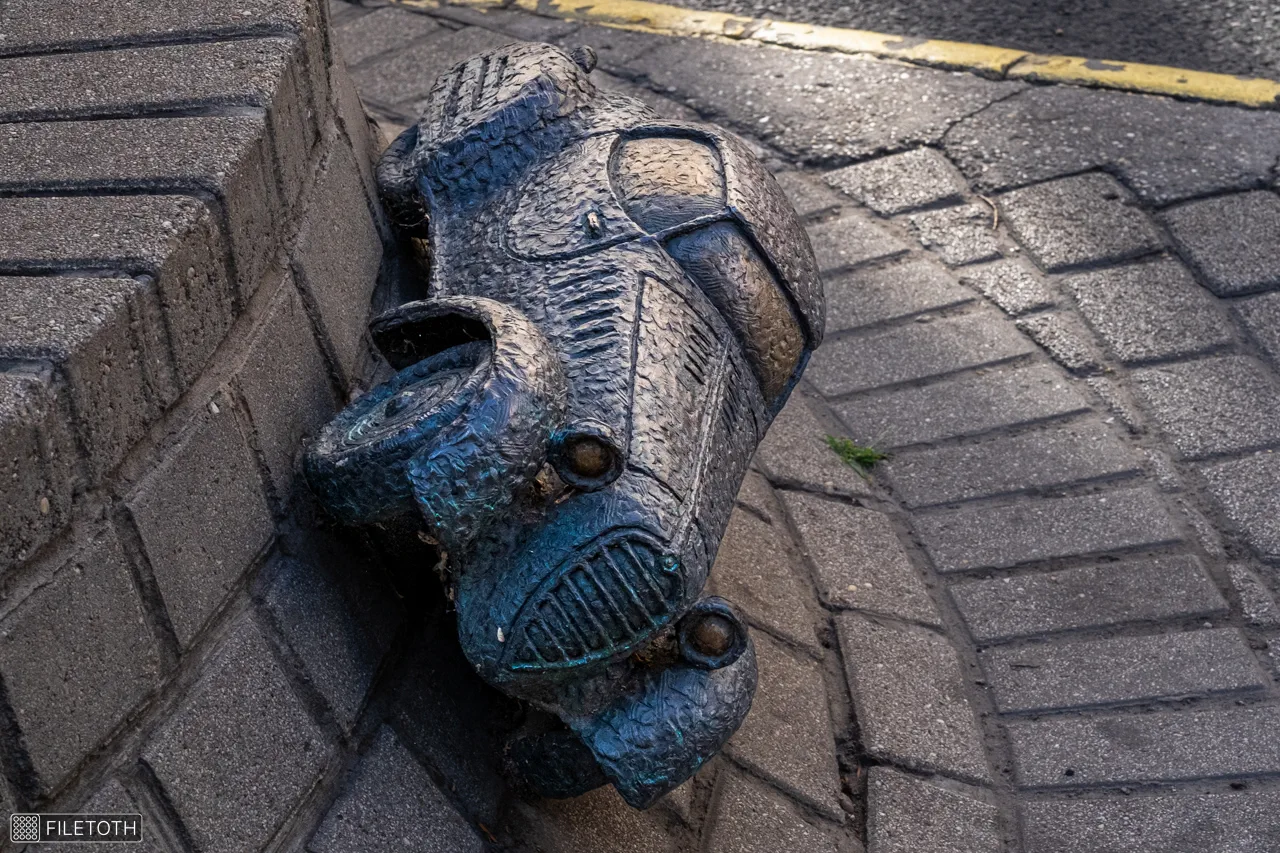
The Fourteen Carat Car miniature at the entrance to Rejtő Jenő Street.

About the Miniature

The miniature depicts the extraordinary Alfa Romeo from Jenő Rejtő's novel The Fourteen Carat Car. Positioned at the entrance to Rejtő Jenő Street, the unusually large bronze automobile is distinguished by its golden windows and lights, recalling the legendary luxury car at the heart of the story.

Behind the Miniature

Published in 1940, The Fourteen Carat Car is one of Jenő Rejtő's best-known adventure novels. The story follows Iván Gorcsev as he becomes entangled in the search for an Alfa Romeo supposedly built largely from fourteen-carat gold. Rather than reproducing every detail described in the novel, Kolodko captures its unmistakable spirit, creating a playful tribute to one of Hungarian literature's most memorable fictional automobiles. The miniature stands only a few steps from the birthplace of Jenő Rejtő, adding another literary landmark to the neighbourhood that bears his name.

Miniature by Mihály Kolodko, August 28, 2019. [ref.]

Wonder Woman

Hannah Senesh miniature

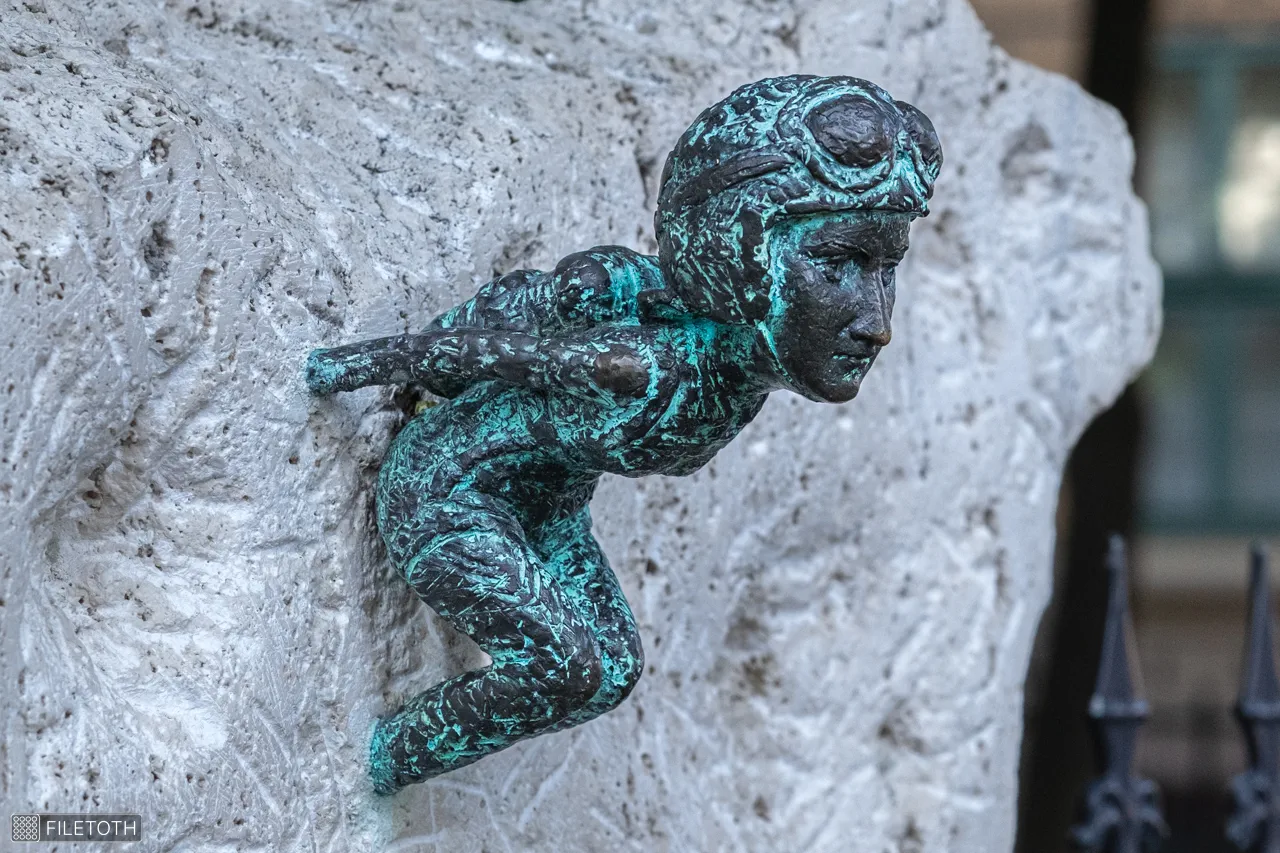
The Hannah Senesh miniature in Erzsébetváros.

About the Miniature

The miniature depicts Hannah Senesh in military uniform with a parachute on her back. Behind her stands the limestone outline of Hungary, while her upright posture and steady gaze recall one of the country's most remarkable wartime heroines. The sculpture was unveiled on International Women's Day in Erzsébetváros.

Behind the Miniature

Hannah Senesh was born in Budapest in 1921. After emigrating to Mandatory Palestine, she volunteered for the British Army during the Second World War and returned to Hungary in 1944 as a parachutist on a mission to assist resistance efforts and help save Hungarian Jews. Captured shortly after crossing the border, she endured imprisonment and torture without betraying her companions before being executed later that year. The miniature was created as the first permanent sculpture of the Wonder Women initiative, which seeks to increase the visibility of remarkable women in Budapest's public spaces.

Miniature by Mihály Kolodko, March 8, 2020. [ref.]

Monday Again

Garfield miniature

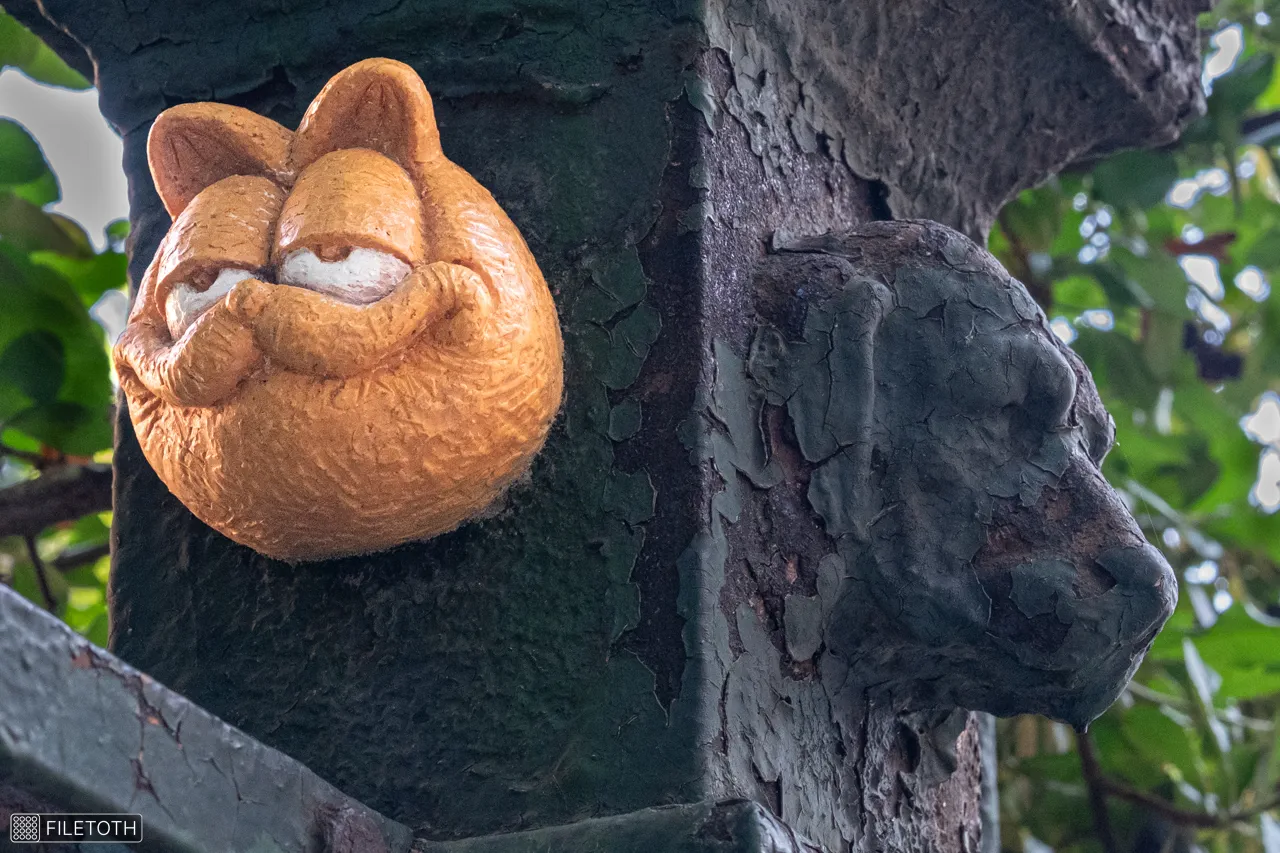
Garfield sitting on a fence decorated with dog portraits.

About the Miniature

The miniature depicts Garfield balancing on top of an old iron fence while holding a birthday cake marked with the number 45. The fence itself is decorated with portraits of dogs, creating a humorous setting for the world's most famous cat.

Behind the Miniature

Garfield first appeared in newspapers on 19 June 1978, making the miniature's unveiling on 19 June 2023 an exact celebration of the character's 45th birthday. Created by American cartoonist Jim Davis, Garfield has become one of the world's best-known comic-strip characters, celebrated for his laziness, sarcasm and enormous appetite. The playful location, surrounded by dogs, adds another layer of humour to the birthday tribute.

Miniature by Mihály Kolodko, June 19, 2023. [ref.]

Two by Two

Noah's Ark miniature

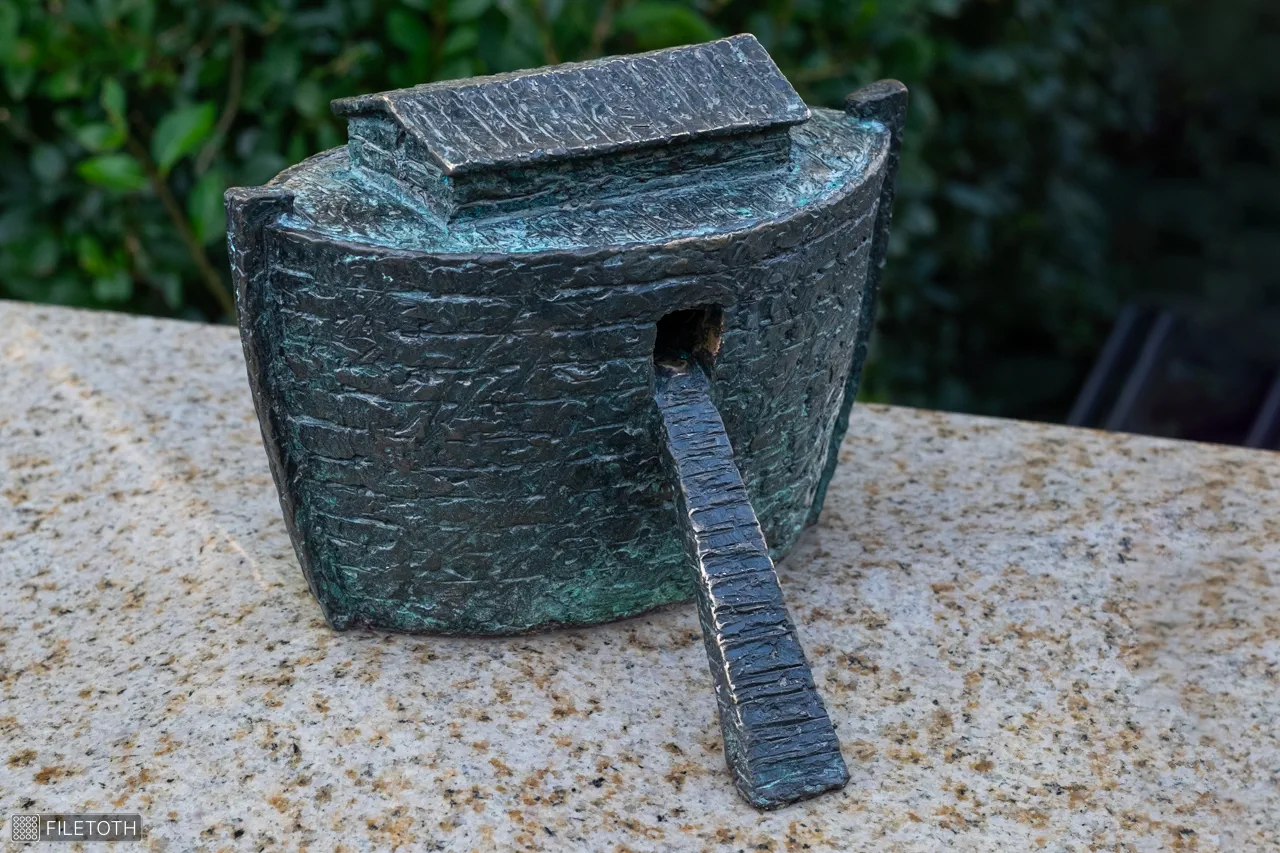
The Noah's Ark miniature between the synagogue and the University of Veterinary Medicine.

About the Miniature

The miniature depicts Noah's Ark carrying pairs of animals from the biblical story of the Great Flood. It stands midway between the Bethlen Gábor Square synagogue and the main entrance of Budapest's University of Veterinary Medicine, allowing its surroundings to become part of the composition.

Behind the Miniature

Noah's Ark is one of the best-known stories of the Hebrew Bible, describing how Noah saved pairs of every animal from the Great Flood. The miniature's location appears thoughtfully chosen: the nearby synagogue recalls the story's biblical origins, while the neighbouring University of Veterinary Medicine naturally echoes the ark's animal passengers. Together, the setting and the sculpture create one of Kolodko's most harmonious site-specific compositions.

Miniature by Mihály Kolodko, August 28, 2019. [ref.]

Delivering Tradition

Brewery Horses miniature

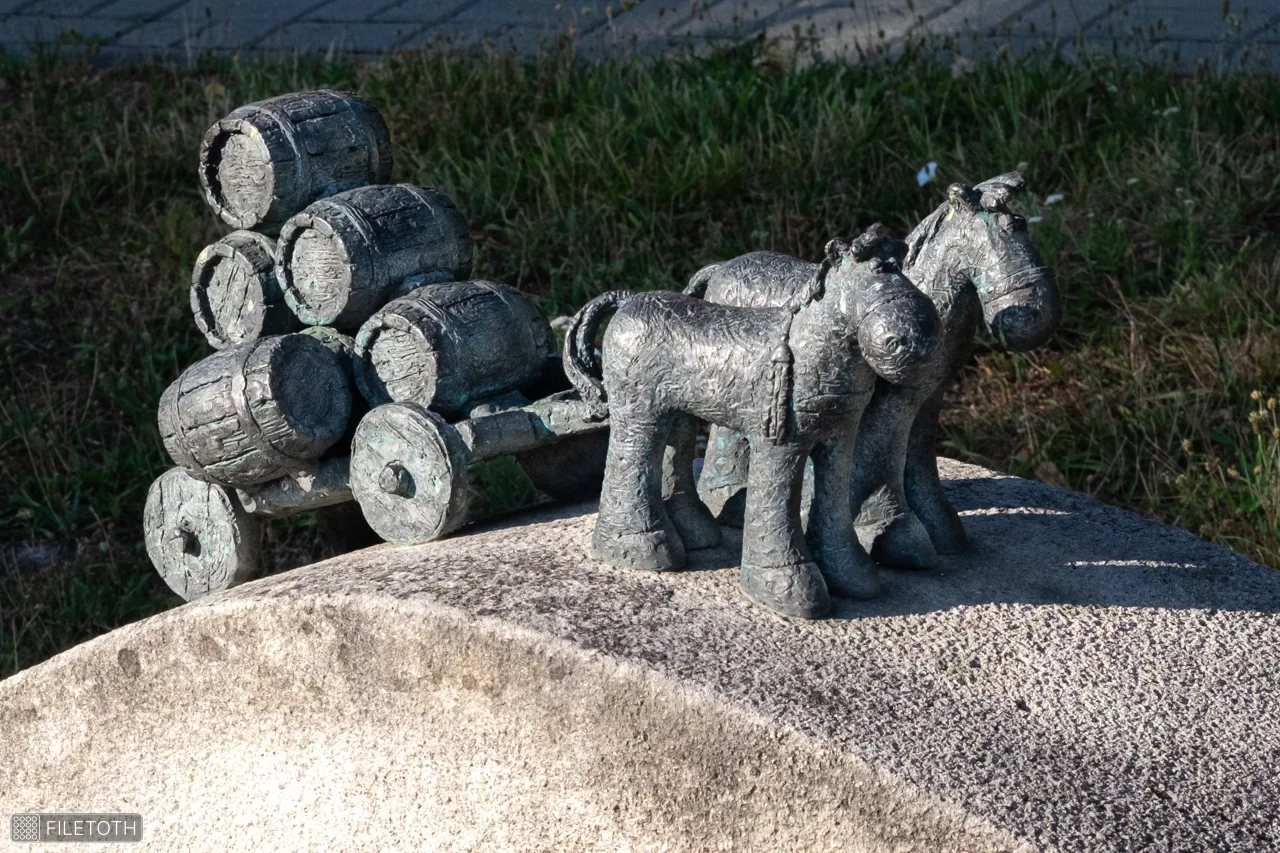
The Brewery Horses miniature on the limestone bridge at the Dreher Brewery.

About the Miniature

The miniature depicts two powerful brewery horses pulling a wagon loaded with beer barrels across a limestone bridge at Budapest's historic Dreher Brewery. The scene recalls the horse-drawn deliveries that once carried Dreher beer throughout the city's streets.

Behind the Miniature

Before motor vehicles became common, horse-drawn wagons transported beer from the Dreher Brewery to pubs and restaurants across Budapest. Commissioned by the brewery in 2020, the miniature celebrates this important chapter in the company's history while preserving the memory of the famous brewery horses that became a familiar sight on the city's streets.

Miniature by Mihály Kolodko, July 7, 2020. [ref.]

Finally Tied Down

Chuck Norris miniature

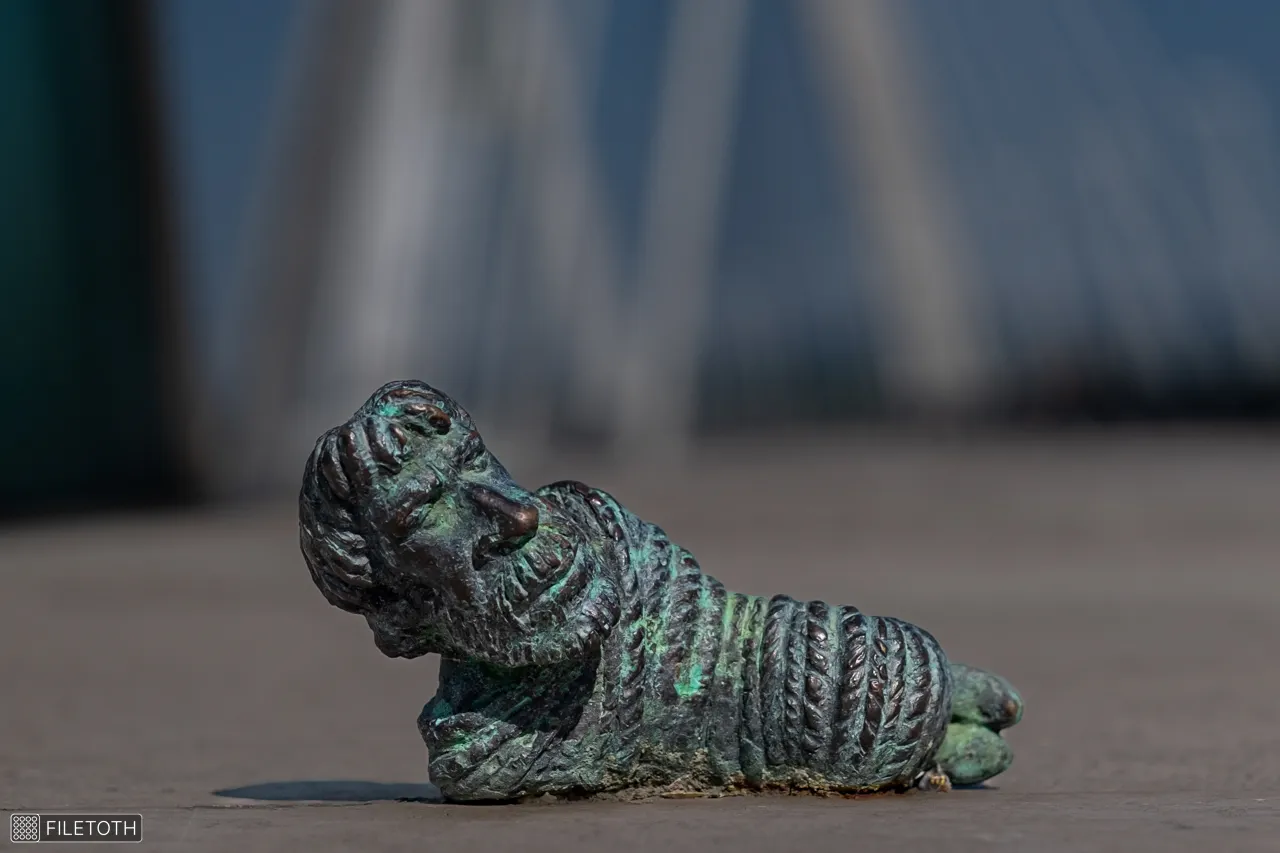
The Chuck Norris miniature tied to the Megyeri Bridge.

About the Miniature

The miniature depicts Chuck Norris lying horizontally, tied to the top of Budapest's Megyeri Bridge. Installed on April Fool's Day, the playful scene presents one of popular culture's most invincible heroes in an entirely unexpected situation.

Behind the Miniature

The sculpture recalls the famous public vote held before the Megyeri Bridge opened in 2008, when internet users overwhelmingly proposed naming the bridge after Chuck Norris. Although the suggestion was never adopted, it became one of Hungary's best-known online jokes. Sixteen years later, Kolodko returned the action hero to the bridge—this time securely tied in place.

Miniature by Mihály Kolodko, April 1, 2024. [ref.]

The Triangle

Baroque Corner miniature

The Baroque Corner miniature in Vác's triangular main square.

About the Miniature

The miniature depicts a tiny figure standing at the narrow end of Vác's Baroque main square, holding a stone in one hand while aiming an imaginary slingshot toward the opposite end of the square. Even the triangular base echoes the distinctive shape of the square itself.

Behind the Miniature

Vác's main square is often described as Hungary's only triangular Baroque square, although many visitors never notice its unusual geometry. Kolodko placed the miniature precisely at the apex of the triangle, transforming the entire square into part of the artwork. The figure appears to aim toward the opposite corner, encouraging visitors to pause and appreciate the carefully planned urban space from a new perspective.

Miniature by Mihály Kolodko, July 7, 2021. [ref.]

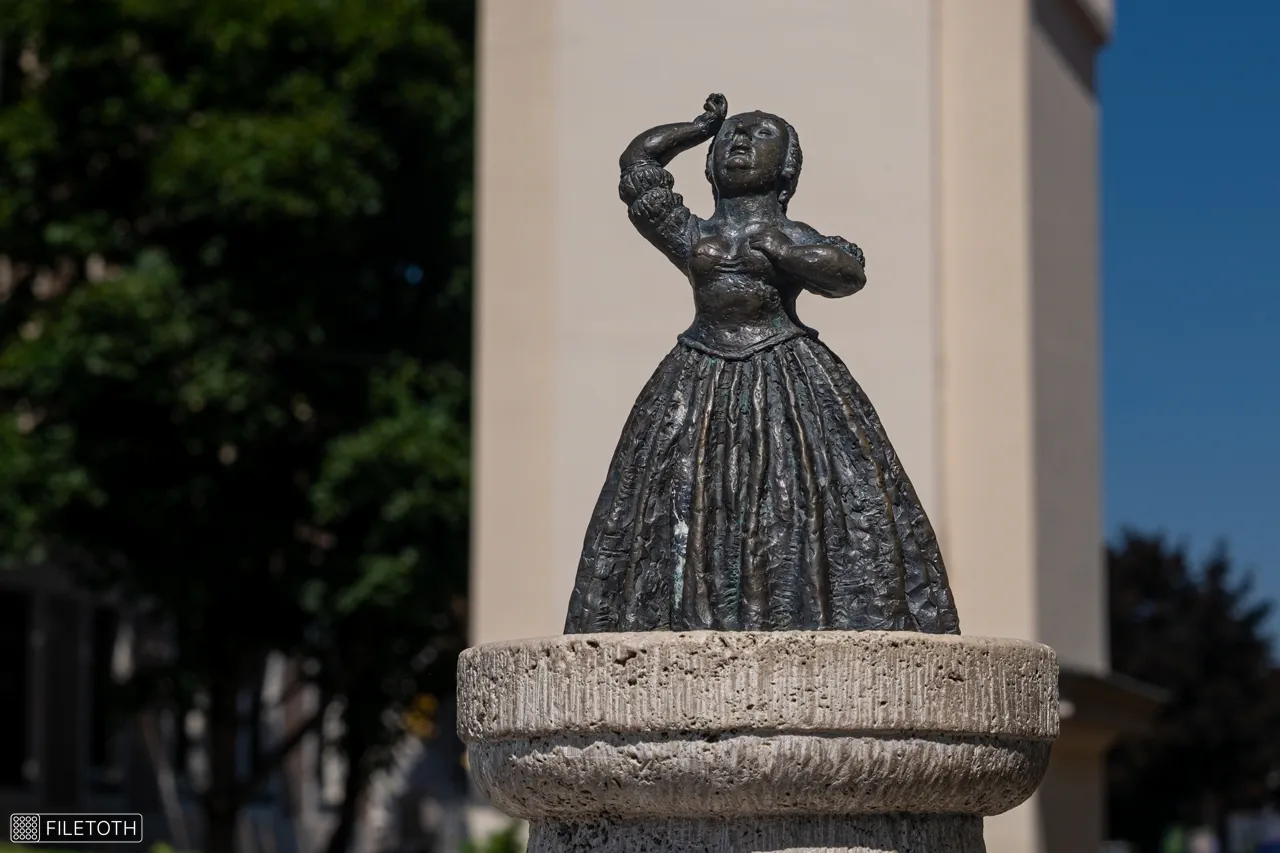
The Stone Arch

Ecstasy of Maria Theresa miniature

The Ecstasy of Maria Theresa miniature near the Stone Arch in Vác.

About the Miniature

The miniature depicts Empress Maria Theresa in an exaggerated theatrical pose, one hand pressed to her chest while the other reaches toward her head. It stands beside Vác's famous Stone Arch, built especially for her royal visit in 1764.

Behind the Miniature

The Stone Arch was erected in remarkably little time to welcome Maria Theresa to Vác. According to local tradition, the Empress hesitated to pass beneath the newly completed triumphal arch, fearing it might collapse. Whether entirely true or not, the story has become part of the city's folklore. Kolodko's miniature playfully captures that legendary moment of hesitation, transforming a well-known local tale into a humorous scene.

Miniature by Mihály Kolodko, June 29, 2021. [ref.]

Petőfi's Poem

My Mother's Chicken miniature

The My Mother's Chicken miniature in front of Vác railway station.

About the Miniature

The miniature depicts Morzsa the dog and Mother's Chicken sitting peacefully together inside a small henhouse. Installed in front of Vác railway station, the scene brings to life the beloved characters from Sándor Petőfi's famous poem My Mother's Chicken.

Behind the Miniature

Sándor Petőfi wrote My Mother's Chicken in Vác in February 1848 while staying with his parents. The poem, learned by generations of Hungarian schoolchildren, asks the family dog Morzsa to live peacefully with the hen instead of chasing it. Kolodko transforms the well-known verses into a charming three-dimensional scene, showing the two animals living exactly as the poet wished—in friendship.

Miniature by Mihály Kolodko, July 2, 2021. [ref.]

Hidden Beneath the Surface

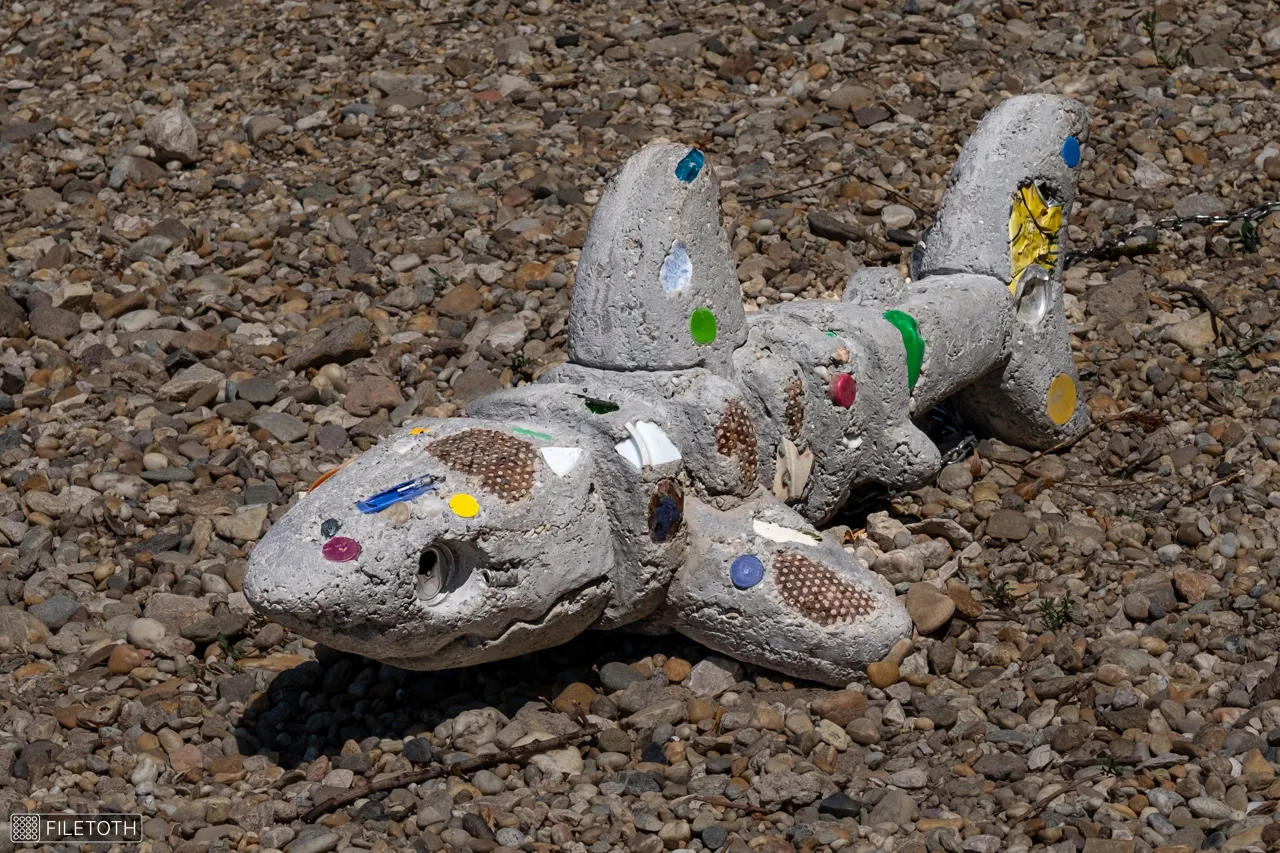
Sharks

The Sharks sculptures along the Danube.

About the Miniature

The sculpture group depicts several sharks emerging from the Danube. Unlike Kolodko's traditional bronze miniatures, these works were created using waste collected from the riverbank, making the material itself part of the message.

Behind the Miniature

Installed in May 2024, the Sharks draw attention to the growing problem of pollution in the Danube. Kolodko created the sculptures from discarded material collected along the river, transforming rubbish into predators that appear to rise from the water. The playful installation reminds visitors that what threatens the river is often hidden beneath its surface—not sharks, but the waste left behind by people.

Sculpture by Mihály Kolodko, May 12 2024. [ref.]

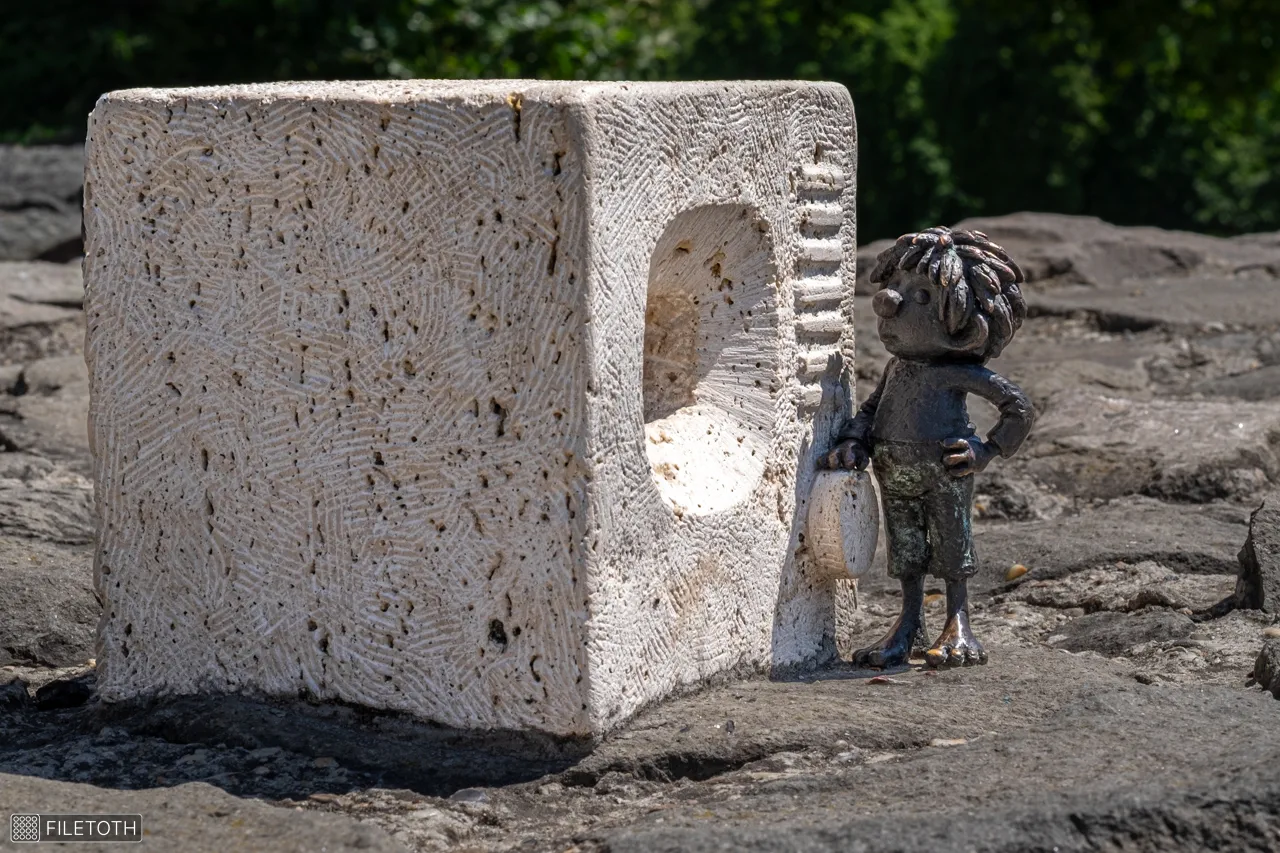
The Invisible Kobold

Pumuckl miniature

The Pumuckl miniature standing beside a television in Esztergom.

About the Miniature

The miniature depicts Pumuckl standing beside a small television set on a stone wall in Esztergom. The mischievous kobold, with his wild red hair and unmistakable grin, recalls one of the best-loved children's television characters in Central Europe.

Behind the Miniature

Created by German author Ellis Kaut, Pumuckl first appeared in books before becoming internationally known through the television series Meister Eder und sein Pumuckl. The Esztergom miniature also celebrates a local connection: Kornél Pusztaszeri, the Hungarian voice of Pumuckl, was born in the city. Placing the kobold beside a television playfully recalls the medium through which generations of children first met the invisible little troublemaker.

Miniature by Mihály Kolodko, July 25, 2024. [ref.]

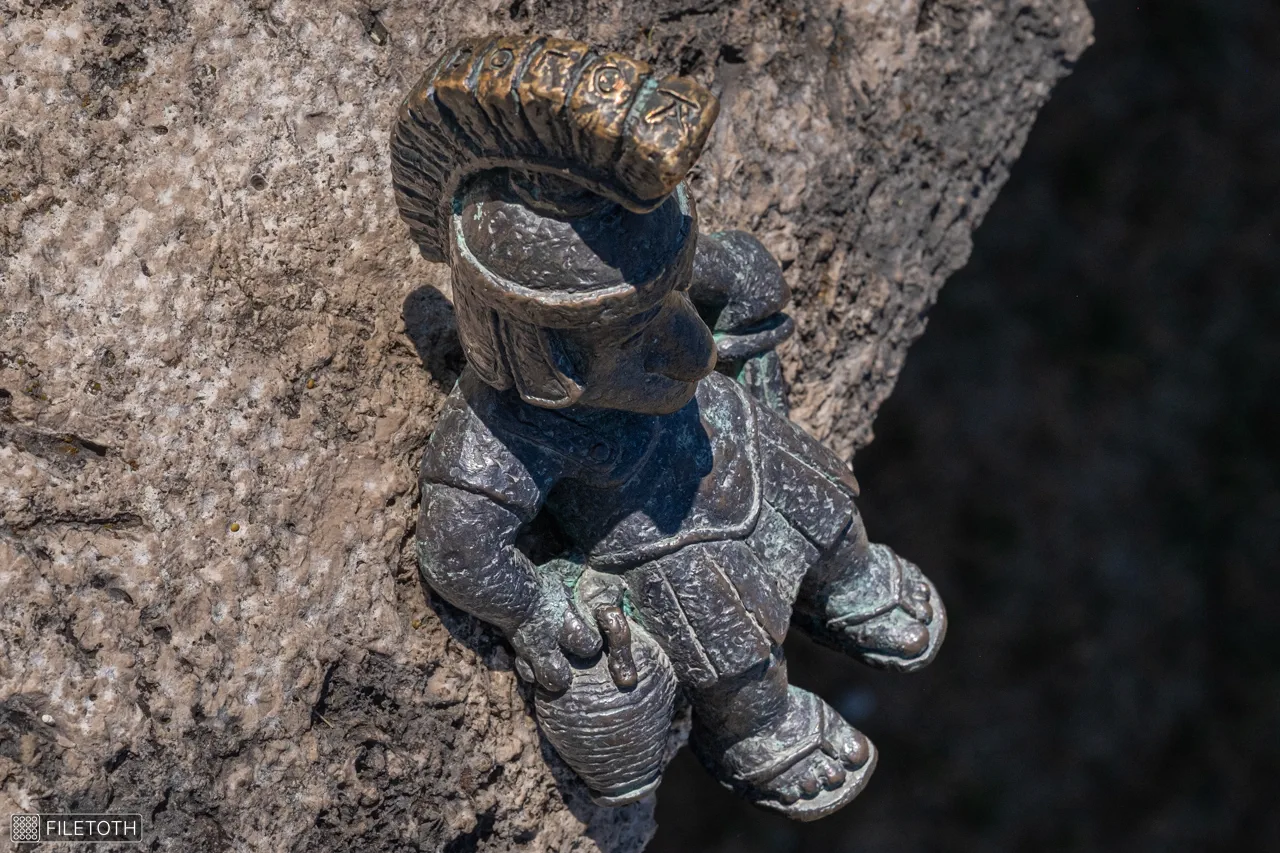
Roman Vacation

In Vino Veritas miniature

The In Vino Veritas miniature at the Katonavárosi Amphitheatre.

About the Miniature

The miniature depicts a Roman soldier lying at the edge of Budapest's Katonavárosi Amphitheatre. Fully armed, he still clutches his sword in one hand while holding a large wine bottle in the other. His relaxed posture and blurred expression leave little doubt that he has had more than enough wine.

Behind the Miniature

The title refers to the well-known Latin saying In vino veritas – "In wine, there is truth." The Budapest miniature echoes an earlier Kolodko sculpture installed at the amphitheatre in Pula, Croatia. By placing the drunken legionary among the ruins of the Katonavárosi Amphitheatre, Kolodko playfully combines Budapest's Roman heritage with one of antiquity's best-known sayings.

Miniature by Mihály Kolodko, May 21, 2022. [ref.]
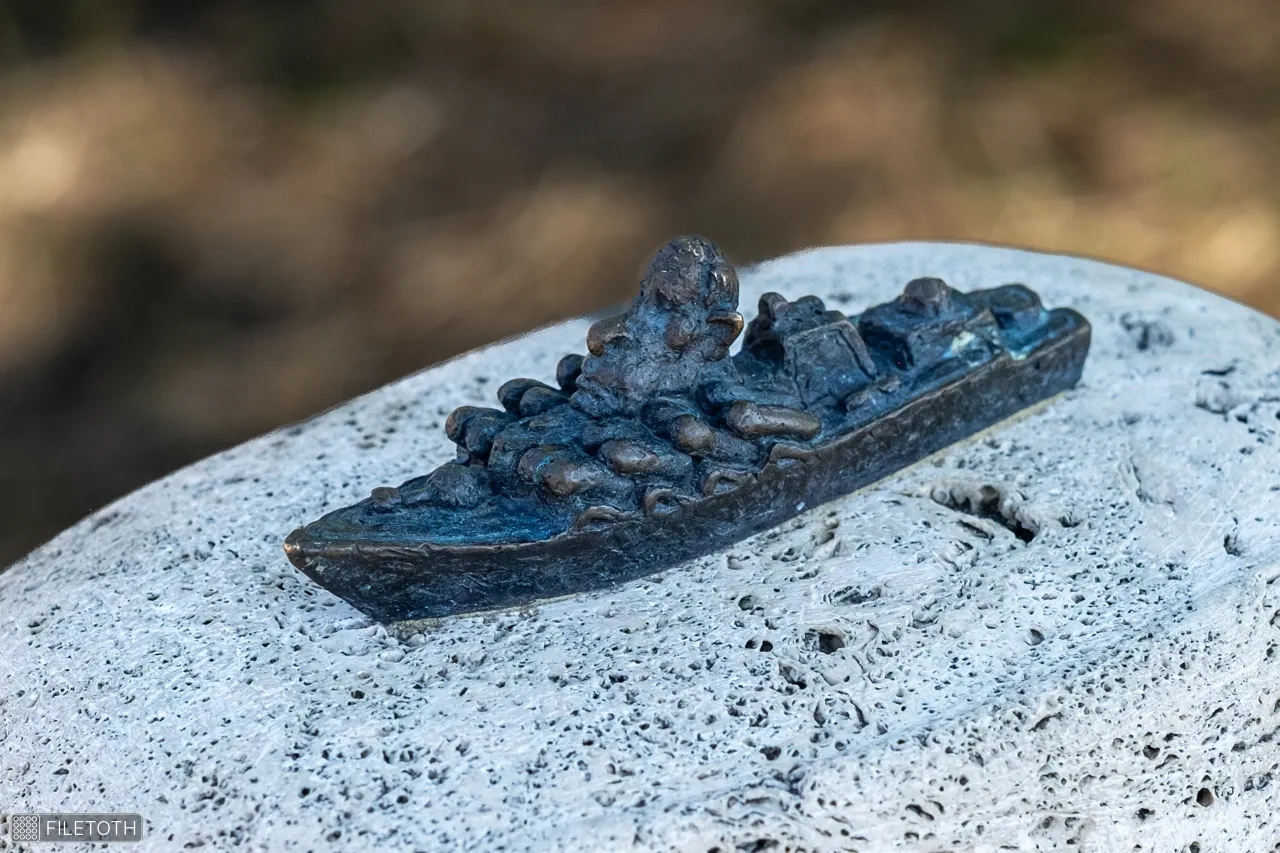
Snake Island

Message miniature

The Message miniature mounted on a raised middle finger.

About the Miniature

The miniature depicts a heavily armed warship carrying a figure identifiable as Vladimir Putin. The sculpture stands on top of a raised middle finger wearing a ring engraved with Ukraine's trident, creating one of Kolodko's most direct contemporary political statements.

Behind the Miniature

The sculpture was unveiled only weeks after Russia's invasion of Ukraine in 2022. It refers to the widely reported exchange between the crew of the Russian warship and the Ukrainian border guards defending Snake Island. The title Message recalls that historic radio transmission, while the sculpture transforms the defenders' famous reply into a powerful visual symbol of resistance.

Miniature by Mihály Kolodko, March 13, 2022. [ref.]
A Pot of Honey

Winnie the Pooh miniature

The Winnie the Pooh miniature beneath the Karinthy memorial plaque.

About the Miniature

The miniature depicts Winnie the Pooh standing beneath the memorial plaque marking the birthplace of Hungarian writer Frigyes Karinthy. Holding an empty honey pot upside down above his head, Pooh patiently waits for the very last drop of honey.

Behind the Miniature

The sculpture was unveiled on 24 June, the anniversary of Frigyes Karinthy's birth. Although A. A. Milne created Winnie the Pooh, generations of Hungarian readers came to know the bear as Micimackó through Karinthy's celebrated Hungarian adaptation, prepared with the assistance of his sister Emília ("Mici"), whose nickname inspired the bear's Hungarian name. The miniature pays tribute to one of the best-loved literary translations in Hungarian children's literature.

Miniature by Mihály Kolodko, June 24, 2023. [ref.]

The Boots of Stalin

Among Us miniature

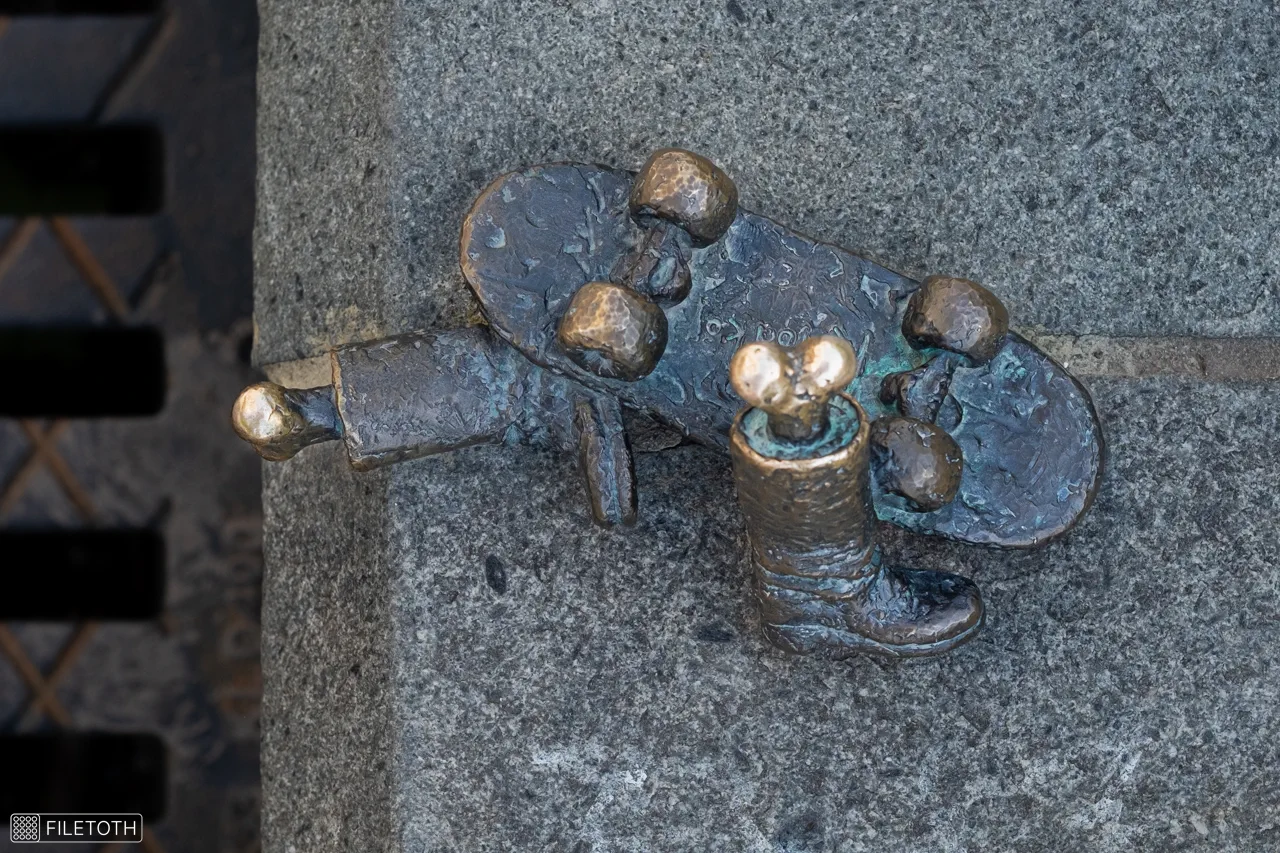
The Among Us miniature beside the Museum of Ethnography.

About the Miniature

The miniature depicts a pair of oversized boots standing on railway rails, while a small Among Us character rides a skateboard nearby. Installed beside Budapest's Museum of Ethnography, the composition combines historical memory with contemporary popular culture.

Behind the Miniature

The sculpture was unveiled on 23 October, the anniversary of the 1956 Hungarian Revolution. Its central motif recalls the famous boots that remained standing after the colossal Stalin statue was pulled down during the uprising. The railway rails echo the internal structure that once supported the monument. The nearby skateboard appears to reference the distinctive form of the Museum of Ethnography, whose sloping roof has often been compared to a skate park. Whether this was the artist's intention or simply an amusing coincidence is left to the viewer.

Miniature by Mihály Kolodko, October 23, 2022. [ref.]
Keeping Watch

The Check-Eared Rabbit miniature

The Check-Eared Rabbit miniature overlooking Budapest from Buda Castle.

About the Miniature

The miniature depicts the Check-Eared Rabbit standing on the walls of Buda Castle, looking across Budapest through a pair of binoculars. One of Hungary's best-loved animated characters appears as a quiet observer, watching over the city below.

Behind the Miniature

Created by writer Veronika Marék and director Zsolt Richly, The Check-Eared Rabbit first appeared in the 1970s and became one of Hungary's most beloved animated television characters. Known for solving problems with kindness, intelligence and the help of his remarkable checkered ears, the rabbit now surveys Budapest from one of the city's finest viewpoints. Through his binoculars he appears to be watching the Chain Bridge and the bustling city beyond.

Miniature by Mihály Kolodko, November 16, 2018. [ref.]

The Flower Sellers

Auntie Aranka and Uncle Béla miniature

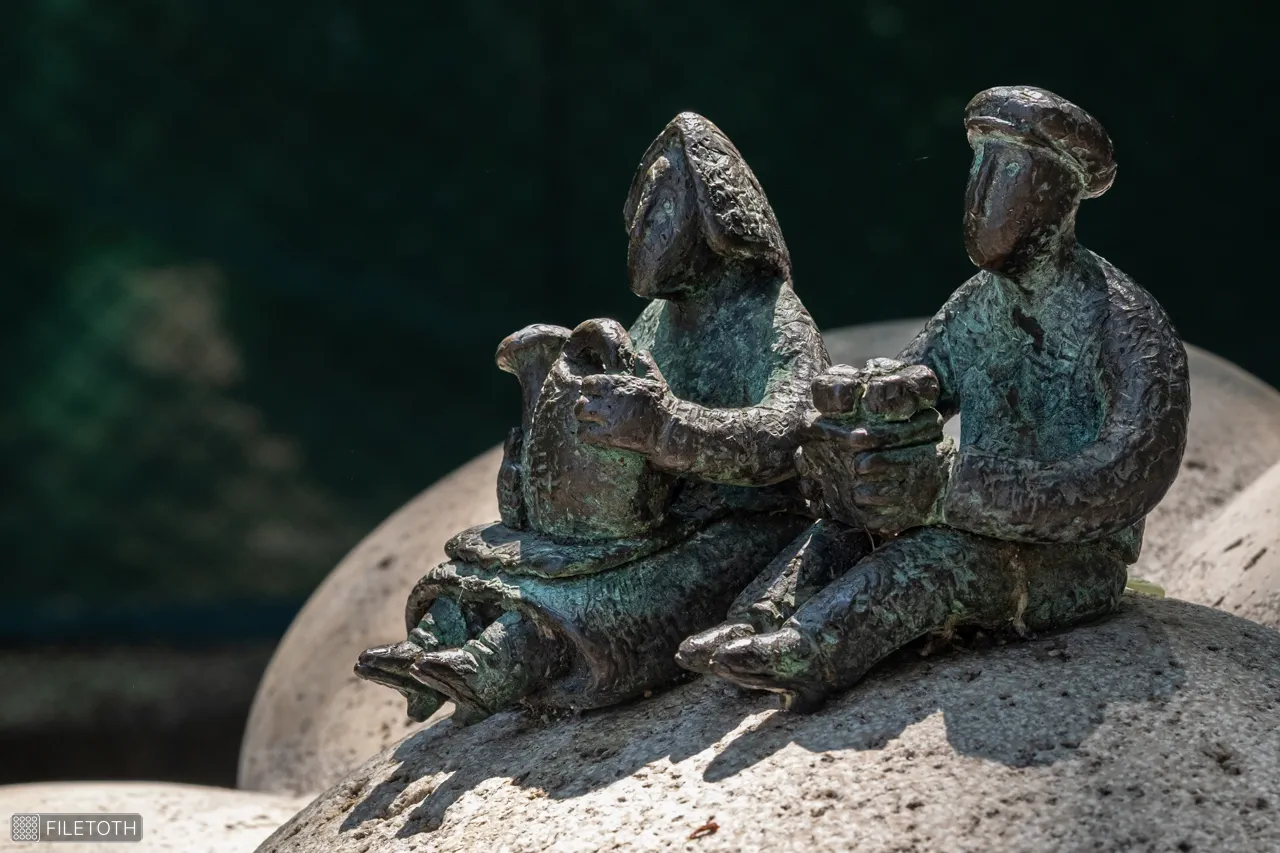
The Auntie Aranka and Uncle Béla miniature in Pasarét.

About the Miniature

The miniature depicts Auntie Aranka and Uncle Béla sitting together on the stem of a large flower. Uncle Béla holds a potted plant, while Auntie Aranka carries a watering can, recalling the work they shared for decades as Pasarét's beloved flower sellers.

Behind the Miniature

The sculpture was commissioned by the local community to honour the elderly couple, whose flower kiosk had long been a familiar meeting place in the neighbourhood. After they passed away, residents continued to leave flowers and messages at the empty kiosk before deciding to create a permanent memorial. The miniature celebrates not fame or historical events, but the lasting impact that kindness, dedication and everyday human relationships can have on a community.

Miniature by Mihály Kolodko, August 25, 2022. [ref.]
Childhood Memories

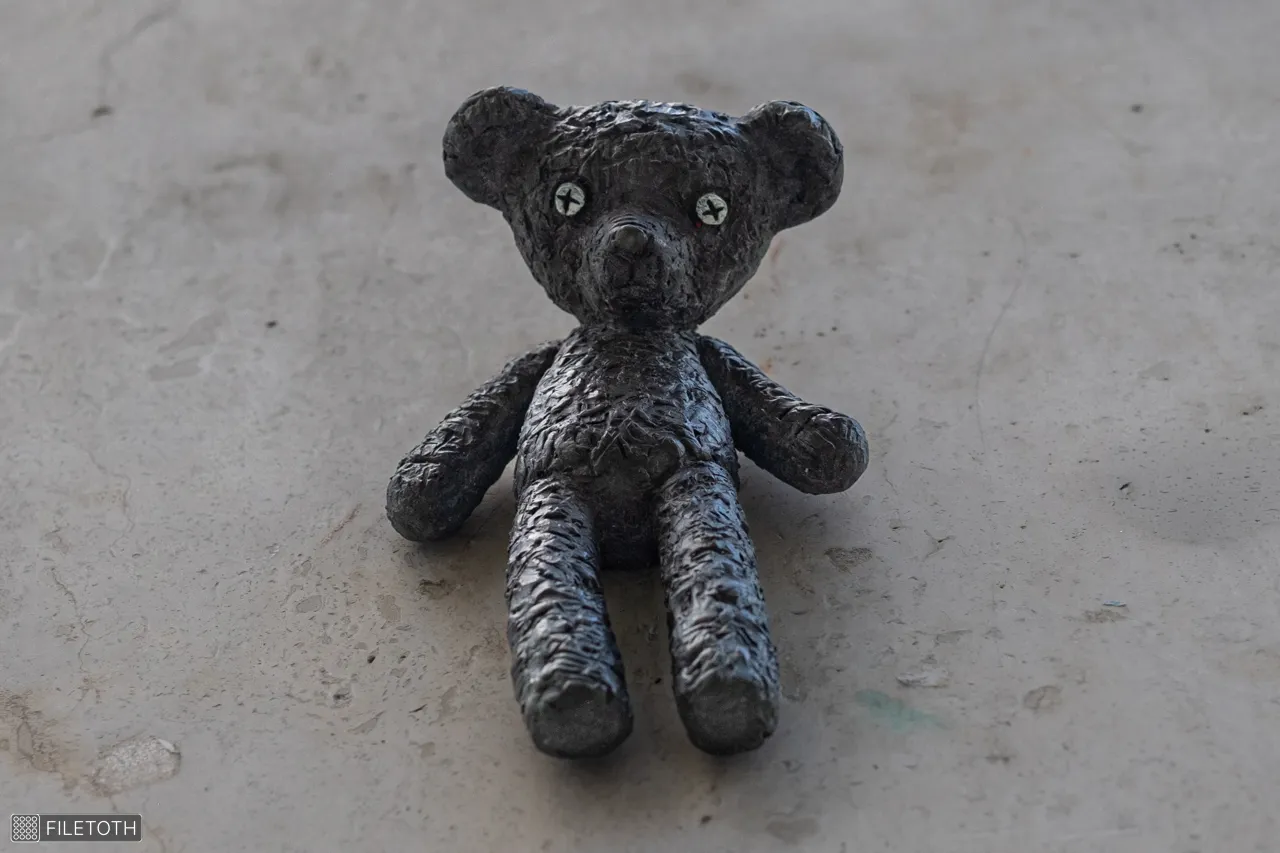
Teddy Bear miniature

The Teddy Bear miniature on the wall of the former British Embassy.

About the Miniature

The miniature depicts a small teddy bear sitting quietly on the wall of the former British Embassy in Budapest. Its simple appearance and well-loved shape make it instantly familiar, inviting visitors to recall a favourite toy from their own childhood.

Behind the Miniature

Since its unveiling, many visitors have associated the sculpture with Teddy, the well-known companion of Mr. Bean. No official explanation has been given, however, and the miniature works just as well as a universal symbol of childhood. Rather than portraying one specific bear, it invites everyone to remember the treasured toy that accompanied them while growing up.

Miniature by Mihály Kolodko, November 12, 2020. [ref.]
City of Music

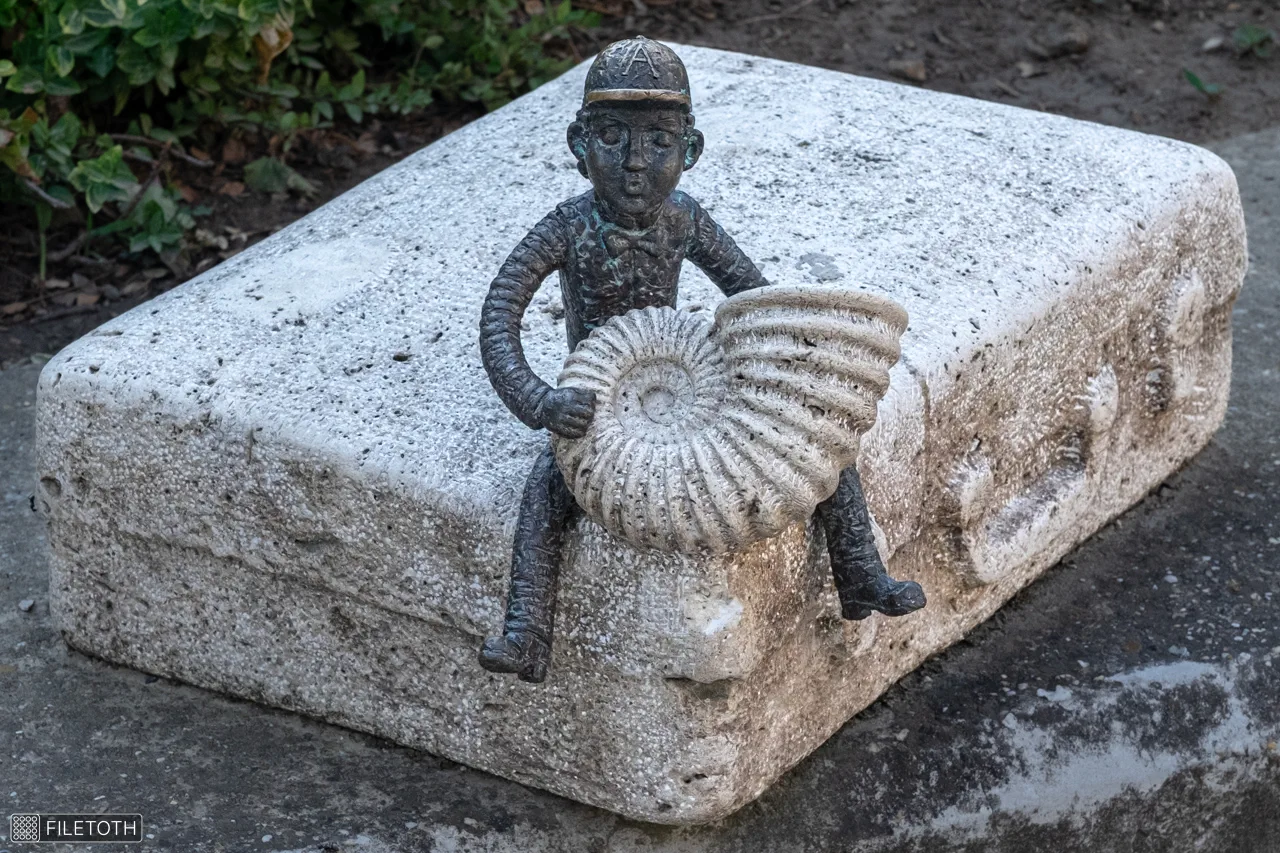
Street Musician: Ödön miniature

The Street Musician: Ödön miniature in Veszprém.

About the Miniature

The miniature depicts a travelling street musician sitting on a large suitcase while playing a shell-shaped wind instrument. Dressed in formal clothes with a bow tie and cap, he appears to have paused in Veszprém before continuing his journey.

Behind the Miniature

Installed in 2020, the miniature celebrates Veszprém's rich musical traditions. The city, recognised by UNESCO as a City of Music, hosts numerous festivals ranging from classical music to jazz, world music and its internationally known Street Music Festival. According to the project's description, the shell-shaped instrument symbolises all musical instruments, making the travelling musician a tribute to the city's diverse musical life.

Miniature by Mihály Kolodko, August 6, 2020. [ref.]
The City's Guardian

The Guard: Ernő miniature

The Guard: Ernő miniature in Veszprém.

About the Miniature

The miniature depicts a helmeted guard standing watch beside a wooden chest. His historic uniform recalls several periods of Veszprém's past rather than representing one specific person, making him a symbolic guardian of the city.

Behind the Miniature

The Guard was created as one of three miniatures celebrating Veszprém's history and cultural identity. During a public naming campaign organised by the city, residents chose the name Ernő. Many associated the figure with the legendary guardians of the Holy Crown, which was kept in Veszprém for a short time during the final months of the Second World War. According to the project's description, however, the figure intentionally represents several chapters of the city's history—from the Ottoman period through the twentieth century—rather than a single historical event.

Miniature by Mihály Kolodko, July 13, 2020. [ref.]
City of Queens

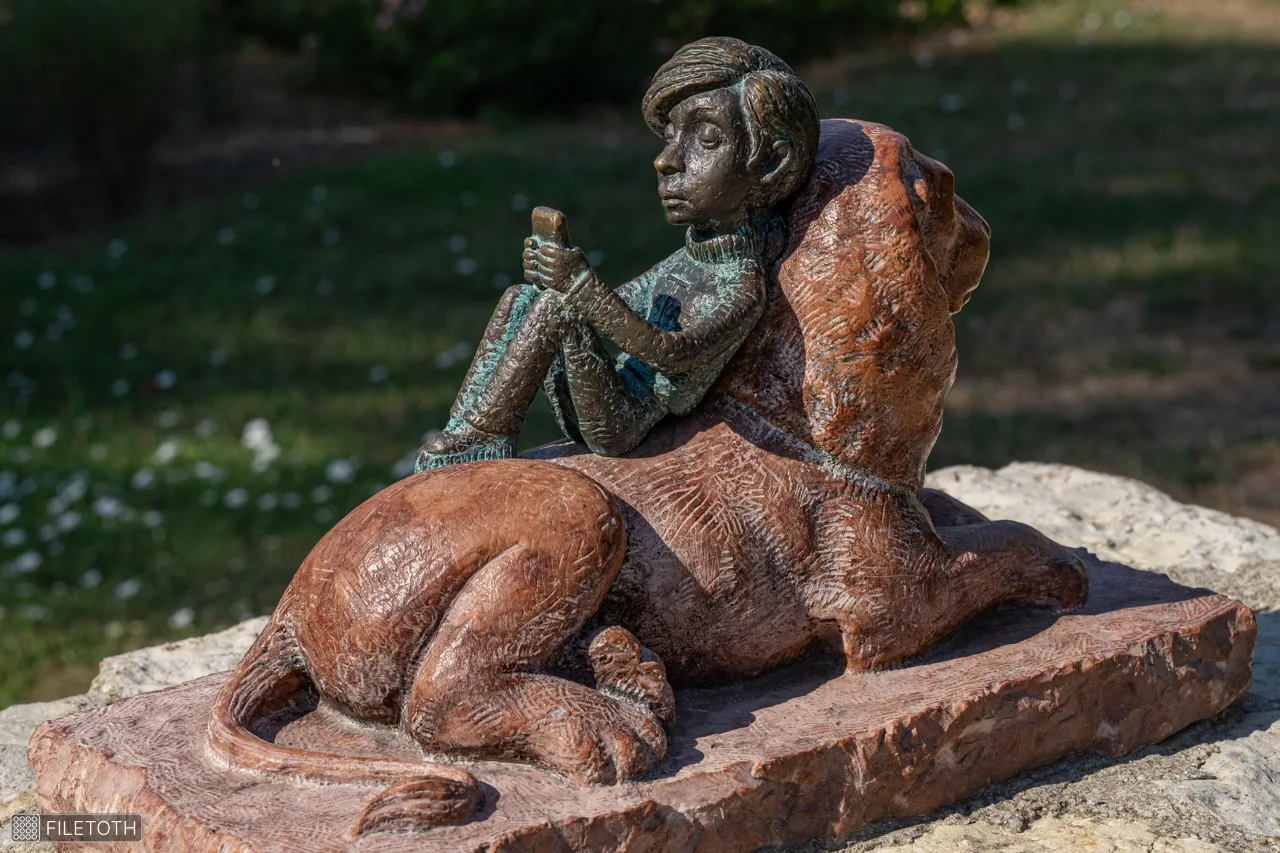
Leonóra and the Lion miniature

The Leonóra and the Lion miniature in Veszprém.

About the Miniature

The miniature depicts a contemporary young girl sitting on the back of a lion while holding a small object in her hands. It stands on a pedestrian bridge near the ruins of Saint Margaret's convent in Veszprém.

Behind the Miniature

Leonóra and the Lion was commissioned as part of the Veszprém Mini Sculptures project. According to the official description, the work brings together three themes associated with the city: Saint Margaret, who spent part of her childhood in Veszprém, the city's tradition as the "City of Queens", and the nearby Veszprém Zoo, where the lion represents the king of animals. The sculpture was intentionally designed so that the object in the girl's hands can be interpreted in different ways.

Miniature by Mihály Kolodko, September 3, 2020. [ref.]
Chocolate Lover

Arthur Gombóc miniature

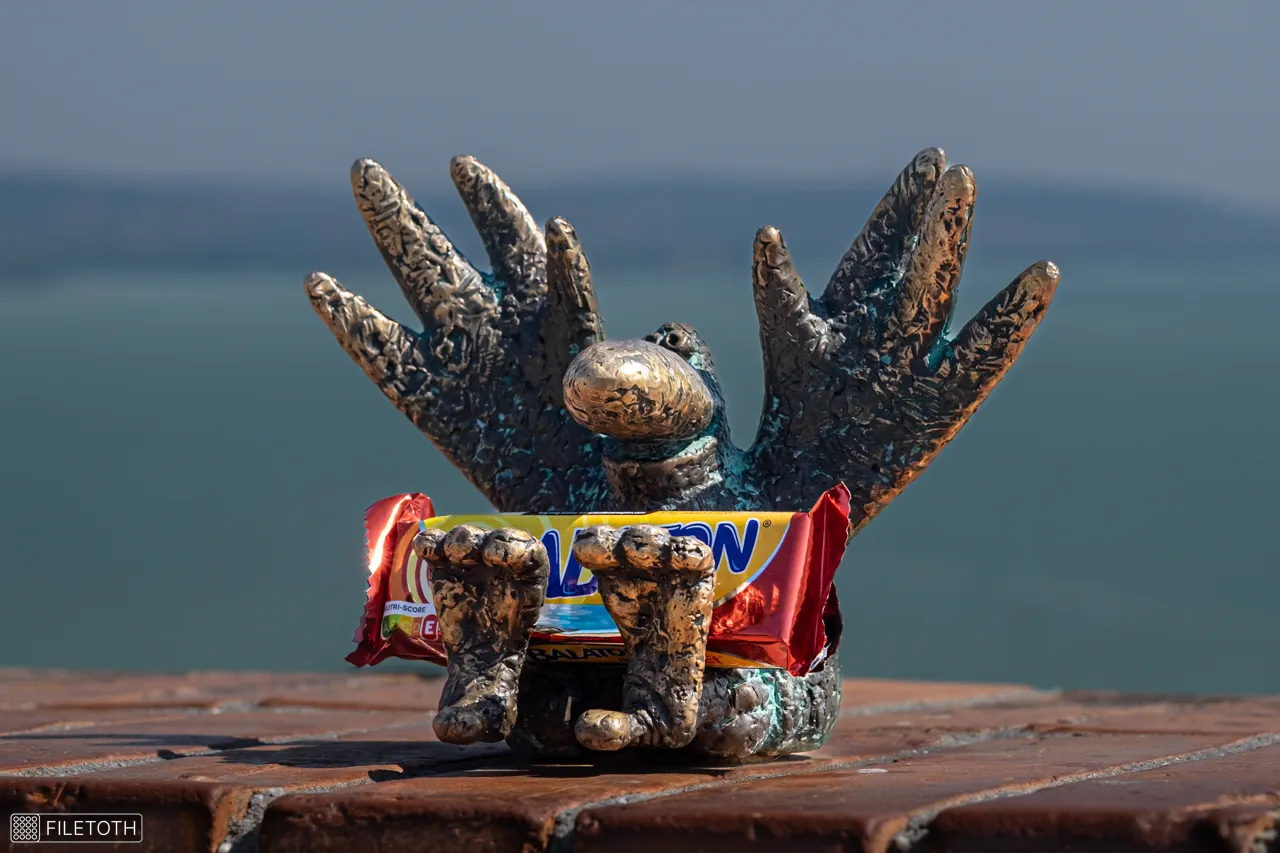
The Gombóc Artúr miniature beside Tihany Abbey.

About the Miniature

The miniature depicts Arthur Gombóc, the famously round bird from Pom Pom Tales, sitting on the promenade beside Tihany Abbey. One of the most beloved characters created by István Csukás, he is instantly recognisable to generations of Hungarian readers and television viewers.

Behind the Miniature

Arthur Gombóc first appeared in Pom Pom Tales, created by writer István Csukás and illustrator Ferenc Sajdik. His greatest passion is chocolate of every imaginable kind—a running joke known to almost every Hungarian child. Visitors have embraced the miniature in their own way, often placing Balaton chocolate bars beside him before taking photographs, turning the sculpture into a playful local tradition.

Miniature by Mihály Kolodko, May 30, 2020. [ref.]
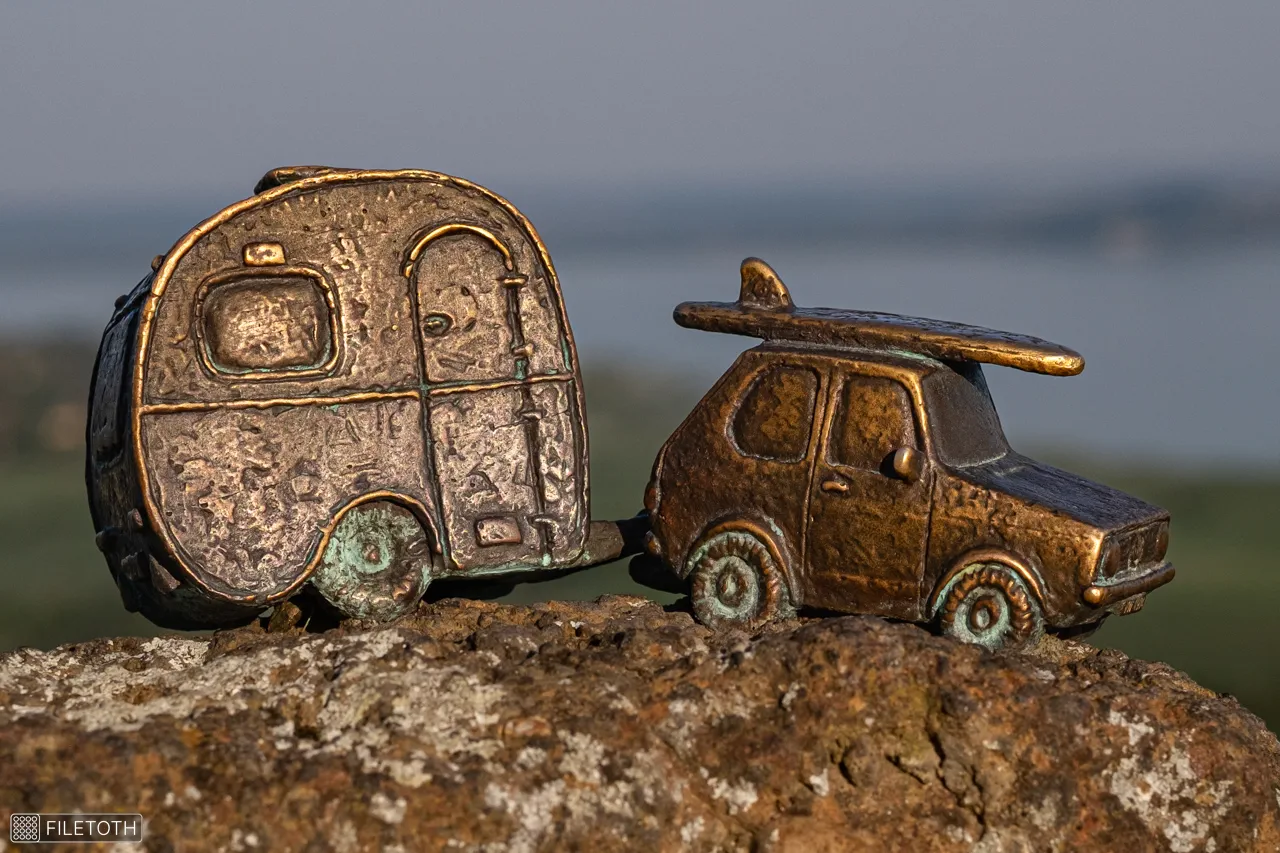
Summer Memories

Caravan, Surf, Balaton miniature

The Caravan, Surf, Balaton miniature overlooking Lake Balaton.

About the Miniature

The miniature depicts a classic hatchback pulling a small caravan, with a surfboard strapped to the roof. It stands at a panoramic viewpoint overlooking Lake Balaton near Szigliget, often referred to as the Fortress of Lake Balaton.

Behind the Miniature

Rather than commemorating a specific person or historical event, the sculpture celebrates a way of life. For generations of Hungarians, the journey to Lake Balaton meant packing the family car, towing a caravan and spending long summer days by the water. Whether the board is seen as a windsurf or a stand-up paddleboard remains open to interpretation, linking memories of earlier holidays with the Balaton of today.

Miniature by Mihály Kolodko, December 18 2024. [ref.]
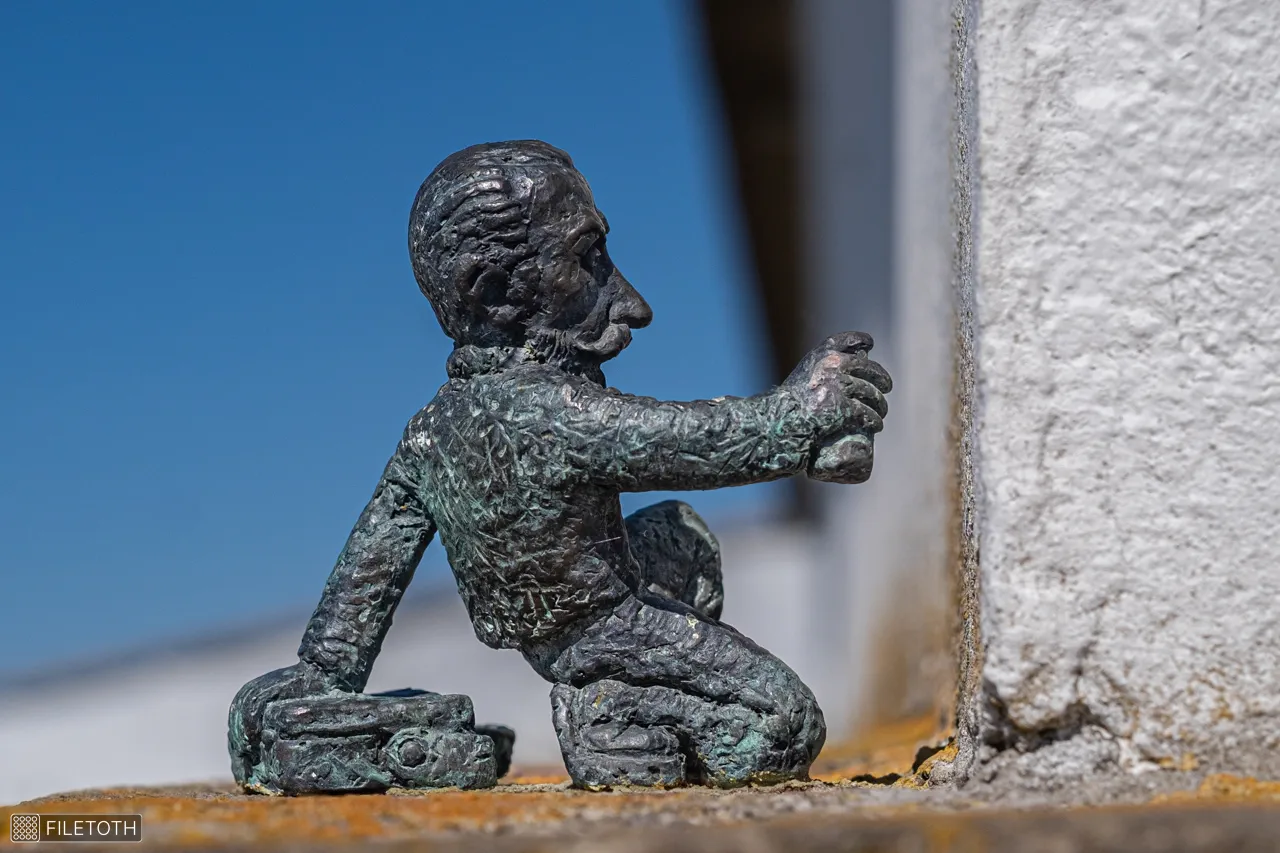
Storm over Hortobágy

Tivadar Csontváry Kosztka miniature

The Csontváry Kosztka Tivadar miniature beneath the Nine-Hole Bridge at Hortobágy.

About the Miniature

The miniature depicts the celebrated Hungarian painter Tivadar Csontváry Kosztka kneeling beneath the Nine-Hole Bridge at Hortobágy. Instead of a traditional paintbrush, he holds a spray can, reimagining the artist as a contemporary graffiti painter.

Behind the Miniature

The location recalls Csontváry's famous painting *Storm over Hortobágy*, created after his travels across the Great Hungarian Plain. Installed close to the viewpoint associated with the painting, the miniature playfully bridges classical art and modern street art. A second version of the sculpture can also be found in Munich, Germany.

Miniature by Mihály Kolodko, July 5, 2023. [ref.]
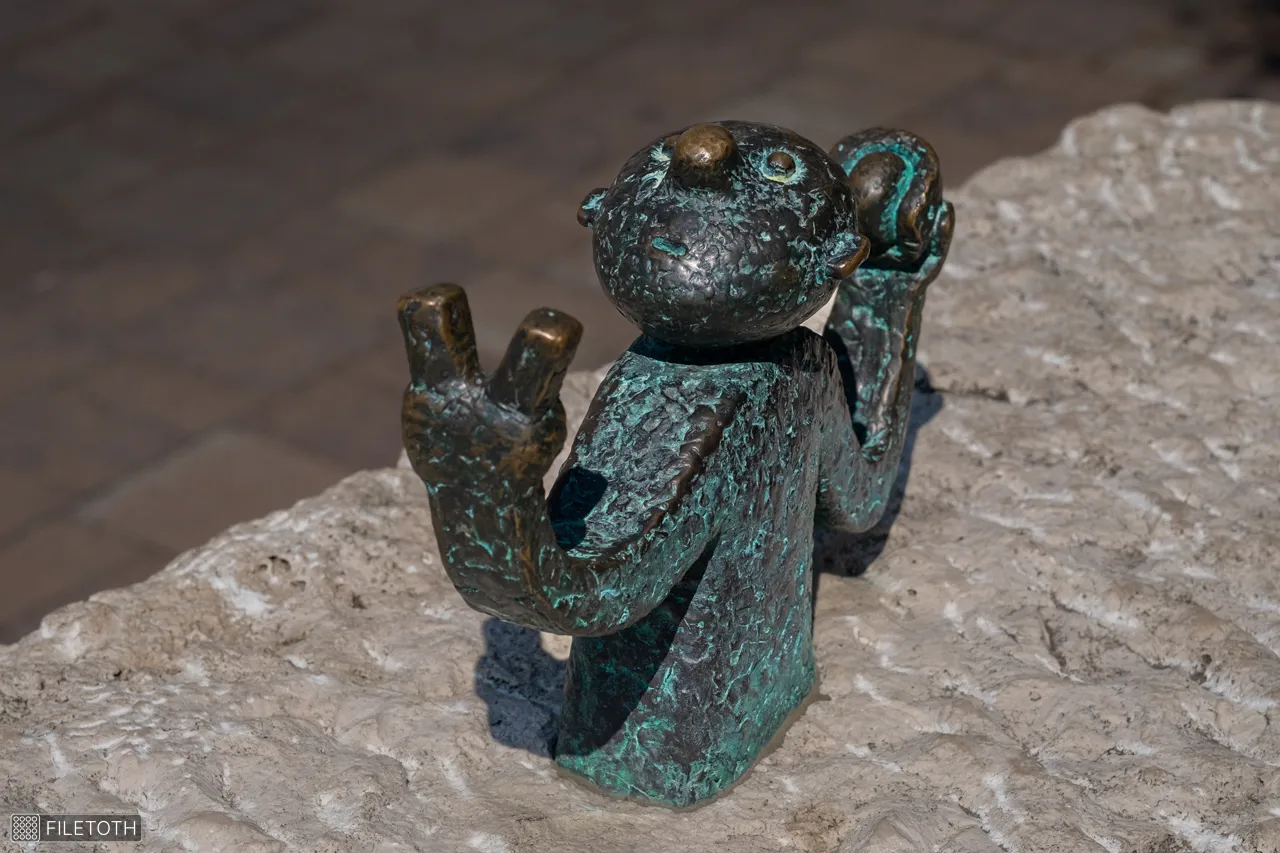
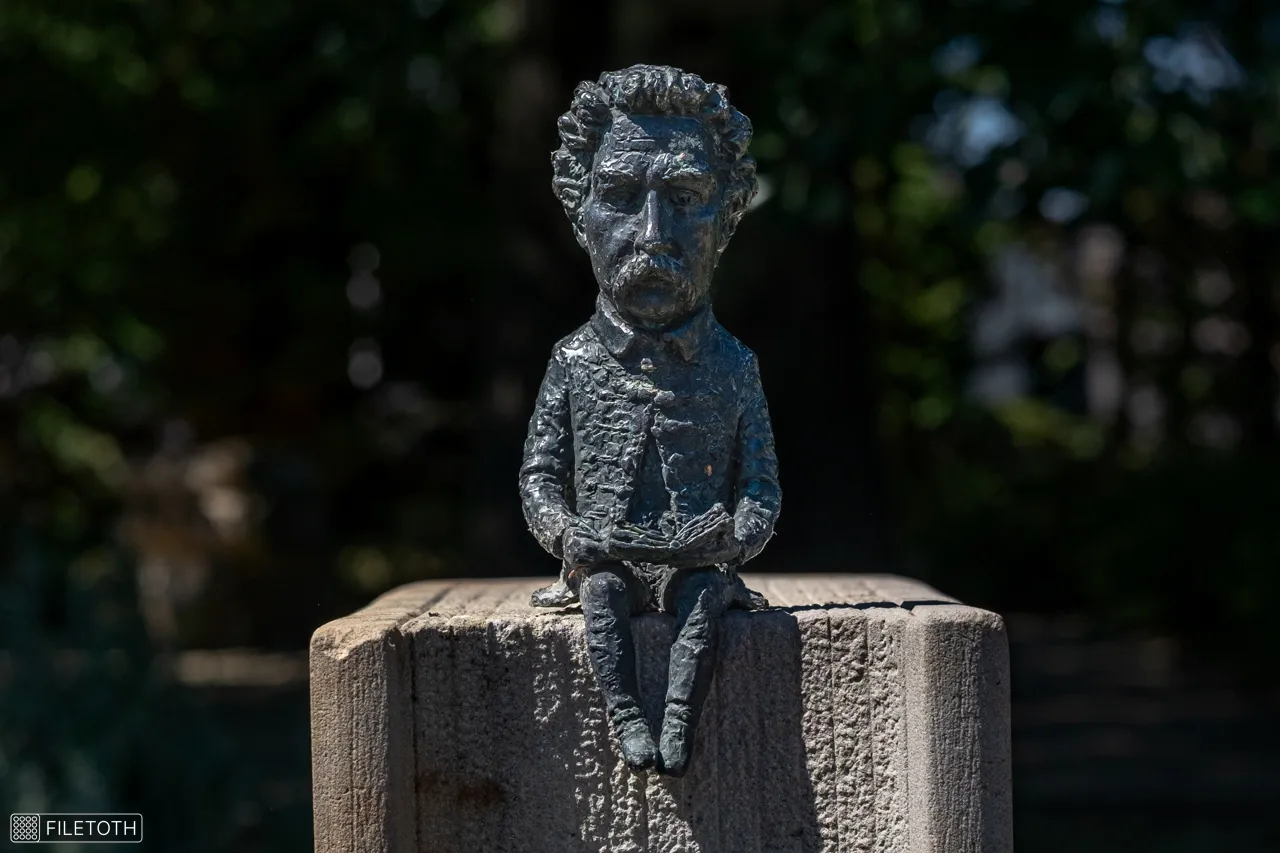
The Library Garden

Count János Péter Kállay miniature

The Count János Péter Kállay miniature in Biri.

About the Miniature

The miniature depicts Count János Péter Kállay seated among a group of oversized stone books. Created as part of a larger memorial in the village of Biri, the bronze figure welcomes visitors into a small library garden dedicated to the village's founder.

Behind the Miniature

The memorial was commissioned by the Municipality of Biri to honour Count János Péter Kállay, regarded as the founder of the village. Rather than standing alone, Kolodko's miniature forms part of a larger sculptural composition created together with stonemason György Sárga. The surrounding stone books symbolise learning and culture, while the seated count appears to greet visitors entering this peaceful public space.

Miniature by Mihály Kolodko, March 27, 2021. [ref.]
The Prince

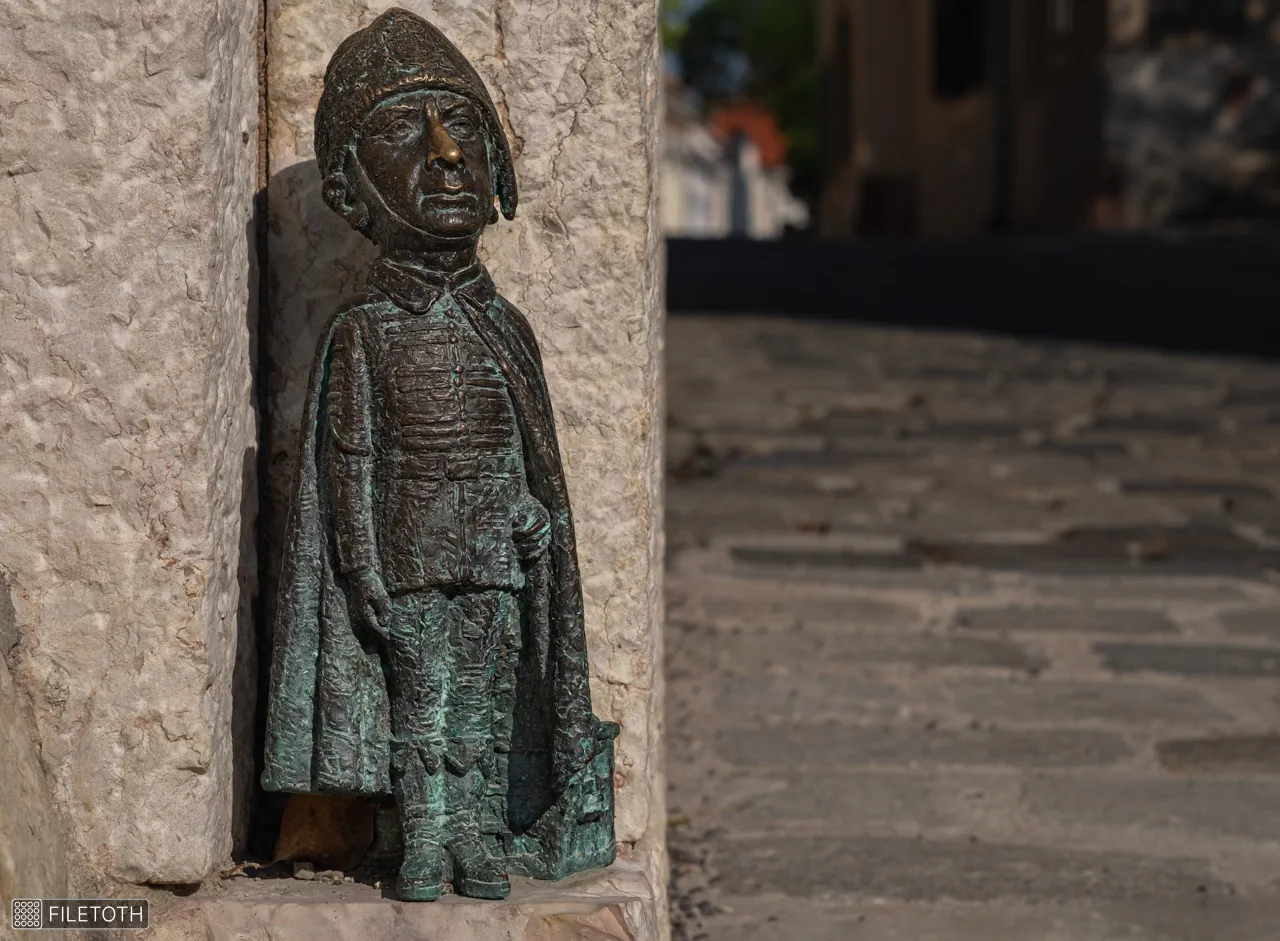
Francis II Rákóczi miniature

The Francis II Rákóczi miniature in Geszteréd.

About the Miniature

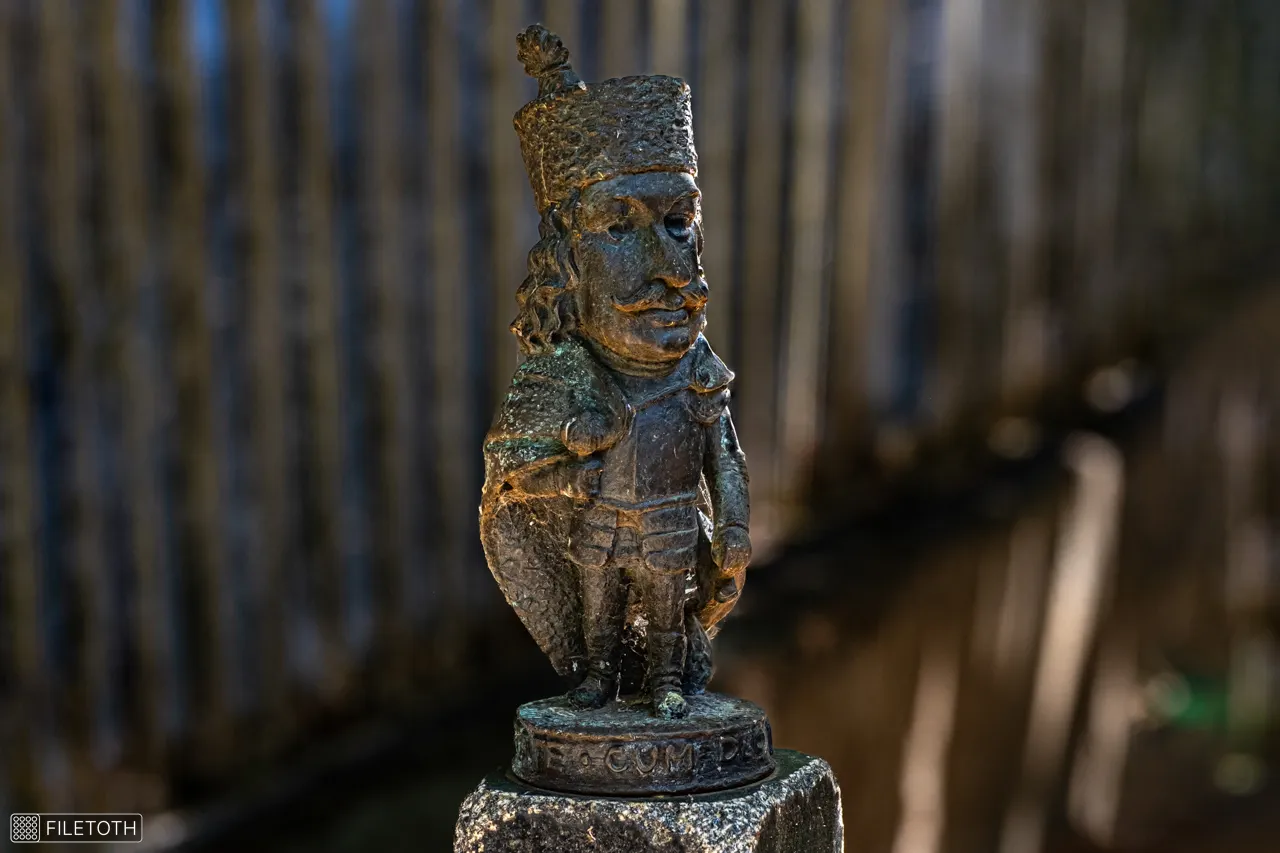
The miniature depicts Francis II Rákóczi in military dress, standing on a small pedestal beside the street entrance of a kindergarten in Geszteréd. The figure has an unusually large head and wears a fur hat, boots and a sword.

Behind the Miniature

Francis II Rákóczi (1676–1735) was a Hungarian nobleman and the leader of the Rákóczi War of Independence against the Habsburgs from 1703 to 1711. He was elected Prince of Transylvania in 1704 and became one of the most important figures in Hungarian history. Kolodko's miniature was unveiled in Geszteréd on October 20, 2018. The sculpture was donated to the village and placed beside the entrance to the local kindergarten.

Miniature by Mihály Kolodko, October 20, 2018. [ref.]

The Medieval Salt Route

Salt Merchant miniature

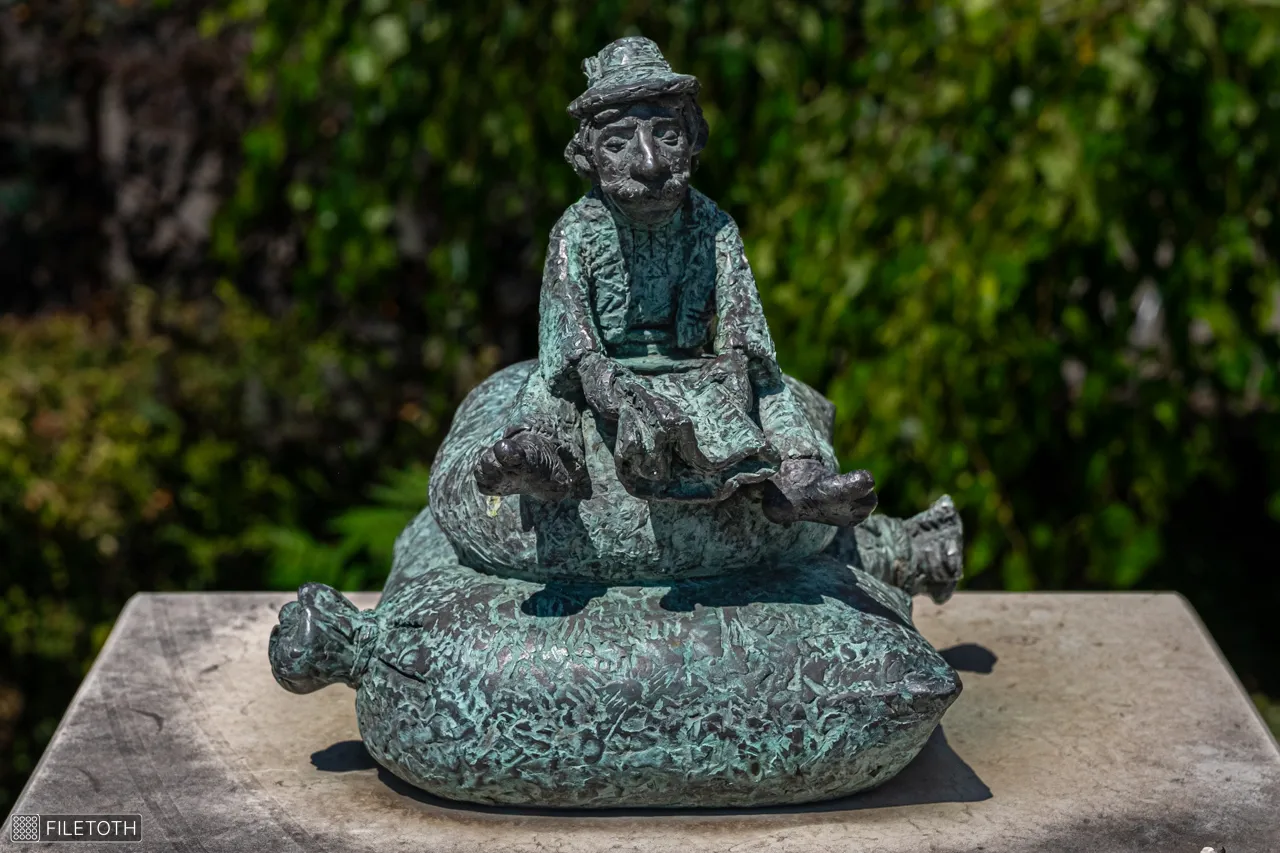
The Salt Merchant miniature in Nagykálló.

About the Miniature

The miniature depicts a salt merchant resting on three sacks of salt. Dressed in period clothing, he recalls the merchants who transported one of medieval Europe's most valuable commodities along the historic salt routes crossing northeastern Hungary.

Behind the Miniature

The Salt Merchant was commissioned as part of a memorial project honouring the medieval salt route that connected the salt mines of Transylvania and Transcarpathia with the Great Hungarian Plain. Identical sculptures were installed in five settlements along the historic route: Nagykálló, Nyírbátor, Csenger, Tiszabecs and Vásárosnamény. Together they commemorate the merchants whose journeys helped shape the history and economy of the region.

Miniature by Mihály Kolodko, February 26, 2021. [ref.]

A Dance Worth Remembering

Geszteréd Triple Csárdás

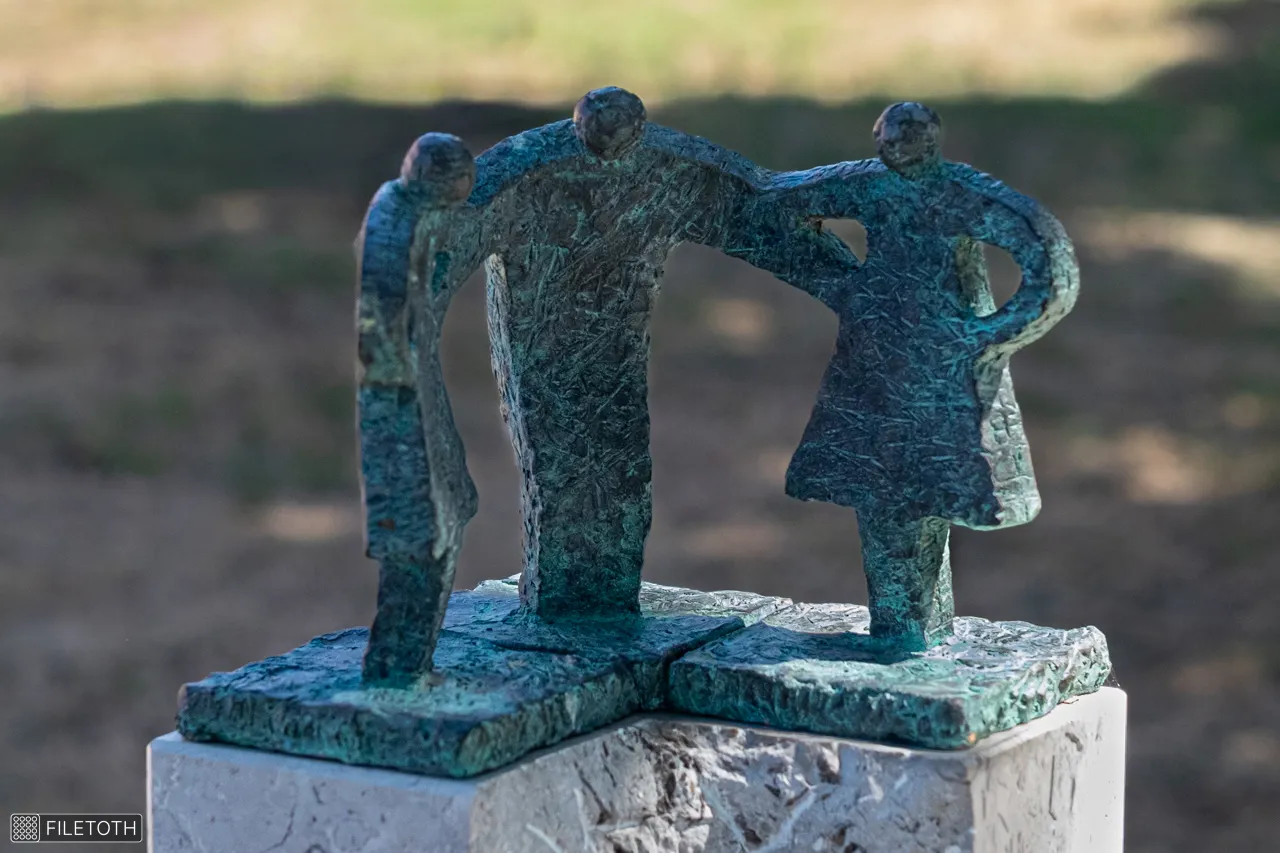
The three dancers of the Geszteréd Triple Csárdás miniature by Mihály Kolodko.

About the Miniature

Installed in 2021 in the park in front of the Gajdos János Cultural Centre in Geszteréd, the miniature depicts three dancers performing the Geszterédi Triple Csárdás. The small group stands on an L-shaped limestone pedestal, turning a local dance tradition into a permanent public memory. Rather than celebrating a famous individual, Kolodko gives a physical form to something much more fragile: a dance remembered by the people of one village.

Behind the Miniature

The sculpture preserves the memory of the Geszterédi Triple Csárdás, a local dance tradition that was becoming less familiar to younger generations. Its story is unusually well documented: in 1955, ethnographer and filmmaker György Martin filmed Balogh Ferenc performing the dance in Geszteréd with two women. Kolodko's three dancers connect that recorded moment with the village today, turning a fragile local tradition into a permanent public memory.

Miniature by Mihály Kolodko, August 28, 2021. [ref.]

The Doctor and His Patient

Dr. Bubó and the Healing Rabbit miniatures

The Healing Rabbit miniature on the fence of Bethesda Children's Hospital.

About the Miniature

Two miniature figures by Mihály Kolodko bring the world of the beloved Hungarian cartoon series Dr. Bubó to the fence of Bethesda Children's Hospital in Zugló. Dr. Bubó, the doctor, stands beside a rabbit who is recovering, turning the hospital setting into part of the sculpture's gentle joke.

Behind the Miniature

The rabbit is inspired by the timid rabbit from the second episode of the first season of Dr. Bubó, "Why Is the Rabbit a Rabbit?". In the original episode, the rabbit is the patient; here, Kolodko transforms the scene into something more hopeful: the rabbit is no longer frightened or injured, but appears to be recovering under the care of Dr. Bubó. The location adds another layer to the story. The figures were commissioned for the fence of Bethesda Children's Hospital, so the fictional doctor and his recovering patient find themselves in an unexpectedly appropriate real-world setting: a children's hospital.

Miniatures by Mihály Kolodko, August 10, 2026. [ref.]

Continue exploring:

The Kolodko Trail.|Browse the full reference index.|Search the collection.|Explore the map.