Hands that create meaning.

EXPRESSION

Creativity given form — gestures that communicate imagination, emotion and voice.

Hands, gestures and statues belonging to artists, writers, musicians, performers and allegorical figures whose work gives form to human imagination.

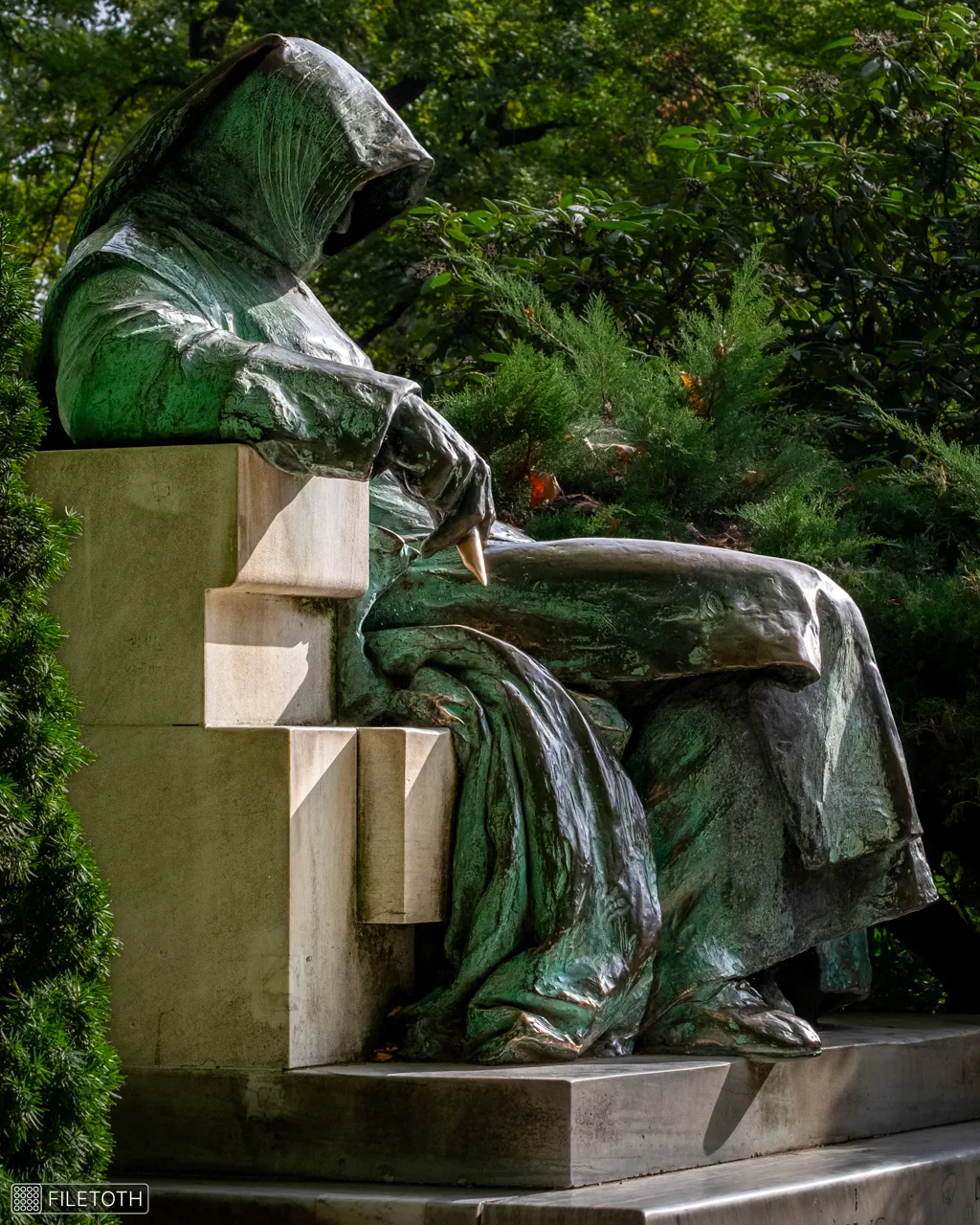
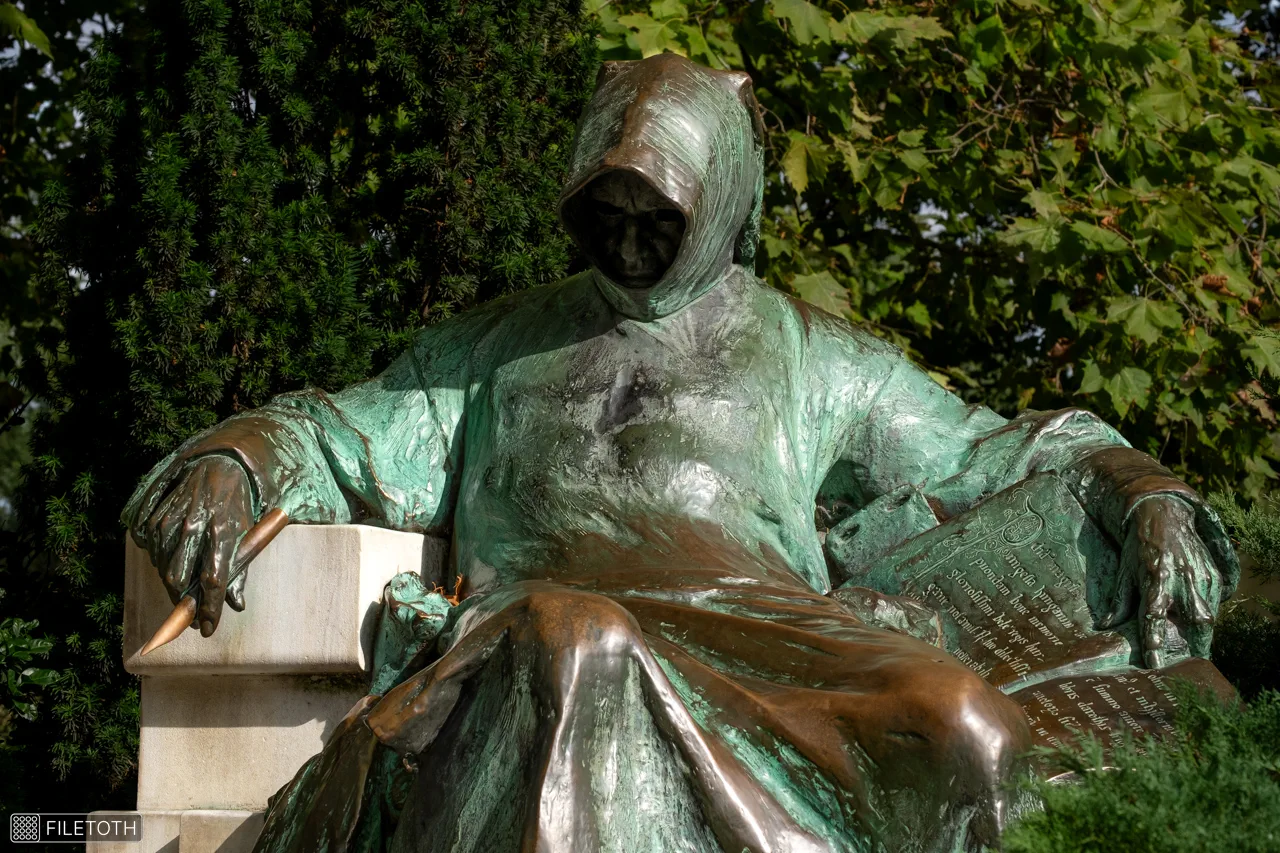
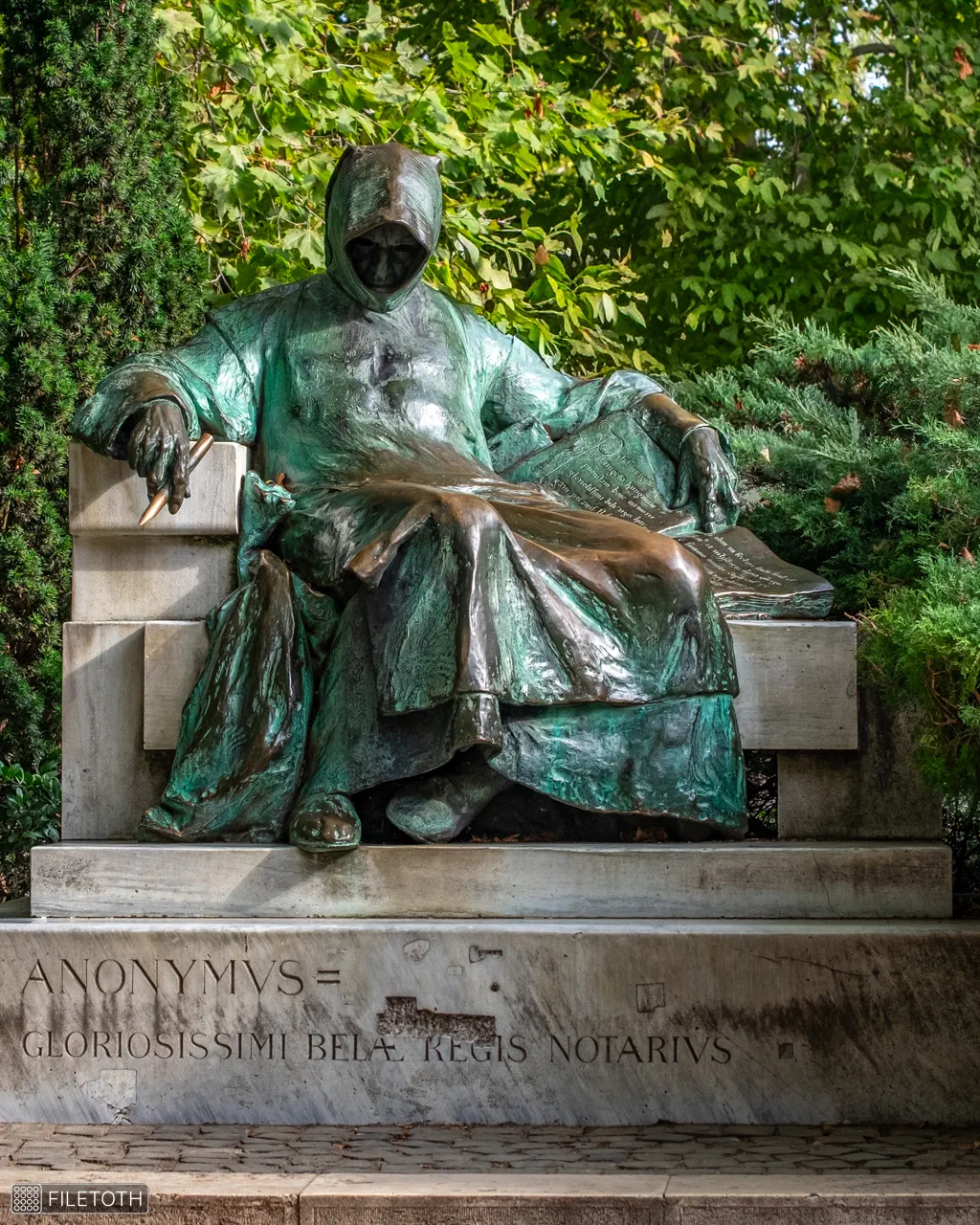
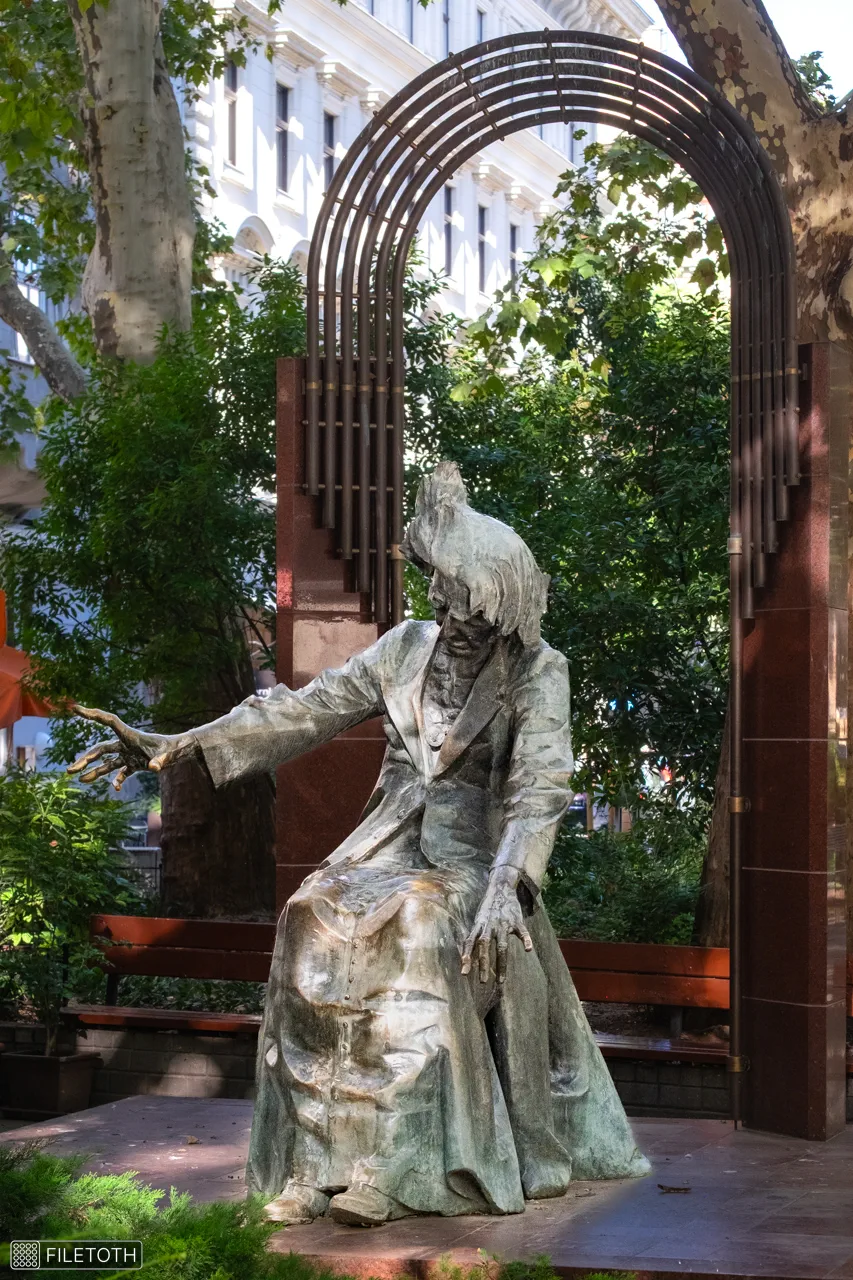
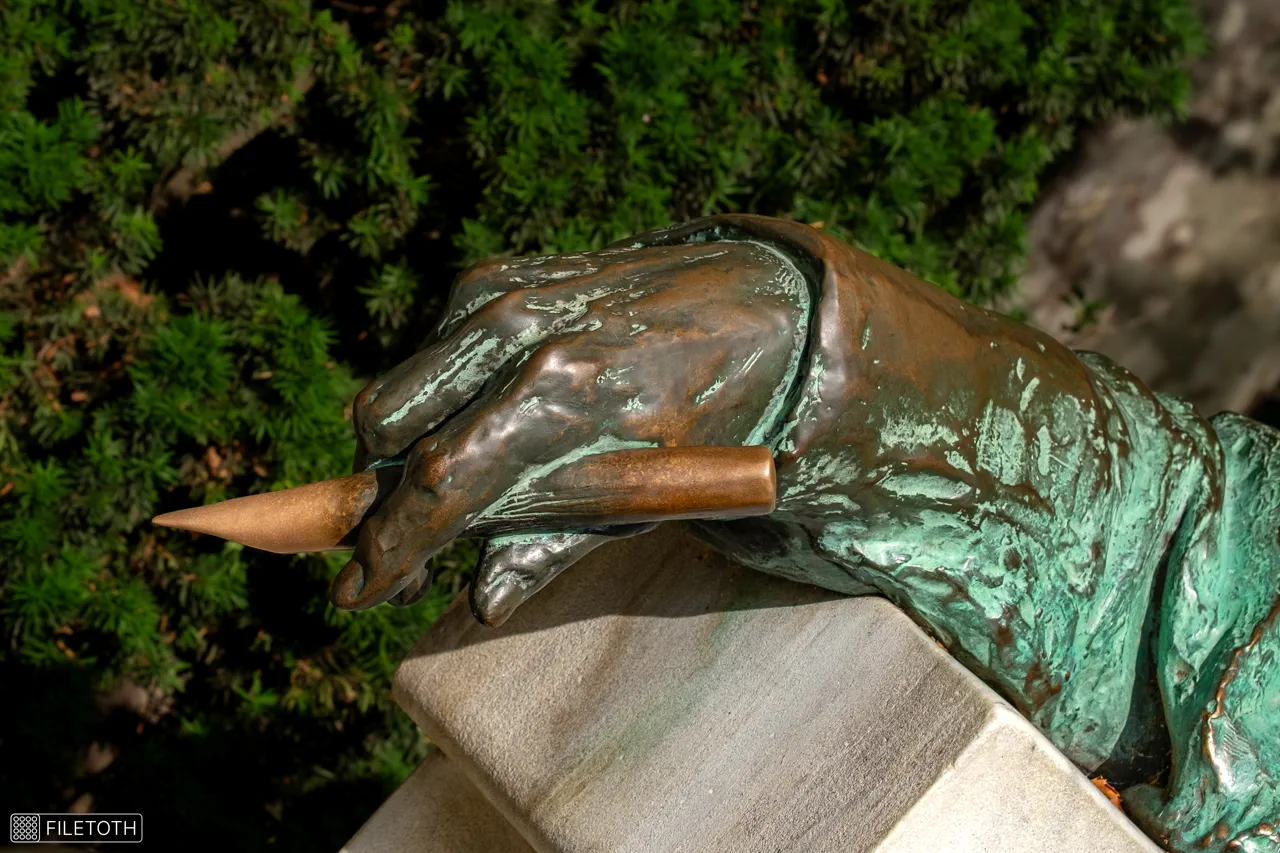
The Hand of Memory

Anonymous Statue

Historical figure and era

Anonymous, or Master P., was the nameless notary of a Hungarian king—probably Béla III—who wrote the Gesta Hungarorum around 1200, the first major narrative of the Hungarians' conquest and early history. Almost nothing certain is known about his life, yet his chronicle has profoundly shaped how later generations imagined Hungary's origins, blending facts, legends, and political messages into a sweeping narrative.

Creation and historical context

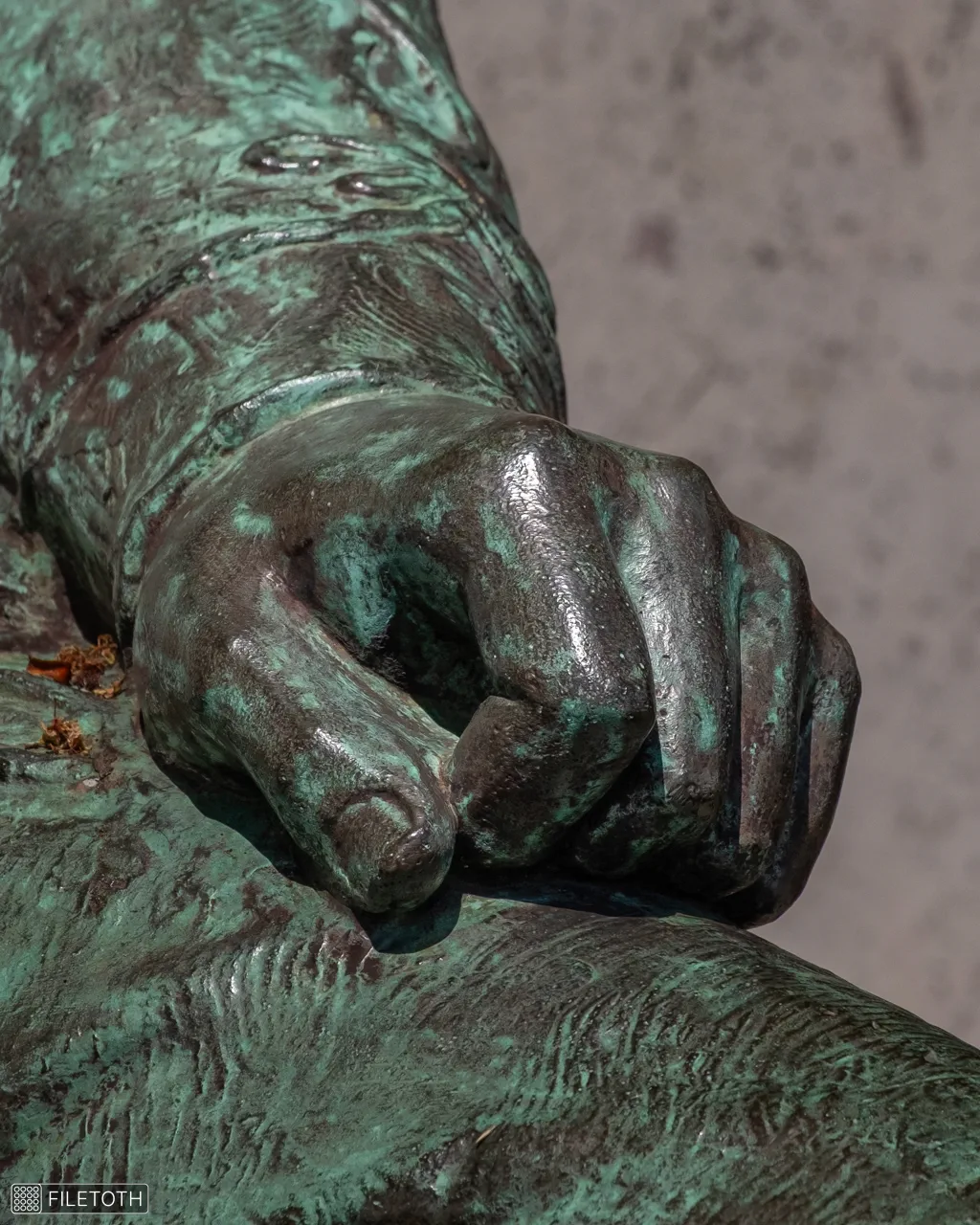
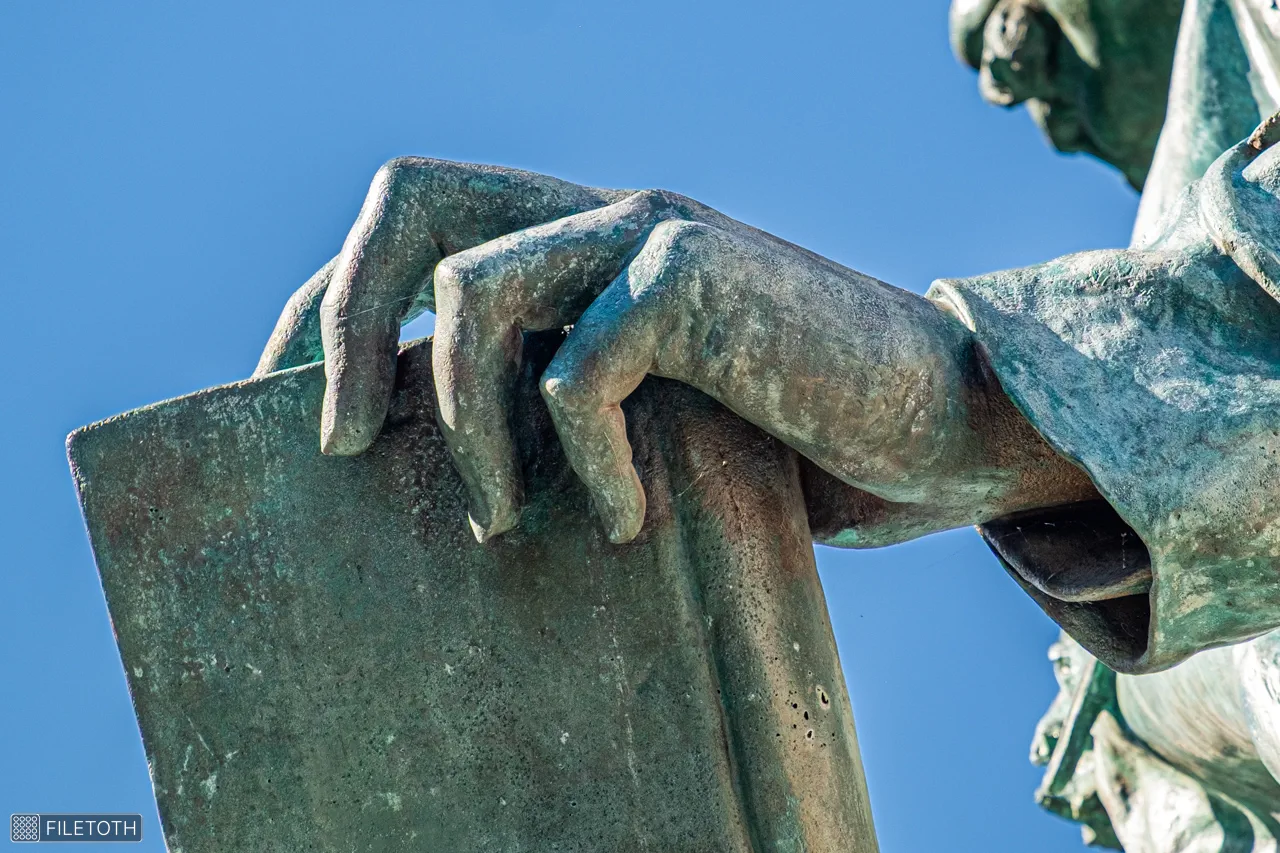
Miklós Ligeti's 1903 statue in Városliget translates this paradox into bronze: the chronicler's body is solid and present, yet his face disappears beneath a deep hood, leaving only the writing hand and the open book clearly visible. Created at the beginning of Budapest's first golden age, when the rapidly growing capital sought to monumentalize its past, the work transforms a medieval chronicler into one of the city's most enduring symbols of history and remembrance.

Statue by Miklós Ligeti, November 8, 1903. [ref.]
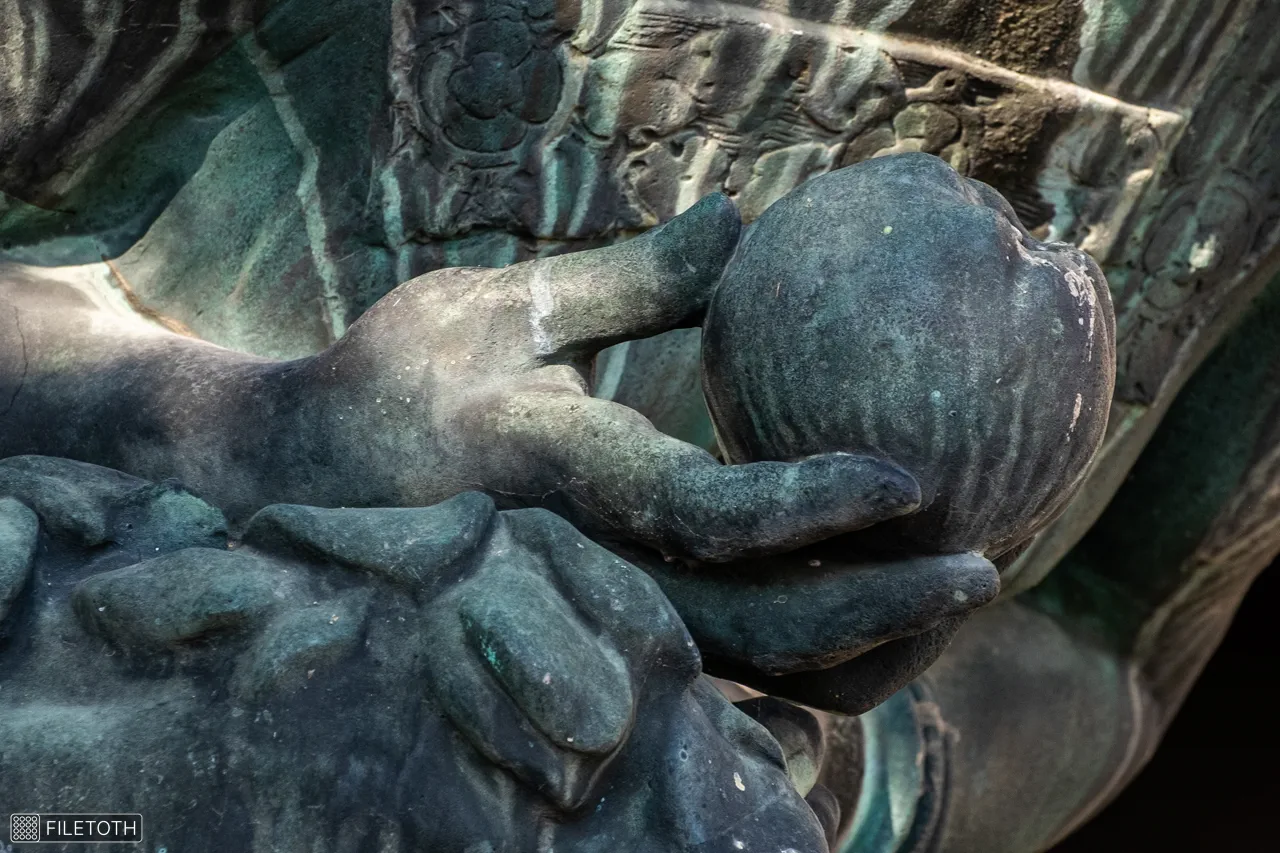
The Hand of Enchantment

Csongor and Tünde statues

Historical figure and era

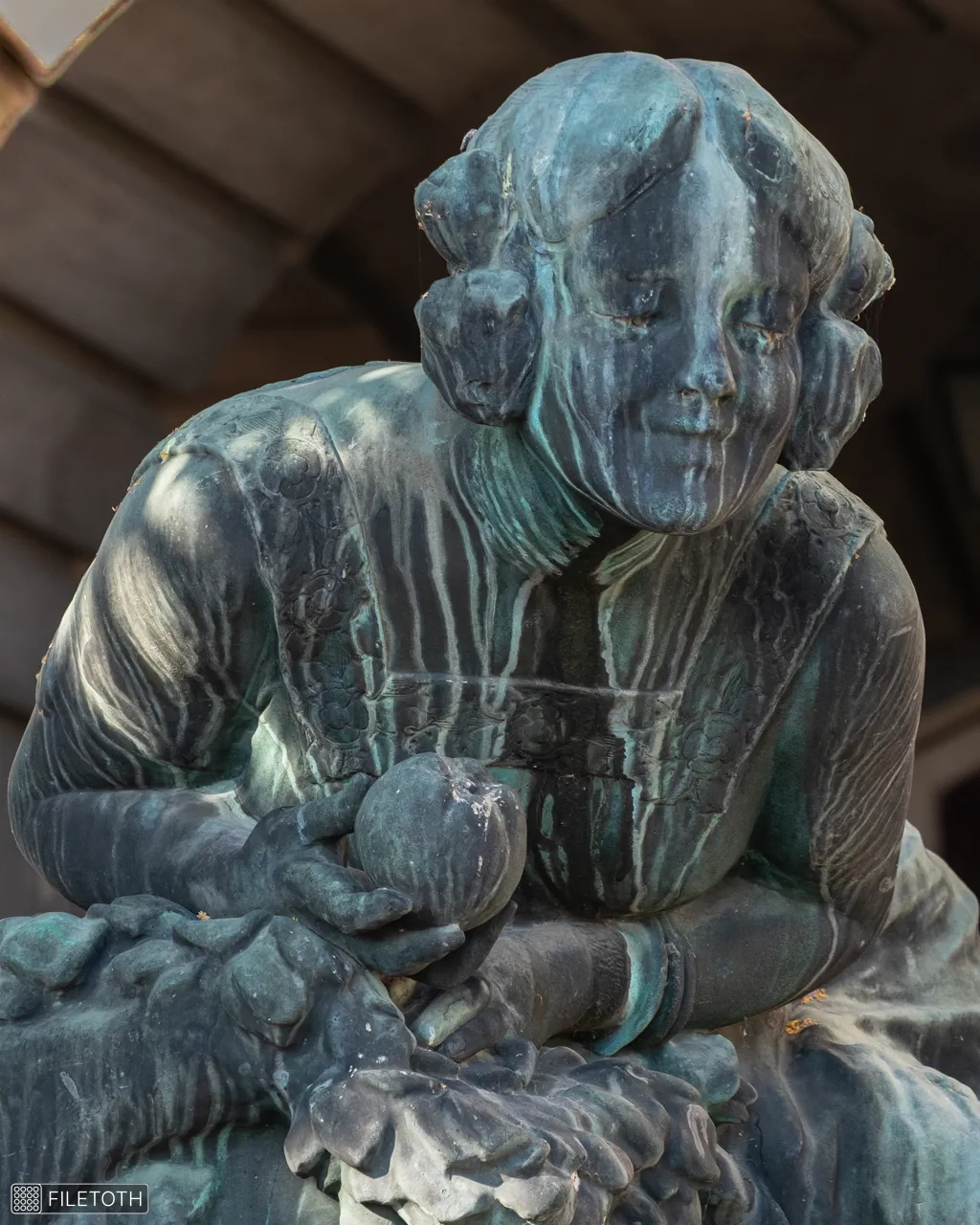
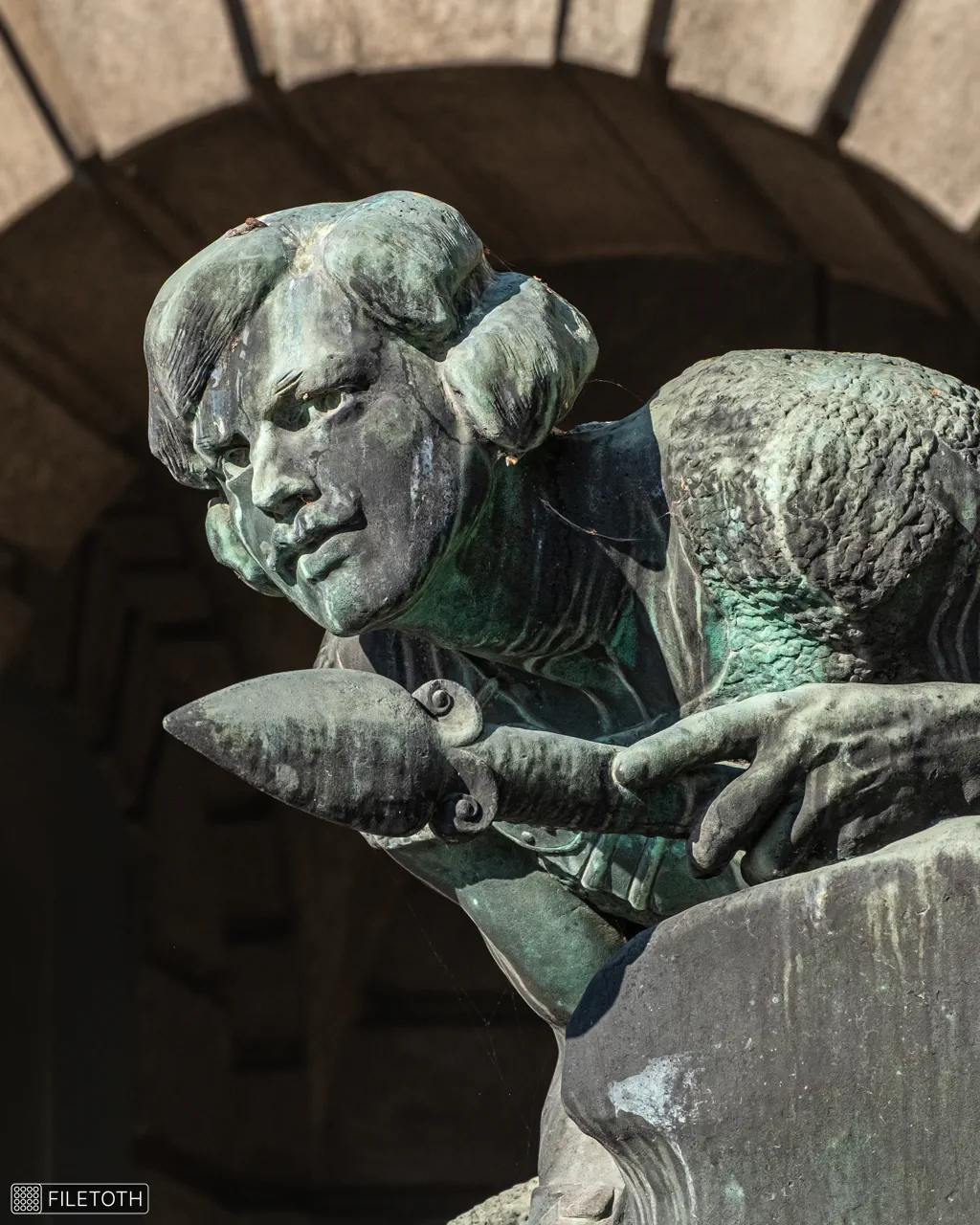
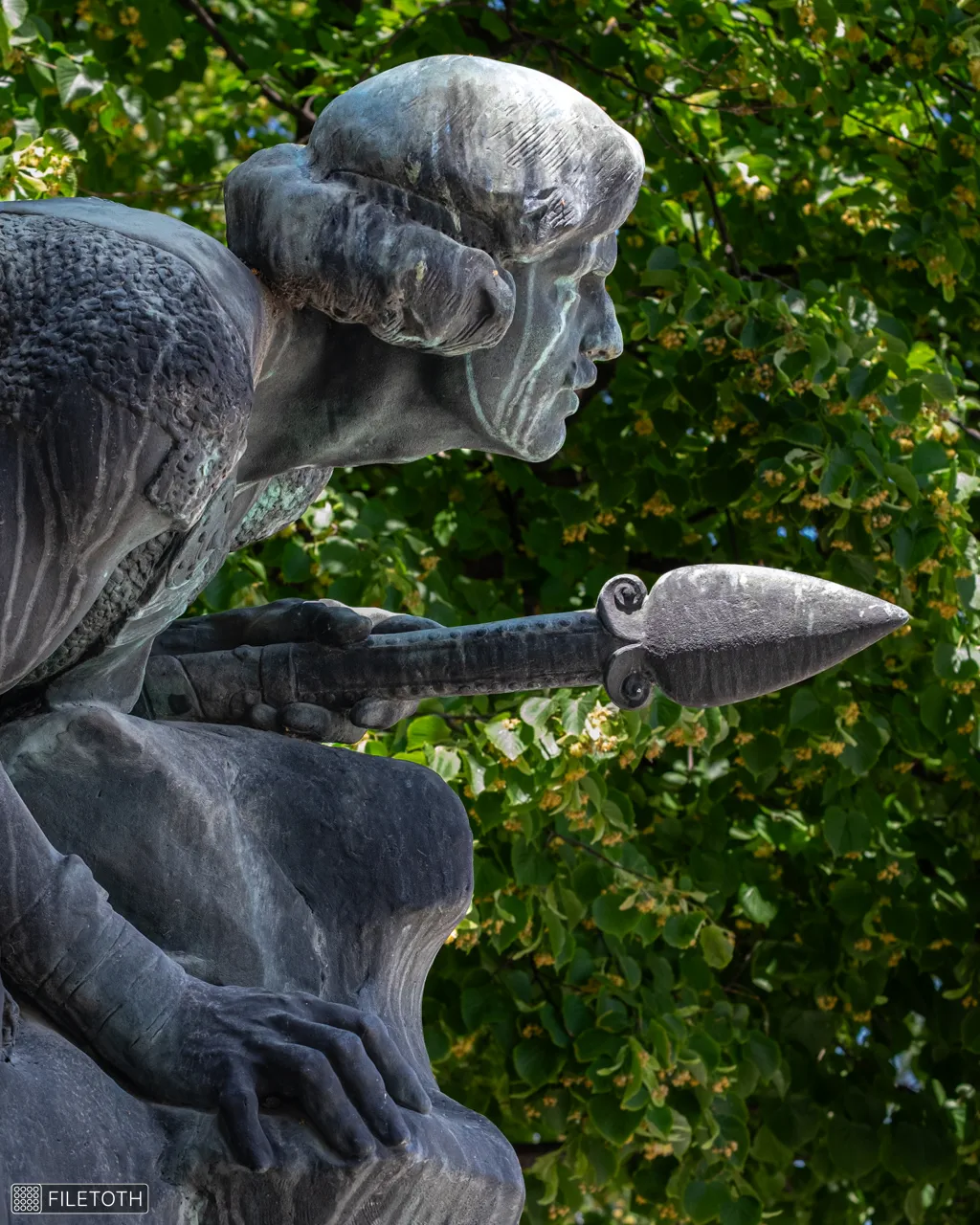
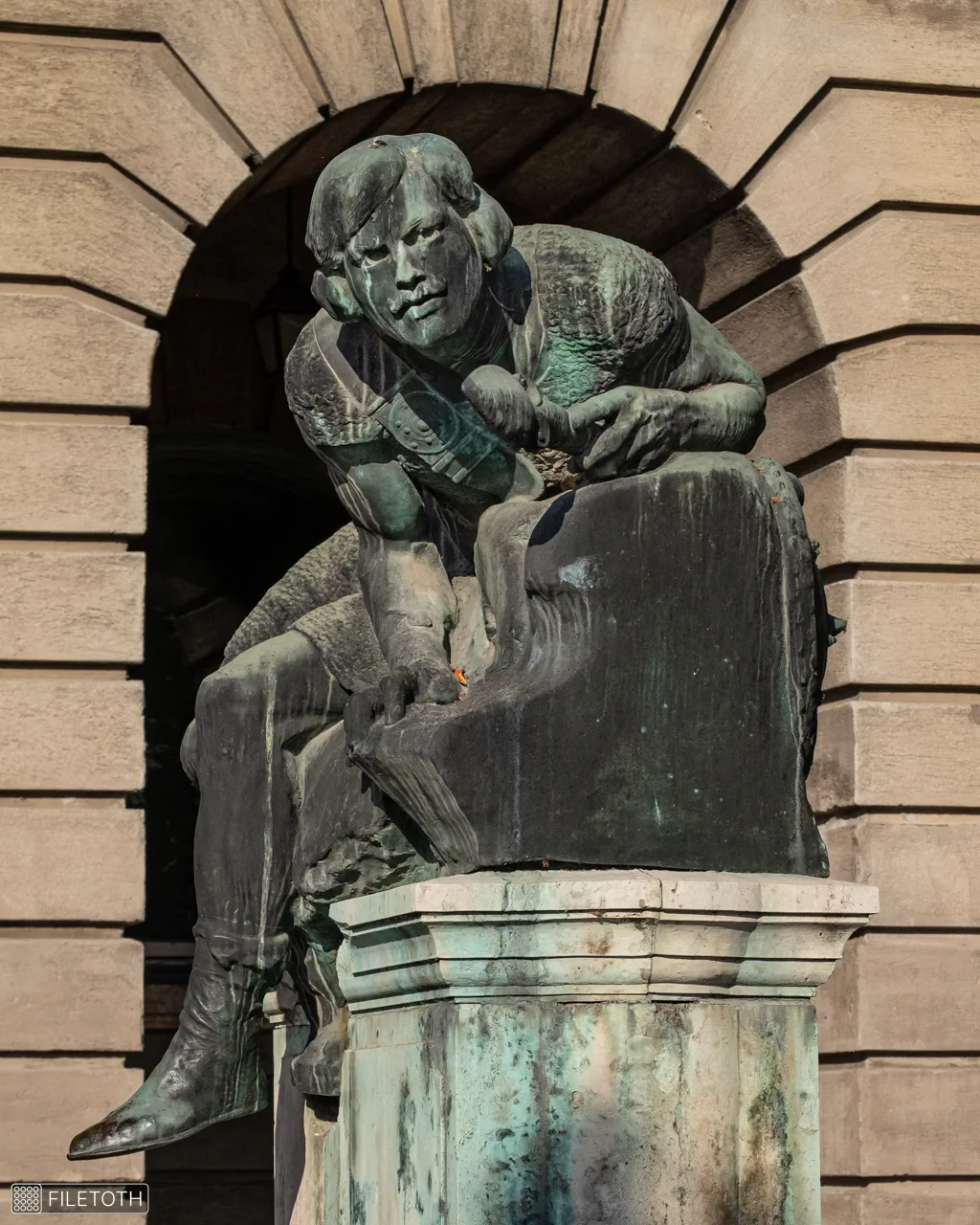
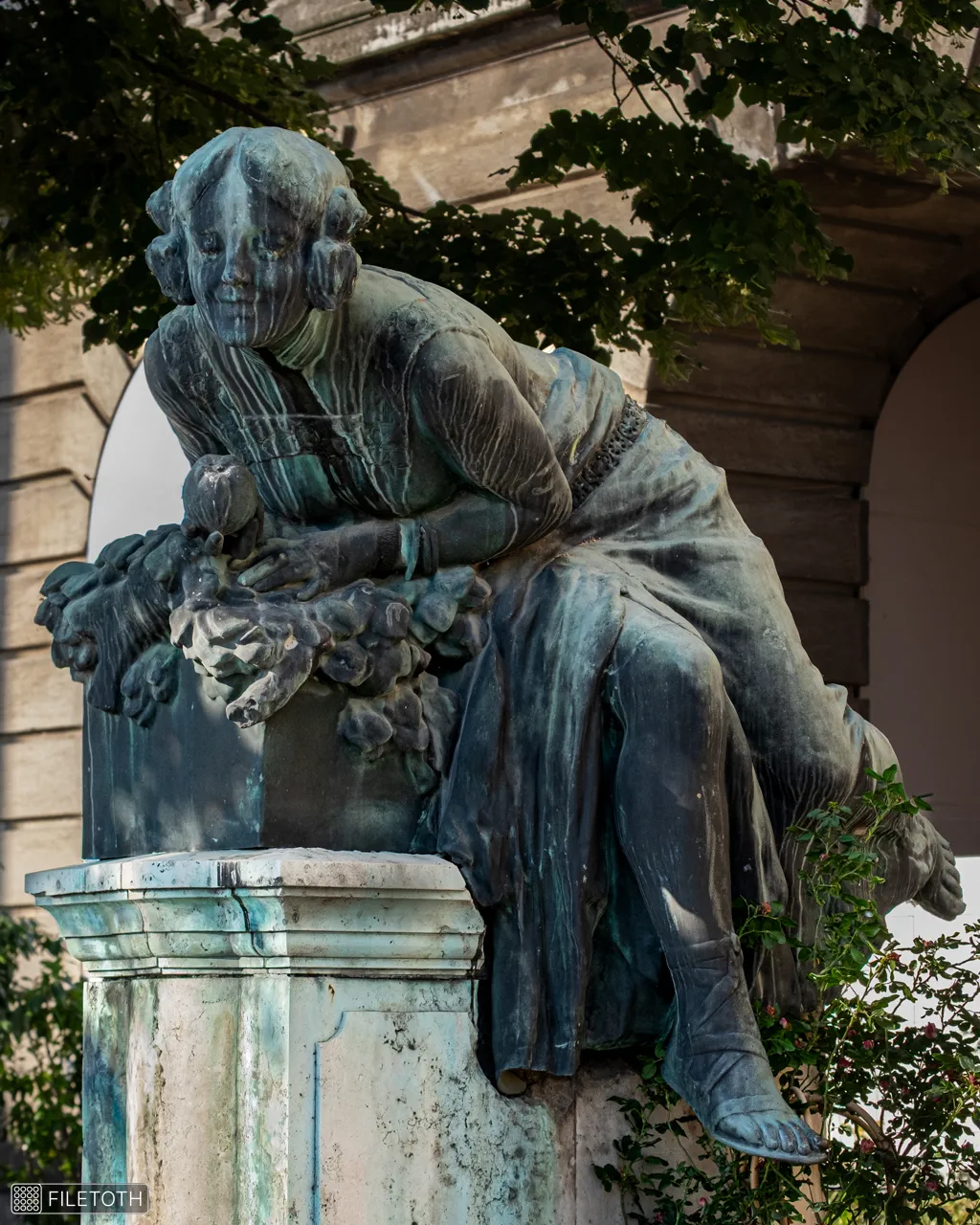
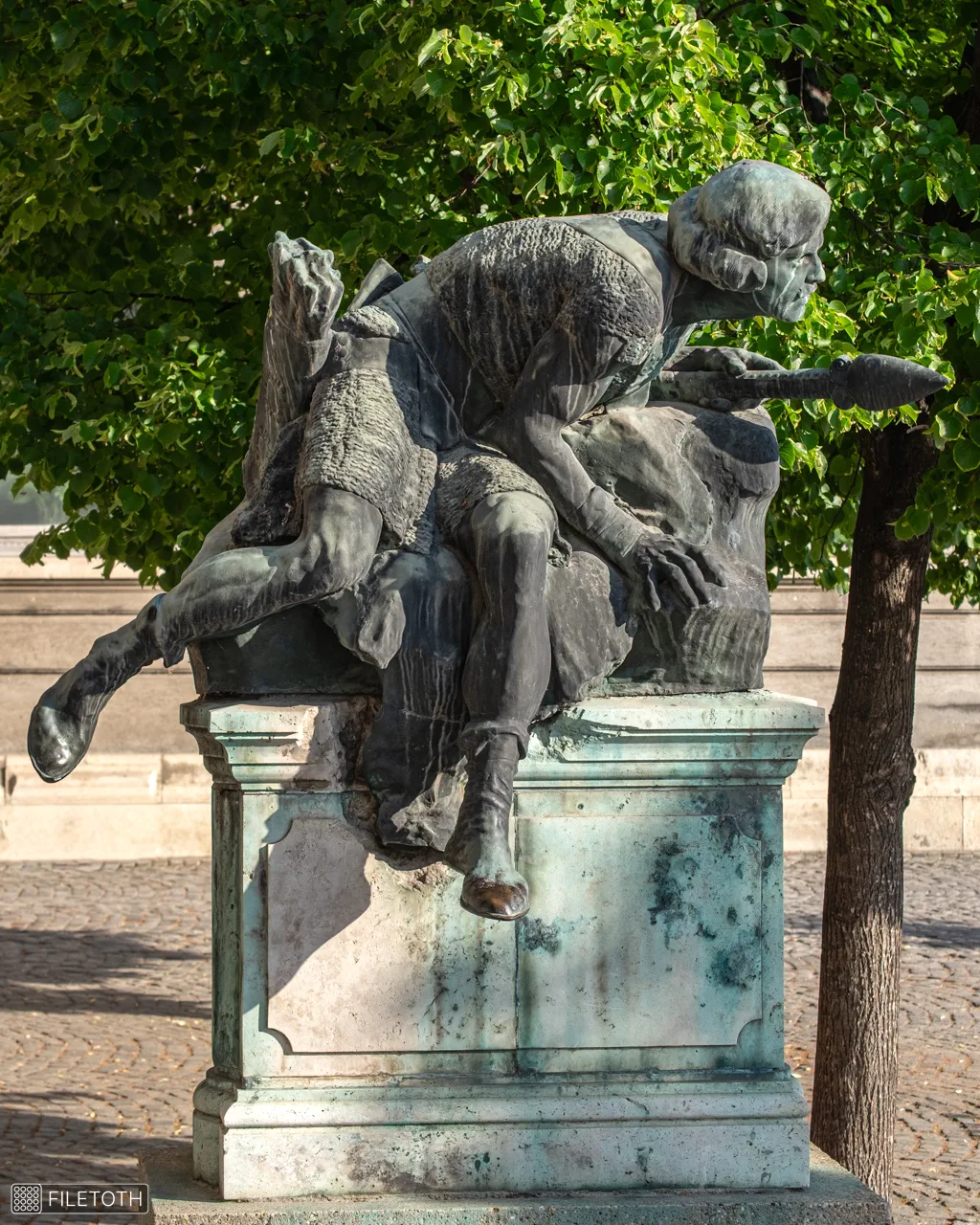
Csongor and Tünde are the central characters in Mihály Vörösmarty's romantic fairy play 'The Quest,' which is inspired by the Hungarian folk tale of Prince Árgyélus and Fairy Ilona. Their story follows a young hero's search for happiness and true love, blending folklore, fantasy, and philosophy. Together, they have become enduring symbols of youthful curiosity, enchantment, and the lifelong quest for fulfillment.

Creation and historical context

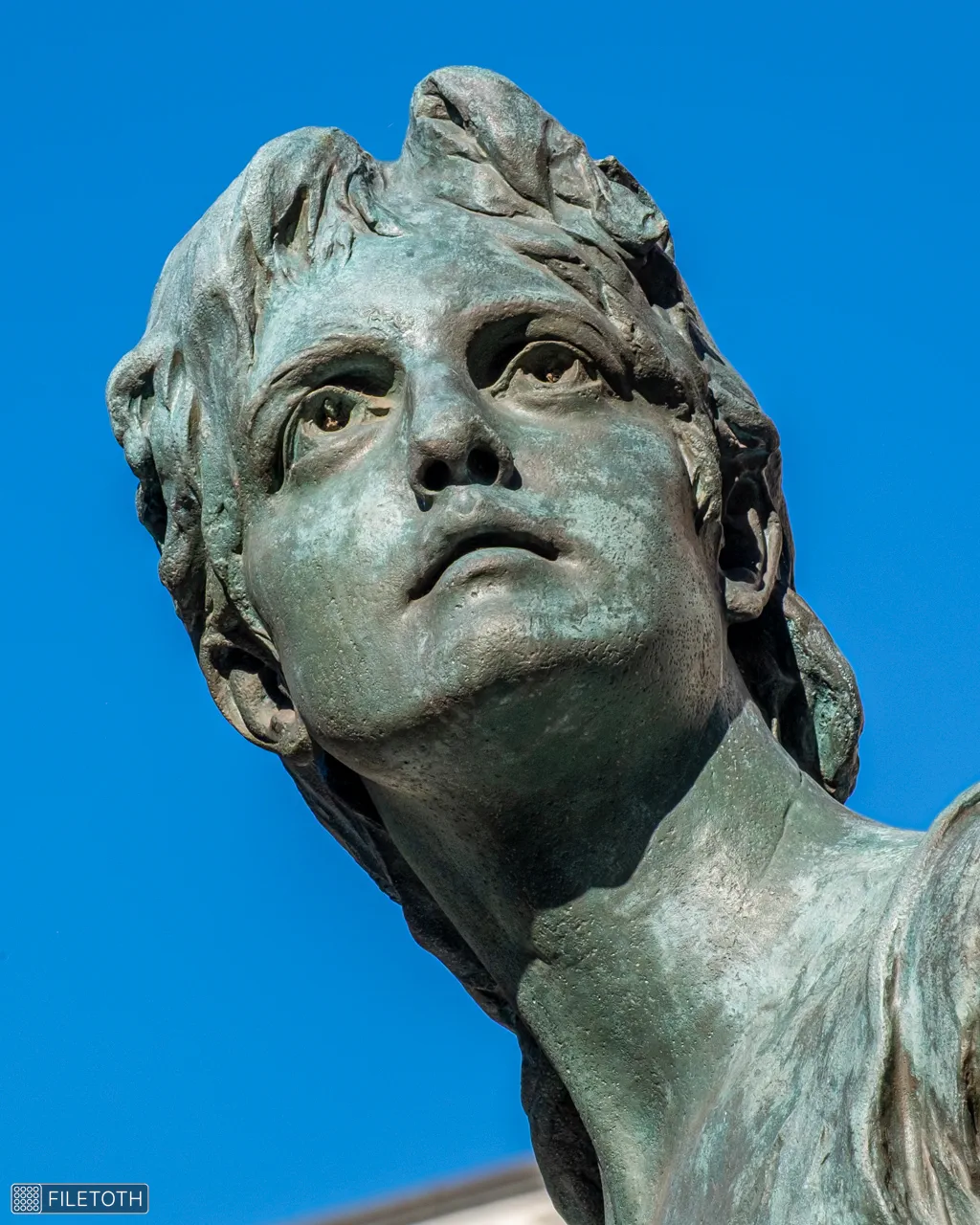
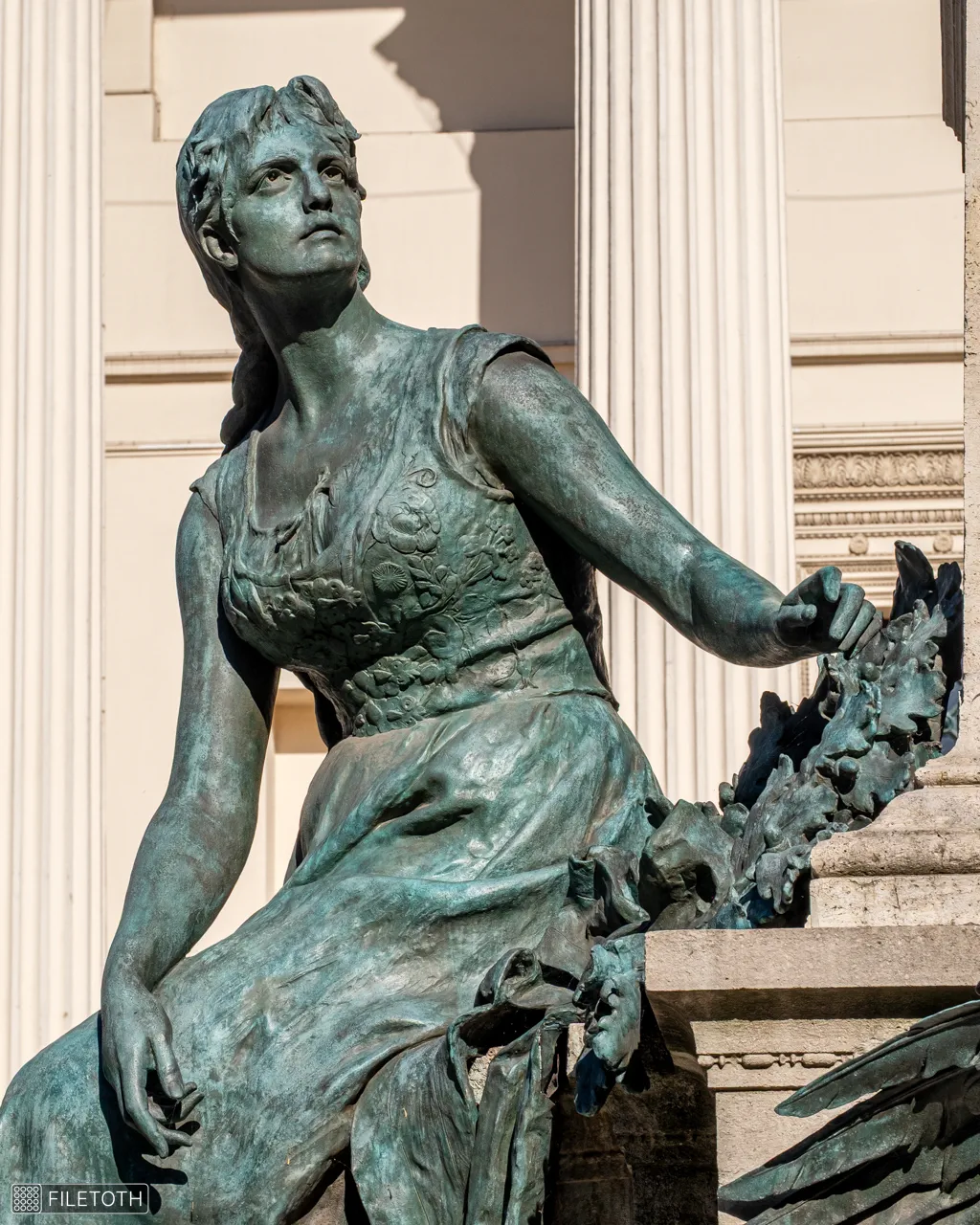
Created by Miklós Ligeti in 1903, the statues originally stood on opposite sides of the former Habsburg Staircase at Buda Castle, playfully watching one another across the steps. Tünde holds an apple while Csongor leans forward with quiet curiosity, capturing a moment of gentle flirtation. Today, the pair remains separated by space yet united in meaning, preserving one of Hungarian literature's most beloved stories.

Statue by Miklós Ligeti, 1903. [ref.]
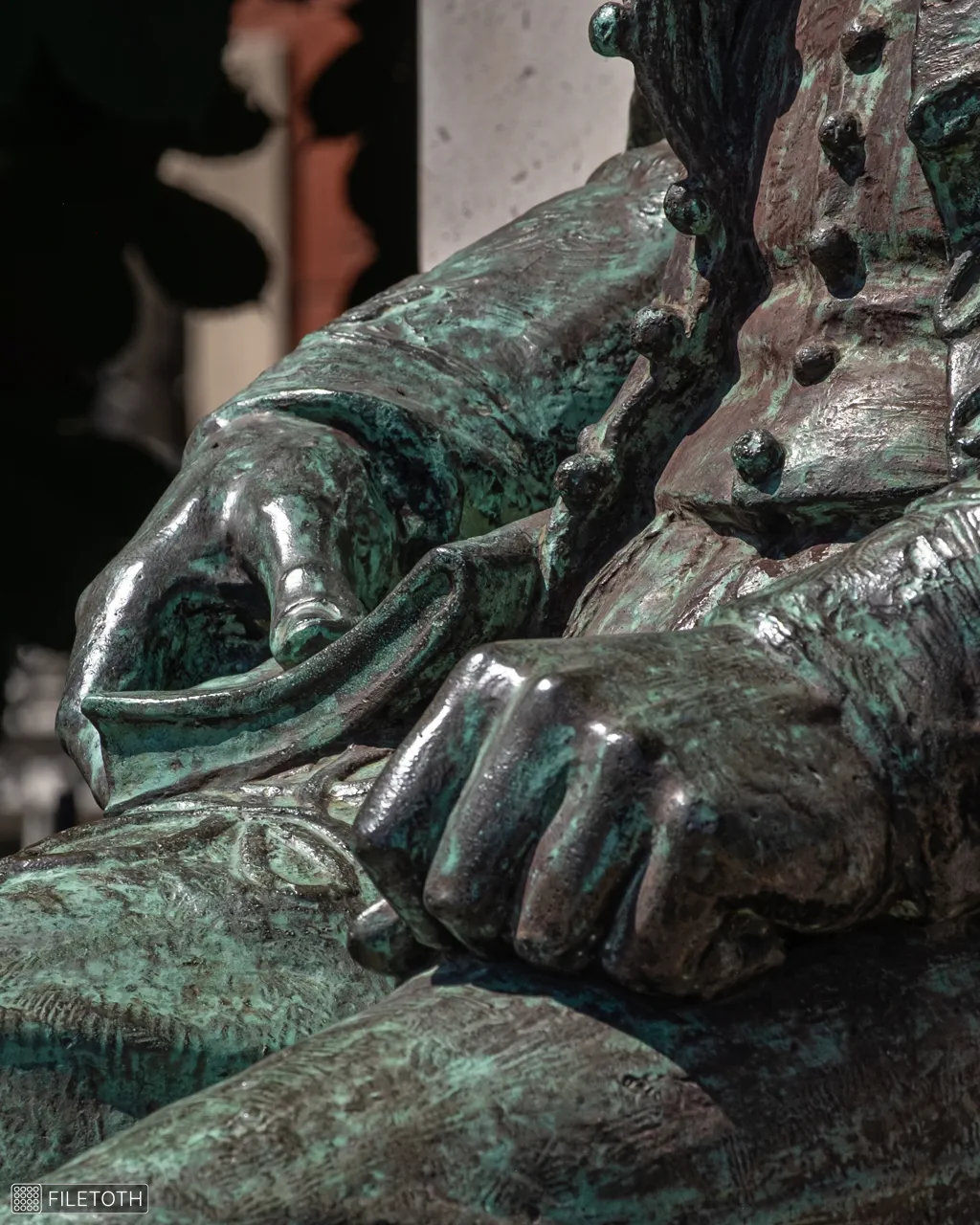
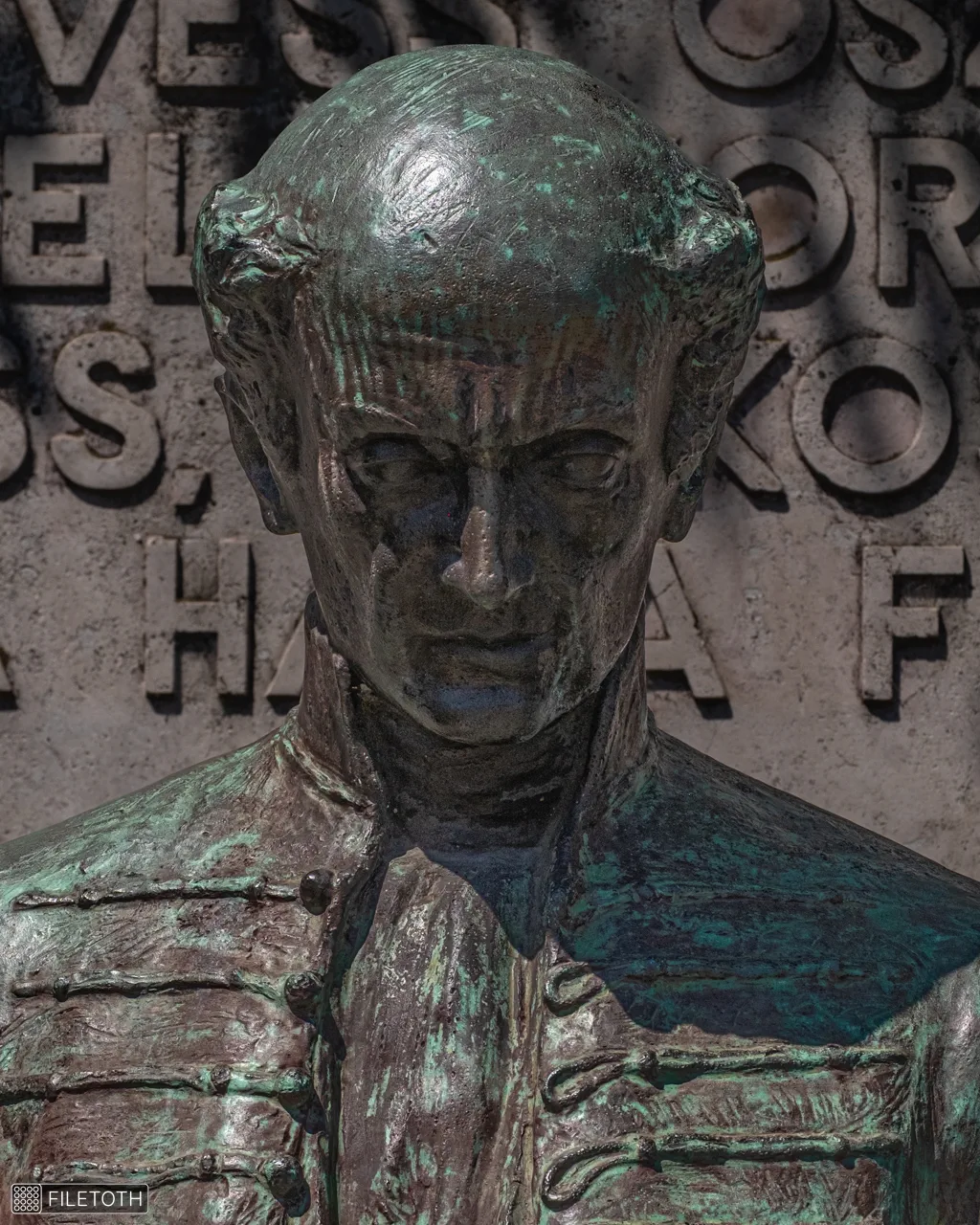
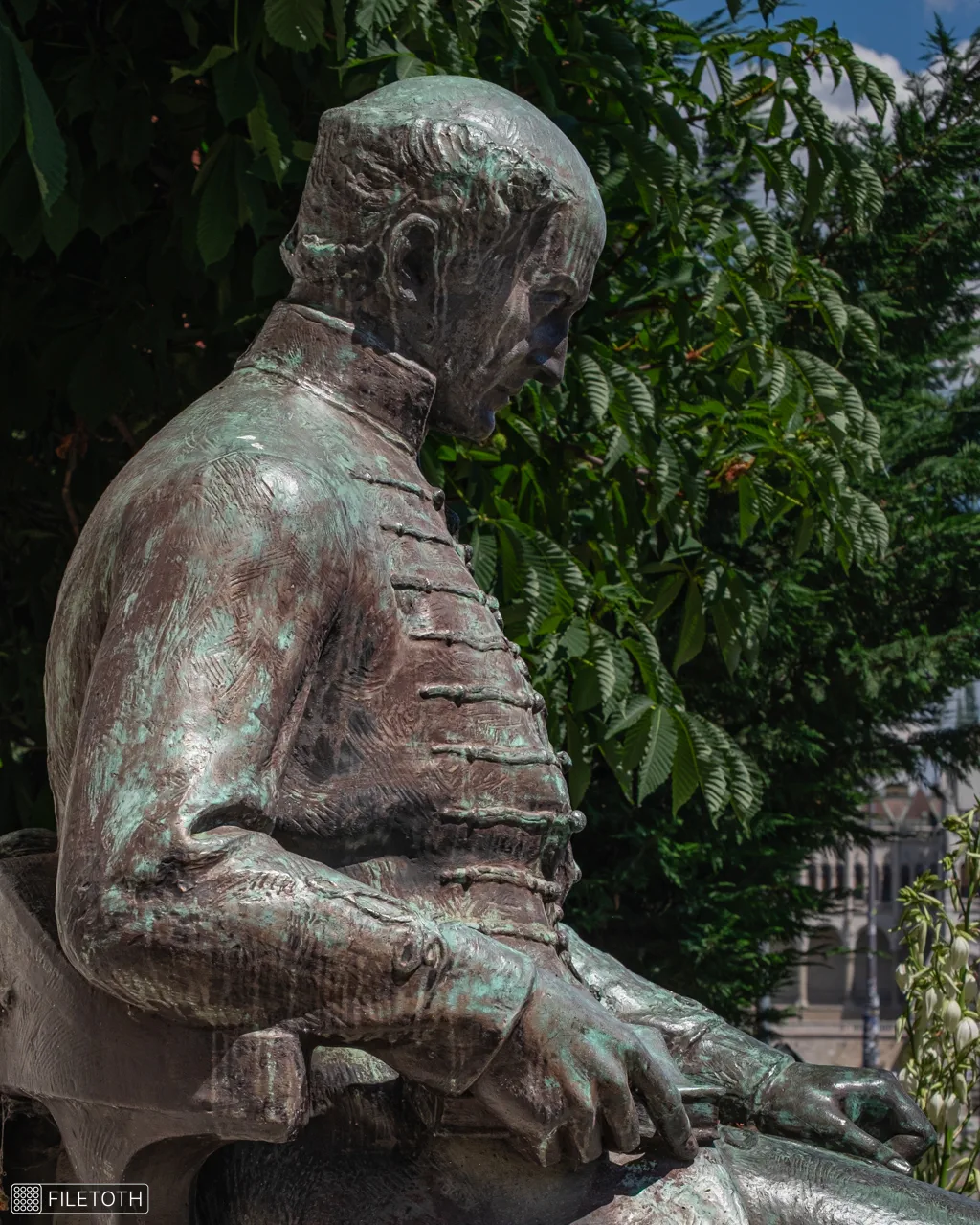
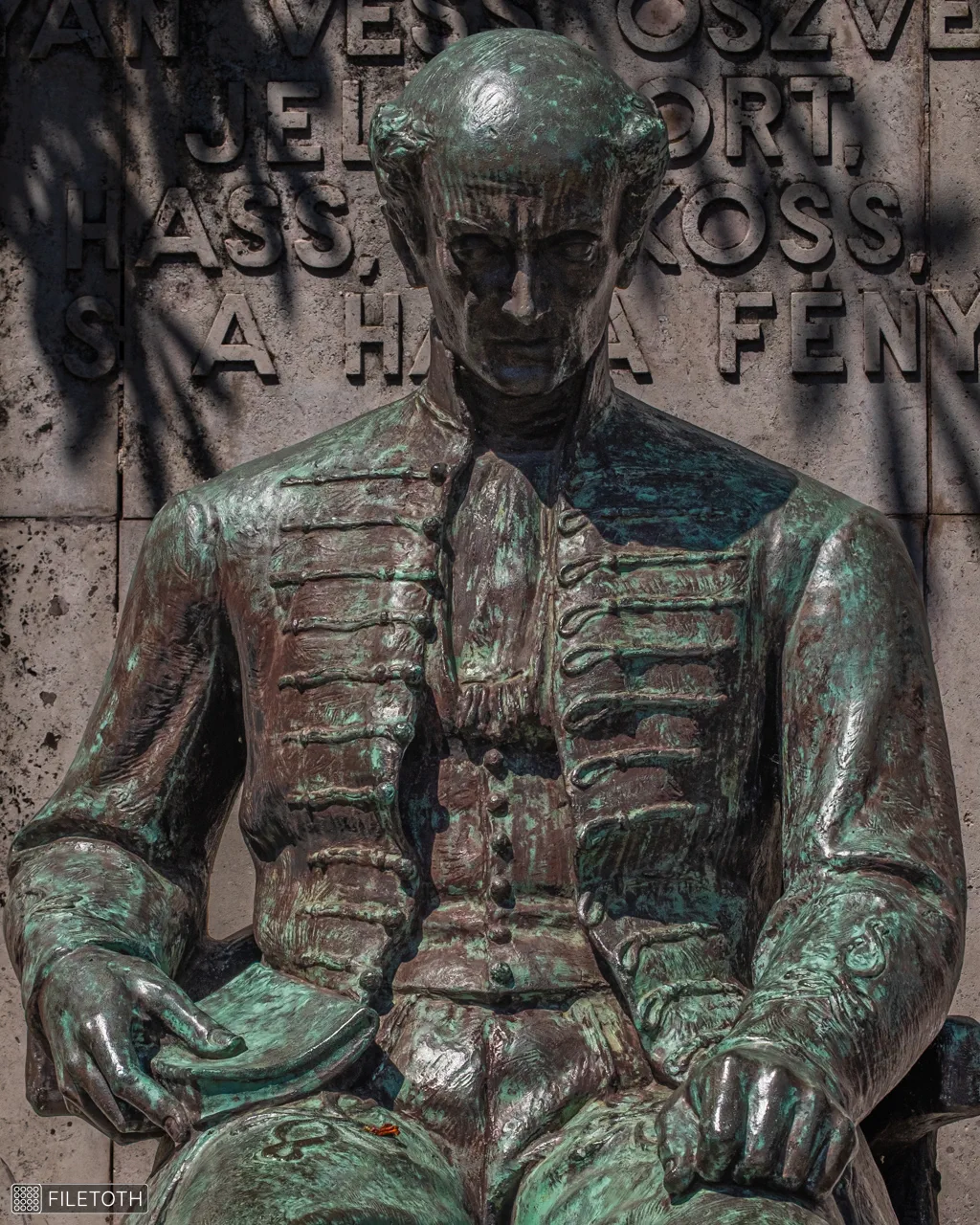
The Hand of Counsel

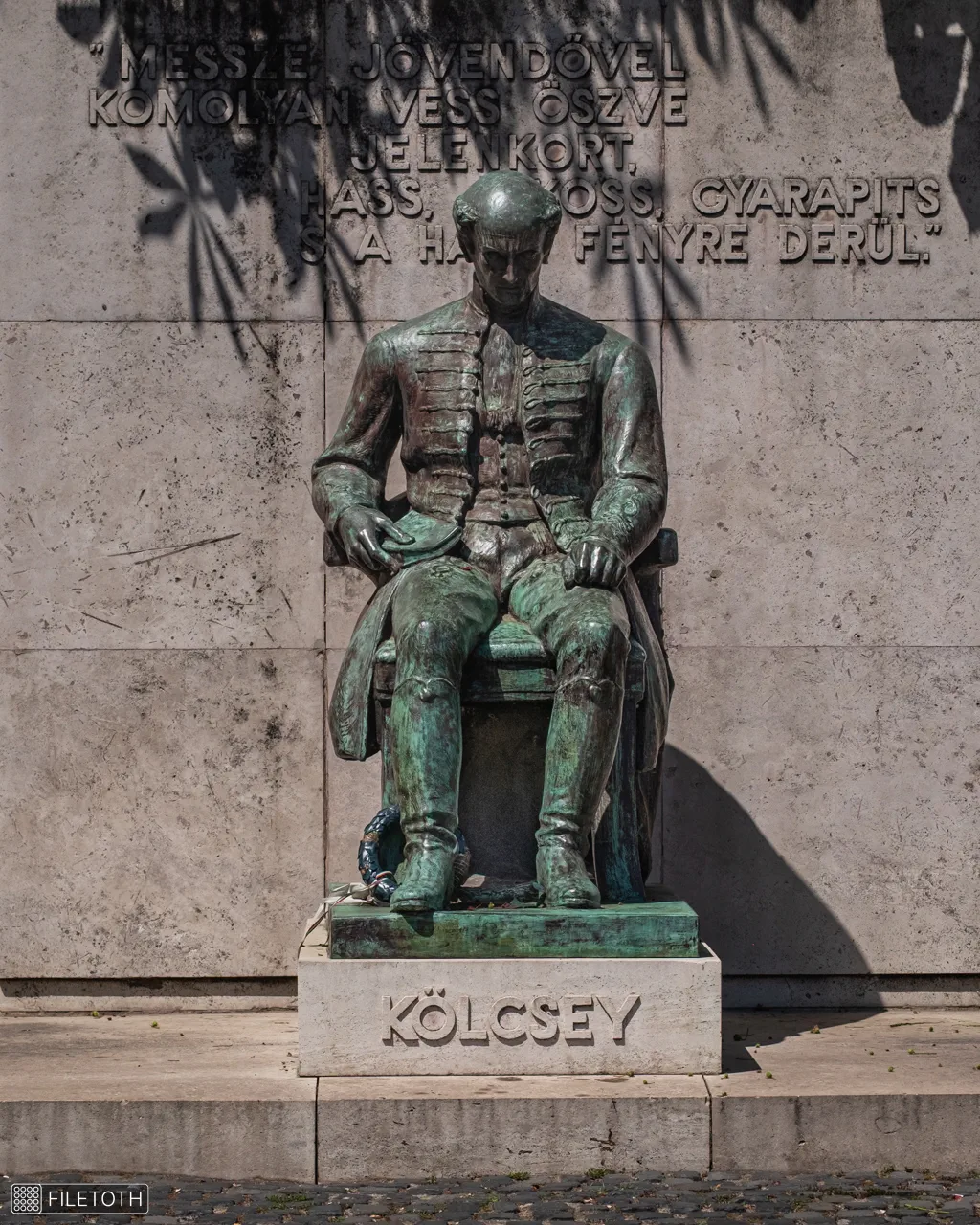
Ferenc Kölcsey Statue

Historical figure and era

Ferenc Kölcsey (1790–1838) was a poet, critic, statesman, and one of Hungary's leading intellectuals of the Reform Era. Best known as the author of the national anthem, Himnusz, he also promoted moral responsibility, education, and national renewal through his writings and public service, helping shape Hungarian political and cultural thought.

Creation and historical context

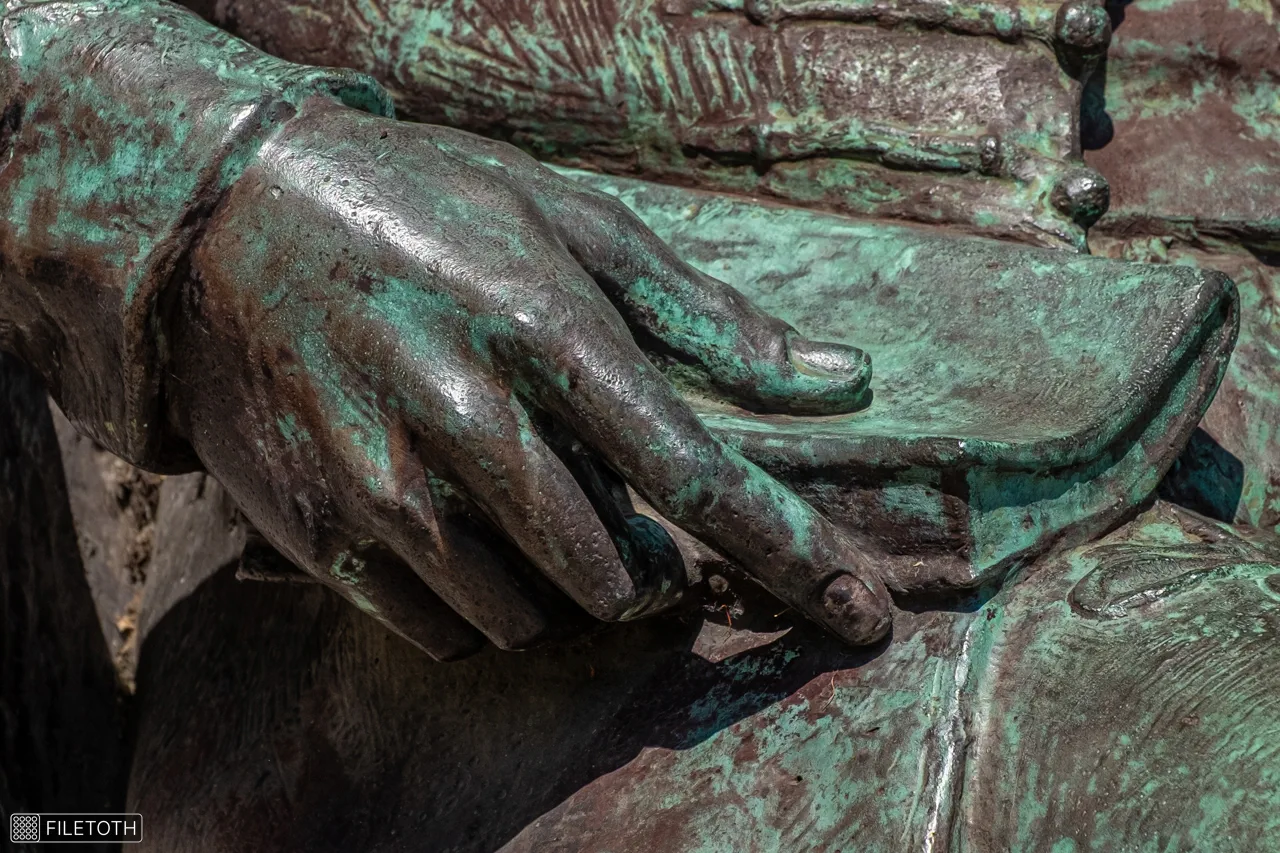
Ede Kallós's statue, unveiled on June 11, 1939, depicts Kölcsey in a calm, contemplative pose. Seated with a book on his lap, he leans slightly forward, conveying attentiveness rather than distance. Behind him appears one of his best-known lines: "Hass, alkoss, gyarapíts: s a haza fényre derül" ("Act, create, enrich, and the nation shall rise into light"). The monument was erected at a time when literary figures were often presented as moral exemplars. Kölcsey does not address the viewer with dramatic gestures. Instead, his hands rest on the book, suggesting reflection, learning, and the enduring power of ideas.

Statue by Ede Kallós, June 11, 1939. [ref.]

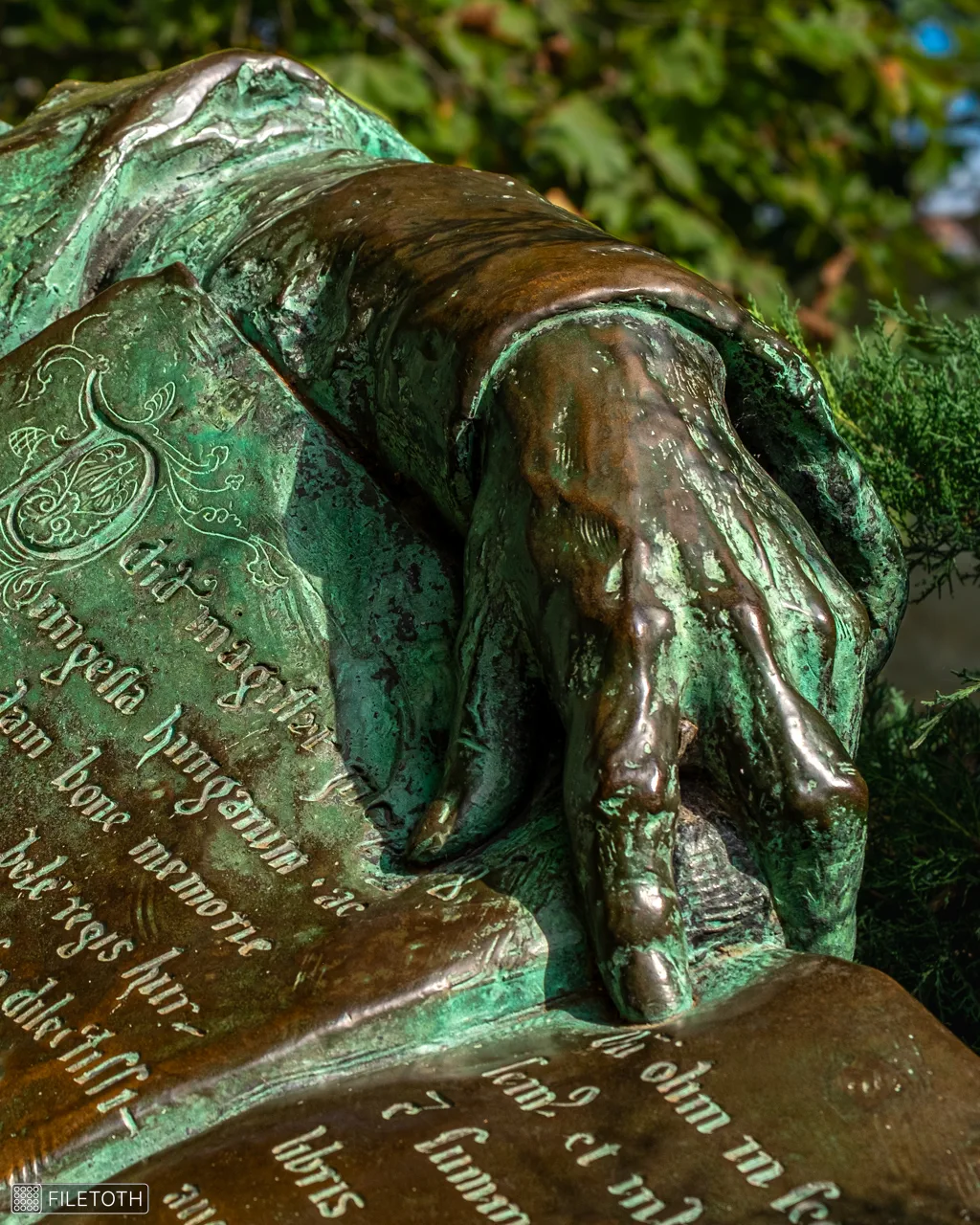
The Hand of Poetry

János Arany Memorial

Historical figure and era

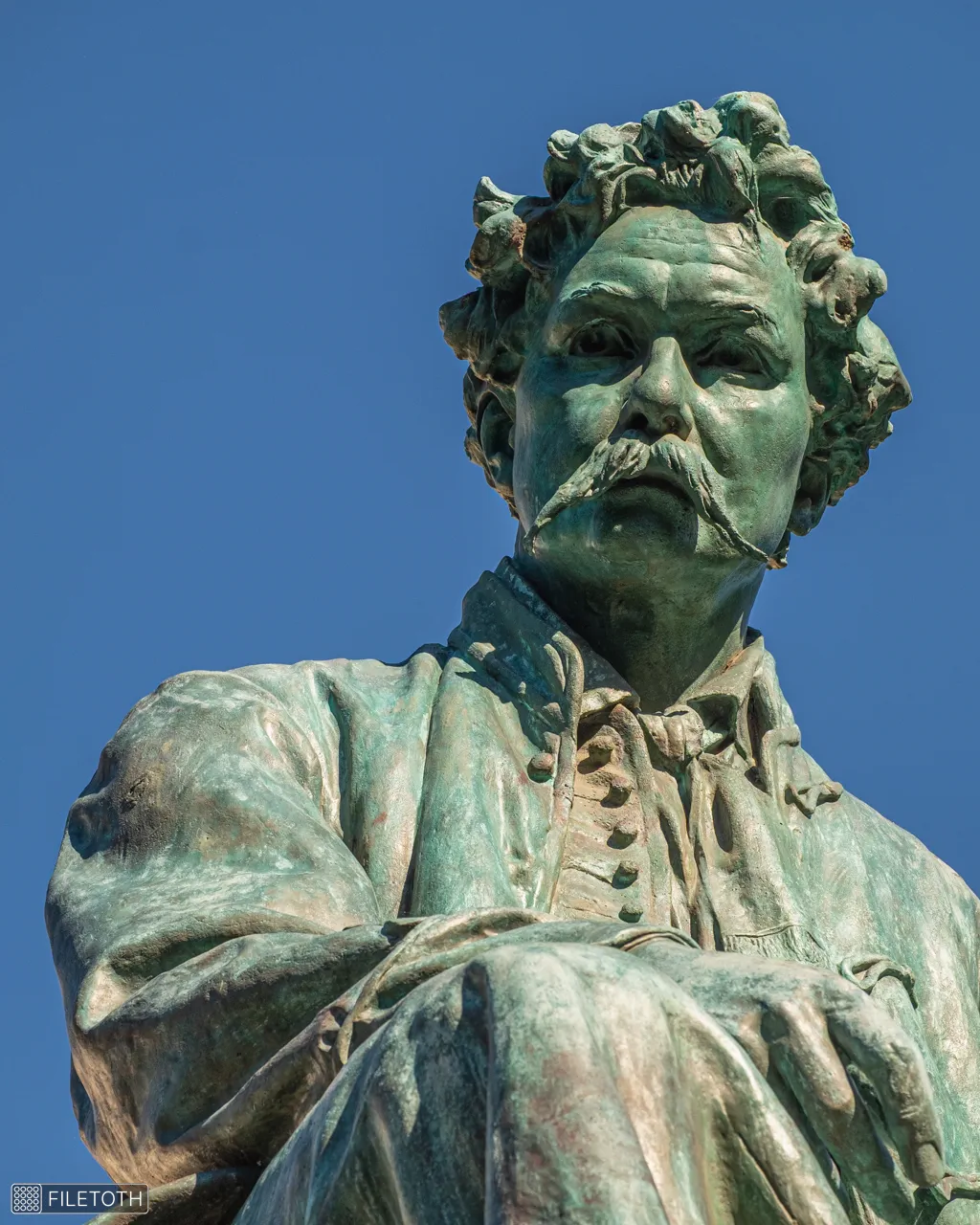
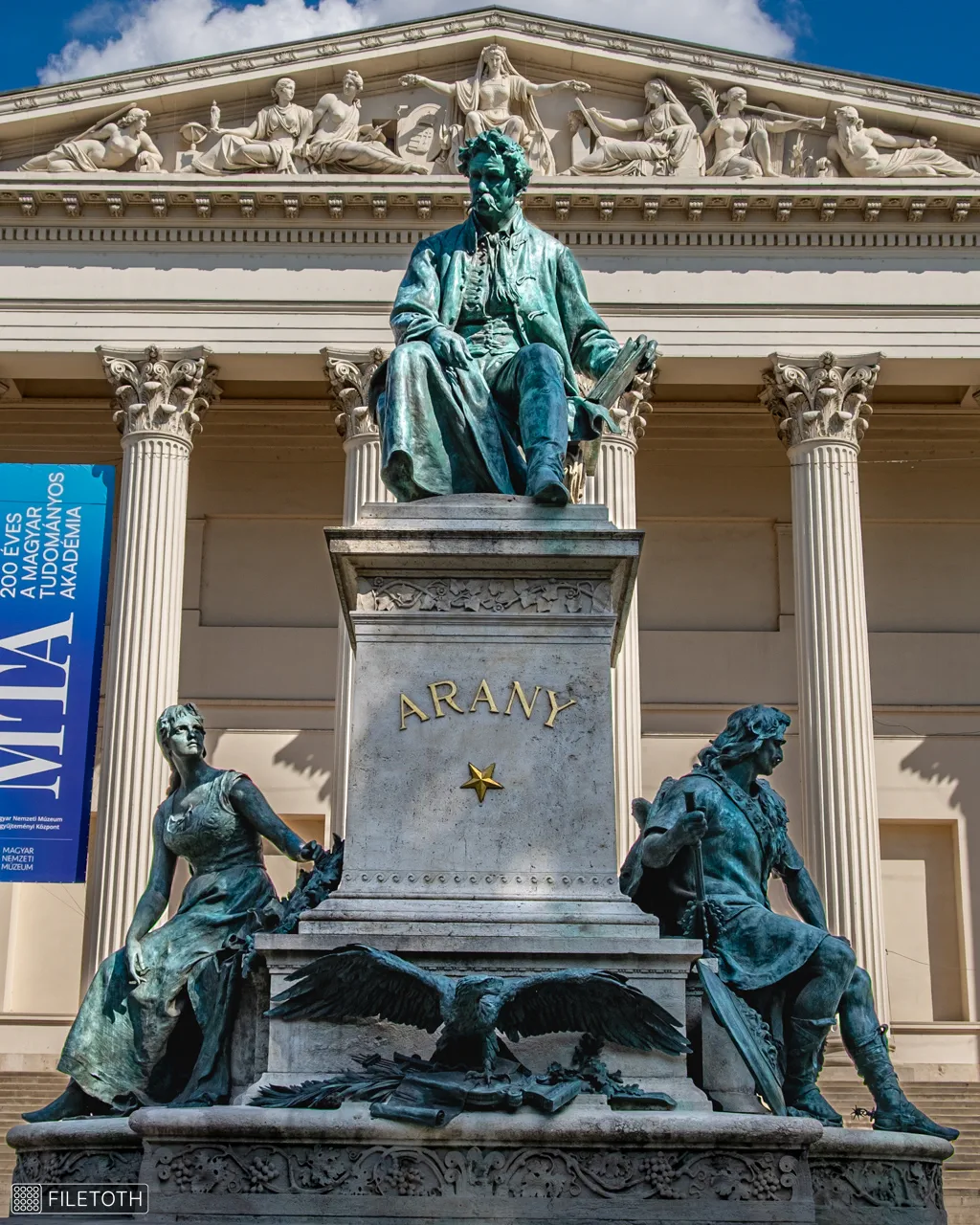
János Arany (1817–1882) was one of Hungary's greatest poets and master storytellers, whose narrative poems, ballads, and the celebrated Toldi trilogy shaped the nation's literary identity. Drawing upon folklore, history, and profound psychological insight, his works continue to inspire readers through their remarkable combination of vivid storytelling and poetic craftsmanship.

Creation and historical context

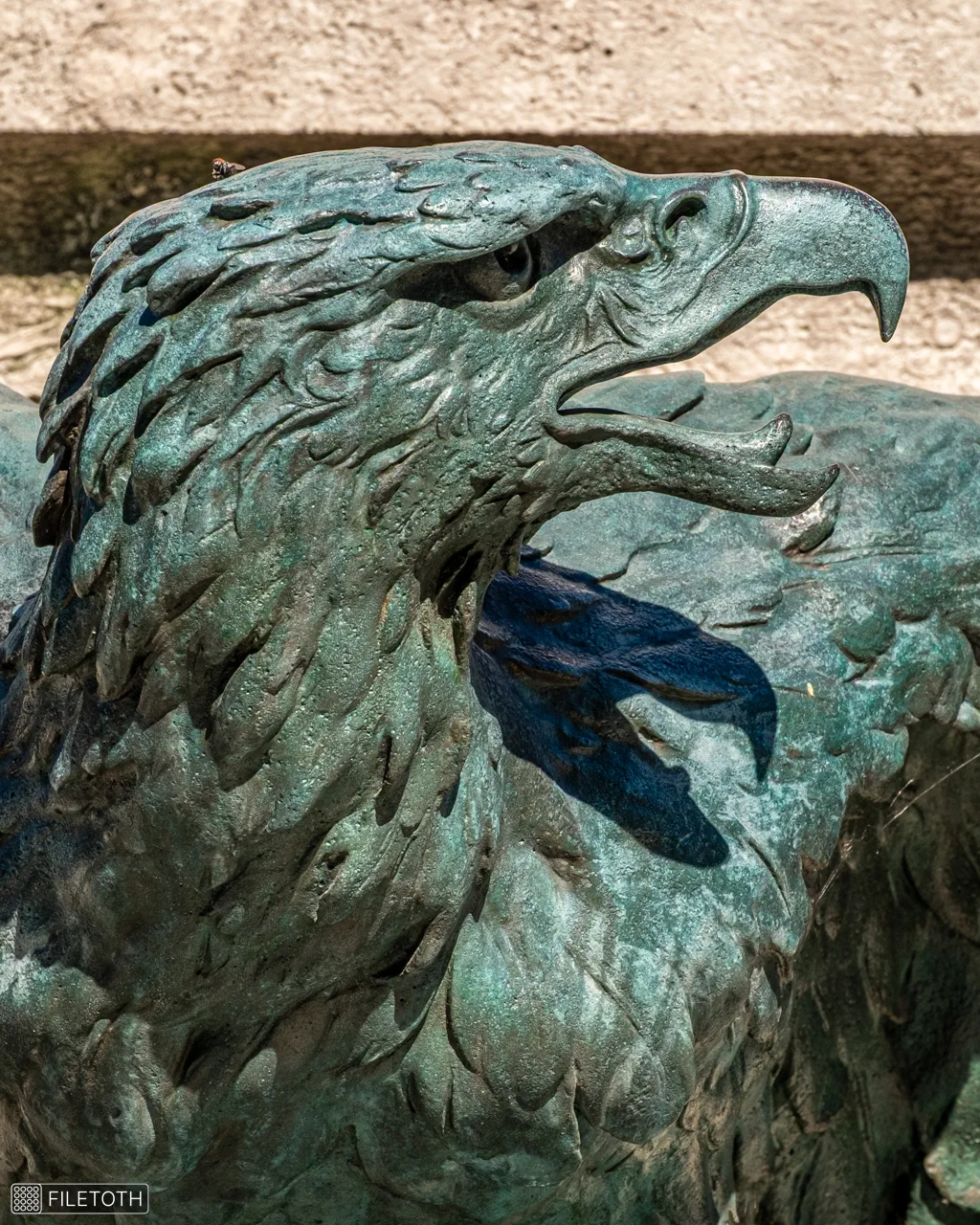
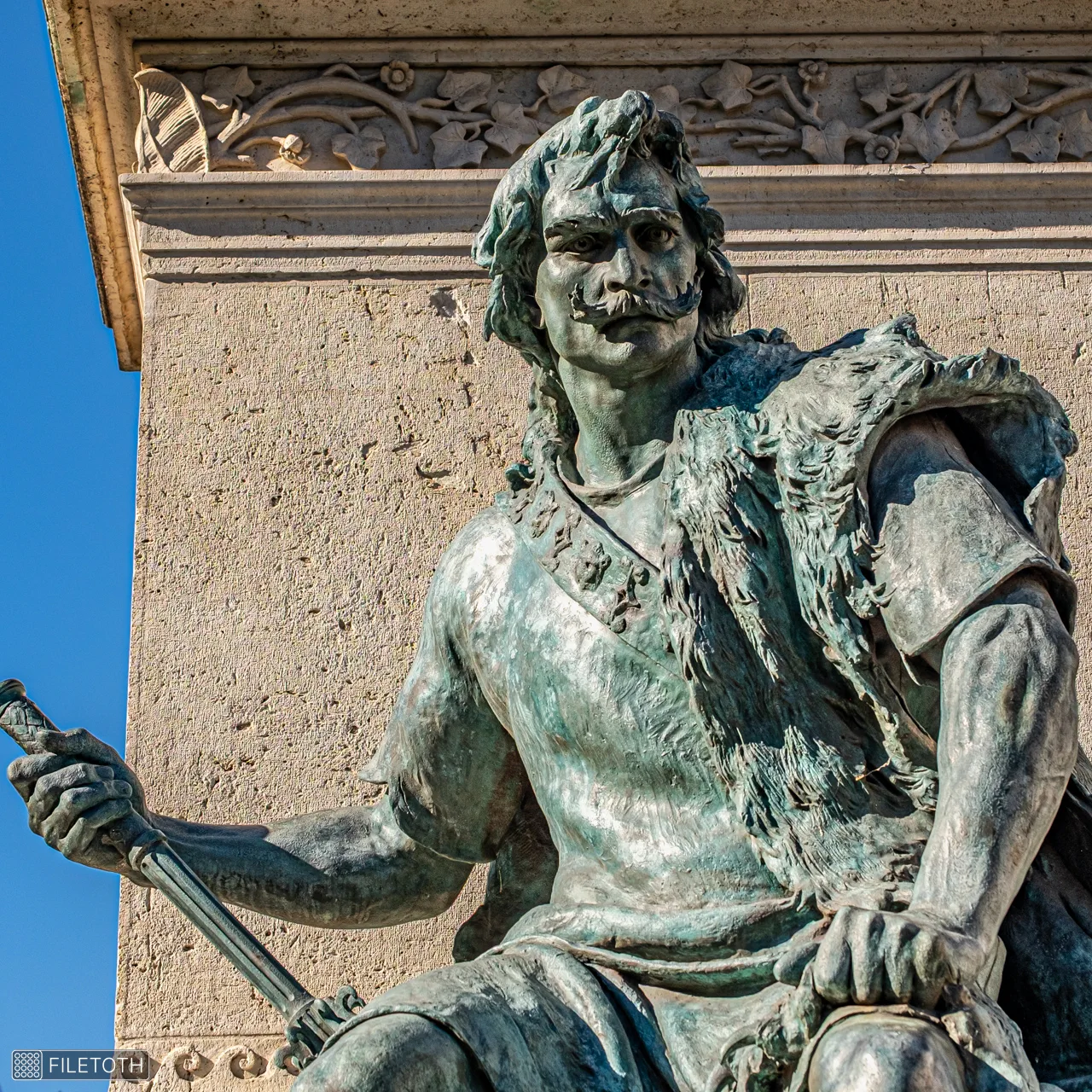
Alajos Strobl's 1893 monument depicts Arany seated with a manuscript and pen, emphasizing the quiet act of literary creation rather than heroic display. Standing before the Hungarian National Museum, the memorial places the poet at the symbolic heart of Hungarian culture. Around him appear figures from his literary world, transforming the monument into both a portrait of the author and a celebration of the imagination that gave life to his stories.

Memorial by Alajos Strobl, May 21, 1893. [ref.]
The Hand of Reflection

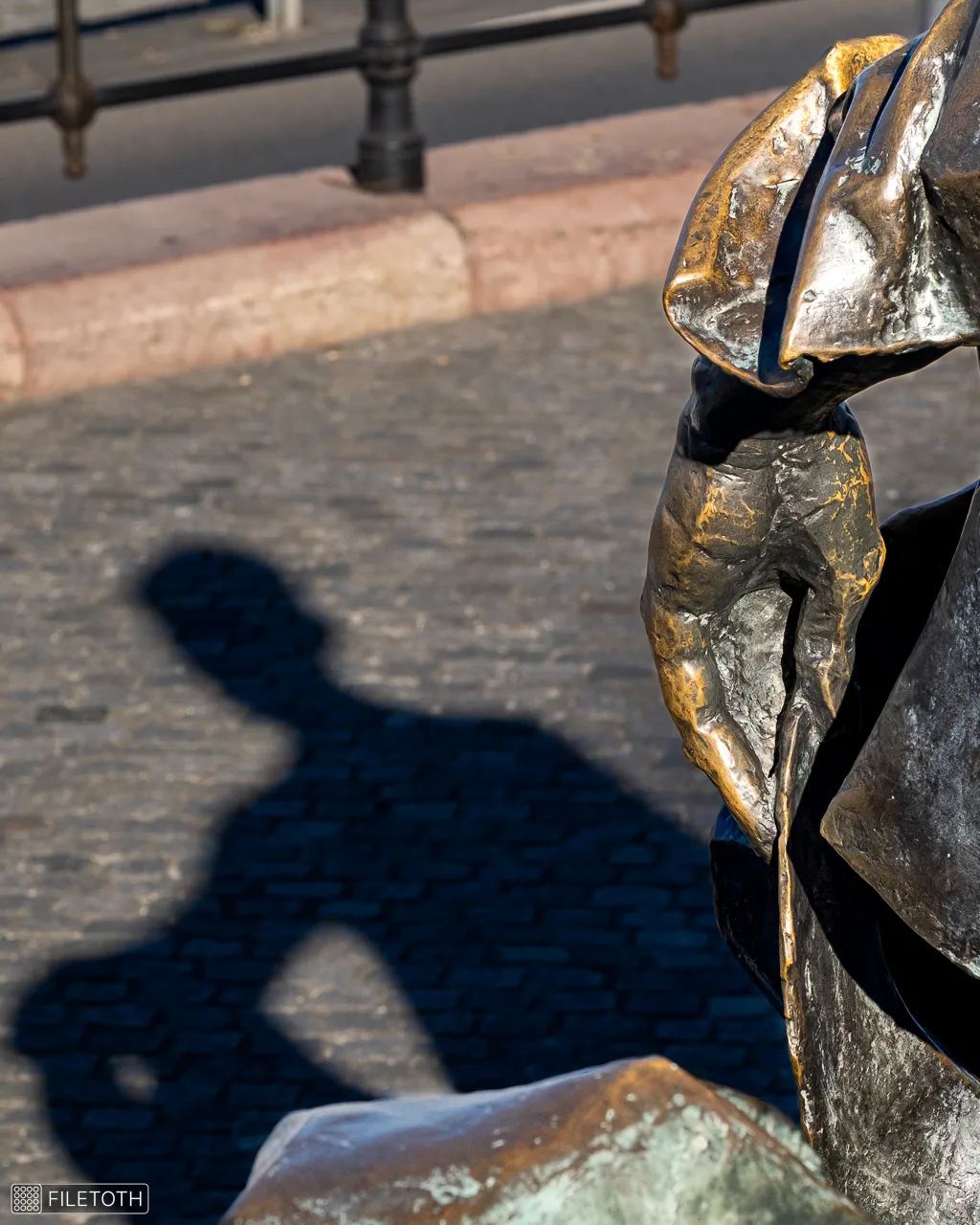
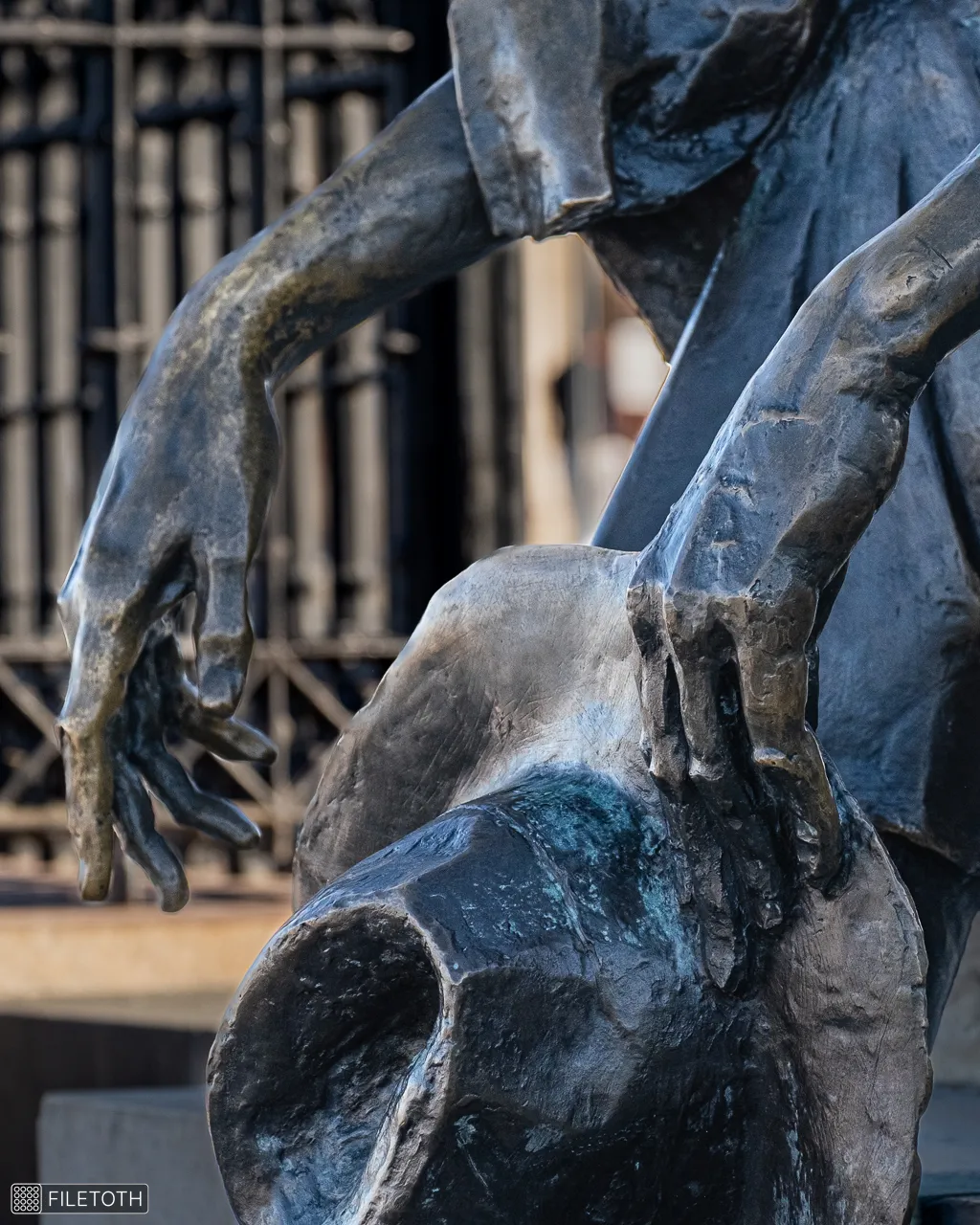
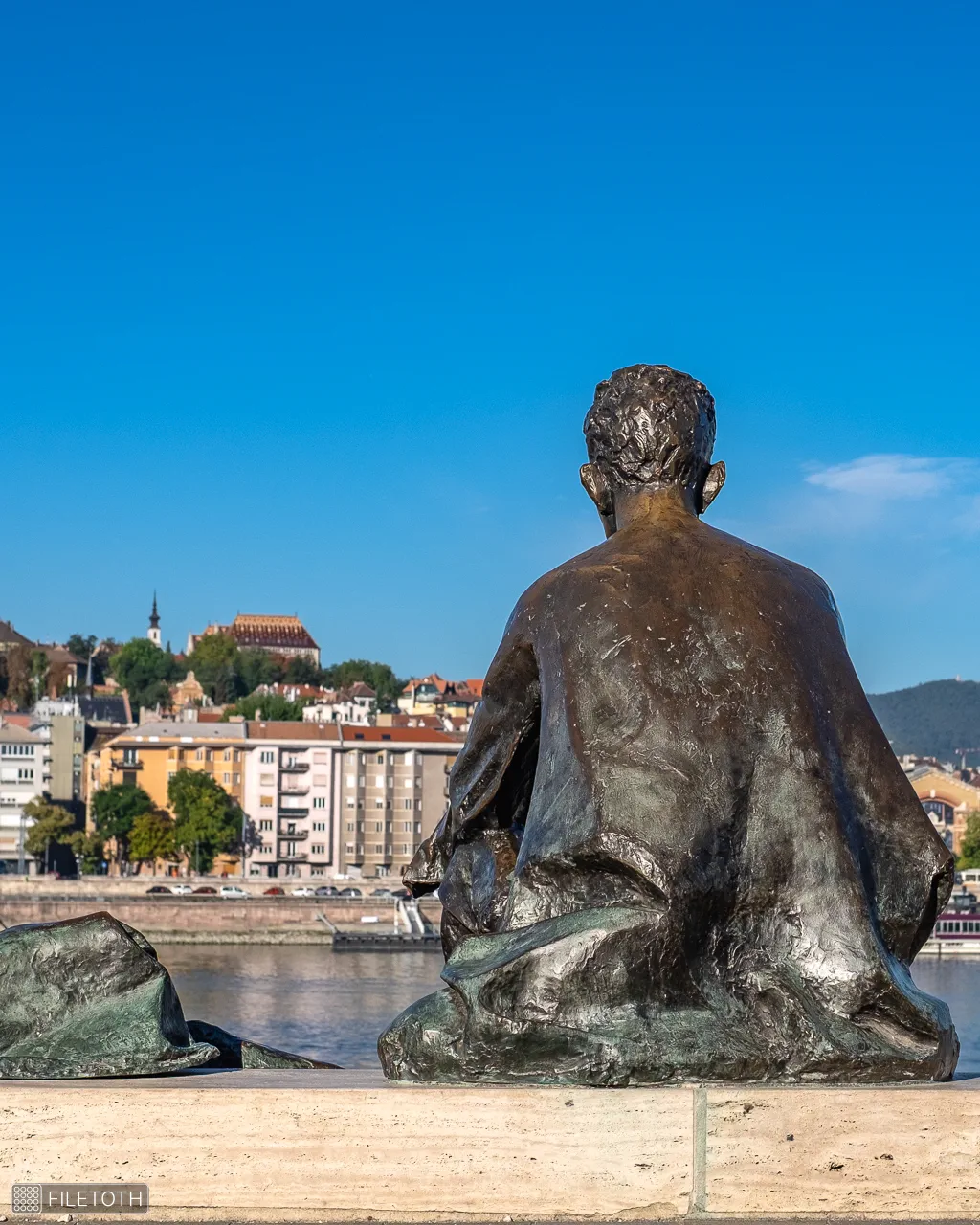
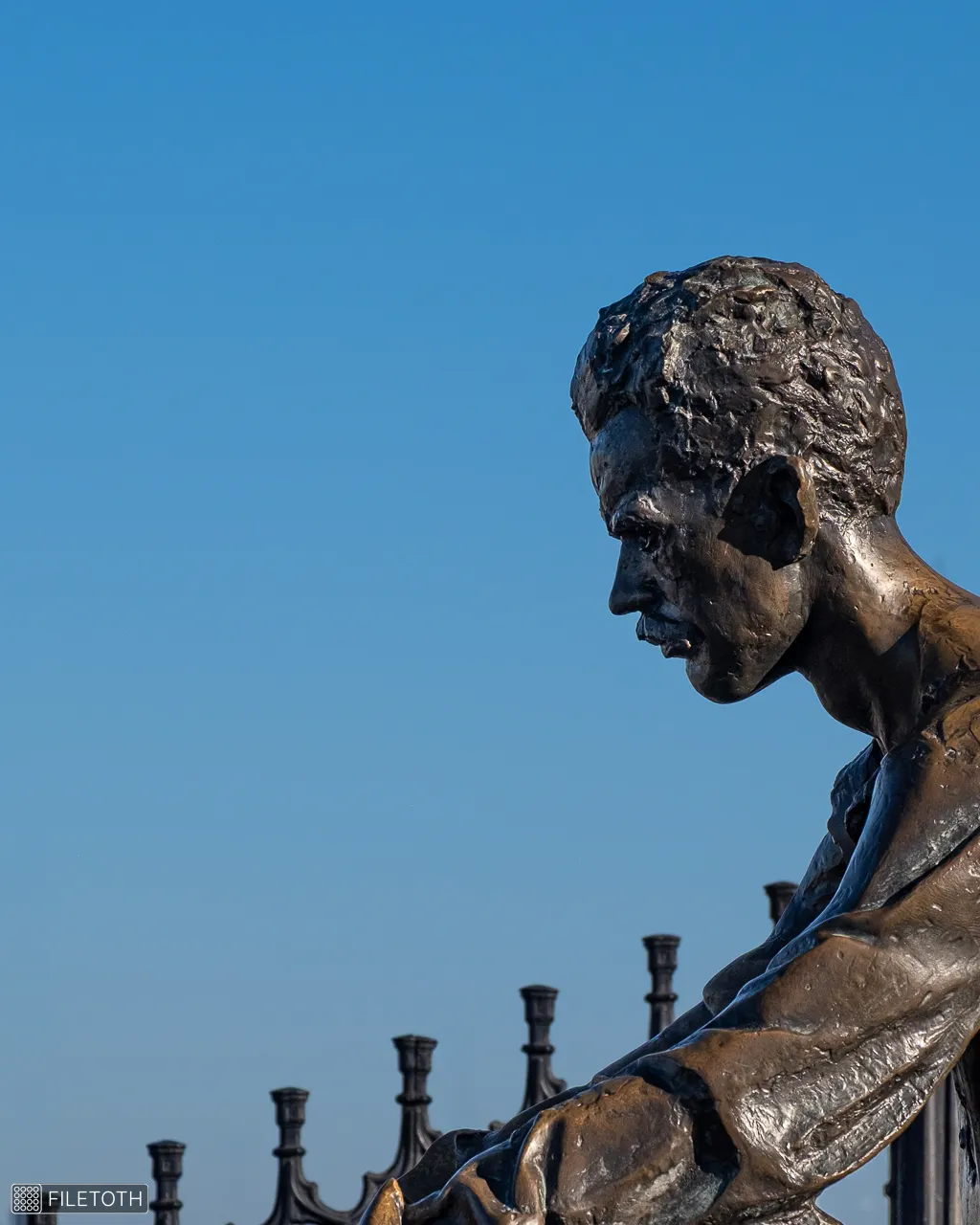
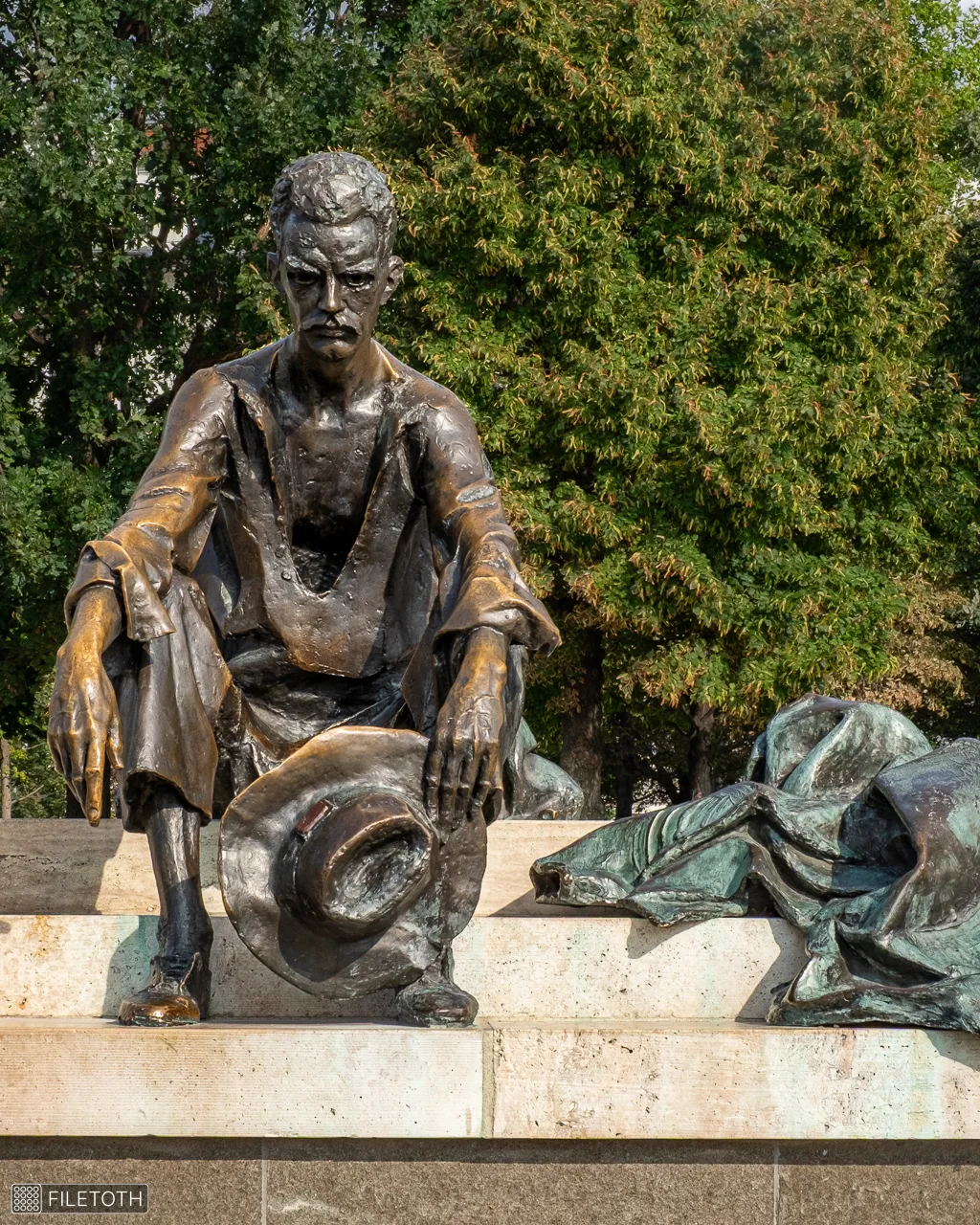
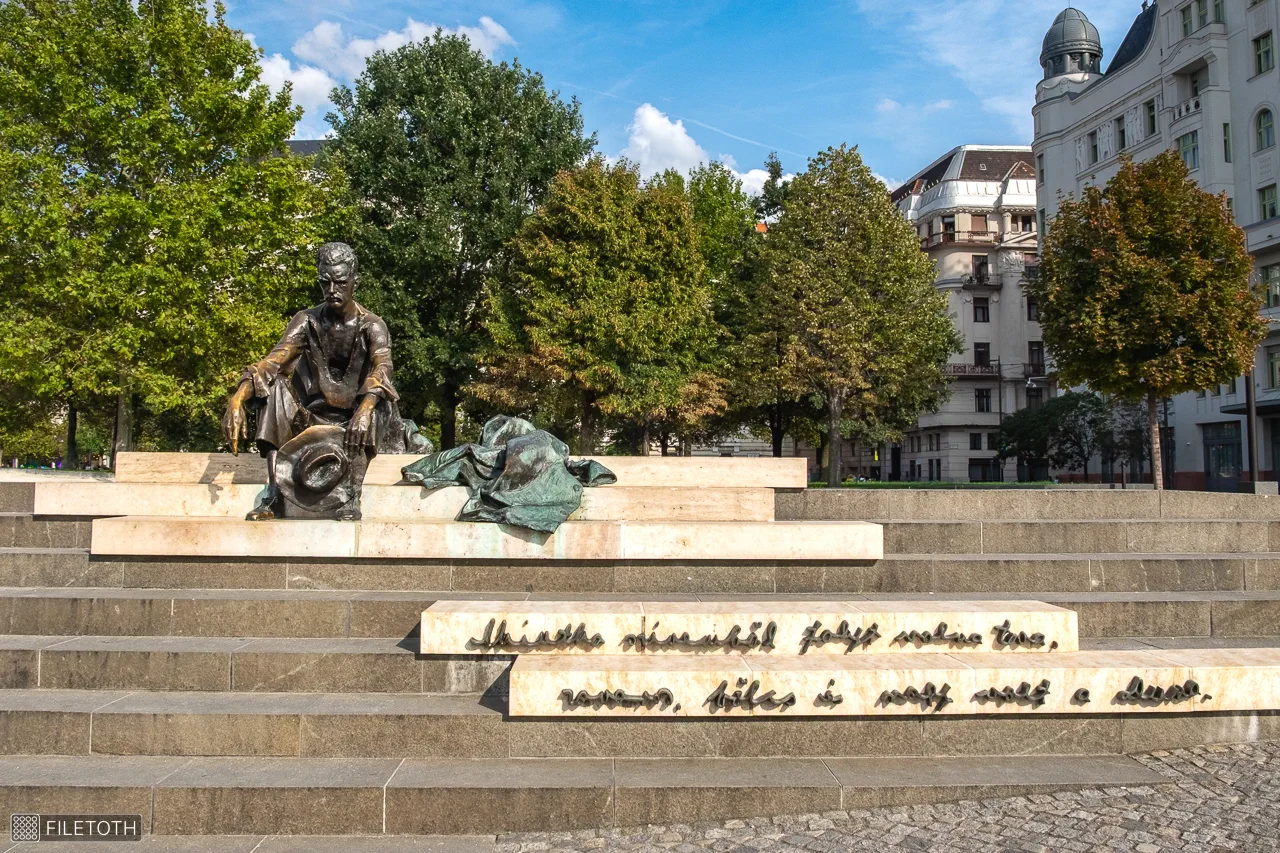
At the Danube – Attila József Statue

Historical figure and era

Attila József (1905–1937) was one of Hungary's most important twentieth-century poets, known for socially conscious, emotionally intense verses rooted in poverty and urban life. His 1936 poem At the Danube reflects on identity, history, and the flow of human time, weaving personal experience into the shared story of the Hungarian people.

Creation and historical context

László Marton's 1980 statue places the poet on the stone steps beside the Danube near the Parliament, hat in hand, coat beside him, his gaze turned toward the river. Created during the late socialist period, the monument gave a previously marginalized, later celebrated writer a quiet place at the heart of the capital. Echoing the poem's setting and mood, it invites visitors to pause beside the water and reflect on the relationship between personal memory and the continuous flow of history.

Statue by László Marton, December 22, 1980. [ref.]
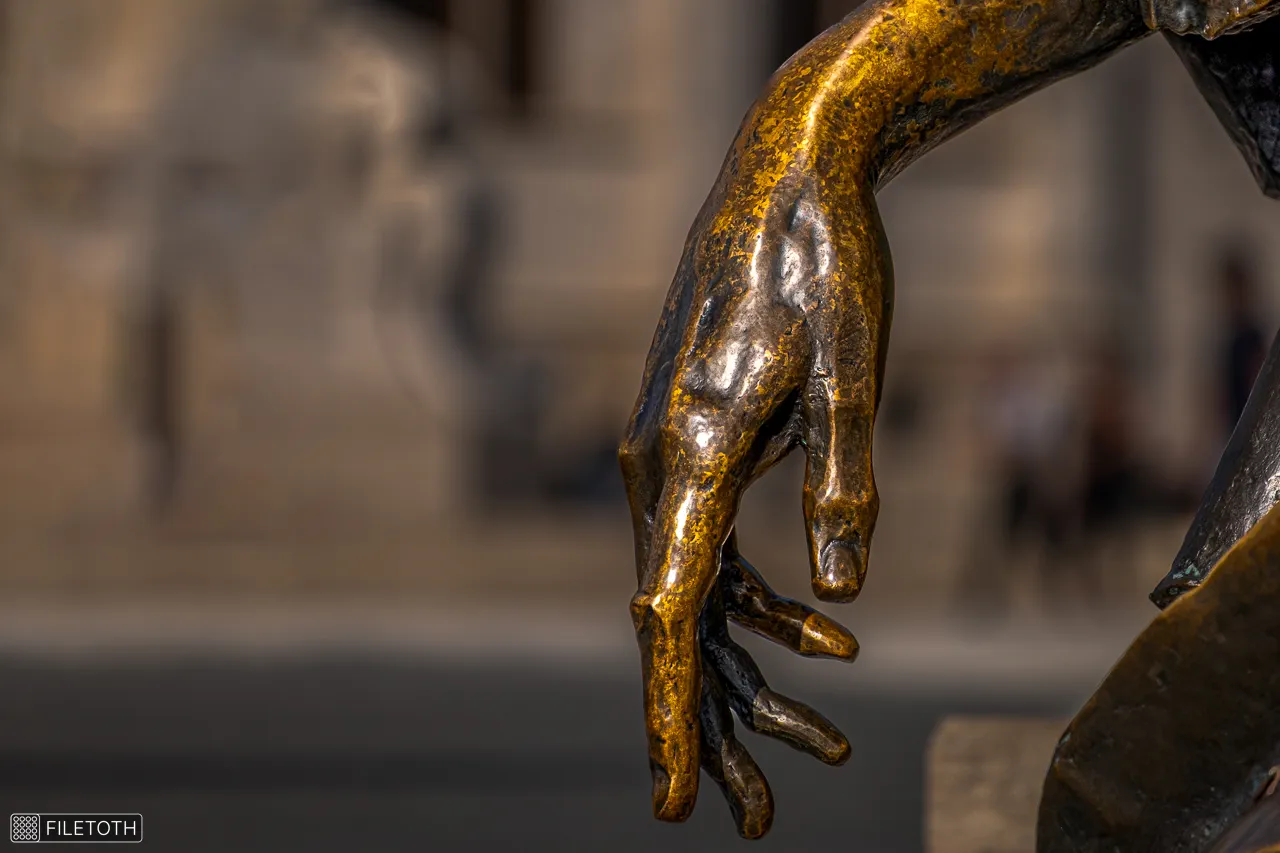
The Hand of the Poet

Mihály Babits Statue

Historical figure and era

Mihály Babits (1883–1941) was one of Hungary's foremost twentieth-century poets, essayists, and literary translators. As a leading figure of the influential journal Nyugat, he helped shape modern Hungarian literature while building lasting connections between Hungarian culture and the wider currents of European thought. His poetry combined lyrical sensitivity with philosophical depth, leaving a profound mark on generations of readers.

Creation and historical context

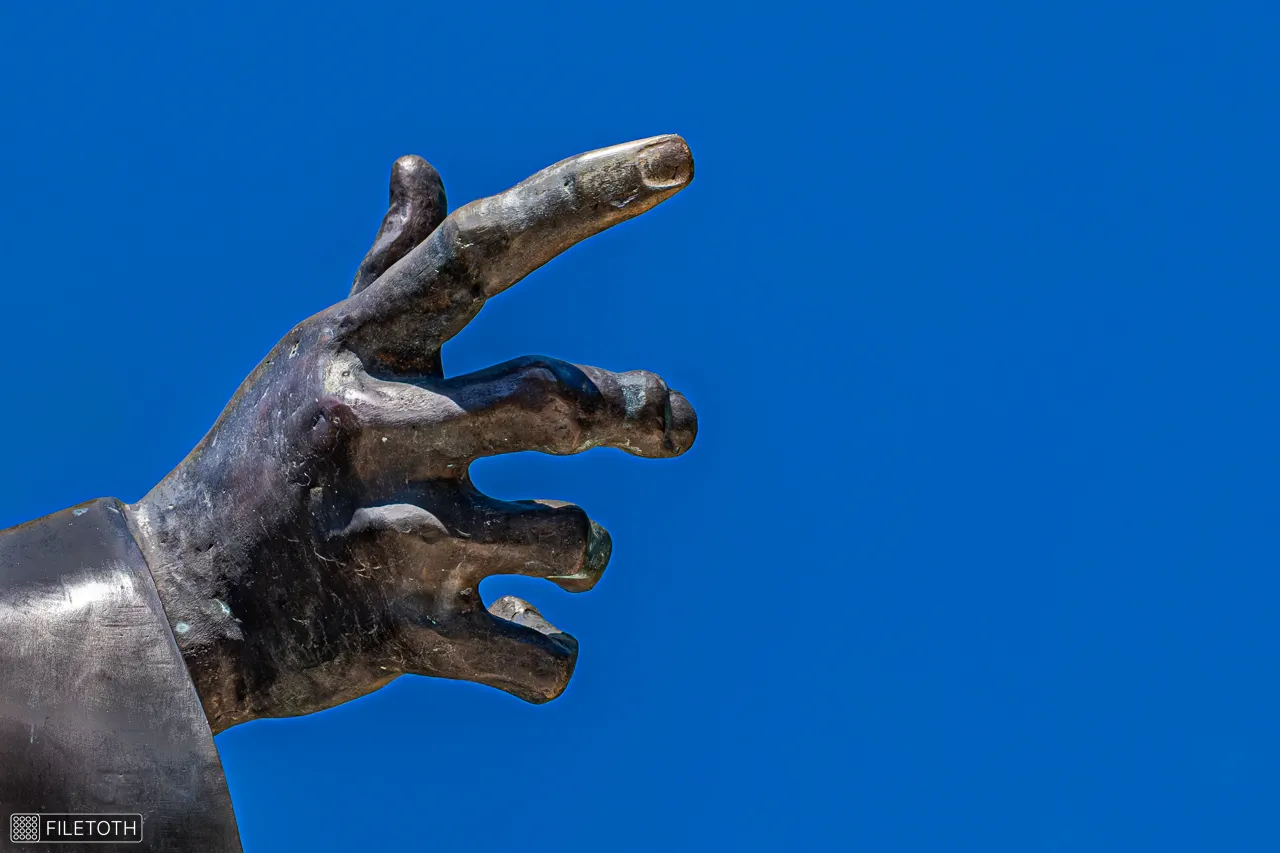
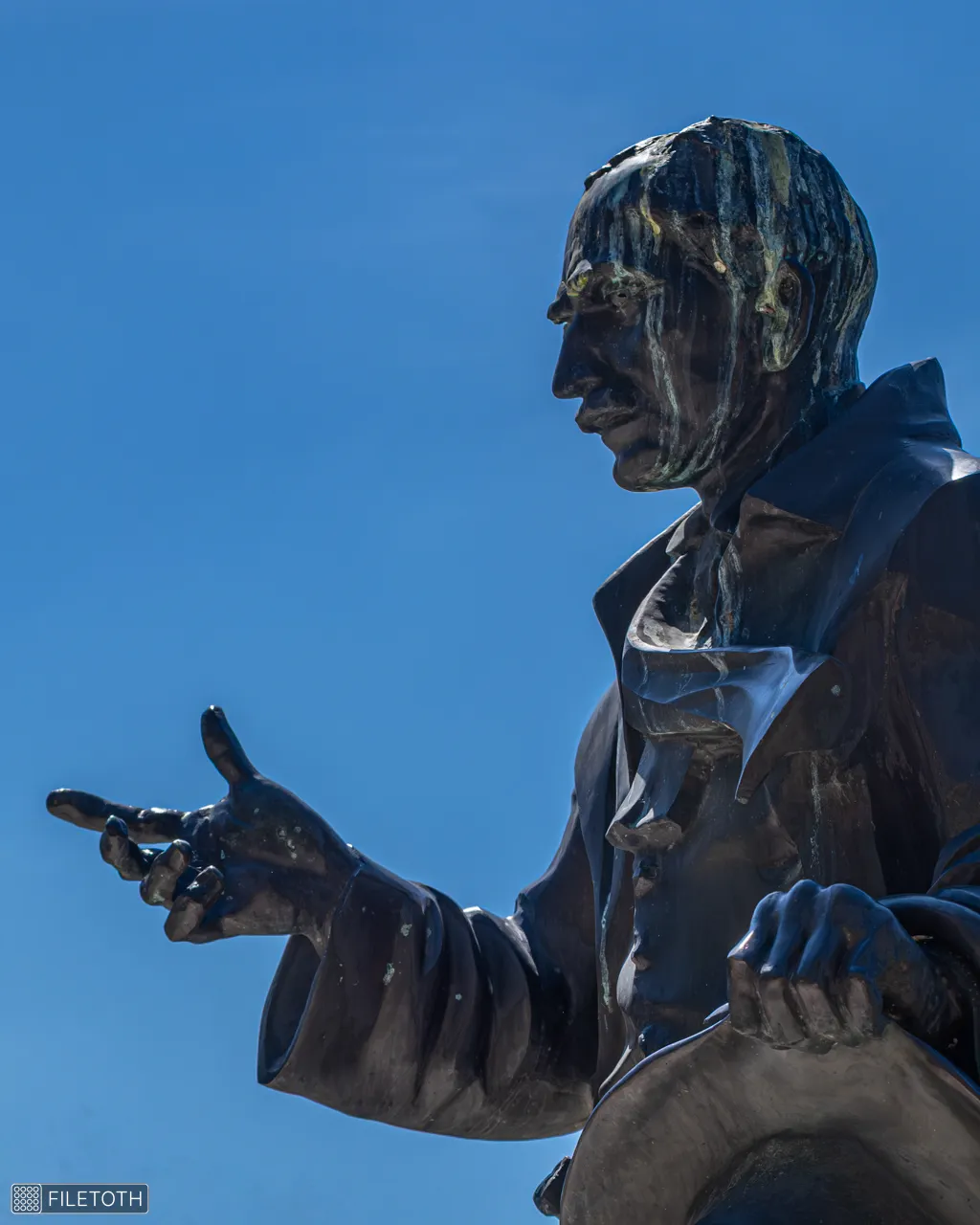
László Marton's statue, unveiled in 2008 to mark the 125th anniversary of Babits's birth, presents the poet in motion rather than in solemn stillness. Without the distance often associated with literary monuments, the sculpture creates the impression of a thoughtful passerby, inviting visitors into an encounter rather than an act of remembrance. The expressive hand and relaxed posture suggest that poetry begins not with grand gestures, but with quiet observation and reflection.

Statue by László Marton, November 26, 2008. [ref.]
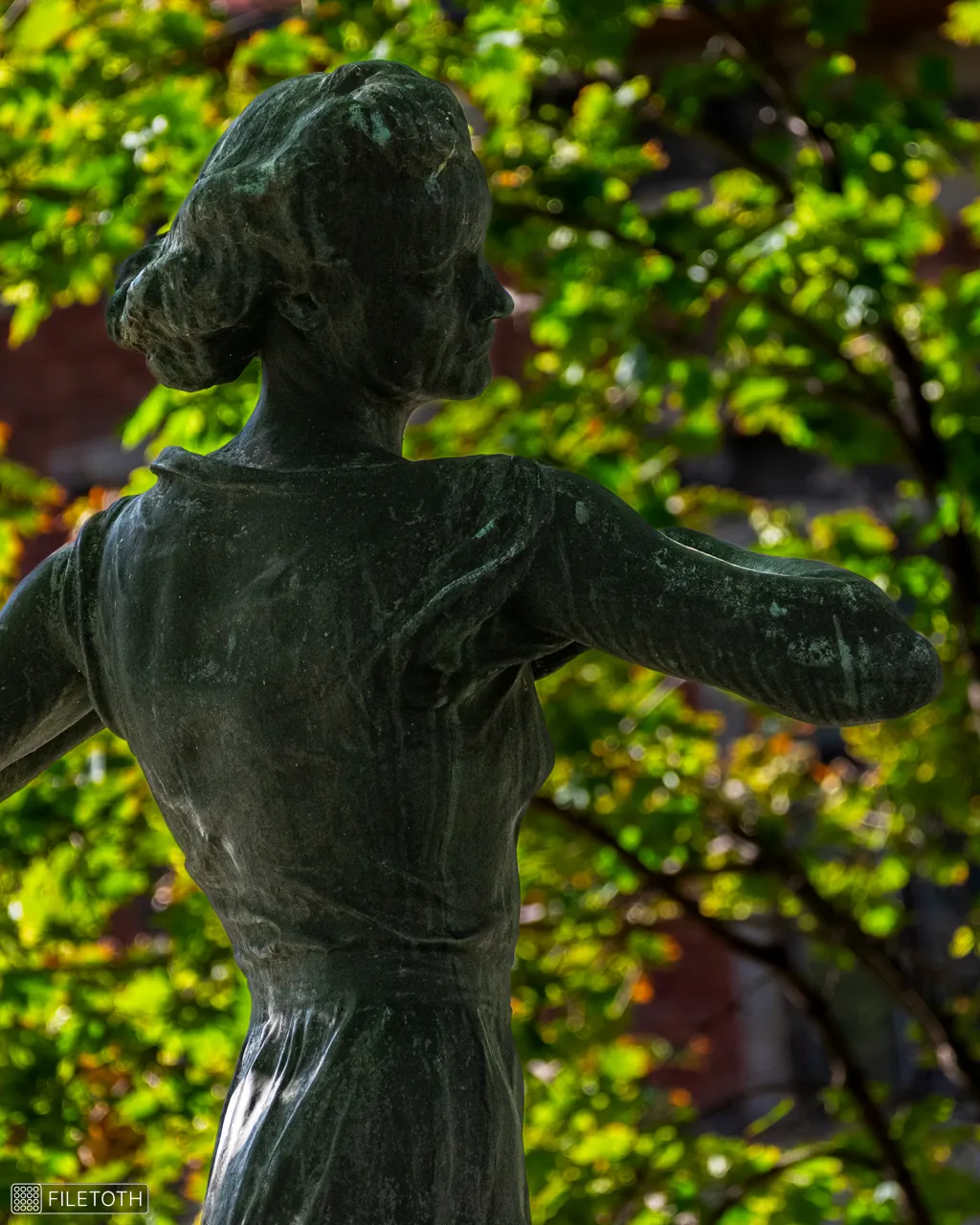
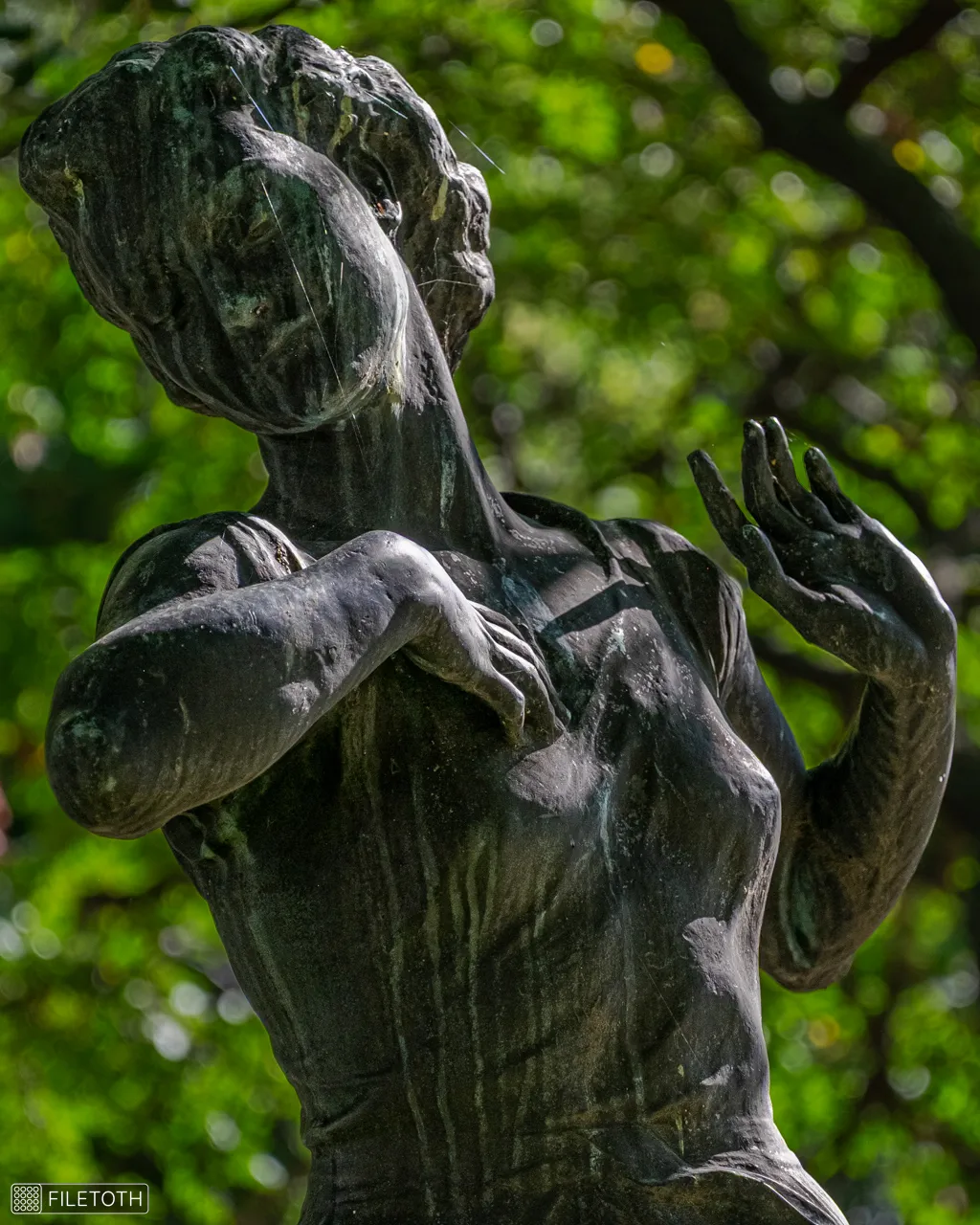
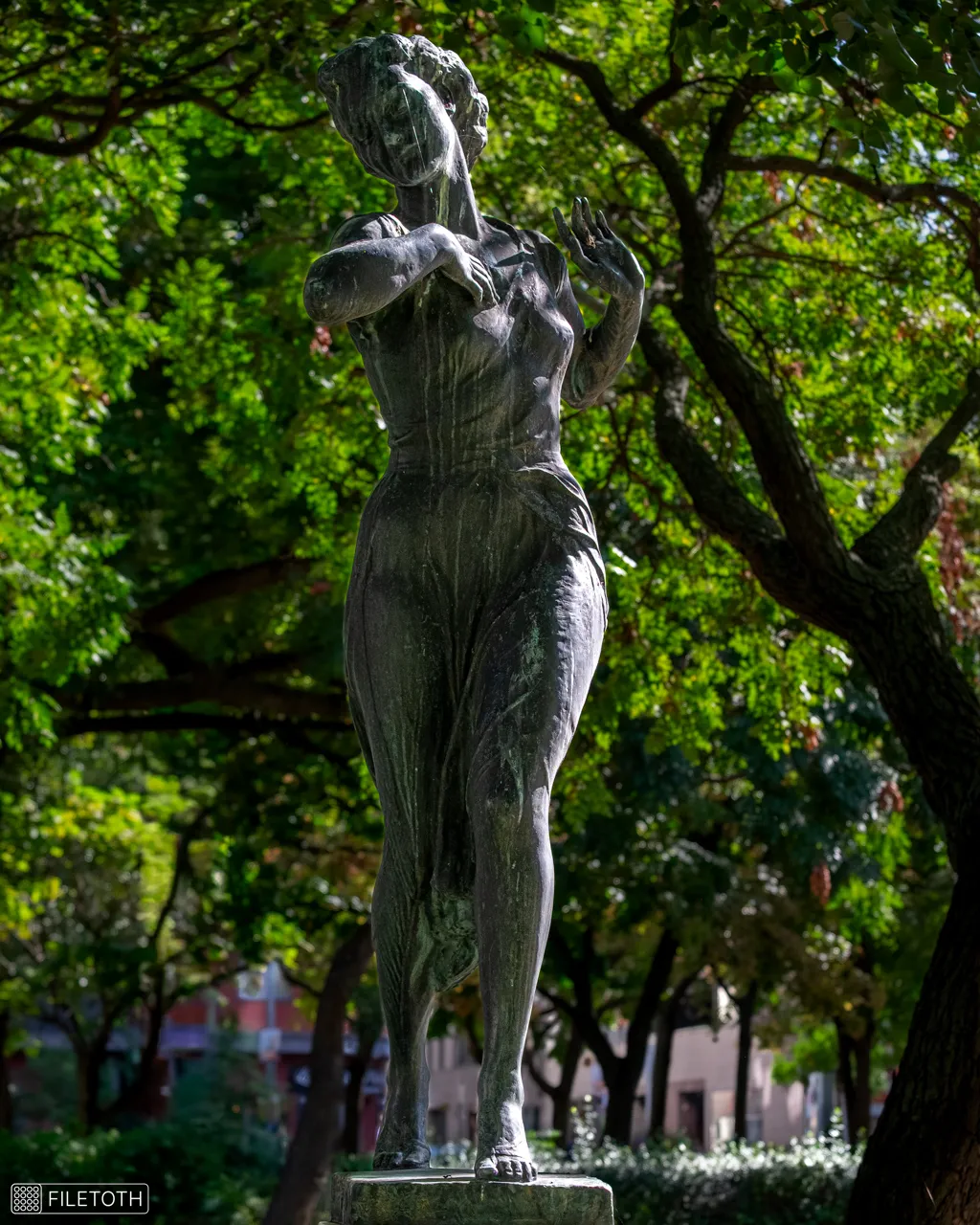
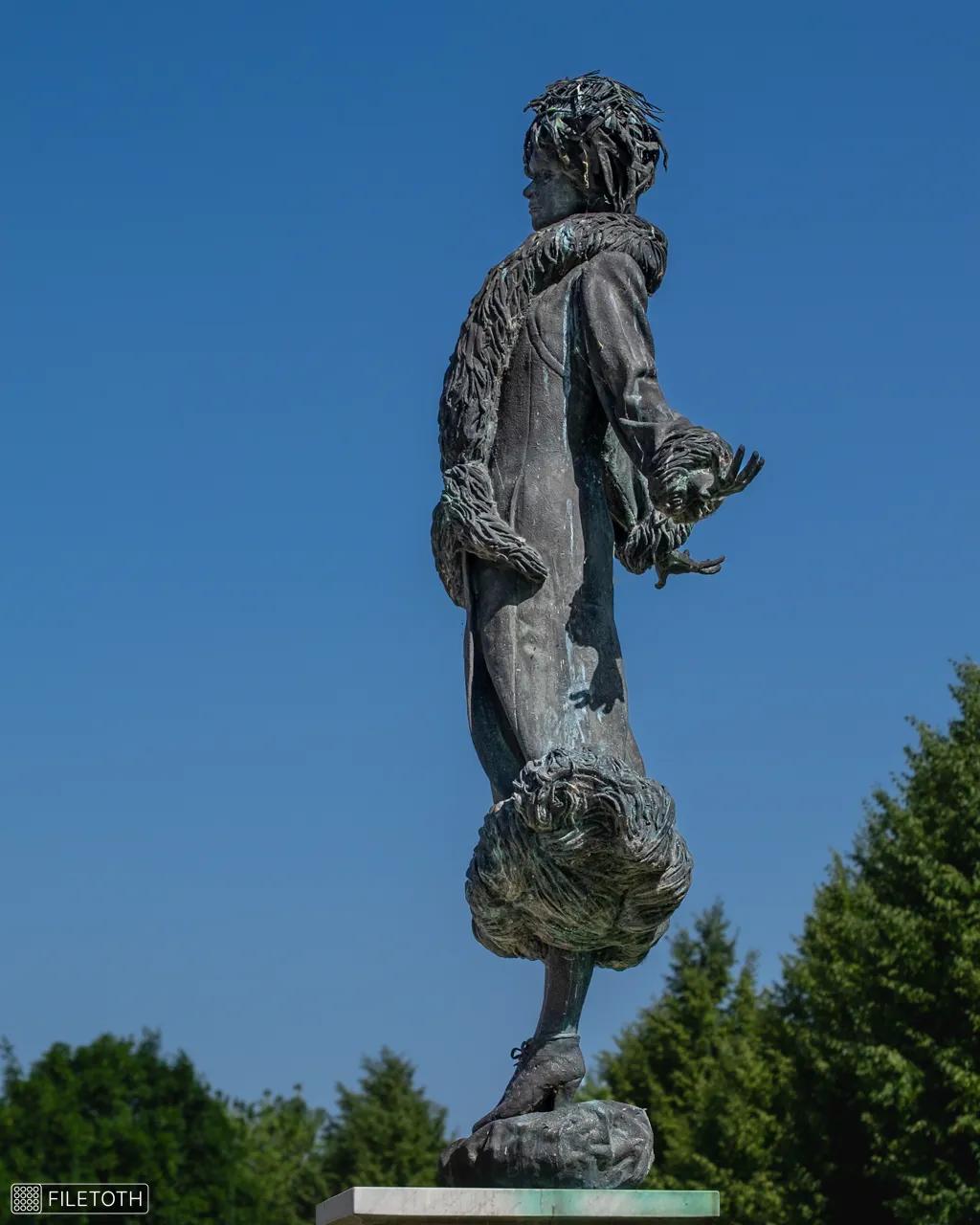
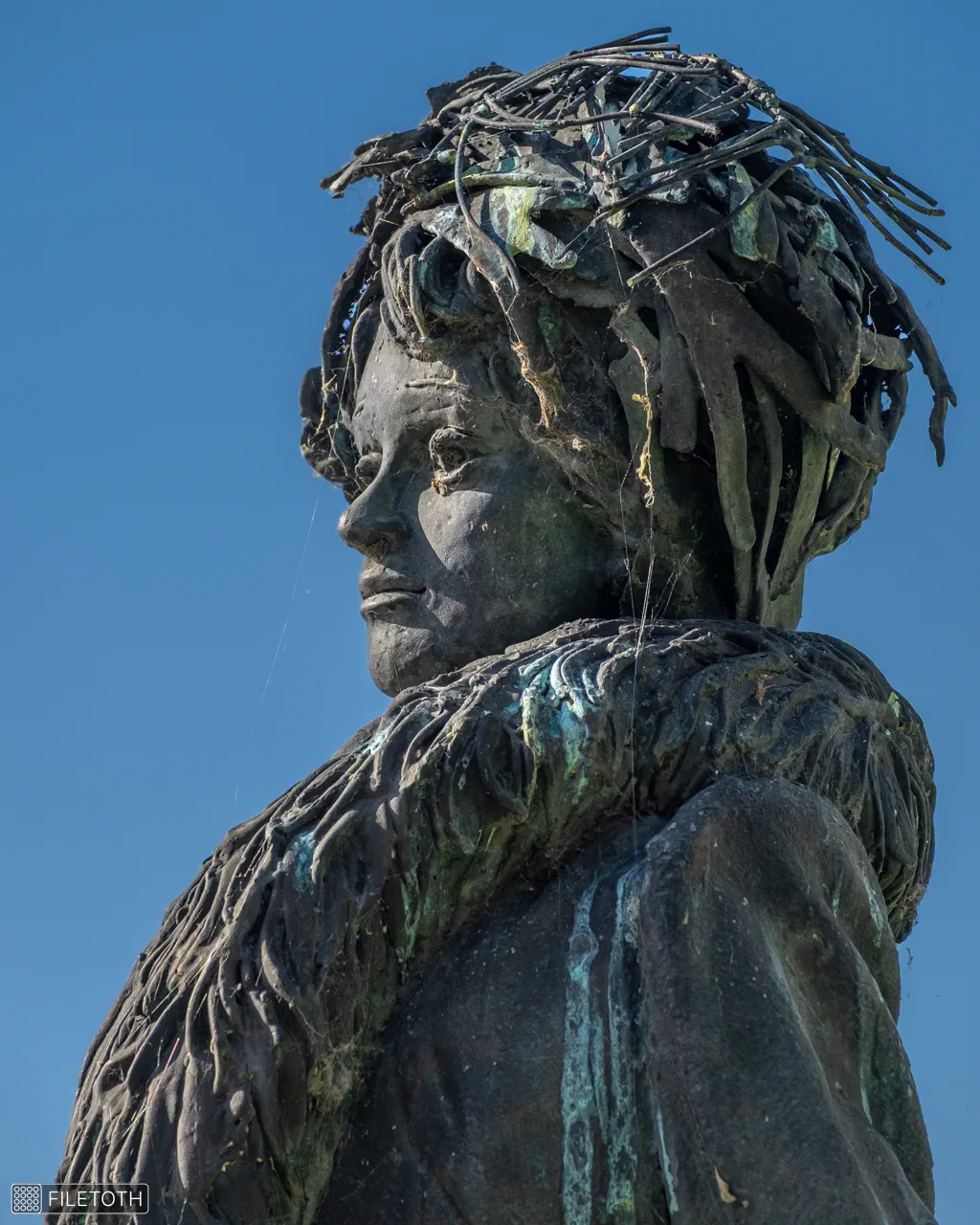
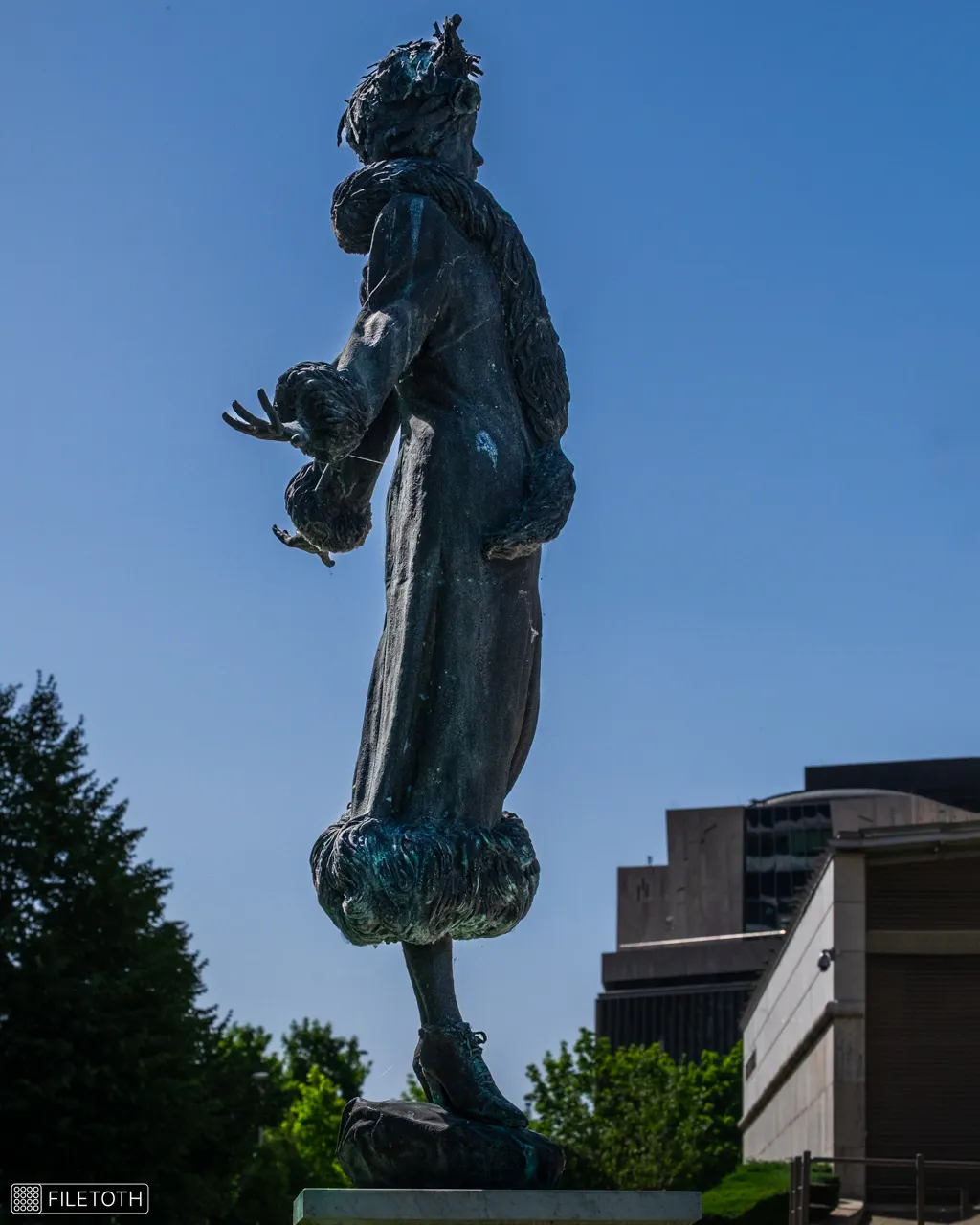
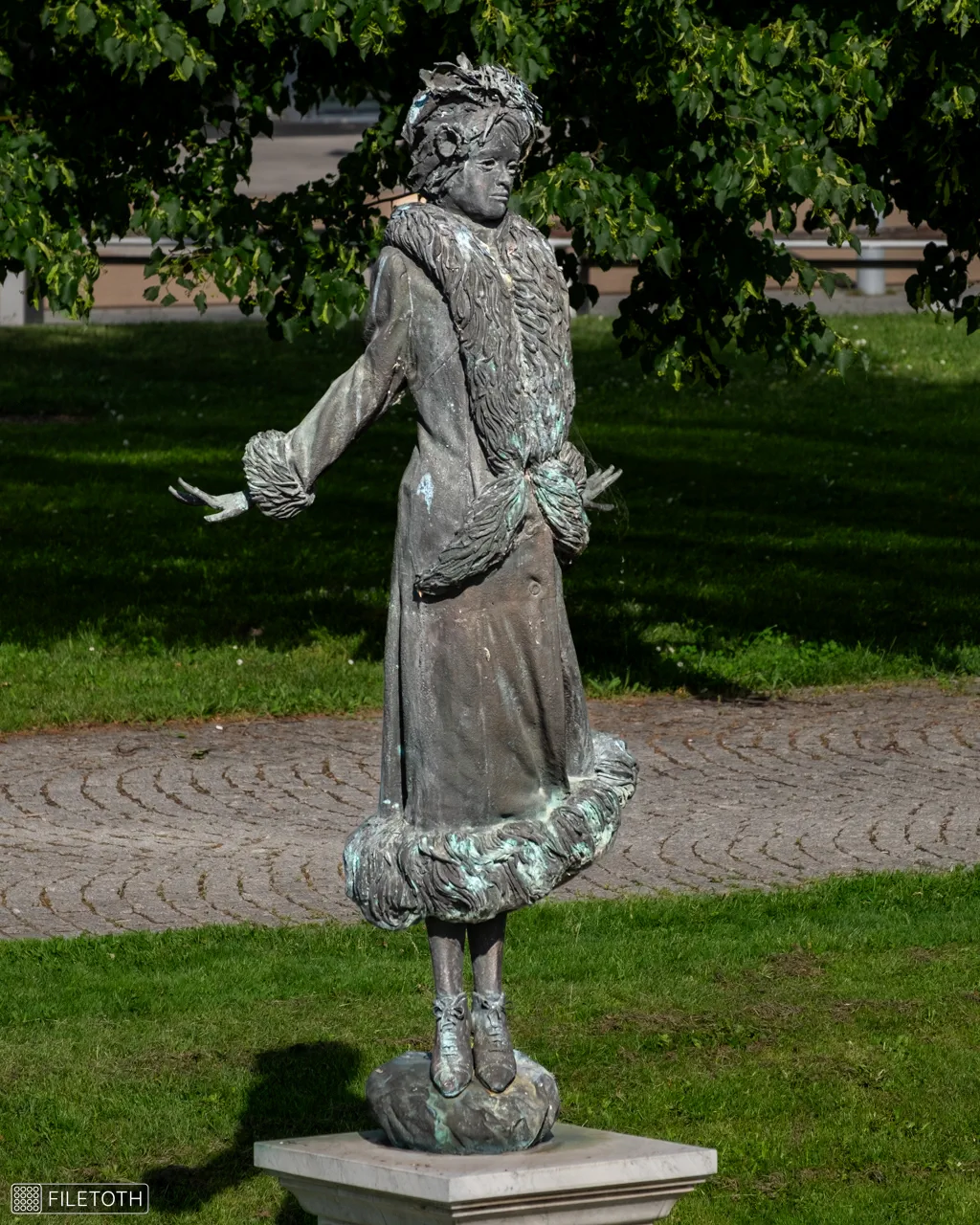
The Hand of Spring

Spring Statue

Historical figure and era

Jenő Grantner (1907–1983) was a sculptor known for his elegant forms and steadfast commitment to a classical language at a time when many contemporaries were turning toward abstraction. This bronze figure of a young woman welcoming spring reflects his search for pure beauty and direct emotional expression, conveyed through light, fluid gestures rather than monumental pathos.

Creation and historical context

Completed in 1979, during the later decades of state socialism, the work offers a deliberately apolitical, lyrical subject at a moment when many public sculptures still served overt ideological purposes. Placed quietly among the multistory buildings of Józsefváros, it introduces a moment of softness into a dense, often austere urban environment, setting human scale and calm movement against concrete, traffic, and façades.

Statue by Jenő Grantner, 1979. [ref.]
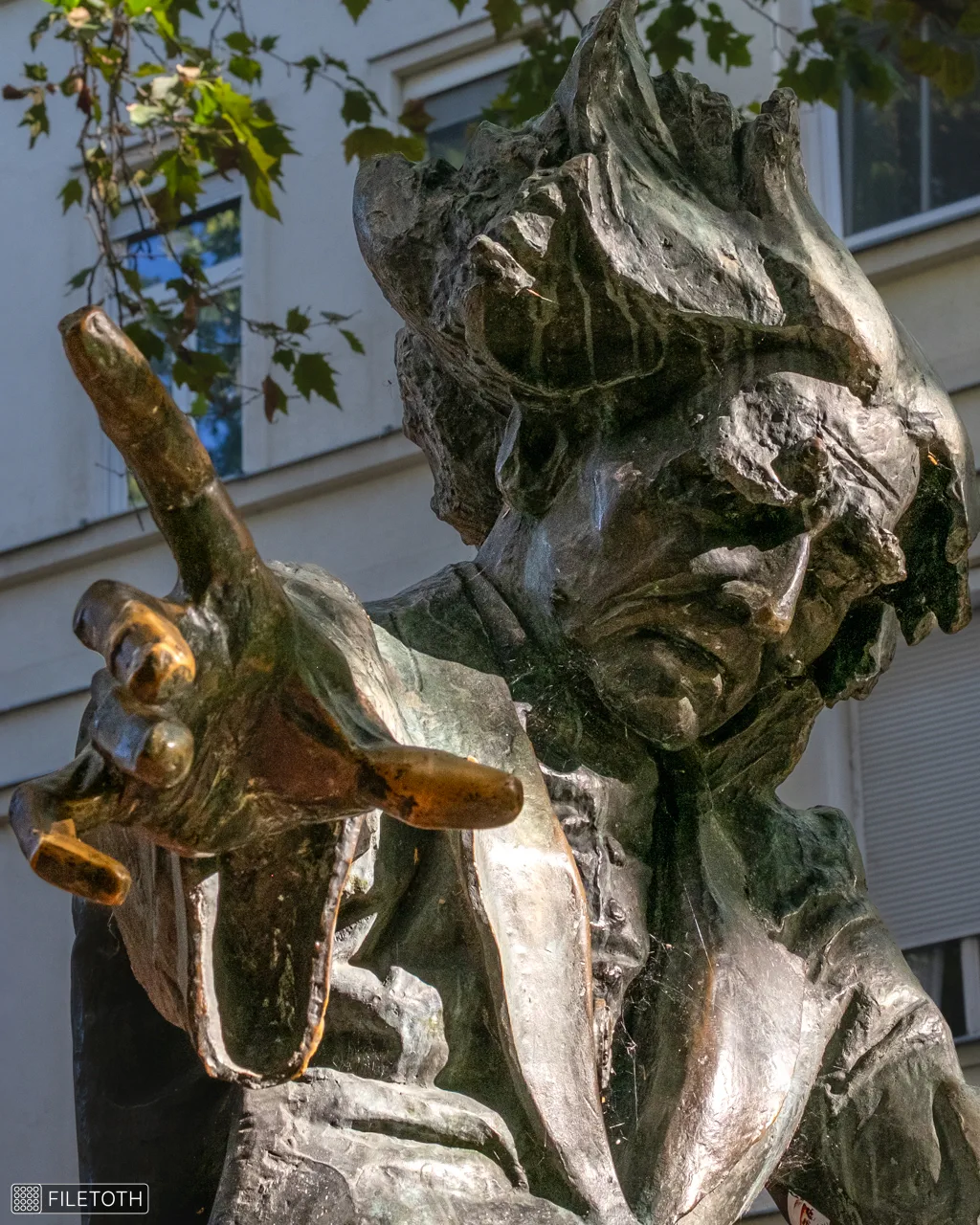
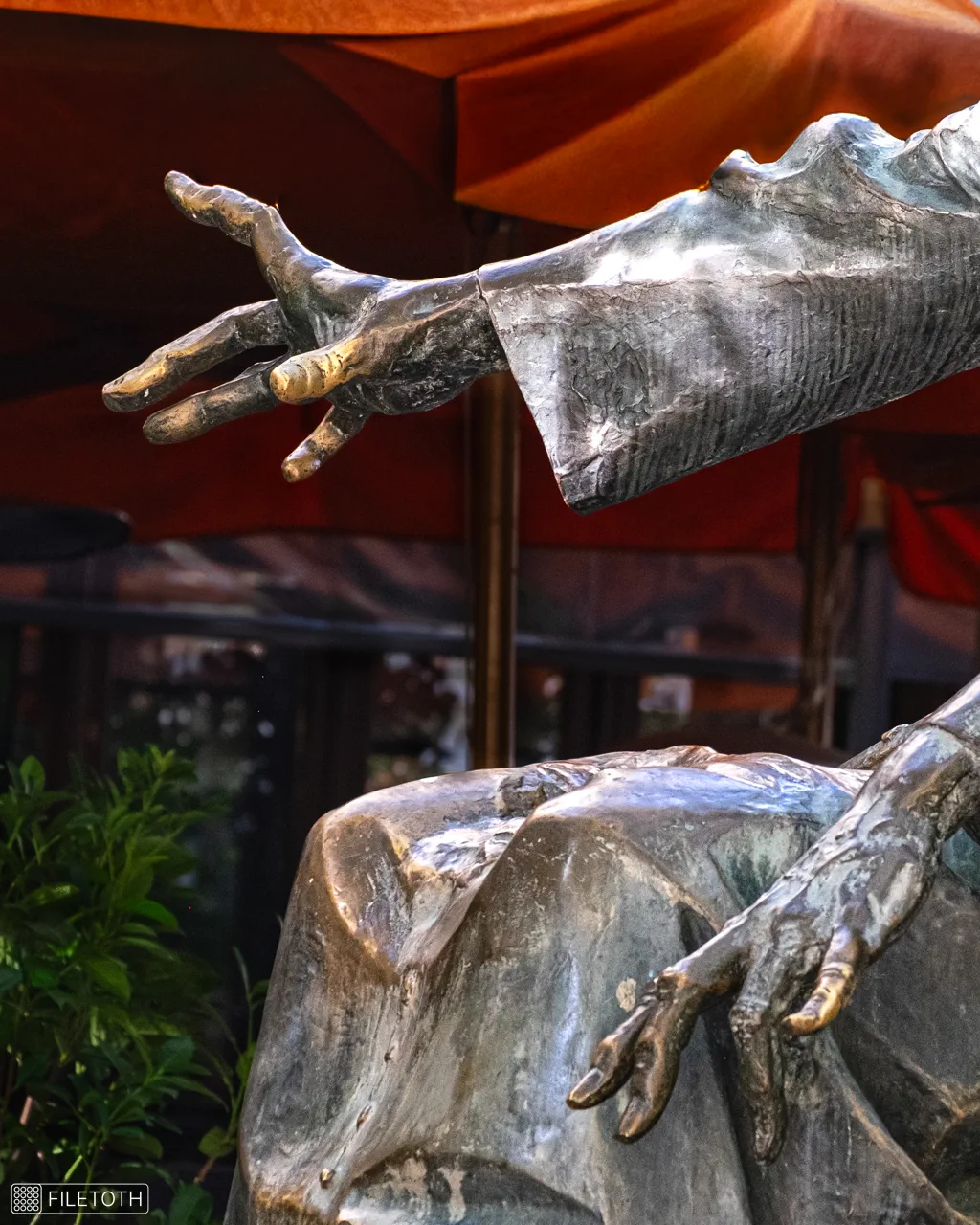
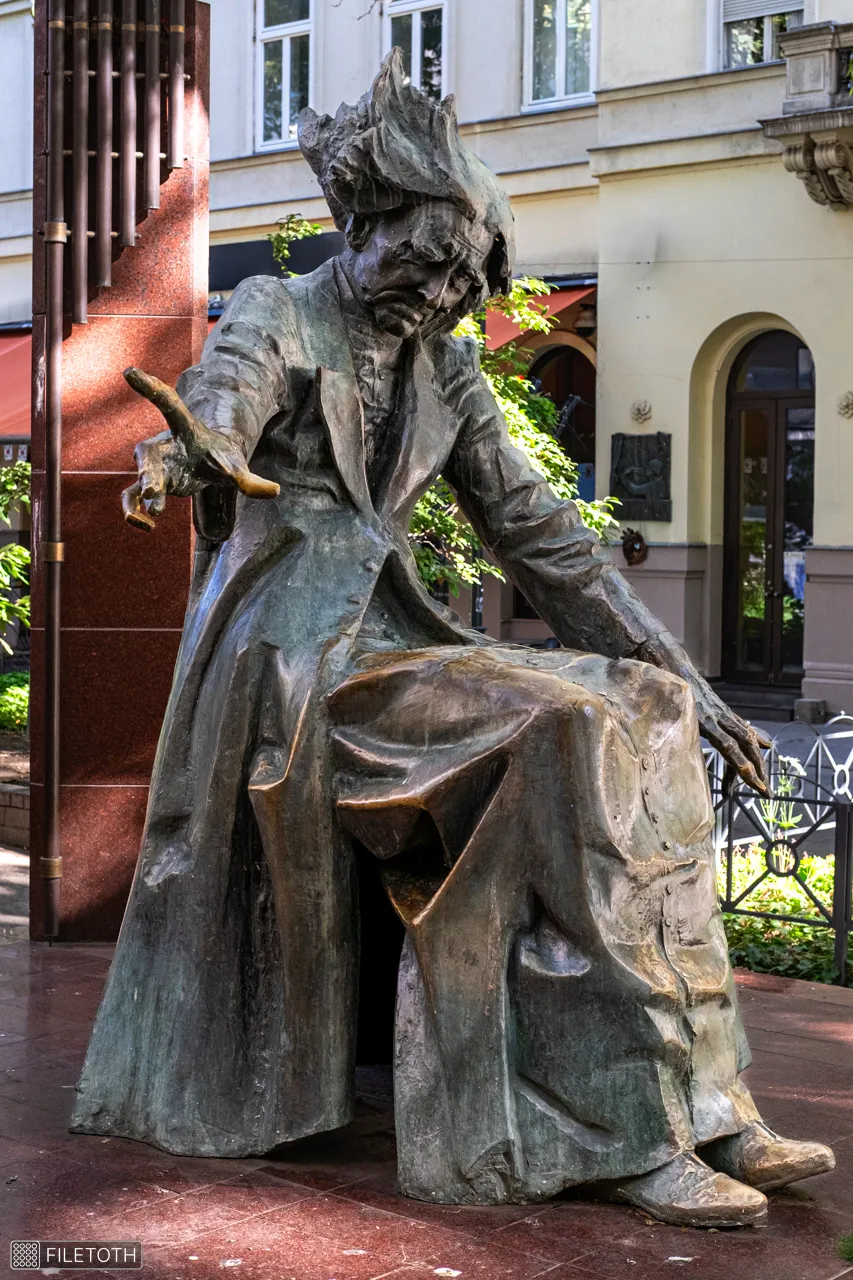
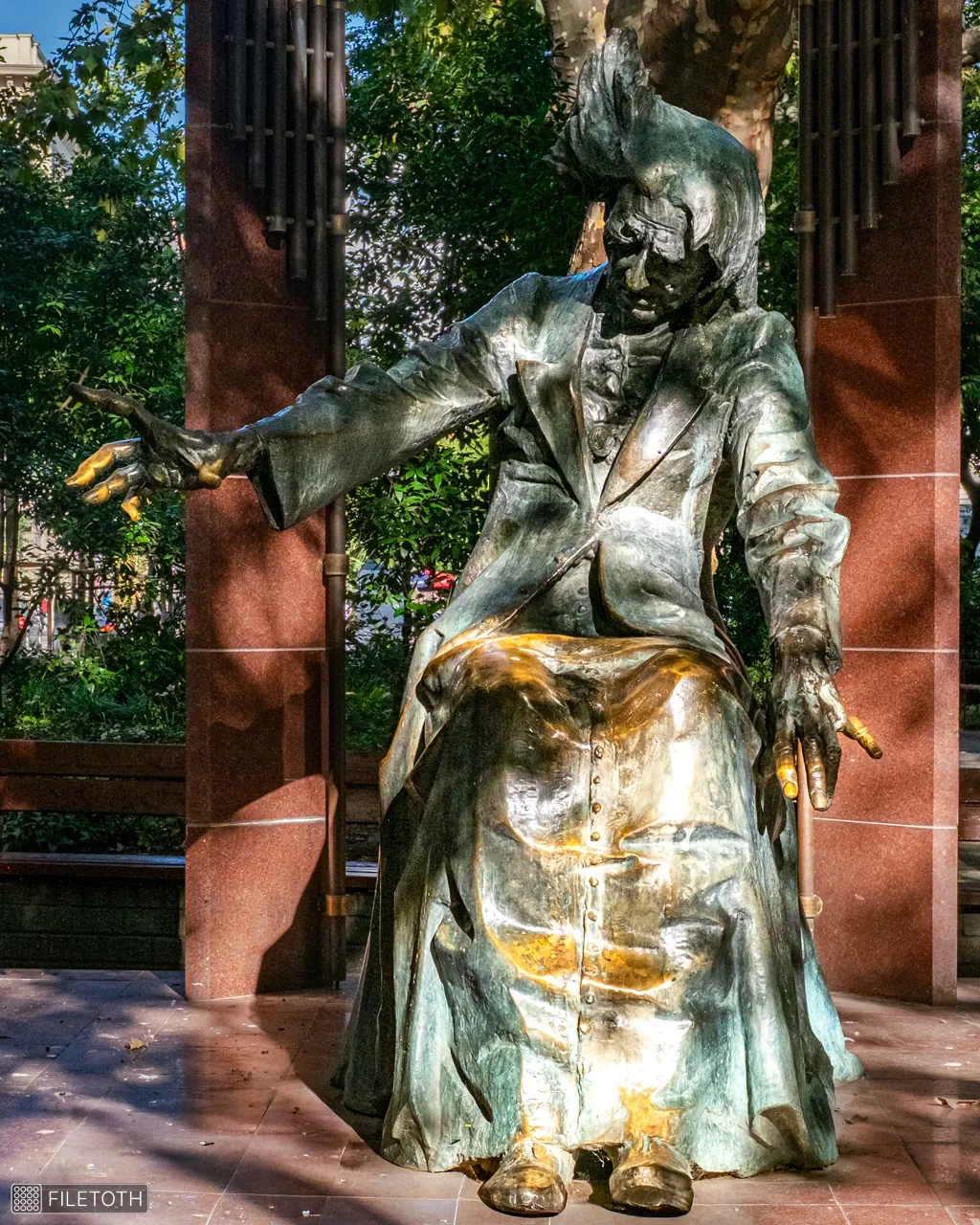
The Hand of Desire

Imre Soós Statue

Historical figure and era

Imre Soós (1930–1957) was a Hungarian actor and recipient of the Jászai Prize whose career ended tragically at a young age. The statue recalls a memorable scene from the 1956 film Merry-Go-Round, where his outstretched hand and forward-leaning posture capture a moment of emotional intensity that became one of the defining images of Hungarian cinema.

Creation and historical context

Working during the cultural restrictions of the Rákosi era, director Zoltán Fábri created films that formally complied with socialist realism while quietly expanding its artistic boundaries through dynamic storytelling and poetic imagery. Péter Párkányi Raab's 2002 sculpture transforms a fleeting cinematic gesture into a permanent public monument, preserving a single moment of longing, uncertainty, and possibility beyond the screen.

Statue by Péter Párkányi Raab, 2002. [ref.]
The Hand of Candor

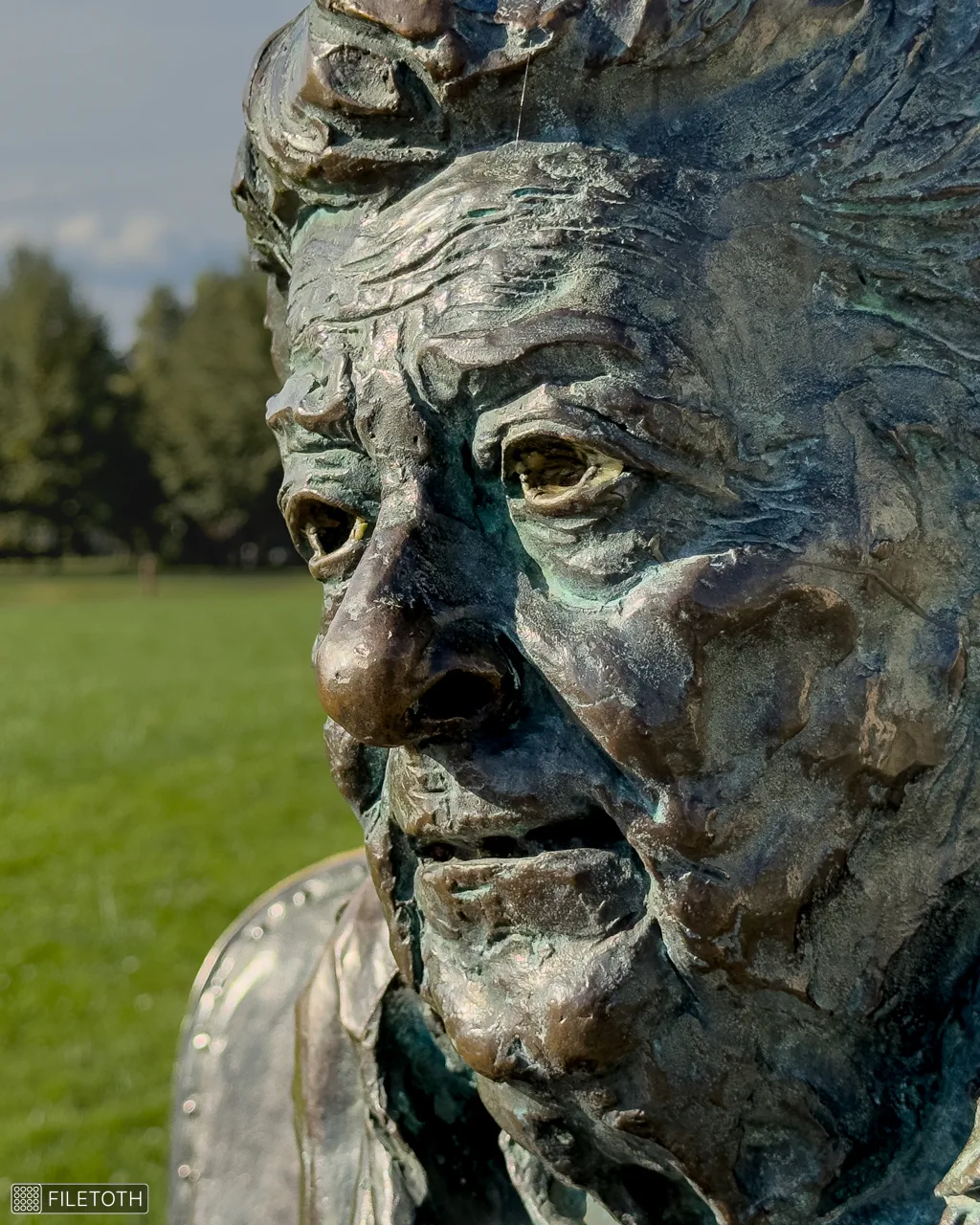
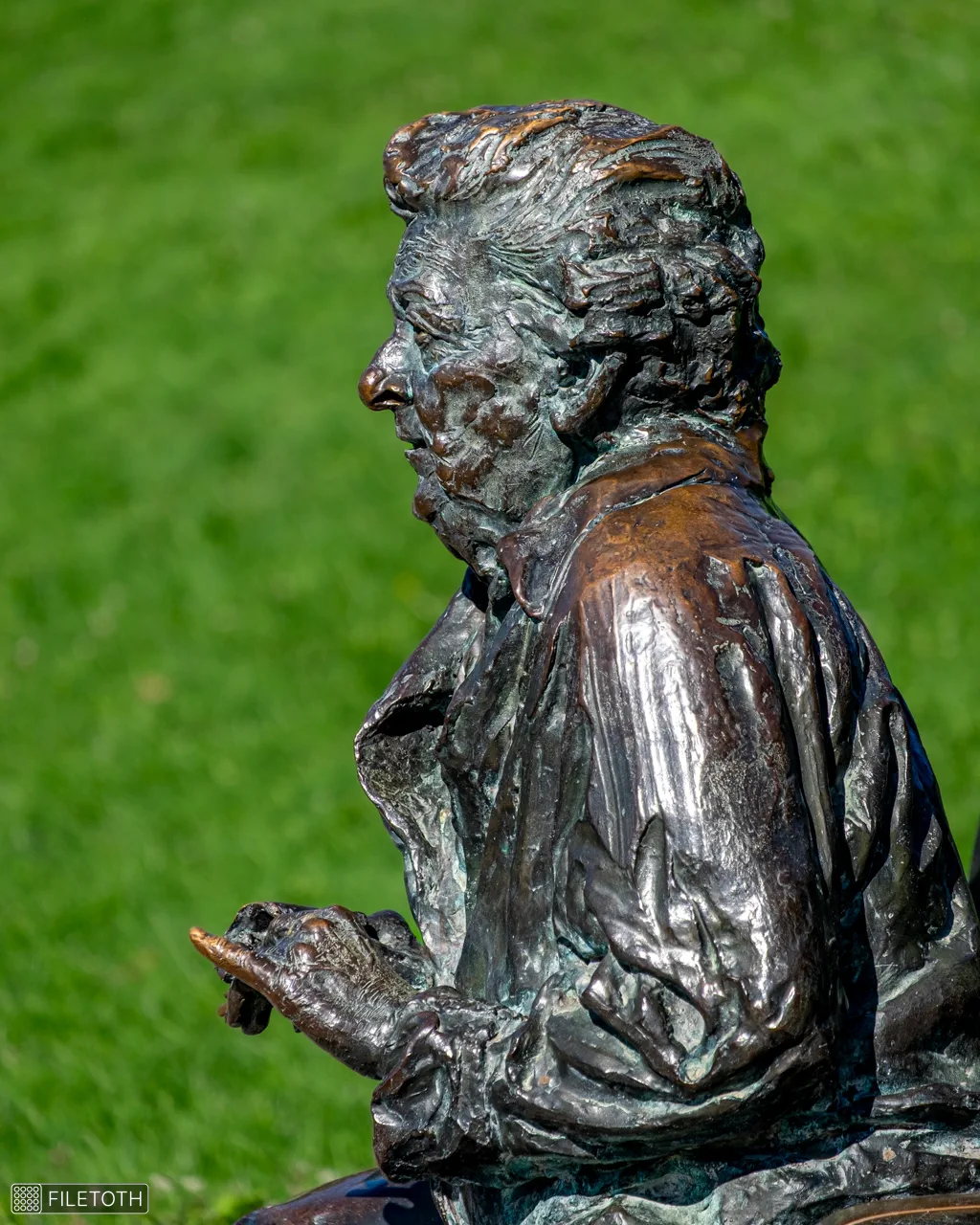
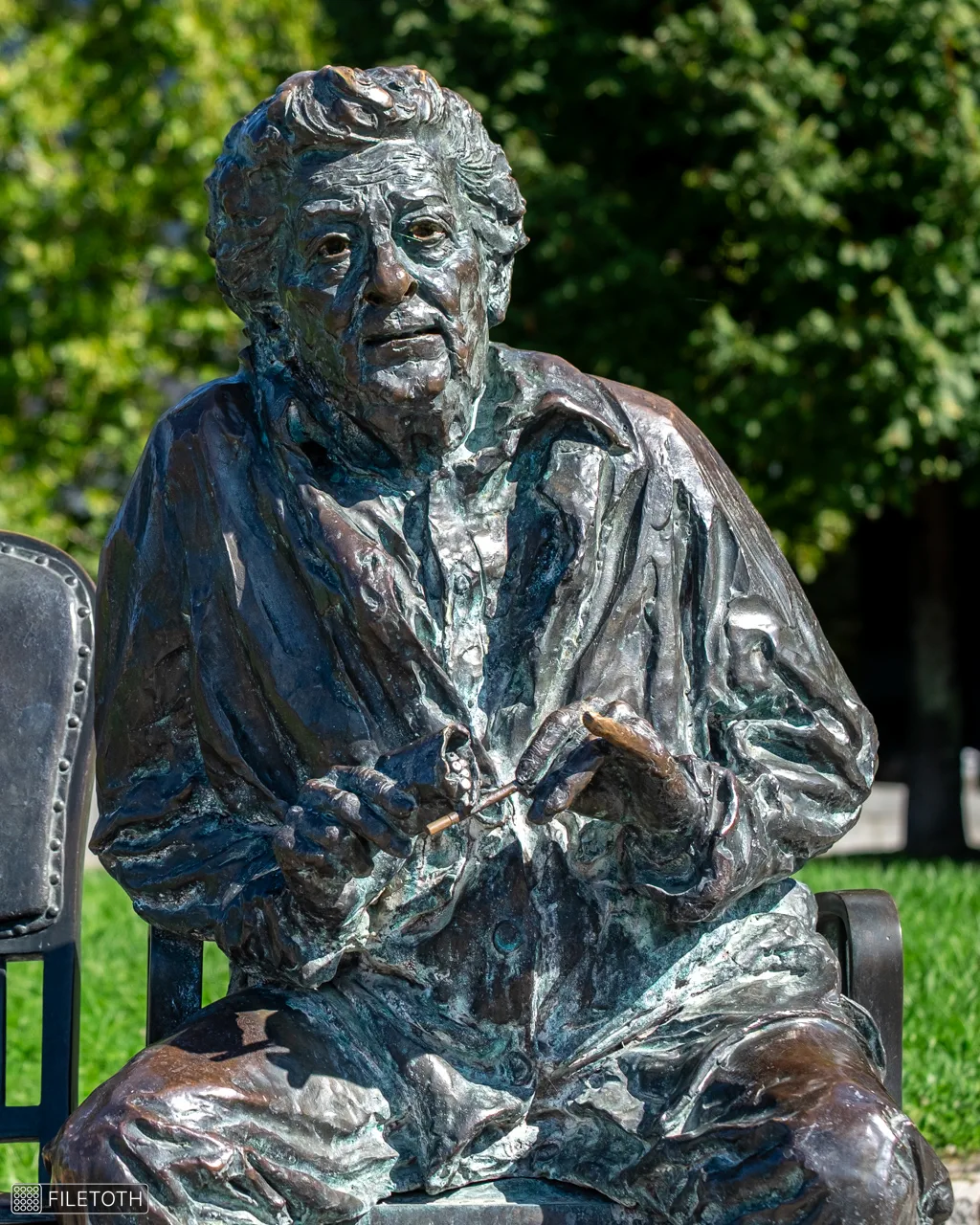
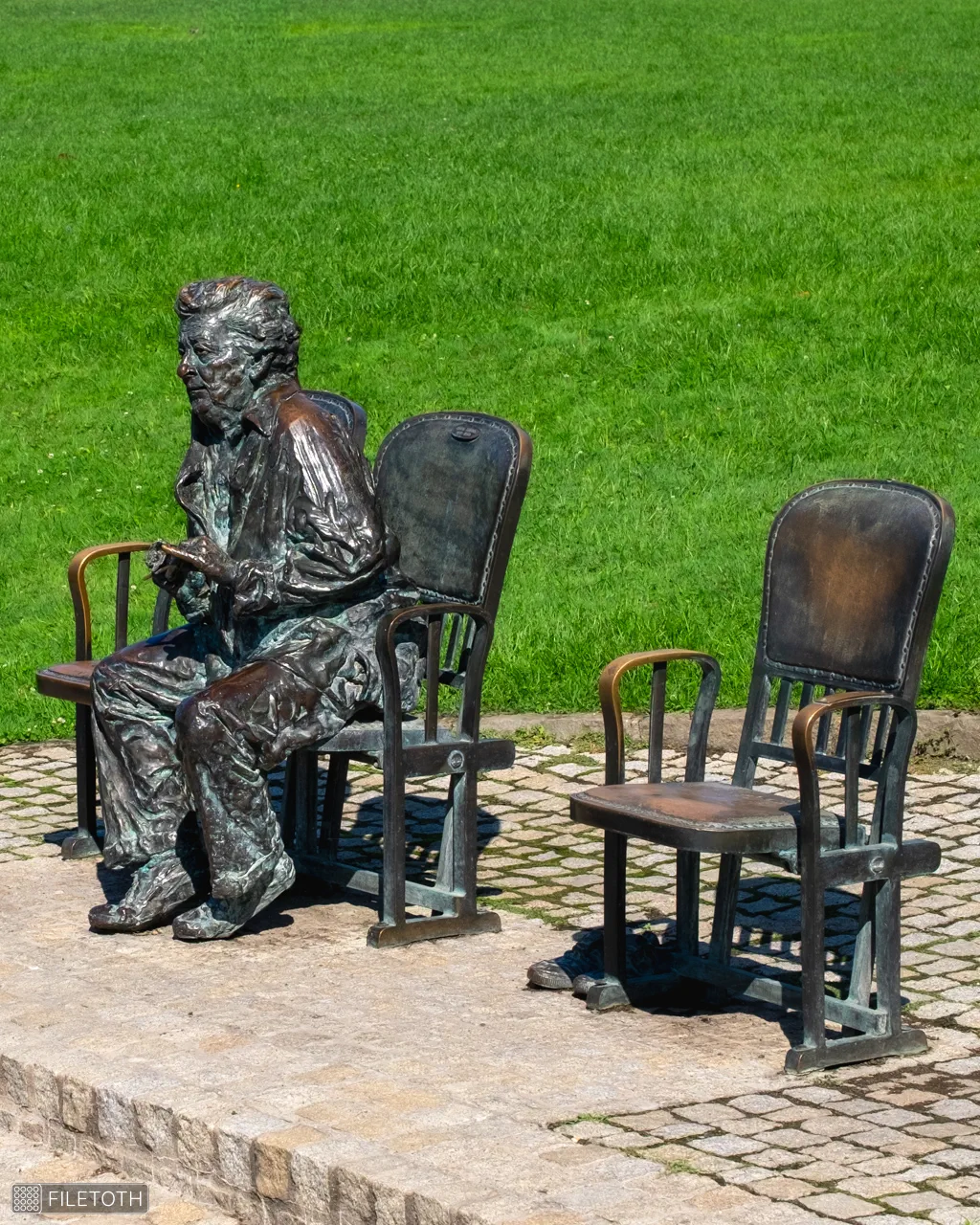
Hilda Gobbi Statue

Historical figure and era

Hilda Gobbi (1913–1988) was one of Hungary's most distinctive and beloved actresses, celebrated for her direct manner, expressive performances, and unmistakable stage presence. Beyond the theater, she devoted much of her life to improving the welfare of fellow actors, believing that artists also carried a public responsibility toward society.

Creation and historical context

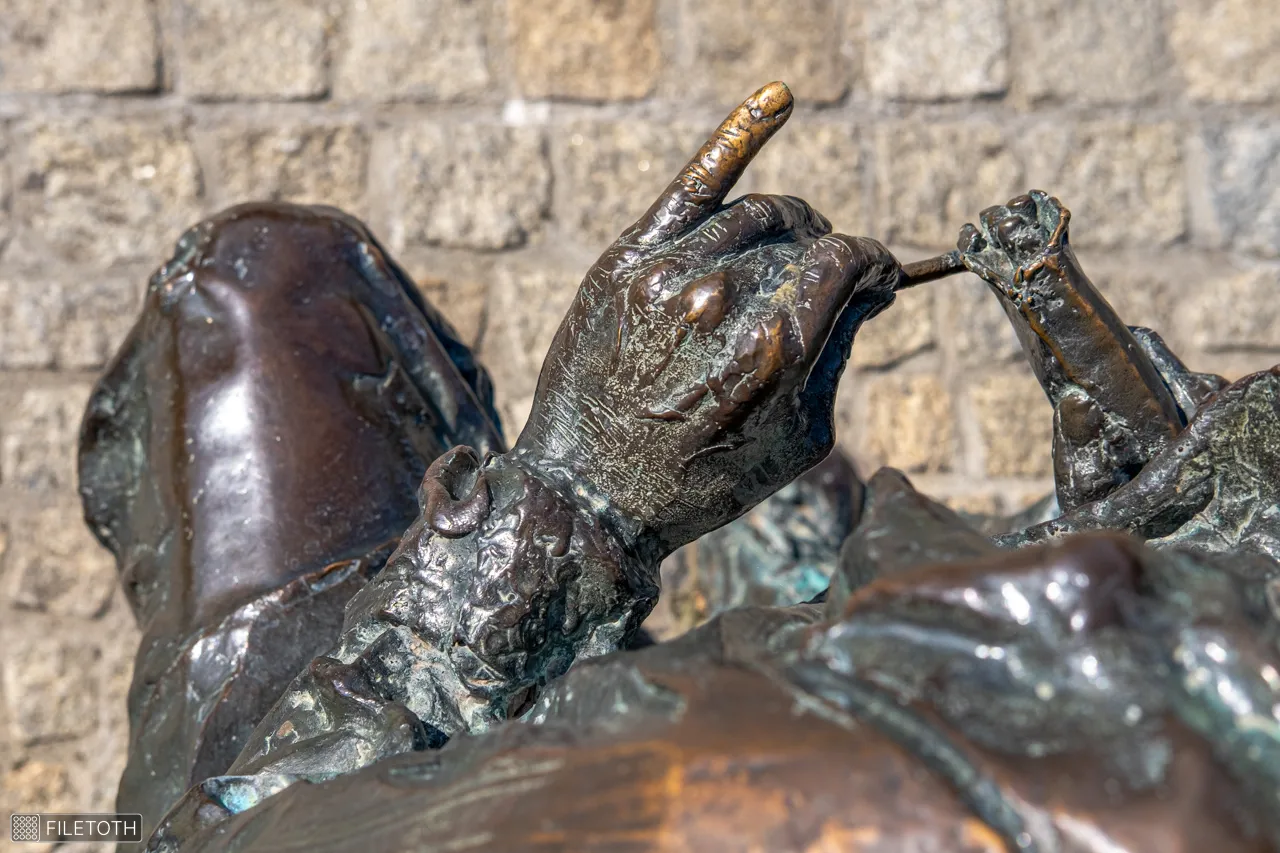
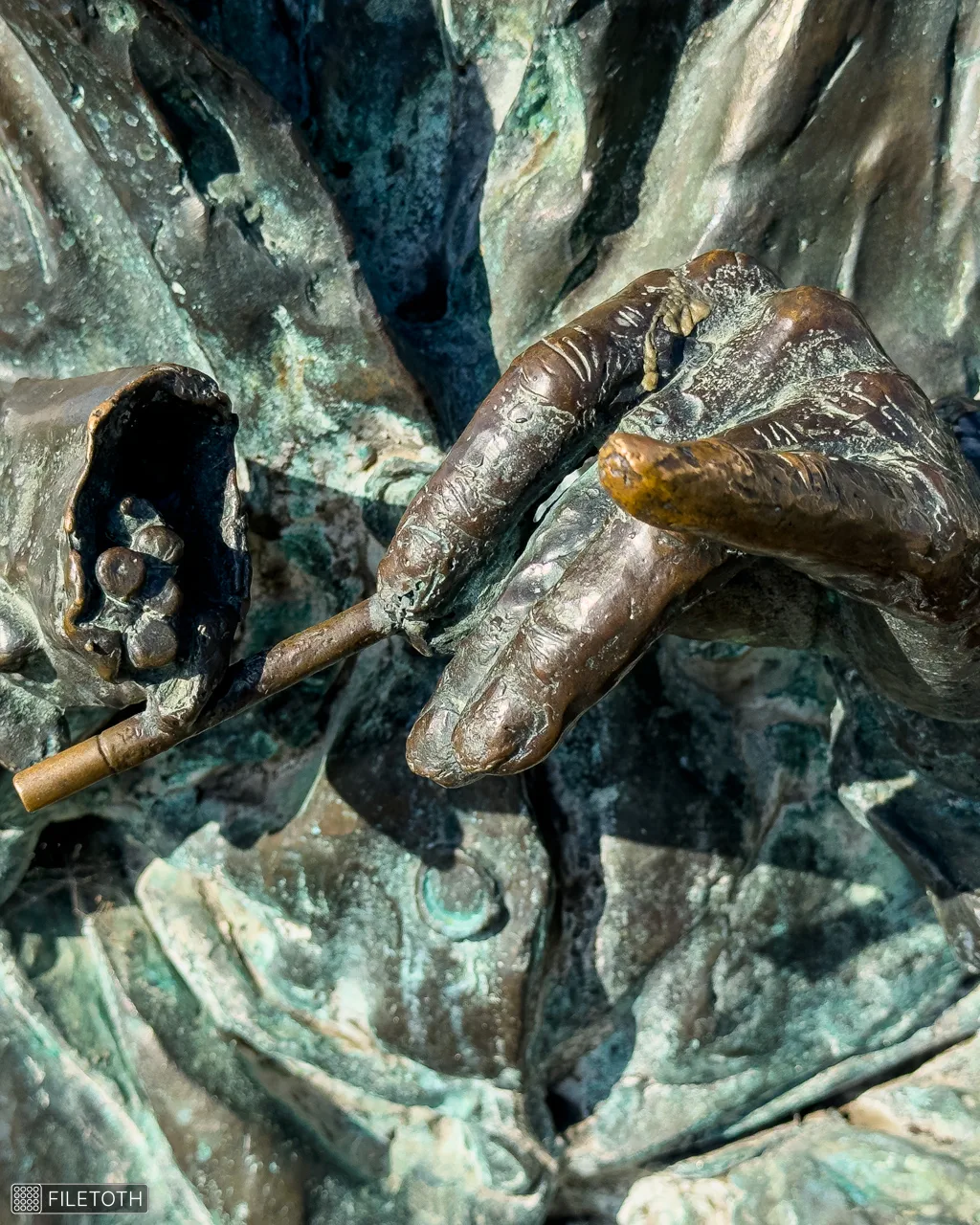
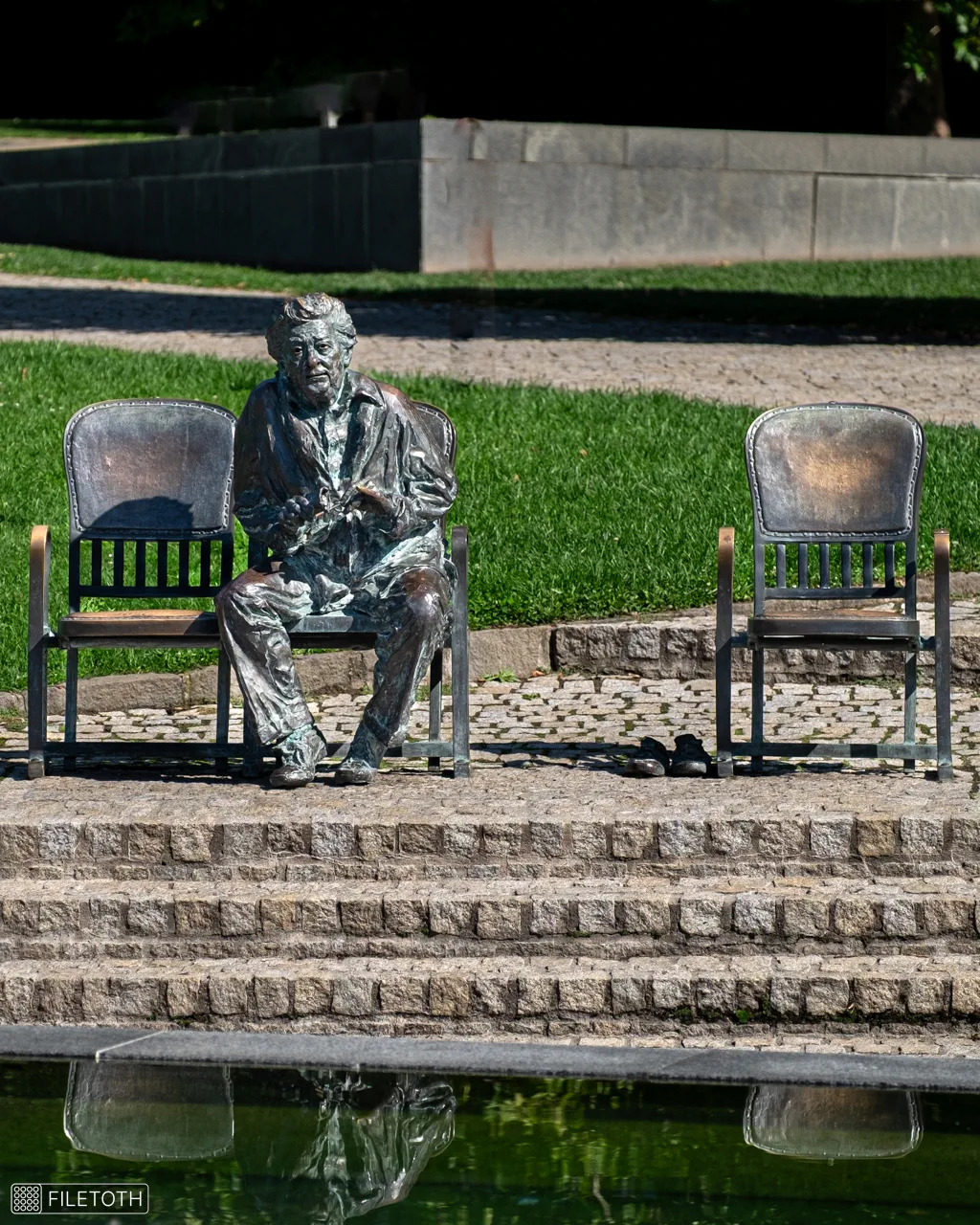
Péter Párkányi Raab's 2002 sculpture portrays Gobbi seated as she casually draws a cigarette from its packet, capturing an unguarded everyday moment rather than a theatrical role. The empty chair beside her quietly invites conversation, reflecting both her openness and the lasting dialogue she fostered through her artistic work and public life.

Statue by Péter Párkányi Raab, 2002. [ref.]
The Hand of Transformation

Manyi Kiss Statue

Historical figure and era

Manyi Kiss (1911–1971) was one of Hungary's most beloved stage and film actresses, celebrated for her comic brilliance, dramatic depth, and unmistakable voice. Rising from provincial theatres to Budapest's leading stages, she became a defining figure of twentieth-century Hungarian performing arts, moving effortlessly between fairy-tale charm and profound human drama.

Creation and historical context

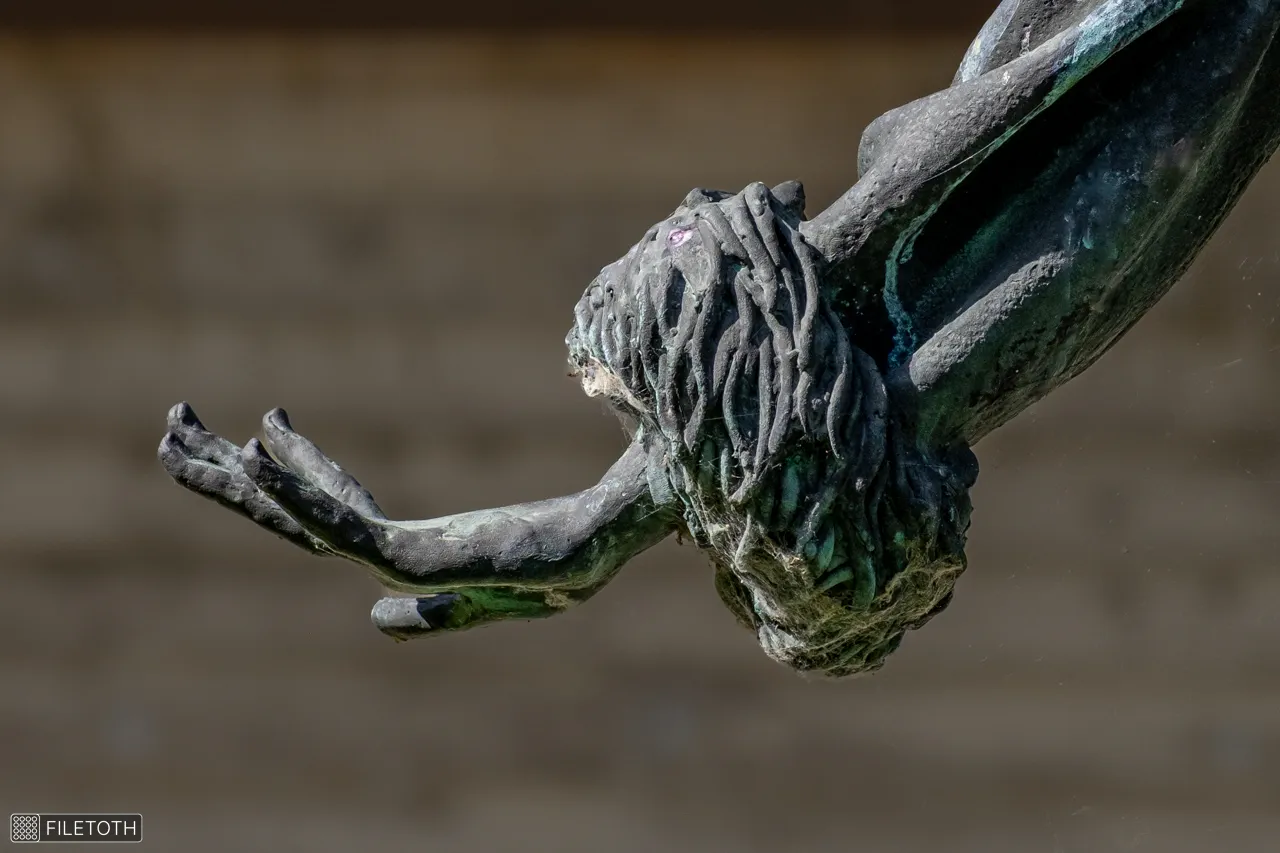
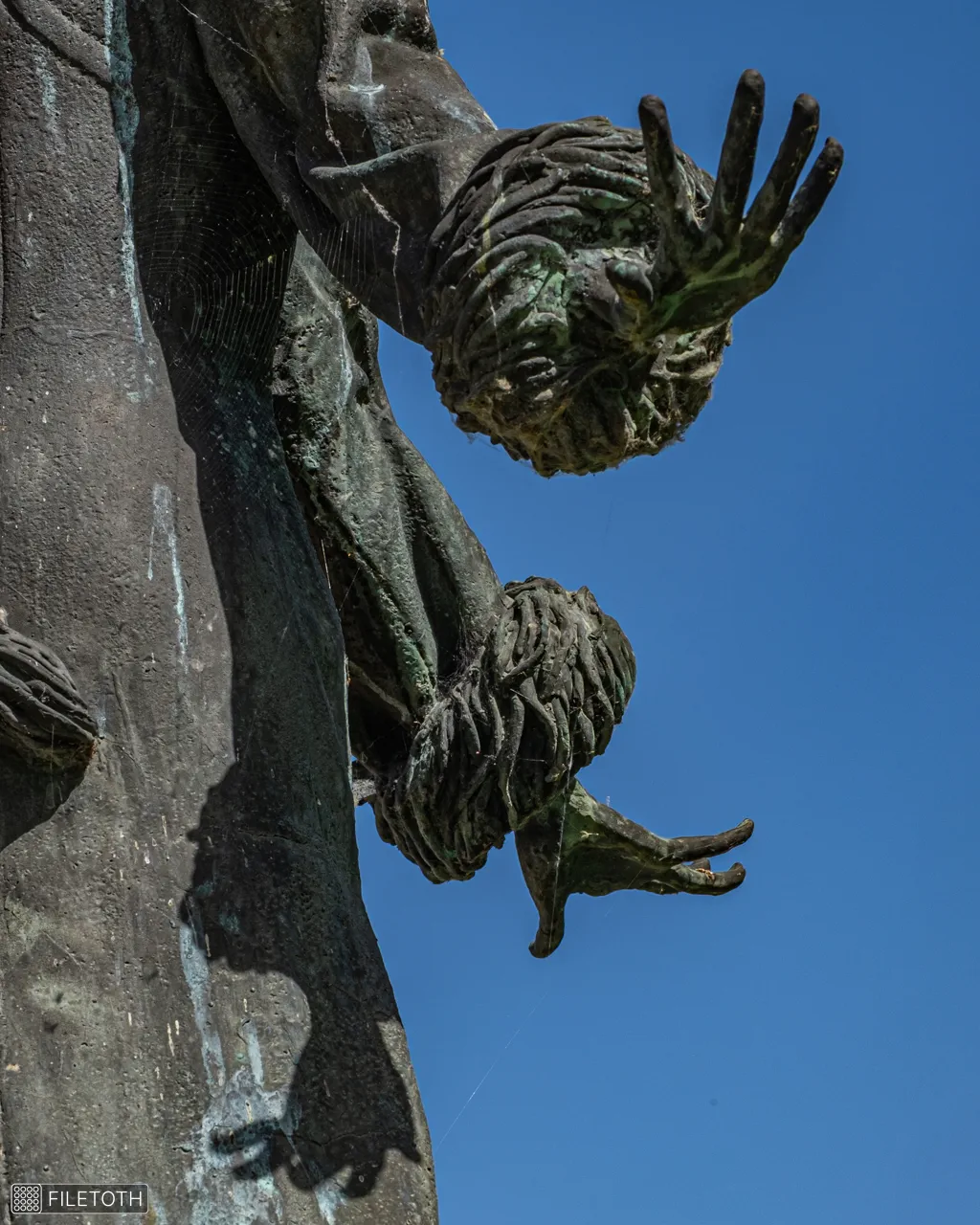
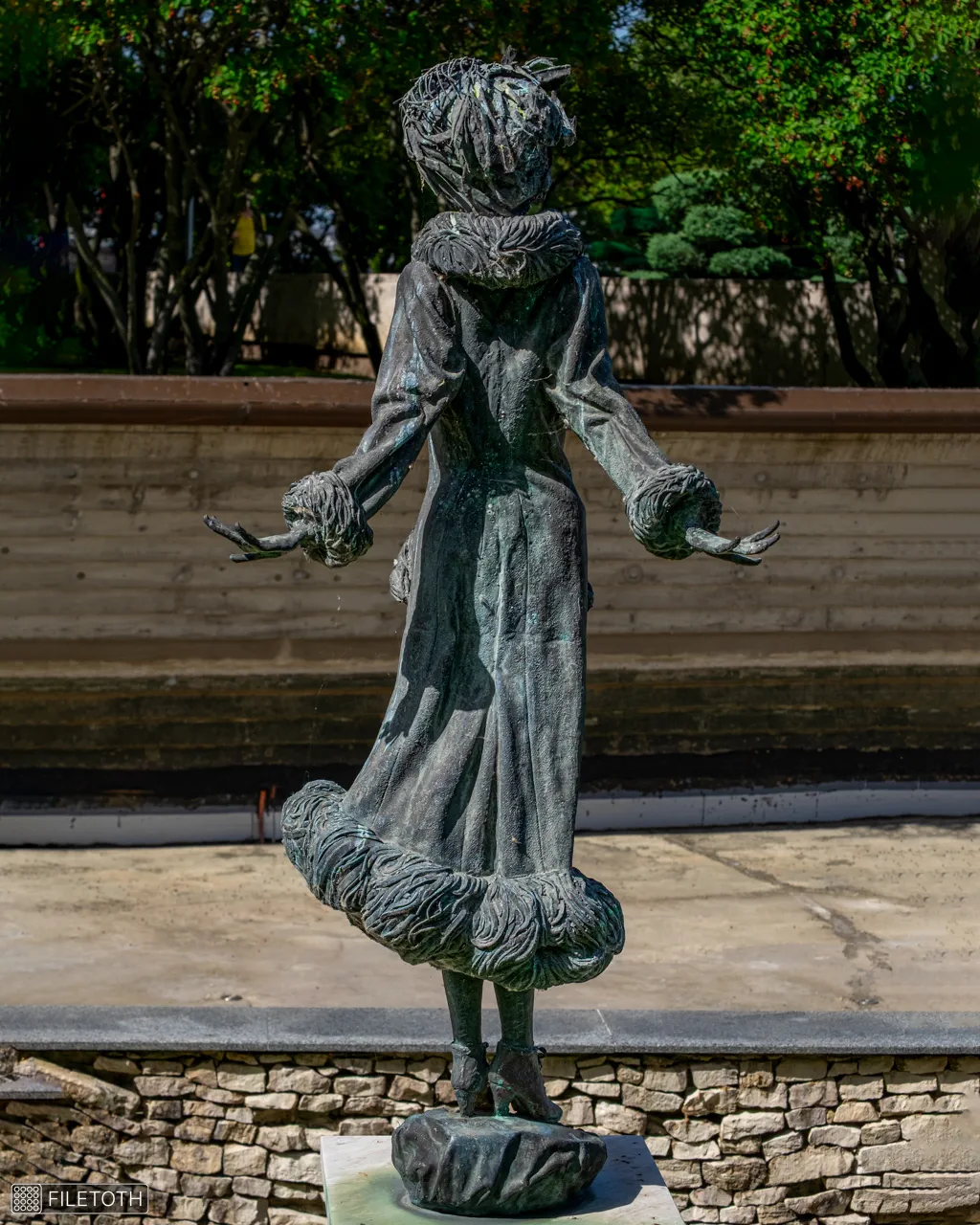
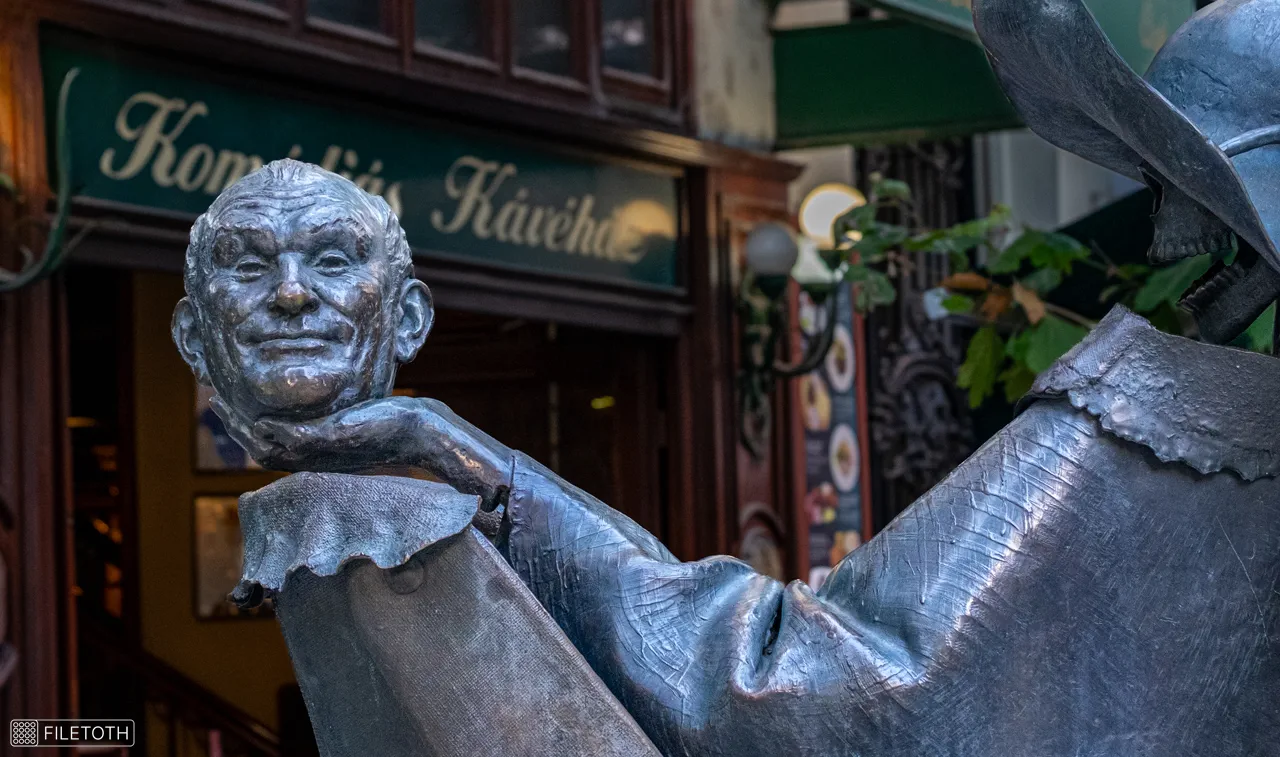
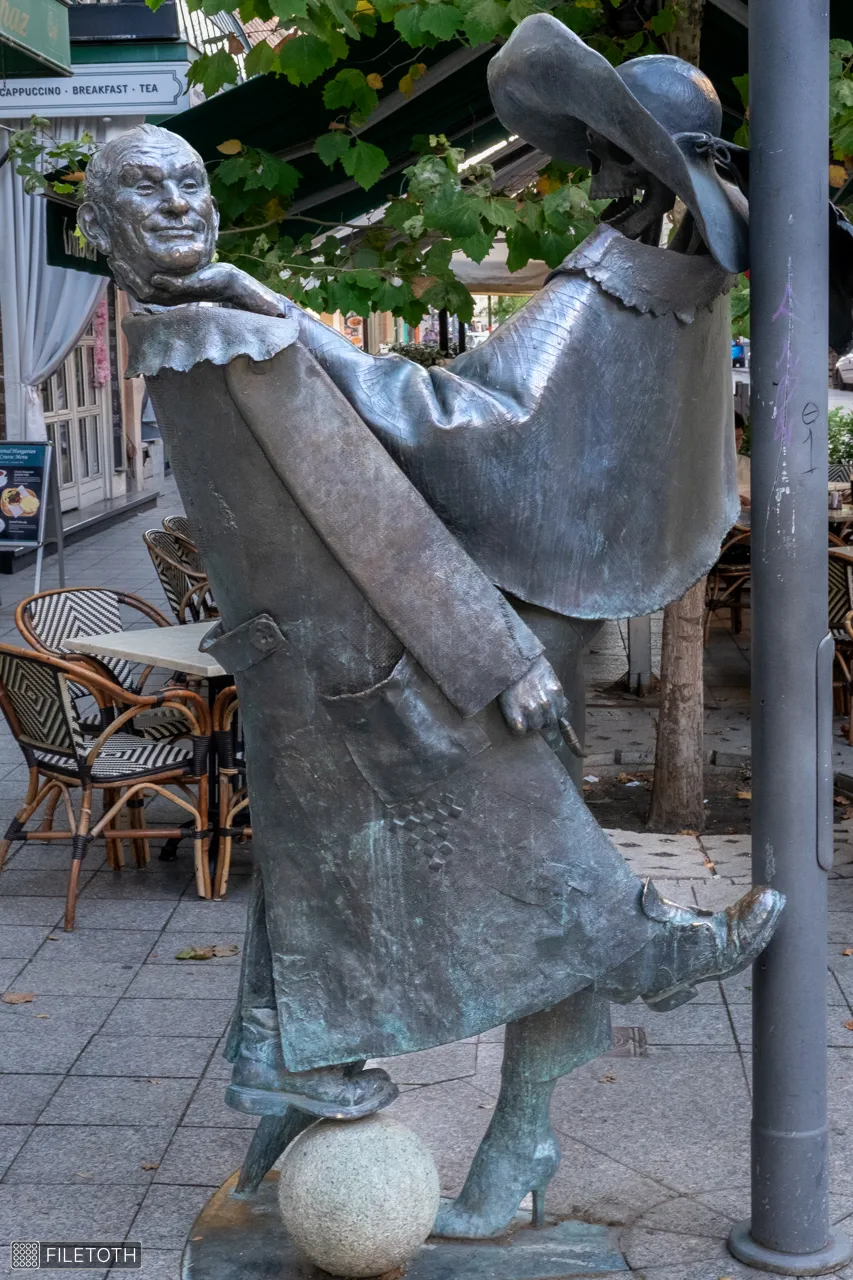
Sándor Kligl's bronze statue, installed near the National Theatre in 2002, celebrates the fleeting magic of performance rather than theatrical grandeur. Human in scale and gently stylized, the sculpture presents Manyi Kiss in an almost weightless pose, as though suspended between one role and the next. Her graceful gesture and flowing silhouette suggest the continual transformation that lies at the heart of every actor's craft.

Statue by Sándor Kligl, 2002. [ref.]
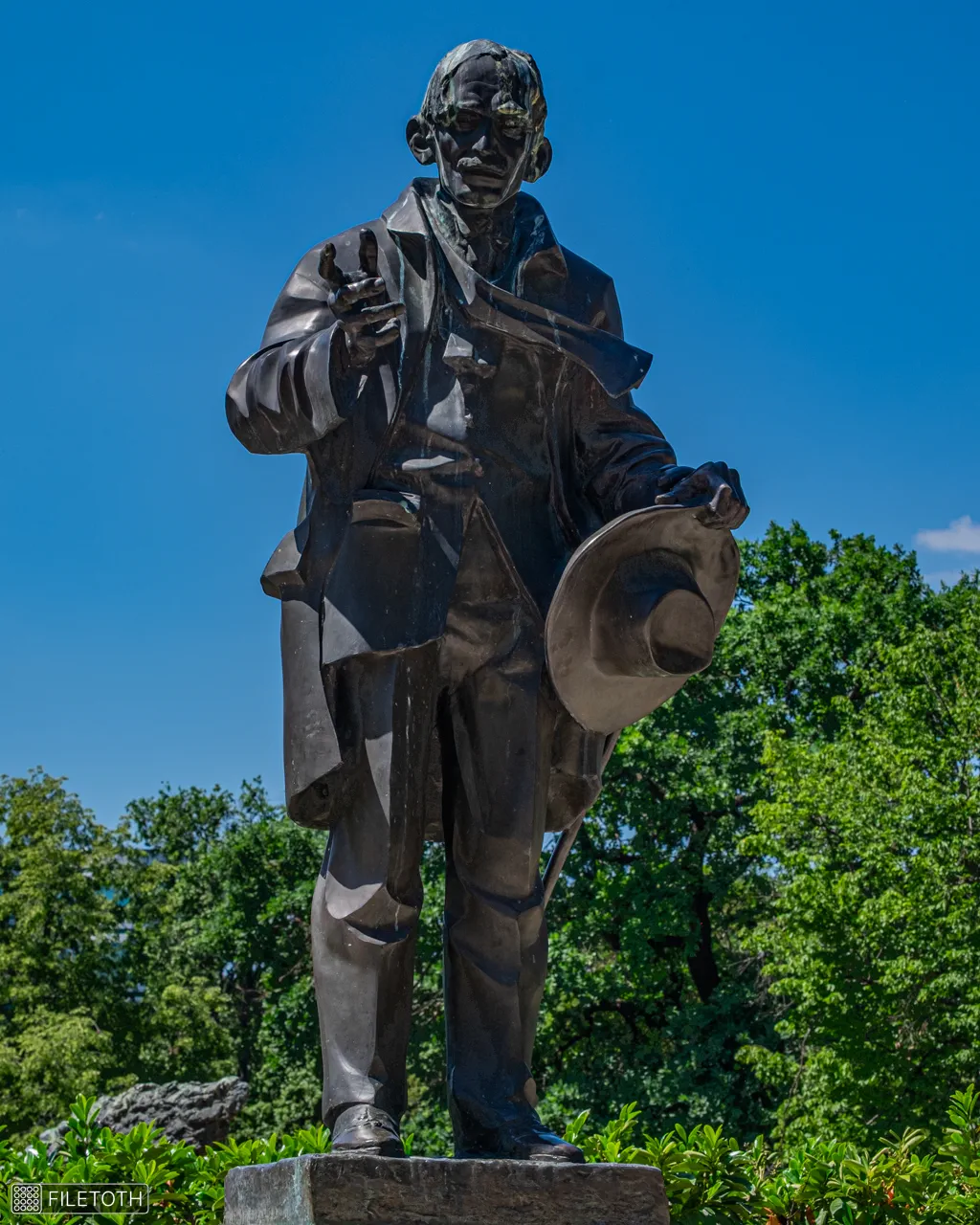
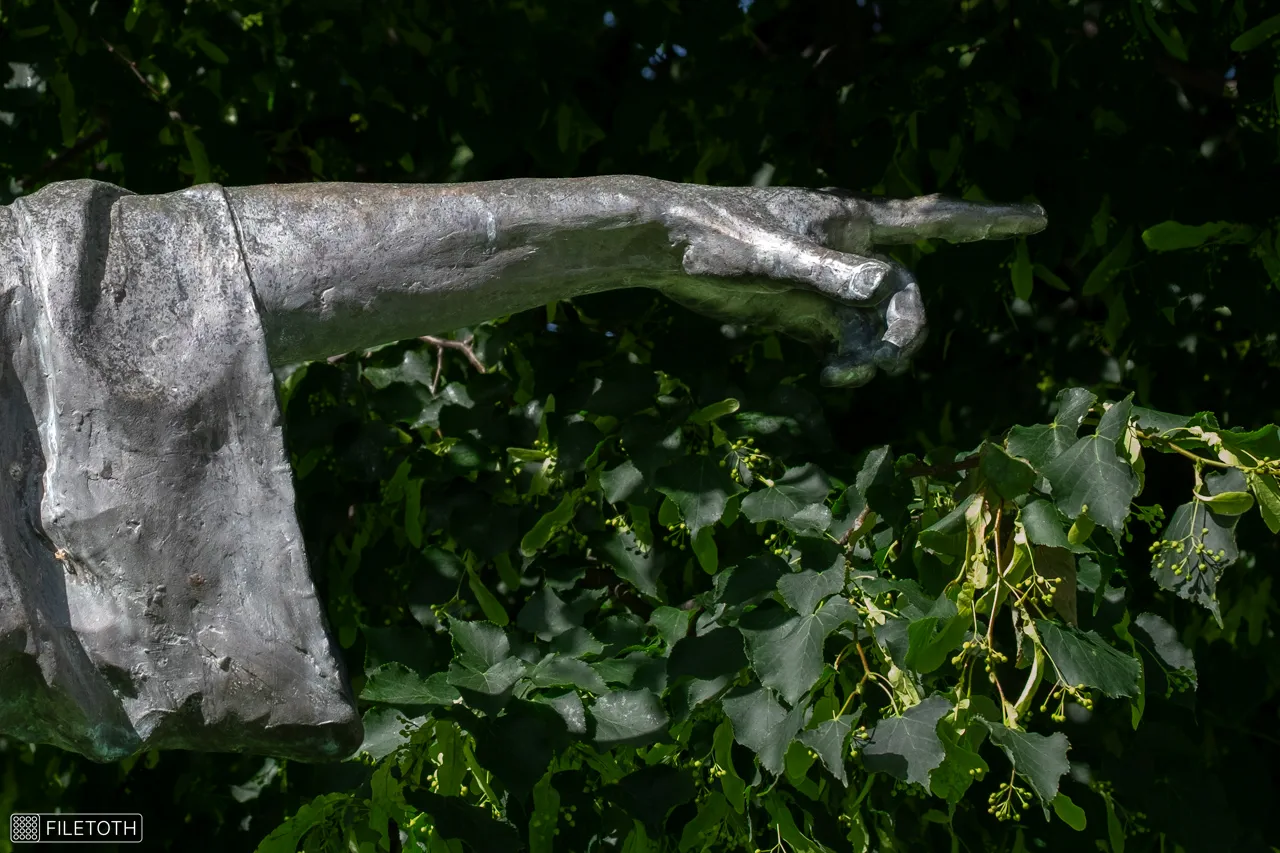
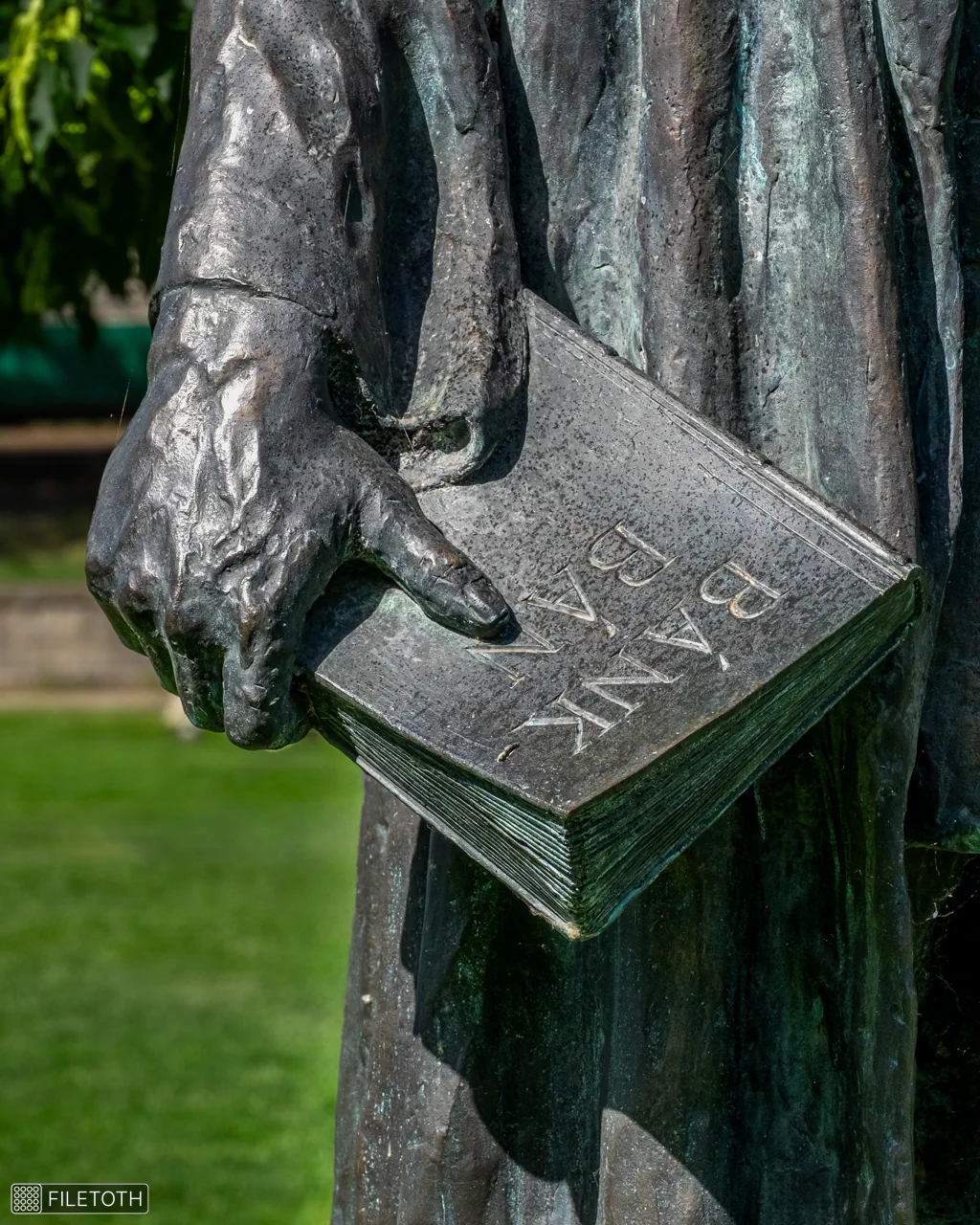
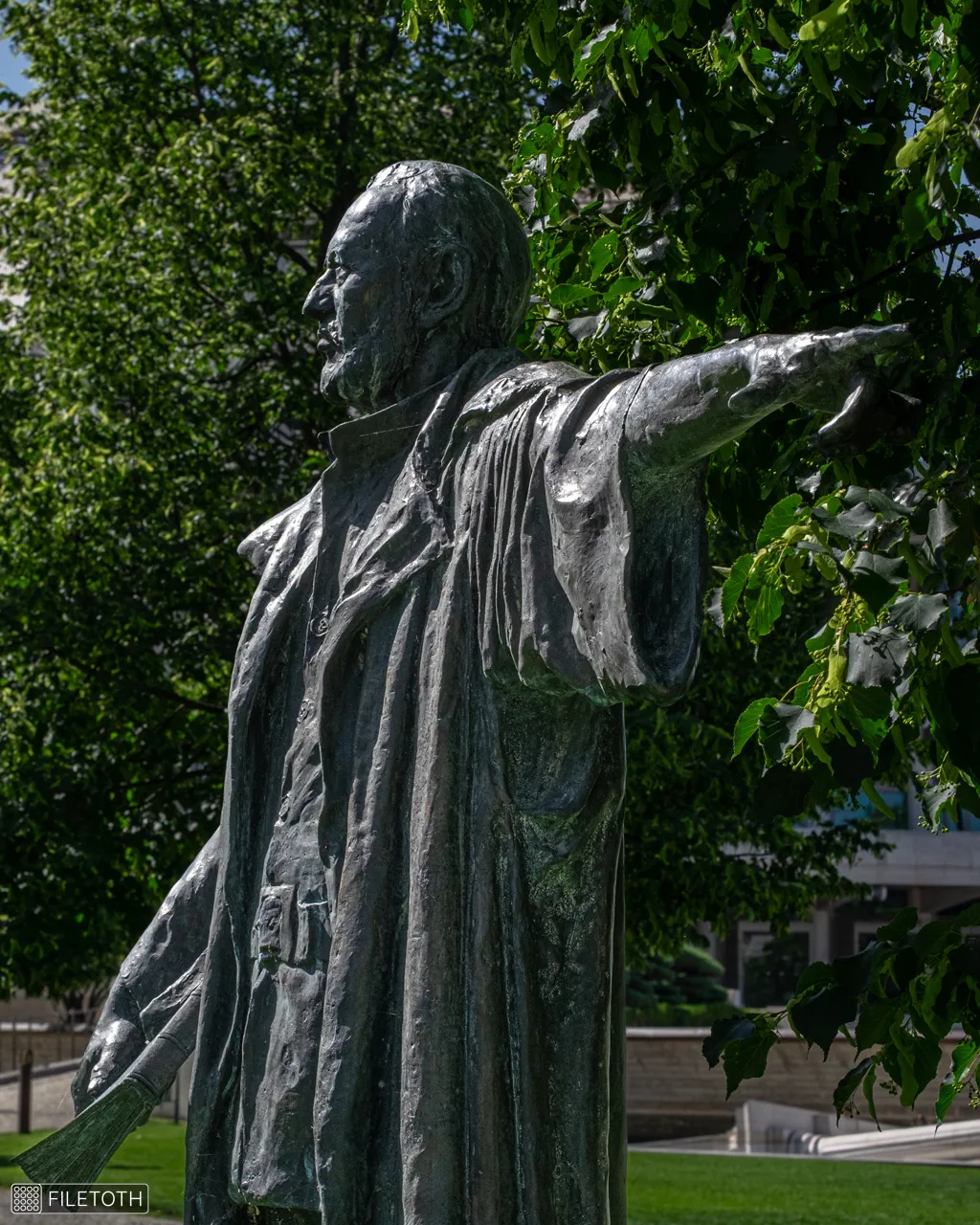
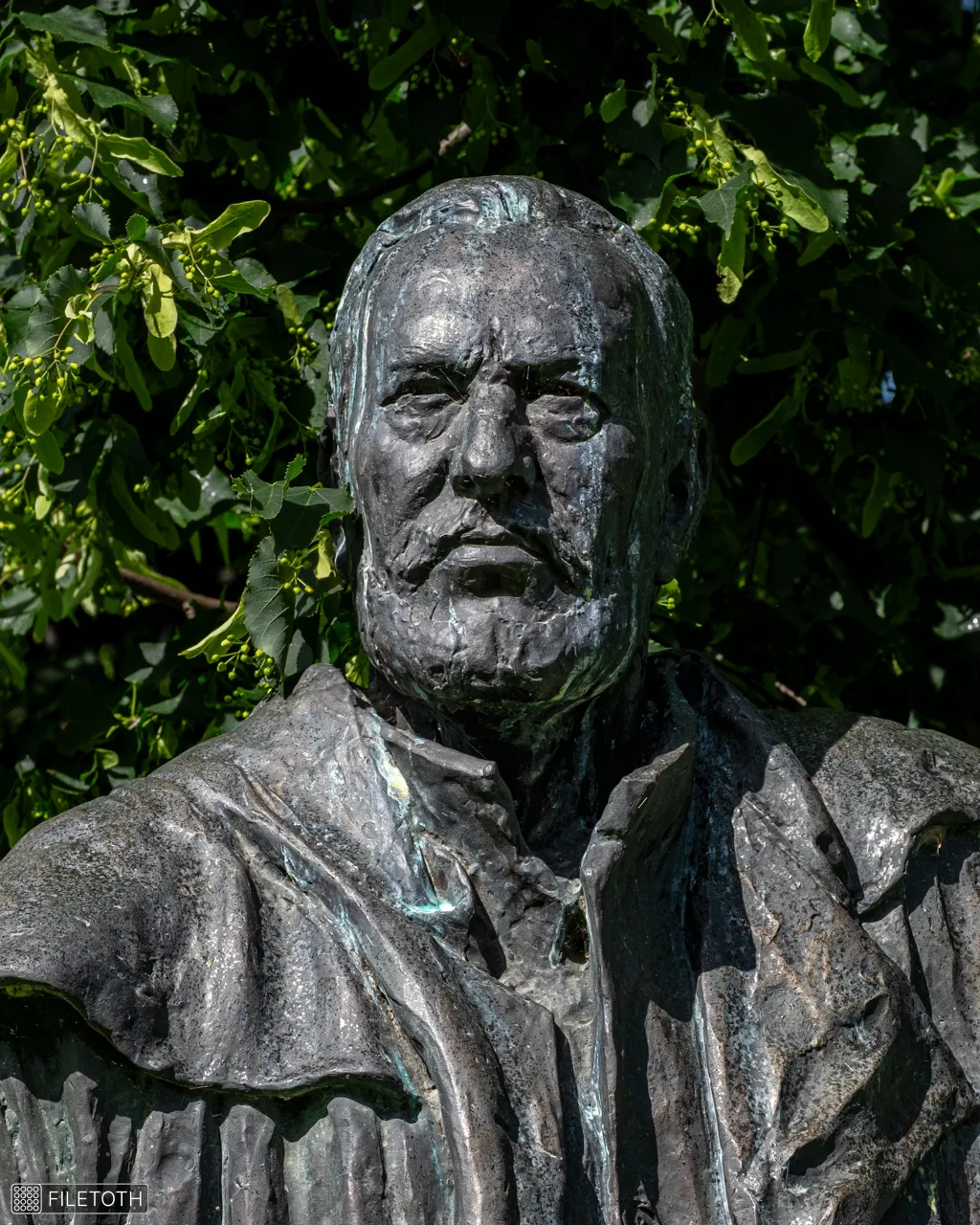
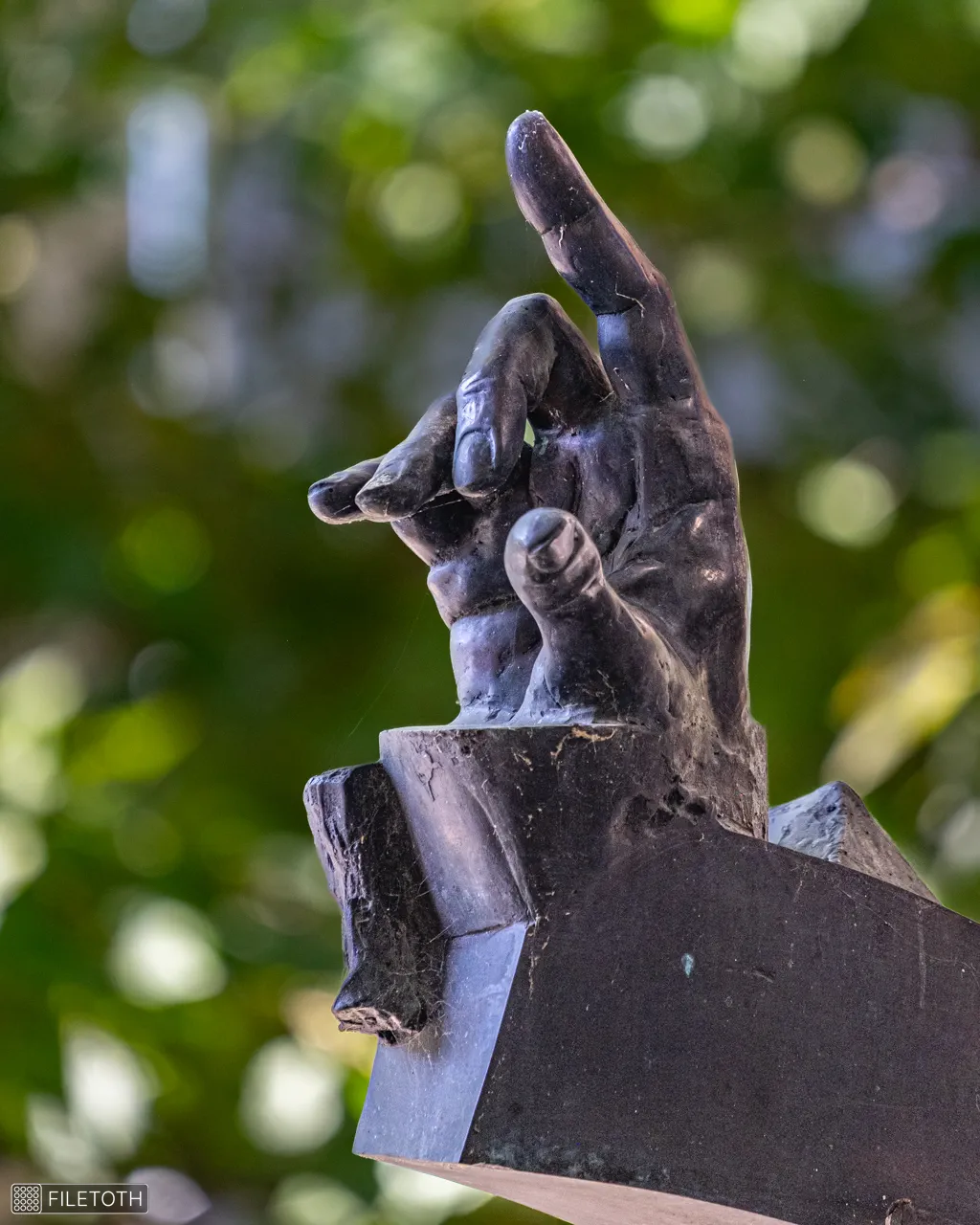
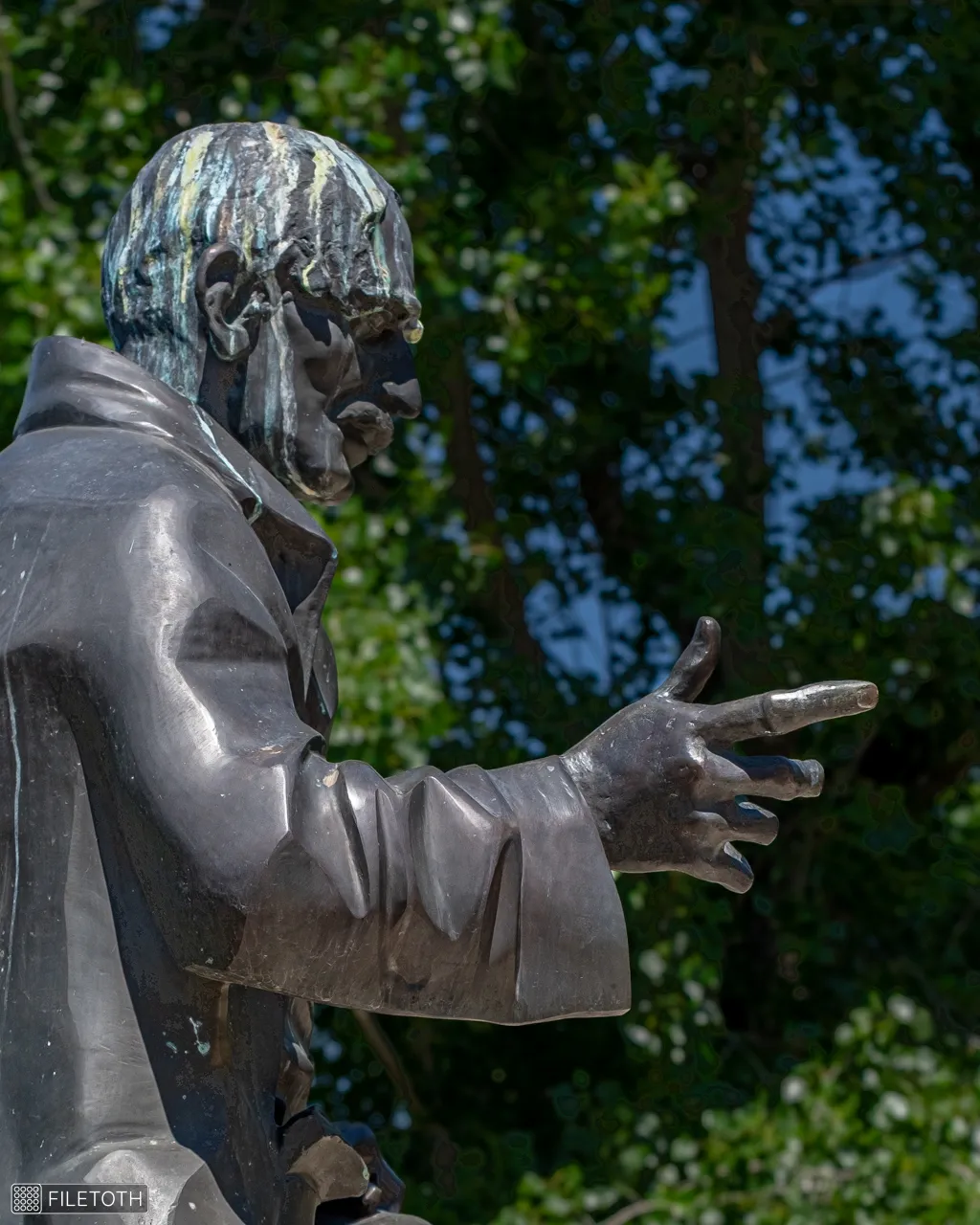
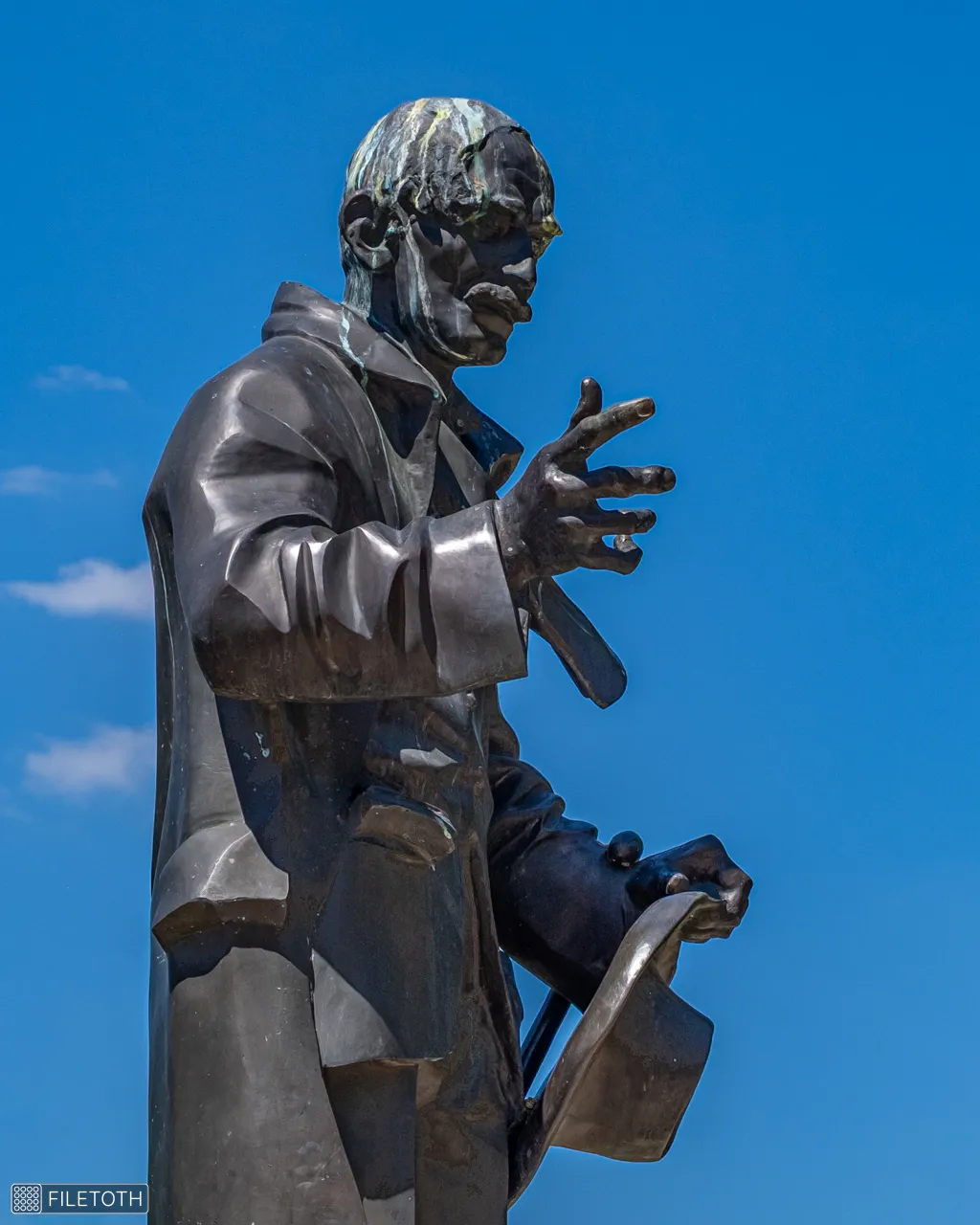
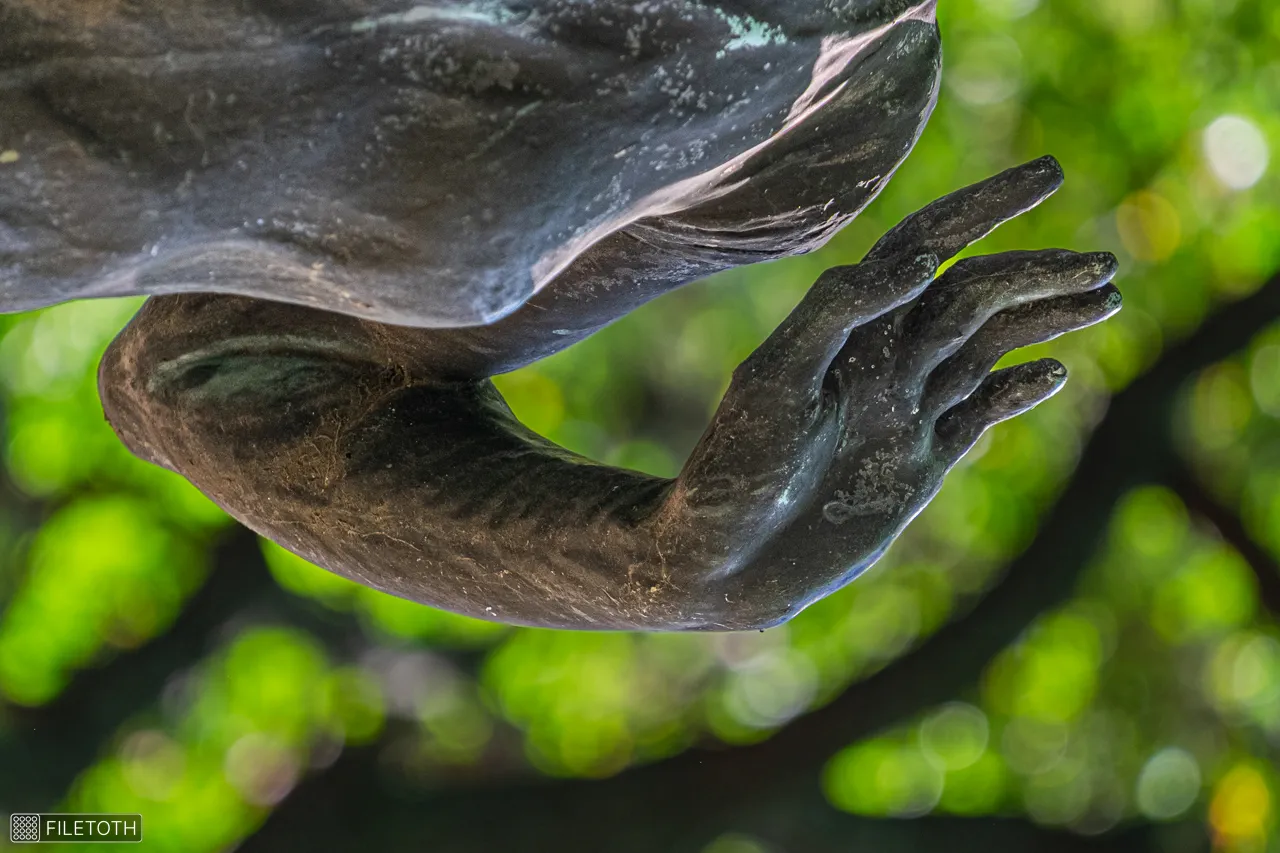
The Hand of Judgement

Ferenc Bessenyei Statue

Historical figure and era

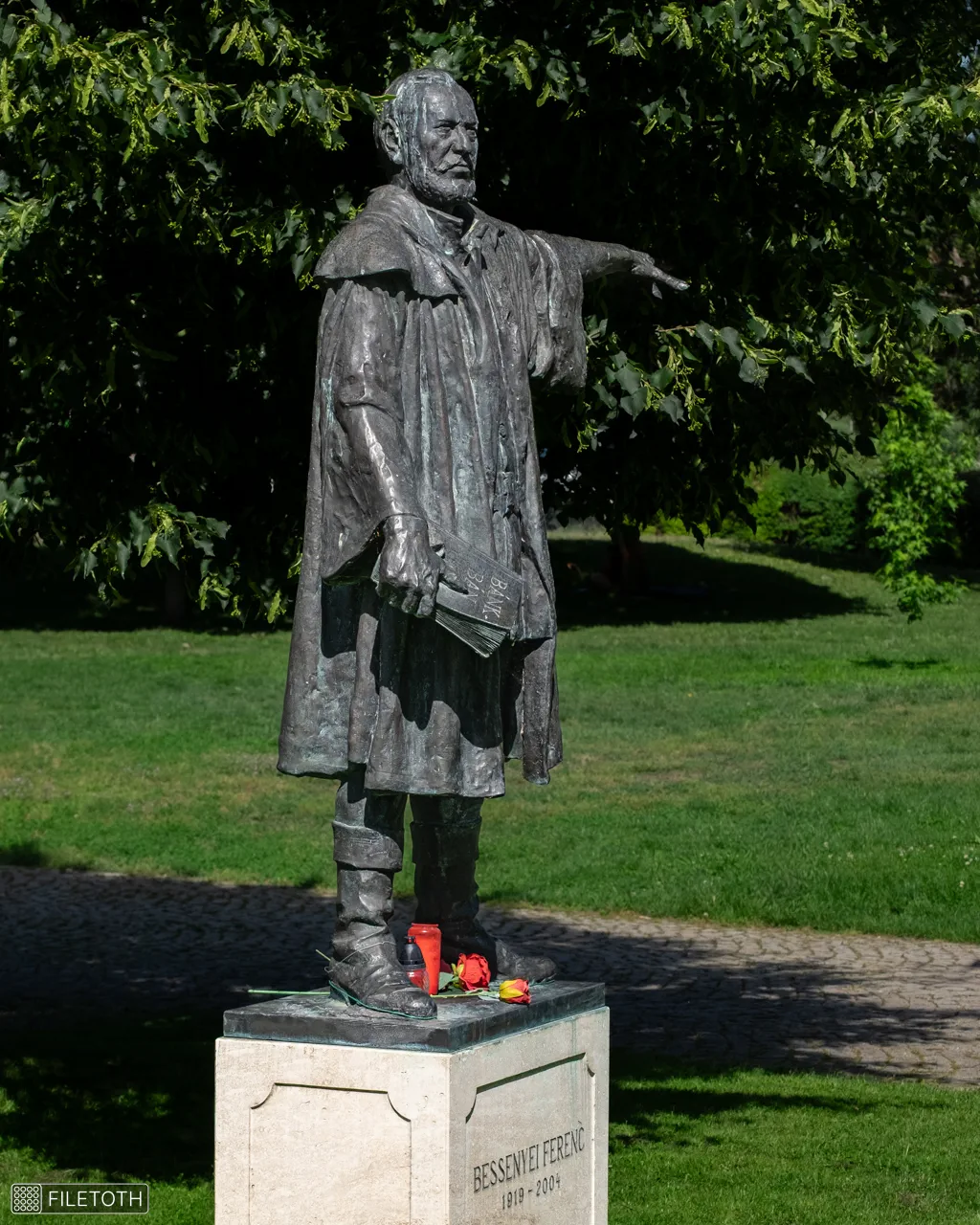
Ferenc Bessenyei (1919–2004) was one of Hungary's most influential stage and film actors, celebrated for his commanding voice and remarkable stage presence. His portrayal of Bánk bán, the tragic protagonist torn between loyalty, justice, and personal loss, became the defining role of his career and remained closely associated with him for more than three decades.

Creation and historical context

Péter Párkányi Raab based the sculpture on the final act of József Katona's classic drama Bánk bán, capturing the moment when the protagonist points beyond the stage in an act of moral judgement. Drawing on archival films, photographs, and personal recollections, the sculptor condensed Bessenyei's thirty-one years in the role into a single decisive gesture. Visitors encounter not simply an actor portraying a character, but the enduring dramatic power of Bánk himself.

Statue by Péter Párkányi Raab, September 21, 2008. [ref.]
The Hand of Play

Kálmán Latabár Statue

Historical figure and era

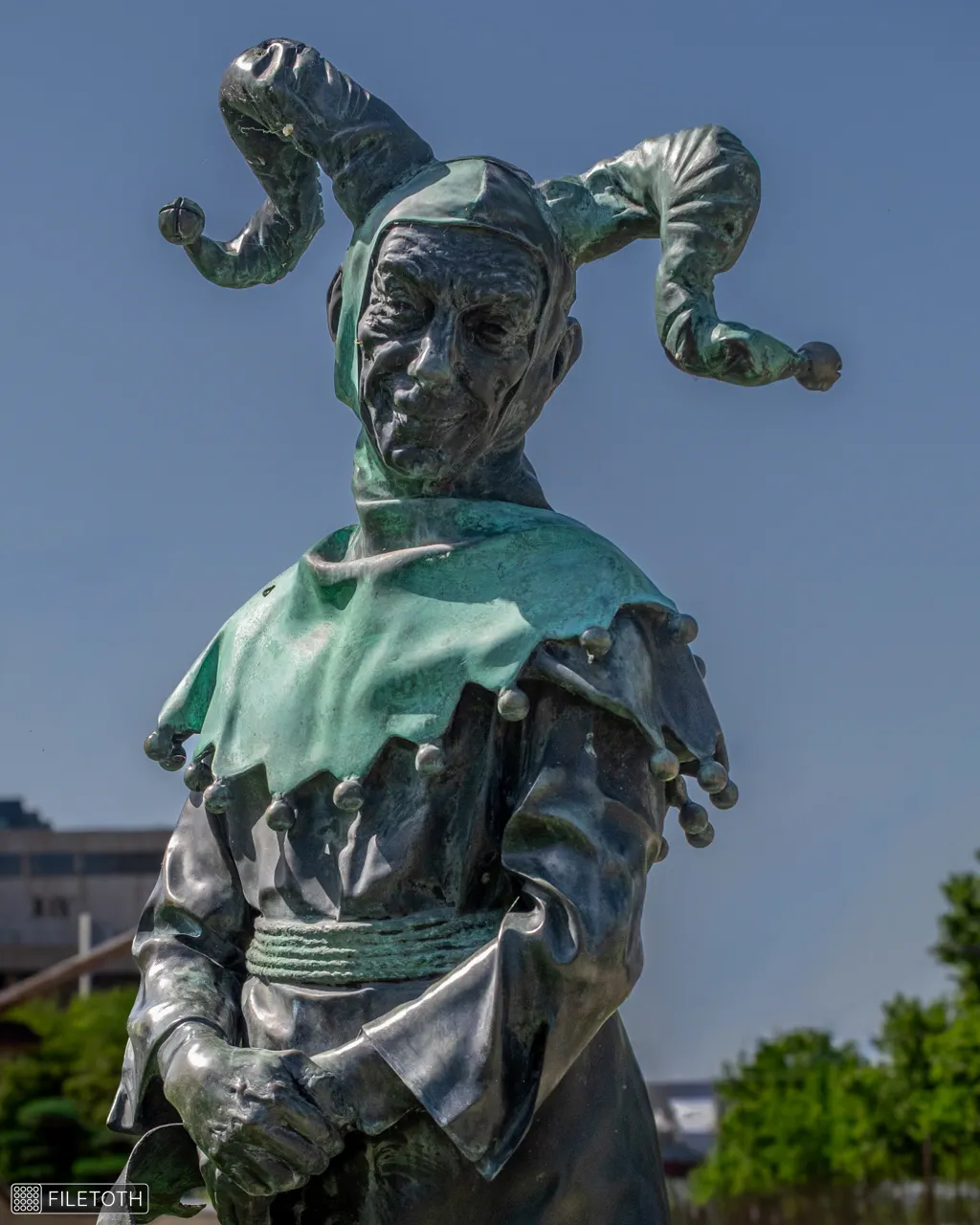
Kálmán Latabár (1902–1970) was one of Hungary's most beloved comedians, actors, and entertainers. Renowned for his impeccable comic timing, musical performances, and unmistakable stage presence, he brought laughter to audiences across decades marked by war, reconstruction, and profound social change. His performances made him one of the defining figures of twentieth-century Hungarian popular theatre.

Creation and historical context

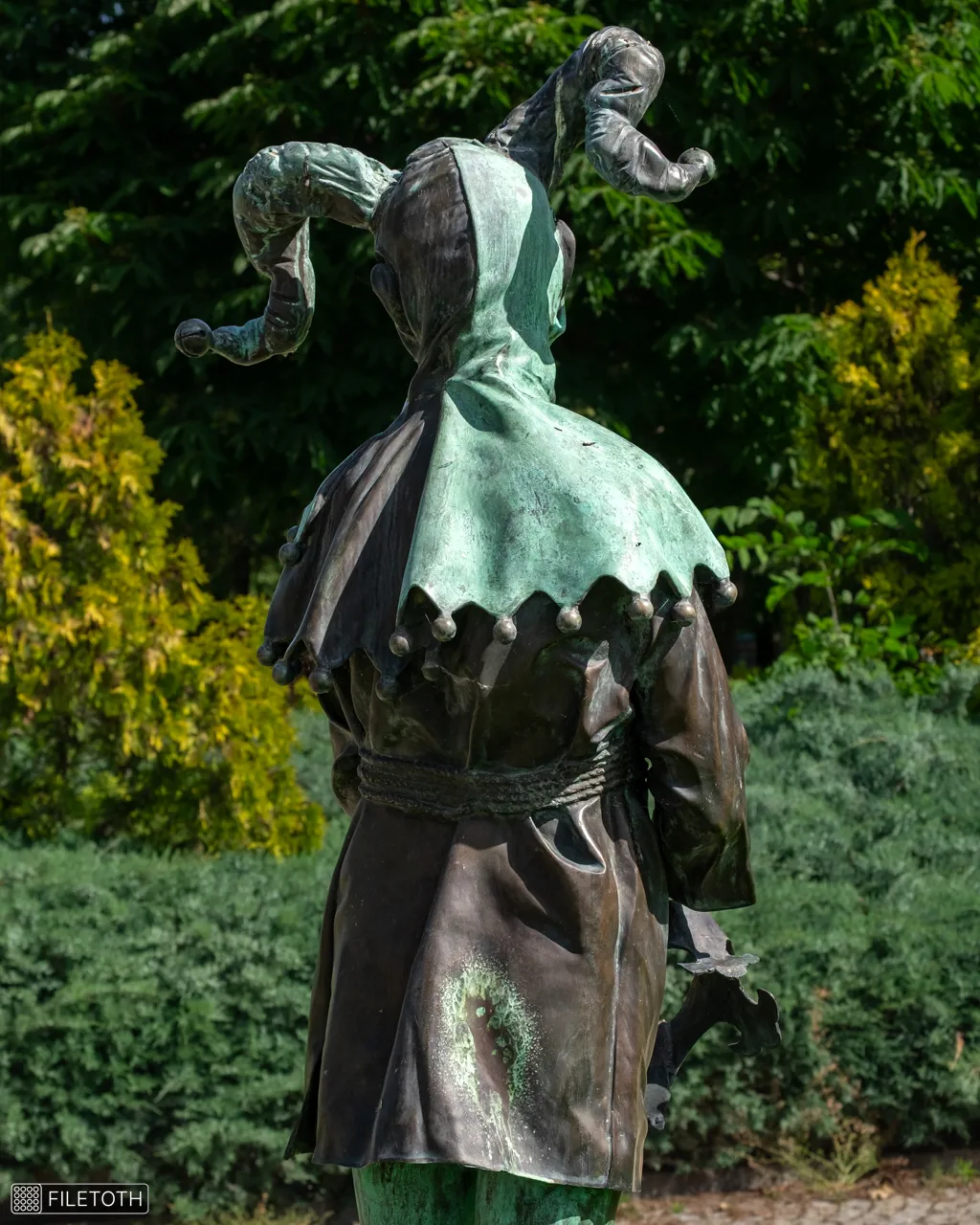
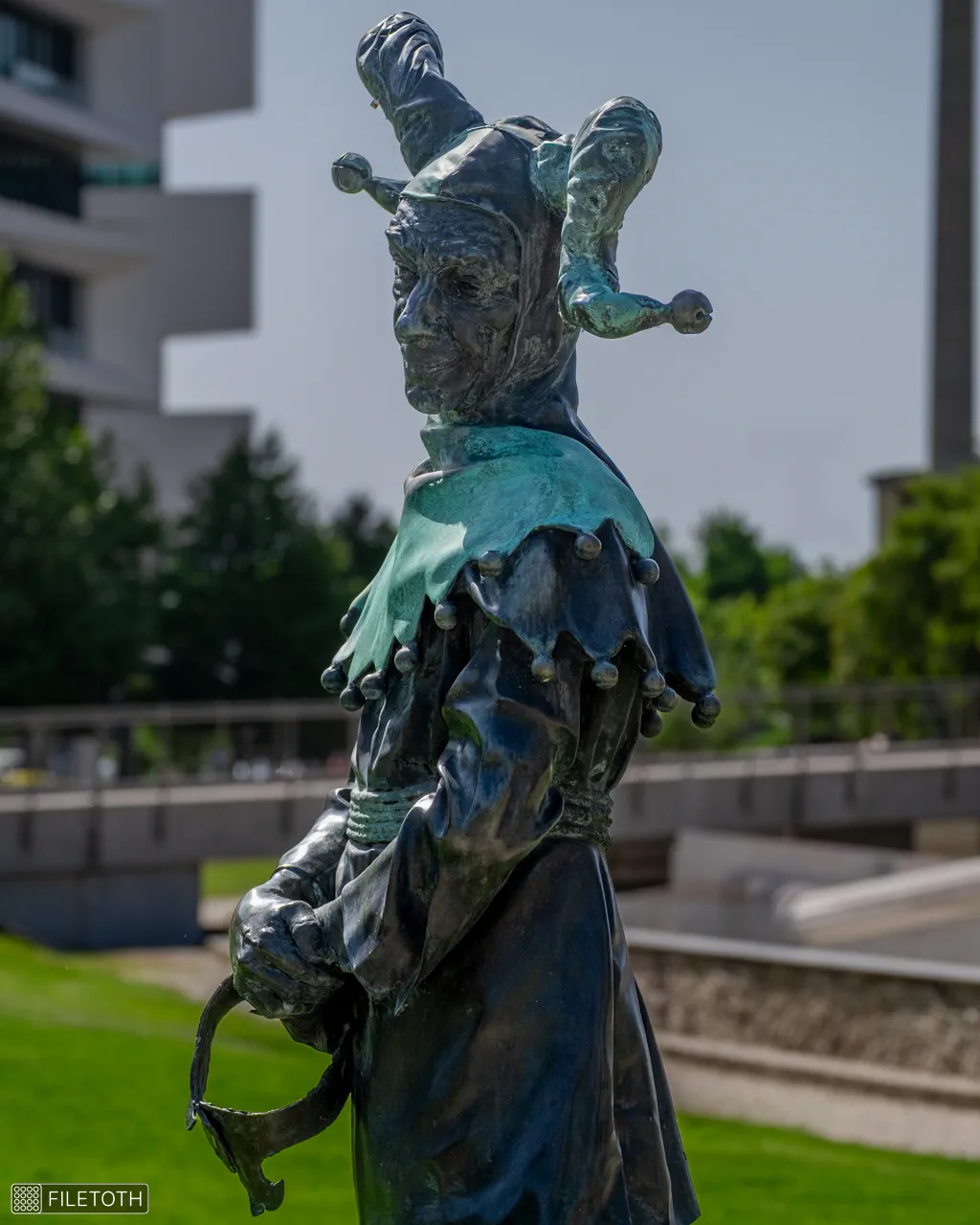
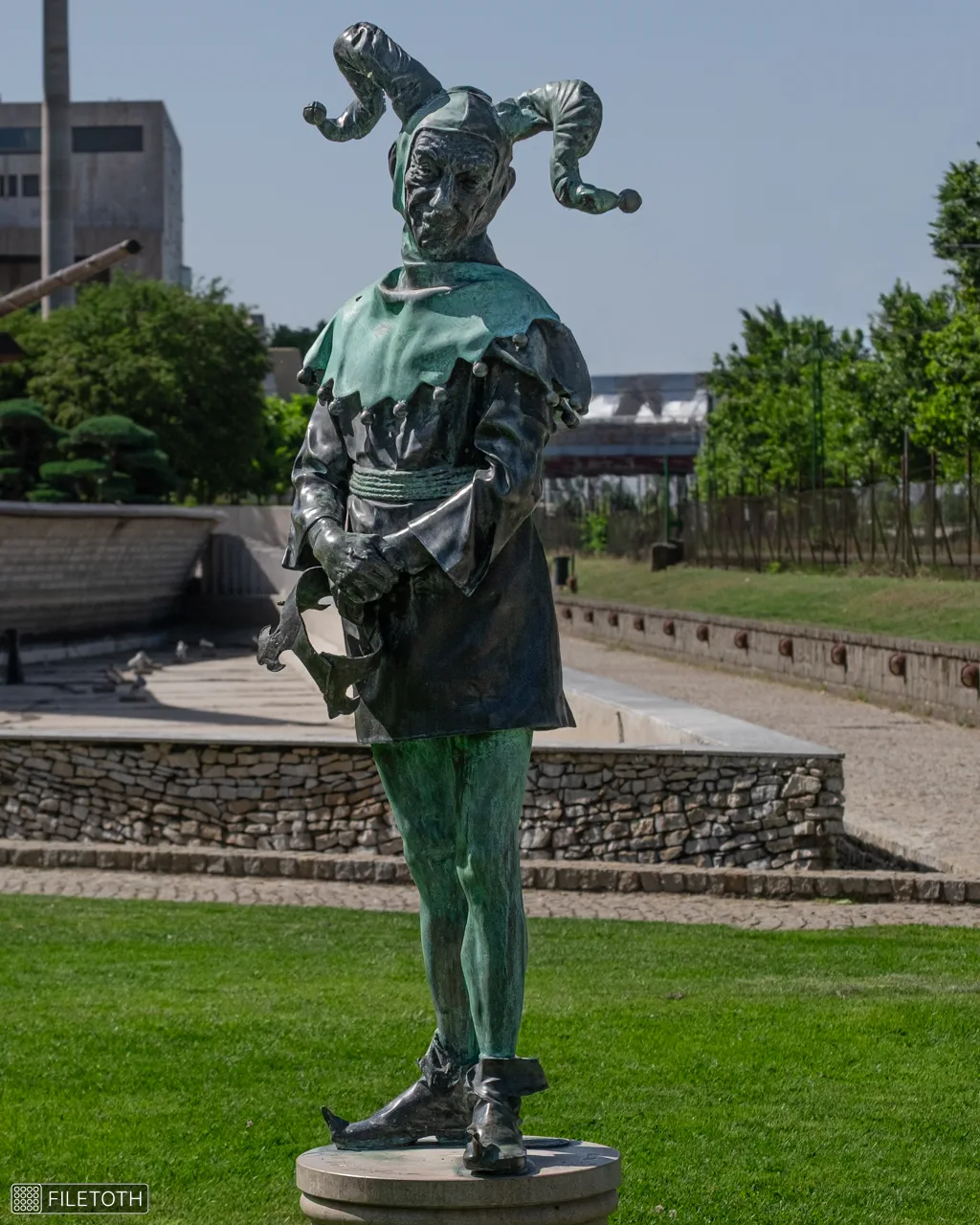
Péter Párkányi Raab's 2002 bronze statue portrays Latabár in one of his characteristic clown roles, complete with costume, bells, and a small crown resting in his hands. Rather than commemorating a single performance, the sculpture captures the playful spirit that made him unforgettable. The relaxed posture, warm smile, and approachable scale invite visitors to share in the theatrical world where humor and vulnerability exist side by side.

Statue by Péter Párkányi Raab, 2002. [ref.]
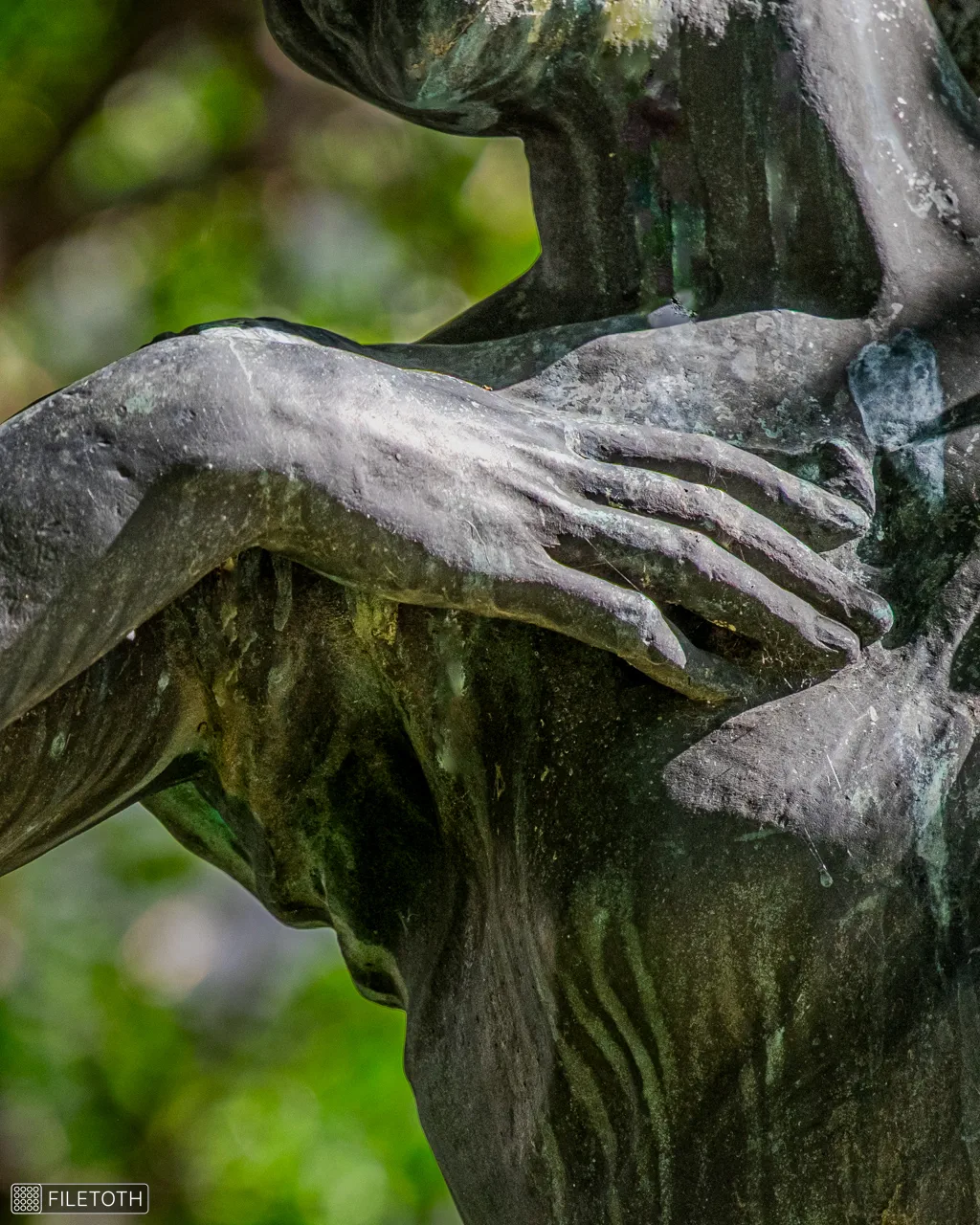
The Hand of Humor

Géza Hofi Statue

Historical figure and era

Géza Hofi (1936–2002) was one of Hungary's most influential actors and comedians, renowned for using humor to expose hypocrisy, arrogance, pretension, and everyday absurdity. His performances entertained millions while encouraging audiences to question authority, recognize human weakness, and laugh at themselves as much as at the world around them.

Creation and historical context

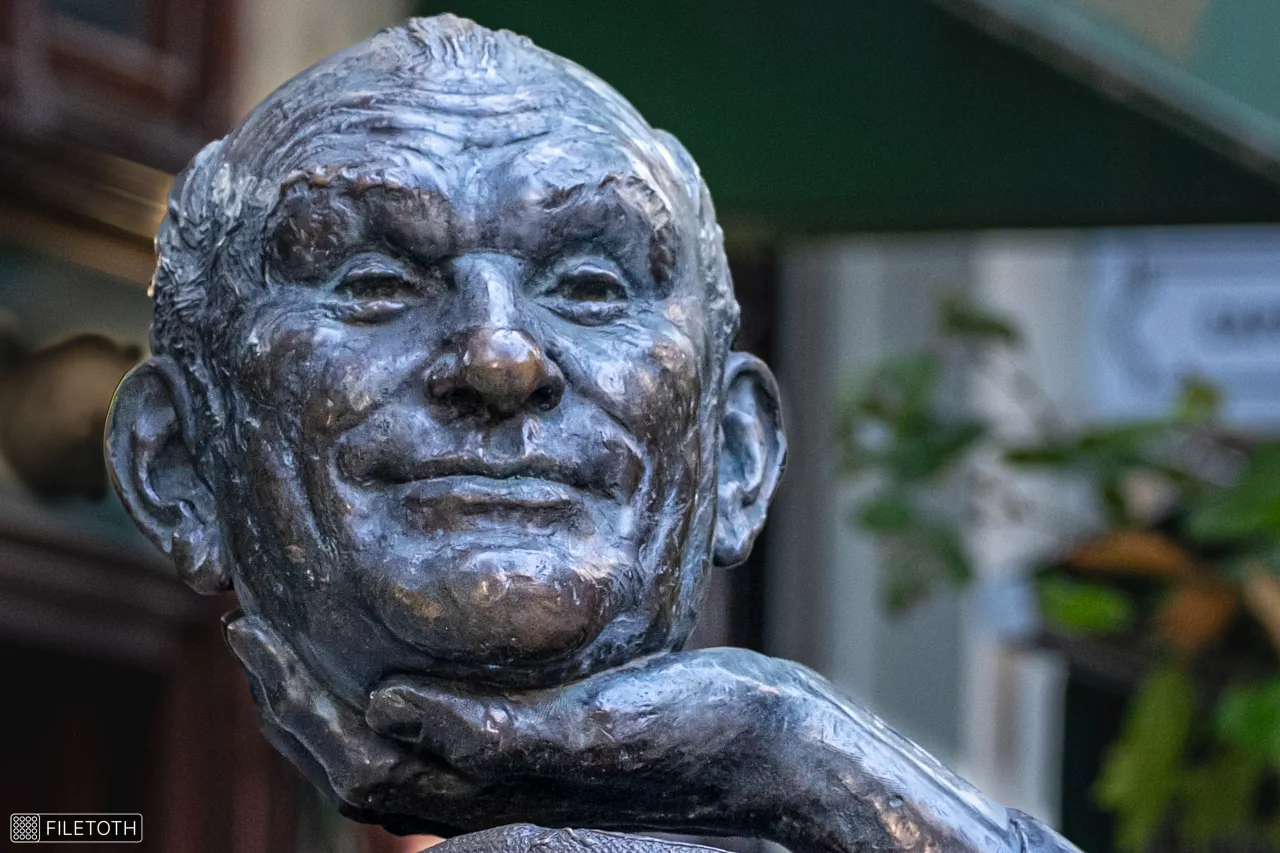
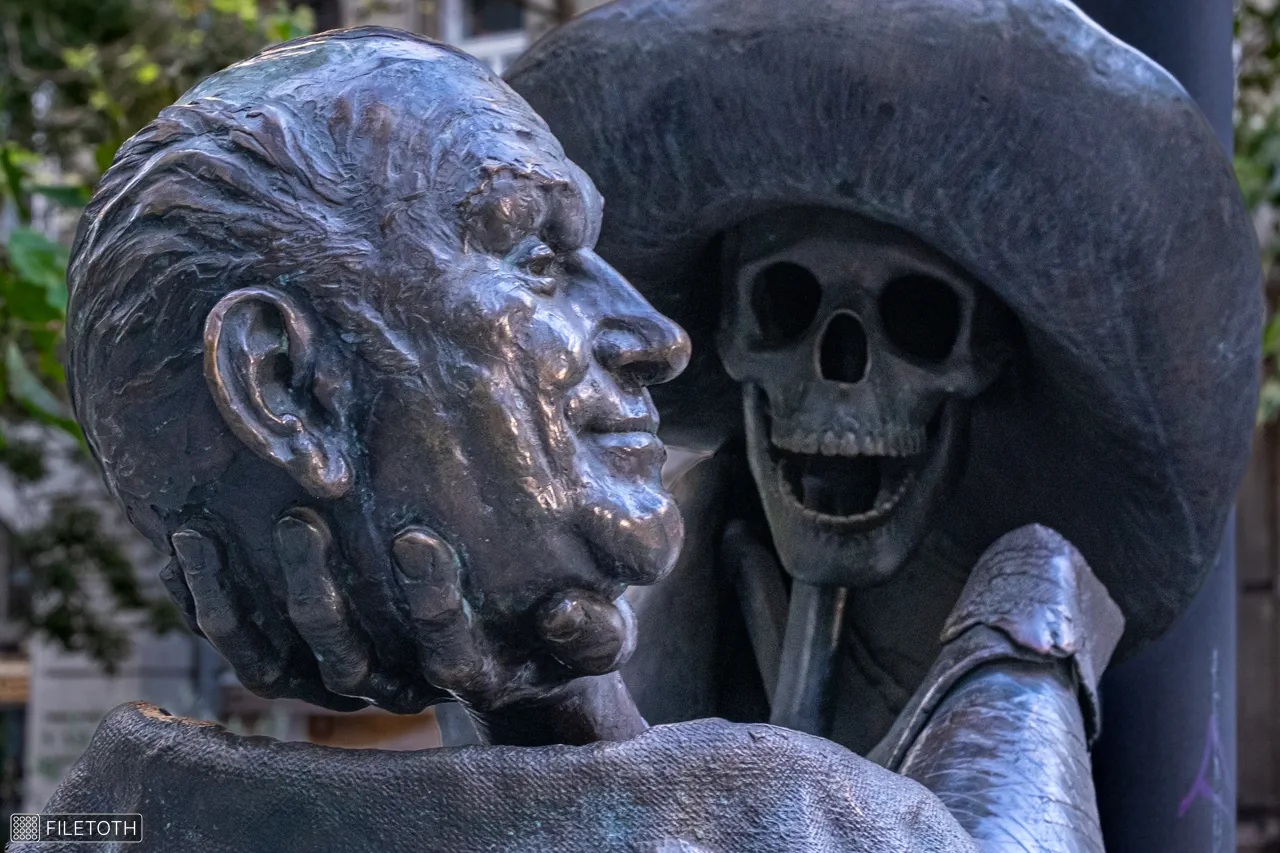
Géza Stremeny's 2004 sculpture portrays Hofi in a lively conversational pose, as though caught in the middle of delivering a punchline. Unveiled only two years after his death, it preserves the memory of a performer whose voice accompanied generations of Hungarians through decades of social and political change. Titled *Theatre*, the sculpture suggests that Hofi himself became a symbol of the stage, where comedy, social criticism, and everyday life met. His open, gesturing hand reminds us that humor creates connection rather than division, inviting reflection through laughter.

Statue by Géza Stremeny, December 28, 2004. [ref.]

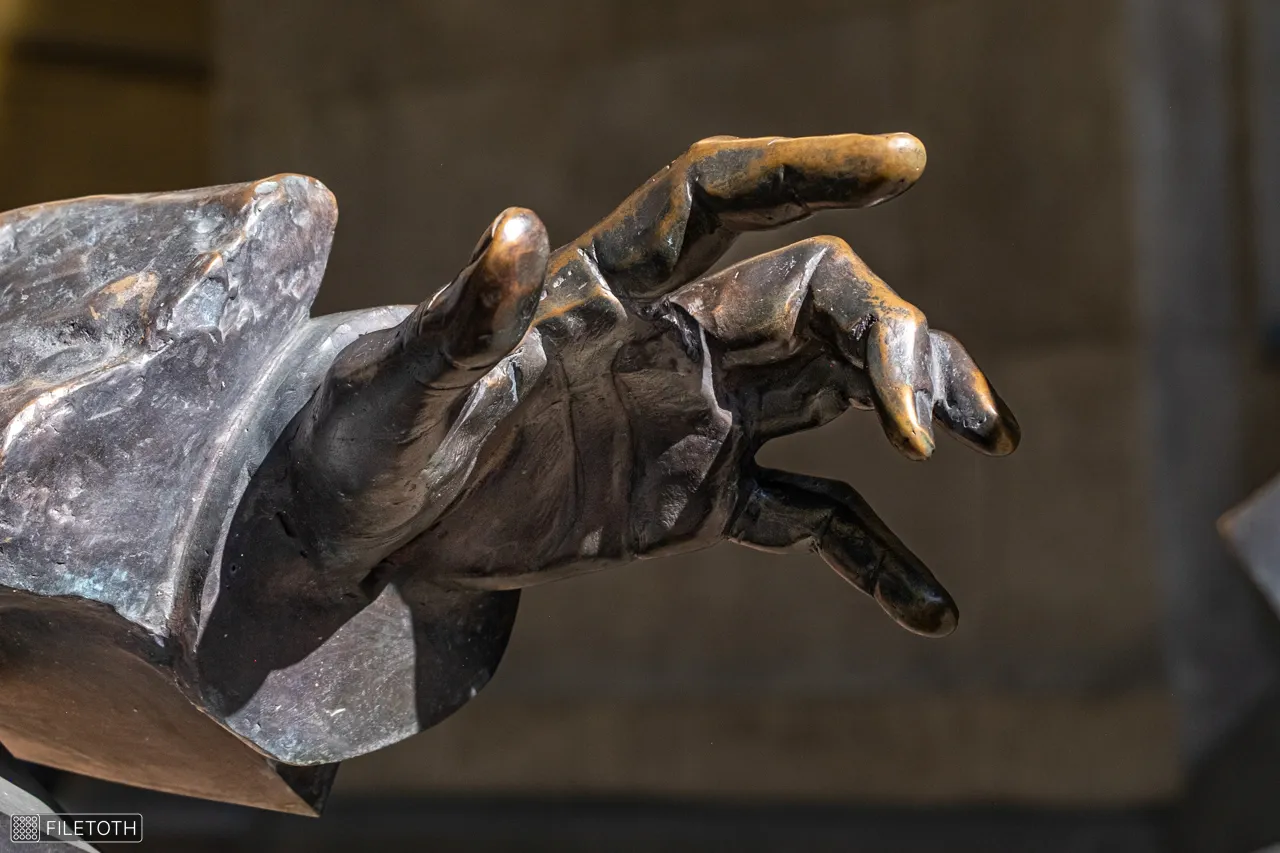
The Hand of the Slap

Bud Spencer Statue

Historical figure and era

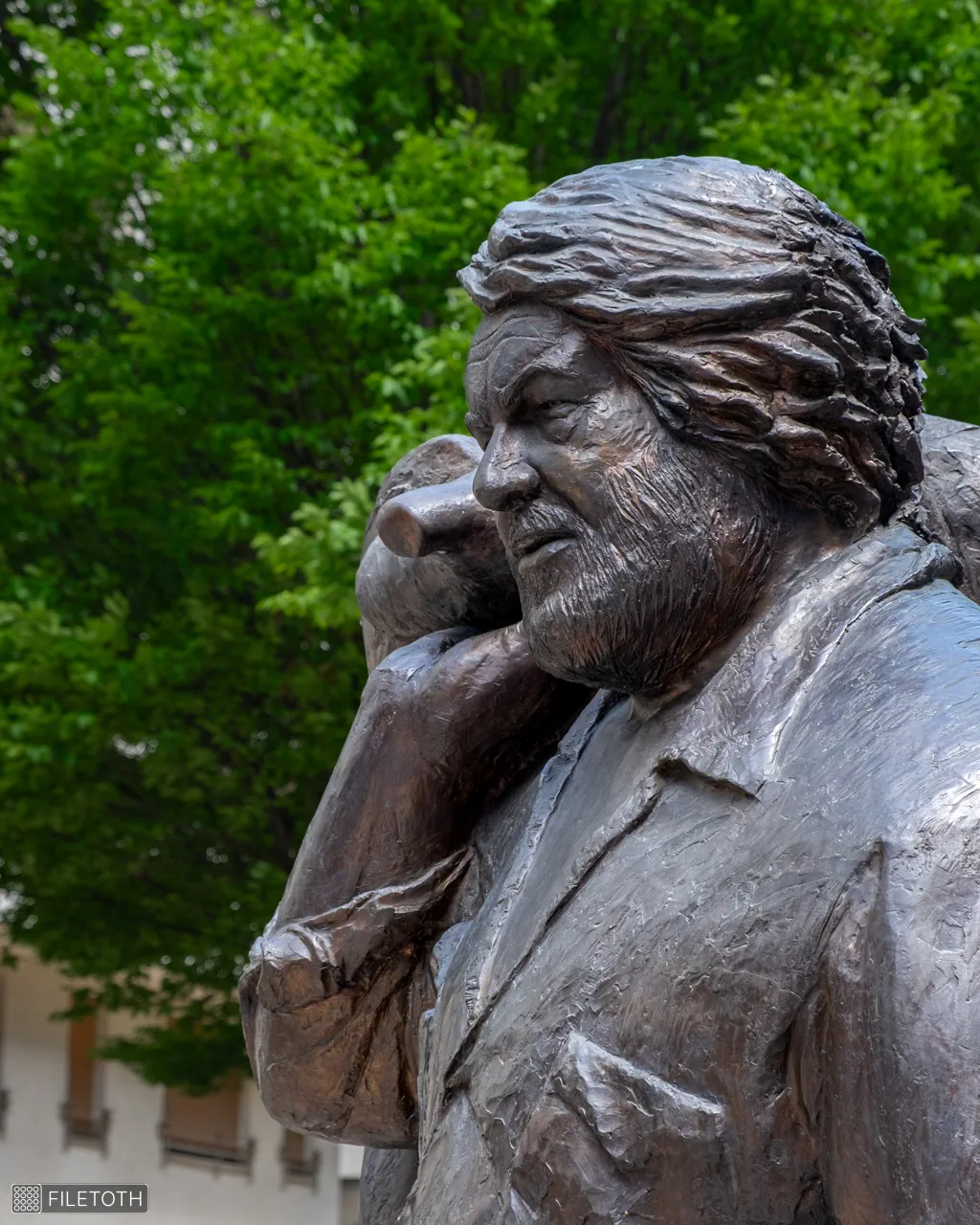
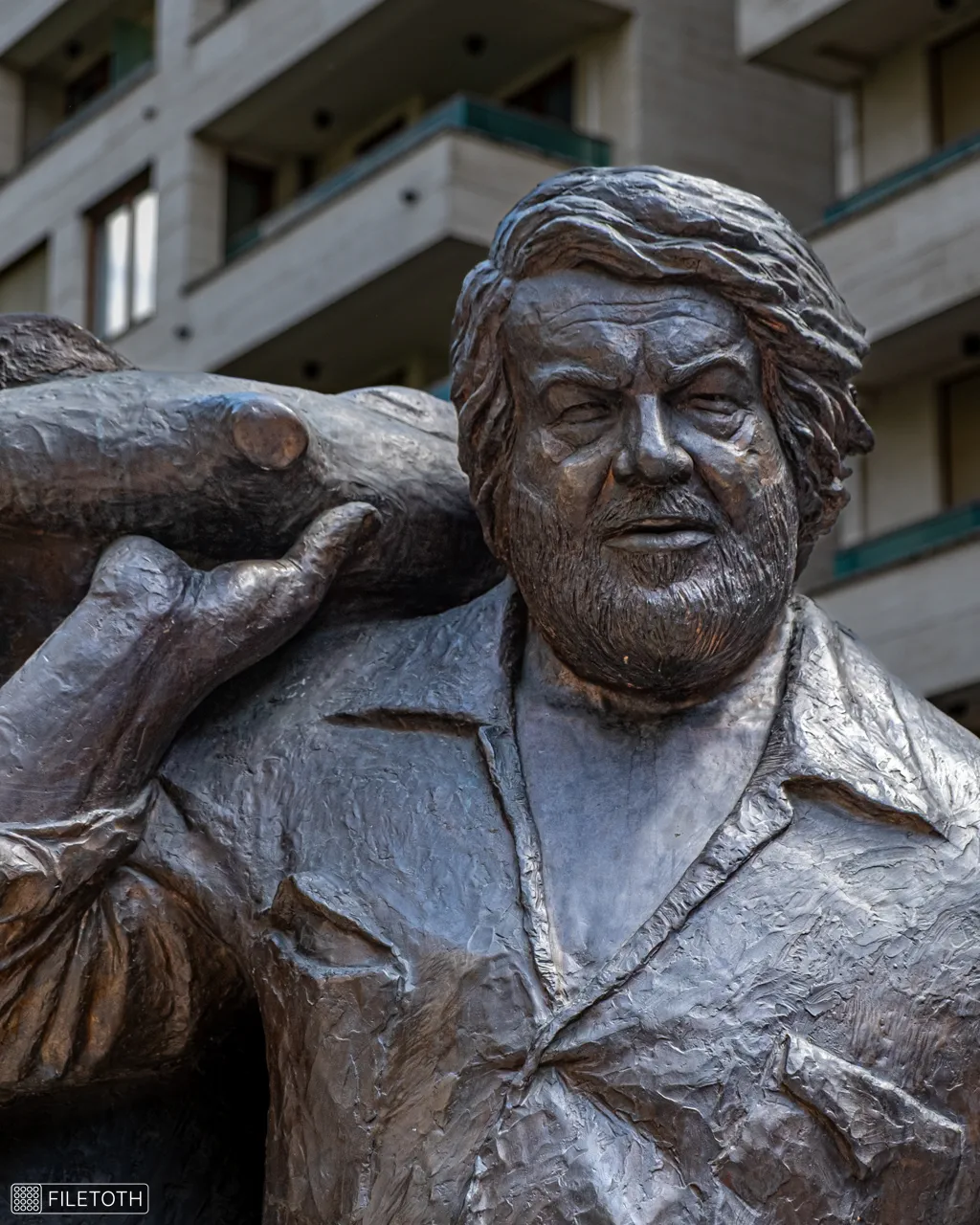
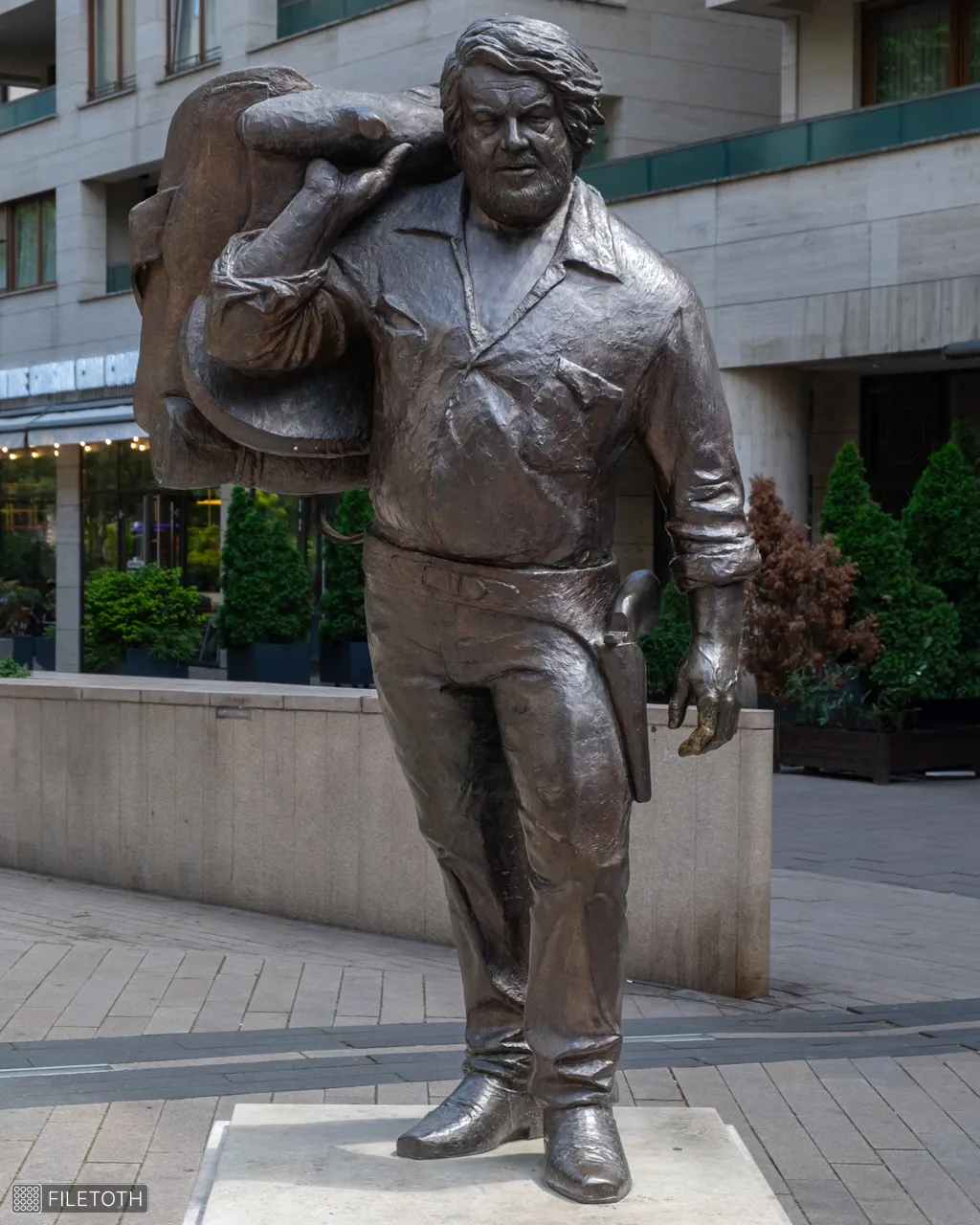
Bud Spencer (1929–2016), born Carlo Pedersoli, was an Italian actor, swimmer, and water polo player whose action-comedies and spaghetti westerns with Terence Hill made him one of Europe's most beloved film stars. His calm demeanor, unmistakable physical presence, and legendary open-handed slap earned him a devoted following, especially in Hungary, where his films became enduring television classics.

Creation and historical context

Following Bud Spencer's death, sculptor Szandra Tasnádi created the world's first public monument dedicated to the actor, unveiled in Budapest in 2017. Carrying a saddle over his shoulder, the larger-than-life figure recalls his western roles while celebrating the partnership with Terence Hill that made him internationally famous. His broad, relaxed hand evokes the iconic cinematic slap that became a symbol of comic justice—powerful, unforgettable, yet never cruel.

Statue by Szandra Tasnádi, November 11, 2017. [ref.]

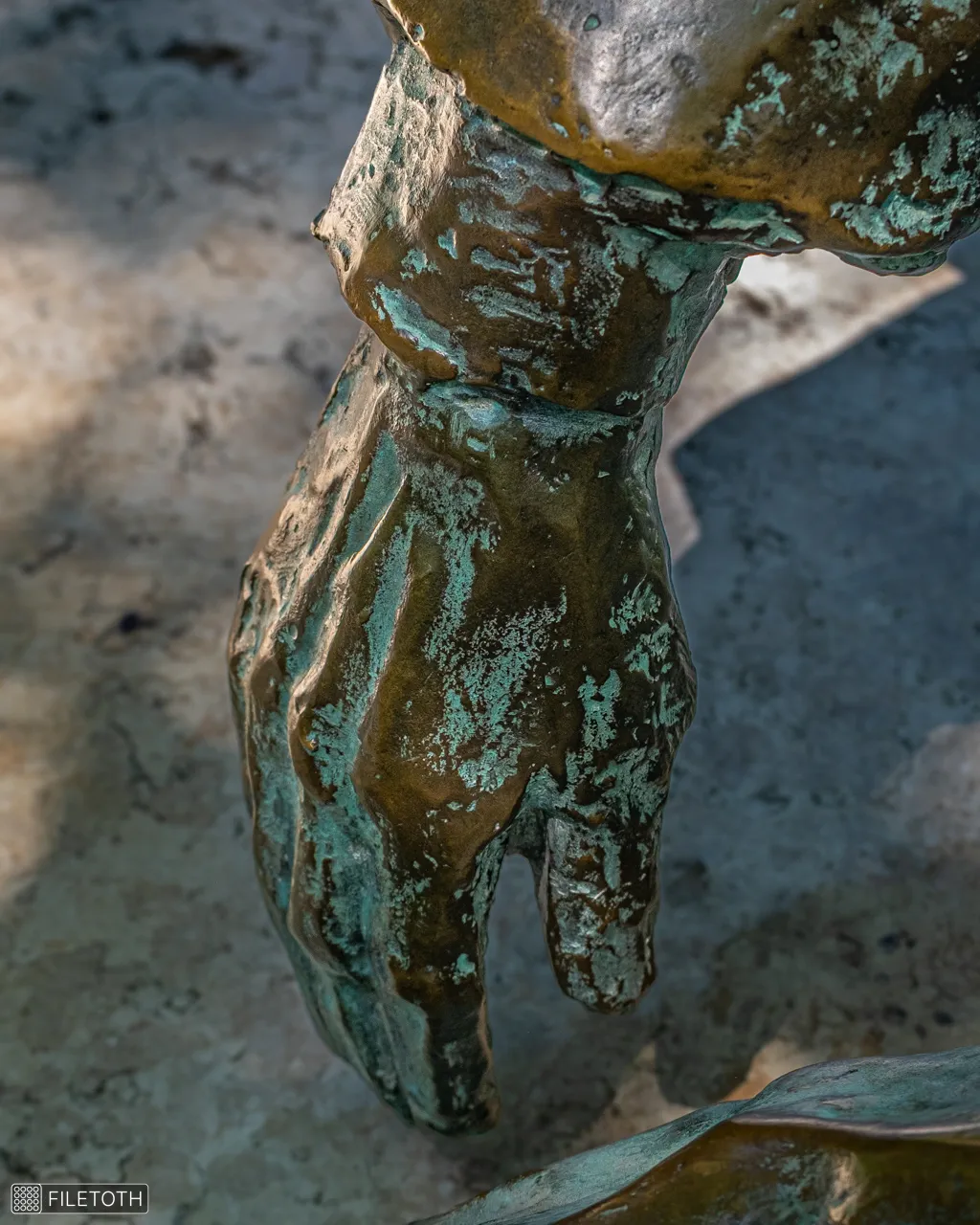
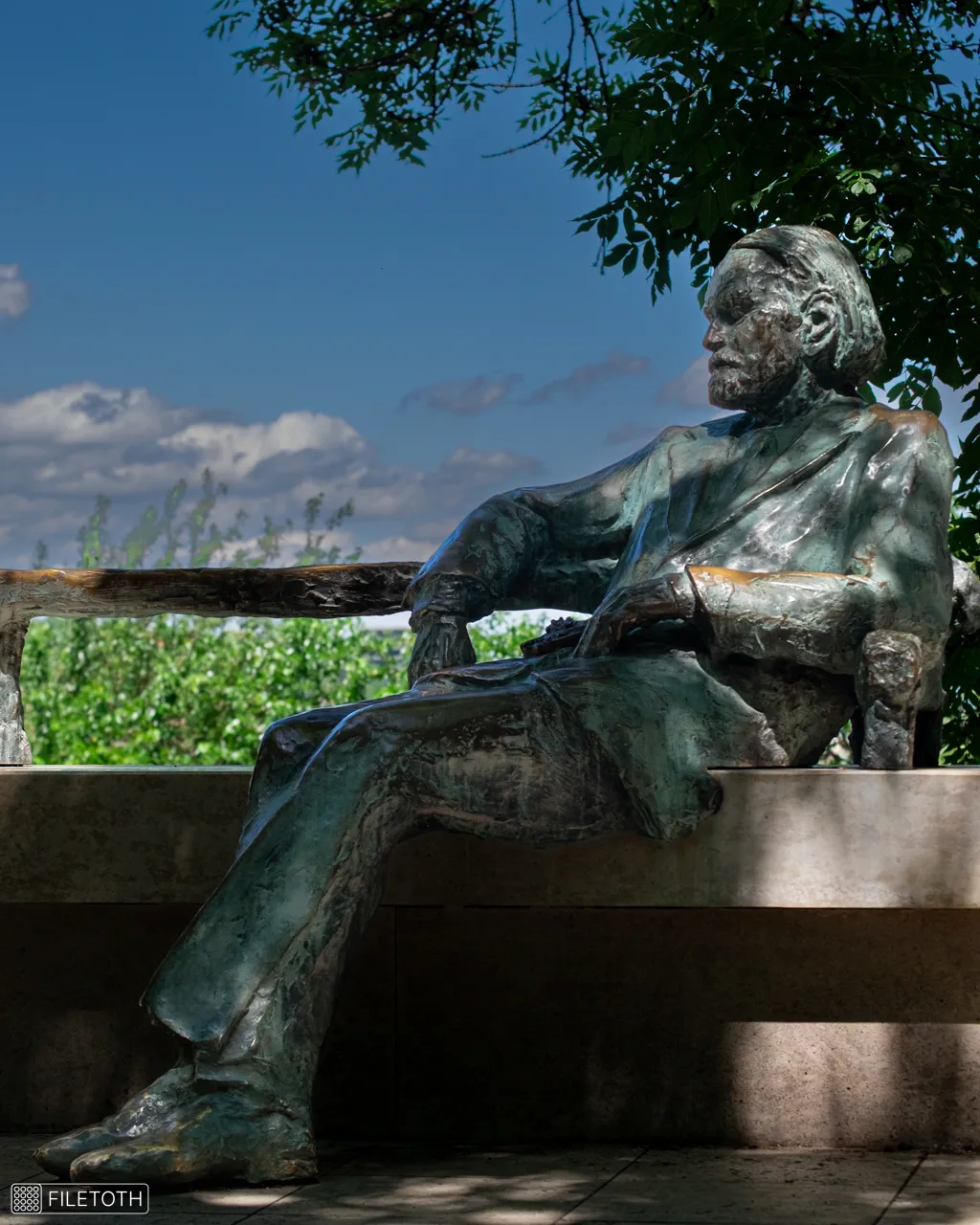
The Hand of Harmony

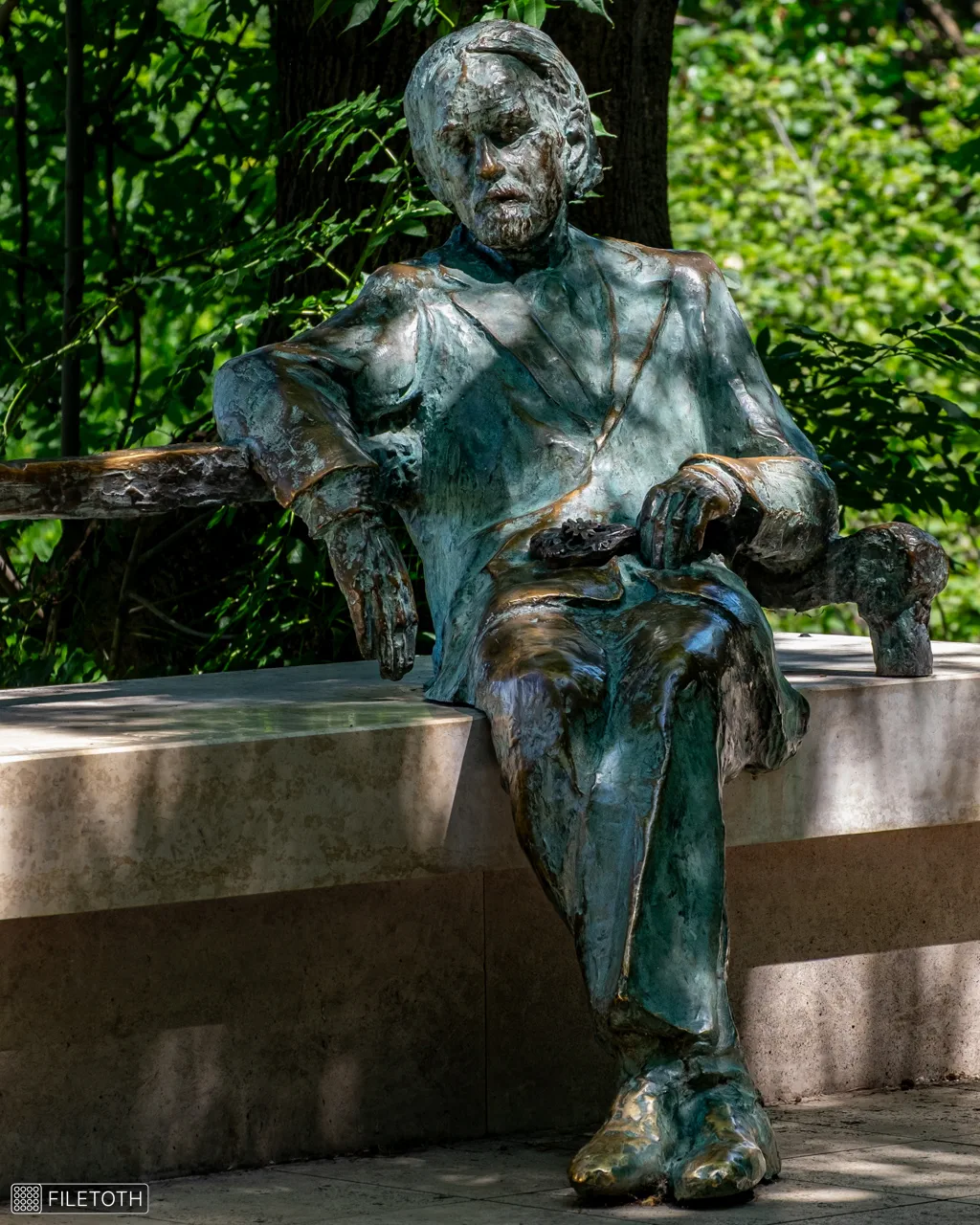
Zoltán Kodály Statue

Historical figure and era

Zoltán Kodály (1882–1967) was one of Hungary's most influential composers, ethnomusicologists, and music educators. Together with Béla Bartók, he collected thousands of Hungarian folk songs, preserving a rich musical heritage while developing an educational philosophy that transformed music teaching both in Hungary and around the world.

Creation and historical context

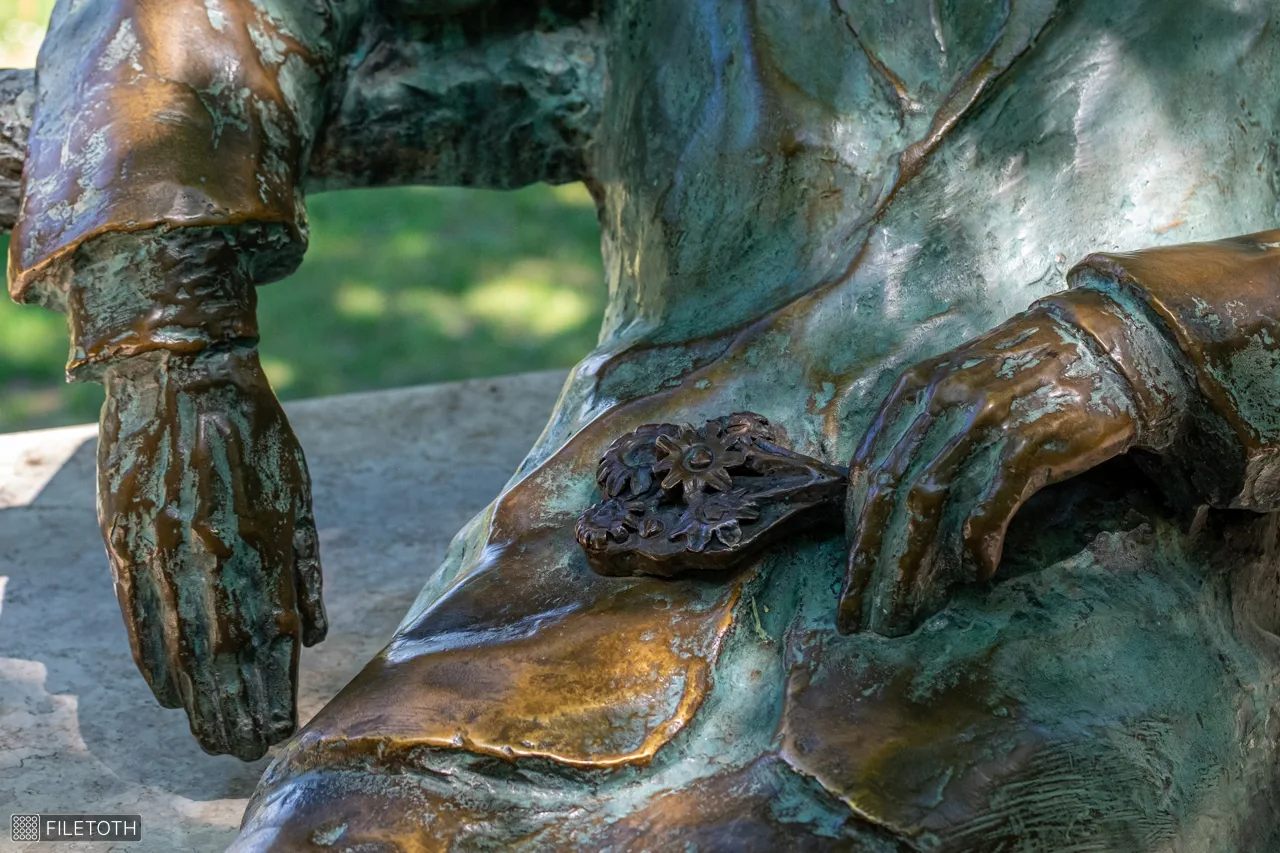
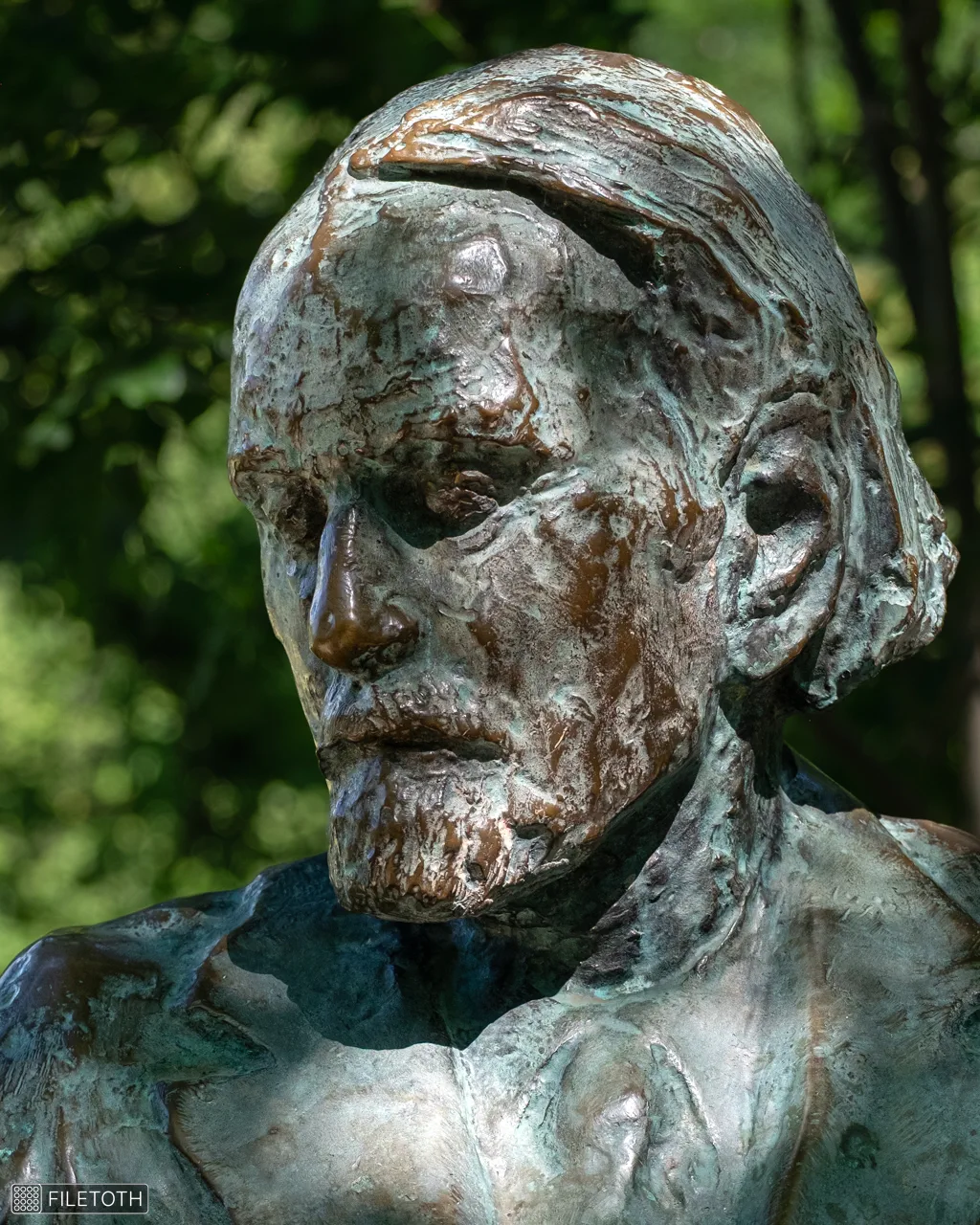
Imre Varga's bronze statue, unveiled in 1982, presents Kodály in an intimate and approachable way. Rather than conducting an orchestra or composing at a desk, he sits quietly on a park bench holding a small bouquet of wildflowers. Overlooking Budapest, the sculpture invites visitors to sit beside him, reflecting a broader shift toward human-scale public monuments that celebrate character as much as achievement.

Statue by Imre Varga, December 15, 1982. [ref.]

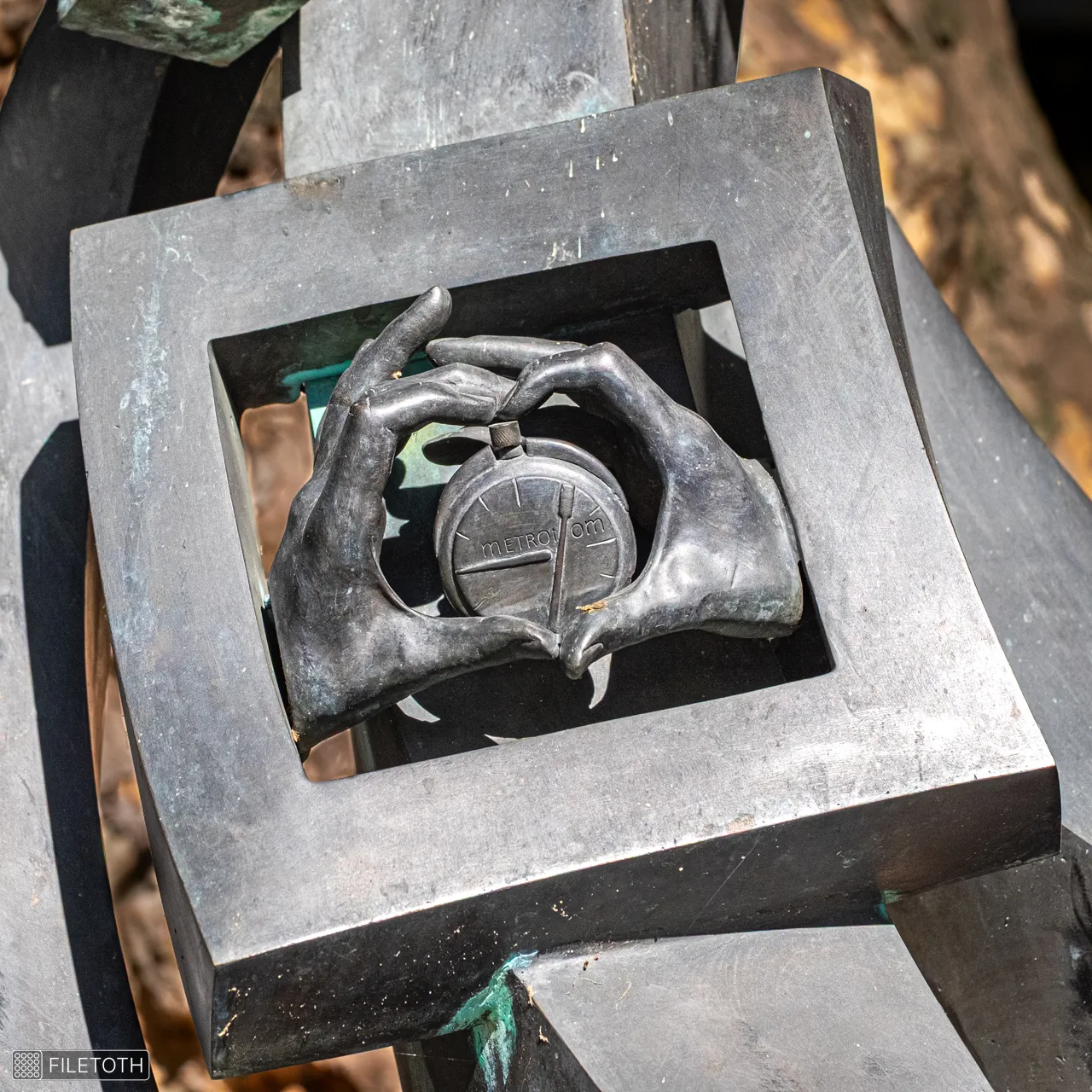
The Hand of Interpretation

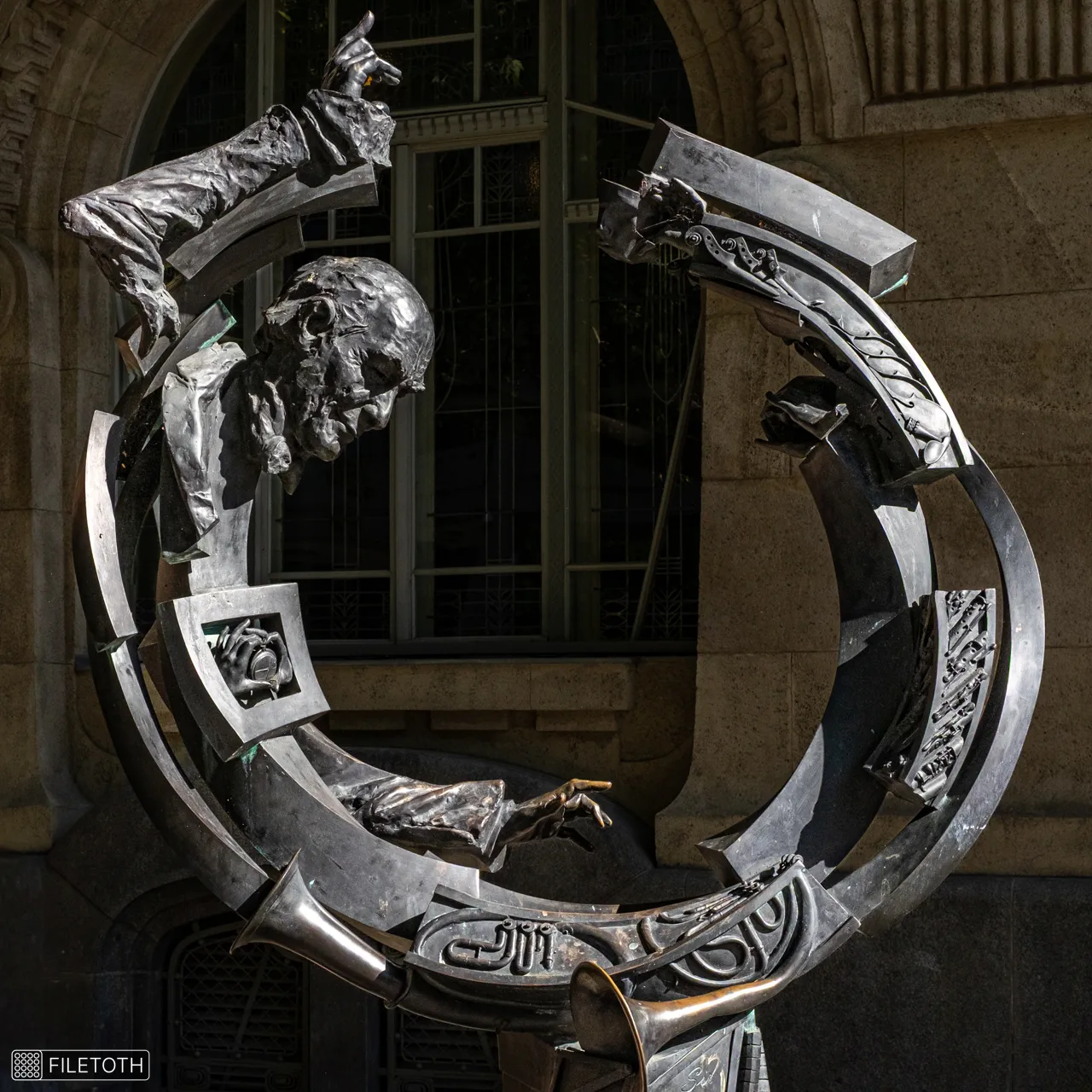
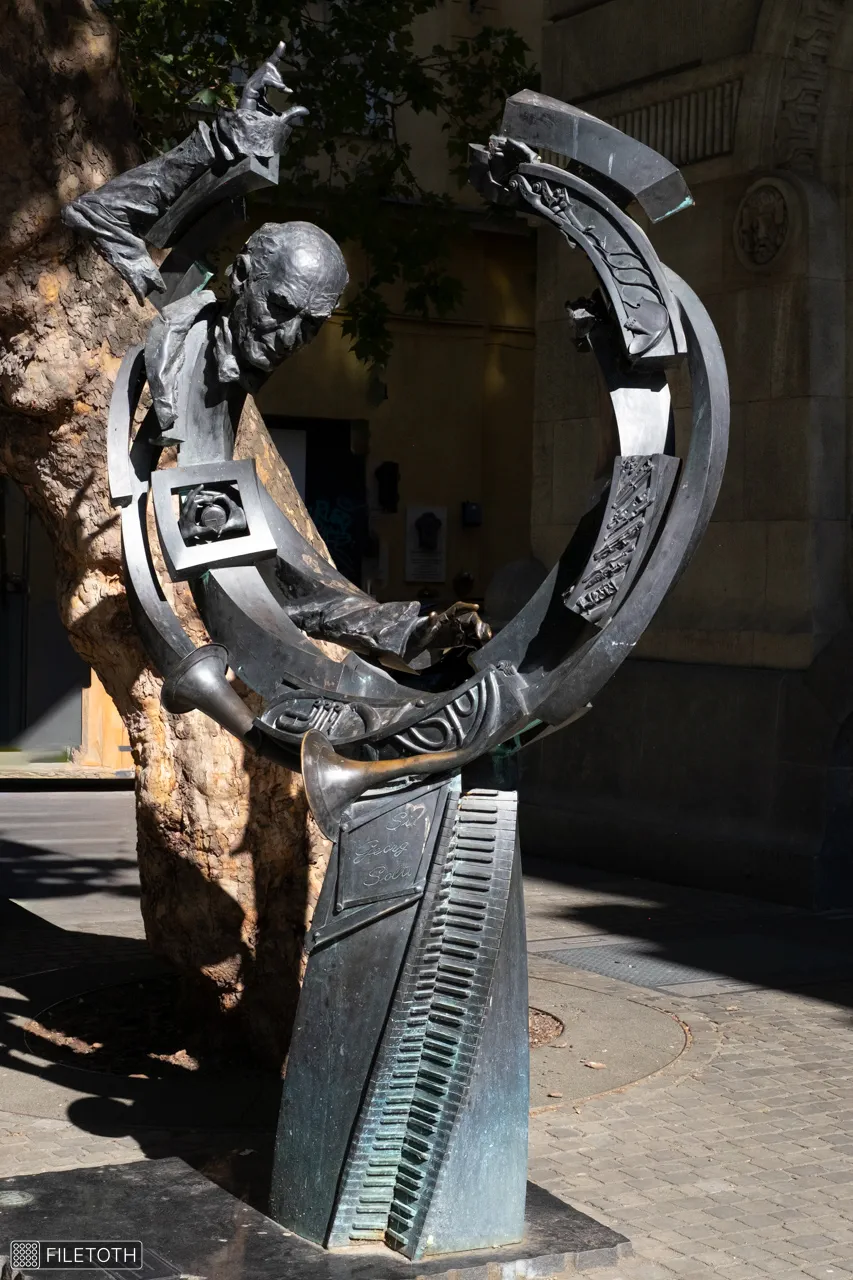
Georg Solti Statue

Historical figure and era

Sir Georg Solti (1912–1997) was a renowned Hungarian-British conductor whose dynamic performances shaped the sound of many of the world's leading orchestras and opera houses throughout the twentieth century. He recorded more than 250 albums and received 31 Grammy Awards, a record that reflects his extraordinary international influence on classical music.

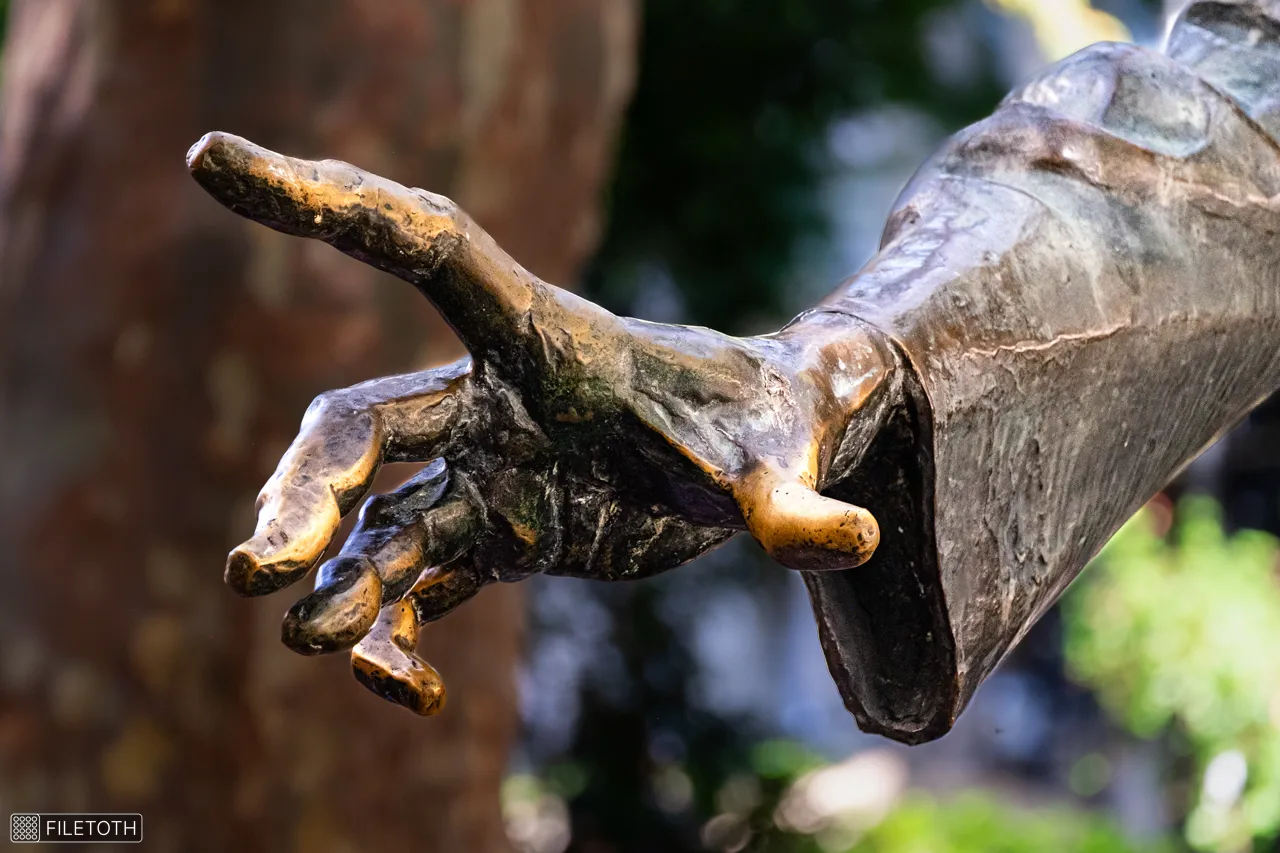
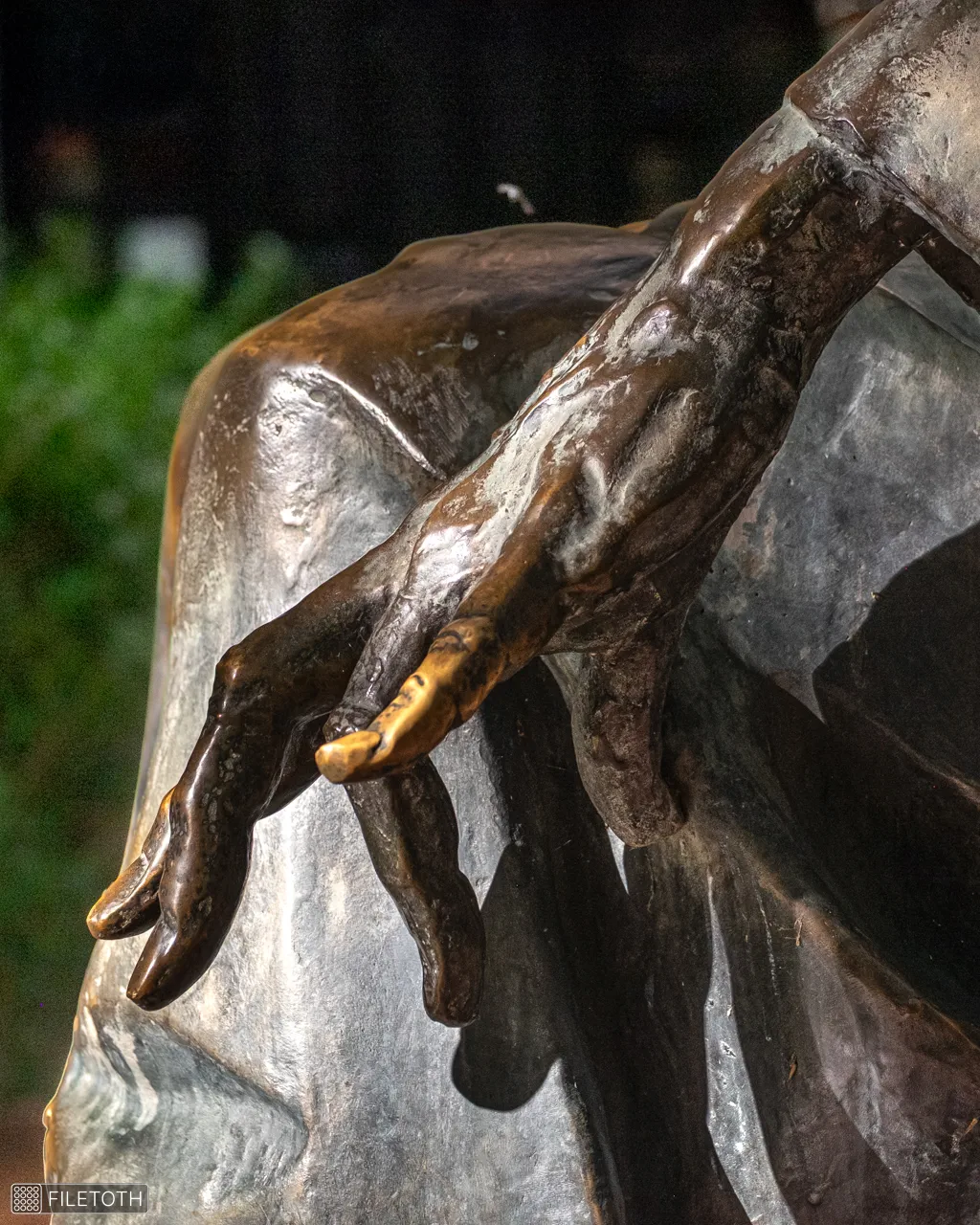
Creation and historical context

Péter Párkányi Raab's 2013 statue captures Solti in motion, with baton and hands suspended mid-gesture, as though drawing sound from an unseen orchestra. Installed beside Budapest's Liszt Academy of Music, the sculpture reconnects an international career with the city where his musical journey began. The raised hands and concentrated expression suggest that interpretation emerges through a dialogue between the score, the conductor, and the musicians.

Statue by Péter Párkányi Raab, October 22, 2013. [ref.]
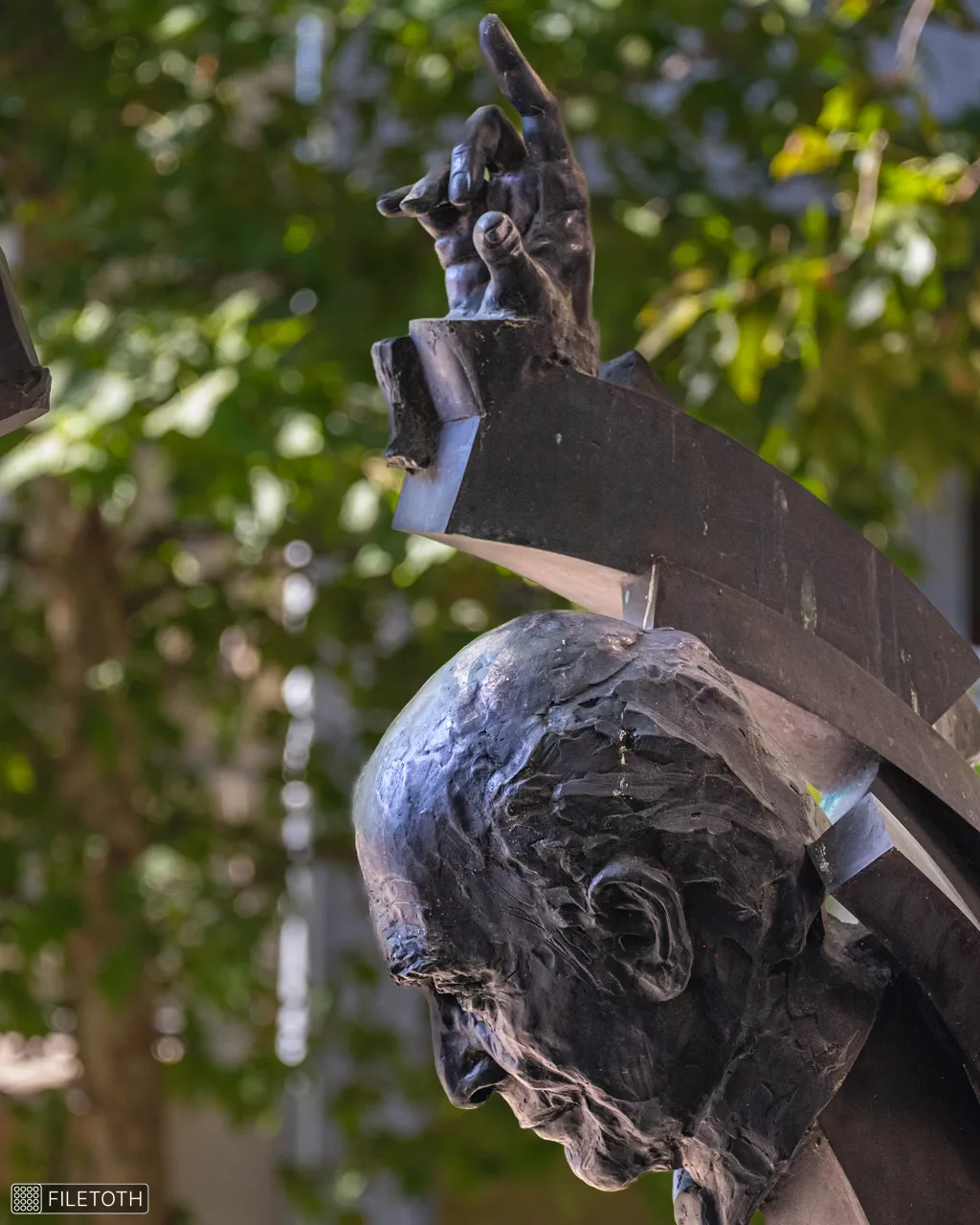
The Hand of Virtuosity

Franz Liszt Statue

Historical figure and era

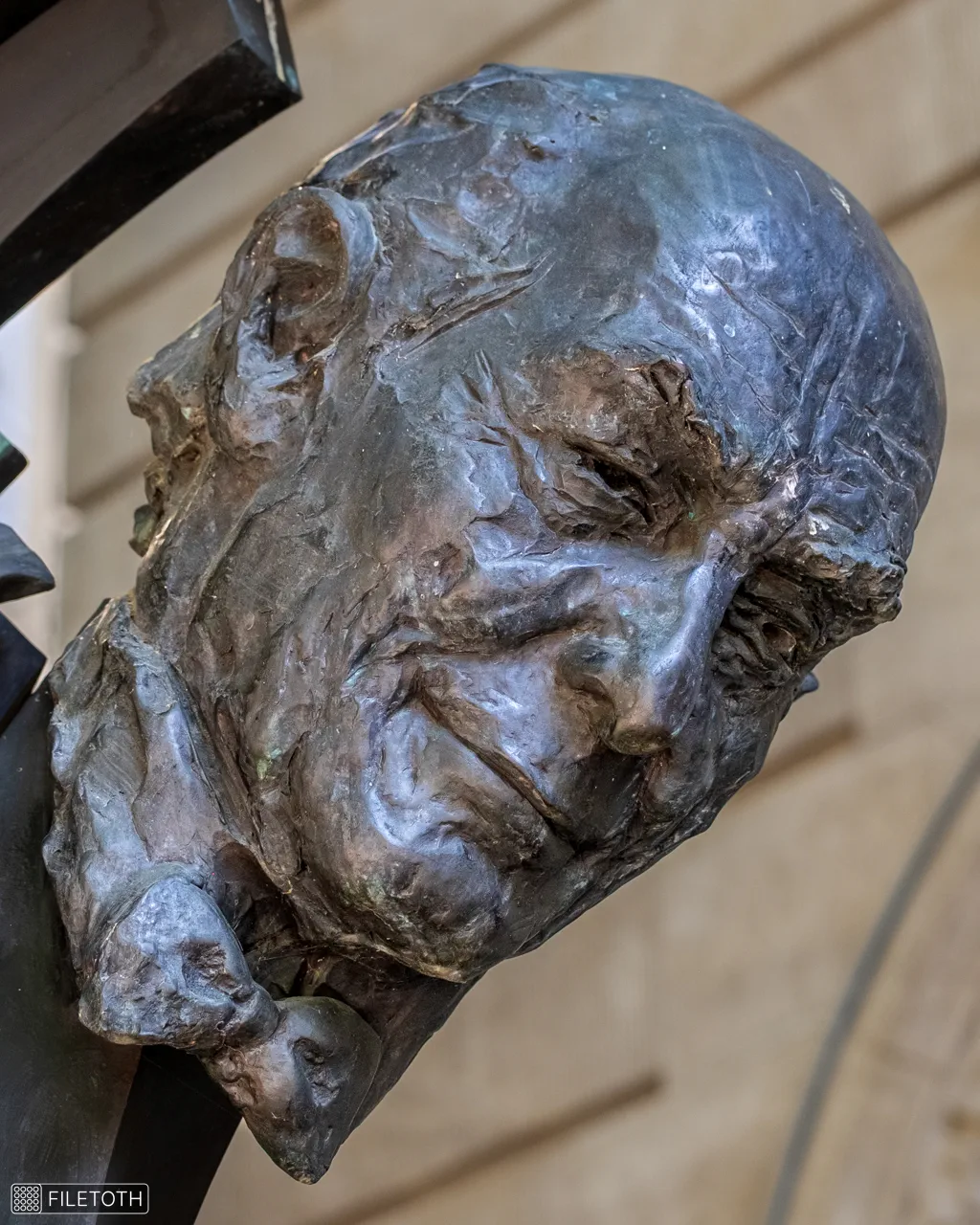
Franz Liszt (1811–1886) was a legendary composer, pianist, conductor, and teacher whose dazzling virtuosity transformed nineteenth-century concert life. His innovations in harmony, musical form, and piano technique reshaped the role of the solo performer, while his influence continues to define classical music education and performance around the world.

Creation and historical context

László Marton's 1986 statue places particular emphasis on Liszt's expressive hands, the instruments through which his extraordinary musical imagination reached audiences across Europe. Seated in quiet concentration, the composer appears poised between thought and performance, his hands suggesting that music is about to begin. Rather than depicting theatrical movement, the sculpture captures the anticipation that precedes artistic creation.

Statue by László Marton, October 22, 1986. [ref.]
Continue exploring:

Browse the full reference index .